
Lalibela: The Rock-Hewn Churches and King's Vision
Discover how King Lalibela carved twelve churches from solid rock in Ethiopia's highlands, creating a sacred landscape that blends ancient Christian devotion with legendary ambition. A journey to Jerusalem without leaving home.
Contents
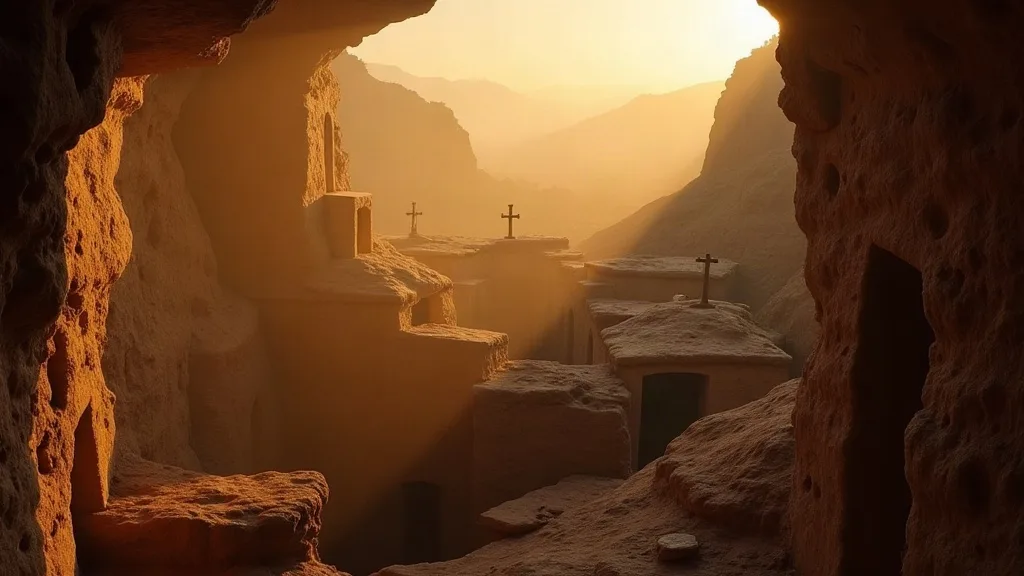
In the cool mists of Ethiopia's northern highlands, beneath the plateau of Lasta, stands a vision carved from stone that defies every natural instinct a builder possesses. Twelve churches, hewn downward from the living rock, sink into the earth like a city of faith sinking into prayer. No mortar binds them. No scaffolding supported their creation. Workers drove chisel and hammer into solid basalt, removing hundreds of thousands of cubic metres of stone by hand, leaving behind not ruins but perfect architectural forms, each cross-shaped, each cruciform vault intact, each window a geometric prayer. This is Lalibela, the rock-hewn churches, and they exist because a king in the twelfth century heard a call from Jerusalem and decided Jerusalem could come to him.
The man behind the vision was King Lalibela (also called Gebre Mesqal, ruled approximately 1181-1221). Legend says he was chosen for his kingship not by birth alone but by divine sign: when his mother was pregnant, a swarm of bees descended on her without stinging, then spiraled skyward in the shape of a cross. The bees, said the priests, were marking him. And they were right. This king would leave a mark on stone that eight centuries later still stops pilgrims and visitors in their tracks, their breath leaving clouds in the alpine air.
The Vision Behind the Churches: Jerusalem in Stone
Lalibela lived during the Crusades. Far to the west, in the Levant, Christian armies clashed with Islamic ones over the same ground where Christ had walked. The Holy Land, once freely accessible to Christian pilgrims, became dangerous. Routes that led to Jerusalem grew treacherous. For the faithful of Ethiopia, a nation cradled in its own mountains and already ancient in its Christianity, the idea of pilgrimage to the Holy City began to feel impossible.
Lalibela's answer was radical: if the living could not go to Jerusalem, he would build Jerusalem in stone. The twelve churches of Lalibela are not random. They map themselves onto the sacred geography of the Holy Land. The largest church, Beta Maryam (House of Mary), stands like a cathedral. Beta Dingane (House of Judgment) echoes the basilicas where Christ was tried. Beta Golgotha honors the place of the skull. Beta Medhane Alem (House of the Redeemer of the World) replicates the Church of the Holy Sepulcher, the holiest site in Christendom, where Christ was believed to have risen. Walk through Lalibela and you walk through Jerusalem's key sites, compressed into a single plateau, accessible to any Ethiopian Christian with the strength to climb down into the rock churches and climb back out.
This was not mere architecture. It was theology translated into stone. It was an act of defiance against distance and an affirmation that holiness is not locked into one place on earth. Wherever faith gathers in authentic reverence, the sacred is present. Ethiopia had been Christian since the fourth century, converted when Saint Frumentius, an Egyptian slave, won the heart of King Ezana. By Lalibela's time, that faith was centuries deep, rooted in the Aksumite empire, expressed in the Ge'ez language of the liturgy and the Kebra Nagast, the Ethiopian royal chronicle that claimed King Solomon himself had a son by the Queen of Sheba, Menelik I, from whom all Ethiopian kings descended. Lalibela was not building a substitute Jerusalem. He was building Ethiopia's Jerusalem, proof that the divine presence honored Ethiopian ground as much as Middle Eastern ground.
Carving the Vision: Methods and Madness
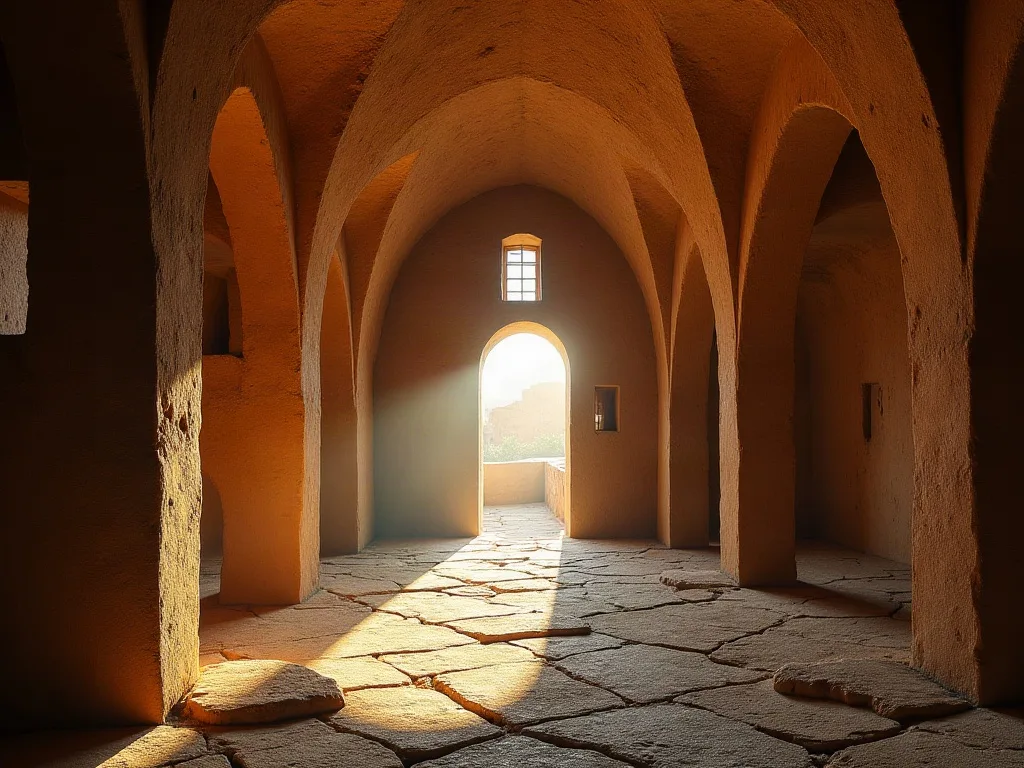
How was such work possible without modern machinery? The answer lies partly in the stone itself. The basalt of the Lasta plateau, though hard, is columnar. It fractures along natural planes. A skilled worker could read the stone, understand where it wanted to break, and use hammer and chisel with almost surgical precision. Work began at the top of each church site. Teams of masons would strike downward, following the columnar grain. As they went deeper, the church emerged from the negative space. Walls that formed the sanctuary revealed themselves. Columns that supported vaulted roofs appeared as stone was subtracted. It is the inverse of sculpture; it is the inverse of building. It is, instead, unbuilding the landscape until what remained was sacred form.
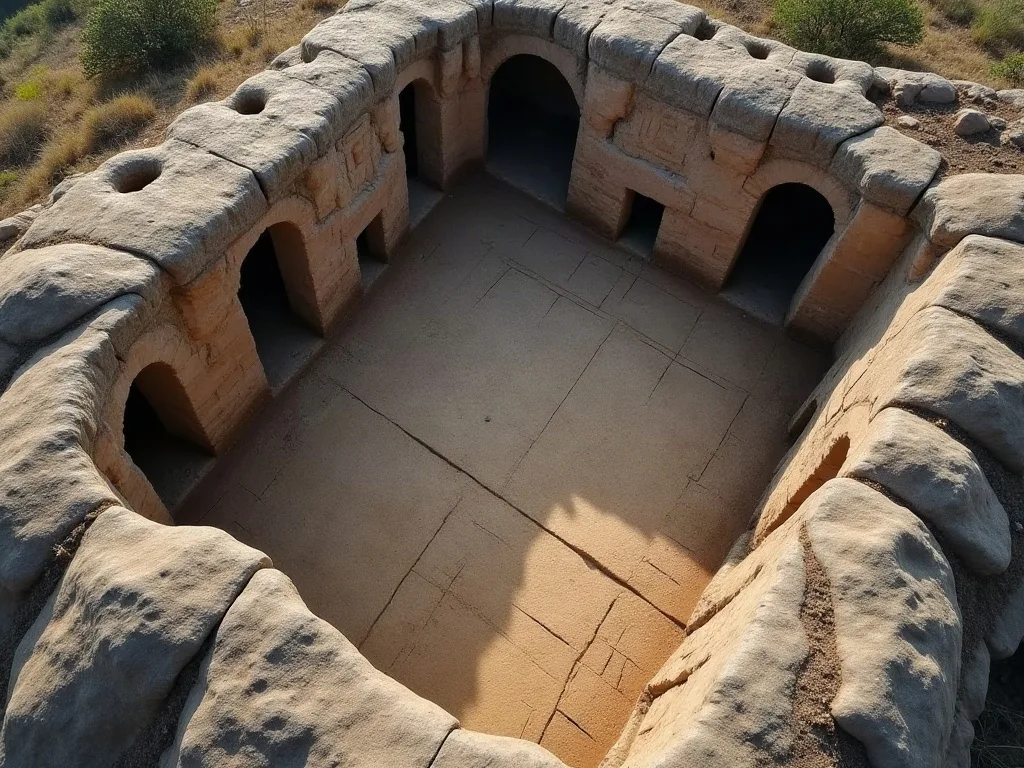
The scale staggers the mind. Beta Medhane Alem measures 36 meters long, 23 meters wide, and 11 meters deep, all of it cut from a single stone outcrop. Its roof is supported by thirty-four monolithic columns, each pillar carved from the bedrock and left in place. Workers removed the stone around and beneath them, leaving columns standing alone. The precision required was unforgiving. A mistake, a wrong strike, a miscalculation of grain and stress, could cause the entire structure to fail catastrophically. No second chances. No starting over. The craftsmen of Lalibela worked with a kind of controlled obsession that only faith and royal will combined could sustain.
Estimates vary wildly, but tradition says King Lalibela deployed two thousand workers per church, roughly. Work on some sites may have stretched across decades. The organization required was feudal and total. The king's authority extended from the grand vision down to the daily assignment of work gangs. Food had to be provisioned. Workers rotated between new churches and maintenance. Accidents happened; workers fell into the deep excavations or were crushed by falling stone. The human cost of carving Jerusalem from Ethiopian rock was substantial, though no chronicle recorded exact numbers. What mattered to the chroniclers was the result: churches that stood eternal, proof of a king's vision and a nation's faith.
The Layout: A Sacred Map Carved in Stone
The eleven or twelve rock churches of Lalibela (sources vary slightly; the core is eleven, with Beta Gabriel-Rafael sometimes counted separately) are arranged in two clusters, divided by a ravine that early monks called the Jordan River in echo of the Jordan that separates the lands in biblical geography.
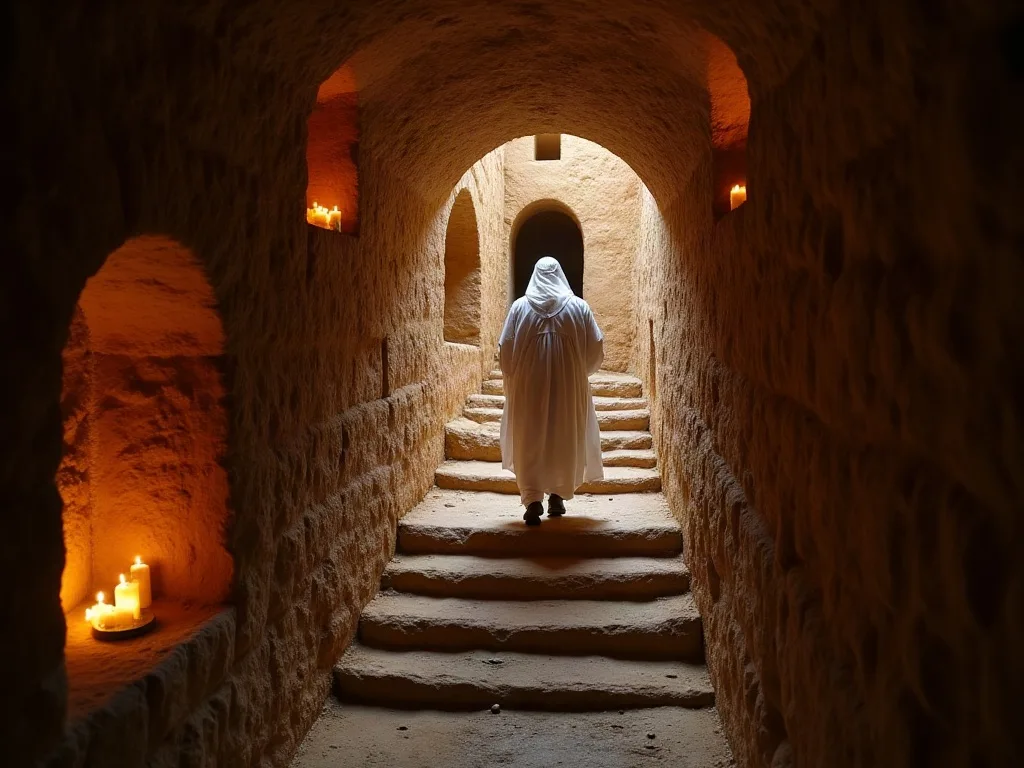
The northern group contains the churches most directly modeled on sites in Jerusalem: Beta Medhane Alem, the House of the Redeemer, stands as the cathedral equivalent of the Holy Sepulcher. Beta Maryam, the House of Mary, honors the mother of Christ and was likely a monastery as well as a church. Beta Maskal, the Church of the Cross, celebrates the finding of the True Cross by Saint Helena. The southern group includes Beta Dingane, the House of Judgment, and several others. All are connected by underground passages, trenches carved from the same rock, creating a subterranean pilgrimage route that initiates would follow in procession, moving from church to church in an enacted imitation of the pilgrim's journey to the Holy Land.
Each church is a Greek cross in form: four equal arms extending from a central altar. This shape carries profound meaning in Orthodox Christianity; it balances the vertical axis (matter and spirit) with the horizontal (earthly and divine love). The architectural form itself was a prayer. Enter Beta Golgotha, descend into the nave carved deep into the earth, and you are literally below the surface of the land, in a kind of tomb space. The light that falls through geometric windows creates a chiaroscuro effect, shadow and illumination dancing across the walls in a way that invited contemplative silence. The churches were not beautiful in the ornate sense. They are austere, spare, almost severe. Their beauty lies in the perfect geometry of their forms and the absolute conviction that shaped every cut and vault.
The Pillars of Faith: King Lalibela's Court and Inspiration
Lalibela did not dream this vision alone. He was part of a lineage of Ethiopian kings who claimed descent from Menelik I, the son of Solomon and the Queen of Sheba, according to the Kebra Nagast. This lineage claim was not mere mythology; it was political theology. It said that Ethiopian kings ruled not by conquest alone but by divine appointment, through a line older than many European royal houses. Lalibela was educated in the theology of the Ethiopian Orthodox Church, steeped in the liturgy of Ge'ez, immersed in the monastic traditions that had flourished in Ethiopia since the fifth century.
It is likely that Lalibela traveled to Jerusalem in his youth. Some chronicles suggest he spent time in the Holy Land before returning to Ethiopia to claim his throne. Whether or not this is historically verifiable, the vision he held of Jerusalem's sacred sites was vivid and intimate. He knew the layout of the Holy Sepulcher, the positions of the altars, the theological significance of each space. When he returned to Ethiopia and found pilgrimage to Jerusalem barred by war and distance, the idea crystallized: he would transpose that sacred geography onto his own land.
His builders were likely monks, master craftsmen, and engineers drawn from across the Ethiopian empire. The Ethiopian Orthodox monastic tradition was ancient and skilled in stone. For centuries, monks had built churches in caves, carved cells from cliff faces, created communities in rock shelters that still stand today (such as the Debre Damo monastery, perched impossibly on a mesa). Lalibela's builders inherited that tradition and elevated it to something unprecedented.
The Pilgrim's Experience: Then and Now
For a medieval Ethiopian Christian, the journey to Lalibela was itself a pilgrimage. You would climb into the highlands, travel on foot or horseback along narrow passes, eventually reach the plateau of Lasta, and descend into the rock churches as one descends into a sacred underworld. The churches were meant to be visited in sequence, following a prescribed order that mirrored the pilgrim's journey to Jerusalem. You would process from church to church, perform rituals in each, receive communion in the sanctuary carved from stone, and emerge feeling that you had, in some real and spiritual sense, journeyed to the Holy Land and been transformed.
The Ethiopian Orthodox tradition added its own spiritual layer. Pilgrims would arrive for the great feast days, Ganna (Christmas) or Fasika (Easter), and would witness liturgies in Ge'ez, the ancient language of Ethiopian Christianity. Priests robed in white cottas would chant the ancient prayers. Deacons would swing censers of frankincense. The smell of the stone, cool and mineral, would mix with the scent of incense and the sound of voices echoing off carved walls. The experience was immersive, primal, designed to transport the soul. For those who could not afford to journey to Jerusalem, Lalibela offered transformation without leaving home.
Architectural Genius: The Engineering of Paradox
What arrests engineers and architects even today is how Lalibela's builders solved the problem of carving a standing structure from above. When you remove the material around and beneath a church, you must ensure that columns and walls do not collapse into the void as you work. The solution was structural intuition and careful mathematics.
The workers would begin by identifying the columnar planes in the basalt. These natural fracture lines allowed them to cleave the stone more efficiently. They would work from the edges inward, removing stone in careful sequence, always supporting the structure as they went. As the church emerged from its rocky matrix, the weight distribution adjusted itself. The remaining columns bore the load. The walls braced against the sides of the excavation. The roof, initially connected to bedrock on all sides, gradually became a floating vault supported on pillars carved from the same stone.
One particularly audacious decision: Beta Medhane Alem has an interior colonnaded hall with no exterior walls except those formed by the bedrock on three sides. The roof is a monolithic slab, supported on interior columns. If a single interior column had fractured during construction, the entire roof could have collapsed. No document records if this ever happened, but the fact that the builders attempted it at all speaks to either supreme confidence or supreme faith. Perhaps both.
Modern structural analysis suggests that the builders understood load-bearing principles intuitively. The columnar basalt structure, cleaved carefully, naturally wanted to form columns that could bear weight. The builders read the stone and cooperated with its nature. This is not luck. This is craft knowledge passed down through generations of Ethiopian masons, refined through trial and experience.
Decline, Rediscovery, and Modern Pilgrimage
By the fifteenth century, Lalibela's prominence had begun to fade. The direct route to Jerusalem reopened for some pilgrims. The focus of Ethiopian Christian power shifted northward. Lalibela remained a site of pilgrimage for the Ethiopian Orthodox faithful, but it was no longer the singular symbol of royal power that Lalibela himself had intended it to be. The churches fell into disrepair in places. Roof and walls suffered damage from water seepage and weathering.
Western Europeans did not "discover" Lalibela until the sixteenth century, when Portuguese missionaries encountered the churches and were astounded. But for the Ethiopian faithful, Lalibela had never been lost. It remained a destination for pilgrims throughout the centuries, a place where the boundary between the carved and the sacred seemed permeable.
Modern pilgrimage to Lalibela began to flourish in the late twentieth century, as Ethiopia opened to tourism. Today, thousands of visitors arrive each year. Some are tourists seeking architectural marvels. Others are Orthodox pilgrims come to participate in the great feasts. The churches still function as places of worship. Priests still perform the ancient liturgies. Deacons still swing censers in the nave. The boundary between museum and monastery remains alive, unresolved, and sacred.
Lalibela's Echoes: The Architecture of Vision
Lalibela stands alone in the world of architecture. There is nothing else quite like it. It is not a copy of Jerusalem transported to Ethiopia; it is a theological interpretation of Jerusalem, a compressed and reimagined sacred geography that works on its own terms. It demonstrates a principle that recurs throughout world architecture and mythology: that the sacred can be made manifest through human intention, craft, and faith combined.
The churches reflect a theology of wholeness, of integration. Ethiopia is not separate from the Holy Land in spiritual terms; it is continuous with it. The same God who walked the streets of Jerusalem blesses the highlands of Lasta. The same faith that animated the first Christians animates Ethiopian Christians in the twelfth century. Carving the churches was not an admission that Ethiopians could not reach Jerusalem; it was a statement that Jerusalem is here, wherever the faithful gather in authentic devotion.
Lalibela's vision has echoed forward across centuries. It inspired later Ethiopian churches, monastic communities, and devotional practices. It became a symbol of Ethiopian Christian identity, particularly during times when Ethiopia's independence and sovereignty were threatened by colonial and regional powers. The churches represented continuity, unbroken lineage, the presence of faith in stone. No conqueror could erase them. No plague could diminish them. They stood, immutable.
In our age, when pilgrimage to distant holy sites has become more feasible but more complicated, Lalibela reminds us that sacred space is not purely geographical. It is enacted, created, sustained by intention and devotion. King Lalibela understood that the soul's journey to the holy is not measured in miles but in transformation. By carving his vision into rock, he proved that anywhere faith is genuine, anywhere the human heart turns toward the divine with sincerity, the holy is present.
Frequently asked questions about Lalibela: The Rock-Hewn Churches and King's Vision
Frequently asked questions
Who was King Lalibela and why did he build the churches?
King Lalibela (ruled circa 1181-1221) was an Ethiopian ruler who decided to build a sacred replica of Jerusalem in stone when pilgrimage to the Holy Land became dangerous due to the Crusades. According to Ethiopian tradition, he was marked at birth by bees that spiraled into the shape of a cross, signaling his divine destiny. The churches were meant to allow Ethiopian Christians to undertake a spiritual pilgrimage to Jerusalem without leaving their homeland, using the rock-hewn structures as a subterranean version of the holy sites of the Levant.
How many churches are there at Lalibela?
The main complex contains eleven rock-hewn churches, though some sources count twelve to include Beta Gabriel-Rafael. The churches are arranged in two clusters, divided by a ravine called the Jordan River. The largest, Beta Medhane Alem (House of the Redeemer), measures 36 meters long and was carved entirely from a single stone outcrop, supported by thirty-four monolithic columns.
How were the churches carved from rock without modern machinery?
Workers used hammer and chisel to follow the natural columnar planes in the basalt, carving downward from the top of the plateau to remove stone around and beneath the structures. The columnar grain of the rock allowed for precise fracturing. Workers proceeded methodically to avoid catastrophic collapse, removing material in careful sequence while maintaining load-bearing columns and walls. The process required skilled craftsmen, careful mathematics, and possibly decades of labor per church.
What is the layout of Lalibela's churches?
The churches map onto the sacred geography of Jerusalem. Beta Medhane Alem (House of the Redeemer) corresponds to the Holy Sepulcher; Beta Golgotha honors the place of the crucifixion; Beta Dingane is the House of Judgment; Beta Maryam honors Mary. The churches are connected by underground passages carved from the rock, creating a subterranean pilgrimage route. Each church is built in a Greek cross form, with four equal arms extending from a central altar.
Is Lalibela still an active place of worship?
Yes. Lalibela remains a functioning site of worship for the Ethiopian Orthodox Church. Priests still perform ancient liturgies in Ge'ez, the traditional language. The churches attract both Orthodox pilgrims, particularly during the feasts of Ganna (Christmas) and Fasika (Easter), and visitors seeking to experience the architecture and spiritual atmosphere. The site balances its role as both a pilgrimage destination and a cultural monument.
What was the theological purpose of carving churches underground?
Carving the churches downward into the earth served multiple purposes: it enacted a symbolic descent into the sacred underworld, akin to entering a tomb or sanctuary space; it created acoustic and atmospheric effects that enhanced the liturgical experience; and it demonstrated the king's theological conviction that holiness is not confined to one geographical location, but wherever faith gathers genuinely. The underground setting invited contemplation and prayer while the specific arrangement mapped the pilgrim's journey through Jerusalem's holy sites.
The Persistence of Vision in Stone
King Lalibela is long dead, his empire dissolved into Ethiopia's ever-changing political landscape. Yet his vision endures more vividly than most empires endure. The rock churches stand as a testament to what becomes possible when a ruler commits entirely to a spiritual vision and possesses the resources and will to see it through. They are not beautiful in the way ornate cathedrals are beautiful. They are profound in the way a perfect silence is profound.
To walk among the churches at dawn, when mist clings to the plateau and you descend into the carved depths, is to inhabit the mind of a twelfth-century king who refused to accept that distance could separate him from the holy. He carved his faith into stone. It remains.
Read the full book
Want the whole story?
The complete edition is an instant PDF download here, with a paperback on Amazon for selected titles.

Ethiopian
The Ethiopian Mythology Book: The Queen of Sheba, the Ark of the Covenant, and the Sacred Legends of Aksum
The Queen of Sheba, the Ark of the Covenant, and the Kingdom of Aksum
The sacred legends of Ethiopia, the one African kingdom never conquered: the Queen of Sheba and her journey to King Solomon, the Ark of the Covenant said to rest at Aksum, Waaqa the sky-god of the Oromo, and the saint-kings who carved the churches of Lalibela. Drawn from the Kebra Nagast and the living oral tradition.
More from Ethiopian
All articles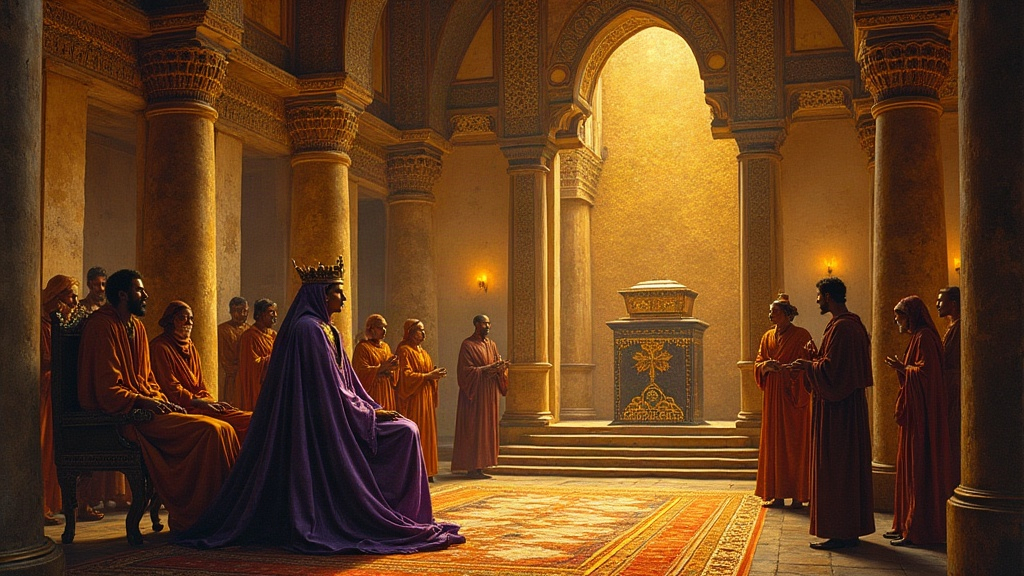
Ethiopian
The Kebra Nagast: Ethiopia's Sacred National Epic
The Kebra Nagast, Ethiopia's greatest literary and spiritual treasure, tells how the Queen of Sheba bore Solomon's son and founded a dynasty that would claim descent from Israel's king. Discover the epic that shaped an empire's identity and survives as living scripture today.

Ethiopian
Atete: Oromo Goddess of Fertility and Femininity
Atete embodies the generative power at the heart of Oromo spirituality. This goddess shapes the cycles of birth, growth, and renewal across the Ethiopian highlands and pastoralist cultures of the Horn of Africa.

Ethiopian
The Nine Saints: Founders of Ethiopian Monasticism
Nine Syrian monks arrived in Ethiopia in the 5th century and transformed its spiritual landscape. Discover how the Nine Saints founded Ethiopian monasticism, shaping the Tewahedo Church and a monastic tradition that endures today.
Ethiopian
Timkat: The Epiphany Festival and Ark Processions
Timkat celebrates Christ's baptism through Ethiopia's most sacred ritual: the parading of the Ark of the Covenant. This ancient festival weaves Old Testament reverence, water blessings, and centuries of royal ceremony into a living theology that still shapes Ethiopian Christianity today.