
Timkat: The Epiphany Festival and Ark Processions
Timkat celebrates Christ's baptism through Ethiopia's most sacred ritual: the parading of the Ark of the Covenant. This ancient festival weaves Old Testament reverence, water blessings, and centuries of royal ceremony into a living theology that still shapes Ethiopian Christianity today.
Contents
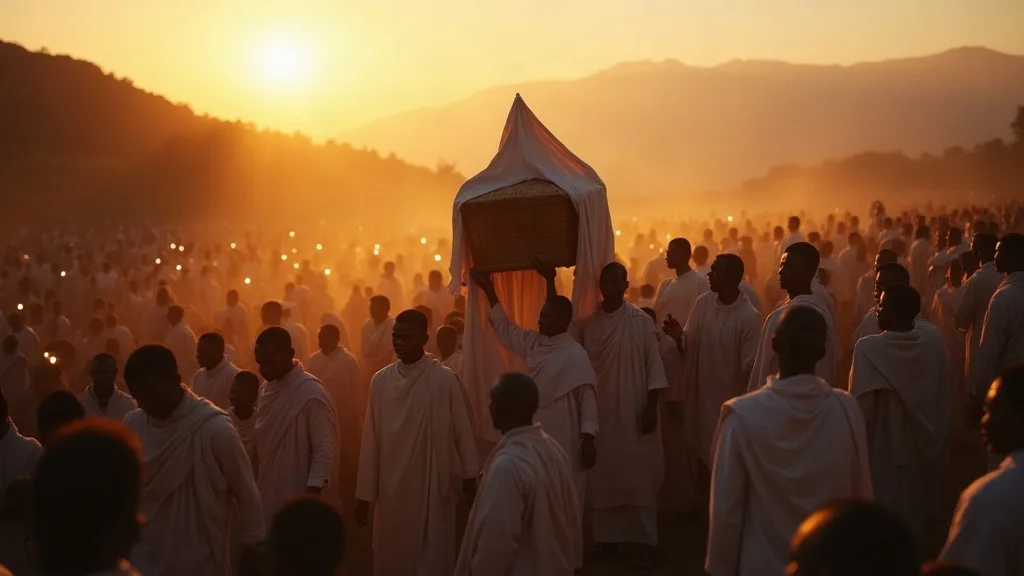
Before dawn in Addis Ababa, priests emerge from churches carrying veiled objects wrapped in embroidered cloth. By first light, thousands line the streets. The objects are not relics. They are sacred replicas of the Ark of the Covenant, the wooden chest that held the stone tablets of Moses. This is Timkat, the Ethiopian celebration of Epiphany, and the moment the Ark leaves its sanctuary marks the most holy day on Ethiopia's Christian calendar.
Timkat is not Christmas or Easter. It is something older, stranger, and more central to Ethiopian faith. A festival that exists nowhere else on earth quite like it does in Ethiopia, where the Ark is not a historical memory but a living presence, paraded each January through streets wet with holy water and lined with singing crowds.
The Ark and Ethiopian Tradition: Why Ethiopia Holds the Covenant
The roots of Timkat reach back to a claim that sounds legendary but has shaped Ethiopian Christianity for two thousand years: that the Ark of the Covenant rests in Ethiopia. Not symbolically. Not metaphorically. Actually there.
According to the Kebra Nagast, a 14th-century Ethiopian text that weaves history and sacred legend, the Ark came to Ethiopia during the reign of King Solomon and the Queen of Sheba (called Makeda in Ethiopic tradition). The story unfolds like this: their son, Menelik I, was raised in Jerusalem and later brought the Ark back to his mother's kingdom as a young man. It has remained in Ethiopia ever since, kept in the sanctuary of the Church of Our Lady Mary of Zion in Axum, guarded by a single monk whose entire life is devoted to its protection.
This is not fringe theology. The Ethiopian Orthodox Tewahedo Church teaches it as revealed truth. When Pope John Paul II visited Ethiopia in 1993, he was not permitted to see the Ark himself. No one is except the chosen guardian. The Church does not present evidence. It presents conviction.
The Kebra Nagast was compiled in the 14th century but draws on much older oral traditions. Medieval scholars in Ethiopia, particularly under the Solomonic dynasty, crystallized these legends into a unified narrative. The Ark became proof that Ethiopia was chosen by God. It made Ethiopia not a follower of Christianity but a keeper of its holiest treasure. Timkat is the annual reminder of that covenant. The festival says, every January: this place is sacred because what was most sacred rested here first.
Callout:
The Festival Itself: Water, Blessing, and Royal Ceremony
Timkat takes place on January 19 in the Ethiopian calendar (January 11 in the Gregorian calendar, though the Orthodox church sometimes adjusts the secular date). The festival lasts three days, but the central ritual happens on the night of Timkat Eve, called Ganna in Amharic.
On the evening before Timkat, Ethiopians fast and prepare for a solemn vigil. At midnight, church doors open. Priests, deacons, and monks emerge in a procession. The church's tabot, the replica of the Ark, is lifted from the sanctuary and placed on a priest's head, draped in layers of colored silk and velvet. The procession moves through the streets toward water: a river, a fountain, or a ceremonial pool. In Addis Ababa, processions converge toward the large pool at Fasilides Castle in Gondar, or towards the Blue Nile tributaries.
The music never stops. Drums pulse. Chants in Ge'ez, Ethiopia's ancient liturgical language, rise in layers of harmony. Priests and deacons move in slow, choreographed steps. Pilgrims line the route, many wearing white cotton shawls called shamas. It is not a solemn march. There is joy in it, almost ecstatic. People sing, clap, and dance behind the procession. Some move with spiritual fervor; others celebrate with the warmth of a community gathering.
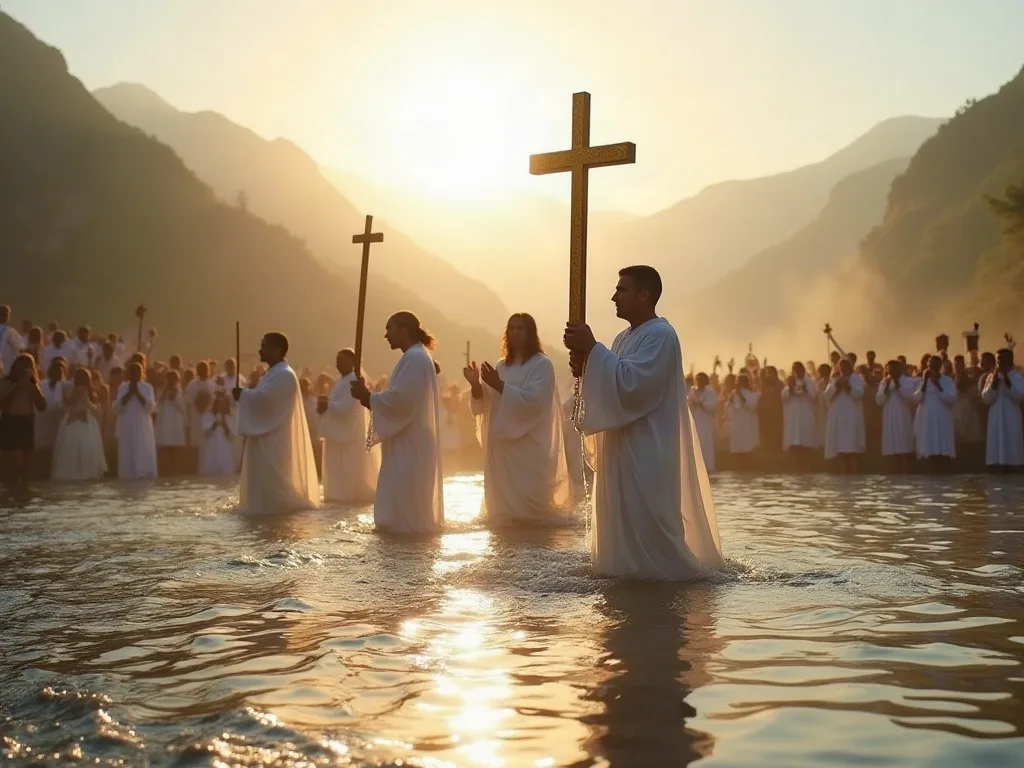
By dawn, the procession reaches the water. Here the blessing happens. A priest immerses a cross in the water three times while chanting prayers. The water is now sanctified. It is believed to have healing power, to forgive sins, to renew spiritual life. People rush to touch it, splash it on themselves, drink it. Parents bring children forward. The elderly wade in. In some places, the entire procession enters the water together, a mass baptismal moment that echoes Christ's baptism in the Jordan River.
After the water blessing, the tabot is processed back toward the church. By mid-morning, the sacred object is returned to its sanctuary. The festival concludes with a great feast called Debo. Families gather to eat injera (spongy flatbread) with stews, to drink tej (honey wine), and to celebrate together.
The three-day structure reflects both Old Testament Passover (a pilgrimage, a night vigil, a covenant renewal) and Christian Epiphany (the revelation of Christ, celebrated on January 6 in the Western calendar). Ethiopian Timkat compresses these threads into a single, coherent theology: the Ark represents God's unbreakable covenant with his people; the water represents Christ's baptism and spiritual renewal; the community gathered represents the chosen nation, the heirs of Solomon, the keepers of sacred truth.
The Procession and the Replica Ark: Ritual as Presence
What makes Timkat unique is the procession of the tabot. In Roman Catholic or Protestant churches, you might see a processional cross or a processional Bible. In Ethiopian Orthodox churches, the tabot is the most sacred object in the building other than the sanctuary itself where it permanently rests.
Every Ethiopian church has a tabot, regardless of size. Even a small rural chapel with a corrugated iron roof possesses one. The tabot is not an ornament. It is the heart of the church. The priest cannot celebrate the Eucharist without it. The tabot is the object that transforms a room from a meeting space into a sanctuary where God's presence concentrates.
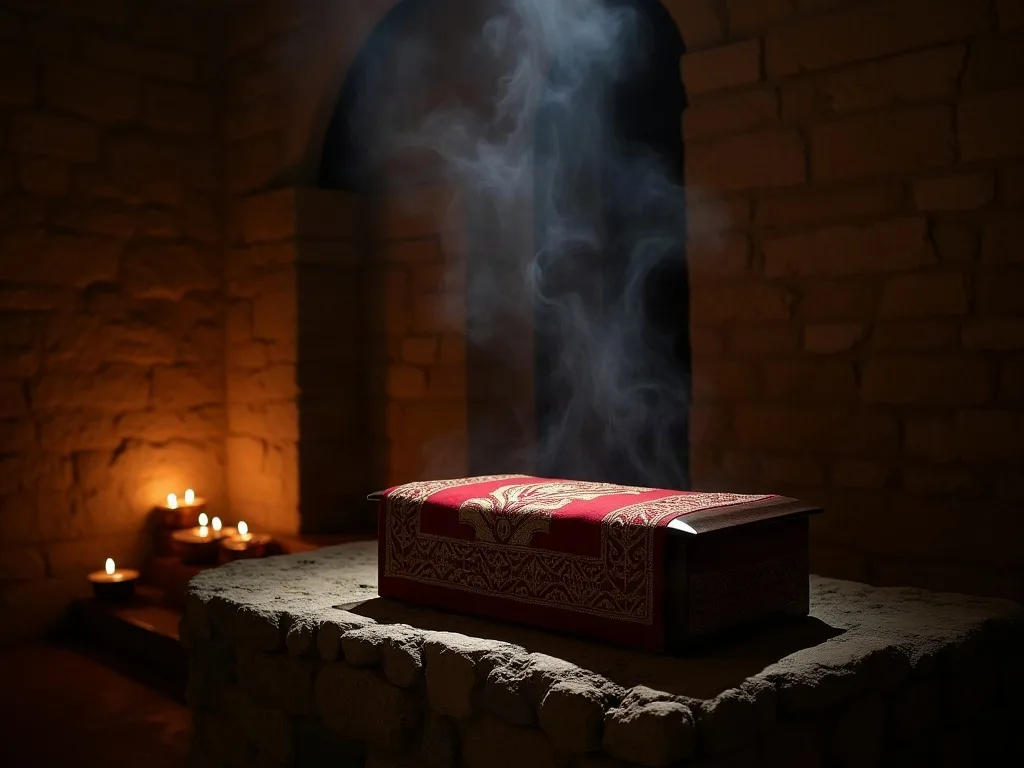
The tabot itself is typically a wooden box, small enough to rest on a priest's head, about the size of a child's coffin. It is made of wood and sits upon a stone altar table called the medhane. No one is allowed to touch it except the designated neburaed, the guardian priest. The neburaed spends his entire life in the church, never leaving, forbidden marriage, devoted entirely to the tabot's protection and honor.
During Timkat, the tabot is veiled in layers of fabric. A cloth of brilliant color, often embroidered with crosses and biblical scenes, drapes over it. It is then lifted, and the priest carries it on his head covered by a large canopy held by deacons. The procession becomes a moving sanctuary. It is not a statue. It is not a symbol. For the faithful, it is the presence of God's covenant made visible, made processional, made tangible enough to walk behind and honor in the flesh.
The replica tabot echoes the original. Medieval Ethiopian theology, drawing on the Kebra Nagast and other texts, taught that once the Ark arrived in Ethiopia, God protected it absolutely. Priests began creating replicas in churches to extend the spiritual presence of the Ark throughout the land. If you cannot visit Axum to see the Ark itself (and few can), you can go to your own church and encounter its replicated sanctity. Timkat makes that presence portable and communal.
Water Blessings: Baptism, Healing, and Covenant Renewal
The water ceremony at Timkat's heart is called the blessing of the waters. It is modeled on the Epiphany tradition of Christian liturgies around the world. But in Ethiopia, it takes on deeper resonances because it combines Christian baptism theology with Old Testament ideas of purification and with indigenous African water reverence.
Christ's baptism in the Jordan River, described in the Gospel of Mark and Matthew, is the gospel event that Epiphany celebrates. Jesus, though sinless, enters the water to fulfill righteousness. The heavens open. The Holy Spirit descends as a dove. God's voice speaks: "You are my beloved son; with you I am well pleased." For early Christianity, this moment revealed Christ as the Son of God. It was the epiphany, the revelation.
Ethiopian theology lays this Christian moment alongside the Old Testament Ark narrative. The Ark is the sign of God's covenant with the people of Israel. The Ark held the tablets of the law. The Ark was carried into every sacred place. To process the Ark and bless the waters is to say: God's covenant is not past. It lives now. The waters represent the blessing that comes when God's word is honored and fulfilled.
The healing power attributed to Timkat water is not merely metaphorical. Ethiopians report stories of illnesses healed by drinking or bathing in Timkat-blessed water. The Church does not claim medical miracles in the scientific sense. Instead, it teaches that spiritual healing and physical healing are intertwined. Water blessed during the renewal of God's covenant can purify both body and soul. Whether one interprets this as divine intervention or as the deep psychological power of ritual, millions of Ethiopians have experienced what they understand as healing during Timkat.
The water blessing also connects to pre-Christian African practices. Water sources in Ethiopia have long been sites of reverence, both for practical reasons (water is life in a semi-arid landscape) and for spiritual ones. Many Ethiopian regions have sacred springs and water sources associated with saints or with protective powers. Timkat does not replace these indigenous reverence systems. It absorbs them. The church's blessing of water at Timkat integrates Christian theology with Ethiopia's older relationship to water as a sacred, life-giving force.
The Solomonic Dynasty and Royal Timkat Ceremonies
For much of Ethiopian history, Timkat was not just a popular festival but a central act of royal ceremony. Kings processed with the Ark replicas. Kings participated in the water blessing. The festival became a way of renewing not just the people's covenant with God but the king's legitimacy as a ruler chosen by God.
The Solomonic dynasty, which ruled Ethiopia from the 13th century until 1974, claimed direct descent from Solomon and the Queen of Sheba. They did not merely claim it as a metaphor. The Kebra Nagast was a political as much as a theological text. It legitimized Solomonic rule by showing that Ethiopia's royal line carried God's covenant in their bloodline. When a Solomonic king processed the Ark at Timkat, the ceremony made that claim visible: the king was not just a human ruler but an heir of Solomon, a keeper of the sacred covenant.
Emperor Haile Selassie, the last of the Solomonic emperors (reigned 1930-1974), participated in Timkat processions. His presence transformed the festival into a state ceremony. Soldiers processed alongside priests. Diplomatic dignitaries attended. The festival became both deeply religious and unmistakably political, a moment when the emperor's divine right was publicly renewed.
After the revolution in 1974 and Haile Selassie's death, the political role of Timkat changed. The Marxist military government that followed viewed the festival with suspicion, seeing it as feudal and backward. But they could not suppress it. Too many Ethiopians held it sacred. Today, under the more recent governments, Timkat has regained prominence. Prime ministers and presidents participate. But the festival remains primarily a people's celebration, a religious ceremony that belongs to the church and to communities, not to the state.
Timkat in the Diaspora and Modern Ethiopia
Timkat is practiced everywhere Ethiopians gather, but the festival's character differs from place to place. In rural Ethiopia, Timkat is still the time when entire communities converge on churches and rivers. It is the moment when the bonds between families, villages, and the church are renewed together.
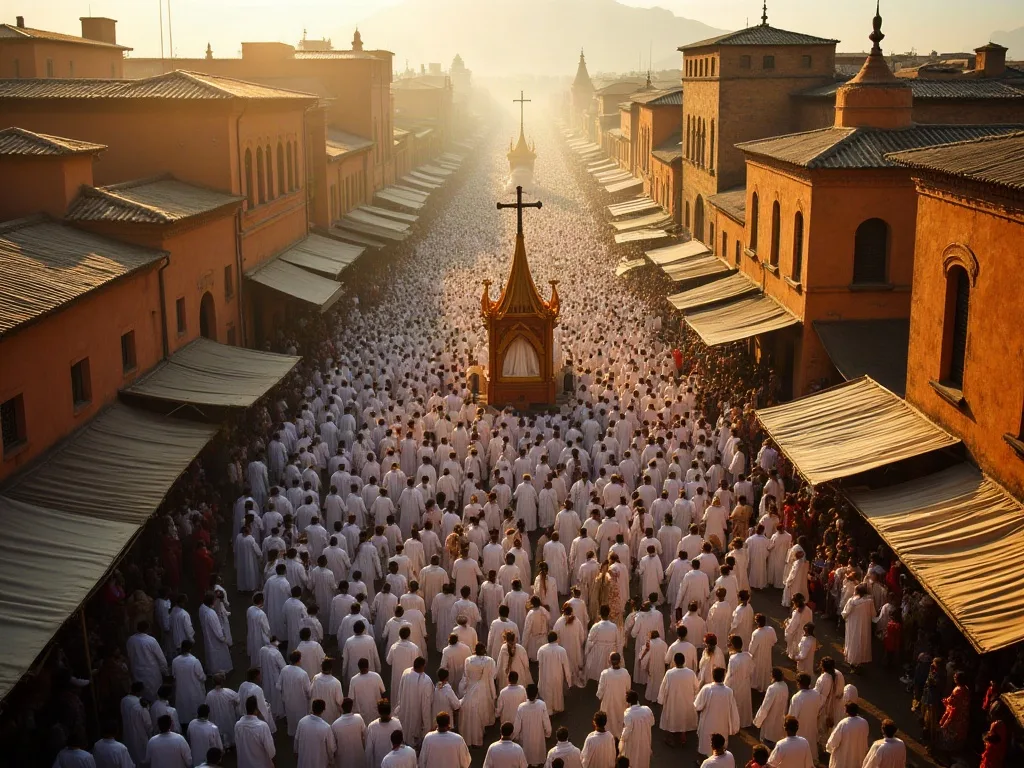
In Addis Ababa and Gondar, Timkat has become a public spectacle as well as a religious ceremony. Thousands gather. The church still performs its liturgy, but the festival now has a visible cultural dimension. It draws tourists, researchers, and Ethiopians from secular backgrounds who come to witness a tradition they recognize as central to Ethiopian identity.
In the diaspora, Ethiopian Orthodox communities in the United States, Europe, and the Middle East still observe Timkat. Churches hold vigils. Communities gather at rivers or fountains. The blessing of water happens even in places far from Ethiopia. These ceremonies are both smaller and more intimate. They preserve the tradition while adapting to exile. For diaspora Ethiopians, Timkat is one of the strongest bonds to homeland and heritage.
The festival's persistence, even amid Ethiopia's modern upheavals, speaks to its depth in Ethiopian consciousness. Timkat is not a ceremony that Ethiopians maintain out of obligation or habit. It is something they maintain because it answers a spiritual need and an identity need that nothing else satisfies quite the same way.
Scholars, Skeptics, and the Question of the Real Ark
Scholars who study Ethiopian Christianity take different approaches to the Ark question. Some, working within the Ethiopian Orthodox tradition itself, accept the Kebra Nagast as a reliable historical account, pointing to archaeological evidence of Aksumite prosperity and to written references to the Ark in ancient Ethiopian texts. Others view the Kebra Nagast as brilliant theological storytelling rather than literal history, but emphasize that for Ethiopians, the distinction may not matter the way it does for Western scholars. The story is true because it functions as truth in the lived experience of faith.
Archaeologists have found no physical evidence of the biblical Ark inside the Church of Our Lady Mary of Zion in Axum, but the Church has never permitted excavation. Radiocarbon dating would theoretically settle the question, but the church refuses such investigation as disrespectful. This refusal itself has theological meaning: some truths, the Church teaches, are not meant to be proven by external evidence. They rest on faith, on tradition, and on the authority of the church itself.
What is indisputable is that the belief in Ethiopia's guardianship of the Ark has shaped Ethiopian Christianity for at least two thousand years. Whether the original Ark of the Covenant rests in Axum or not, its presence as a lived religious reality has made Ethiopian faith distinct from every other Christian tradition on earth. Timkat exists because this belief exists. The festival would not make sense without it.
Timkat's Place in World Religious Observance
When compared to Epiphany celebrations in other Christian traditions, Timkat stands apart. Western churches (both Catholic and Protestant) observe Epiphany on January 6 with liturgies and sometimes processions, but water plays no central role. In the Eastern Orthodox churches of Russia, Greece, and the Middle East, Epiphany involves a blessing of water, but the ceremony lacks the centrality of the Ark tradition that makes Ethiopian Timkat distinctive.
Timkat resembles Passover in its structure: a nighttime vigil, a pilgrimage to water or a sacred site, a ritual of covenant renewal, and a communal feast. It resembles Hindu Maha Shivaratri in its all-night vigil and in its fusion of mythology (the Solomonic narrative) with lived spiritual practice. It resembles Islamic Eid ceremonies in the way it brings together entire communities in public spaces and reaffirms shared faith and identity.
But Timkat is finally sui generis. It is a Christian ceremony rooted in African royal tradition and African sacred geography, filtered through centuries of Ethiopian theological reflection. It cannot be fully understood by analogy. It must be encountered on its own terms.
The Question of Timkat's Ancient Roots
How old is Timkat really? The Ethiopian Orthodox Church traces it to ancient times, to the early centuries of Christianity in Ethiopia. Written records become clear only in the medieval period. The earliest liturgical texts describing the blessing of water appear in Ethiopian liturgical manuscripts from the medieval era, but these texts draw on older oral traditions.
Some scholars argue that Timkat's water-blessing component may echo pre-Christian Ethiopian water rituals, adopted and Christianized during Ethiopia's conversion in the 4th century (when King Ezana accepted Christianity). Others point out that water blessings appear in Christian liturgies across the Mediterranean world from early times, so Ethiopian practice may simply follow widespread Christian tradition.
What seems certain is that the tabot procession and the emphasis on the Ark are distinctively Ethiopian developments. The Kebra Nagast, though compiled in the 14th century, claims to record traditions far older. The story of Menelik bringing the Ark to Ethiopia may contain historical kernels (perhaps relating to trade routes, or to religious objects that arrived from Arabia or the Mediterranean during the Aksumite period), or it may be a purely theological creation meant to answer the question: why should we believe we are chosen? Timkat, in its current form, is at least medieval, likely drawing on older layers of tradition.
Frequently Asked Questions About Timkat
Frequently asked questions
Is the Ark of the Covenant really in Ethiopia, and can people visit it?
The Ethiopian Orthodox Tewahedo Church teaches that the Ark resides in the Church of Our Lady Mary of Zion in Axum, where it has been kept since the time of Menelik I. The church does not permit public viewing. Only the designated guardian, a monk called the Abbot of the Ark, is allowed to see it. No archaeological evidence has been released, and no independent verification is possible. Faith in the Ark's presence is central to Ethiopian Christianity, whether or not external proof can be found.
What exactly is a tabot, and why do churches need one?
A tabot is a wooden replica of the Ark of the Covenant, installed in the sanctuary of every Ethiopian Orthodox church. The priest cannot perform the Eucharist without a tabot present. It is not a decoration but the spiritual heart of the church, a physical anchor for God's presence. The tabot is always veiled and locked away except during Timkat, when it is brought out in procession.
When is Timkat celebrated, and why does the date seem to change?
Timkat is observed on January 19 in the Ethiopian calendar, which corresponds to January 11 in the Gregorian calendar. However, the Ethiopian church sometimes adjusts the date for pastoral or logistical reasons. In Addis Ababa and some other cities, celebrations may occur on the closest convenient weekend to ensure large public participation. The core festival always involves a pre-dawn vigil on Timkat Eve and water blessings at dawn.
Can non-Ethiopians or non-Orthodox Christians participate in Timkat?
Yes. Timkat is a public festival in Ethiopia, and observers from other faiths are generally welcomed to attend processions and witness the celebrations. However, participation in the church liturgy itself is reserved for Orthodox Christians, and the innermost sanctuaries remain off-limits to all but clergy. Many Timkat celebrations in major cities include both religious ceremonies and public cultural events that welcome diverse spectators.
How does Timkat connect to Christmas and Easter in the Ethiopian calendar?
The Ethiopian Orthodox Church observes all three major Christian festivals, but with different dates due to the Julian calendar still in use ecclesiastically. Ganna (Ethiopian Christmas) is celebrated on January 7; Fasika (Easter) is observed on the Orthodox date in spring. Timkat is considered the most sacred festival because it celebrates the revelation of Christ and, for Ethiopians, the presence of the Ark. The three festivals together mark the rhythm of the Ethiopian Christian year.
Timkat as Living Theology
The power of Timkat lies not in a single moment but in its weaving together of theology, history, community, and sacred geography. When an Ethiopian Orthodox Christian processes behind the tabot at dawn on Timkat morning, they are doing several things at once. They are honoring a tradition that connects them to medieval kings and ancient priests. They are asserting that Ethiopia is chosen, that the covenant is real, that the sacred is still present in the world. They are participating in a ritual baptism, a spiritual cleansing that echoes Christ's baptism. They are gathering as a community, renewing bonds, singing in Ge'ez, speaking the language of their ancestors.
Timkat is not a museum piece or a folklore performance. It is theology enacted. It is belief made visible, audible, and tangible. The water that flows, the drums that beat, the priests who move in ceremonial steps, the crowds who sing and dance and push forward to touch the blessed water these are not symbols of faith. For Ethiopians, they are faith itself, made present.
The Ark may or may not rest in Axum, but Timkat proves that it rests in the hearts of millions who believe. The festival endures because it answers a hunger that doctrine alone cannot satisfy: the hunger for the sacred to be present, for history to be alive, for a people to know that they are chosen and that God's covenant with them has not been forgotten."
Read the full book
Want the whole story?
The complete edition is an instant PDF download here, with a paperback on Amazon for selected titles.
Ethiopian
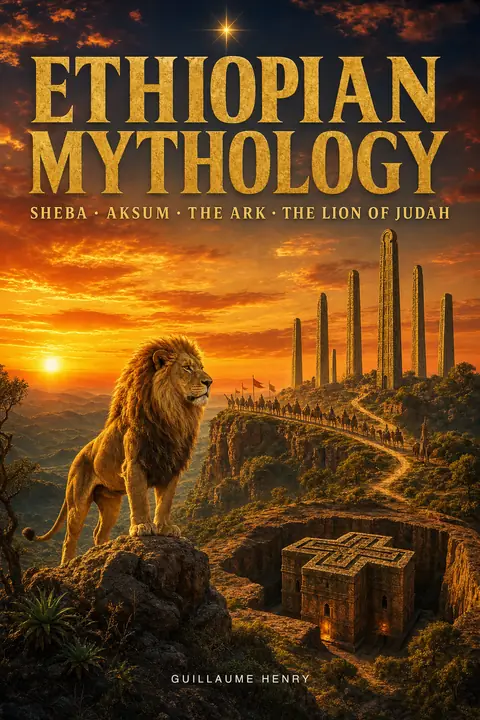
The Ethiopian Mythology Book: The Queen of Sheba, the Ark of the Covenant, and the Sacred Legends of Aksum
The Queen of Sheba, the Ark of the Covenant, and the Kingdom of Aksum
The sacred legends of Ethiopia, the one African kingdom never conquered: the Queen of Sheba and her journey to King Solomon, the Ark of the Covenant said to rest at Aksum, Waaqa the sky-god of the Oromo, and the saint-kings who carved the churches of Lalibela. Drawn from the Kebra Nagast and the living oral tradition.
More from Ethiopian
All articles
Ethiopian
The Kebra Nagast: Ethiopia's Sacred National Epic
The Kebra Nagast, Ethiopia's greatest literary and spiritual treasure, tells how the Queen of Sheba bore Solomon's son and founded a dynasty that would claim descent from Israel's king. Discover the epic that shaped an empire's identity and survives as living scripture today.
Ethiopian
Lalibela: The Rock-Hewn Churches and King's Vision
Discover how King Lalibela carved twelve churches from solid rock in Ethiopia's highlands, creating a sacred landscape that blends ancient Christian devotion with legendary ambition. A journey to Jerusalem without leaving home.

Ethiopian
Atete: Oromo Goddess of Fertility and Femininity
Atete embodies the generative power at the heart of Oromo spirituality. This goddess shapes the cycles of birth, growth, and renewal across the Ethiopian highlands and pastoralist cultures of the Horn of Africa.
Ethiopian
The Nine Saints: Founders of Ethiopian Monasticism
Nine Syrian monks arrived in Ethiopia in the 5th century and transformed its spiritual landscape. Discover how the Nine Saints founded Ethiopian monasticism, shaping the Tewahedo Church and a monastic tradition that endures today.