

Menelik I: Founder of the Solomonic Dynasty
Menelik I stands at the crossroads of legend and kingship, the son of Solomon and Sheba who carried the Ark of the Covenant to Ethiopia and founded a dynasty that endured three millennia.
Contents
The boy arrives at Jerusalem as a stranger. He carries nothing but his mother's face and his father's blood. By the time he leaves, he carries something no army could have taken by force: the most sacred object in the ancient world.
This is the story of Menelik I, the figure Ethiopian tradition places at the very origin of its royal line, the son born between two legendary rulers, a young man who became the bridge between Jerusalem and Aksum. His story is not merely a foundation myth. It is a claim about cosmic legitimacy, divine favor, and the idea that an African kingdom stood at the very center of God's plan for humanity.
The account survives in extraordinary detail inside the Kebra Nagast (pronounced "KEB-ra NA-gast"), which means "Glory of Kings" in Ge'ez, the ancient Ethiopian liturgical language. This text, compiled in its current form around the 14th century AD but drawing on sources reaching back centuries earlier, is the primary sacred narrative of Ethiopian Christianity. Every claim about Menelik I made here draws directly from it.
Who Was the Queen of Sheba, Menelik's Mother?
Every story about Menelik I: Founder of the Solomonic Dynasty begins one generation earlier, with his mother.
The Kebra Nagast calls her Makeda, Queen of Ethiopia, though she is also known in the Hebrew Bible as the Queen of Sheba and in the Islamic tradition as Bilqis. She rules a vast kingdom, commands enormous wealth, and hears rumors of Solomon's wisdom spreading across the ancient world like smoke across a plain.
Makeda travels to Jerusalem, a journey of weeks across desert and mountain. She arrives with gold, spices, and hard questions. Solomon answers every one. The two rulers feast together, trade riddles, and something deeper than diplomacy begins between them.
The Kebra Nagast is direct about what happens next. Solomon asks Makeda to stay the night. She agrees, but only on the condition that he take nothing of hers without permission. He agrees, but sets his own trap: the evening meal is heavily salted. Makeda wakes in the night, desperate for water. Solomon names the water "something of his" and calls the debt even. She drinks. The agreement is sealed.
From that night, she conceives a son.
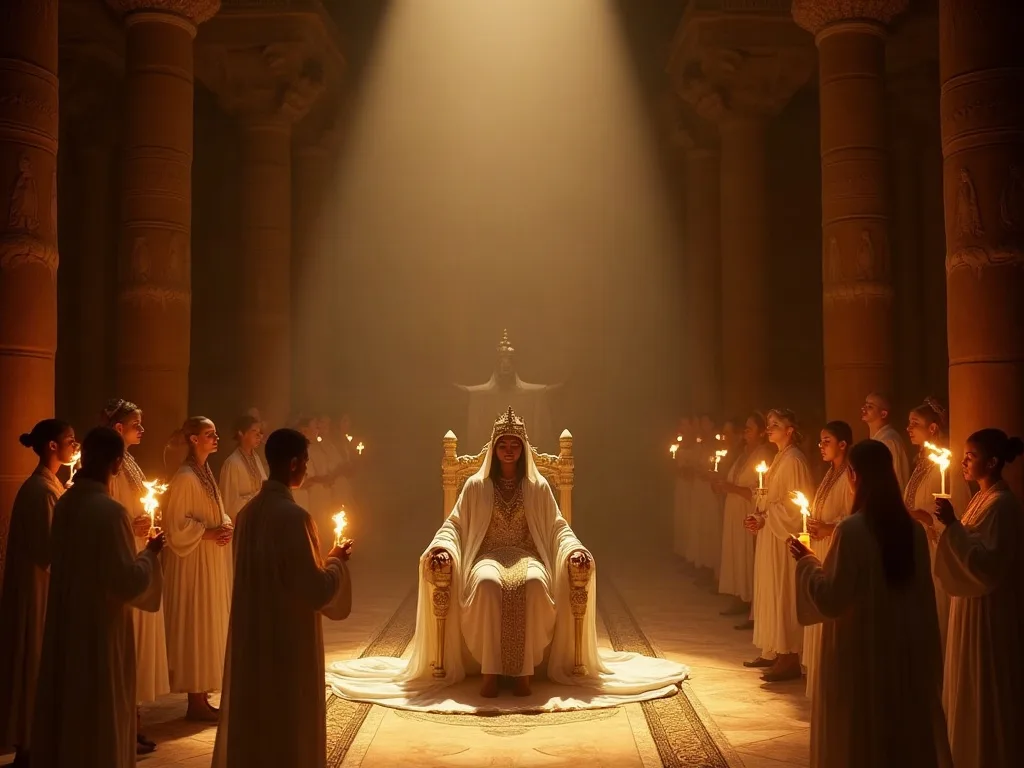
Makeda returns to Ethiopia before the child is born. She raises him alone in her kingdom, telling him about his father when the time is right. The boy grows tall and strong, and in him people can already read the face of the great king of Jerusalem.
The Journey to Jerusalem: A Son Meets His Father
When Menelik reaches young adulthood, he decides he must see his father. The Kebra Nagast frames this not as a personal longing but as a sacred duty. He travels north to Jerusalem, and the meeting is electric.
Solomon looks at the young man and sees his own reflection aged down by twenty years. He weeps. He recognizes his son immediately, before a word is spoken. He calls him by the name that echoes through the Ethiopian tradition forever: David, after his own grandfather, the shepherd-king who wrote the Psalms.
Solomon wants Menelik to stay. He offers him Jerusalem, succession, the throne of Israel. The young man declines with a respect that the Kebra Nagast treats as wisdom rather than insult. He is Ethiopian. His people need him. His mother needs him. His place is in the south.
Solomon accepts the choice, but he wants his son to carry Israel with him. He calls together the firstborn sons of the priests and elders of Jerusalem, three hundred young men, and commands them to accompany Menelik back to Ethiopia. Israel's wisdom, blood, and tradition would travel south with the king's son.
But the young men grieve. They are leaving their homeland, their Temple, their sacred ark.
And so they do something extraordinary.
The Taking of the Ark: How the Covenant Traveled to Ethiopia
The Ark of the Covenant, in the Hebrew tradition, is the wooden chest covered in gold that God commanded Moses to build in the desert, as described in the book of Exodus. It housed the stone tablets of the Ten Commandments. It was the physical meeting point between heaven and earth, the place where God's presence rested above two golden cherubim. In Solomon's Temple, it sat in the Holy of Holies, the innermost room no ordinary person could enter.
Azarias, son of the high priest Zadok and one of the three hundred young men assigned to escort Menelik, devises a plan. He removes the Ark from the Temple in the night, replacing it with a replica so exact that the priests do not notice the exchange for days.
The Kebra Nagast does not present Azarias as a thief. It presents him as a vessel of divine will. The Ark itself, the text insists, wanted to go. The angel of God had already prepared the way. Menelik and his companions travel back to Ethiopia at miraculous speed, the wagons floating above the ground, the journey compressed by heavenly assistance.
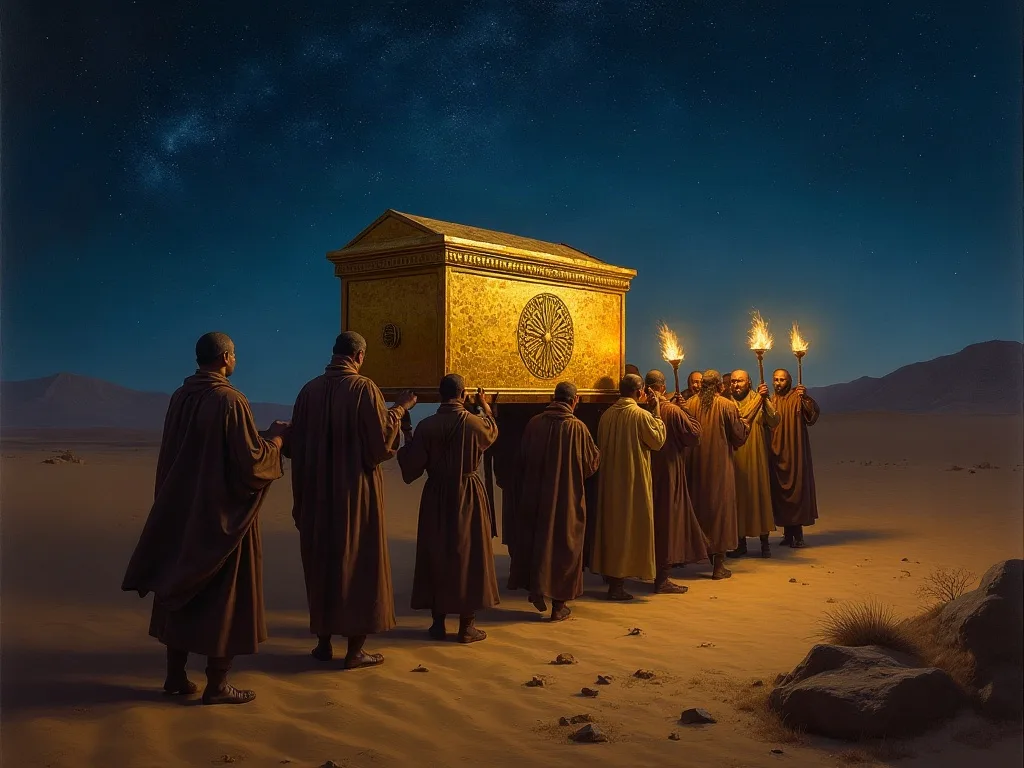
When Solomon finally learns what has happened, he is grief-stricken. But then his counselors speak a deeper truth: God has permitted this. If the Ark has gone to Ethiopia, it is because God has chosen to go there. The covenant has not been stolen. It has been transferred.
This moment is the theological heart of the Menelik I story. It is not simply about one man's lineage. It is the claim that Ethiopia became the new chosen nation, the keeper of the most sacred object in Abrahamic tradition, the rightful heir to the covenant that began with Abraham and ran through Moses to Solomon.
The Solomonic Dynasty: What "Founding" Actually Meant
When Menelik returns to Ethiopia, his mother Makeda abdicates in his favor. He is crowned the first king of what would become the Solomonic Dynasty, the royal line that Ethiopian tradition claims ran, with one major interruption, from this moment all the way to Emperor Haile Selassie I, who was deposed in 1974.
That interruption matters. The Zagwe Dynasty ruled Ethiopia from roughly the 10th to the 13th century AD, and when the Solomonic line was restored in 1270 by Yekuno Amlak, the Kebra Nagast was compiled and promoted precisely to legitimize that restoration. The text served as a political instrument as much as a spiritual one: it told the Ethiopian people and the world that the rightful kings descended from Solomon and Menelik had reclaimed what was theirs.
The dynasty Menelik founded drew its authority from several interlocking claims:
- Direct blood descent from King Solomon of Israel
- Custodianship of the Ark of the Covenant, which Ethiopian tradition says rests today in the Chapel of the Tablet in Aksum
- A divine mandate confirmed by prophecy and by the physical presence of the most sacred relic in Abrahamic faith on Ethiopian soil
This is why the Solomonic Dynasty carried such weight for so long. It was not merely a political arrangement. It was a theological statement written in flesh and stone.
Menelik in the Kebra Nagast: Primary Sources and Narrative Structure
The Kebra Nagast is a text of 117 chapters, written in Ge'ez and translated into Arabic before it reached its definitive Ethiopian form. The most important modern scholarly translation is by E.A. Wallis Budge (1922), though later scholars including Edward Ullendorff and David Hubbard have refined our understanding of its composition history.
The text blends several genres at once. It is part royal chronicle, part theological argument, part apocalyptic vision. Early chapters establish the cosmic plan: that wisdom, embodied by Solomon, was always destined to travel from Israel to Ethiopia. Later chapters describe Menelik's return and his establishment of a kingdom modeled on Israelite law, complete with a Sabbath observance, dietary laws, and a priestly class.
One passage is particularly striking. After Menelik is crowned, the Kebra Nagast records his mother's speech to the Ethiopian people, in which Makeda declares that the kingdom has passed not simply to a new king but to a new dispensation. Ethiopia, she says, has been elevated above all nations by the grace of God. The arrival of the Ark seals this. The text frames the transfer not as a theft but as a fulfillment.
Scholars such as Stuart Munro-Hay, who wrote extensively on Aksum and its connections to ancient Israel, have noted that while no archaeological evidence confirms the Ark's presence at Aksum, the Kebra Nagast narrative reflects genuine historical connections between Ethiopia and ancient Semitic cultures, connections visible in the Ge'ez language itself, which shares roots with ancient South Arabian scripts.

The Ark at Aksum: What Ethiopian Christianity Claims Today
The city of Aksum (also spelled Axum), located in the Tigray region of northern Ethiopia, is one of the oldest continuously inhabited cities in the world. At its peak between the 1st and 7th centuries AD, the Aksumite Empire was a major Red Sea trading power, one of the four great empires of the ancient world alongside Rome, Persia, and China, according to the 3rd-century Persian prophet Mani.
Ethiopian Christianity, which dates its formal founding to the 4th century AD when King Ezana of Aksum converted, holds that the Ark of the Covenant rests inside the Chapel of the Tablet (called Bete Maryam in some sources), a small sanctuary adjacent to the Cathedral of Our Lady Mary of Zion in Aksum. Only one man, the guardian monk, is permitted to see it. He lives there until his death, when a successor is chosen.
No independent verification of the Ark's presence exists. But that is precisely the point, from the Ethiopian perspective. The Ark does not need to be verified by outsiders. The guardian's whole life is its protection. The tradition does not invite scrutiny; it demands faith.
For millions of Ethiopian Orthodox Christians, this is not mythology in the sense of a story from the distant past. It is living reality. Replicas of the Ark, called tabot (singular), are housed in every Ethiopian Orthodox church and are carried in procession during festivals such as Timkat, the Ethiopian Epiphany. The tabot are wrapped in cloth and treated with the same reverence due the original. This ritual practice, still alive in thousands of churches across Ethiopia and the Ethiopian diaspora, is the direct inheritance of Menelik's journey.
Menelik's Legacy in Ethiopian Identity and the Rastafari Tradition
The reach of Menelik I extends far beyond Ethiopian borders and far beyond the 14th century.
When Haile Selassie I was crowned Emperor of Ethiopia on November 2, 1930, his full title ran: "His Imperial Majesty Haile Selassie I, King of Kings, Lord of Lords, Conquering Lion of the Tribe of Judah, Elect of God." Every word of that title is a direct echo of the Kebra Nagast and the Menelik tradition. Haile Selassie presented himself as the 225th descendant of Solomon and Menelik. His coronation was attended by dignitaries from across the world, and the Ethiopian constitution of 1955 formally enshrined his Solomonic descent as the legal basis of imperial authority.
For the Rastafari movement, which emerged in Jamaica in the 1930s in the years after Selassie's coronation, Menelik's story provided a theological foundation of the first order. If Selassie was the living descendant of Solomon and David, and if Ethiopia was the true keeper of the Covenant, then Africa held the spiritual center of the world. Marcus Garvey's calls for African redemption and the return of the diaspora gained a mythological framework drawn directly from the Kebra Nagast.
Bob Marley, Peter Tosh, and countless Rastafari artists carried the Menelik narrative into global popular culture without always naming it explicitly. Every invocation of "Zion" in Rastafari theology is in part a reference to the Jerusalem that Menelik carried south. Every celebration of Ethiopian kingship points back to the boy who arrived in Jerusalem as a stranger and left as the father of a dynasty.
Menelik I Compared to Other Founding-King Myths
It is worth pausing to place Menelik I: Founder of the Solomonic Dynasty alongside other founding myths that shaped royal traditions around the world.
Menelik I (Ethiopian)
Menelik is born of a consensual union between two ruling monarchs. His legitimacy rests on divine bloodline plus a sacred object, the Ark, transferred through divine will. His founding act is return, not conquest. The Kebra Nagast presents him as humble, obedient to both parents, and chosen by God rather than seizing power. His dynasty's authority is theological before it is military.
Romulus (Roman)
Romulus, the legendary founder of Rome, is born under violence (the imprisonment of his mother Rhea Silvia by the god Mars), survives exposure as an infant, and founds the city through fratricidal conflict, killing his twin Remus. Rome's authority rests on military strength and divine favor expressed through augury. The founding act is territorial, not custodial.
The contrast is sharp. Menelik's power derives from what he carries and who he is, not from conquest. This shapes Ethiopian political theology in a very specific way: the king is a steward of the sacred, not a conqueror who imposes it.
A similar structural comparison applies to Romulus and other Mediterranean founding figures, as well as to divine kingship traditions in Egyptian mythology, where pharaohs claimed descent from Ra or Horus to anchor their rule in cosmic order.
Frequently Asked Questions About Menelik I
Frequently asked questions
Is Menelik I a historical figure or purely a legend?
The honest answer is that Menelik I belongs to what scholars call "mythologized history." No contemporary inscription or archaeological find from his supposed era independently confirms his existence. However, the Kebra Nagast draws on older oral and textual traditions, and genuine historical links between Ethiopia and ancient Semitic cultures are well-documented through linguistics, trade records, and religious practice. The Solomonic Dynasty itself is historically attested from the 13th century onward.
Where is the Ark of the Covenant today, according to Ethiopian tradition?
Ethiopian Orthodox tradition holds that the Ark rests in the Chapel of the Tablet in Aksum, Tigray, Ethiopia. A single guardian monk, forbidden from leaving and forbidden from allowing anyone else to view the Ark, watches over it for life. No outside verification has been permitted. The practice of housing tabot replicas in every Ethiopian church flows directly from this belief.
What is the Kebra Nagast and when was it written?
The Kebra Nagast (Ge'ez for "Glory of Kings") is the sacred Ethiopian text that records the story of Makeda, Solomon, and Menelik. It was compiled in its current Ge'ez form around 1314 AD by the monk Yeshaq of Aksum, though it draws on older Arabic, Coptic, and Ethiopian sources. E.A. Wallis Budge produced the first major English translation in 1922.
How did the Menelik story influence the Rastafari movement?
When Haile Selassie I was crowned in 1930 claiming Solomonic descent from Menelik, Rastafari theologians in Jamaica identified him as the fulfillment of biblical prophecy. The Kebra Nagast became a sacred text in the movement. Ethiopia's role as keeper of the Ark and the idea of Africa as the spiritual center of the world directly shaped Rastafari theology, music, and the concept of Zion as a real, African place of divine presence.
Did Solomon know the Ark had been taken to Ethiopia?
According to the Kebra Nagast, Solomon did not discover the Ark's removal until after Menelik and his party had already traveled far south. His initial grief gives way to acceptance when his counselors interpret the event as God's will, a divine decision to relocate the covenant's center. The text presents the transfer as providential rather than criminal.
The Menelik Myth in Modern Scholarship and Living Practice
Academic interest in the Menelik I tradition has grown considerably since the 20th century, partly because of the global visibility of Haile Selassie and the Rastafari movement, and partly because scholars have grown more attentive to the depth and sophistication of African textual traditions.
Stuart Munro-Hay's work on Aksum placed the Kebra Nagast in its archaeological and political context. Richard Pankhurst, one of the foremost historians of Ethiopia, traced how the Solomonic narrative functioned as a living constitutional document across multiple centuries. More recently, scholars like Wendy Laura Belcher, who co-produced a new critical edition of the Kebra Nagast, have emphasized the text's role as a work of African literary genius rather than a simple political tool.
What makes the story of Menelik particularly alive in the present is not only its scholarly afterlife but its ritual one. Every January, during the festival of Timkat, Ethiopian Orthodox Christians carry tabot through the streets wrapped in silk and gold brocade, re-enacting the procession of the Ark in a ceremony that has continued for over a thousand years. The priests who lead these processions are, in a direct sense, performing the memory of Menelik's return journey.
The boy who walked into Jerusalem and walked out carrying a dynasty continues to move through history. His footsteps are audible in every Ethiopian church, in every Rastafari song about Zion, in every recitation of a royal title that begins with the words "King of Kings, Lord of Lords, Conquering Lion of the Tribe of Judah."
The Kebra Nagast ends with a vision of the last days, when the kings of Ethiopia will stand at the right hand of God. Menelik is where that vision begins. The story is still being told.
Read the full book
Want the whole story?
The complete edition is an instant PDF download here, with a paperback on Amazon for selected titles.
Ethiopian
The Ethiopian Mythology Book: The Queen of Sheba, the Ark of the Covenant, and the Sacred Legends of Aksum
The Queen of Sheba, the Ark of the Covenant, and the Kingdom of Aksum
The sacred legends of Ethiopia, the one African kingdom never conquered: the Queen of Sheba and her journey to King Solomon, the Ark of the Covenant said to rest at Aksum, Waaqa the sky-god of the Oromo, and the saint-kings who carved the churches of Lalibela. Drawn from the Kebra Nagast and the living oral tradition.
More from Ethiopian
All articles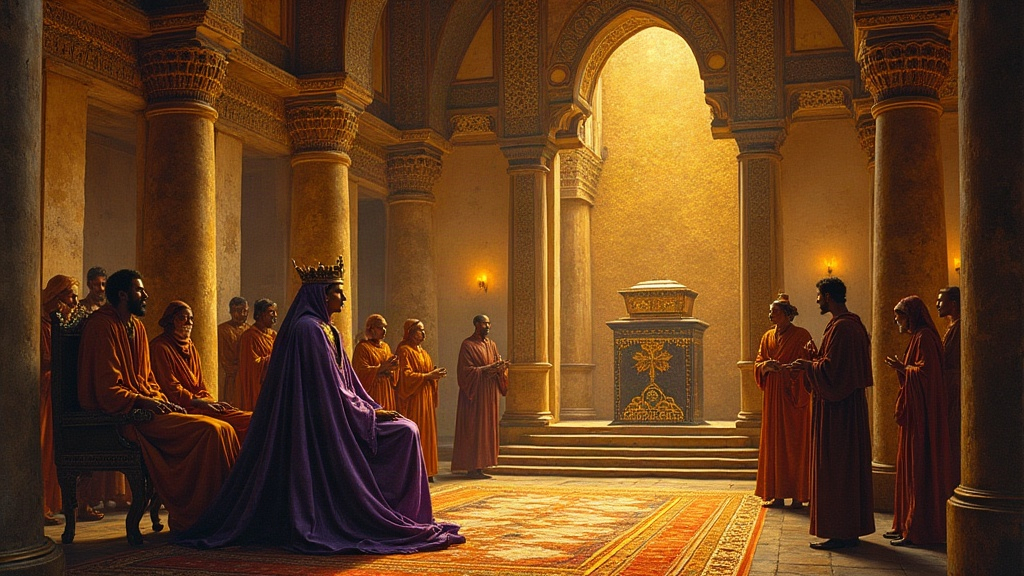
Ethiopian
The Kebra Nagast: Ethiopia's Sacred National Epic
The Kebra Nagast, Ethiopia's greatest literary and spiritual treasure, tells how the Queen of Sheba bore Solomon's son and founded a dynasty that would claim descent from Israel's king. Discover the epic that shaped an empire's identity and survives as living scripture today.
Ethiopian
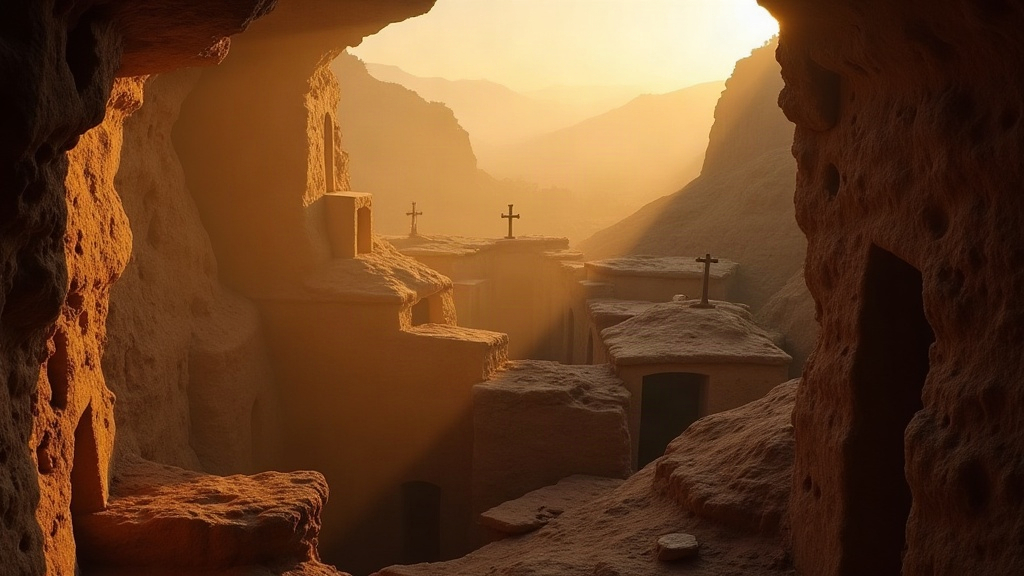
Lalibela: The Rock-Hewn Churches and King's Vision
Discover how King Lalibela carved twelve churches from solid rock in Ethiopia's highlands, creating a sacred landscape that blends ancient Christian devotion with legendary ambition. A journey to Jerusalem without leaving home.

Ethiopian
Atete: Oromo Goddess of Fertility and Femininity
Atete embodies the generative power at the heart of Oromo spirituality. This goddess shapes the cycles of birth, growth, and renewal across the Ethiopian highlands and pastoralist cultures of the Horn of Africa.

Ethiopian
The Nine Saints: Founders of Ethiopian Monasticism
Nine Syrian monks arrived in Ethiopia in the 5th century and transformed its spiritual landscape. Discover how the Nine Saints founded Ethiopian monasticism, shaping the Tewahedo Church and a monastic tradition that endures today.