
The Ark of the Covenant in Axum: Ethiopia's Holiest Relic
The Ark of the Covenant, said to rest in Axum's Chapel of the Tablet, is Ethiopia's most sacred object. Explore how this biblical relic became central to Ethiopian Christianity, the legends surrounding its arrival, and the monastery that guards it.
Contents
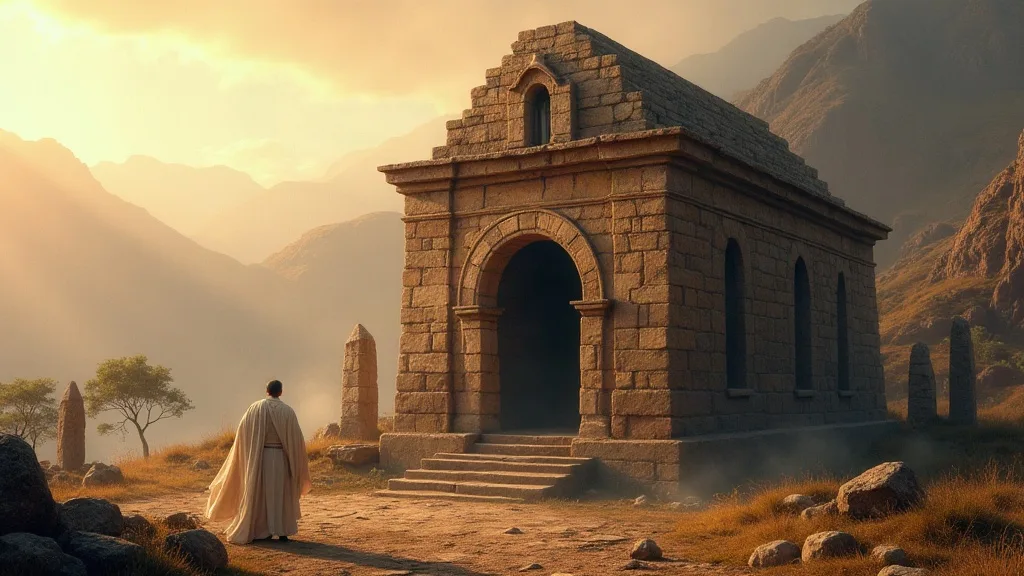
In the highlands of northern Ethiopia, in a city that once rivaled Rome and Persia as a superpower, sits a small stone chapel. Inside, only the high priest may enter. What lies behind that locked door, no outsider has confirmed for centuries. The Ethiopians call it the Tabot, the Ark. They believe it is the very chest that Moses carried down from Mount Sinai, the one that held the stone tablets inscribed with God's law.
This is not legend treated lightly. For nearly 2,000 years, the Ark of the Covenant in Axum has shaped Ethiopian faith, kingship, and sovereignty. It is why pilgrims walk barefoot across rocky ground. It is why armies marched into battle with its name on their lips. It is why Axum became not just a kingdom, but a holy nation.
The Biblical Origins and Journey to Ethiopia
The Ark of the Covenant first appears in the Hebrew scriptures as the chest built by Bezalel, a master craftsman, to hold the two stone tablets of the Ten Commandments. According to the Book of Exodus, it measures three and three-quarter feet long, two and one-quarter feet wide, and two and one-quarter feet tall. Made of acacia wood and covered in pure gold, it carries golden rings on its sides so priests could bear it on poles. Above it rests the mercy seat, a solid gold slab flanked by two golden cherubim with wings touching above the center. This was the holiest object in Jewish practice, so sacred that only the high priest could approach it, and then only once a year, on the Day of Atonement.
For centuries, the Ark remained in the First Temple, built by Solomon in Jerusalem around 960 BC. Then the Babylonians came. In 586 BC, King Nebuchadnezzar II's armies laid siege to Jerusalem. The city fell. The temple burned. The Ark vanished from historical view.
What happened next becomes legend, but legend shaped by real geography and real historical currents. According to Ethiopian tradition, preserved in texts like the Kebra Nagast (The Glory of Kings), written in the 14th century but recording much older oral history, the Ark was not lost in Babylon. Instead, it traveled south.
The Kebra Nagast tells of how Menelik I, the son of Solomon and the Queen of Sheba (called Makeda in Ethiopian tradition), returned to Ethiopia after his childhood in Jerusalem. Menelik, the story goes, did not return empty-handed. He carried with him the Ark itself, smuggled out by high priests who wished to preserve it from desecration. The journey took the Ark through the Red Sea, across trade routes known to Ethiopians and Arabians, and finally to the ancient kingdom of Axum, which by the 1st century AD was already a major power controlling the spice trade between the Mediterranean and India.
This narrative, which Ethiopian Christians hold as historical truth, transforms Ethiopia from a distant periphery into the true guardian of Israel's holiest relic. The Ark did not scatter or perish. It found sanctuary in the mountains.
Axum as a Center of Power and Faith
Axum, called Aksum in scholarly texts, rose to prominence between the 1st and 7th centuries AD. At its height, it was one of only four great empires of the world, alongside Rome, Parthia, and China. Its ports on the Red Sea controlled the monsoon trade; its merchants dealt in frankincense, myrrh, and African ivory. Its coins, stamped with the face of its kings, circulated across the Mediterranean. Its armies pushed into Yemen and Sudan.
But Axum was not merely a commercial power. In 330 AD, under King Ezana, Axum adopted Christianity, becoming one of the first states in the world to do so officially, even before Constantine made it the religion of Rome. This conversion anchored the kingdom's identity in the Church. Every Axumite king was anointed by the high priest, just as Jewish and Christian kings had been for centuries. The monarch became, in a real sense, the custodian of the sacred.
If the Ark was truly in Axum, this convergence was no accident. A Christian kingdom controlling the holiest relic of the Jewish faith; a political power that based its legitimacy not just on military strength or trade wealth, but on possession of a tangible link to the divine will. This made Axum something unprecedented: a fusion of material empire and spiritual authority.
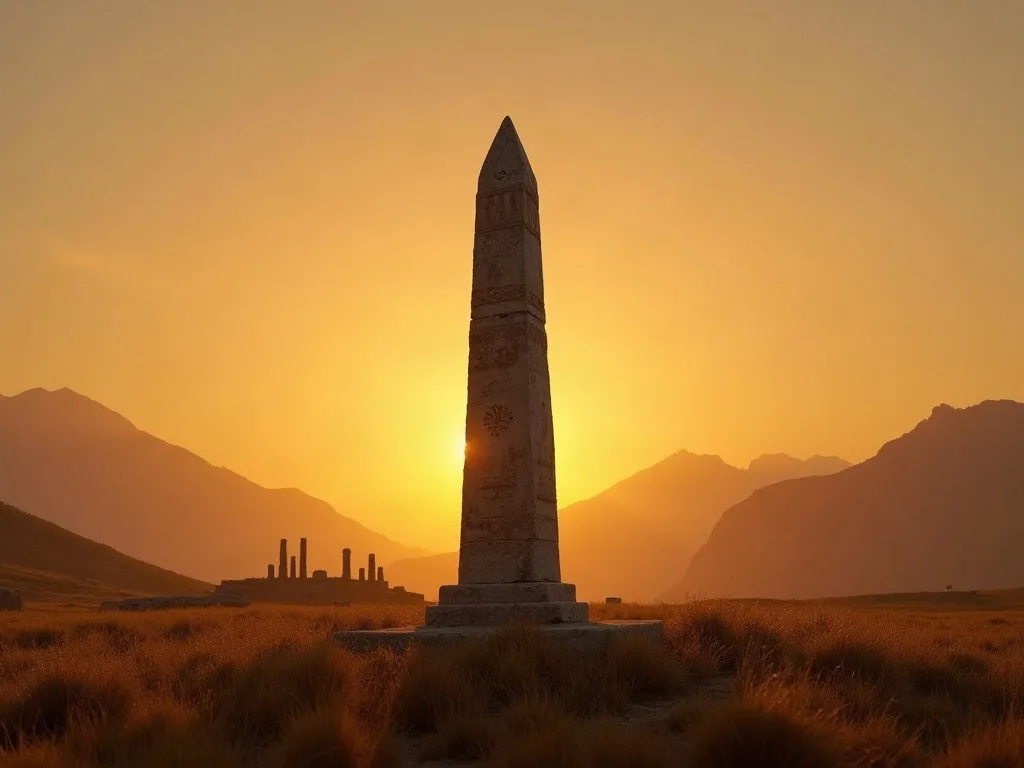
The city itself, ruins of which still stand near the modern town of Aksum in Tigray Region, displayed this power through stone. The Axumites built massive obelisks, some reaching over 100 feet in height, carved from single blocks of granite. These monuments, which stood in a field like silent sentinels, announced Axum's wealth and dominance. They were also, scholars believe, monuments to kings and ancestors. They pointed to the sky. In a landscape of such monuments, the Ark was not separate from the political realm. It sanctified it.
The Chapel of the Tablet: Sanctuary and Secrecy
When did the Ark reach Axum? When was the chapel built to house it? Here, history and tradition overlap in ways that archaeological evidence has not fully clarified. The Kebra Nagast places the Ark's arrival in Axum in the pre-Christian era, at the time of Menelik I. But most scholars recognize the Kebra Nagast as a 14th-century composition, drawing on older oral traditions but also serving the political needs of its time, particularly to legitimize the dynasty of the emperor Zara Yaqob.
What is certain is that by the medieval period, the Ark was central to Ethiopian Christianity. By the 13th century, it was kept in a chapel in Axum, and that chapel's status as the most holy site in Ethiopia was unquestioned.
The Chapel of the Tablet, called Tsion (Zion) in Amharic, is a modest stone building, rebuilt multiple times, most recently in 1965 to replace a structure destroyed in a 16th-century raid. It sits within the grounds of the Church of St. Mary of Zion, itself one of Africa's oldest continuously functioning Christian sites. The chapel is not grand. There are no windows. No ornaments adorn its walls. The interior is empty except for the Ark, which rests on a stone altar.
Access to the Ark is restricted to the Abbot of Axum, the high priest, and only he may enter the chapel, and only he may see the Ark directly. Pilgrims come to pray in the outer church. They do not see the relic. They know it is there the way believers know grace is present: through faith, through ritual, through the weight of centuries.
This extreme secrecy has invited skepticism from Western scholars and journalists. In 1974, a British researcher named Graham Hancock claimed to have conducted interviews with an elderly priest who had served as keeper of the Ark and was willing to describe it. Hancock's book "The Sign and the Seal" (1992) became a popular account of the Ark's history and its supposed residence in Axum. However, scholars of Ethiopian Christianity remain divided on Hancock's claims; Ethiopian church authorities have never confirmed his account, and the strict prohibition on viewing the Ark remains in effect.
Yet the secrecy itself is not unusual in Ethiopian Orthodox practice. Even today, the inner sanctum of Ethiopian churches, called the maqdas, contains a replica of the Ark (every Orthodox church has one), and lay worshippers do not enter it. The Ark, whether original or symbolic, lives in concealment because that is how sacred mysteries are protected in this tradition. To show it would be to diminish it.
The Legend of Menelik I and the Covenant Line
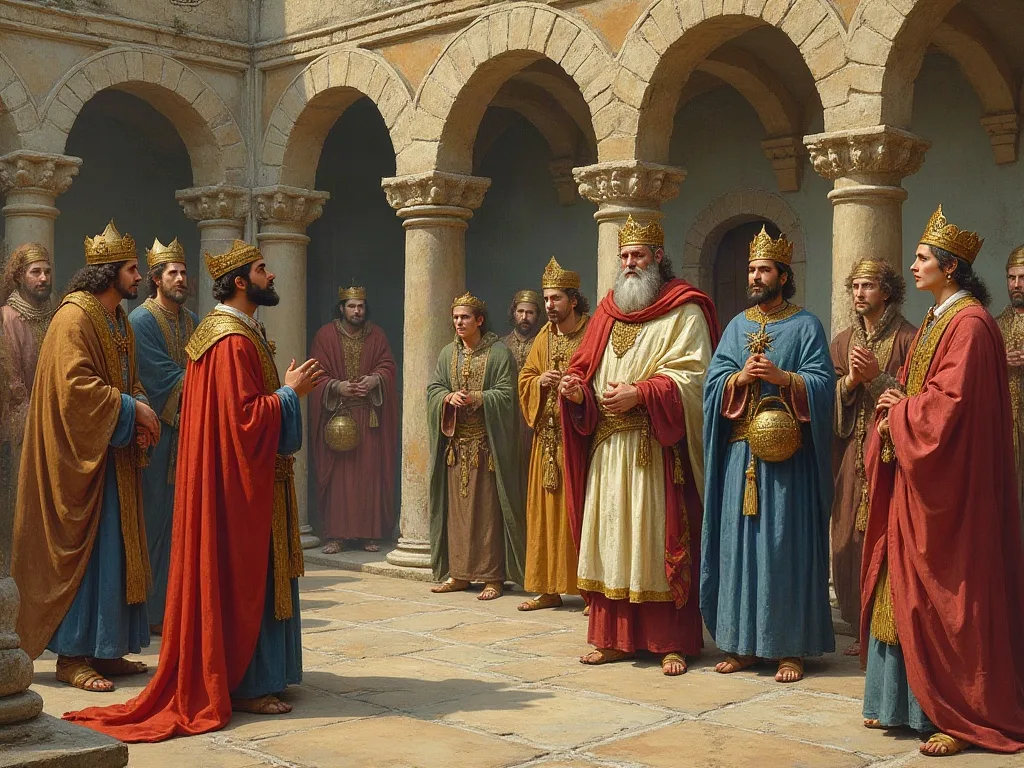
The figure who brings the Ark to Axum in Ethiopian tradition is Menelik I, and his story carries theological and political weight far beyond mere adventure narrative.
According to the Kebra Nagast, Menelik was born from an encounter between King Solomon of Israel and the Queen of Sheba. The queen traveled to Jerusalem, as recorded in the Hebrew Bible and the Qur'an, to test Solomon's wisdom. She also bore his child. That child, raised partly in Jerusalem and schooled in Jewish law and wisdom, returned to Ethiopia with knowledge of the Torah and, crucially, with the Ark itself.
This narrative accomplishes several things at once. First, it places Ethiopia on the same spiritual genealogy as Israel. Menelik is not a foreigner who receives a relic; he is the offspring of Israel's greatest king, returning home with his inheritance. Second, it creates a unbroken line of succession. Just as Jewish kingship traced itself back through Solomon, Ethiopian kingship traced itself back through Menelik, which meant the Solomonic dynasty claimed direct descent from the patriarch. Third, it makes the possession of the Ark not a lucky acquisition but a birthright.
The Solomonic emperors of Ethiopia ruled explicitly under this claim. As late as the 20th century, Ethiopian Emperor Haile Selassie, the last of the Solomonic line, used the title "Elect of God" and was revered in some circles as a divine figure, partly because of his place in this unbroken chain stretching back to Solomon and the Covenant itself.
Whether Menelik I was a historical figure remains debated among scholars. Some evidence suggests that a figure named Menelik did rule Ethiopia in the early centuries AD, but the biographical details in the Kebra Nagast are likely literary amplification. What matters for understanding the Ark of the Covenant in Axum is that Menelik became the mythological and political vessel through which Ethiopians understood their relationship to the Bible, to the covenant, and to sovereignty itself. The Ark in Axum is "real" not because the object necessarily matches the description in Exodus, but because for Ethiopians, the story of how it came to be there is true in the way that myths are true: it explains who they are, how they stand in relation to divine order, and what makes them chosen.
The Church of St. Mary of Zion and Its Sacred Guardianship
The Ark rests within the Church of St. Mary of Zion, one of the oldest and most important pilgrimage sites in Christianity. The current structure, built in the 17th century with 20th-century renovations, stands on a site that has been sacred for at least 1,600 years. The church itself honors Mary, the mother of Jesus, and contains altars dedicated to saints and martyrs central to Ethiopian Christianity.
But the Chapel of the Tablet within it is the true center of gravity. The church exists to shelter and honor the Ark.
Every Ethiopian Orthodox church, whether a village congregation in the highlands or a great cathedral in Addis Ababa, contains a tabot, a replica of the Ark. These are not idol replicas; they are objects through which the presence of God is understood to be localized. A church without a tabot is incomplete; it cannot function as a place where heaven and earth meet. But there is only one original Tabot, and it is in Axum.
For an Ethiopian Christian, to journey to Axum is to walk toward the source. It is pilgrimage in the fullest sense. Every year, especially at festivals like Timkat (the Ethiopian celebration of the Baptism of Jesus), thousands arrive in Axum. They process around the Church of St. Mary of Zion. They sing in Ge'ez, the ancient liturgical language of Ethiopia. They do not enter the Chapel of the Tablet, but they are present in its orbit. They pray toward it. They fast and meditate in its proximity. The Ark's hiddenness becomes part of its power; mystery draws faith as much as revelation does.
The guardianship of the Ark has been a serious responsibility. In the 1520s, when the Muslim leader Ahmad ibn Ibrahim al-Ghazi invaded Ethiopia, his forces raided Axum and the church was damaged. The Ark was hidden during this period. Later conflicts, civil wars, and the rise and fall of different emperors all affected access to the site, but the guardian tradition never broke. The church was rebuilt. The Ark remained.
The Ark's Role in Ethiopian Identity and Political Authority
What makes the Ark of the Covenant in Axum unique among sacred relics is not just its religious importance but its function as the foundation of a nation's legitimacy.
When an Ethiopian emperor was crowned, the ceremony took place in Axum. The candidate was brought before the Ark, even if he could not see it. The high priest anointed him. In this moment, the emperor was not simply claiming political power; he was being recognized as the heir to Menelik, the keeper of the covenant, the one chosen by God to rule. This was not metaphorical. It was the engine of political authority.
This system gave Ethiopian Christianity something many other African kingdoms lacked: a centralized, unchallengeable religious authority tied to a specific place and a specific object. You could challenge a king's policies. You could even challenge his right to rule through force. But you could not claim legitimacy without the Ark's blessing, mediated through its keepers. The Ark was political as much as it was spiritual.
This also meant that Axum, even as the center of Axumite power shifted southward over centuries, never lost its symbolic weight. By the medieval period, Ethiopia's political capital moved to places like Lalibela, Gondar, and eventually Addis Ababa. But Axum remained the coronation city, the sacred city, the one place where a new emperor's rule truly began. The Ark kept Axum alive in the national consciousness long after its physical empire had faded.
The Ark in Ethiopian History and the Doctrine of Elect Lineage
The concept that the Ark had come to Ethiopia, and that the Ethiopian ruling line descended directly from Solomon, gave Ethiopians a remarkable theological claim: they were not a peripheral kingdom receiving Christianity from the Mediterranean or Middle East. They were the true inheritors of the Old Testament covenant, the spiritual center of the ancient world.
This belief manifested in specific doctrines. The Ethiopian Orthodox Church teaches that just as Jesus Christ is the fulfillment of the Mosaic covenant, Ethiopia's Solomonic emperors are the earthly expression of God's eternal order. The line does not break. The covenant is not suspended. It flows, unbroken, through the mountains.
When the Solomonic dynasty finally ended in 1974 with the overthrow of Emperor Haile Selassie, the theological shock was enormous. The coronation tradition ceased. No more emperors would come to Axum to be anointed before the Ark. The belief in unbroken continuity from Solomon to the present was severed. Yet even then, the Ark did not lose its hold on the Ethiopian imagination. For many Ethiopians, the illegitimacy of what came after 1974 was proven by the absence of coronation, the absence of blessing before the Ark.
Scholarly Debates: Historical Evidence and Living Belief
Historians have long questioned whether the Ark resting in Axum is the same object described in Exodus. The biblical Ark would have been destroyed or taken during the Babylonian conquest of Jerusalem in 586 BC. There is no historical record of its survival. Some Jewish traditions claim it was hidden in a cave on Mount Sinai; others that it was removed to Egypt. No physical evidence places it in Ethiopia.
Yet the fact that we cannot confirm the Ark's authenticity through archaeology does not diminish its reality to Ethiopians. Faith and historical evidence operate in different registers. The Ark in Axum is real as a theological claim, as a historical tradition stretching back centuries, as a lived practice that shapes how millions understand their relationship to God and nation. Whether the actual wooden chest from Jerusalem sits in that chapel or whether Ethiopia possess a replica made with sacred intent centuries ago, the object's meaning and power remain unchanged.
What scholars can confirm is that a tradition claiming possession of the Ark was established in Ethiopia by the medieval period, that this tradition was enshrined in texts like the Kebra Nagast, and that it shaped Ethiopian Christianity and imperial ideology profoundly. That is historical fact.
Axum and the Global Journey of Relics
The Ark of the Covenant in Axum is one case in a broader historical phenomenon: the migration of sacred objects across continents and centuries, each one accumulating layers of meaning, protection, and legend.
The True Cross, believed by Christians to be the wood of Jesus's crucifixion, has been fragmented and distributed across the world, pieces claimed by churches in Jerusalem, Rome, Constantinople, and countless smaller sanctuaries. The Buddha's tooth is said to rest in Sri Lanka. The head of John the Baptist is claimed by multiple cathedrals. These objects are not mistakes or frauds in the popular sense. They are vessels of devotion, anchors for faith, proof that the sacred once touched the material world and can be touched again.
Axum's role in this global circulation was particular. As a great trading power, Axum was a crossroads where goods, people, and beliefs flowed. If the Ark came to Axum, it came via the same routes that brought spices and silks, via merchants and pilgrims who carried not just goods but stories. The Ark in Axum thus becomes not an anomaly but a natural terminus for a sacred object in the ancient world.
The Ark Today: Pilgrimage, Restoration, and Future
In 2021, the Church of St. Mary of Zion underwent a significant restoration project. The chapel's exterior was rebuilt with modern materials while preserving its original design. This is a delicate matter; to maintain the site for future pilgrims while respecting its ancient sanctity requires careful judgment.
The restoration underscored a tension that the church faces. Axum is a UNESCO World Heritage Site, protected as cultural property of human significance. Pilgrims continue to arrive, seeking spiritual encounter. Scholars and tourists arrive seeking historical understanding. Media outlets periodically publish sensationalist stories about "finally seeing the Ark" or "solving its mystery." The church must navigate all of this while guarding its most precious possession.
Today, the Ark of the Covenant in Axum remains unseen by the world but vividly present in Ethiopian consciousness. It is not a relic forgotten by history. It is a living object of faith, honored in prayer, protected by ritual, and passed down through an unbroken chain of guardians. Whether one believes it is the original Ark from Sinai or understands it as a sacred representation of the covenant itself, its power in Ethiopian life is absolute.
The secrecy that surrounds it is not paranoia or superstition. It is a theological stance: some things are made holy precisely by their givenness, their refusal to be displayed, their withdrawal from the gaze of the profane world. To see the Ark would be to treat it as an object for consumption, a sight to check off a list. To leave it hidden is to treat it as mystery, as the presence of God that transcends human knowing.
In a world of relentless exposure, the Ark's hiddenness stands as a counter-witness: not everything sacred is made more sacred by being revealed.
Frequently asked questions about the Ark of the Covenant in Axum?
Frequently asked questions
Is the Ark in Axum the same one from the Bible?
This cannot be confirmed by historical evidence or archaeology. The biblical Ark disappeared from the historical record after the Babylonian conquest of Jerusalem in 586 BC. However, Ethiopian tradition places it in Axum, a tradition attested in texts like the Kebra Nagast (recorded in writing by the 14th century, but drawing on much older oral history). For Ethiopian Christians, this tradition is historically true; it explains their spiritual identity. For historians, what can be confirmed is that Ethiopians have claimed possession of the Ark for centuries and have organized their entire religious and political system around that claim.
Has anyone ever seen the Ark in Axum?
Only the high priest (Abbot) of Axum is permitted to enter the Chapel of the Tablet where the Ark is kept. No outsider has been granted access in modern times. In the 1970s, researcher Graham Hancock interviewed an elderly priest who described the Ark, but the Ethiopian church has never officially confirmed these accounts, and direct access remains prohibited. The church's refusal to display the Ark is consistent with Orthodox Christian theology, which treats the inner sanctum as a space reserved for the holy and protected from profane gaze.
Why is the Ark so important to Ethiopian identity?
The Ark's presence in Axum became the theological foundation of Ethiopian kingship and Christianity. According to the Kebra Nagast, Ethiopian emperors descended from Menelik I, the son of Solomon and the Queen of Sheba. This lineage made Ethiopian rulers not foreign recipients of Christianity but heirs to the covenant itself. Every emperor was crowned in Axum, before the Ark, his authority sanctified by proximity to this holiest object. The Ark thus made Ethiopia not peripheral to Biblical history but central to it, transforming the nation's self-understanding from a distant kingdom to a chosen one.
What does the Ark look like according to Ethiopian tradition?
The Ark is described as a wooden chest covered in gold, with a solid gold lid called the mercy seat, topped with two golden cherubim. This matches the biblical description in the Book of Exodus. Every Ethiopian Orthodox church possesses a replica called a tabot, which follows this same design and is treated as a consecrated object through which God's presence is localized. The design has remained consistent across centuries of church practice, suggesting either very reliable oral transmission or, some scholars propose, the influence of a written tradition like the Kebra Nagast on how the object is imagined.
Can visitors see the Ark or visit the Chapel of the Tablet?
No. Only the Abbot of Axum may enter the Chapel of the Tablet. Pilgrims and visitors worship in the outer Church of St. Mary of Zion and process around its grounds, but they do not see the Ark. This practice reflects Ethiopian Orthodox theology, which keeps the holiest mysteries hidden. However, the site remains open to pilgrims and tourists, and the restoration of the Church of St. Mary of Zion in 2021 was completed to serve future generations of worshippers.
When did the Ark arrive in Axum?
Ethiopian tradition places the Ark's arrival in Axum during the time of Menelik I, which would place it in the early centuries AD or possibly earlier. However, the Kebra Nagast, which records this narrative, was compiled in writing in the 14th century, though it drew on older oral traditions. Archaeological evidence cannot confirm when the Ark reached Axum or even that it did. What scholars can confirm is that by the medieval period, the tradition was firmly established and shaped Ethiopian Christianity profoundly. The exact dating remains one of the unresolved questions in Ethiopian religious history.
The Ark and the Question of Sacred Concealment in the Modern World
The Ark of the Covenant in Axum raises a question that modern culture struggles with: what is the relationship between visibility and sacredness?
In our current moment, authenticity is often demanded to be transparent. Museums display relics under glass. Digital technology lets anyone view high-resolution images of ancient objects from their home. Secrets are treated as suspicious. If you won't show something, the logic goes, you must be hiding fraud.
But Ethiopian Orthodoxy works from a different premise: some things become holy precisely because they are not on display. The inner sanctum of every church, the maqdas, is closed to all but clergy at specific times. Women do not enter it during certain periods. Lay worshippers come to pray at the threshold, not within. This is not superstition. It is a theological commitment: holiness is constituted partly through restriction, through the acknowledgment that not all mysteries are for all people, that sacredness involves a boundary.
The Ark, guarded in Axum, makes this teaching physical. It says: God's presence does not require your viewing. Your faith does not depend on ocular proof. The hidden thing is as real, perhaps more real, than what you see.
In a culture obsessed with exposure, with access, with the dissolution of boundaries between public and private, sacred and secular, the Ark's hiddenness is radical. It represents a world in which not seeing is a form of respect, not a failure of transparency.
Whether the object in the chapel is wood and gold from the deserts of Sinai or a devotional replica crafted in medieval Ethiopia, the principle it embodies remains constant: some things belong to mystery. Some things are made holy not by being shown but by being protected, honored, and passed hand to hand through generations who understand that their role is stewardship, not possession, and their privilege is proximity, not sight.
That is how the Ark of the Covenant endures in Axum in 2026, as it has for centuries: unseen, unshakeable, and absolutely central to a faith that asks its people to believe in what they cannot hold, to honor what they cannot view, and to trust in a presence that asks them to walk, barefoot and bowing, into the unknown.
Read the full book
Want the whole story?
The complete edition is an instant PDF download here, with a paperback on Amazon for selected titles.
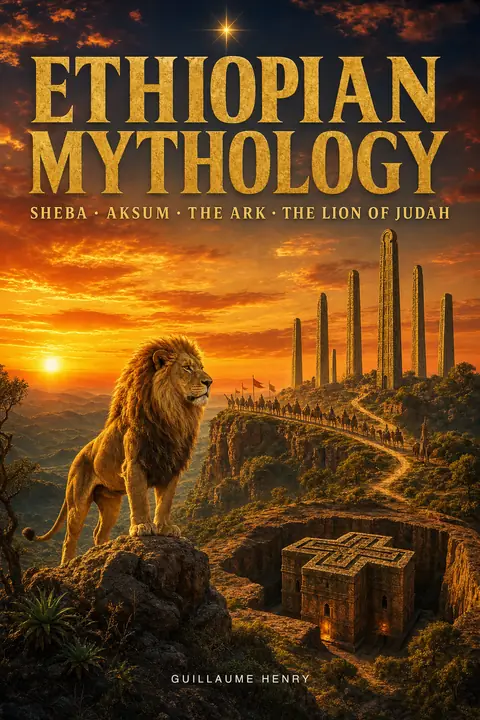
Ethiopian
The Ethiopian Mythology Book: The Queen of Sheba, the Ark of the Covenant, and the Sacred Legends of Aksum
The Queen of Sheba, the Ark of the Covenant, and the Kingdom of Aksum
The sacred legends of Ethiopia, the one African kingdom never conquered: the Queen of Sheba and her journey to King Solomon, the Ark of the Covenant said to rest at Aksum, Waaqa the sky-god of the Oromo, and the saint-kings who carved the churches of Lalibela. Drawn from the Kebra Nagast and the living oral tradition.
More from Ethiopian
All articles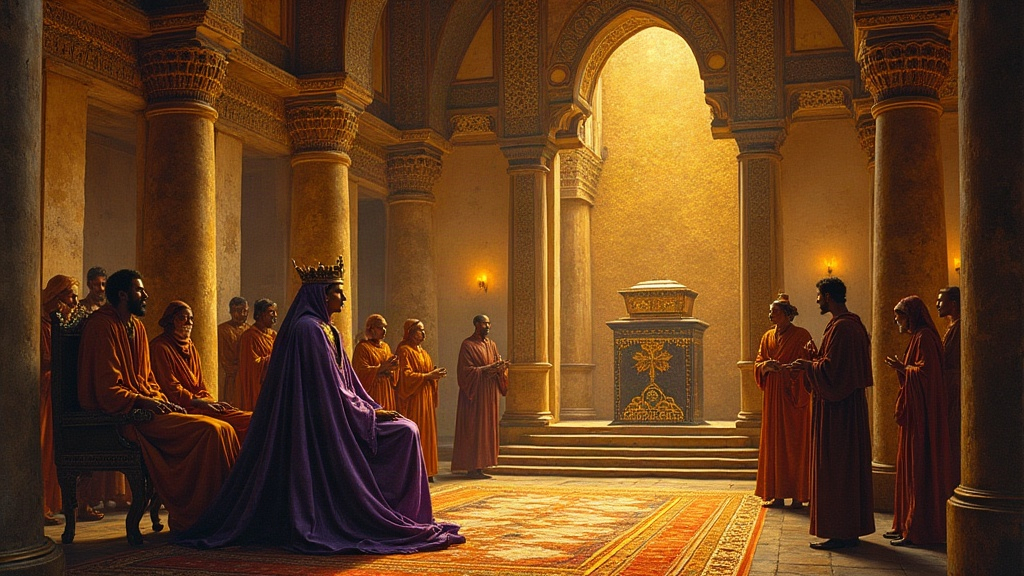
Ethiopian
The Kebra Nagast: Ethiopia's Sacred National Epic
The Kebra Nagast, Ethiopia's greatest literary and spiritual treasure, tells how the Queen of Sheba bore Solomon's son and founded a dynasty that would claim descent from Israel's king. Discover the epic that shaped an empire's identity and survives as living scripture today.
Ethiopian
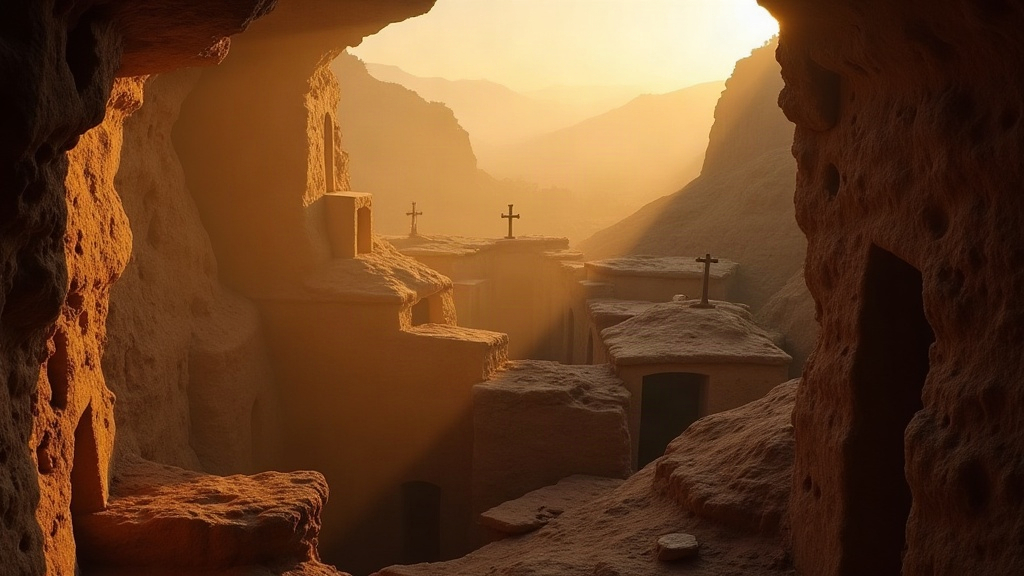
Lalibela: The Rock-Hewn Churches and King's Vision
Discover how King Lalibela carved twelve churches from solid rock in Ethiopia's highlands, creating a sacred landscape that blends ancient Christian devotion with legendary ambition. A journey to Jerusalem without leaving home.

Ethiopian
Atete: Oromo Goddess of Fertility and Femininity
Atete embodies the generative power at the heart of Oromo spirituality. This goddess shapes the cycles of birth, growth, and renewal across the Ethiopian highlands and pastoralist cultures of the Horn of Africa.

Ethiopian
The Nine Saints: Founders of Ethiopian Monasticism
Nine Syrian monks arrived in Ethiopia in the 5th century and transformed its spiritual landscape. Discover how the Nine Saints founded Ethiopian monasticism, shaping the Tewahedo Church and a monastic tradition that endures today.