
The Faravahar: The Winged Symbol of Zoroastrianism
The Faravahar appears across Zoroastrian art, temples, and personal devotion as a winged figure hovering between realms. This ancient Persian symbol encodes the faith's core belief: that each human spirit carries divine potential and cosmic choice. Discover what this icon reveals about the battle between good and evil.
Contents
A winged human form hovers above a spiral. Below, a man and woman stand on either side of a flame. This is the Faravahar, and in this single image rests the spiritual engine of Zoroastrianism, a faith that shaped the Persian empire and influenced faiths across the Mediterranean and Asia for over two millennia.
The symbol seems to float between worlds. Its wings are raised, its body serene but alert. A human face, rendered in profile, looks ahead with purpose. Around this figure circle symbols of cosmic struggle: the winged disk (borrowed from ancient Mesopotamian art), often with a human upper body emerging from it, flanked by crescent moons and other celestial markers. What appears at first glance as mere decoration is actually a spiritual map, a visual theology that Zoroastrians still contemplate today.
To understand the Faravahar is to grasp how an ancient Persian religion saw the human soul, divine order, and the eternal war between light and darkness. The symbol is not decorative ornament. It is doctrine made visible.
What the Faravahar Represents in Zoroastrianism
The Faravahar functions as the visual anchor of one of humanity's oldest monotheistic faiths. In Persian, "faravahar" (also transliterated as "fravashi") refers to the guardian spirit or celestial prototype of each human being. The symbol depicts this invisible protector in winged form, watching over the material world from a vantage point between earth and heaven.
Zoroastrianism teaches that before a person is born into the material world, their spiritual essence already exists in the celestial realm. This pre-existent spirit is the fravashi. It is not quite a soul in the Christian sense, nor is it identical to the individual ego. Rather, it is the divine blueprint of the person; a guardian presence that stands before the divine court on your behalf.
The Faravahar depicts this guardian in the moment of eternal vigilance. The outstretched wings express protection and readiness. The raised hand often holds a ring or torque (an ancient symbol of royal dignity and cosmic order), signifying the sacred covenant between the fravashi and the material human below. The human figure's posture suggests both power and service: this is not a ruler commanding from on high, but a sentinel devoted to the person it protects.
What makes the Faravahar peculiar in religious iconography is its refusal to show the personal human below it merged into an abstract divine form. Instead, it preserves the image of the individual human standing on the earth. The symbol thus captures a central Zoroastrian conviction: you are not merely an illusion of the divine. You are a real being, standing in material reality, and your spiritual guardian stands between you and the cosmos, ensuring your dignity and your capacity to choose.
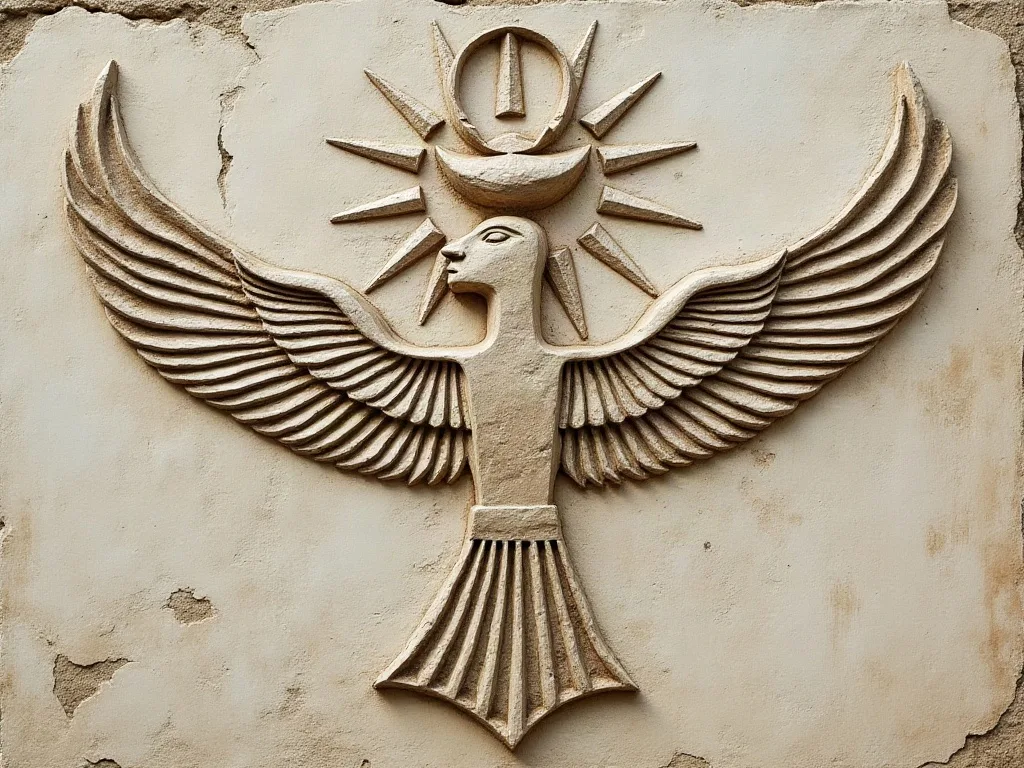
The Guardian Spirit: The Fravashi Concept
To see the Faravahar properly, one must know what a fravashi is. The word appears in the Avesta, the oldest Zoroastrian scriptures, where it refers to the celestial counterpart of every living being. Every human, every fire, every sacred plant has a fravashi in the divine realm. When Zoroaster (the prophet around whom the faith crystallized, likely sometime between 1500 and 600 BCE, though scholars debate the exact dates) addressed his god Ahura Mazda, he invoked these guardians as allies in the cosmic struggle against evil.
The Yasna Haptanghaiti, one of the oldest layers of the Avesta, preserves a prayer invoking the fravashis of the righteous dead. They are invoked as protectors, fighters against darkness. In Zoroastrian theology, the fravashi is your immortal advocate. It exists outside time and is not bound by death. When you die, your fravashi continues its work in the celestial realm, supporting the cause of good against evil.
This differs fundamentally from how other traditions conceptualize the soul. In Christianity, the soul is the seat of individual consciousness and moral judgment. In Hinduism, the atman is the eternal self, gradually refined through reincarnation. The Zoroastrian fravashi is closer to a celestial archetype, a spiritual ally, an immortal protector whose existence precedes your birth and continues after your death. The Faravahar is its portrait.
The fravashi also embodies a radical choice. Because the material world (in Zoroastrian belief) is a battleground between Ahura Mazda, the god of wisdom and light, and Angra Mainyu, the destructive spirit of chaos, each human stands at the intersection of this cosmic war. Your fravashi has already chosen the side of light; your material self must now choose whether to align with that choice or betray it.
The Cosmic Duality: Light Against Darkness
The Faravahar appears across Zoroastrian art alongside symbols that emphasize cosmic binary opposition. On the arms of many versions of the symbol appear two snakes or dragons, sometimes coiled in S-shapes; these represent the eternal struggle between the forces of creation and destruction. The crescent moon often appears below, while rays of sun or stars radiate above. These are not mere ornaments. Each element encodes a piece of Zoroastrian cosmology.
Zoroastrianism is sometimes called the world's first dualistic religion. This description requires nuance: Ahura Mazda is supreme, and ultimate victory over evil is assured. But the cosmic narrative of the faith unfolds as a genuine struggle between two opposing forces. Good will triumph, but the outcome is not foreordained in every moment. Your choices matter. Your fravashi matters.
This dualism is why the Faravahar shows a winged figure in profile, gazing outward with a penetrating stare. The spirit is watching. It is alert to danger. It stands ready because the world is a place where the righteous must defend what is sacred. The symbol thus expresses not abstract spirituality but a call to action. The fravashi is not passively blessing you from above; it is enlisting you in a struggle.
The connection between the fravashi and the concept of asha (divine order, righteousness, truth) is inseparable. By invoking the Faravahar, a Zoroastrian is reminding themselves: I have a guardian in the celestial realm who embodies perfect order. I am called to embody asha in this material realm. The symbol thus serves as both comfort and discipline.
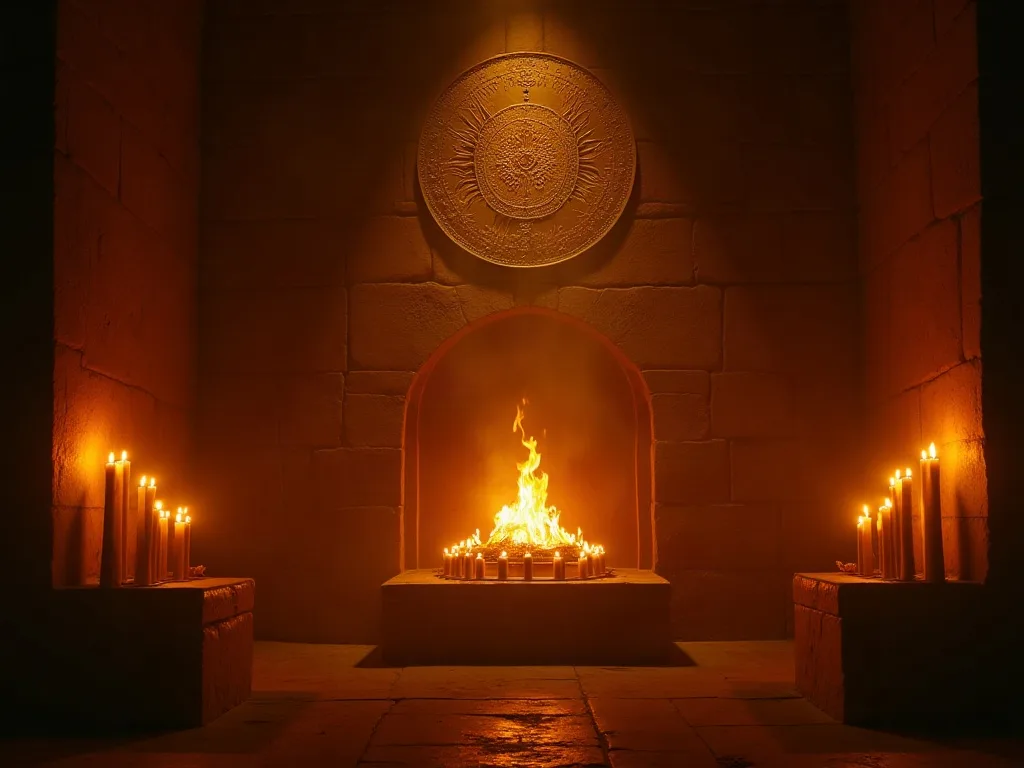
The Symbol's Geometry and Sacred Iconography
The Faravahar as we know it today took its refined visual form during the Sassanid Empire (224-651 CE), though its spiritual roots reach back to the Achaemenid period (550-330 BCE). The geometric precision of the symbol is deliberate. Every element carries meaning.
The central winged figure typically shows a human upper body (bust) with two large wings spread wide. Below the figure hangs a circle or sphere, often positioned between two snakes or curves. Above, or sometimes integrated into the wings, sits a solar disk or star. This layering of symbols creates a cosmological hierarchy: the human spirit (the bust), the celestial forces (wings, disk), the earthly forces (the curves and snakes below), and the eternal cycle (the circle).
The ring or torque held in the figure's hand carries royal and cosmic significance. In ancient Persian culture, the torque was the insignia of royalty and sovereignty. In the Faravahar, it represents the bond between the human and the divine, and more broadly, the individual's claim to dignity and kingship. Zoroastrianism teaches that each human is, in a sense, a sovereign of their own material realm, responsible for maintaining asha through their actions.
The snakes or dragons flanking the symbol are sometimes depicted as fierce, sometimes stylized into curves. Interpretations vary among scholars: some see them as representing Angra Mainyu's forces; others as symbols of wisdom and the knowledge required to navigate the cosmic struggle; still others as expressions of the fundamental duality that structures existence. What unites these readings is a sense that the Faravahar sits at the fulcrum of opposed cosmic forces, never in perfect stasis but always in dynamic balance.
The proportions of the Faravahar also matter. The wings are often drawn larger than the body, emphasizing the transcendent nature of the fravashi. This is not a portrait of the earthly human. It is a portrait of the celestial guardian rendered visible. The human face is serene, often gazing forward or slightly upward, suggesting clarity of purpose and unwavering vision.
Faravahar in Personal Devotion and Temple Practice
For Zoroastrians, the Faravahar is not merely a historical artifact or symbol of cultural identity (though it serves both functions). It is an active presence in daily spiritual practice. Many Zoroastrians wear the Faravahar as a pendant or ring, a constant reminder of their guardian spirit and their covenant with the divine.
In Zoroastrian fire temples, the Faravahar often appears engraved on architectural elements, carved into stone above doorways, or depicted in manuscript illuminations. The sacred fire at the center of the temple is understood as a manifestation of Ahura Mazda's wisdom. The Faravahar stands guard over this fire, present as an invisible witness and protector. When a Zoroastrian enters the temple, they are entering a space where the boundary between material and celestial realms is deliberately thinned.
During prayer, particularly during the Ashem Vohu invocation (one of the most sacred Zoroastrian prayers, which focuses on righteousness and its reward), many adherents visualize the Faravahar. The prayer translates, roughly: "Righteousness is the highest good. Happiness follows from righteousness." By holding the image of the Faravahar in mind, the worshipper aligns themselves with their fravashi and reaffirms their commitment to asha. The symbol becomes a bridge between personal intention and cosmic order.
The Faravahar also appears on sacred texts, on ceremonial objects (such as the sacred cord worn by initiated Zoroastrians, called the kusti), and in personal talismans. In Zoroastrian communities from ancient Persia to modern Iran, India, and the diaspora, the symbol functions as a portable theology. It travels with you, reminding you that your guardian stands with you wherever you are.
During rites of passage, such as the Navjote ceremony (initiation into the faith), the Faravahar is presented to the initiate as a symbol of their spiritual maturation and their acceptance into the community of the righteous. The ceremony often includes the receipt of the sacred cord and the recitation of sacred words, all while the Faravahar looks on, marking the occasion as a covenant between the initiate's earthly self and their fravashi.
The Faravahar and the Battle of Good Versus Evil
Zoroastrianism introduced to the ancient world a stark cosmic theology: existence is structured around the opposition between good and evil, light and darkness. This binary is not metaphorical. It is cosmological. Ahura Mazda is the god of wisdom and light. Angra Mainyu (or Ahriman, as he is sometimes called) is the principle of chaos, destruction, and lie. The material world is the arena where these forces contend for supremacy.
The Faravahar, by depicting a vigilant guardian spirit, encodes this theology into visual form. The spirit is not at rest. It is not meditating in abstract bliss. It is watching. It is protecting. It is positioned between the heavenly and earthly realms precisely because those realms are under siege by opposing forces.
In the Zoroastrian apocalyptic vision (found in texts like the Bundahishn, a 9th-century Pahlavi text that synthesizes earlier teachings), the struggle culminates in a final confrontation. Ahura Mazda will ultimately triumph. Evil will be annihilated. But until that moment arrives, the struggle continues. Every righteous act, every true speech, every ritual correctly performed contributes to the eventual victory of Ahura Mazda. Your fravashi, depicted in the Faravahar, is your guardian in this effort. It stands at your shoulder, reminding you to choose the right path.
The symbol thus carries an ethical imperative. To invoke the Faravahar is to acknowledge that you are not neutral. You have a guardian committed to righteousness, and you are called to alignment with that guardian's purpose. Zoroastrianism offers no comfortable middle ground, no possibility of withdrawal. You are either advancing the cause of asha or you are complicit in druj (the lie, the chaos, the destructive force). The Faravahar marks this stark choice.
The Symbol's Journey Through History and Influence
The Faravahar emerged as a refined visual symbol during the Sassanid Empire, when Zoroastrianism was the state religion of Persia. Sassanid kings commissioned elaborate versions of the symbol in stone and on coins. These images served both spiritual and political purposes: they asserted that the king's rule was sanctioned by the celestial fravashi, that he stood as a guardian of asha on the earthly plane, just as his spiritual prototype stood guard in the celestial realm.
When Islamic conquest swept through Persia in the 7th century CE, Zoroastrianism lost its position as the dominant religion. Yet the faith persisted, particularly in remote regions and in diaspora communities. The Faravahar survived as a symbol of resilience and identity. Later, during the Safavid period (1501-1736 CE), when Shia Islam dominated Persia, Zoroastrian communities maintained their sacred symbols in private contexts, in homes and small places of worship. The Faravahar remained a marker of faith and continuity.
In the 20th century, as nationalist movements arose across the Middle East and Asia, the Faravahar took on additional significance as a symbol of Persian cultural pride and ancient identity. Today, it appears on the flag and coat of arms of Iran, representing the nation's pre-Islamic heritage. This dual function (as both religious symbol and national emblem) means the Faravahar speaks to Zoroastrians as a spiritual anchor and to Iranians more broadly as a connection to their ancient roots.
The symbol also appears in scholarly and popular discussions of ancient religions. The Faravahar is often cited as evidence that Zoroastrianism pioneered dualistic cosmology, influenced subsequent monotheistic faiths (particularly Judaism and Christianity during and after the Babylonian exile), and developed a sophisticated theology of individual moral agency and cosmic struggle. Whether these influences are direct or indirect remains a matter of scholarly debate, but the historical reach of the Faravahar as a symbol of Zoroastrian thought is undeniable.
The Faravahar in Modern Zoroastrian Communities
Today, Zoroastrian communities in Iran, India (where Parsi Zoroastrians have flourished for centuries), and diaspora populations across North America, Europe, and Australia maintain the Faravahar as a central spiritual symbol. The symbol appears in modern temple designs, on jewelry, in home altars, and in art that reinterprets ancient symbolism through contemporary aesthetic sensibilities.
Many contemporary Zoroastrian artists and scholars have explored the Faravahar's meanings, creating new visual interpretations while remaining faithful to its core theology. Some versions emphasize the humanistic aspects: the individual's capacity for moral choice and self-transformation. Others highlight the cosmic aspects: the eternal struggle between order and chaos, and the fravashi's role as humanity's celestial ally in that struggle.
For Zoroastrians who have emigrated or whose communities live as minorities in predominantly Muslim or Christian nations, the Faravahar serves another crucial function: it is a portable theology, a symbol that connects them to their ancestral faith and to the global community of Zoroastrians. Wearing the Faravahar as a pendant, displaying it in a home, or studying its symbolism becomes an act of religious affirmation and cultural continuity.
The symbol has also attracted the interest of comparative religionists, historians, and spiritual seekers more broadly. Some non-Zoroastrians are drawn to the Faravahar as a symbol of guardian protection or cosmic balance. While Zoroastrian scholars sometimes caution against the dilution of the symbol's specific theological meaning, there is also recognition that symbols, by their nature, speak to people in diverse ways and can travel beyond their original contexts.
Scholarly Debates and Interpretations of the Symbol
Scholars of Persian religion and comparative mythology have long debated the precise origins and evolution of the Faravahar. Some argue that the symbol's visual form was influenced by Mesopotamian and Egyptian iconography, particularly the winged disk representations found in Assyrian and Egyptian art. Others contend that the Faravahar developed indigenously within Zoroastrian tradition, drawing on pre-Zoroastrian Persian symbols of protection and divinity.
The etymology and meaning of "fravashi" itself have been disputed. Some scholars argue the term derives from an older Indo-European root meaning "to create" or "to form," suggesting the fravashi is the creative prototype of each being. Others propose connections to words meaning "protection" or "care." The ambiguity is productive: it allows the concept to encompass multiple meanings simultaneously, which may well reflect how ancient Zoroastrians themselves understood the fravashi.
There is also scholarly discussion about the relationship between the Faravahar and earlier shamanistic or Indo-European spiritual traditions. Some scholars see the fravashi as an evolution of an earlier guardian spirit concept found in Indo-Iranian religions. Others argue that Zoroaster radically transformed older ideas into something unprecedented: a systematic theology of the human spirit as both participant in and reflection of the cosmic struggle between order and chaos.
The influence of Zoroastrianism on later traditions remains a contested but significant topic. The concept of the fravashi may have influenced the development of angelology in Judaism and Christianity; the dualism of Zoroastrianism likely influenced the Manichean religion and Gnostic movements; and some scholars see echoes of Zoroastrian ethics in later Islamic mysticism. The Faravahar, as the visual symbol of this complex theology, thus becomes important evidence in these broader discussions about religious transmission and influence across cultures.
The Faravahar Today: A Living Symbol
In contemporary Zoroastrian practice, the Faravahar remains vivid and vital. During daily prayers, many Zoroastrians focus their attention on the symbol, using it as a meditation object to align their consciousness with their fravashi. During festivals like Nowruz (the Persian New Year, celebrated by Zoroastrians and non-Zoroastrians alike), the Faravahar appears in temple decorations and personal celebrations as a marker of renewal and spiritual recommitment.
Zoroastrian youth education includes study of the Faravahar's symbolism. Young people learning about their faith encounter the symbol as a gateway to understanding the entire theological system: the concept of the fravashi, the nature of asha, the reality of cosmic struggle, and the individual's role in advancing the good. In this sense, the symbol functions pedagogically, making abstract theology tangible and memorable.
The Faravahar also appears in interfaith dialogue and in discussions of pluralism within world religions. Because the symbol emphasizes individual moral agency and the importance of righteous choice, it resonates with secular and progressive audiences. Some contemporary Zoroastrians emphasize these universalizable aspects of the symbol, seeing in the Faravahar a call to justice, integrity, and the courage to stand against cruelty and oppression, regardless of one's specific faith tradition.
Yet there remains a clear boundary: for Zoroastrians, the Faravahar is not merely a symbol of universal ethical principles. It is specifically the guardian spirit of the Zoroastrian cosmos, the visible manifestation of the fravashi, the eternal protector whose entire existence is oriented toward advancing asha and defending the human against the corrupting force of Angra Mainyu. The symbol carries this specificity even as it speaks across boundaries.
Frequently asked questions about the Faravahar
Frequently asked questions
What is the difference between the Faravahar and the fravashi?
The fravashi is the theological concept: the celestial guardian spirit that exists in the divine realm before your birth and continues after your death. The Faravahar is the visual symbol that depicts this guardian in winged form. Think of it like the difference between "courage" as a concept and a portrait of a warrior: one is abstract, one is concrete. The Faravahar makes the fravashi visible and memorable.
Is the Faravahar a representation of Ahura Mazda or a specific god?
No. The Faravahar is not a depiction of Ahura Mazda or any individual deity. It is a representation of the universal principle of the guardian spirit. Every being (human, animal, plant, fire, even abstract concepts like righteousness) has its own fravashi. The Faravahar symbol represents this cosmic principle in its most universal form, specifically as it relates to human beings. Zoroastrianism is strictly monotheistic; Ahura Mazda is the sole creator. The Faravahar depicts the relationship between the human and the divine, mediated through the fravashi.
How old is the Faravahar symbol, and when did it take its current form?
The concept of the fravashi appears in the Avesta, the oldest Zoroastrian scriptures, which likely date to around the 6th to 7th century BCE (though the oral tradition behind them may be much older). The refined visual symbol we recognize today developed during the Sassanid Empire (224-651 CE), when Zoroastrianism was the state religion of Persia. Earlier versions existed, but the geometric precision and symbolic layering of the classic Faravahar emerged in this period. After the Islamic conquest and the decline of Zoroastrianism as a state religion, the symbol survived in community practice and private devotion.
Why does the Faravahar appear on the Iranian flag and coat of arms?
Modern Iran adopted the Faravahar as a national symbol to represent the pre-Islamic Persian heritage and to honor Zoroastrianism as part of Iran's ancient spiritual and cultural legacy. While today's Iran is an Islamic republic, the Faravahar on the state symbols acknowledges the nation's connection to its Zoroastrian past and to the religious and philosophical contributions Zoroastrianism made to human civilization. This reflects a broader trend in the 20th and 21st centuries of nations reclaiming ancient symbols as markers of cultural continuity and pride.
Can non-Zoroastrians wear or use the Faravahar symbol?
This varies depending on individual Zoroastrian communities and beliefs. Some Zoroastrians welcome the Faravahar's use by others as a symbol of spiritual principles like protection, balance, or moral commitment to good over evil. Others believe the symbol belongs specifically to Zoroastrian faith and practice, and prefer that those outside the tradition respect that boundary. The best approach is to consult with the Zoroastrian community in your area or to ask individual Zoroastrians about their perspective. What matters is respect for the symbol's spiritual significance and its roots in a living faith tradition.
Does the Faravahar appear in other religious traditions or influence other symbols?
The Faravahar is distinctly Zoroastrian. However, scholars have noted that Zoroastrianism influenced several later traditions, including Judaism, Christianity, Islam, Buddhism, and Gnosticism. Some concepts related to guardian spirits, angelic protection, and the cosmic struggle between good and evil may have been shaped in part by Zoroastrian ideas. But the Faravahar itself is not a borrowed or shared symbol; it is a unique visual theology belonging to Zoroastrianism. Its influence is intellectual and conceptual, not symbolic.
The Faravahar as Spiritual Anchor in an Uncertain World
The Faravahar endures because it answers a perennial human need: the need to know that we are protected, that we are not alone, and that our choices matter in a cosmos larger than ourselves. The symbol insists that each individual is spiritually significant. Each human carries within themselves a guardian who stands before the divine court on their behalf.
In an age of abstraction and digital mediation, the Faravahar remains a tactile, embodied reminder of presence and purpose. When a Zoroastrian touches the Faravahar pendant at their neck or glimpses the symbol in a temple, they are reconnecting with a theology older than most written religions, a vision of human dignity rooted in the conviction that light is real, that darkness is real, and that the struggle between them is waged not in some distant cosmic realm but in the choices each person makes every day.
The symbol carries no despair. Zoroastrianism teaches that Ahura Mazda's victory is assured, and that the final restoration of the cosmos to perfect order is inevitable. Yet this optimism never permits passivity. The Faravahar's vigilant gaze, its wings raised and ready, its hand holding the sacred ring, all declare: this is your moment; your choice counts; your fravashi stands with you. The symbol thus speaks both comfort and responsibility.
For anyone encountering the Faravahar for the first time, the key is to see past the geometric elegance to the theology beneath. Every line, every curve, every symbolic element encodes a teaching. The symbol is not decoration. It is doctrine made visible, a bridge between the celestial and earthly, a portrait of the human spirit as guardian, guardian as cosmic ally, and cosmic alliance as the foundation of all meaning.
Read the full book
Want the whole story?
The complete edition is an instant PDF download here, with a paperback on Amazon for selected titles.
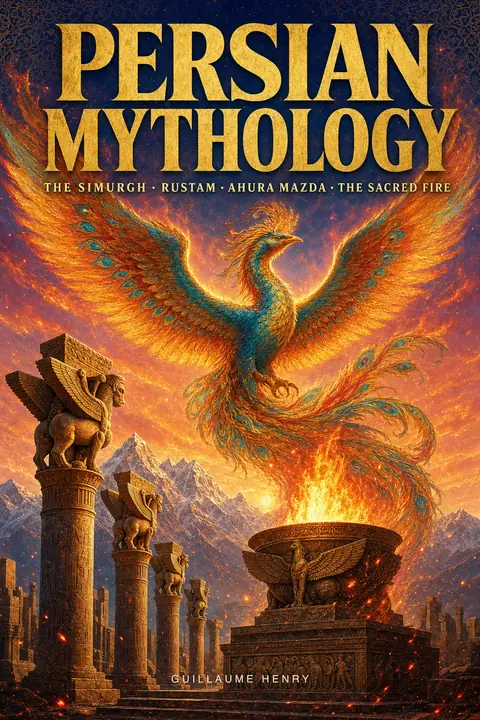
Persian
The Persian Mythology Book: Ahura Mazda, Ahriman, Mithra, and the Cosmic Dualism That Shaped Three Religions
From the Avesta to Ferdowsi's Shahnameh
The Zoroastrian cosmos of light against darkness, the Amesha Spentas, the hero Rostam, and the Shahnameh epic that preserved pre-Islamic Iran in verse.
More from Persian
All articles
Persian
Anahita: The Persian Goddess of Waters and Fertility
Anahita, the Persian goddess of waters and fertility, ruled over rivers, healing, and the cycle of life itself. Revered for millennia across the Zoroastrian world, her story reveals how water became sacred, and how a goddess shaped the spiritual landscape of Persia, Anatolia, and beyond.

Persian
The Avesta: Sacred Texts of Zoroastrianism and Ancient Persian Religion
The Avesta is the religious scripture of Zoroastrianism, containing hymns, prayers, and law from ancient Persia. Discover how this 3,000-year-old text shaped Western religion and philosophy.

Persian
Ahriman (Angra Mainyu): The Destructive Spirit of Persian Mythology
Ahriman (Angra Mainyu in Avestan) is the cosmic principle of destruction, decay, and evil in Persian Zoroastrianism. Eternal rival of Ahura Mazda, he embodies chaos itself and shapes the central spiritual conflict of humanity's purpose.

Persian
The Shahnameh: Iran's Epic Book of Kings
The Shahnameh is the world's longest poem and Iran's national epic, a 50,000-verse masterpiece written by Firdawsi around 1000 CE that weaves together mythology, legend, and history into a seamless narrative of Persian kingship across 3,000 years.