
The Avesta: Sacred Texts of Zoroastrianism and Ancient Persian Religion
The Avesta is the religious scripture of Zoroastrianism, containing hymns, prayers, and law from ancient Persia. Discover how this 3,000-year-old text shaped Western religion and philosophy.
Contents
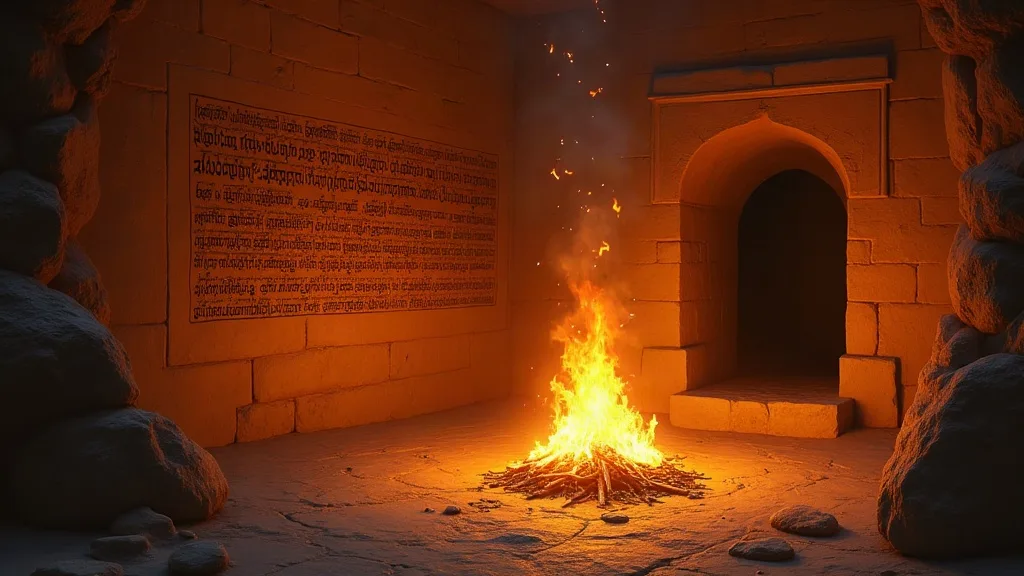
The fire temple stands empty except for the flame. Inside a stone chamber in Yazd, Iran, that same flame has burned for more than 1,000 years, tended by priests who recite words from a text written so long ago that empires have risen and crumbled in the meantime. Those words come from the Avesta: sacred texts of Zoroastrianism, a collection of liturgical hymns, prayers, and laws that form the spiritual backbone of one of humanity's oldest organized religions. Written in Avestan, a language so ancient it predates even Classical Persian, the Avesta speaks to a world where fire was not mere physical heat but the visible presence of divine order itself.
What makes the Avesta extraordinary is not simply its age. It is that this text shaped the religious imagination of the Persian world for over two millennia, influenced the architecture of Judaism, Christianity, and Islam, and yet remains less widely known in English scholarship than it deserves. When a reader encounters the concept of cosmic struggle between good and evil, or a final day of judgment, or the existence of a saviour figure, they are often tracing ideas that flow directly from Zoroastrian texts first composed when the Greek alphabet had barely been invented.
The Avesta survives today in fragments. We do not have the complete original. What we hold are texts preserved by Zoroastrian communities in Persia and among the Parsis of India, transmitted orally for centuries, then written down in a script called Avestan only after the Islamic conquest of Persia made written preservation urgent. That transmission itself is a story of survival against extraordinary odds.
Origins and Composition of the Avesta
No one agrees on when the Avesta was composed. Scholars debate fiercely. Some place the core hymns between 1500 and 1200 BCE, during the Bronze Age collapse when the Indic and Iranian peoples still shared linguistic roots. Others argue for a later date, somewhere in the first millennium BCE, closer to the rise of the Achaemenid Empire under Cyrus the Great.
The likeliest answer is that the Avesta accumulated over centuries, like sediment building up in a riverbed. The oldest layer consists of the Gathas (literally "songs" in Avestan), seventeen hymns composed in an archaic dialect that linguists find so ancient they sometimes sound closer to Vedic Sanskrit than to later Persian texts. These Gathas are attributed to Zarathustra (or Zoroaster in the Greek spelling), the prophet and reformer who stands at the center of Zoroastrian faith. He may have lived around 1500 BCE, or perhaps around 600 BCE; the historical Zarathustra remains one of the great enigmas of ancient religious history, more mythologized than documented.
What is certain is that Zarathustra preached a radical idea for his time: that the cosmos was divided between a force of wisdom and goodness, called Ahura Mazda (the "Wise Lord"), and a force of ignorance and destruction, called Angra Mainyu (the "Destructive Spirit"). This was dualism before dualism had a name in the Greek world. And in the Gathas, Zarathustra's own voice seems to emerge, raw and prophetic, addressing Ahura Mazda directly, asking him questions that sound almost modern in their existential urgency: "To whom will I turn for help in defending the poor against the oppressor?"
The Gathas are written in a poetic meter that scholars compare to the Vedic hymns of India. They are abstract, dense, and deeply challenging even for specialists. A line from the Gathas might run: "The wise one who discerns truth from falsehood through what he sees with his own eye will choose the right path." The language is deliberate, repetitive in a way that served oral transmission before it served the page.
Around these Gathas accumulated later material. The Yasna (a word meaning "worship" or "sacred ritual") is the liturgical core: 72 chapters that form the backbone of Zoroastrian worship. It includes the Gathas, but it also adds prayers, mythological narratives, and descriptions of ritual. The Visparad ("all leaders") supplements the Yasna with additional invocations of divine beings.
Then comes the Yashts, a collection of twenty hymns celebrating the divine powers, or yazatas (literally "worthy of worship"). Each Yasht honors one of these divine beings. The Yasht to Mithra celebrates Mithra, an ancient Indo-Iranian god of contracts and oaths. The Yasht to Ashi honors Ashi, a yazata embodying abundance and reward. These Yashts draw heavily from pre-Zoroastrian Iranian mythology, suggesting that Zoroastrianism did not simply replace older religious ideas but absorbed and reinterpreted them.
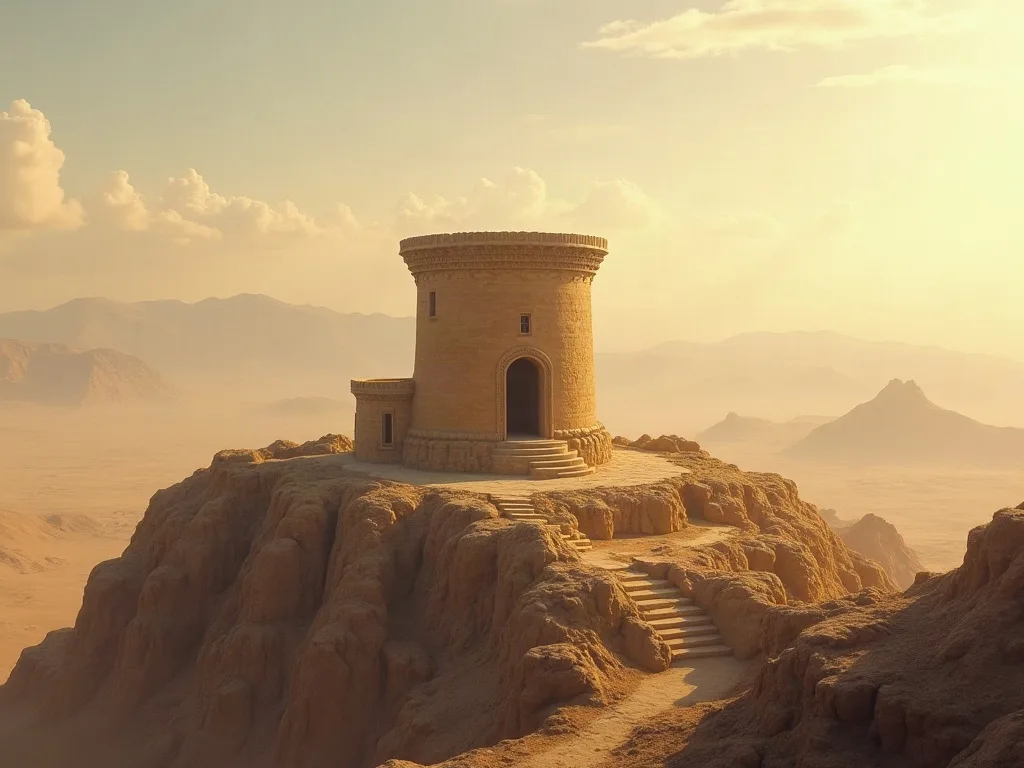
The Vendidad ("law against demons") is perhaps the most practical section of the Avesta. It contains ritual prescriptions, purity laws, and narratives about the mythical history of the Persian world. It describes how Ahura Mazda created the world in six stages, one element per day, and how the evil spirit Angra Mainyu attacked each creation, corrupting it. It lays out laws for purification after death, rules for dealing with corpses (Zoroastrians do not bury or burn their dead; they expose them to vultures in structures called Towers of Silence to avoid defiling earth or fire).
Finally, there are smaller fragments: the Khorda Avesta (a selection of shorter texts used for daily prayer), the Farvardin Yasht (celebrating the fravashis, protective divine spirits), and scattered texts on grammar and cosmology.

The Structure and Content of the Sacred Zoroastrian Text
The Avesta: sacred texts of Zoroastrianism is not organized like the Bible or the Quran. It is a religious manual that grew organically, with layers of liturgical practice calcified into scripture. To understand it, imagine if the Psalms, the Book of Leviticus, and a Greek mythology handbook were bound together in an order that reflects how priests used them in worship, not how a modern editor would arrange them chronologically.
The Avesta divides into five broad sections, each with its own theological and practical focus:
The Gathas are the summit. These seventeen hymns stand as the closest thing Zoroastrianism has to a founder's direct testimony. They are fiercely monotheistic (or more precisely, dualistic; Ahura Mazda is supreme, but Angra Mainyu is real, not merely illusory). They speak to choice: humanity, in Zarathustra's vision, is not predestined but chooses which force it serves. The Gathas ask hard questions and offer no easy answers. When Zarathustra cries out to Ahura Mazda, he sounds less like someone who has received perfect revelation and more like a man struggling with faith under pressure.
The Yasna wraps around the Gathas and adds the liturgical apparatus. Its chapters prescribe the words a priest must speak during the yasna ceremony, the central rite of Zoroastrian worship. The ceremony involves the preparation of haoma, a sacred drink made from a plant (possibly an ephedra or some other stimulant), combined with milk and water. As the priest drinks and offers haoma to the gods, he recites passages from the Yasna. The ceremony can last hours. It is an act of communion: the priest becomes a channel for Ahura Mazda's wisdom into the world.
The Yashts are almost epic poetry. They celebrate divine beings and mythological figures with vivid, archaic language. The Yasht to Zarathustra praises the prophet himself, describing him as physically radiant, born from miraculous circumstances, and destined to bring reform to the world. The Yasht to Anahita, honoring the goddess of waters and fertility, reads like a courtly praise poem, acknowledging her role in sustaining creation and her power over armies and kings.
The Vendidad reads like a legal code with interwoven mythology. It opens with a cosmological narrative: Ahura Mazda creates the world and the first human, Gayomard. But Angra Mainyu immediately counterattacks, corrupting Gayomard with disease and death. This pattern repeats: creation, then corruption. The Vendidad then pivots to laws. It prescribes purification rituals for contact with corpses (a profound concern in a religion that sees death as the ultimate evil, the work of Angra Mainyu). It forbids the eating of certain animals, the practices of witchcraft, and the pollution of rivers. It describes marriage, inheritance, and the proper treatment of slaves. It is simultaneously myth, law, and theology bound into one code.
The Transmission and Loss of the Avesta
Here is a tragedy: we do not possess the complete Avesta. The original text was likely far longer. Scholars estimate that what survives represents perhaps one-quarter of what once existed. How did so much vanish?
The first rupture came with the Macedonian conquest of Persia under Alexander the Great in 330 BCE. Ancient sources claim that Alexander's armies burned the great library at Persepolis, the ceremonial capital of the Achaemenid Empire. Whether this was deliberate or incidental is debated, but the fire was real. With it went untold quantities of written knowledge, though the Avesta, being primarily oral, may have been less vulnerable than administrative records.
For centuries after Alexander, the Avesta survived as oral tradition. Priests memorized vast portions. The language of the Avesta, Avestan, fell out of everyday use; Persian moved on, evolved. The Avesta became a text one learned by rote, in a dead language, the way Latin remained in the Christian church long after Rome fell.
Then came the Islamic conquest of Persia in the 7th century CE. The religious revolution was seismic. Islam replaced Zoroastrianism as the state religion. Many Zoroastrians converted. Others fled east to India, joining communities already established there (these became the Parsis, whose name means "Persians"). In Persia itself, Zoroastrianism contracted into small pockets of resistance, still tolerated but marginalized.
The Avesta, faced with extinction, was finally committed to writing. But by then, centuries of oral transmission had already left their mark. Some texts had been lost entirely, forgotten because no one remained who had memorized them. Others had drifted in the retelling. The script used to write Avestan down was invented specifically for the task, borrowing from Pahlavi (Middle Persian) conventions but creating a unique system of consonants and vowels to capture sounds that spoken Persian no longer used. This Avestan script survives today only in religious texts; no other literature was ever written in it.
The surviving manuscripts are scattered across the world. The oldest are fragmentary. Some texts were preserved by the Parsi communities of India, who guarded them with extraordinary care. The Zoroastrian Fire Temple in Bombay (Mumbai) holds some of the most important surviving manuscripts, copied in the 13th and 14th centuries CE but transmitting texts far older. Western scholars did not even begin to study the Avesta systematically until the 18th and 19th centuries, when European orientalists like Anquetil-Duperron and Friedrich Max Müller deciphered and translated it. For a religious text this ancient and influential, the Avesta arrived late to global awareness.
The Theology Encoded in Avestan Scripture
To read the Avesta is to encounter a theology that feels strangely modern in some ways and utterly ancient in others. The fundamental insight is dualism: the cosmos is contested. Ahura Mazda, the Wise Lord, embodies wisdom, light, and creation. Angra Mainyu, the Destructive Spirit, embodies ignorance, darkness, and dissolution. Neither is powerless; both have will and agency.
This is not the dualism of later Gnostic Christianity, where the material world is inherently evil and the divine is purely spiritual. In Zoroastrianism, the physical creation of Ahura Mazda is good. Fire, water, earth, plants, animals, humans: all are good as created. Evil is not a substance but a force of corruption, an active negation. Angra Mainyu does not create; he only destroys and perverts what Ahura Mazda has made.
Humans are equipped with choice. The Gathas emphasize this repeatedly. Every person can choose to align themselves with Ahura Mazda and his vision of order, justice, and abundance, or to align themselves with Angra Mainyu and his chaos and lies. This choice is not mysterious or predestined; it is rational. You choose by using your mind to perceive truth from falsehood. The Avesta calls this discernment vohu mana, "good mind."
The cosmos has a history and a direction. It is not cyclical in the way that Hindu cosmology is cyclical; it is linear and moving toward a climax. The world will end. Angra Mainyu will be finally defeated. The dead will be resurrected. There will be a last judgment, in which every soul passes through a purifying fire (not as punishment but as refinement; Zoroastrianism is not a religion of damnation). Then the world will be renewed, made eternal and free of evil. This concept, called the Frashokereti or "making wonderful," is spelled out most fully in later Zoroastrian texts but hinted at in the Avesta itself.
The Amesha Spentas (the "Holy Immortals") are abstract divine powers. There are seven of them, each embodying an aspect of Ahura Mazda's nature. Vohu Mana is "Good Mind." Asha is "Righteousness" or "Truth." Spenta Armaiti is "Generous Piety," often conceived as female and associated with the earth. Khshathra is "Desirable Power." Haurvatat is "Wholeness" or "Health." Ameretat is "Immortality." And Ahura Mazda himself is the highest, Spenta Mainyu, "Holy Spirit."
These are not gods in the old polytheistic sense. They are divine attributes, facets of the supreme wisdom. Worship flows toward Ahura Mazda, but the Amesha Spentas are honored as extensions of his being. It is a monism dressed as polytheism, or a sophisticated monotheism that acknowledges the multiple dimensions of the divine.
Below the Amesha Spentas are the yazatas, worthy ones, divine beings who embody virtues or natural forces. Mithra oversees oaths and contracts. Anahita (also spelled Anahid) commands waters and fertility. Verethraghna brings victory in battle. Vohu Mana, interestingly, is both an Amesha Spenta and sometimes invoked as a yazata, showing the fluid boundaries of Zoroastrian theology. These yazatas are worshipped, invoked in prayer, and honored with the Yashts.
The daevas are demons, explicitly opposing forces. The word daeva (later corrupted in Persian to dev) originally meant "god" in pre-Zoroastrian Iranian religion. Zoroastrianism inverted the value judgment: the daevas became demons, false gods, servants of Angra Mainyu. This was a radical theological move, a repudiation of the old religion in favor of a new one, though one that salvaged many of its ritual forms and divine names.
The Avesta in Comparative Religious History
The influence of the Avesta on later religions is profound and often unacknowledged. Scholars have traced echoes of Zoroastrian concepts in Judaism, Christianity, and Islam, though the pathways of transmission are sometimes obscure.
The concept of a final judgment does not appear prominently in the Torah or the early books of the Hebrew Bible. But in the later biblical books (Daniel, written during the Hellenistic period) and in Jewish apocalyptic literature from the second century BCE onward, the idea of resurrection, divine judgment, and the end of history becomes central. The Avesta describes these things in detail. When the Jews were exiled in Babylon (586 BCE) and lived under Persian rule for generations afterward, they would have encountered Zoroastrian ideas. Whether they adopted them directly or were influenced by the broader Persian intellectual climate is debated, but the theological architecture of later Judaism and early Christianity bears marked similarities to Zoroastrian cosmology.
The figure of a saviour also appears in Zoroastrian tradition. The Avesta hints at the coming of Saoshyant (the "Saviour"), a figure born of Zarathustra's lineage who will appear at the end of time to usher in the final renewal. This concept was developed more fully in later Zoroastrian texts. Christianity's expectation of Christ as a messianic figure born of a virgin, whose coming will bring judgment and renewal, parallels Zoroastrian messianism in ways that are unlikely to be accidental.
The devil in Christian theology bears marks of Angra Mainyu. Both are powerful, both are clever and deceptive, both fight against the divine but are ultimately destined to lose. The difference is that Christian theology subordinates Satan to God in a way that the Avesta does not fully subordinate Angra Mainyu to Ahura Mazda. Zoroastrianism is more truly dualistic; Christianity, more strictly monotheistic, though dualistic impulses remain embedded in Christian thought.
The seven heavens in Islamic cosmology may owe something to the seven Amesha Spentas, though the connection is speculative. The Sufi mystical tradition, with its emphasis on spiritual intoxication and union with the divine, was influenced by Zoroastrian and older Persian mysticism in ways scholars are only beginning to map.
What is undeniable is that the Avesta, as the religious scripture of one of antiquity's greatest empires, was a document of immense prestige. When Alexander conquered Persia, he did not merely conquer a land; he exposed the Greek world to Persian ideas. When the Zoroastrian faith declined after the Islamic conquest, those ideas did not vanish; they had already permeated Mediterranean and Near Eastern thought. The Avesta's legacy lived on, often unattributed, in the religions that supplanted it.

Scholarly Debates and Textual Challenges
The study of the Avesta is riven by unsolved puzzles. Scholars still cannot agree on basic questions of dating, authorship, and transmission.
The historical Zarathustra remains elusive. The Avesta itself provides almost no biographical information. Later Zoroastrian texts (written a thousand years after the Avesta) describe his life in detail: his miraculous birth, his trials, his revelations. But these are hagiographical, not historical. Early Western scholars placed Zarathustra around 600 BCE, in the time of the Persian King Cyrus, partly because that seemed to fit the historical record. But linguistic evidence suggests the core hymns of the Gathas might be much older, possibly contemporary with the Vedic hymns of India, which would push Zarathustra back to 1500 or 1200 BCE. If so, he lived in a world utterly different from the Achaemenid Empire, in a time before Persia was even Persia. The truth may never be known with certainty.
The dating of individual texts within the Avesta is contestious. The Gathas are undoubtedly the oldest layer, but how much older than the Yasna? How much older than the Yashts? Linguists can offer clues, but the texts were composed orally, so they may have drifted in time before being written down. A Yasht might contain archaic language but have been composed relatively late, borrowing the diction of older forms. Or it might be quite old but have been updated in diction by later priests. Scholars debate whether certain Yashts are even Zoroastrian in origin or whether they preserve pre-Zoroastrian hymns that were incorporated into the canon.
The question of how much is lost haunts Avestan scholarship. We know that the Avesta we possess is incomplete. But how much was there originally? Some scholars argue that the missing portions might have shifted our understanding of Zoroastrian theology significantly. Perhaps there were texts celebrating Angra Mainyu, or texts that portrayed Ahura Mazda's omnipotence more absolutely than the surviving Avesta does. We simply do not know.
The interpretation of obscure passages remains contested. The Avesta is written in an ancient language that is not fully understood. No one speaks Avestan. Scholars must reconstruct meanings from comparative linguistics (comparing Avestan to Vedic Sanskrit, Pahlavi, and Old Persian) and from the context of later Zoroastrian literature and practice. But sometimes the meaning remains opaque. A line might have multiple valid interpretations, or the grammar might be ambiguous in ways that radically alter the theological meaning.
The relationship between the Avesta and pre-Zoroastrian Iranian religion is also debated. How much did Zarathustra innovate, and how much did he conserve? The Avesta condemns worship of the daevas, suggesting a radical break. Yet it honors yazatas like Mithra and Anahita, who appear to have older roots. Was Zoroastrianism a revolutionary monotheistic faith that borrowed names and forms from the old religion? Or was it a reform movement that reinterpreted older deities within a new theological framework? Scholars tend toward the latter view, but the texts themselves are not entirely clear.
The Avesta and Modern Zoroastrian Practice
Today, Zoroastrianism survives in small communities, primarily in Iran and among the Parsis of India. The faith has perhaps 200,000 to 300,000 adherents worldwide. These communities continue to reverence the Avesta as scripture, though few can read Avestan directly.
In a modern fire temple, a priest conducting the yasna ceremony will recite passages from the Avesta, often in Avestan, though the words have been learned by rote, their meanings transmitted through commentary and interpretation rather than direct comprehension. The ceremony itself, the material forms of worship (the sacred fire, the haoma drink, the specific prayers and gestures) are prescribed by the Avesta and have changed little in two thousand years.
Zoroastrian families also practice smaller rites derived from the Avesta. During the fire festival of Nowruz, celebrated at the spring equinox, prayers from the Khorda Avesta (the shorter version used for daily devotion) might be recited. When a person dies, ritual specialists will recite passages meant to guide the soul through its journey. The Avesta is not merely a historical document; it is a living scripture in the hands of a small but dedicated religious community.
For modern Western readers, the Avesta offers something unexpected: a vision of religion that is simultaneously ancient and strangely rational. It demands moral choice. It emphasizes wisdom and understanding. It does not ask for blind faith but for the use of reason to discern good from evil. It does not disparage the material world but celebrates it as good and worth preserving. These themes resonate differently today than they did in antiquity, but their power remains undiminished.
The Avesta's Literary and Linguistic Significance
The Avesta is also a linguistic marvel. Avestan is an ancient Indo-European language, one of the oldest texts we have from the Indo-European family. It is older than most of the Sanskrit literature it is compared to (though the Rigveda is roughly contemporary). Its preservation is a gift to historical linguists.
The language is inflected, with cases and genders. Nouns decline; verbs conjugate. The alphabet, when finally standardized, contained 16 consonants and 7 vowels, designed to capture phonetic distinctions that had already begun to blur in Persian speech. The script is phonetically precise in ways that make it valuable to scholars trying to reconstruct ancient pronunciation.
The meter of the Avesta, particularly the Gathas, is a matter of scholarly analysis. The Gathas are structured in stanzas, with what appears to be a metrical pattern, though it is not identical to Vedic meter. Some scholars hear in the Gathas the echo of a shamanic chant, rhythmic and incantatory, designed to induce trance or vision. Whether Zarathustra's preaching was accompanied by such rhythmic utterance is unknowable, but the possibility illuminates how differently this text would have been experienced when recited aloud rather than read in silence.
The poetic imagery of the Avesta is vivid and concrete. Fire appears constantly, as a symbol of wisdom and divine order. Water is praised for its life-giving power. The cow is sacred, emblem of abundance. The horse is the beast of nobility and war. Plants are valued for their healing properties. The language is not abstract; it is rooted in the landscape and the economy of an ancient pastoral people. When the Avesta speaks of Ahura Mazda, it does not describe him in purely metaphysical terms but in relation to the natural world: he is mighty as a mountain, abundant as rain, consuming as fire.
Frequently asked questions about the Avesta and Zoroastrianism
Frequently asked questions
What language was the Avesta originally written in?
The Avesta was composed and transmitted in Avestan, an ancient Indo-European language related to Sanskrit and Old Persian. For centuries, it existed only as oral tradition. It was written down in a specially designed Avestan script only after the Islamic conquest of Persia in the 7th century CE, when the oral tradition faced extinction. The script itself was invented for this purpose and has no other surviving literature written in it.
How much of the original Avesta has been lost?
Scholars estimate that only about 25 percent of the original Avesta survives today. The rest was lost during the Islamic conquest, the decline of Zoroastrianism, and centuries of oral transmission before texts were written down. Some portions may have been deliberately suppressed or simply forgotten because no one remained who had memorized them. What we possess is fragmented, though still substantial enough to reconstruct Zoroastrian theology and practice.
Did the Avesta influence Judaism, Christianity, and Islam?
Strong parallels exist between Zoroastrian concepts in the Avesta and later religious ideas: resurrection, divine judgment, a coming saviour, heavenly realms. Jews living in Persia during the Babylonian exile (586 BCE onward) encountered Zoroastrian thought. Early Christian ideas about Satan, redemption, and the end times show Zoroastrian influence. The pathways of transmission are not always direct, but the similarities are too pronounced to be accidental. Islamic mysticism, particularly Sufism, also absorbed Persian spiritual concepts rooted in Zoroastrianism.
Who was the historical Zarathustra, and when did he live?
The historical Zarathustra is obscure. The Avesta provides almost no biographical information. Later Zoroastrian texts describe his life in hagiographical detail, but these are not reliable historical sources. Scholars debate whether he lived around 1500 or 1200 BCE (based on linguistic analysis of the Gathas) or around 600 BCE (based on fit with the Achaemenid period). The truth remains uncertain. Early life and teachings were likely legendary elaborations rather than historical fact.
How do Zoroastrians today use the Avesta?
Modern Zoroastrian communities, particularly the Parsis of India and smaller populations in Iran, preserve the Avesta as sacred scripture. Priests recite passages from the Avesta in Avestan during religious ceremonies, especially the yasna ritual. The Khorda Avesta, a shorter collection of passages, is used for daily prayer and during festivals like Nowruz. Few adherents can read Avestan fluently, so meanings are transmitted through interpretation, commentary, and oral teaching rather than direct textual study.
What is the structure of the Avesta?
The Avesta has five main sections: the Gathas (17 ancient hymns attributed to Zarathustra), the Yasna (72 chapters forming the liturgical core), the Yashts (20 hymns celebrating divine beings), the Vendidad (a law code with mythological narratives), and smaller fragments including the Khorda Avesta. The text is not organized chronologically or logically but reflects how Zoroastrian priests used it in worship. Each section has distinct age and purpose, suggesting layers of composition over centuries.
The Avesta's Reception and Reinterpretation in Modern Scholarship
The Avesta arrived late in European and American consciousness. Until the 18th century, Western scholars were largely ignorant of Zoroastrian texts. It was only when European orientalists like Abraham Hyacinthe Anquetil-Duperron traveled to India and lived with Parsi communities that sustained translation and study began. Friedrich Max Müller, the great 19th-century indologist, devoted tremendous effort to publishing the Avesta in translation and to analyzing its relationship to Vedic Sanskrit. His work established Avestan studies as a serious academic discipline.
In the 20th century, Zoroastrian scholarship underwent a profound shift. Scholars began to recognize that Zoroastrianism was not a fossil religion preserved unchanged from antiquity but a living tradition that had evolved, adapted, and reinterpreted its sacred texts in response to new theological challenges. The discovery of the Dead Sea Scrolls and the study of Jewish apocalyptic literature from the Hellenistic period deepened understanding of how Zoroastrian and Jewish thought might have intersected. The comparative study of religions, pioneered by scholars like Mircea Eliade, repositioned Zoroastrianism not as an exotic curiosity but as one of the world's great religious systems, worthy of the same serious attention given to Buddhism, Christianity, or Islam.
Recent scholarship has also grown more attentive to the possibility that the Avesta preserves remnants of pre-Zoroastrian religion. Scholars like Mary Boyce and Stephanie West have argued that the Avesta is a palimpsest, a document written over other documents, in which older hymns and rituals have been preserved, sometimes with Zoroastrian reinterpretation, sometimes with little more than a change of labels. This reading makes the Avesta more complex and more historically valuable; it becomes not just a document of Zoroastrian innovation but an archive of ancient Iranian religiosity before the revolution.
The question of gender in the Avesta is now receiving serious scholarly attention. The holy immortals include Spenta Armaiti, conceived as female or as a feminine principle. The yazata Anahita is female. But the Avesta is dominated by male imagery of power, conquest, and divine authority. Later Zoroastrian tradition developed more elaborate feminine imagery, particularly in Sufi-influenced mysticism. Scholars are now asking whether the Avesta preserves a moment in the history of religions when patriarchal monotheism was not yet fully solidified, or whether the feminine imagery was always subordinate to masculine imagery rooted in Indo-European warrior culture. The debate is unresolved and intellectually vigorous.
There is also growing interest in the ecological dimensions of Zoroastrian thought. The Avesta's celebration of fire, water, earth, and plants; its prohibition on pollution; its vision of creation as good and worth defending; these themes resonate with modern environmental consciousness in unexpected ways. Some contemporary Zoroastrians have emphasized these elements, reclaiming their tradition as an early environmental religion. Whether this represents a faithful reading of the Avesta or a modern projection remains contentious, but it shows how ancient texts continue to speak to new concerns.
The question of authenticity and transmission also troubles modern Avestan scholarship. We read the Avesta through the lens of manuscripts copied in medieval times, through the interpretations of Zoroastrian commentators writing centuries after the texts were composed, and through translations by modern scholars with their own theoretical commitments. Can we ever know what the Avesta meant to Zarathustra or to the earliest Zoroastrian communities? Or do we inevitably read it through layers of mediation that obscure the original? This epistemological anxiety is productive; it makes scholars more careful and more humble about claims of certainty.
The Avesta remains, then, a text in motion. It is not a fixed scripture but a living one, reinterpreted by each generation of readers, each bringing new questions and new contexts. For modern scholarship, the Avesta is a window into the ancient Persian world, a repository of linguistic and mythological treasure, and a profound statement about the human struggle between good and evil, wisdom and ignorance, order and chaos.
Read the full book
Want the whole story?
The complete edition is an instant PDF download here, with a paperback on Amazon for selected titles.
Persian
The Persian Mythology Book: Ahura Mazda, Ahriman, Mithra, and the Cosmic Dualism That Shaped Three Religions
From the Avesta to Ferdowsi's Shahnameh
The Zoroastrian cosmos of light against darkness, the Amesha Spentas, the hero Rostam, and the Shahnameh epic that preserved pre-Islamic Iran in verse.
More from Persian
All articles
Persian
Anahita: The Persian Goddess of Waters and Fertility
Anahita, the Persian goddess of waters and fertility, ruled over rivers, healing, and the cycle of life itself. Revered for millennia across the Zoroastrian world, her story reveals how water became sacred, and how a goddess shaped the spiritual landscape of Persia, Anatolia, and beyond.
Persian
The Faravahar: The Winged Symbol of Zoroastrianism
The Faravahar appears across Zoroastrian art, temples, and personal devotion as a winged figure hovering between realms. This ancient Persian symbol encodes the faith's core belief: that each human spirit carries divine potential and cosmic choice. Discover what this icon reveals about the battle between good and evil.

Persian
Ahriman (Angra Mainyu): The Destructive Spirit of Persian Mythology
Ahriman (Angra Mainyu in Avestan) is the cosmic principle of destruction, decay, and evil in Persian Zoroastrianism. Eternal rival of Ahura Mazda, he embodies chaos itself and shapes the central spiritual conflict of humanity's purpose.

Persian
The Shahnameh: Iran's Epic Book of Kings
The Shahnameh is the world's longest poem and Iran's national epic, a 50,000-verse masterpiece written by Firdawsi around 1000 CE that weaves together mythology, legend, and history into a seamless narrative of Persian kingship across 3,000 years.