Persian
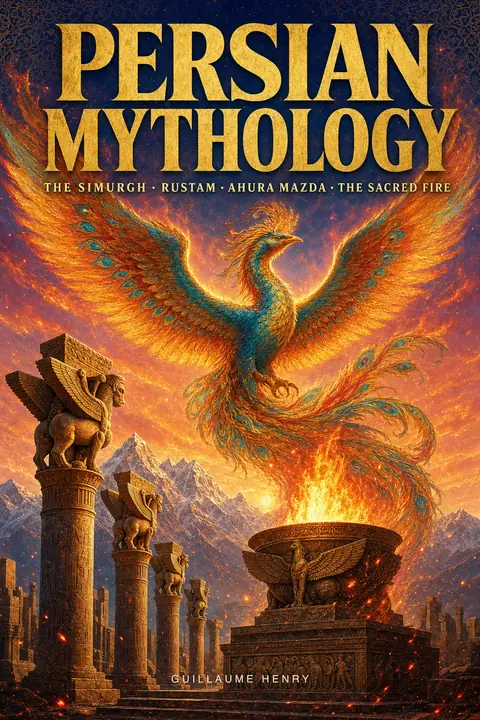
Persian mythology is the cement of Iranian culture and its art, so we introduce you to the Persian legends often forgotten in our classes.
Browse Persian
Persian mythology is that of the ancient peoples who inhabited the Iranian plateau to the territories of Central Asia of the Black Sea
This mythology is characterized by a dualism in which Ahura Mazda, symbol of good, and Angra Mainyu, symbol of darkness and evil, confront each other. This dualism already existed in Achaemenid times and it is under its influence that Judaism has made the adversary, Satan, the principle of evil.
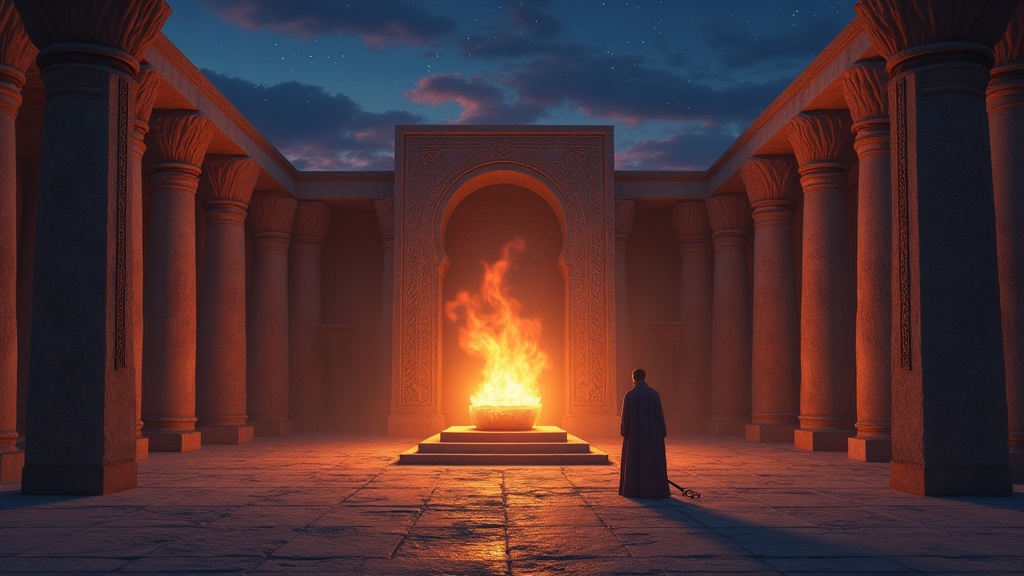
One of the fundamental aspects of Mazdeism is the importance of fire, “son of Ahura Mazda”, and its sacredness. Monumental altars of fire are built throughout the Iranian world.
The other particular aspect is the funeral custom which consists in exposing the corpses in the “towers of silence” (dakhma) where vultures come to devour them in an act of supreme generosity towards the elements of nature.
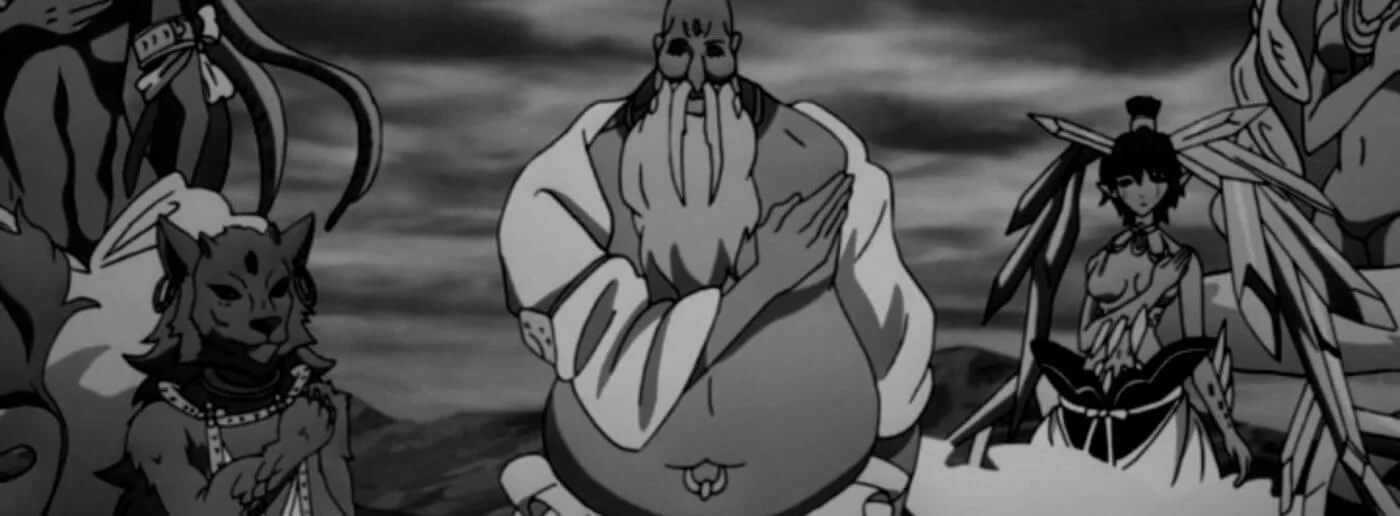
Along with rare bloody sacrifices, the main means of communication with the divinity is the sacrifice of haoma, a liquor obtained from the juice of the plant. The Mazdean cult has a whole ritual assumed by a strongly structured clergy of which two of the principal representatives are the priest called mobed (or magopat, “chief of magi”) and the erpat, teaching priest and reader.
The Islamic conquest, in the 7th century, which caused the fall of the Sassanids, led to the gradual disappearance of this system, which only survives in its modalities among a few groups in Iran, the Gebras, and in India with the Parsis.
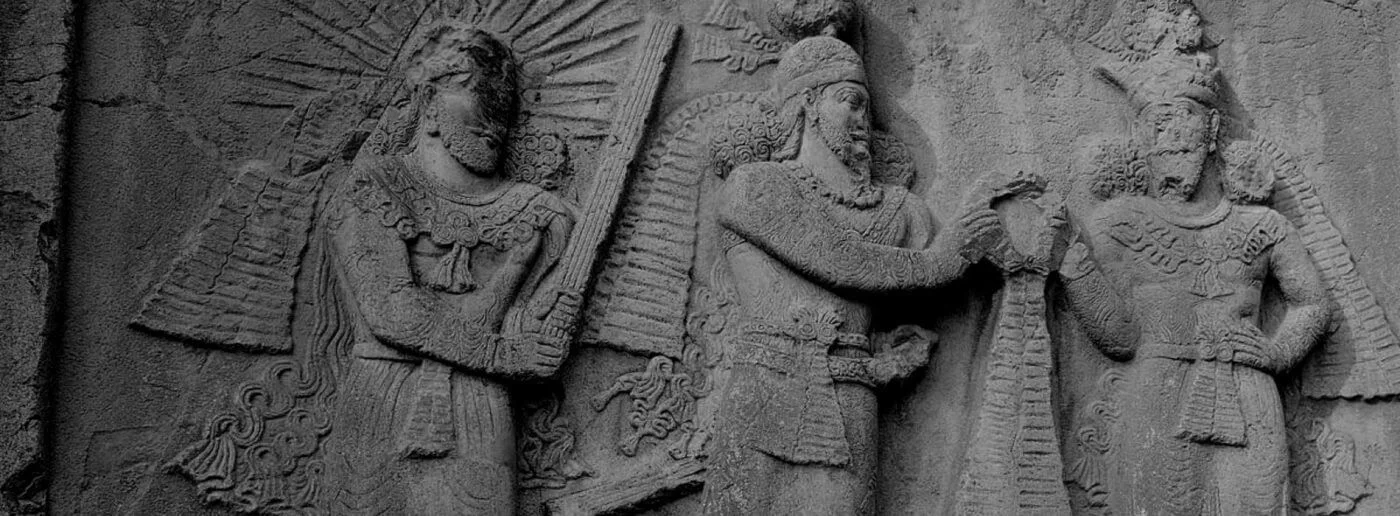
Among the sources we must mention the Shâh Nâmeh, the book of kings, written around the year 1000 by Ferdowsi; it is an epic poem, retracing the history of Great Iran from the creation of the world until the arrival of Islam.
See some photos on Iran and the current presence of a small Zoroastrian community with its temples of fire and its towers of silence
The foundations of Persian mythology
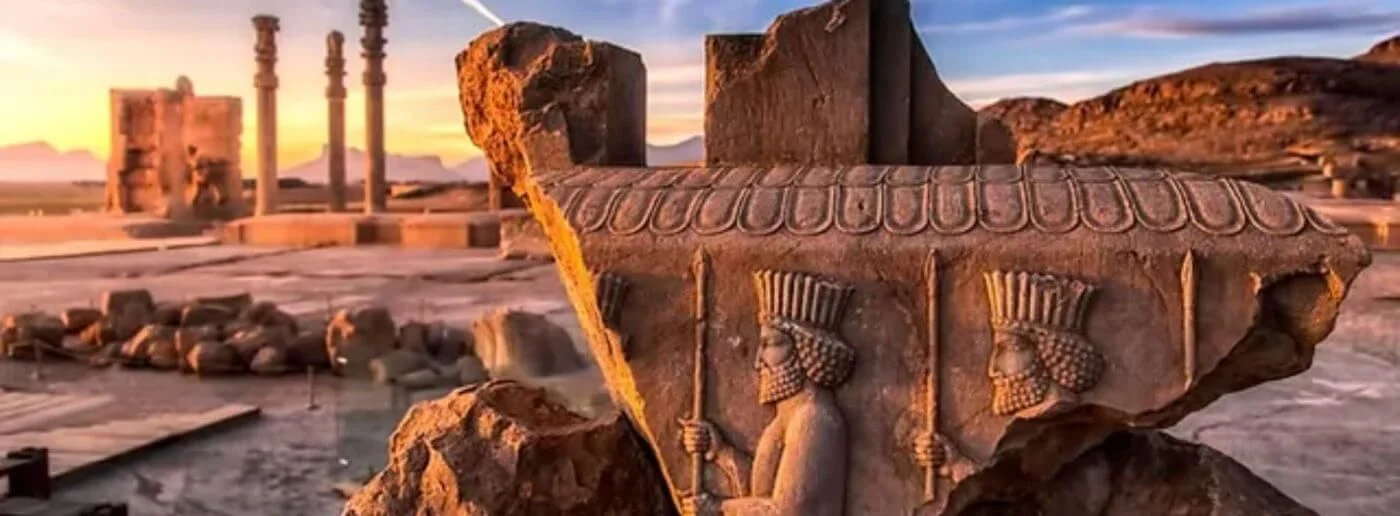
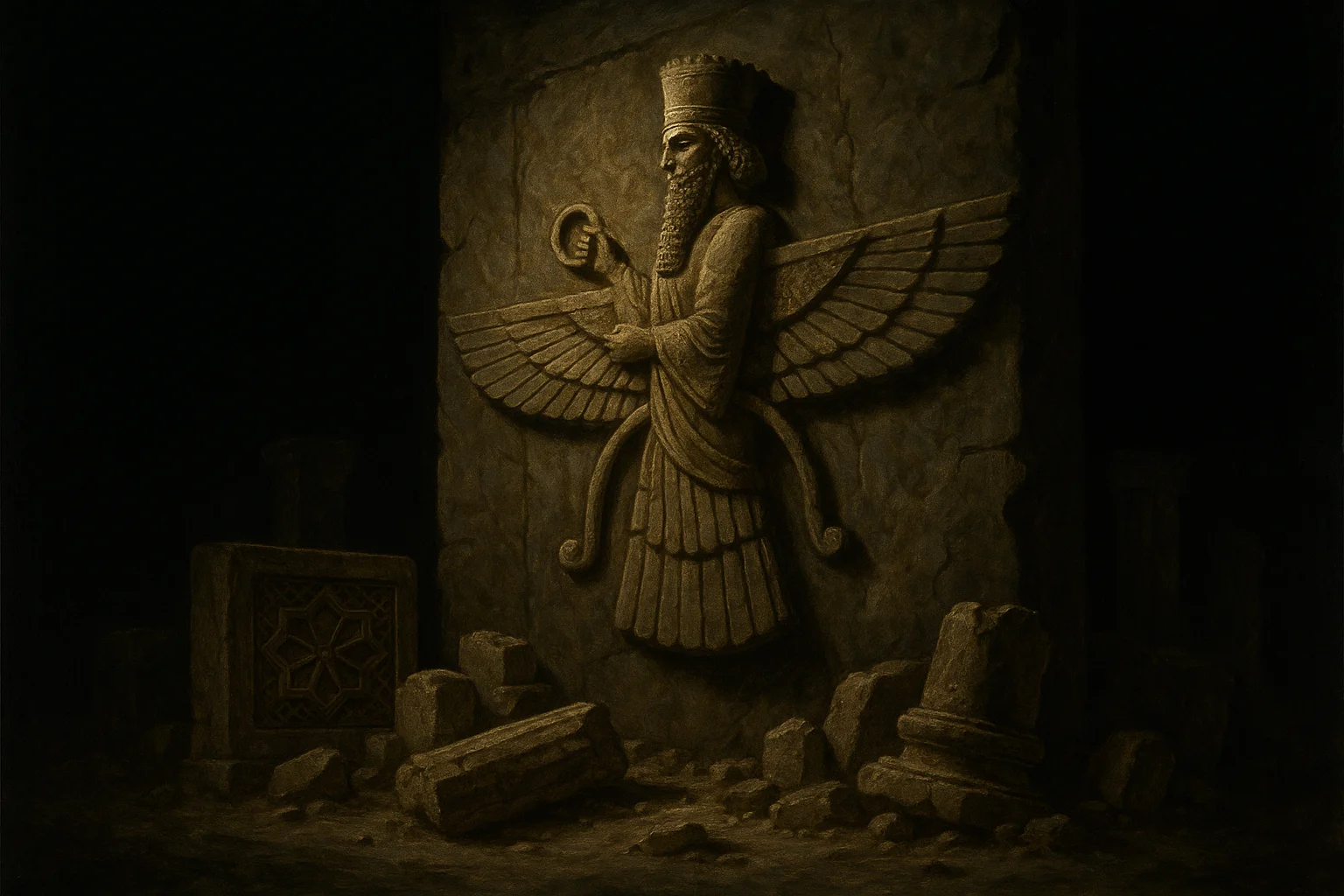
The Persian gods are diverse and numerous and their worship varies according to the different religious movements: the practitioners of Mazdaism worshipped a plethora of gods until the prophet Zoroaster, founder of Zoroastrianism during the 2nd millennium BC, reformed Mazdaism by creating the first monotheistic religion known to this day. The latter is centered around the only god Ormazd also called Ahura Mazda, the creator god.
From then on, Persian mythology was based on a dualism: Ahura Mazda embodied Goodness in constant struggle against Ahriman or Angra Mainyu, who was no longer considered a god in his own right, but a concept related to Evil. As for the Mazdean gods, they become what are called “Yazatas”, geniuses of good who are still respected but to whom one no longer devotes a divine cult.
Zurvanism in Persian Mythology
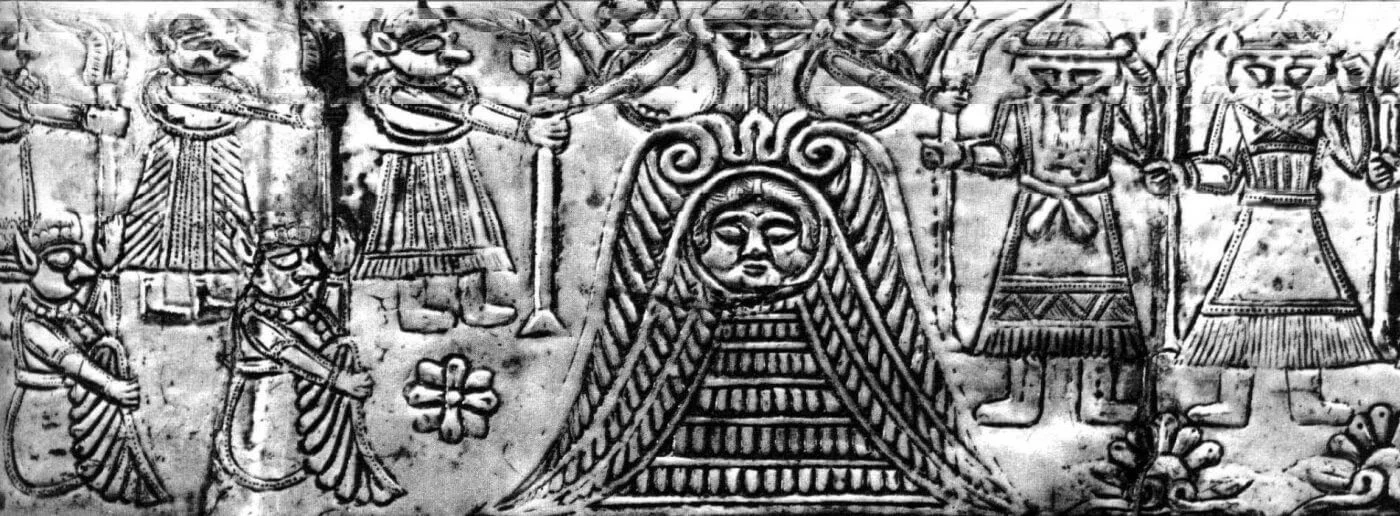
Zurvanism , a religious movement born in Achaemenid Persia, will go so far as to create a new god above Ahura Mazda: the primitive god Zurvan Akaran. Like the god Chronos in Greek mythology, Zurvan Akaran is the master of time. He is said to have given birth to two completely opposite twins, Ormazd and Ahriman, who embody respectively Good and Evil. However, Zurvan Akaran is only recognized by the Zurvanists.
Thus, the notion of dualism is omnipresent in Persian mythology, and reaches its paroxysm in Mazdakism and Manichaeism.
The entities of Ahura Mazda and Angra Mainyu are a reflection of life in this world in which Good and Evil clash relentlessly. It is interesting to note that this dualistic vision is also deeply rooted in Christianity with the figure of the Devil. It can also be found in more distant thoughts such as those of the Incas and the Mayans.
Now that the foundations have been laid, we would like to introduce you to its two main and founding entities:
AHURA MAZDA or ORMAZD : the Good
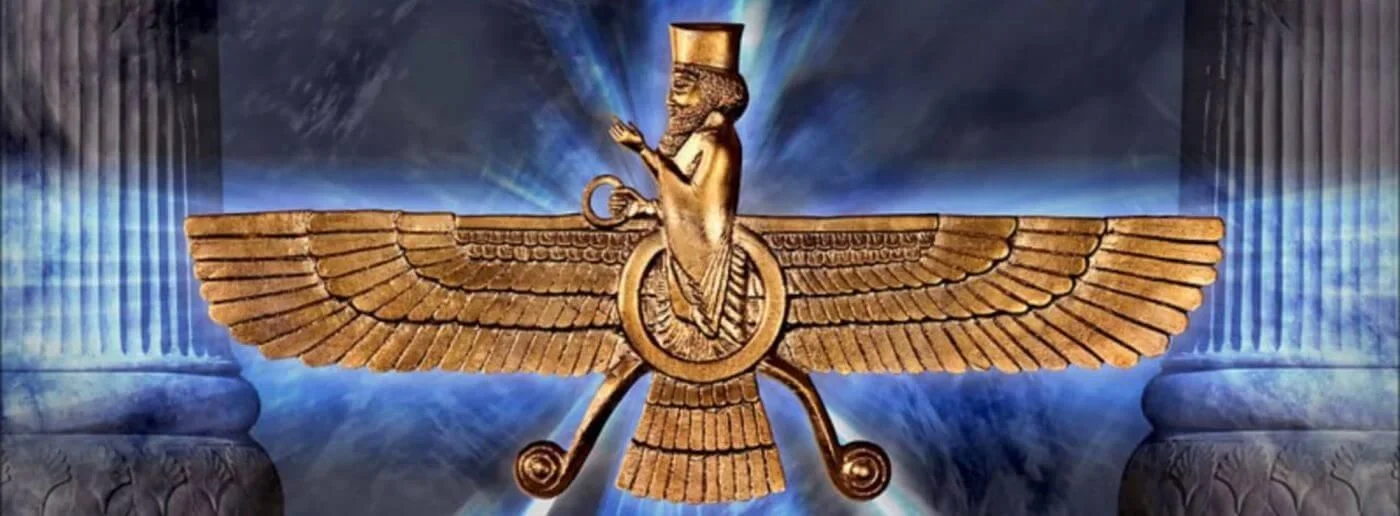
Incarnation of the Good, god of the goodness, the wisdom, the absolute knowledge, Ahura Mazda is endowed with a creative force which makes of him a supreme god. He is responsible for the creation of the cosmos, of light and darkness, of all living beings and of all spiritual and physical activities. It is said that the sun is his eye, and the sky is his garment whose embroidery is the stars.
His perpetual light, warm and full of life, repels the cold and dead darkness where evil flourishes and against which he wages a perpetual battle.
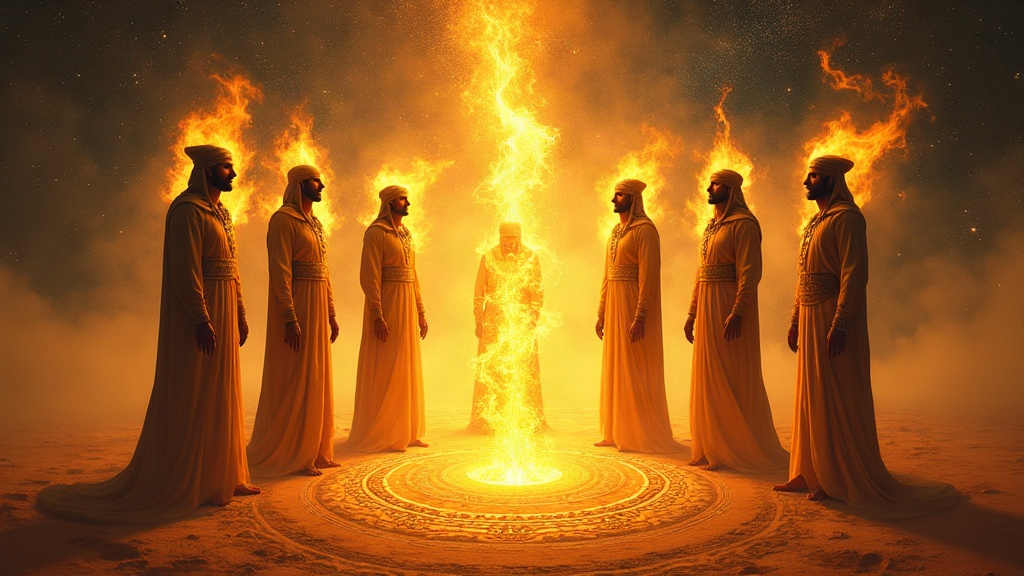
Ahura Mazda reigns over the universe alongside 6 other supreme deities, the “Amshaspands”, each of whom reigns over a form of creation that we will present to you in the next article.
ANGRA MAINYU or AHRIMAN : Evil
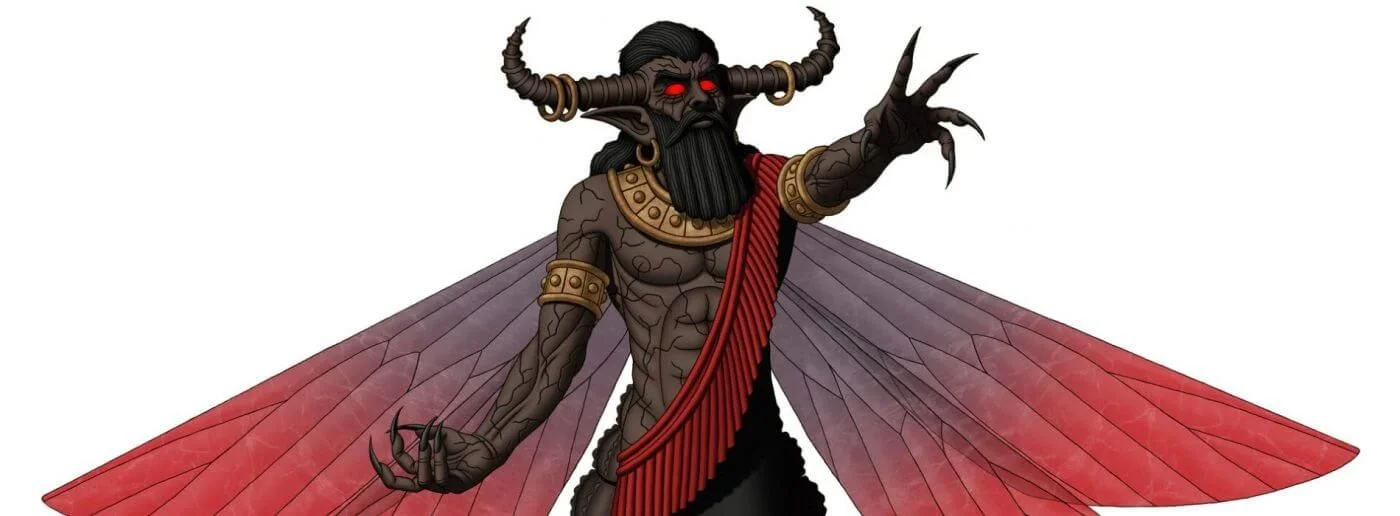
He is the embodiment of evil and his goal is to destroy the world and bring about the reign of evil and darkness. He lives in the darkness of the North, epicenter of all evil forces. Like Ahura Mazda, he is helped in his fight against good by six demons, “davea” in Persian, coming from the cosmic darkness and many other evil deities that you will discover in the next article.
Where Ahura Mazda generates life, Angra Mainyu generates death, where Ahura Mazda offers health to living beings, Angra Mainyu offers them diseases. Thus, Angra Mainyu may be built in opposition to the god Ahura Mazda, but his powers remain inferior to the latter since he is doomed to fail at the end of time.
Note that Angra Mainyu remains a concept and not a god for monotheistic Zoroastrianism.
Major gods of Persian
View all →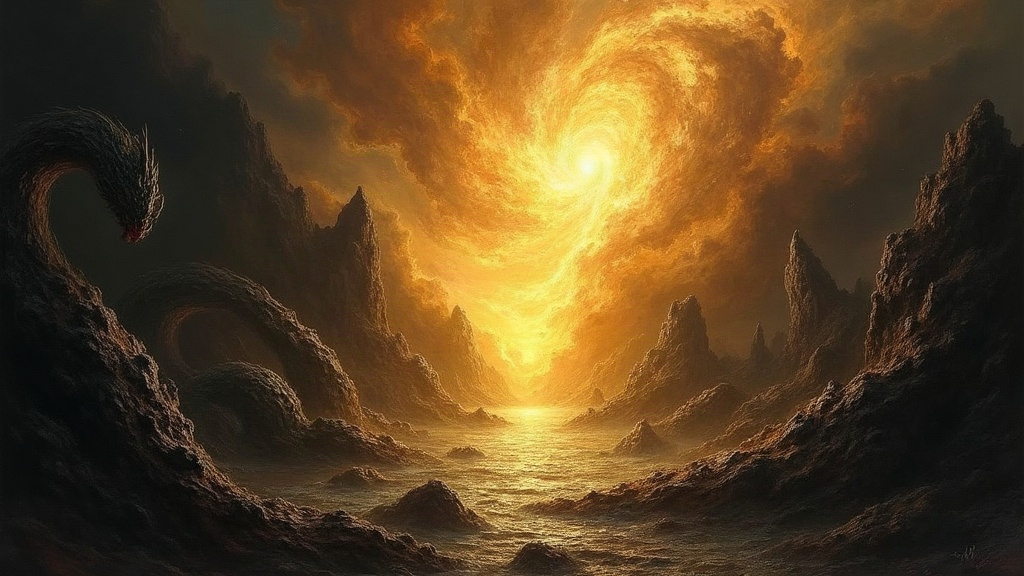
Persian
Ahriman (Angra Mainyu): The Destructive Spirit of Persian Mythology
Ahriman (Angra Mainyu in Avestan) is the cosmic principle of destruction, decay, and evil in Persian Zoroastrianism. Eternal rival of Ahura Mazda, he embodies chaos itself and shapes the central spiritual conflict of humanity's purpose.
Persian
Ahura Mazda: The Wise Lord and Supreme Deity of Zoroastrianism
Ahura Mazda, the "Wise Lord" of ancient Iran, stands at the center of one of humanity's oldest monotheistic traditions. His conflict with Angra Mainyu shaped Persian cosmology, ethics, and the fate of the soul.

Persian
Anahita: The Persian Goddess of Waters and Fertility
Anahita, the Persian goddess of waters and fertility, ruled over rivers, healing, and the cycle of life itself. Revered for millennia across the Zoroastrian world, her story reveals how water became sacred, and how a goddess shaped the spiritual landscape of Persia, Anatolia, and beyond.

Persian
Mithra: The Ancient Persian God of Covenant and Light
Mithra stands at the heart of Persian religion as the guardian of oaths, contracts, and the cosmic order. Explore how this ancient god shaped Zoroastrianism and influenced religions across the Mediterranean world.
Recent in Persian
6 entriesPersian
Ahriman (Angra Mainyu): The Destructive Spirit of Persian Mythology
Ahriman (Angra Mainyu in Avestan) is the cosmic principle of destruction, decay, and evil in Persian Zoroastrianism. Eternal rival of Ahura Mazda, he embodies chaos itself and shapes the central spiritual conflict of humanity's purpose.
Persian
Ahura Mazda: The Wise Lord and Supreme Deity of Zoroastrianism
Ahura Mazda, the "Wise Lord" of ancient Iran, stands at the center of one of humanity's oldest monotheistic traditions. His conflict with Angra Mainyu shaped Persian cosmology, ethics, and the fate of the soul.
Persian
The Amesha Spentas: The Holy Immortals of Zoroastrianism
The Amesha Spentas are the six divine beings who embody Ahura Mazda's virtues in Zoroastrianism, each governing a sacred realm from fire to cattle. Discover how these Holy Immortals shaped Persian theology and still guide followers today.
Persian
Anahita: The Persian Goddess of Waters and Fertility
Anahita, the Persian goddess of waters and fertility, ruled over rivers, healing, and the cycle of life itself. Revered for millennia across the Zoroastrian world, her story reveals how water became sacred, and how a goddess shaped the spiritual landscape of Persia, Anatolia, and beyond.

Persian
The Avesta: Sacred Texts of Zoroastrianism and Ancient Persian Religion
The Avesta is the religious scripture of Zoroastrianism, containing hymns, prayers, and law from ancient Persia. Discover how this 3,000-year-old text shaped Western religion and philosophy.

Persian
The Chinvat Bridge: The Bridge of Judgment in Zoroastrian Eschatology
The Chinvat Bridge decides every soul's fate in Zoroastrian belief: a razor-thin span over the abyss that widens for the righteous and narrows for the wicked. Learn what awaits on the other side.