
Axé: The Sacred Life Force in Candomblé
Axé is the vital energy that flows through all life in Candomblé, from the orisha deities to the human body. Discover how this West African concept became the beating heart of Brazil's most influential African diaspora religion.
Contents
In a small white-walled room in Salvador, Bahia, a priestess opens her hands and whispers a prayer. Around her, the smell of herbs and dried flowers fills the air. She is not calling to a distant god. She is drawing down axé (pronounced ah-SHAY), the very force that animates existence, the same power that moves through the orishas, the plants growing outside, the blood in her own veins. This is not metaphor. In Candomblé, axé is tangible. It can be built, transferred, depleted, and restored. Without it, nothing moves, grows, or holds power.
Axé, the sacred life force in Candomblé, sits at the center of this African diaspora religion born from the collision of Yoruba belief, Catholicism, and Brazilian survival. It is not a god. It is not spirit alone. It is the fundamental energy of existence itself, something the Yoruba peoples of West Africa understood long before Candomblé took its modern shape. To understand axé is to understand how Candomblé priestesses heal the sick, how the orishas manifest in human bodies during rituals, and why Candomblé initiates spend years learning how to cultivate, contain, and direct this invisible but undeniable power.
Where Axé Comes From: Yoruba Roots and the Atlantic Passage
The concept of axé originates in Yoruba cosmology, the spiritual worldview of the Yoruba peoples of what is now Nigeria, Benin, and Togo. In Yoruba thought, the universe is not divided between matter and spirit in the Western sense. Instead, all things possess ase, the vital principle that grants them existence and allows them to act. A stone has ase. A word has ase. A person's name carries ase. When a Yoruba elder speaks a blessing, the words themselves are not merely symbolic. They transmit ase from speaker to listener.
The Yoruba did not arrive in Brazil voluntarily. Between the 16th and 19th centuries, approximately 4.9 million African captives crossed the Atlantic in the holds of slave ships. Of these, Yoruba-speaking peoples constituted one of the largest cohorts, especially during the 18th and 19th centuries. They brought their gods with them. They brought their languages, their medicines, their music, and their understanding of how power moved through the world.
When enslaved Yoruba people encountered Catholicism in Brazil, they recognized the orishas in the saints. Xangô, the Yoruba god of thunder and justice, became Saint George. Yemoja, the mother of the ocean and all waters, became Our Lady of Conception. Oxum, the orisha of rivers, love, and prosperity, became Our Lady of Aparecida. This was not mere syncretism, a superficial blending of two faiths. It was a brilliant act of resistance and continuity. By channeling Yoruba devotion through Catholic saints, enslaved Africans preserved their spiritual practice under the eyes of oppressors. In the hidden spaces of quilombos and the slave quarters of sugar plantations, Candomblé was born.
Over time, especially after Brazilian abolition in 1888, Candomblé moved from survival practice to sustained religion. Terreiros, meaning "yards" or temple grounds, became anchors of African diaspora culture. And at the heart of every terreiro's work lay an understanding of axé.
The Nature of Axé: Energy, Presence, and Transformation
To speak of axé in English is to immediately lose precision. The closest translations might be "life force," "sacred energy," or "spiritual power." But these words flatten what is actually a dynamic concept. Axé is not static. It moves. It accumulates. It dissipates. It can be given, received, and circulated.
In Candomblé practice, axé has several key properties:
-
It is relational. Axé is not possessed individually but flows through relationships between humans, orishas, spirits, plants, and objects. The axé of a priestess is inseparable from the axé of her initiation house, her godparents, and the orishas she serves. When someone walks away from community, their axé diminishes.
-
It responds to intention and ritual. Axé does not move randomly. It is activated and directed through music, drumming, specific prayers in Yoruba, offerings, and precise ritual gestures. A Candomblé ceremony without proper invocation, without the right songs and movements, will not generate axé. The ritual is not theater meant to symbolize something else. The ritual is the mechanism by which axé is accessed and deployed.
-
It accumulates through practice and initiation. Someone born outside a terreiro has axé, but it is diffuse. Through initiation, a person's axé is concentrated, refined, and aligned with specific orishas. An iyalorixá (a female priestess who heads a house) possesses far greater axé than a newly initiated person. This is not because she is "more spiritual" in some abstract sense. It is because she has spent years in controlled relationship with her orishas, building and directing power.
-
It inhabits and strengthens objects. A particular stone found near a waterfall and prepared through ritual carries axé. The herbal preparations called banhos (baths) that practitioners use for healing or protection are not merely herbal medicine. They are saturated with axé, the intention of the priestess who made them, and the presence of specific orishas. The effectiveness of these preparations is not separable from their axé.
-
It can be transferred. In Candomblé initiation, the godparent (usually called a madrina or padrinho, the godmother or godfather) transfers a portion of their axé to the initiate. This is not a metaphorical blessing. The priestess will place her hand on the initiate's head, whisper prayers, and ground that person in the lineage of her house. From that moment forward, the initiate carries the axé of that bloodline, that terreiro, those specific orishas.
Axé and the Orishas: The Source of All Power
The orishas, the deities venerated in Candomblé, are themselves beings of pure axé. Each orisha embodies a particular force and governs specific domains of existence. When we say that Shango is the orisha of thunder and justice, we are naming his particular flavor of axé. When someone is said to be "a child of Oxum," it means their fundamental axé resonates with Oxum's frequency.
The relationship between a devotee and her orisha is not distant. It is intimate and practical. An Oxum priestess does not merely revere the orisha. Through ritual, through song, through offerings of honey and gold cloth, through years of service, she becomes a conductor for Oxum's axé. During ceremonies called festas (feasts), when the priestess dances in trance, it is understood that the boundary between her and her orisha has thinned. Oxum is present in her body, speaking through her, moving her hands with a grace that is not entirely the priestess's own.
This possession is not what outsiders sometimes imagine: a loss of self or a frightening seizure. Rather, it is described by practitioners as an opening, a meeting point where human and divine axé merge. The priestess remains conscious, though her awareness expands. She feels the orisha's presence the way a musician feels the rhythm, not as something alien but as something that has always been part of her deeper nature.
The axé circulates not only between priestess and orisha but through the entire gathered community. When people in the terreiro respond to the priestess's movements with their own dancing, their own voices singing the orishas' songs, they are adding their axé to the collective field. The ceremony builds. The drumming accelerates. The axé thickens in the room like humidity before a storm.
Axé in Daily Practice: Healing, Protection, and Alignment
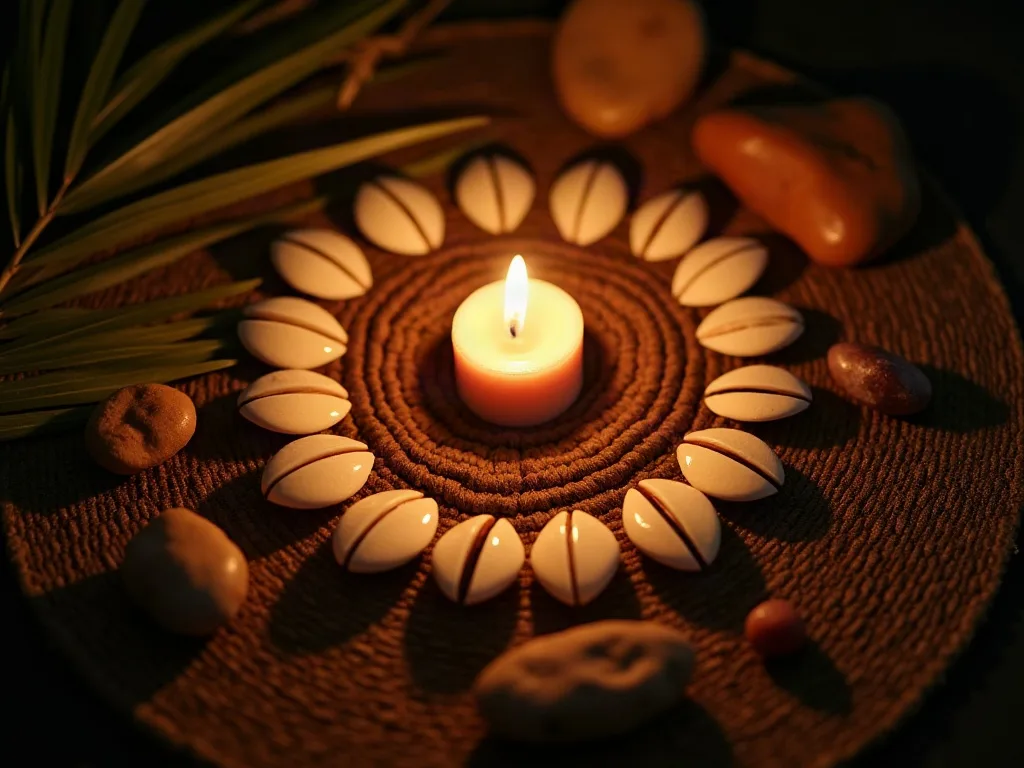
For most Candomblé practitioners, axé is not an abstract theological concept but a practical reality encountered in weekly life. When someone falls ill with a persistent sadness or anxiety, they might visit a priestess. The priestess does not necessarily prescribe pharmaceuticals. She performs a reading, often with cowrie shells called búzios, to determine which orisha needs attention and what offerings or rituals are required. She might prepare a banho, a ritual bath infused with herbs and prayers directed at a particular orisha. The practitioner takes the bath, speaking the prayers the priestess has taught, visualizing the orisha's energy flowing into them.
Does it work? From the perspective of biomedicine, the mechanism is unclear. But practitioners and their families report consistent results: the sadness lifts, clarity returns, the person feels grounded. Whether one attributes this to placebo, to the power of ritual meaning-making, or to the literal transmission of axé as Candomblé cosmology describes it, the reality of the healing is not disputed. The axé is in the results.
Similarly, Candomblé practitioners use axé-laden objects and practices for protection. A person might wear a bracelet called a fio-de-conta (thread of beads) corresponding to their orisha. The beads are not merely decorative. They have been prepared with prayers and intention, saturated with axé, aligned with the wearer's spiritual identity. They serve as both identifier and protection, a constant reminder of the wearer's relationship to their orisha and a vehicle for that orisha's presence and strength.
When someone is preparing for a difficult situation, a job interview, a court appearance, a dangerous journey, they might receive a prepared item or blessing from a priestess. These are not superstitions to be overcome by rationality. They are technologies of axé, deliberate engagements with the sacred forces that govern human fortune.

The Initiation: Building Axé Through Sacred Death and Rebirth
The most intense encounter with axé for a Candomblé practitioner occurs during initiation, called feitura de santo (making of the saint). This is not a one-day ceremony but a process lasting anywhere from several months to over a year. The initiate undergoes a literal seclusion called repouso (rest), usually spending the first three days in a private room, often fasting, engaging in prayer and meditation focused on their particular orisha.
During these days, the initiate is considered to be in a liminal state, no longer fully themselves but not yet integrated into their new identity. They are being unmade and remade. Their individual axé is being adjusted, aligned, and concentrated. They undergo ritual washing, special foods prepared with prayers, constant singing and drumming. They are taught the songs, the stories, the personal history of their orisha. They learn the gestures, the taboos, the sacred foods they will honor.
On the day the initiate emerges from seclusion, they are dressed in elaborate white clothing, their head wrapped, their body marked with ritual scarification and the marks of their orisha (in Candomblé, these are usually symbolic rather than literal). They sit in a place of honor and are presented to the community. They are no longer the same person. They have been possessed by their orisha, killed and reborn, emptied of their individual will and refilled with divine presence.
This is not metaphorical language in Candomblé understanding. Something has genuinely been transformed. The initiate's axé has been fundamentally reorganized. They now carry an amplified connection to their orisha. They can more easily transmit that orisha's energy. They understand themselves differently.
The godparents who supervised this process have transferred a crucial portion of their own axé to the initiate, creating a permanent bond. The initiate will greet these godparents with a specific ritual gesture of respect (a genuflection called a reverência) for the rest of their lives. The axé that flows through that relationship never ceases.
Axé and Community: The Terreiro as Energetic Organism
A terreiro is not primarily a building, though it does have physical structures. It is an organism constituted by axé. The founding priestess or priest establishes the terreiro through a founding ritual that plants, quite literally, sacred objects in the ground and consecrates the space. From that moment forward, the terreiro has its own axé, its own spiritual gravity, its own particular relationship to specific orishas.
People are drawn to a terreiro because they resonate with its axé. They may not have language for this. They might simply say, "I felt welcome," or "Something about that place felt right." What they are responding to is the accumulated axé of the community, the spiritual lineage of the priestess, the particular configuration of orishas honored there.
The regular ceremonies held at a terreiro are not optional performances. They are maintenance rituals. Just as a city must maintain its electrical grid, water system, and roads, a terreiro must maintain its spiritual infrastructure. When the community gathers to honor a particular orisha, singing their songs and making their offerings, the axé of that orisha is renewed and strengthened. The bonds between community members are reinforced. The spiritual protection of the terreiro is reinforced.
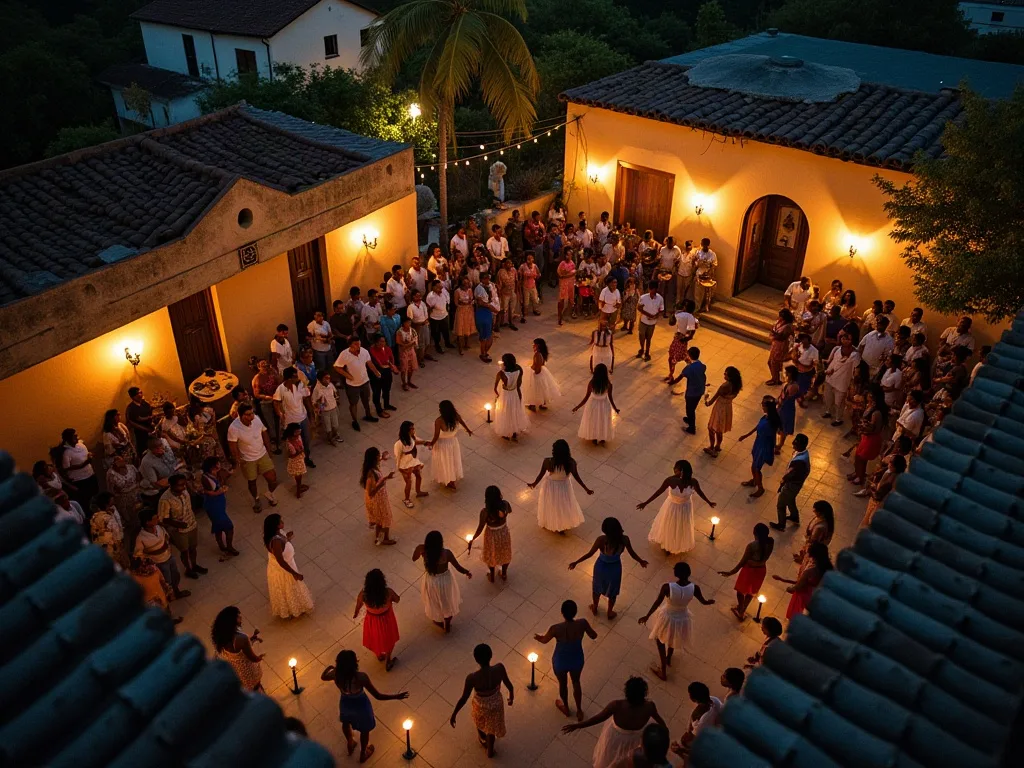
During the festas for the major orishas, which follow a ritual calendar throughout the year, the terreiro reaches peak energetic intensity. The ceremony for Yemoja, typically in December, draws hundreds of people. The priestess, covered in the blue and white of that orisha, the music reaching a frenzy, the dancers moving in unison, the air thick with incense and intention. This is not entertainment. This is organized generation and circulation of axé on a massive scale.
Axé in Contemporary Candomblé: Facing Threat and Transformation
In recent decades, Candomblé has faced increasing pressure from evangelical Protestant churches and from mainstream Brazilian society that continues to regard African diaspora religions with suspicion or hostility. Despite legal protections against religious discrimination, practitioners report being fired from jobs, shunned by neighbors, and verbally attacked when their religious identity is known.
In this context, axé has taken on new dimensions of meaning. To maintain a terreiro and its practices in the face of active opposition requires extraordinary commitment. Practitioners speak of the axé needed to resist erasure, to keep their orishas alive in a society that denies their validity. The concept has become bound up with resilience, with Black pride, with the refusal to assimilate.
At the same time, Candomblé in some urban contexts has moved toward greater openness and visibility. Some priestesses have written books. Some terreiros have invited journalists and researchers. This shift creates new dynamics around axé. How do you share the sacred without diminishing it? How do you build community when the community is no longer insular? These are questions contemporary practitioners navigate actively.
The concept of axé has also begun to circulate more widely in Brazilian popular culture and consciousness. The phrase "muita axé" (much axé) is used colloquially as a blessing or encouragement. While some Candomblé practitioners see this as dilution, others see it as a kind of cultural diffusion, an opening through which people not formally initiated can begin to sense the reality of forces that lie beneath the surface of everyday life.
Axé and Western Scholarship: Bridging Two Epistemologies
Western academic study of Candomblé has long grappled with how to write about axé without reducing it to metaphor or dismissing it as superstition. The anthropologist Ruth Landes, who conducted fieldwork in Bahia in the 1930s, wrote about axé as a distinct category of religious experience. More recent scholars, including Leticia Vandi and Stephan Palmié, have explored how Candomblé practitioners themselves theorize axé, not as a primitive precursor to science but as a coherent system of knowledge about how power, intention, and transformation work.
One crucial insight from this scholarship is that axé should not be understood through either/or logic: either it is "real" in a scientific sense or it is "merely symbolic." Practitioners operate with greater sophistication. They understand that ritual and axé are not separated from material reality but are woven through it. The herbal bath works not because it is magically separate from chemistry but because the practitioner's intention, the plant's properties, the community's belief, and the orisha's presence all converge. Axé is the name for that convergence.
Frequently Asked Questions About Axé in Candomblé
Frequently asked questions
Can someone outside Candomblé access axé?
In Candomblé teaching, everyone possesses axé, but it varies in concentration and clarity. A person not initiated into Candomblé has dispersed axé. Through initiation and sustained practice, axé becomes organized and amplified. However, some practitioners acknowledge that certain non-initiated people have natural gifts and can work with axé in limited ways. The formal cultivation of axé, though, is understood to require the structure, lineage, and orishas of a terreiro.
Is axé the same concept as chi, prana, or other 'life force' terms from other traditions?
There are genuine similarities. Axé, like chi in Taoism or prana in Hinduism, names a vital energy underlying existence. However, Candomblé practitioners emphasize that axé is relational and personal in a way these other concepts might not be. Axé flows through specific relationships with specific orishas. It is not an impersonal universal force but one that is negotiated through community, ritual, and intimate spiritual kinship.
What happens to axé after someone dies?
In Candomblé belief, the axé of a deceased person does not simply vanish. Ancestors, called egun, remain present and continue to influence the living. Their axé is integrated into the terreiro's collective axé. Ancestors are honored in specific rituals and are understood to offer protection and guidance. Some traditions within Candomblé emphasize ancestral axé more than others.
Can axé be removed or stolen?
Candomblé practitioners acknowledge that axé can be disrupted, depleted, or intentionally directed with harmful intent. This is why protection is a significant part of Candomblé practice. Priestesses perform rituals to cleanse a person's axé, to restore energy that has been diminished through conflict or illness, and to strengthen boundaries against unwanted spiritual influence. The idea is not that axé can be "stolen" like a physical object, but that negative intention can scatter or damage a person's axé alignment.
How do Candomblé practitioners measure whether axé is working?
Measurement occurs primarily through lived results. Does the person feel clearer, more peaceful, more capable after ritual work? Do healings occur? Do protective measures seem to shield from harm? Are community bonds stronger? Do the orishas manifest more strongly in ceremonies? These are the practical indicators. In Candomblé epistemology, axé that does not produce real-world change is questioned.
Is learning about axé the same as learning about Candomblé as a whole?
Axé is central to Candomblé but is not its complete picture. Candomblé also encompasses the specific mythology of each orisha, the elaborate ritual calendar, the governance of terreiros, the relationship to ancestors, healing practices, divination systems, and ethical teachings. Understanding axé provides a key, but a complete Candomblé education takes years of study and initiation.
Axé as Epistemology: A Different Way of Knowing
What emerges from serious engagement with Candomblé's concept of axé is a reminder that Western secular modernity is not the only framework for understanding how the world works. Candomblé offers an epistemology, a way of knowing, in which intention, relationship, community, ritual, and the sacred are not optional additions to material reality but are woven through it.
When a priestess says that healing depends on axé, she is not being prescientific. She is naming something empirically real: that the transformation of a person's condition requires a shift in their relationship to forces larger than themselves, requires community support, requires the activation of meaning and intention. Modern medicine might measure this in terms of stress hormones, parasympathetic activation, and psychoneuroimmunology. Candomblé measures it in terms of axé. Both describe genuine phenomena.
The persistence of Candomblé despite centuries of opposition, despite slavery, despite ongoing discrimination and violence, testifies to the power of its practitioners' understanding of how to transmit life, energy, and meaning across generations. Axé, in this sense, is not merely a spiritual concept. It is a technology of survival, a method of keeping Black African culture alive in a diaspora, a practice of building power collectively in the face of forces that would erase it. To understand axé is to understand one of the most significant spiritual systems in the Americas, and to grasp something true about how human beings generate meaning, healing, and transformation.
Read the full book
Want the whole story?
The complete edition is an instant PDF download here, with a paperback on Amazon for selected titles.

Candomblé
The Candomblé Book: The Orixás, Xangô, Yemanjá, and the Living Religion of Brazil
The Orixás: Xangô, Yemanjá, and Oxalá
The faith the enslaved carried across the ocean and refused to lose: the orixás of West Africa reborn in Brazil. Xangô of thunder, Yemanjá of the sea, Oxalá the creator, and the drums, foods, and colors that call them down. A living religion.
More from Candomblé
All articles
Candomblé
Xangô: The Thunder King and God of Justice
Xangô commands thunder and lightning, wielding a double axe as an instrument of divine justice. This Candomblé orisha embodies the warrior spirit, passion, and the power to strike down falsehood with sacred fire.

Candomblé
Oxóssi: Hunter God of the Forest
Oxóssi is the Candomblé deity of the hunt, forest abundance, and spiritual provision. His arrows strike with precision through the veil between worlds. Learn how this Yoruba orisha shapes African-Brazilian spirituality and why devotees invoke him for sustenance, clarity, and protection.

Candomblé
Oxum: Goddess of Fresh Waters, Love, and Fertility
Oxum rules the rivers and the human heart in Candomble. She is generosity itself: golden, sensual, protective of mothers and children. Learn how this Yoruba orisha became the most beloved goddess in Brazil and what her mythology reveals about devotion, abundance, and desire.

Candomblé
Iansã: Goddess of Winds, Storms, and the Dead
Iansã commands lightning and tempests, guards the edge between life and death, and embodies the fierce, unbounded energy of nature. In Candomblé, she is one of the most powerful and beloved orixás, syncretized with Santa Bárbara.