
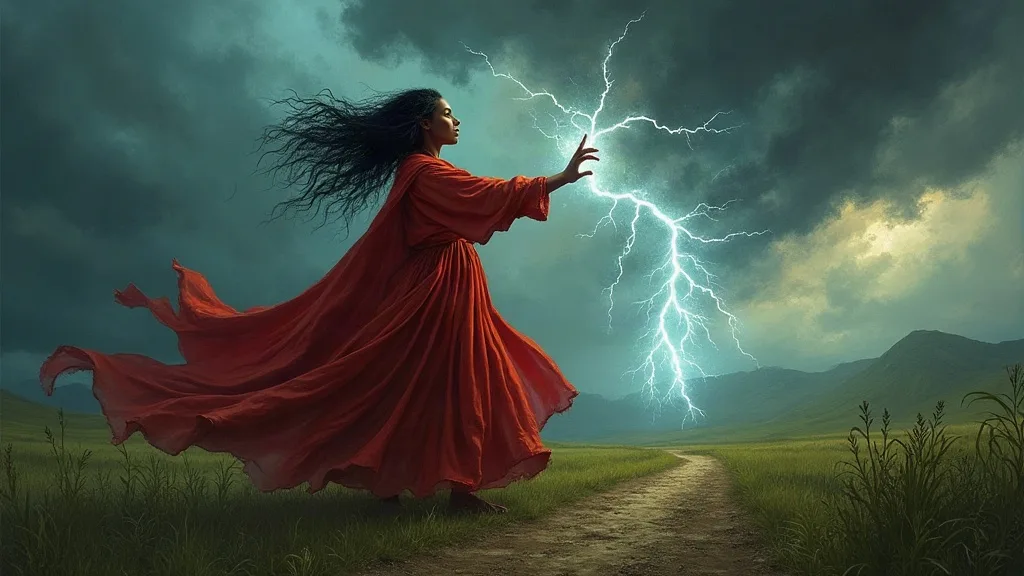
Iansã: Goddess of Winds, Storms, and the Dead
Iansã commands lightning and tempests, guards the edge between life and death, and embodies the fierce, unbounded energy of nature. In Candomblé, she is one of the most powerful and beloved orixás, syncretized with Santa Bárbara.
Contents
In the drumbeat before a storm breaks, when the air goes still and electric, the Candomblé faithful recognize the arrival of Iansã. She comes first as wind, invisible and irresistible, a force that bends trees and scatters ash. Then comes the thunder, the split sky, the rain that cleanses. Iansã does not ask permission. She does not negotiate with mortals or yield to other powers. She is the wind that carries away what is dead, the storm that renews, the warrior who rides at the edge between the living world and the realm of ancestors.
In Candomblé, the Afro-Brazilian religion born from the meeting of Yoruba cosmology and Catholic Christianity in colonial Brazil, Iansã is one of the most formidable and beloved of the orixás. The orixás are sacred powers, sometimes called saints or deities, each ruling over a domain of nature and human experience. Iansã commands lightning, tempests, wind, and the dead. She is the wife of Xangô (the orixá of thunder and justice) and the lover of Ogun (the warrior of iron and roads). She rides into battle alongside them, fierce and uncompromising. Her color is red and copper. Her element is air and fire. Her rhythm is the urgent, driving beat of the agogô bell.
Origins in Yoruba Cosmology
Iansã has roots that reach back to West Africa, to the Yoruba peoples of what is now Nigeria. The Yoruba knew her as Oya or Oya Meji, a powerful and mysterious orixá. In Yoruba tradition, Oya began as the wife of Oshun, the river orixá, and then became the wife of Xangô, the storm king. Some traditions say she transformed herself, shedding her old form to take on new power. Others say she was always destined for Xangô, and her union with him completed a cosmic balance.
The name Oya itself carries weight. In Yoruba, it can mean "she tore," pointing to her destructive, creative force. She is not gentle. The Yoruba understood that wind tears down what is weak, that lightning splits what stands in its way, that the dead must be guided with strength and without sentiment. Oya does all these things. She sweeps away the old so the new can grow. She protects the living from the anger of the ancestors. She holds the boundary between life and death in her hands.
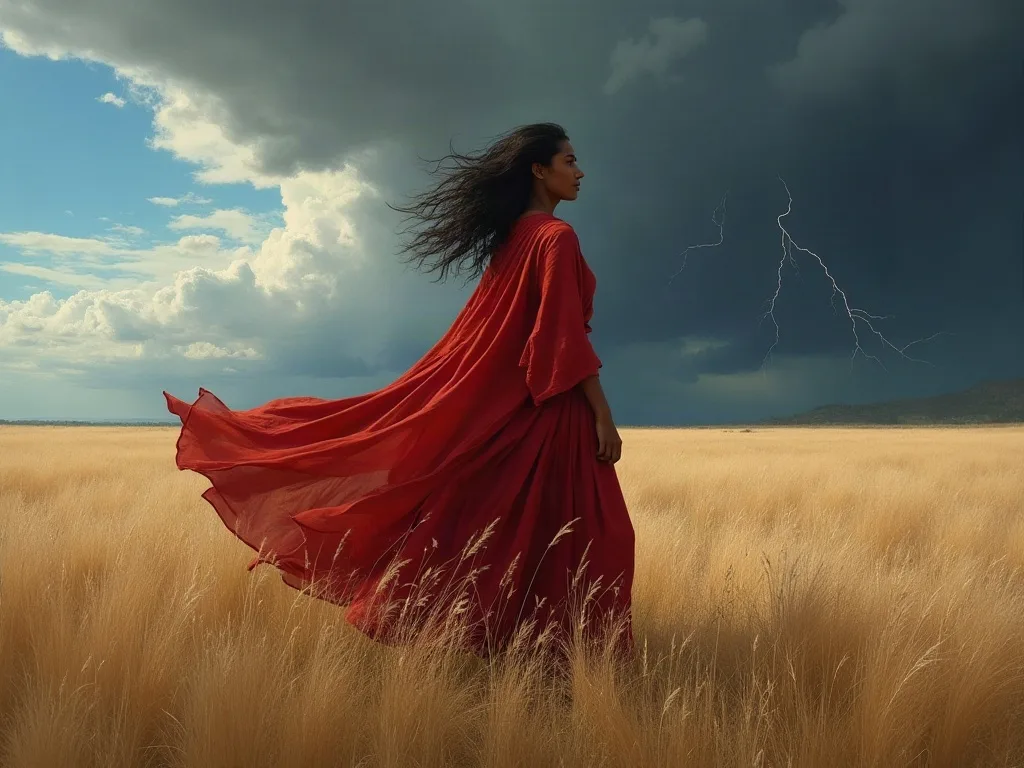
In Yoruba cosmology, the orixás are not distant gods but living forces present in the world, in water, in fire, in the storm. They are mothers, fathers, lovers, warriors. They feel what humans feel. They act with intention. Oya's presence in Yoruba religion predates written records by centuries, passed down through oral tradition, ritual, and the lived experience of communities across the Yoruba heartland.
The Journey to Brazil and Syncretism with Santa Bárbara
When millions of enslaved Africans were forcibly brought to Brazil between the 16th and 19th centuries, they carried the orixás with them in memory, in song, in ritual practice. Under slavery, African religions were forbidden or suppressed. To keep the orixás alive, the Yoruba and other African peoples did something remarkable: they identified each orixá with a Catholic saint. The orixás could then be worshipped openly, hidden in plain sight beneath the Catholic saints' feast days and images.
Iansã became synchronized with Santa Bárbara, the Christian saint of thunder and lightning. The parallel was logical: Santa Bárbara is shown in iconography holding a sword or palm frond, dressed in red, sometimes with lightning at her back. The feast day of Santa Bárbara is December 4th, and in Brazil, this day is also celebrated as Iansã's feast day in Candomblé houses. Many Brazilian churches display Santa Bárbara in her warrior aspect, which only deepened the connection.
This syncretism was not a betrayal of Yoruba belief or a watering-down of Iansã's power. It was a brilliant act of spiritual survival. In Candomblé houses (called terreiros or roças), priests and priestesses called pais de santo and mães de santo (fathers and mothers of the saints) maintained the fullness of Iansã's identity alongside her Catholic mask. They knew her Yoruba songs, her real names, her true domain. When initiates went through the rituals of becoming "children of Iansã" (filhos de Iansã), they entered a relationship with a force as complex and powerful as the orixá herself.
Iansã as Warrior and Storm
Iansã is not an orixá of gentleness or compromise. She is a warrior who rides into battle. In some stories, she carries a sword or a large metal blade. In others, she wears a crown and rides a wild horse, her hair streaming like a banner behind her. Her energy is pure motion: wind, fire, the electricity that comes before a storm. She moves fast. She does not wait.
In Candomblé tradition, Iansã fought alongside Xangô against the orixás who would challenge his rule. She was cunning and fearless. In one story, she stole the secrets of thunder from Xangô and learned to throw lightning herself. Rather than punish her, Xangô was impressed. She became not just his wife but his equal, a storm-bringer in her own right. Some say she was once married to Ogum, the warrior orixá of iron and tools, and the tension between her past with Ogum and her present with Xangô creates a kind of cosmic electricity, a perpetual friction that fuels her power.
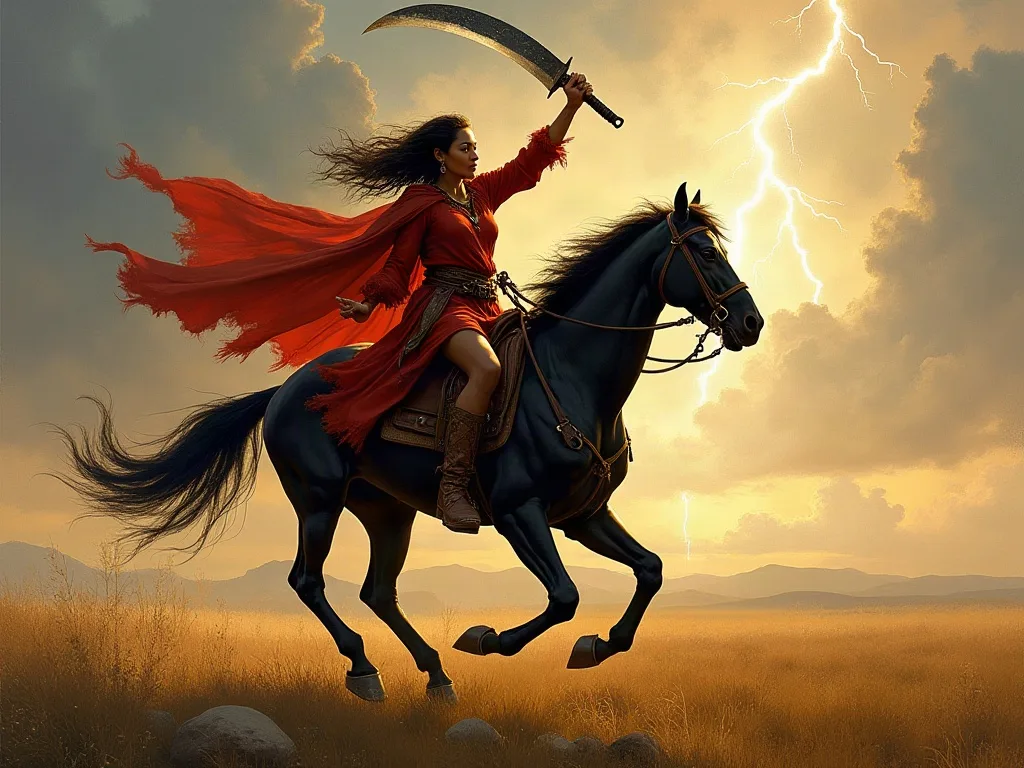
The storm is Iansã's medium. A thunderstorm is not chaos to her; it is communication, release, cleansing. In Candomblé theology, Iansã clears away stagnant energy. She brings rain when the earth is dry. She scatters the ashes of the old fire so new growth can take root. People who belong to Iansã (initiated into her mysteries) are often described as tempestuous themselves. They are not meek. They are passionate, direct, sometimes volatile. They act decisively. They do not hold grudges for long because they move too fast to settle into bitterness. They are protective of those they love with the same intensity that a storm protects the earth by clearing away what does not belong.
Guardian of the Dead and the Boundary Between Worlds
But Iansã is not only a warrior. She holds another sacred responsibility that makes her one of the most important orixás in Candomblé: she is the guardian of the dead and the boundary between the living world and the ancestral realm. This aspect of her power is less visible in popular culture but central to her identity.
In Candomblé practice, death is not an ending but a transition. The ancestors (eguns or egun, a Yoruba word) remain part of the community. They offer guidance, protection, and sometimes challenge. They must be honored and managed carefully. Iansã, with her connection to wind and to the liminal spaces where one world touches another, serves as a guardian at this threshold. She guides the dead to their proper rest. She prevents them from lingering in places where they might cause harm. She carries away the spiritual debris left when someone dies.
This is why Iansã is invoked in rituals of transition and in funerary practices. This is why her feast day in Candomblé houses is sometimes marked with rituals that honor not just her power but her role as a protector of the living by managing the dead. Some Candomblé lineages hold special ceremonies at Iansã's festival where initiates dress in her colors and perform ritual actions that recreate her movement through the boundaries between worlds.
The Colors, Numbers, and Symbols of Iansã
In Candomblé, each orixá has specific symbols, colors, numbers, and ritual objects that embody their power and make them recognizable in both the visible and invisible worlds.
Iansã's primary colors are red and copper. Red is the color of blood, fire, passion, and power. Copper is the color of lightning, of the metal that conducts electricity, of transformation. In some traditions, she is also associated with brown and gold, the colors of storm clouds and the breaking sky.
Her sacred number is nine, a number of completion and power in many traditions. Initiates of Iansã often receive nine bracelets, nine beads, or nine ritual objects.
Her symbol is the large curved metal blade called an opá or, in some traditions, a sword or machete. This weapon represents her role as a warrior and her power to cut through illusion and confusion. In rituals, the opá is honored as a direct manifestation of Iansã's presence.
Her sacred animals include the water buffalo (for its power and stubbornness), the horse (for its speed and freedom), and certain birds associated with storms and wind.
Her scent is often evoked as the smell of rain on earth, the sharp ozone smell that comes before a lightning strike, sometimes mixed with brass polish or metallic scents that recall the opá.
Her feast day in Candomblé is December 4th (synchronized with Santa Bárbara), though different houses may celebrate it on different dates depending on their lineage and tradition.
Iansã and Human Passion, Sexuality, and Transformation
Iansã is also connected to human sexuality and desire in a way that is frank and unapologetic. She is sensual. She is not bound by conventional rules about how women should present themselves or who they should love. In Candomblé mythology, she has had multiple partners. She was married to Ogum, then to Xangô. She has lovers. She moves between states and identities.
This aspect of Iansã's character makes her a patron of women who resist limitation, who claim their own power and sexuality on their own terms. She is invoked by women facing difficult transitions, by those struggling to find their voice, by anyone who needs to break free from constraints. People initiated to Iansã sometimes report that her presence brings a kind of recklessness, a willingness to speak truth even when it is dangerous, a passionate energy that can either manifest as creation or destruction depending on the circumstances.
Iansã's transformative power extends to the spiritual realm as well. She is associated with the ability to shift states of consciousness, to move between the ordinary world and the realm of spirit. In some Candomblé traditions, she is connected to prophecy and to the ability to see what is hidden.
Iansã in Candomblé Ritual and Practice
In a Candomblé terreiro, when Iansã is honored, the energy is unmistakable. Drums accelerate. The rhythm becomes urgent and driving. Initiates who are children of Iansã may enter trance, possessed by her spirit, and the movements are rapid, powerful, full of the gestures of a warrior or a woman riding wind. The possessed person speaks with her voice, moves with her authority.
Offerings to Iansã typically include red fruits, grains, honey, and sometimes wine. Water buffalo meat, when it is part of the offering, is roasted and seasoned. Flowers are red carnations, red roses, or plants associated with wind and air. The offerings are meant not as payment but as a form of conversation, a way of saying, "I honor you, I acknowledge your power, I am in right relationship with you."
In divination systems used in Candomblé, when signs pointing to Iansã appear, they often indicate a time of change, a need to act decisively, a message about movement or danger, or a call to claim one's own power. A diviner reading the shells or other sacred objects might tell a client: "Iansã is present. Change is coming. Do not resist it."
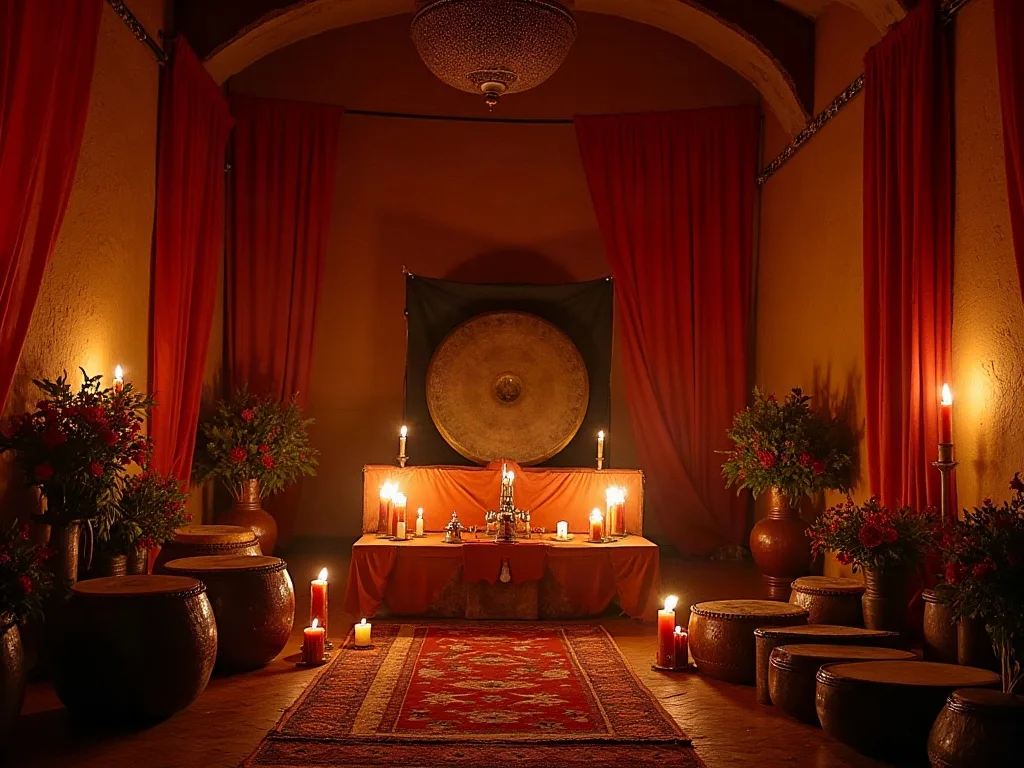
Initiation to Iansã is considered a serious undertaking. The candidate goes through ritual preparation, spending time in seclusion, learning the songs and prayers in Yoruba, understanding the mythology and the ethical dimensions of Iansã's power. After initiation, the person is expected to embody something of Iansã's qualities: directness, courage, a willingness to move through difficulty, an acceptance of one's own power even when it frightens others.
Iansã and the Broader African Diaspora
While Candomblé developed in Brazil, Yoruba religion and variations on the worship of Iansã/Oya spread throughout the African diaspora. In Cuba, similar syncretic religions developed, including Santería, where Oya is synchronized with different Catholic saints depending on the house. In Haiti, in the United States, in other parts of the Caribbean, Yoruba orixás found new homes and adapted to new contexts while maintaining their core identity.
Each diaspora tradition holds its own understanding of Iansã's character and power. In some places, she is more prominently a warrior. In others, her role as guardian of the dead comes to the foreground. But across all these traditions, certain elements remain constant: her connection to wind and storm, her fearlessness, her authority, her complexity. She is never depicted as simple or domesticated. She is always formidable.
Scholarly Perspectives and Living Tradition
Academic study of Candomblé and the orixás has grown significantly since the mid-20th century. Scholars like Roger Bastide, Pierre Verger, and more recently Stefania Capone have examined how Yoruba religion was preserved, transformed, and deepened in the Americas. Their work shows that Candomblé is not a dilution of African religion but a sophisticated, living tradition that adapted to brutal circumstances while maintaining theological depth and spiritual efficacy.
Iansã's presence in Candomblé cannot be separated from questions of gender, power, race, and spiritual autonomy. She embodies a model of feminine power that does not ask for permission or approval. In a religion that emerged in a context of slavery and colonization, where African peoples were systematically dehumanized, the worship of Iansã was a form of resistance and reclamation. It said: we are powerful, our women are powerful, our gods are real, and no one can take them from us.
The Storm That Does Not Fade
In the contemporary world, Iansã remains a living presence in terreiros across Brazil, Cuba, Haiti, and in diaspora communities worldwide. New initiates continue to be received into her mysteries. Rituals continue to be performed. The drums continue to beat her rhythm.
Her power is not historical or distant. It is present. When someone experiences a sudden shift in their life, when they find themselves unable to continue on the old path, when they feel the need to act with courage despite fear, when they sense movement and change in the air around them, people in Candomblé traditions say: Iansã is passing. She moves quickly, but she does not abandon those who call upon her with sincerity.
The syncretism with Santa Bárbara endures, but it is not always comfortable or unidirectional. Candomblé houses do not hide their African heritage anymore, and in contemporary Brazil, there is growing recognition that Iansã is Iansã, that the Yoruba names and identities of the orixás are primary, not secondary to the Catholic masks. The masks were necessary for survival. Now, increasingly, the truth is spoken openly.
Iansã commands the wind and the storm. She guards the boundary between the living and the dead. She embodies the power of transformation, the refusal to be contained, the courage to move forward even when the path is unclear. She is one of the most complex, most powerful, and most beloved of all the orixás. And she is not finished with the world yet.
Frequently asked questions about Iansã, Goddess of Winds and Storms?
Frequently asked questions
How is Iansã connected to both storms and death?
Iansã's connection to wind and air naturally extends to her guardianship of the dead. In Yoruba and Candomblé cosmology, wind is understood as the medium through which spirit moves and transforms. The wind carries away the old; it guides the dead to their rest and protects the living from harmful spiritual remnants. Iansã is the force of transition itself, standing at the boundary between the material and ancestral worlds with her eyes open.
Why was Iansã synchronized with Santa Bárbara in Candomblé?
The parallel was practical and symbolic. Santa Bárbara is the Catholic saint of thunder and lightning, often depicted holding a sword and dressed in red, much like Iansã was understood in Yoruba tradition. During slavery in Brazil, when African religions were forbidden, this synchronization allowed the orixás to be worshipped openly under the guise of Catholic saints. The feast day of Santa Bárbara (December 4th) became Iansã's public celebration, but Candomblé priests maintained the fullness of Iansã's African identity in private ritual.
What does it mean to be initiated to Iansã in Candomblé?
Initiation to Iansã is a ritual process in which a person becomes formally recognized as a "child of Iansã" and enters into a lifetime relationship with her. The initiate undergoes seclusion, learns sacred songs and prayers in Yoruba, and studies the mythology and ethics of Iansã. After initiation, the person is expected to embody something of Iansã's qualities: courage, directness, willingness to embrace change, and the understanding that they carry real spiritual power and responsibility.
Is Iansã worshipped outside of Brazil and Candomblé?
Yes. Yoruba orixás, including Iansã, spread throughout the African diaspora. In Cuba, Santería venerates Oya (sometimes synchronized with different Catholic saints depending on the house). Similar variations exist in Haiti, the United States, and elsewhere. While Candomblé is the tradition most directly descended from Yoruba religion, Iansã's worship is found wherever Yoruba-derived religions took root, and her characteristics remain consistent across all these traditions.
What are Iansã's sacred colors and symbols?
Iansã's primary colors are red and copper. Her sacred number is nine. Her most important symbol is the opá, a large curved metal blade that represents her power as a warrior and her ability to cut through illusion. She is also associated with specific animals (water buffalo, horses), scents (rain and ozone), and plants. These symbols are used in ritual to invoke her presence and create a space where her power can manifest.
Read the full book
Want the whole story?
The complete edition is an instant PDF download here, with a paperback on Amazon for selected titles.
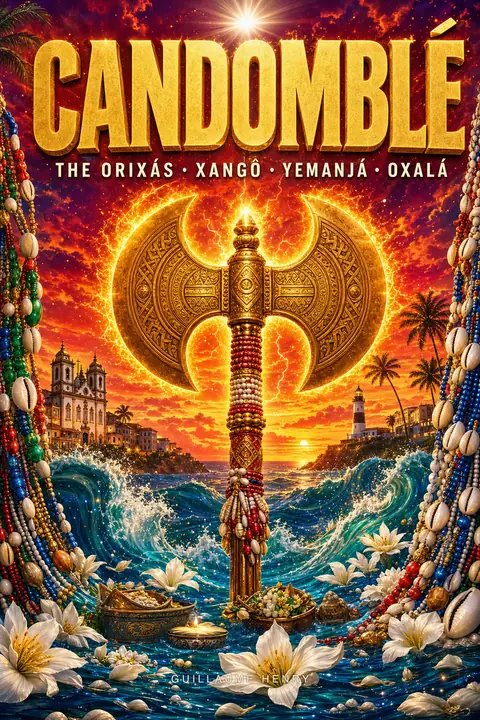
Candomblé
The Candomblé Book: The Orixás, Xangô, Yemanjá, and the Living Religion of Brazil
The Orixás: Xangô, Yemanjá, and Oxalá
The faith the enslaved carried across the ocean and refused to lose: the orixás of West Africa reborn in Brazil. Xangô of thunder, Yemanjá of the sea, Oxalá the creator, and the drums, foods, and colors that call them down. A living religion.
More from Candomblé
All articles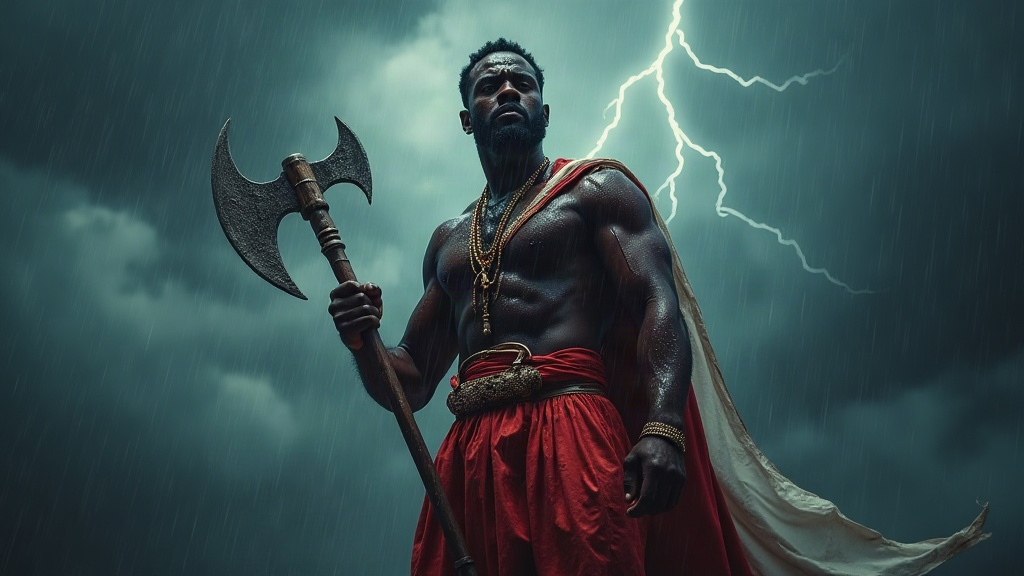
Candomblé
Xangô: The Thunder King and God of Justice
Xangô commands thunder and lightning, wielding a double axe as an instrument of divine justice. This Candomblé orisha embodies the warrior spirit, passion, and the power to strike down falsehood with sacred fire.

Candomblé
Oxóssi: Hunter God of the Forest
Oxóssi is the Candomblé deity of the hunt, forest abundance, and spiritual provision. His arrows strike with precision through the veil between worlds. Learn how this Yoruba orisha shapes African-Brazilian spirituality and why devotees invoke him for sustenance, clarity, and protection.

Candomblé
Oxum: Goddess of Fresh Waters, Love, and Fertility
Oxum rules the rivers and the human heart in Candomble. She is generosity itself: golden, sensual, protective of mothers and children. Learn how this Yoruba orisha became the most beloved goddess in Brazil and what her mythology reveals about devotion, abundance, and desire.
Candomblé
Axé: The Sacred Life Force in Candomblé
Axé is the vital energy that flows through all life in Candomblé, from the orisha deities to the human body. Discover how this West African concept became the beating heart of Brazil's most influential African diaspora religion.