
Orixás: The Divine Forces of Candomblé
The Orixás are the living spirits at the heart of Candomblé, each ruling a force of nature and a thread of human fate. Meet the pantheon that crossed the Atlantic and never forgot its name.
Contents
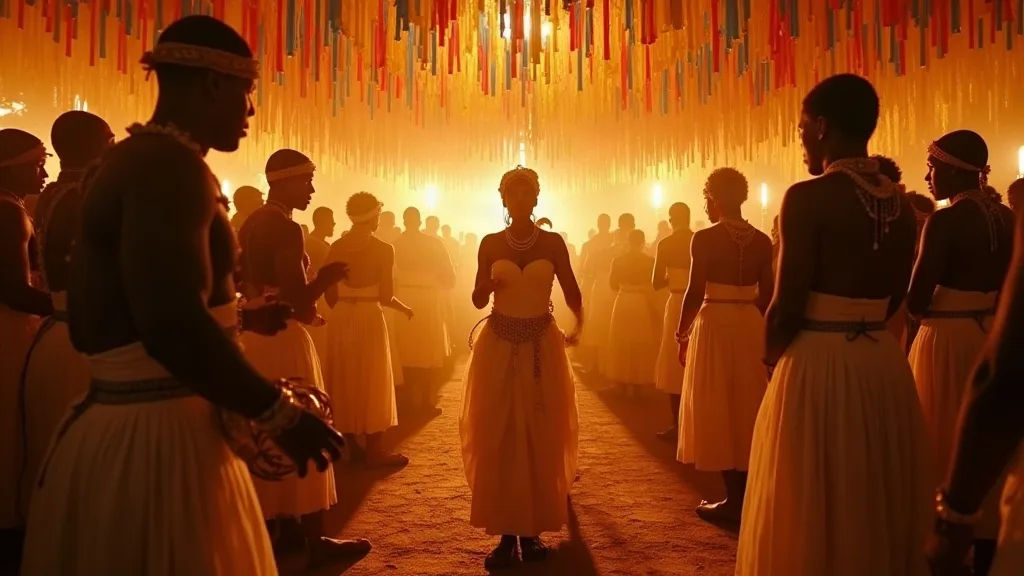
The drum strikes once, hard and low. The air inside the terreiro (the sacred house of worship) tightens. A woman in white stops mid-step, her eyes roll back, and then something older than her own name looks out through her face. The congregation does not flinch. They know who just arrived.
Orixás: the divine forces of Candomblé are not distant gods carved in marble and locked inside temples. They move. They speak through flesh. They answer when called by the right rhythms, the right colors, the right offerings. Each one governs a domain so precise you can feel it: the pull of the ocean, the crack of lightning, the cool patience of iron, the sweet disorder of a crowded market at dusk.
This is one of the most extraordinary religious traditions in the Americas, born from the forced crossing of millions of Yoruba-speaking people from West Africa to Brazil between the sixteenth and nineteenth centuries. Candomblé carried their cosmology across the water, kept it alive under persecution, and handed it to the present century still breathing.
The Yoruba Roots: Where the Orixás Come From
The word Orixá (pronounced oh-ree-SHA) comes from the Yoruba language of present-day Nigeria and Benin. In Yoruba theology, the supreme being is Olódùmarè, the uncreated source of all existence. Olódùmarè does not involve himself directly in human affairs. That work belongs to the Orixás, divine intermediaries who manage specific realms of creation and maintain the balance between the visible world (aiyé) and the invisible world (òrun).

Traditional Yoruba cosmology counted hundreds of Orixás, each tied to a specific town, river, or natural phenomenon. When Yoruba people were enslaved and transported to Brazil, Cuba, Trinidad, and elsewhere, they carried this cosmology in memory alone. The slave trade did not allow books or altars, but it could not silence the oral traditions, the songs, or the initiatory knowledge held by religious specialists called babalaôs and ialorixás (priests and priestesses).
In Brazil, the tradition crystallized most completely in the northeastern state of Bahia, particularly in Salvador. The first formally recognized Candomblé house, the Ilê Axé Iyá Nassô Oká (popularly known as the Casa Branca do Engenho Velho), was founded there in the early nineteenth century, likely around 1830, by three freed African women from the Yoruba city of Ketu. The tradition that emerged bore the name of the Ketu nation, and it remains the dominant liturgical form of Candomblé practiced today.
Scholars such as Reginaldo Prandi (in Mitologia dos Orixás, 2001) and Pierre Verger (in Orixás, 1981) spent decades collecting the Yoruba and Brazilian versions of each deity's stories, showing how the myths traveled and adapted while keeping their essential structure intact.
The Major Orixás and Their Domains
Candomblé theology does not present a fixed, numbered pantheon in the way that Greek mythology lists twelve Olympians. The tradition is living and initiatory: knowledge is transmitted degree by degree, and not every house venerates the same set of Orixás. That said, a core group of about sixteen major Orixás appears consistently across Brazilian Candomblé houses of the Ketu nation.
Exu: The Keeper of the Crossroads
Every ceremony begins with Exu. Without his permission, no message reaches any other Orixá. Exu governs communication, movement, and the crossroads where choices are made. He is not a devil, though Portuguese colonizers tried to cast him as one. He is the divine messenger, equivalent in function to Hermes in Greek mythology, though his personality is sharper, more demanding, and far less interested in politeness.
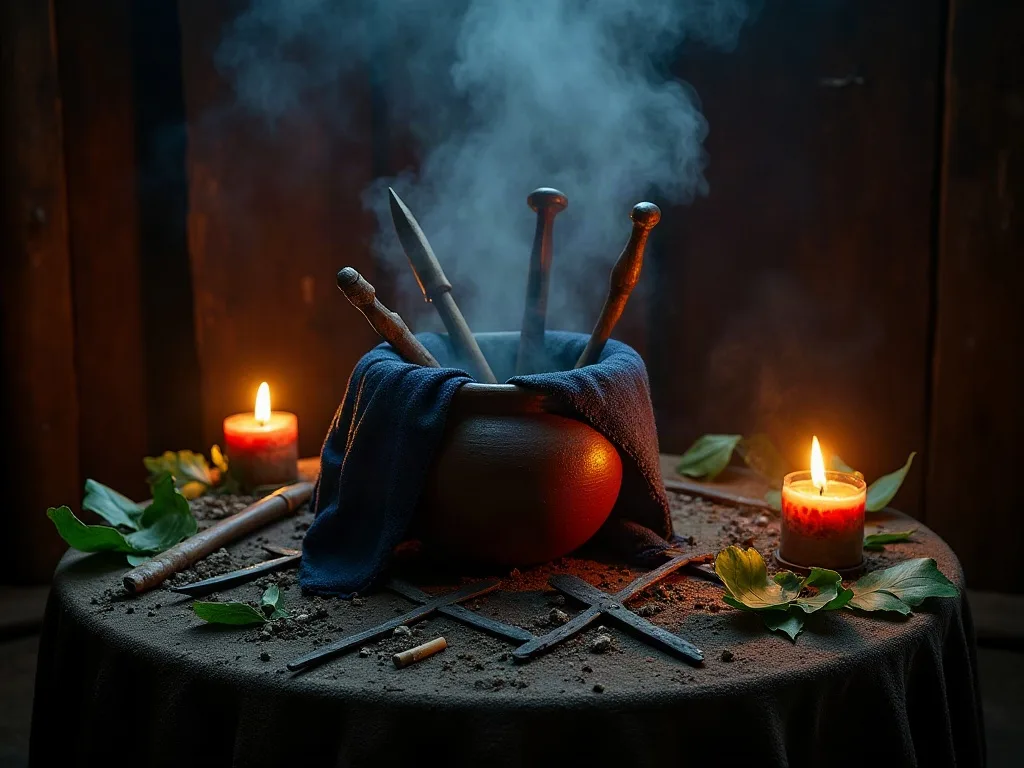
He is offered cachaça (Brazilian sugarcane spirits) and smoked meat. His colors are black and red. His day is Monday. His number is seven. He can be gentle or ruthless, generous or punishing, depending entirely on whether the proper protocols have been observed.
Ogum: Lord of Iron and the Path
Ogum rules iron, war, agriculture, and every road that has ever been cut through a forest. Blacksmiths, surgeons, soldiers, and engineers fall under his protection. He is the one who clears the way, which is why Exu must open the ceremony before Ogum can act: first the gate opens, then the road is built.
His color is dark blue or green. He eats roasted corn and smoked fish. The sound of iron on iron is his sound. Brazilian devotees have long associated him with Saint George, the dragon-slaying warrior of Catholicism, one of the many quiet fusions that allowed Candomblé to survive under Catholic rule.
Oxóssi: Hunter of the Forest
The forests, the animals, the hunt, and abundance belong to Oxóssi. He carries a bow and arrow. He is the provider, the one who brings food from the wilderness into the community. In Brazil, where the Candomblé of the Ketu nation merged with indigenous Tupi knowledge of the forest, Oxóssi became especially important, a bridge between African and Amerindian ecological wisdom.
His color is blue-green, nearly turquoise. He is connected to the state of Bahia the way a patron saint is connected to a city. The hunter who returns with game is a manifestation of his grace.
Xangô: The Thunder King
Xangô is arguably the most dramatic Orixá in the pantheon. He rules thunder, lightning, justice, and royal authority. Historically, he was identified with Shango, the fourth king of the Yoruba city of Oyo, a real historical figure who, after his death, was deified. His myths describe him as a king who wielded a double-headed axe (oxê) capable of calling storms.
His colors are red and white. He eats ram and acarajé (a fried bean fritter that is itself a sacred food in Candomblé). He is associated with the scales of justice: he punishes liars and protects those wrongly accused. In Catholicism, his counterpart became Saint Jerome or Saint Barbara depending on the regional tradition.
Xangô's stories are told in the Candomblé tradition with remarkable consistency between Brazil and Nigeria, which Pierre Verger documented extensively by traveling between the two countries throughout the mid-twentieth century.
Iemanjá: Mother of the Waters
Iemanjá may be the most widely recognized Orixá outside Candomblé itself. On February 2nd each year, millions of Brazilians gather on beaches in Salvador, Rio de Janeiro, and dozens of other coastal cities to send flowers, mirrors, combs, and small boats out to sea as offerings to her.
She rules the ocean, the surface of the water, and motherhood. Her colors are blue and silver. She is the mother of many other Orixás. Her name comes from the Yoruba Yemọja, meaning "mother whose children are like fish." She is vast, serene, and occasionally terrifying: the ocean is not only beautiful.
Her Brazilian popular image, a mermaid crowned with stars, is a fusion of Yoruba theology, Portuguese maritime devotion to Our Lady of the Navigators, and Amerindian water spirits. The fusion is not dilution; it is the record of a history written in ritual.
Oxum: Goddess of Sweet Waters and Love
Oxum governs rivers, fresh water, fertility, gold, and love. She is vain in the best possible sense: she carries a mirror, she adorns herself with brass and gold, she knows she is beautiful. Her stories portray her as clever, passionate, and fiercely protective of children.
Her color is gold or yellow. She is deeply associated with the city of Osogbo in Nigeria, where the Osun-Osogbo Sacred Grove (a UNESCO World Heritage Site since 2005) still holds annual ceremonies in her honor. In Brazil, she is often paired with Our Lady of the Immaculate Conception.
The relationship between Iemanjá and Oxum within Candomblé theology is worth noting: salt water and fresh water, the open sea and the sheltered river, the vast mother and the intimate lover. They are complementary rather than opposed, two registers of the same feminine divine force.
Oxalá: The Father of the White Cloth
Oxalá stands at the top of the Orixá hierarchy, below only Olódùmarè himself. He is the creator of human bodies, the Orixá of purity, peace, and the color white. All white things belong to him: white cloth, white rice, white corn, white doves.
His worship requires absolute stillness and silence compared to the intensity of, say, Xangô or Exu. No alcohol, no blood offerings, no loud colors. Priests who serve Oxalá must wear only white. His day is Friday. In his elder form, he is called Oxalufã, a bent old man who walks with a staff; in his young form, he is Oxaguiã, a warrior carrying a sword.
The tension between his patience and the violence of other Orixás is a recurring theme in Candomblé mythology. One of the central myth cycles tells of Oxalá wrongly imprisoned by Xangô for years before the misunderstanding is resolved. He bears his unjust suffering without bitterness, and that endurance is itself considered a model of spiritual maturity.
Iansã: The Wind That Carries Souls
Iansã (also spelled Oyá in the Yoruba original) is the only Orixá who rules the winds, storms, and lightning alongside Xangô, and she has power over the spirits of the dead. She is the guardian of the egúngún, the ancestral spirits, and she alone among the Orixás has the authority to command the dead to return to their rest.
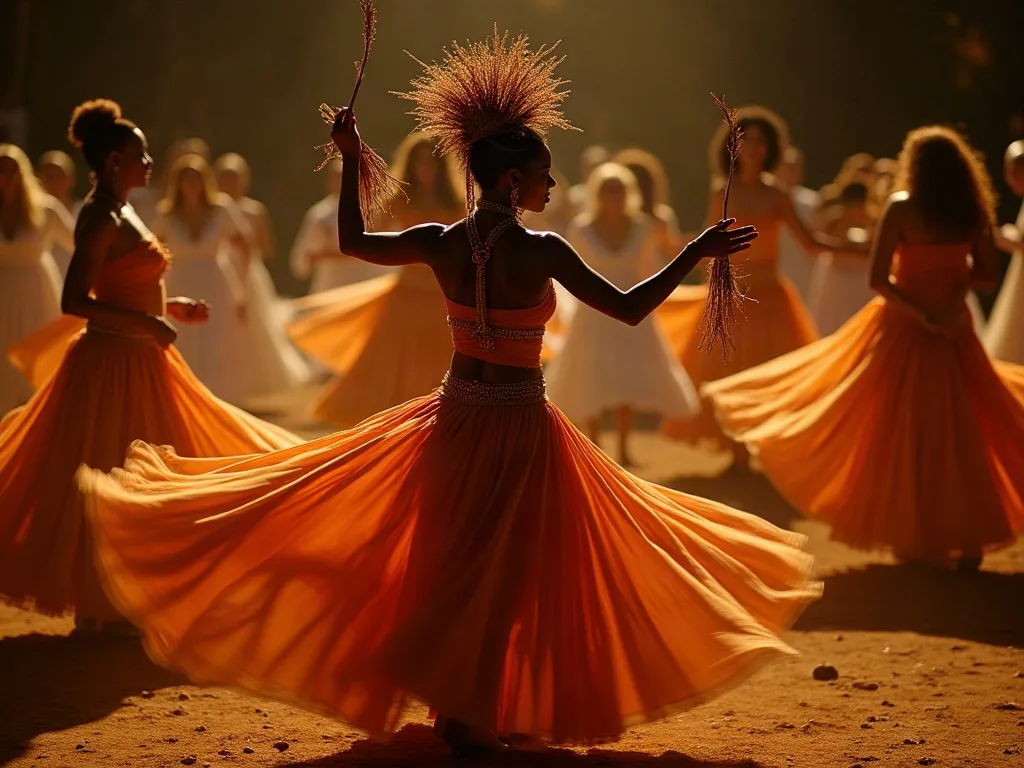
Her colors are copper or dark red. She carries a horsetail whisk called eruexim and wears nine skirts, one for each of her domains. She is fierce, independent, and has been through more marriages, battles, and transformations than almost any other Orixá in the mythology. Feminist readers of Candomblé have found in her a particularly powerful figure: a deity who answers to no one and fights her own wars.
Omulu and Obaluaê: The Two Faces of Disease
Omulu (in his youth) and Obaluaê (in his age) are two aspects of a single Orixá who governs disease, healing, death, and resurrection. He is covered from head to foot in a raffia costume called filá because his body was burned and scarred when his mother abandoned him. He healed himself through his own suffering, which is why he can heal others.
He is both feared and deeply loved. His colors are black, white, and purple. He is offered popcorn, which symbolizes both the plague (pock marks) and the cure. No other Orixá embodies the paradox of Candomblé theology so completely: the one who brings illness is the same one who takes it away.
Axé: The Living Force That Connects All Orixás
The concept of axé (pronounced ah-SHEH) is central to understanding why the Orixás are not mere mythological characters. Axé is divine energy, the living force that permeates all things: human beings, plants, animals, rivers, stones. It can be accumulated, shared, transmitted, and depleted.
Every Candomblé ritual is, at its core, an act of axé management. Offerings build it. Initiations transfer it. Neglect or transgression diminishes it. The relationship between a practitioner and their ruling Orixá is literally an exchange of axé: the practitioner gives devotion, sacrifice, and attention; the Orixá gives health, guidance, and protection in return.
This is why the word "axé" has entered Brazilian popular culture as a general blessing, shouted at concerts and printed on t-shirts. It is a living cosmological concept that has spilled, like water, out of the terreiro and into the street.
Syncretism and Resistance: The Catholic Mask
When Portuguese colonizers arrived and later when the Catholic Church became the law of the land in Brazil, Candomblé practitioners faced brutal suppression. Terreiros were raided. Drums were confiscated. Priests were arrested. The response was creative and strategic: each Orixá was given a Catholic saint as a visible identity.
Exu became the Holy Soul of Judas. Ogum became Saint George. Xangô became Saint Jerome. Iemanjá became Our Lady of the Navigators. The saints were displayed; the Orixás were worshipped.
Scholars debate whether this was purely protective camouflage or a genuine theological synthesis. The Candomblé of Angola and the Candomblé of Ketu diverged somewhat on this question, with different houses maintaining different degrees of formal separation between the African and Catholic elements. Today, the official position of most Ketu-nation houses is that the Orixás and the Catholic saints are distinct: the syncretism served its historical purpose and is no longer required.
The African diaspora religion known as Candomblé now exists alongside, not inside, Brazilian Catholicism. The two traditions can coexist in a single person's life, but they are not the same thing.
Initiation, Possession, and the Personal Orixá
The moment when an Orixá enters a practitioner's body during a ceremony is called incorporação (incorporation) in Brazilian Portuguese. From the outside, it looks startling: the person's posture changes, their voice changes, their face takes on an entirely different expression. They may not remember anything that happened.
From inside Candomblé theology, nothing supernatural is occurring. The human body is already the property of its ruling Orixá. Initiation, a multi-week process that can last up to a year for a new priest, is precisely the process of preparing the body to receive that Orixá cleanly and safely. An uninitiated person who experiences spontaneous incorporação is considered at risk: the body has not been prepared, the Orixá cannot be properly accommodated.
Each person is understood to have a primary Orixá (Orixá do ori, "Orixá of the head") and a secondary one. The primary one shapes the person's temperament, their strengths and their flaws. Someone ruled by Oxum tends toward beauty, sensitivity, and jealousy. Someone ruled by Ogum tends toward directness, discipline, and impatience. This is not fate in the deterministic sense; it is an inheritance that shapes the work to be done.
The babalorixá or ialorixá (priest or priestess who leads a terreiro) is responsible for identifying a new member's ruling Orixá through divination using the jogo de búzios, a system of cowrie-shell casting with roots in the Yoruba Ifá oracle. Ifá divination is itself a vast body of knowledge, comprising 256 sacred narratives called odus that map every situation a human being might face.
The Orixás in Brazilian Culture Today
The Orixás did not stay inside the terreiro. They moved into Brazilian literature, music, visual art, and even football. Jorge Amado, the most widely read Brazilian novelist of the twentieth century, wove Candomblé theology into nearly every major novel: Jubiabá (1935), Mar Morto (1936), and Tenda dos Milagres (1969) all feature Orixás as active characters in contemporary life.
The Afro-Brazilian musical tradition of axé music takes its name directly from the divine force. The Bahian percussion ensemble tradition called afoxé recreates the ritual rhythms of Candomblé in the streets during Carnival. The Ilê Aiyê, a Black cultural association founded in Salvador in 1974, opened its name with the Yoruba words for "house of life" and placed Candomblé aesthetics at the center of its cultural agenda.
In visual art, the work of Mestre Didi (Deoscóredes Maximiano dos Santos, 1917-2013), a Candomblé religious leader and sculptor, brought Orixá iconography into international galleries. His sculptures of braided fibers, seeds, and cowrie shells were not decorative objects. They were, he insisted, living sacred forms.
The Orixás have also traveled north. Candomblé now has recognized houses in Portugal, Argentina, Germany, Japan, and the United States. Each new terreiro carries the same initiatory chain back to Bahia, and through Bahia, back to Yorubaland.
Frequently Asked Questions About the Orixás of Candomblé
Frequently asked questions
How many Orixás are there in Candomblé?
There is no single fixed number. Yoruba theology originally counted hundreds of Orixás. In Brazilian Candomblé of the Ketu nation, between twelve and sixteen major Orixás are venerated consistently, with additional regional or lineage-specific deities recognized in some houses. The exact set varies by terreiro and by the specific "nation" (liturgical tradition) being practiced.
Is Candomblé the same as Vodou or Santería?
They share deep roots in West African religion, particularly Yoruba and Fon traditions, but they are distinct practices with different liturgical languages, ritual structures, and pantheons. Haitian Vodou draws more heavily from Fon and Ewe traditions and calls its spirits lwa. Cuban Santería (Lucumí or Regla de Ocha) shares the Yoruba Orixá tradition with Candomblé but developed its own liturgy, calendar, and syncretic relationships with Catholic saints. All three traditions crossed the Atlantic under slavery and adapted to their specific colonial contexts.
What does it mean to have a ruling Orixá?
In Candomblé belief, each person is spiritually "owned" by a specific Orixá before birth, a relationship that shapes their personality, vulnerabilities, and life path. This Orixá is called the Orixá do ori (Orixá of the head). The relationship is identified through cowrie-shell divination by an experienced priest or priestess. Having a ruling Orixá does not mean worshipping only that deity; it means that deity has a specific claim on that person's wellbeing and requires particular attention.
Why were the Orixás associated with Catholic saints?
The syncretism was a survival strategy developed by enslaved Africans and their descendants in colonial Brazil, where public practice of African religion was forbidden and subject to violent punishment. By presenting Orixá worship under the visible cover of Catholic saint veneration, practitioners could continue their traditions. Most contemporary Candomblé houses now treat the Orixás and the saints as distinct, maintaining the historical record of syncretism while asserting the independent identity of their tradition.
What are the primary sources for Orixá mythology?
The mythology of the Orixás was transmitted orally for centuries. The first major written compilations appeared in the twentieth century. Pierre Fatumbi Verger documented Yoruba and Brazilian versions of the myths in Orixás (1981). Reginaldo Prandi collected over 300 Orixá myths in Mitologia dos Orixás (2001), drawing on both Nigerian Yoruba sources and the oral traditions of Brazilian terreiros. The Ifá corpus, a system of 256 sacred narratives, is the oldest and most extensive primary source, and portions of it have been documented in scholarly publications by Wande Abimbola.
Can someone outside the Afro-Brazilian community practice Candomblé?
Candomblé is not an ethnically restricted tradition. In Brazil today, practitioners come from every racial and social background, a shift that intensified from the 1960s onward. What matters, within the tradition itself, is initiatory lineage: a practitioner must be formally initiated by a recognized babalorixá or ialorixá whose own lineage traces back through an unbroken chain of initiations. The tradition emphasizes correct ritual transmission, not ethnic identity, as the basis of authenticity.
The Orixás as a Living Argument About Memory
What survives the middle passage? What survives chains, forced conversion, generations of suppression? The Orixás are one answer. They survived because they were not confined to texts, temples, or political power. They lived in rhythm, in the body, in the knowledge passed from one initiate to the next in a whisper.
The terreiro functioned as an institution of cultural memory at a time when every other institution was owned by the enslaver. The ialorixá who memorized the correct sequence of drum rhythms for each Orixá, the precise offerings, the sacred names in a language her captors did not speak, was performing an act of intellectual and spiritual resistance every time she opened her house.
Today, as researchers in Nigeria and Brazil compare notes, they keep finding the same structure on both sides of the Atlantic: the same myths, the same colors, the same prohibitions, the same paradoxes. The transmission was not perfect. Hundreds of years of separation and adaptation left real differences. But the core held.
That is perhaps the deepest fact about the Orixás: they are not just divine forces governing thunder and rivers and iron. They are the proof that a people can carry their cosmology across an ocean, through centuries of violence, and hand it to the future intact enough that it still dances.
Read the full book
Want the whole story?
The complete edition is an instant PDF download here, with a paperback on Amazon for selected titles.
Candomblé
The Candomblé Book: The Orixás, Xangô, Yemanjá, and the Living Religion of Brazil
The Orixás: Xangô, Yemanjá, and Oxalá
The faith the enslaved carried across the ocean and refused to lose: the orixás of West Africa reborn in Brazil. Xangô of thunder, Yemanjá of the sea, Oxalá the creator, and the drums, foods, and colors that call them down. A living religion.
More from Candomblé
All articles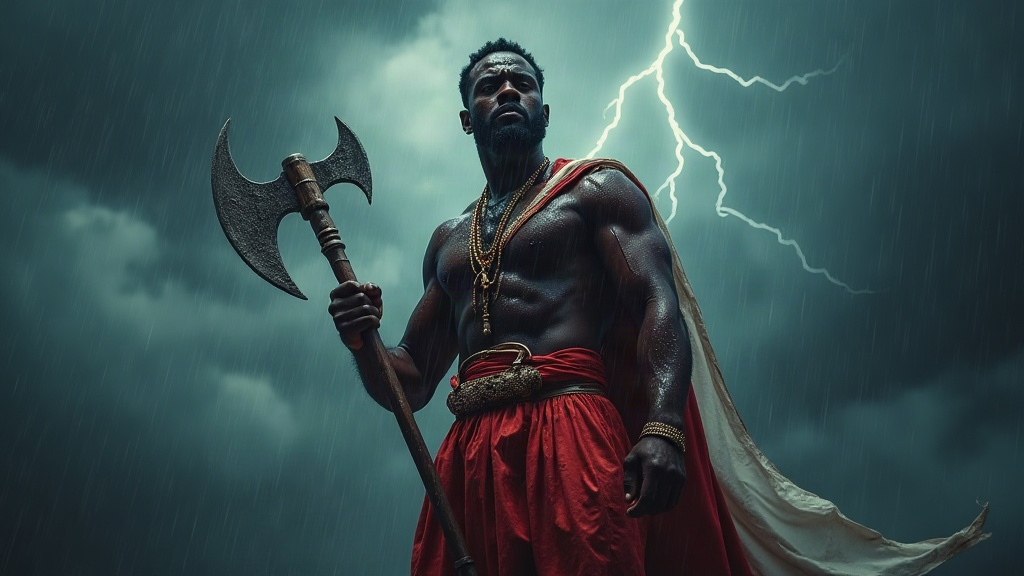
Candomblé
Xangô: The Thunder King and God of Justice
Xangô commands thunder and lightning, wielding a double axe as an instrument of divine justice. This Candomblé orisha embodies the warrior spirit, passion, and the power to strike down falsehood with sacred fire.

Candomblé
Oxóssi: Hunter God of the Forest
Oxóssi is the Candomblé deity of the hunt, forest abundance, and spiritual provision. His arrows strike with precision through the veil between worlds. Learn how this Yoruba orisha shapes African-Brazilian spirituality and why devotees invoke him for sustenance, clarity, and protection.

Candomblé
Oxum: Goddess of Fresh Waters, Love, and Fertility
Oxum rules the rivers and the human heart in Candomble. She is generosity itself: golden, sensual, protective of mothers and children. Learn how this Yoruba orisha became the most beloved goddess in Brazil and what her mythology reveals about devotion, abundance, and desire.

Candomblé
Iansã: Goddess of Winds, Storms, and the Dead
Iansã commands lightning and tempests, guards the edge between life and death, and embodies the fierce, unbounded energy of nature. In Candomblé, she is one of the most powerful and beloved orixás, syncretized with Santa Bárbara.