
Mãe Menininha do Gantois: Legendary Priestess of Bahia
Mãe Menininha was the High Priestess of Candomblé who transformed a humble terreiro into a beacon of spiritual and cultural authority in 20th-century Bahia. Her life, sanctioned by the orixás themselves, shaped how Brazil's most marginalized religion found dignity and influence.
Contents
Born Maria Escolástica da Conceição Nazaré around 1894 in the northeastern Brazilian state of Bahia, a young girl inherited a role that would define not just her life, but the spiritual landscape of an entire nation. The woman the world would come to know as Mãe Menininha do Gantois did not seek priesthood by individual ambition. She was chosen. Summoned. Marked by the orixás from childhood, she became the most revered High Priestess of Candomblé in the twentieth century, a title that placed her at the intersection of African diasporic spirituality, Brazilian national identity, and one woman's quiet, unshakable authority.
Her terreiro, the House of Gantois in Salvador, became a sanctuary. Kings and scholars knocked on its doors. Intellectuals came to study. The poor came to pray. For seventy years, Mãe Menininha held court with the same gravitas a queen might command, not through spectacle, but through an earned, almost palpable spiritual presence. She was keeper of mysteries, guardian of rituals that traced their lineage across the Atlantic to West African shores.
Who Was Mãe Menininha?
Mãe Menininha do Gantois was born into a Candomblé family, though the exact circumstances of her early life remain partially veiled in oral tradition. Her birth name, Maria Escolástica, anchored her in the Catholic Brazil of her childhood; her spiritual name, acquired through initiation and divination, bound her to the Yoruba cosmos.
The title "Mãe" means "mother" in Portuguese. A Mãe-de-santo (literally "saint's mother") is the High Priestess or spiritual mother of a terreiro, a Candomblé temple. The word "Menininha" suggests smallness, youthfulness, an endearing diminutive. Some sources trace it to her gentle stature or her spiritual humility; others suggest it referenced her youthfulness when she assumed leadership. The "Gantois" derives from Gantoos Street in the Federação neighborhood of Salvador, where her house stood.
Menininha came of age during an era when Candomblé practitioners faced active persecution. Brazil's 1890 Constitution had disestablished the Catholic Church and enshrined secular law, yet Afro-Brazilian religions remained criminalized under laws against "witchcraft" and "quackery." Police raids on terreiros were common. Practitioners faced arrest, property seizure, and social stigma. To be initiated into Candomblé meant choosing a faith that society condemned.
Yet from her adolescence, Menininha's spiritual authority was evident. She underwent the rigorous seven-year initiation cycle that prepared her to become a priestess. This training was not theoretical. It involved seclusion, fasting, ritual bathing, memorization of prayers and songs in Yoruba (iorubá), instruction in herbalism and divination, and a series of increasingly intense spiritual experiences in which initiates encounter the orixás directly. The orixás are the divine energies, comparable to saints or angels in Christianity, that mediate between Olorun (God) and humanity in Yoruba and Candomblé cosmology.
The Orixás and the Gantois Lineage
Menininha's house was rooted in the Ketu nation lineage of Candomblé, one of three major branches (alongside Jeje and Bantu traditions). The Ketu tradition traces its protocols and sacred songs most directly to the Yoruba people of present-day Nigeria and Benin, whose enslaved descendants shaped Candomblé in Brazil.
Each terreiro honors a particular orixá as its protective patron. Gantois was consecrated to Olorune, also known as Oluoiê, a complex feminine orixá associated with wealth, sensuality, and the fertility of rivers. Some practitioners identify Olorune with Our Lady of Conception in Catholic veneer, a syncretism that allowed Candomblé ritual to persist visibly in a Catholic nation. Yet Olorune is far more than a saint: she is an autonomous divine presence, with her own myths, songs, dances, and ritual requirements.
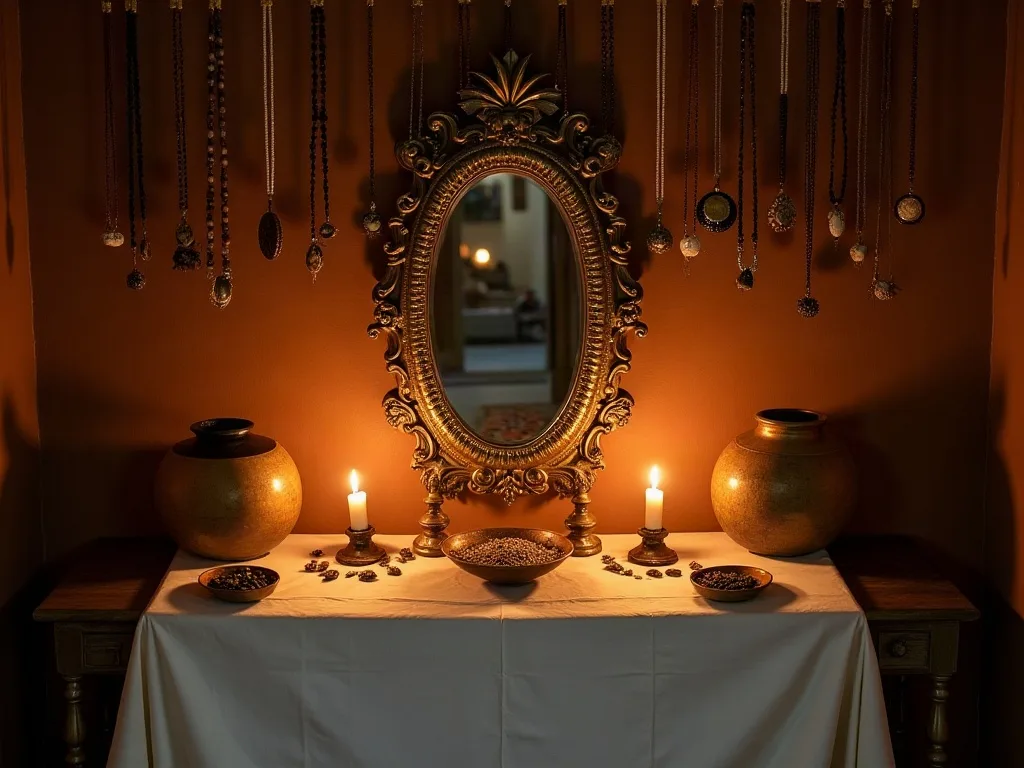
Menininha's authority rested on lineage and on election by the orixás themselves. In Candomblé, leadership of a terreiro passes through succession lines, often matrilineal. A priestess identifies her successor, usually a daughter (biological or spiritual) who has demonstrated the necessary spiritual capacity and ritual knowledge. Yet the succession is only valid if the orixás confirm it through divination. When Menininha's predecessor passed leadership to her, the shells and the wisdom of initiated elders aligned.
This blend of human election and divine confirmation, this fusion of institutional continuity with spiritual authenticity, made Menininha's authority nearly unassailable. She was not merely a priestess chosen by humans; she was a mãe-de-santo anointed by the orixás.
A House of Refuge and Prestige
By the 1930s and 1940s, Gantois had become the most celebrated terreiro in Salvador, perhaps in all of Brazil. Menininha's combination of spiritual knowledge, personal integrity, and an almost regal demeanor drew initiates and seekers from across the nation. The house attracted anthropologists, artists, and intellectuals intrigued by African survivals in the Americas.
The writer Jorge Amado, who set many of his novels in Bahia and chronicled Candomblé life, was familiar with the traditions of houses like Gantois. Menininha became known not as an exotic curiosity but as a custodian of authentic spiritual knowledge.
During the reign of her leadership, Menininha oversaw elaborate public ceremonies that transformed Salvador's streets and sacred spaces. The most celebrated was the annual feast of Olorune, held on December 8 (the Catholic Feast of the Immaculate Conception, skillfully syncretized with the orixá's celebration). Devotees in white clothes, beaded necklaces, and ritual ornaments paraded through the city. Drums sounded. The community danced. The orixá descended into the bodies of priestesses in a state of possession called transe, a phenomenon central to Candomblé worship.
Menininha presided over these ceremonies with an authority that transcended the merely ecclesiastical. She was a keeper of rhythm, a reader of fate through divination, a healer, a legal arbiter within her community, and a mother figure to those who had abandoned or been abandoned by their biological families.
Persecution, Protection, and Political Acumen
Menininha's rise coincided with a period of intense pressure on Candomblé. The Brazilian state, even in its secular phase, preferred a nation imagined as Christian and European. Afro-Brazilian religions were tolerated grudgingly, often criminalized under statutes that allowed police to arrest practitioners on charges of "charlatanism" or "practicing medicine without a license" (because terreiros offered herbal remedies and spiritual counsel).
Menininha possessed a rare political astuteness. She cultivated relationships with magistrates, journalists, and artists who could shield Gantois from police harassment. She was careful to frame Candomblé not as a challenge to Brazilian Catholic identity but as a parallel spiritual universe, complementary, not competitive. She allowed anthropologists and social scientists to observe and document rituals, lending academic legitimacy to her tradition.
This was not compromise in the sense of spiritual capitulation. Rather, it was strategic visibility. By allowing scholars like Roger Bastide and Edison Carneiro to study and write about her terreiro, Menininha transformed Candomblé from a marginalized, stigmatized practice into an object of intellectual and artistic interest. The more Brazil's cultural elite recognized Candomblé as a valid expression of Brazilian identity, the harder it became for the state to criminalize it.
The House of Gantois as Sacred Microcosm
A terreiro is not merely a building. It is a complete spiritual cosmos. Gantois contained multiple sacred spaces: the barracão (the main hall where public ceremonies occurred), the peji (the inner sanctuary where orixás were honored in their material representations), sleeping quarters for initiates undergoing ritual seclusion, storage for sacred objects, rooms for divination and healing.
The rituals Menininha performed were not invented or idiosyncratic. They followed protocols established across centuries in West African Yoruba practice and transmitted through the generations of enslaved Africans and their descendants. Yet every priestess and priest brings individual interpretation and emphases. Menininha was known for the rigor of her protocols, her insistence on proper Yoruba language use, her deep knowledge of herbalism, and her skill in divination using the búzios (cowrie shells).
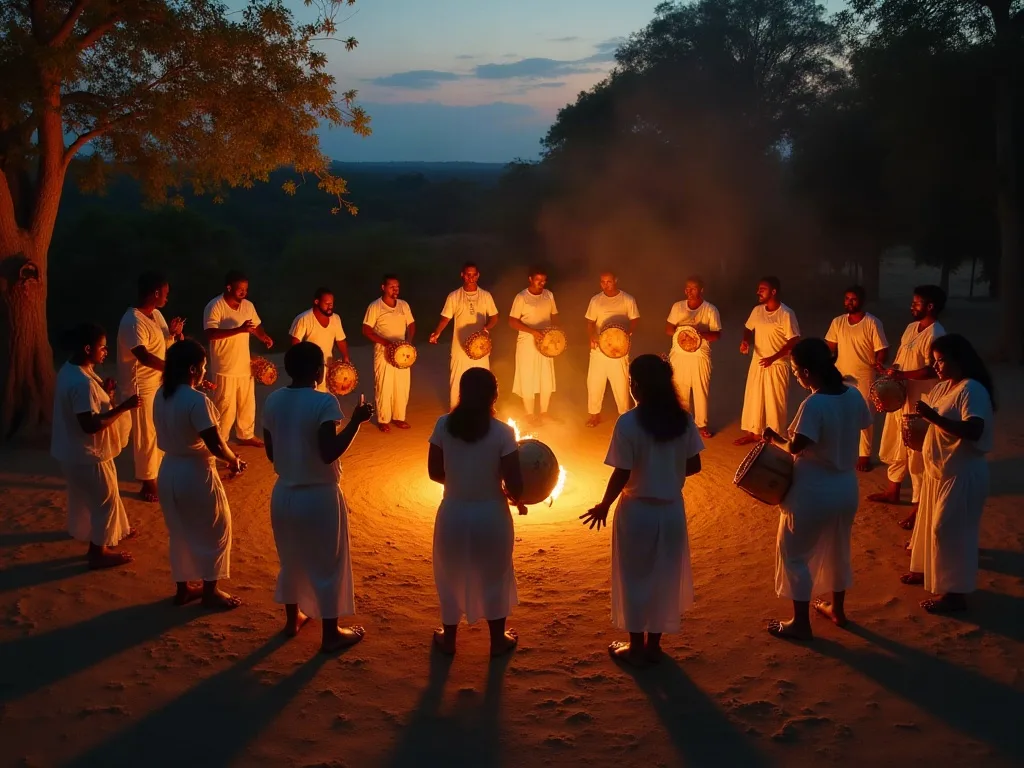
Initiation into Gantois under Menininha's supervision was demanding. Novices underwent the bujá, a seven-year period of progressive stages of learning and ritual. They memorized songs in Yoruba. They learned the mythology and ritual calendar. They fasted. They endured trials of obedience and humility. At the culmination, they were presented to the community in elaborate public ceremonies, fully initiated, bearing the ritual status of a daughter or son of the orixás.
Menininha and Brazil's Racial Conscience
The mid-twentieth century brought shifts in how Brazil conceived of race and identity. The nation began to market itself to the world as a racial democracy, a place where African, indigenous, and European cultures had blended harmoniously. This narrative was partly true and partly propaganda obscuring deep structural racism.
Mãe Menininha do Gantois became an iconic figure in this reimagining. She represented African cultural continuity in the New World. She embodied dignity, wisdom, and spiritual authority that predated European colonization. Yet she was also carefully managed by Brazil's intellectual and political establishment as a symbol of that supposed harmony.
Menininha was shrewd enough to benefit from this symbolic capital without surrendering her autonomy. She remained rooted in her terreiro, in her community of devotees, in her daily work of spiritual guidance. She did not become a public intellectual or a political activist in the manner of later Candomblé figures. She was a priestess, not a spokesman.
The Power of Divination and Healing
One of Menininha's most renowned gifts was divination. The jogo de búzios (cowrie shell casting) is one of Candomblé's core methods of discerning the orixás' will and revealing the hidden dimensions of a person's fate. A trained diviner casts sixteen shells and reads their patterns according to an intricate system of interpretation.
Menininha's skill at divination was legendary. People came to her not merely to hear prophecies but to receive guidance that seemed to penetrate the concealed structures of their lives. She could diagnose spiritual illness, identify which orixá claimed a person's soul, recommend rituals for healing or protection.
Healing in Candomblé is multivalent. It includes herbalism (the knowledge of leaves and roots, banhos or ritual baths, teas and poultices). It includes ritual intervention (offerings to orixás, songs and drumming that reorient spiritual energy). It includes psychological and social support, the community of the terreiro itself as a healing container for the marginalized, the enslaved, the dispossessed.
Menininha inherited centuries of African medicinal knowledge transmitted through enslaved and free Africans. She added to it her own experiential wisdom accumulated over a lifetime of spiritual practice. Her reputation as a healer extended beyond the Candomblé community. Desperate people of all faiths sought her counsel.
The Initiation of Kings: Menininha's Spiritual Legacy
One of the most resonant episodes in Menininha's life was her role in the spiritual initiation of King Biremo of Nigeria, who visited Brazil in the 1970s. This encounter symbolized the trans-Atlantic continuity of Yoruba religion. A living king from the ancestral Yoruba homeland bowed to a Brazilian priestess of Yoruba tradition. The hierarchy of spiritual authority transcended national origin or royal blood.
This moment encapsulated Menininha's profound achievement: she had preserved and transmitted an African spiritual cosmos in the diaspora with such fidelity and power that the priests of the motherland recognized her authority. Candomblé was not a degraded or inauthentic echo of African religion. It was a living, evolving expression rooted in genuine knowledge and genuine spiritual power.
The Question of Authenticity and Continuity
Menininha's long life raises an enduring scholarly question: How much of Candomblé is African, and how much is Brazilian or Brazilian-syncretized? The answer she embodied was complex.
The songs, prayers, orixá names, and ritual protocols of Ketu Candomblé derive unmistakably from Yoruba religious practice. The mythology, the divine personalities, the cosmology, all trace back to West Africa. Yet Candomblé is not a museum. It is a living religion that evolved in response to slavery, colonization, poverty, and diaspora. Catholic saint-syncretism was born from necessity, a camouflage that allowed African ritual to persist. New orixás were sometimes recognized. Rituals adapted to Brazilian geography and social conditions.
Menininha represented a lineage that resisted reductive Africanization (the view that "authentic" Candomblé must exactly replicate Yoruba practice) and reductive syncretism (the view that Candomblé is merely Catholicism with African trappings). She held both continuities in tension: fidelity to ancestral Yoruba knowledge and creative adaptation to Brazilian circumstance.
A Life of Presence: The Later Years
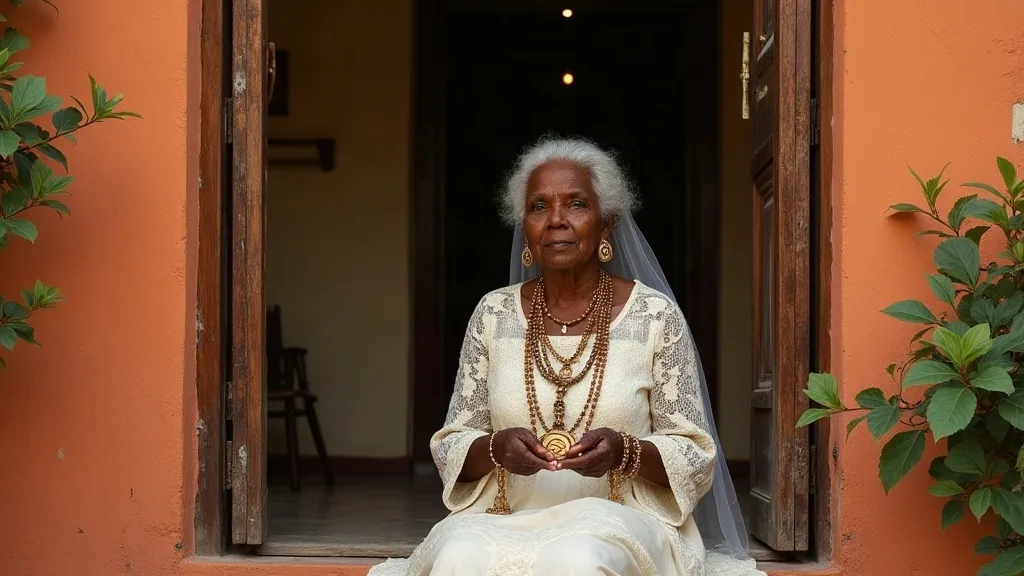
Menininha continued to lead Gantois into her nineties. Photographs from her later decades show a small, dignified woman, usually dressed in white, beaded necklaces draping her torso, her face lined with age and carrying an expression of serene authority. She did not retreat into mystique or distance. She remained accessible to her community.
She trained successors in the protocols of leadership. She mentored younger priestesses. She welcomed anthropologists and filmmakers who wished to document Candomblé. She received visitors from across Brazil and internationally who came to pay homage to a woman who represented something profound: the survival and flourishing of African spiritual consciousness in the Americas.
Menininha died in 1986, at an advanced age, having led the House of Gantois for nearly seventy years. Her death marked the end of an era. The terreiro continued under her chosen successor, but the particular luminosity Menininha embodied, the fusion of spiritual depth, cultural authority, and personal presence, is unrepeatable.
The Living Memory of Mãe Menininha
Today, Mãe Menininha do Gantois is remembered as one of the most significant religious figures in twentieth-century Brazil. Artists, writers, and scholars reference her. The House of Gantois remains one of the most respected terreiros in Brazil. Her lineage continues through initiated daughters who maintain her protocols and preserve her teachings.
Her legacy extends beyond Candomblé. She represents a model of authority rooted not in domination but in service and spiritual authenticity. She shows how marginalized communities can cultivate dignity and influence not by assimilation but by deepening roots in their own traditions while engaging wisely with hostile or skeptical outsiders.
In Brazil's ongoing struggle with its racial identity and its relationship to African heritage, Mãe Menininha stands as a figure of quiet revolution. She did not declare war on Catholic Brazil or on the state. She simply held her ground, practiced her religion with such integrity and power that eventually the nation recognized it as sacred.
Frequently asked questions about Mãe Menininha do Gantois?
Frequently asked questions
What is a terreiro, and why was Gantois so important?
A terreiro is a Candomblé temple or religious house, a physical and spiritual space where the orixás are honored, rituals are performed, and a community of devotees gathers. Gantois became the most prestigious terreiro in Brazil under Menininha's leadership because of her spiritual authority, rigorous ritual practice, and the respect she earned from both the Candomblé community and Brazilian intellectuals. It became a model of how African diasporic religion could maintain integrity while engaging with the wider society.
Who are the orixás, and what role did they play in Menininha's authority?
The orixás are divine energies or spirits in Yoruba and Candomblé theology, comparable to saints in Catholicism but understood as autonomous divine presences. Each orixá has distinct mythology, personality, colors, foods, and songs. Menininha's authority rested partly on her intimate knowledge of the orixás and partly on the belief that she was chosen and sanctioned by them directly through divination and spiritual experience. The orixás were not abstract concepts but living presences in her daily practice.
How did Candomblé survive in a nation where Afro-Brazilian religions were criminalized?
Candomblé survived through strategies of syncretism (identifying orixás with Catholic saints), community secrecy and discretion, and cultivation of relationships with sympathetic intellectuals and political figures. Menininha employed particular political acumen, allowing scholars to document her terreiro, thereby lending academic legitimacy to Candomblé. She framed her religion not as a threat to Brazilian Catholicism but as a parallel spiritual tradition, which eventually earned tolerance and then respect.
What is the meaning of 'Mãe Menininha do Gantois'?
'Mãe' means mother in Portuguese; a Mãe-de-santo is a High Priestess. 'Menininha' is a diminutive meaning small or young one, likely referencing her gentle stature or youthfulness when she assumed leadership. 'Gantois' comes from Gantoos Street in the Federação neighborhood of Salvador, where her terreiro was located. Together, the name reflects both her maternal spiritual role and her place in Bahia's geography and history.
How does Menininha's life reflect the broader question of African authenticity in the diaspora?
Menininha embodied a both-and approach to the question of authenticity. She maintained fidelity to Yoruba religious knowledge and protocols while also embracing the creative adaptations Candomblé developed in response to slavery and Brazilian conditions. She did not reduce authenticity to exact replication of African practice, nor did she accept reductive syncretism. Her terreiro represented a living, evolving tradition rooted in genuine knowledge and genuine spiritual power.
Candomblé, Gender, and Spiritual Maternity in the Diaspora
The prominence of women priestesses like Menininha in Candomblé stands in notable contrast to many other world religions. While Christianity, Islam, Judaism, and Hinduism have predominantly male clerical hierarchies, Candomblé from its origins gave women substantial spiritual authority. A large majority of Candomblé priestesses are women, and the Mãe-de-santo (the High Priestess) is typically the ultimate authority in a terreiro.
This pattern reflects Yoruba traditions, where women held significant ritual roles and sometimes wielded considerable political and spiritual influence. It also reflects the demographics of slavery in Brazil: enslaved African women and men both brought religious knowledge with them, but women often maintained ritual authority with greater continuity because they were excluded from certain forms of patriarchal European dominance.
Menininha's lifelong celibacy (or her refusal of conventional marriage) was not unusual for a High Priestess of her era. The terreiro became her family. The orixás became her spouses and children. Her devotees became her spiritual children. This reimagining of kinship and maternity freed her from the constraints of domestic subordination and allowed her to exercise authority as an elder, a spiritual mother, and a keeper of mysteries.
In the twentieth century, when Brazilian feminism was nascent and the nation's political culture was overwhelmingly patriarchal, Menininha's House of Gantois was a space where women led, commanded resources, transmitted knowledge, and held power. This spiritual maternity, rooted in African tradition but adapted to diaspora, remains one of Candomblé's most distinctive and generative features.
Read the full book
Want the whole story?
The complete edition is an instant PDF download here, with a paperback on Amazon for selected titles.

Candomblé
The Candomblé Book: The Orixás, Xangô, Yemanjá, and the Living Religion of Brazil
The Orixás: Xangô, Yemanjá, and Oxalá
The faith the enslaved carried across the ocean and refused to lose: the orixás of West Africa reborn in Brazil. Xangô of thunder, Yemanjá of the sea, Oxalá the creator, and the drums, foods, and colors that call them down. A living religion.
More from Candomblé
All articles
Candomblé
Xangô: The Thunder King and God of Justice
Xangô commands thunder and lightning, wielding a double axe as an instrument of divine justice. This Candomblé orisha embodies the warrior spirit, passion, and the power to strike down falsehood with sacred fire.

Candomblé
Oxóssi: Hunter God of the Forest
Oxóssi is the Candomblé deity of the hunt, forest abundance, and spiritual provision. His arrows strike with precision through the veil between worlds. Learn how this Yoruba orisha shapes African-Brazilian spirituality and why devotees invoke him for sustenance, clarity, and protection.

Candomblé
Oxum: Goddess of Fresh Waters, Love, and Fertility
Oxum rules the rivers and the human heart in Candomble. She is generosity itself: golden, sensual, protective of mothers and children. Learn how this Yoruba orisha became the most beloved goddess in Brazil and what her mythology reveals about devotion, abundance, and desire.

Candomblé
Iansã: Goddess of Winds, Storms, and the Dead
Iansã commands lightning and tempests, guards the edge between life and death, and embodies the fierce, unbounded energy of nature. In Candomblé, she is one of the most powerful and beloved orixás, syncretized with Santa Bárbara.