
Oxalá: The Father of All Orixás
Oxalá reigns as the supreme creator in Candomblé, the Yoruba-rooted faith of Brazil. Learn who he is, what he made, and why white cloth still honours him today.
Contents
The old stories say he walked slowly. Not because he was weak, but because every step was deliberate, every movement weighed against the vastness of what he carried: the responsibility for human life itself. Oxalá, the Father of All Orixás, is the being who shaped humanity from clay, who breathed spirit into flesh, and who stands at the centre of the Candomblé universe as both the gentlest and the most powerful force in existence.
His name alone carries layers. Oxalá (pronounced oh-sha-LAH) comes from the Yoruba Obàtálá, a name meaning "King of the White Cloth" or "Owner of the White Thing." White, in this cosmology, is not absence. It is everything at once: all colours of light collapsed into one, the colour of creation before it takes shape, the colour of a mind before thought arrives. When Candomblé practitioners dress in brilliant white to honour him each Friday, they are wearing a theology.
Oxalá's Place in the Candomblé Cosmos
To understand Oxalá, you first need a map of the world he inhabits. Candomblé is a living Afro-Brazilian religious tradition, born from the Yoruba, Fon, and Bantu spiritual systems carried to Brazil by enslaved West Africans from the 16th century onward. Its sacred geography is populated by Orixás (also spelled Orishas), divine forces that govern natural phenomena, human activities, and the rhythms of existence.

Above all Orixás stands Olorum, sometimes called Olodumaré, the supreme God who is too vast, too complete, to interact directly with human beings. Olorum does not appear in ceremonies. He has no particular ritual, no specific feast day. He simply is. Between Olorum and humanity, the Orixás act as intermediaries, each governing a specific domain: the sea, thunder, iron, rivers, forests, crossroads.
Oxalá occupies a category apart. He is the Orixa Funfun, the White Orisha, the eldest among the Orixás and the closest to Olorum's will. He does not govern a single domain of nature. He governs the human form itself. When Candomblé theology speaks of a hierarchy among Orixás, Oxalá sits at its apex, not as a tyrant, but as a patriarch whose authority rests on the weight of what he created.
He has a direct equivalent in the Yoruba tradition of West Africa, where Obàtálá holds the same role: sculptor of humanity, lord of purity, owner of cool white spaces in the cosmos. The Middle Passage stripped away many things, but Obàtálá survived the crossing and planted himself in Brazilian soil, where he became Oxalá.
The Two Faces: Oxaguiã and Oxalufã
Here is where the mythology becomes genuinely surprising. Oxalá is not one being but two aspects of the same divine reality, each with a distinct personality, a distinct age, and a distinct ritual life. Candomblé recognises this duality as fundamental: the young Oxalá and the old Oxalá, related but not identical.
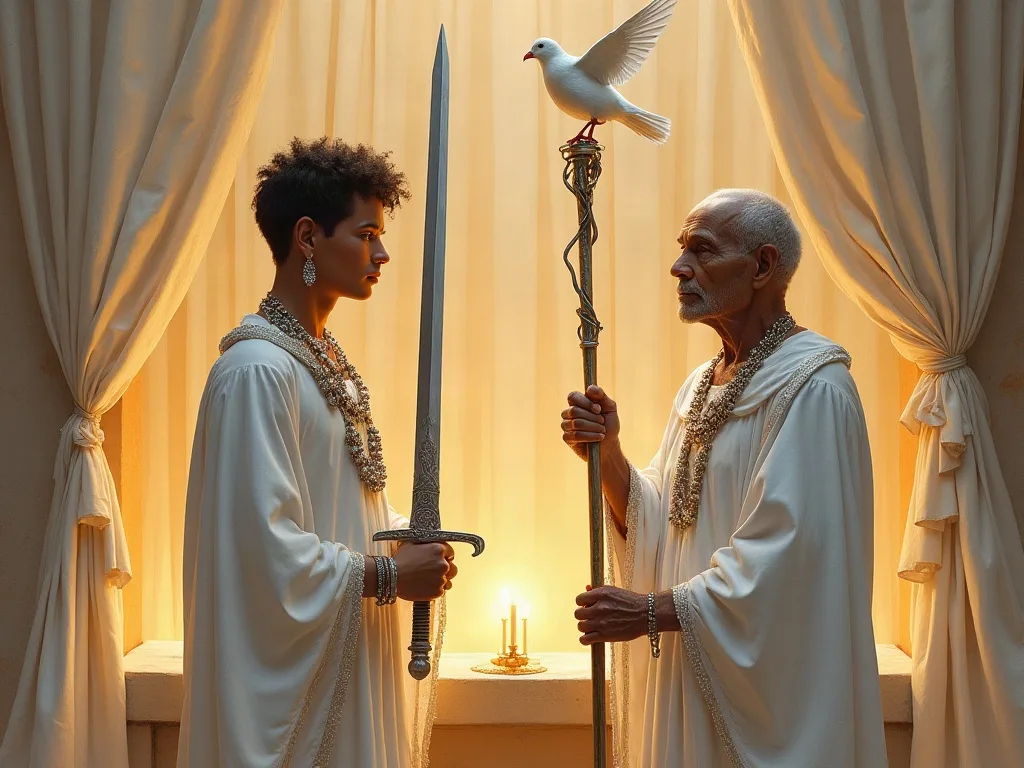
Oxaguiã (oh-sha-gwee-AH) is Oxalá in his youth. He is a warrior. He carries a ixé (a ceremonial sword), he moves with energy, he can show irritation. In some narratives, Oxaguiã is responsible for creating the first human forms before the clay was refined. His colour is white, but his temperament has heat in it. He dances at a brisk pace in ceremonies, his arms cutting the air. Practitioners who belong to Oxaguiã tend to carry some of that restless energy through their own characters.
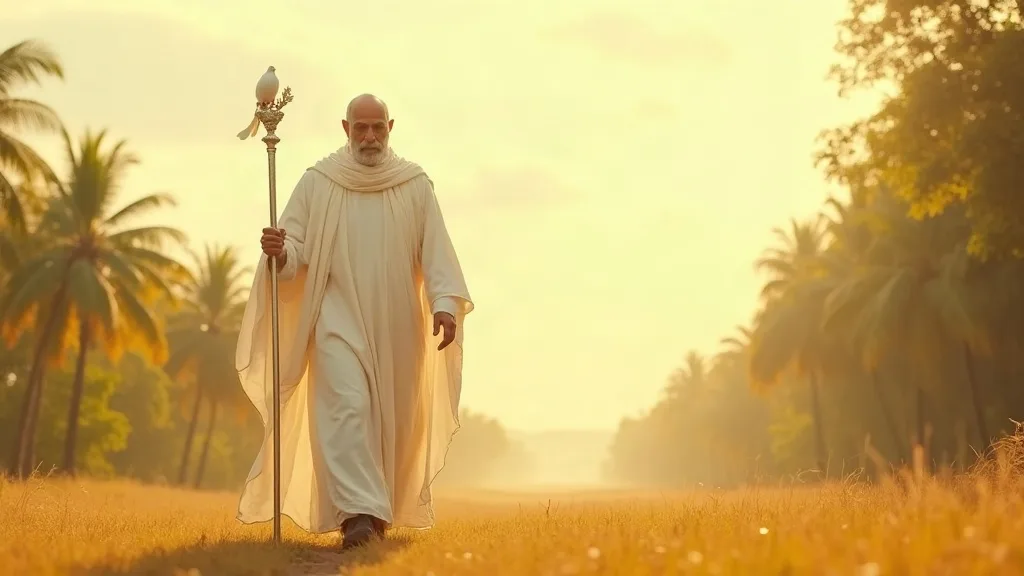
Oxalufã (oh-sha-loo-FAH) is Oxalá in his great old age. He moves with aching slowness, bent over a long white staff called the paxorô, a staff decorated with silver and small birds that jingle faintly as he walks. He speaks in a whisper. He trembles not from weakness but from the enormous weight of accumulated time. To see a filho de santo (a devotee) possessed by Oxalufã is to watch someone move as though every second costs them something precious. It is one of the most moving sights in any Candomblé ceremony.
These two are father and son in some tellings, two phases of a single life in others. Together they cover the full arc of Oxalá's story: the urgency of creation and the wisdom that comes after.
How Oxalá Made Humanity: The Clay and the Commission
The central myth of Oxalá is his mandate from Olorum. Olorum, the supreme God, wished to people the earth, but the work of shaping living things from raw matter was too particular, too embodied, for a God of pure spirit. So Olorum called Oxalá and gave him the task: go down, take the clay, and make the vessels that will hold human souls.
Oxalá accepted. He was given white clay and the knowledge of form. He shaped bodies one by one, giving each its proportions: some tall, some short, some with limbs that curved differently, some with features that would later be called imperfect by other eyes. In many versions of the myth, the bodies Oxalá shapes are diverse precisely because he works with care and variety, not from error. The differences between human bodies are, in this reading, intentional artistry, not accident.
But Oxalá has a weakness: palmwine. In the Yoruba original, Obàtálá is forbidden from drinking it before he works, because it dulls his precision. Some myths say he drank anyway before the commission, which is why some human bodies carry what we call disabilities or differences. These are not punishments in Candomblé theology; they are sacred marks, the shapes Oxalá's hands made while impaired, and they fall under his special protection. People born with physical differences are considered children of Oxalá in a particularly intimate sense.
Once the bodies were shaped, Olorum breathed the emi, the divine breath of life, into each one. Oxalá made the vessel. Olorum filled it. The partnership between creator-sculptor and life-giving breath is the foundational act of Candomblé cosmology.
The Road to Ogun's Kingdom: Oxalá's Great Trial
One of the most powerful narratives in the Candomblé tradition centres on a journey Oxalá attempted to reach the kingdom of Ogun, the Orisha of iron and warfare. Oxalá had been invited, and he set out dressed in his finest white robes.
On the road, he encountered Exu, the Orisha of crossroads and communication, three times. Each time, Exu deliberately knocked into him, spilling palm oil, food, and mud across those immaculate white robes. Oxalá, committed to patience and purity, said nothing. He cleaned himself as best he could and kept walking. When he arrived at Ogun's kingdom, his robes ruined, Ogun's guards did not recognise him. They arrested him as a vagrant, a madman, a stranger who wandered in without proper dress.
Oxalá spent years in Ogun's prison. He did not complain. He did not call for vengeance. He waited. Meanwhile, terrible things began to happen in Ogun's kingdom: crops failed, animals died, women could not give birth. Ogun consulted the oracle, the Ifá, and was told the calamity had one cause: the king was holding Oxalá unjustly, and the world was suffering for it.
Ogun released Oxalá immediately, washing his feet, dressing him in new white cloth, and offering everything in his kingdom as restitution. Oxalá forgave him without a single word of reproach. And the kingdom healed.
This myth is not simply a story. It is the blueprint for Oxalá's character: his patience is not passivity, it is strength. His silence under injustice is not weakness, it is the hardest form of power. And his capacity to forgive restores the world. The myth also explains why Candomblé practitioners observe specific mourning rituals during the two-week period called the Procissão de Senhor do Bonfim in Bahia, walking in white and maintaining silence to echo Oxalá's time in prison.
Rituals, Colours, and Sacred Objects
Oxalá is honoured every Friday in Candomblé. Friday is his day, and on that day, devout practitioners, whether they belong to Oxalá or not, wear white clothing as a mark of respect. In many homes and terreiros (Candomblé temples), the Friday meal is bland and white: white rice, plain yams, unseasoned foods that mirror the purity he requires.
His sacred colour is white, without exception. He rejects red and black, the colours of blood and darkness, near his altar. His metal is silver, sometimes lead (representing the heaviness and coolness he embodies). His number is eight or sixteen, depending on the nação (house or lineage of the tradition).
The foods offered to him are light and cool: corn porridge, white ebô (ritual offerings), boiled yams without pepper or salt, white coconut. Pepper is strictly forbidden near Oxalá. So is cachaça, the Brazilian sugarcane spirit: it recalls the palmwine that cost him his precision. When a Candomblé priest or priestess prepares an offering to Oxalá, the kitchen must be cool, clean, and quiet.
His sacred object, the paxorô, is the most immediately recognisable: a tall silver staff whose crown is a white dove, its wings outstretched. The dove, in Candomblé, is Oxalá's bird. It represents peace, creativity, and the hovering presence of the sacred over the formless. When the paxorô is brought into a ceremony, the space itself changes.
Oxalá and Iemanjá: A Sacred Partnership
No account of Oxalá is complete without Iemanjá, the Queen of the Sea, the great mother of the Orixás. In many Candomblé narratives, Oxalá and Iemanjá form the original divine couple: the sky father and the water mother, the one who shapes from above and the one who nurtures from below.
Their relationship varies across different nações and different mythological strands. In some, they are husband and wife. In others, they are parallel powers, complementary rather than conjugal. In some narratives, it is from the union of Oxalá's sky energy and Iemanjá's oceanic depth that the Orixás themselves are generated: not children in the biological sense, but divine forces that arise from the tension between form and flow, between the fixed and the fluid.
What is consistent across every lineage is the mutual respect between them. Where Iemanjá is salt, movement, and emotion, Oxalá is stillness, air, and patience. Where she weeps for her children lost at sea, he holds them in the palm of a form he made with care. They are not opposites so much as they are complements, the two poles that keep the cosmos from collapsing into either pure matter or pure water.
Oxalá in Umbanda and the Broader Atlantic World
Oxalá did not stay within the borders of Candomblé. As African-derived spirituality spread and mixed across Brazil, he became central to Umbanda, the syncretic Brazilian religion that blends Candomblé with Spiritism, Catholicism, and indigenous beliefs. In Umbanda, Oxalá is often identified with Oxalá Velho (old Oxalá), a spirit of extraordinary gentleness who works through mediums to heal, comfort, and counsel.
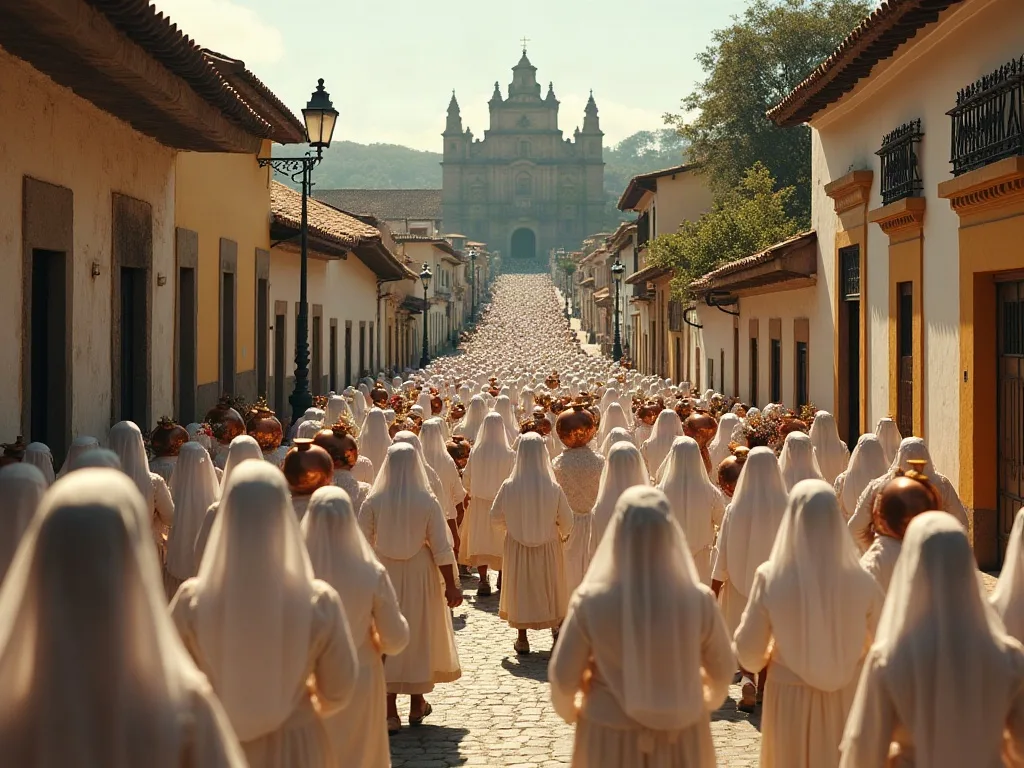
The Catholic overlay is historically significant. Under the brutal repression of African religious practice during the colonial and early national periods in Brazil, Candomblé practitioners disguised their Orixás behind Catholic saints. Oxalá was most often aligned with Jesus Christ or Our Lord of Bonfim (Nosso Senhor do Bonfim), the beloved patron of Bahia. The Feast of Nosso Senhor do Bonfim, celebrated every January in Salvador, includes a famous procession where women dress in white and wash the steps of the Bonfim church with perfumed water: a ritual with obvious Candomblé roots, performed openly in the heart of a Catholic feast.
Across the Atlantic, in Cuba, Obàtálá persists in Lucumí (also called Santería or Regla de Ocha) with nearly identical attributes: white cloth, white clay, the sculpting of human bodies, immense patience. In Trinidad's Orisha religion (sometimes called Shango), the same deity appears. In Yoruba communities in Nigeria and Benin, Obàtálá is actively worshipped and his festivals draw thousands of devotees. The continuity across an ocean, across centuries of forced migration, is one of the most remarkable acts of cultural memory in human history.
Why Oxalá Matters Beyond Mythology
There is something worth pausing on here. The world is full of creator gods. Many traditions have a supreme being who makes humanity out of dust, clay, or breath. What makes Oxalá distinctive is the moral weight attached to the act of creation.
His mythology does not glorify the creator's power. It interrogates it. The story of his drinking before he works and the resulting diversity of human bodies asks: what does it mean to make something imperfect? The answer Candomblé gives is not shame but consecration. Those bodies are his, specifically his, because he made them in a state that reflected his own vulnerability.
His imprisonment story asks: what does it mean to be powerful and unjustly treated? The answer is not rebellion. It is endurance so complete that the world itself bends to restore justice, without the wronged party lifting a finger.
These are not naive answers. They are hard ones. They ask a great deal from the people who follow him. Practitioners who identify as filhos de Oxalá (children of Oxalá) are expected to embody patience in daily life, to refuse quarrels, to dress with care, to treat their bodies as the sacred clay they are.
Common Questions About Oxalá
Frequently asked questions
Is Oxalá the same as God in Candomblé?
Not exactly. Oxalá is the highest of the Orixás, but above him stands Olorum (also called Olodumaré), the supreme God who is too vast to interact directly with humans or to be worshipped in ceremonies. Oxalá acts as the closest intermediary, the one Olorum commissioned to shape humanity, but the two are distinct beings in Candomblé theology.
Why is white the colour of Oxalá?
In Yoruba and Candomblé symbolism, white represents purity, completeness, and the state before differentiation: the colour that contains all other colours. It is associated with creation before it takes specific form, with cool and calm energy, and with the sacred space that must be protected from contamination. Oxalá, as the creator of human bodies, embodies all of these qualities.
What is the difference between Oxalá and Obàtálá?
They are the same divine being across two cultural contexts. Obàtálá is the Yoruba name, used in Nigeria, Benin, and across the diaspora in Cuba (Lucumí/Santería) and Trinidad. Oxalá is the name used in Brazil, particularly in Candomblé. The core mythology, attributes, and ritual colours are almost identical, reflecting the continuity of Yoruba religious culture across the Atlantic.
Why do Candomblé practitioners wear white on Fridays?
Friday is Oxalá's sacred day. Wearing white is an act of respect and alignment with his energy: it signals purity of intention for the day and acknowledges the creator's presence. Even practitioners whose own patron Orisha is not Oxalá typically observe this custom, because Oxalá is considered the father of all, and honouring him is honouring the source of the human form itself.
Who are the children of Oxalá in Candomblé?
People initiated into Candomblé whose patron Orisha is identified as Oxalá (whether Oxaguiã or Oxalufã) are called filhos or filhas de Oxalá. They are typically expected to cultivate patience, avoid conflict, wear white frequently, abstain from pepper and alcohol near rituals, and carry the qualities of calm and creative endurance into their daily lives.
Is Oxalá connected to Jesus Christ?
Historically, yes, through a process of religious camouflage. During Brazil's colonial period, when African religious practice was repressed, Candomblé practitioners aligned their Orixás with Catholic saints to practice openly. Oxalá was most commonly identified with Jesus Christ or Nosso Senhor do Bonfim (Our Lord of the Good End). The Feast of Bonfim in Salvador, Bahia, still carries visible Candomblé roots, particularly in the white-clothed procession and ritual washing of the church steps.
Oxalá in the 21st Century: A Living Creator
Oxalá is not a relic. He is not the subject of academic study alone, not a figure sealed inside an ancient text. Candomblé is a growing tradition: it has an estimated two million active practitioners in Brazil alone, and its influence spreads across the Brazilian diaspora into Portugal, Germany, Japan, and the United States. The terreiros of Salvador, Bahia, where Candomblé has its strongest roots, hold Oxalá's ceremonies with the same structure and reverence they have held them for generations.
There are ongoing scholarly debates about the future of Candomblé and about the tension between the tradition's original Yoruba forms and the more syncretic forms that emerged under colonialism. Some houses actively work to strip away Catholic overlays and return to what they call "traditional" Yoruba practice. Others argue that the syncretic forms are not compromises but genuine creative acts, new theologies forged in fire and survival.
In either case, Oxalá stands at the centre. His mythology survived the Middle Passage. It survived the banning of African religious practice in Brazil. It survived the 20th century's rapid urbanisation and the digital noise of the 21st. It persists because it speaks to something real: the idea that the bodies we carry are sacred because someone made them with care, that patience is a form of power, and that a creator who forgives is stronger than one who punishes.
The white cloth keeps coming out every Friday. The silver staff keeps moving through the terreiro. The old man keeps walking, slow and deliberate, each step carrying the weight of everything he made.
Read the full book
Want the whole story?
The complete edition is an instant PDF download here, with a paperback on Amazon for selected titles.
Candomblé
The Candomblé Book: The Orixás, Xangô, Yemanjá, and the Living Religion of Brazil
The Orixás: Xangô, Yemanjá, and Oxalá
The faith the enslaved carried across the ocean and refused to lose: the orixás of West Africa reborn in Brazil. Xangô of thunder, Yemanjá of the sea, Oxalá the creator, and the drums, foods, and colors that call them down. A living religion.
More from Candomblé
All articles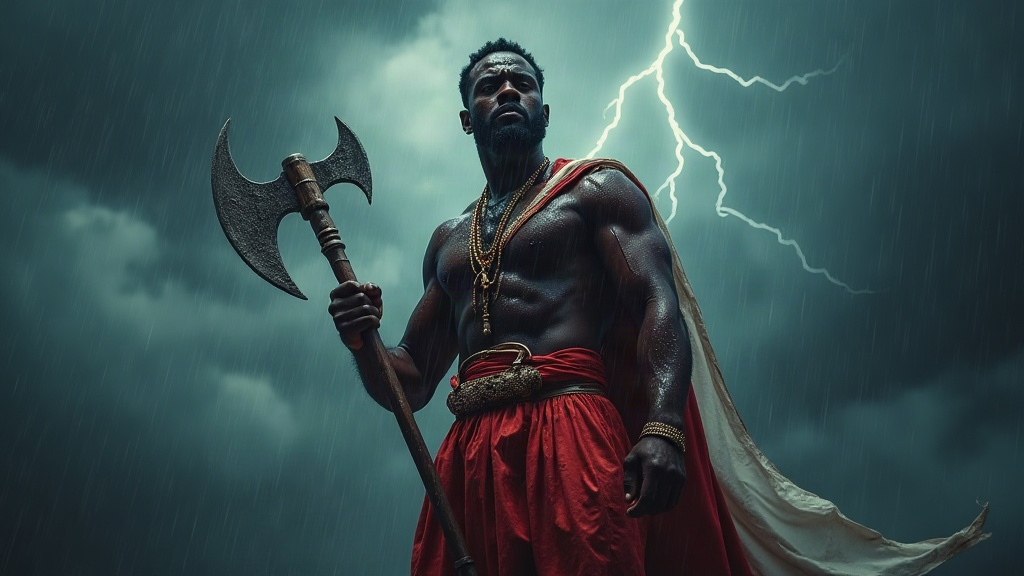
Candomblé
Xangô: The Thunder King and God of Justice
Xangô commands thunder and lightning, wielding a double axe as an instrument of divine justice. This Candomblé orisha embodies the warrior spirit, passion, and the power to strike down falsehood with sacred fire.

Candomblé
Oxóssi: Hunter God of the Forest
Oxóssi is the Candomblé deity of the hunt, forest abundance, and spiritual provision. His arrows strike with precision through the veil between worlds. Learn how this Yoruba orisha shapes African-Brazilian spirituality and why devotees invoke him for sustenance, clarity, and protection.

Candomblé
Oxum: Goddess of Fresh Waters, Love, and Fertility
Oxum rules the rivers and the human heart in Candomble. She is generosity itself: golden, sensual, protective of mothers and children. Learn how this Yoruba orisha became the most beloved goddess in Brazil and what her mythology reveals about devotion, abundance, and desire.
Candomblé
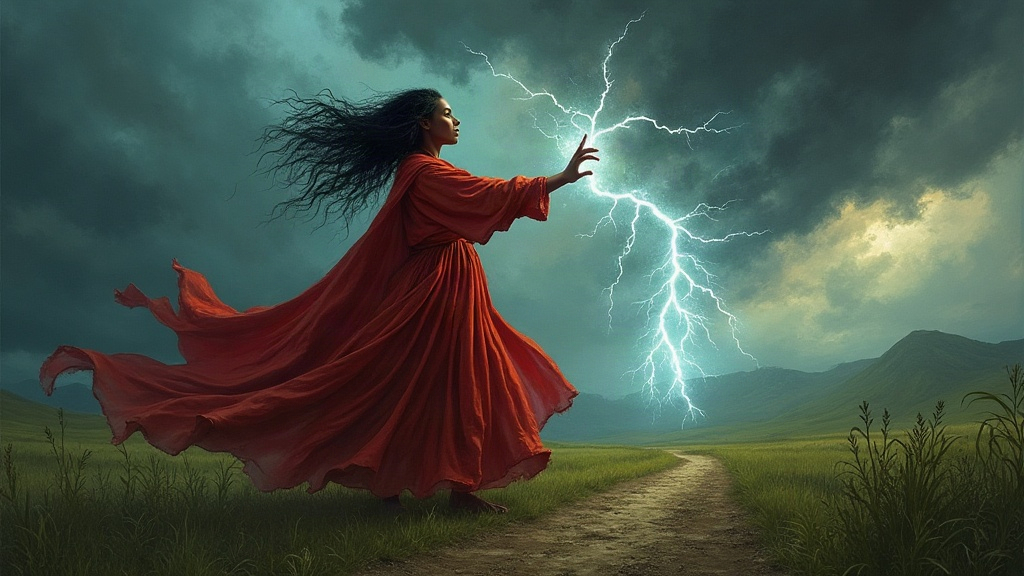
Iansã: Goddess of Winds, Storms, and the Dead
Iansã commands lightning and tempests, guards the edge between life and death, and embodies the fierce, unbounded energy of nature. In Candomblé, she is one of the most powerful and beloved orixás, syncretized with Santa Bárbara.