
Possession Trance: When the Orixás Mount Their Children
In Candomblé, possession trance is not theater but theology. When the orixás mount their children, the divine enters flesh. Learn how this sacred practice transforms initiate into orisha, from the call to the threshold of consciousness, and what it reveals about the living gods of Africa in the Americas.
Contents
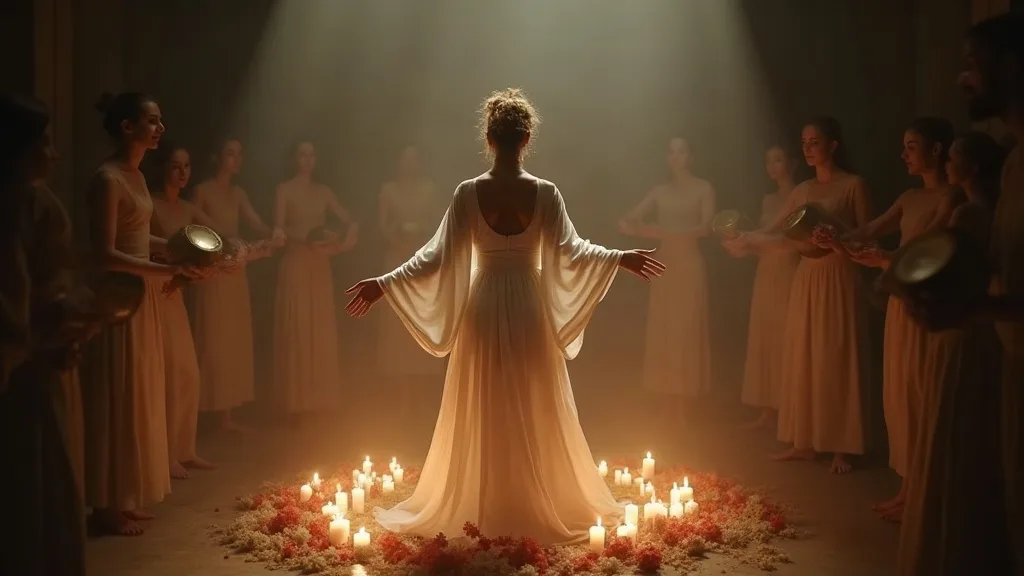
The drumbeat shifts. The pace quickens. A woman in white begins to sway, her shoulders rising and falling as if something inside her is learning to breathe. Her eyes roll back. Her body stiffens, then goes fluid. The other initiates step back. Someone whispers a name. And in that instant, the boundary between human and divine dissolves. The possession trance in Candomblé is not performance, not hysteria, not fraud. It is theology made visible, the central ritual act through which Candomblé connects the living world to the realm of the orixás.
For over four hundred years, Candomblé practitioners have understood possession as the highest form of communion with the sacred. When an orixá mounts a child (a rider claiming a horse), the god does not inhabit a body as a ghost in a machine. Rather, the initiate's consciousness steps aside, and the orixá's presence floods in. The result is not controllable performance. It is genuine encounter, terrifying and ecstatic, in which the boundaries of self become permeable.
This is the heart of Candomblé ritual life. Not prayer alone. Not sacrifice alone. But the direct embodiment of the divine, happening in real time, witnessed by the community.
The Architecture of the Orixás: Who Mounts, and How
Before anyone mounts, you must understand what the orixás are. In Candomblé theology, the orixás are not distant gods dwelling in some remote heaven. They are ancestral spirits who became forces of nature. They lived, suffered, fell in love, made enemies, died. And they never left. They live in the sacred waters, in the forests, in the air above the heads of their descendants.
Each orixá has a particular force, a rhythm, a preference. Xangô is the god of thunder and justice; he comes with the fury of lightning and the weight of iron. Oshun is the goddess of honey, rivers, and seduction; she arrives moving like water, sensual and mercurial. Ogun is the god of iron and war; he moves like a warrior, sharp and direct. Yemaya is the mother of the ocean; she flows with salt water and holds the weight of all birthing.
When an initiate is "chosen" by an orixá (a process called eleição or election), that orixá becomes that person's head-orixá, their guardian and patron. The relationship is not contractual. It is genealogical. The orixá has selected this person from among countless others. Why? The theology says: because the orixá recognizes itself in them. Because there is a deep kinship, an ancestral connection written into their blood and temperament.
An initiate may be "the son of Xangô" or "the daughter of Oshun" the moment they are born. But that election means nothing until the body can be prepared, the mind can be opened, and the possession can happen.
The Road to First Mounting: Years of Initiation
A person does not simply walk into a Candomblé temple and become possessed by an orixá. The practice is surrounded by years of preparation. Initiation is not a single night but a threshold stretched across years.
The first stage, barù, is an initial divination using the divinatory chain or cowrie shells. The diviner reads the shells and announces which orixá has chosen this person. The initiate learns their patron, their enemy (an orixá they must avoid), their character according to the shell patterns. This is the moment of naming.
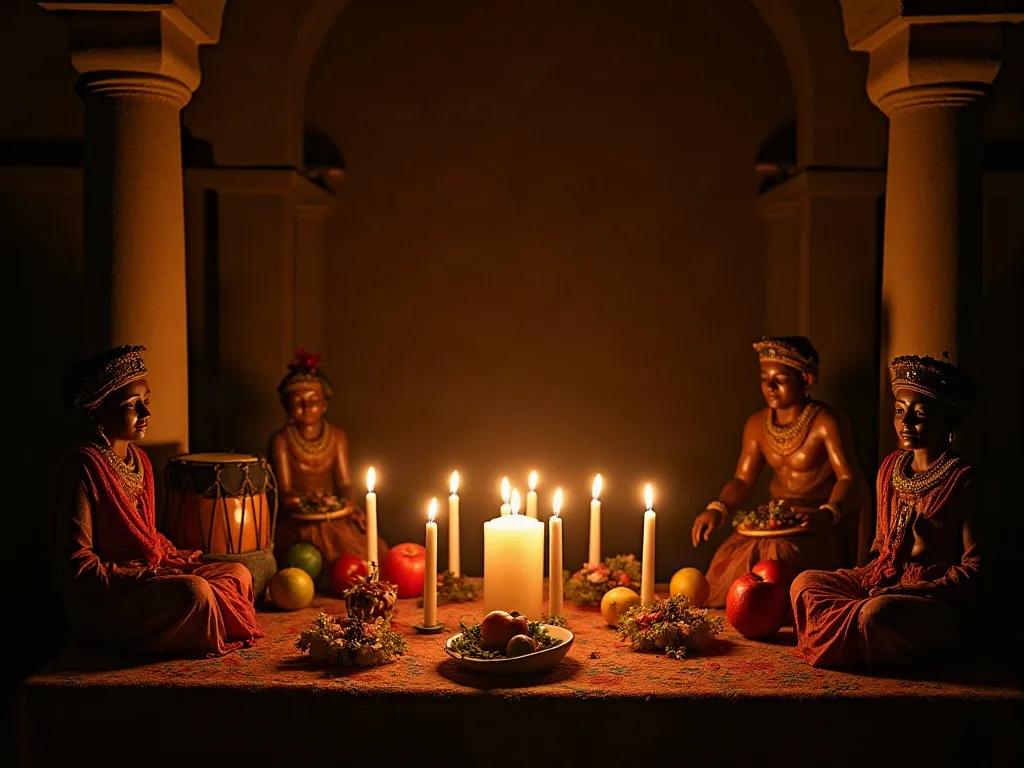
But naming alone does not open the door. The initiate must undergo a period of learning and ritual bathing. They must visit the sacred spaces of their orixá. They must learn the songs, the dances, the offerings, the food their orixá loves. In Candomblé, you feed the orixás before they will come. You make ebo, the offering. Cooked foods blessed with herbs, placed before the altar. The orixá must taste, must recognize the devotion, must soften.
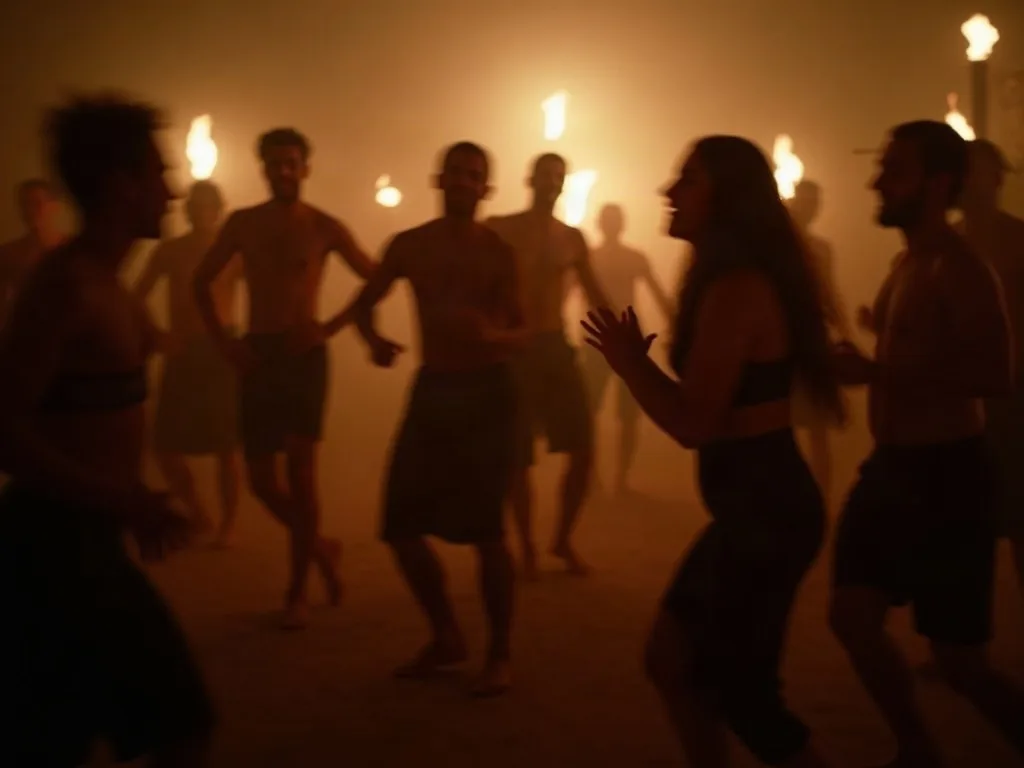
For months, sometimes years, the initiate attends roda de samba, the drumming circles where initiates dance and the air thickens with spiritual presence. The drums are not decoration. The rhythms are toques, the specific patterns that each orixá recognizes as their own voice. Xangô's toques are aggressive, almost angry in their pace. Oshun's are sinuous and slow. Ogun's are sharp and repetitive like the strike of metal. The body learns these rhythms long before the mind understands them.
Then comes the night of initiation proper. For three days and nights, the initiate is in isolation, sometimes in a special room called the ronco (snoring place), with other new initiates. They are fed specific foods, washed in sacred herbs, their hair is braided or bound, their clothes are all white. The space becomes a womb. They die to their old self and wait to be reborn as children of the orixá.
On the final night, the initiates emerge. They are dressed in the colors of their orixá. A new person walks out. The orixá has not yet mounted fully, but they have tasted the initiate's body.
The First Full Possession: When the Orixá Arrives
The first real mounting often happens at a festa, a celebration of the orixá. The drums begin. The mãe-de-santo (mother of the temple, the high priestess) and the pai-de-santo (father, the high priest) are chanting, calling the orixás by their secret names, the ones the uninitiated never hear. The energy in the room is not ordinary. A current runs through it. The initiates who are ready begin to dance. Their movements are no longer entirely their own.
What does possession feel like? Initiates describe it differently. Some say the consciousness fades, and they remember nothing. They wake up as if from a sleep, their body exhausted, people telling them what their orixá did or said. Others describe a watching from far away, as if they are observing their body from the ceiling. Still others feel the orixá as an immense presence, vast and heavy, like standing too close to an open fire, the heat unbearable.
The body changes. The initiate may stagger as if drunk, their center of gravity suddenly altered. Their face shifts; the expression becomes unfamiliar. A woman possessed by Ogun may suddenly begin striking movements, her hands clenched into fists, her body tense. An initiate possessed by Oshun begins to move in curves, one hand on her hip, the other reaching, her face serene and terrible at once. It is not acting. The witnesses know the difference. The body itself is foreign, inhabited.
The mãe-de-santo or pai-de-santo will approach the mounted orixá. They greet it with respect. They may ask it questions. Who are you? What do you want? Why have you come? The orixá speaks. Its voice may be different from the initiate's own. It may speak in archaic Yoruba phrases, in Portuguese, in a mixture. It may address other community members, offer guidance, issue warnings, speak of things no one told the initiate to say.
This is the proof, in Candomblé belief. No one can fake the orixá's knowledge. No one can fabricate the specific way Xangô moves or the particular sweetness of Oshun's voice when she inhabits a body not her own.
The Mechanics of Mounting: Body, Breath, and Threshold Consciousness
What is actually happening in the brain and body during possession? Science and theology answer differently, and Candomblé holds both in tension.
From a neurological standpoint, possession trance involves a genuine alteration of consciousness. Brain imaging studies of possessed individuals in African diaspora religions show suppressed activity in areas associated with self-referential thought, sense of agency, and executive control. The parts of the brain that say "I am me" go quiet. At the same time, areas associated with emotion, sensation, and memory become hyperactive. The body is more sensitive, more responsive, more alive in some dimensions.
But from Candomblé's perspective, neurology describes the mechanism, not the cause. Yes, the brain state changes. That is exactly how you know the orixá has arrived. The orixá uses the body's openness, its receptivity. The initiates spend years learning to quiet the rational mind, to trust the rhythm, to surrender. When that surrender is deep enough, the orixá can enter.
The physical preparation matters profoundly. For weeks before a major festa, initiates may fast or eat only specific foods. They refrain from sex. They avoid certain locations. Their bodies become increasingly permeable. On the day itself, the herbs that have been blessed and poured over their heads in ritual bathing leave traces, not just metaphorically but chemically, in the skin and hair. The rhythms of the drums begin to synchronize the heart. The singing raises the temperature of the room. The initiate has been prepared like an altar.
When possession comes, it is often sudden. A woman dancing may simply stop mid-motion, her whole body stiffening. Then the stiffness breaks into movement, but different movement. Jerking, flowing, animal-like, possessed. The change is visible instantaneously.
The Mounted Orixá: Language, Behavior, and the Impossible Proof
Once an orixá has mounted, it behaves according to its nature and history. This is where the texture of Candomblé theology becomes rich.
Xangô mounted is forceful, often angry. He may demand explanations. He may accuse people in the room of wrongdoing. He moves with martial precision, his gestures sharp. If a woman is mounted by Xangô, she will not move like herself. If she is normally gentle, the presence of Xangô makes her fierce. If a man is mounted by Xangô, he becomes granite.
Oshun mounted is graceful, seductive, almost shy. She will flirt, will touch people gently, will laugh. She moves like water moving through a vessel, filling every curve. She speaks softly. She may make jokes or double-entendres that would be scandalous from the initiate's own lips but are acceptable from the orixá.
Yemaya is maternal and fierce at once. She may hold someone and comfort them, but if they are not showing proper respect, her anger is terrible. She speaks of the ocean, of depths, of things carried in salt water.
Ogun is direct, sometimes crude, laughs with a harsh bark. He speaks of work, of obstacles overcome, of iron and struggle.
The orixá speaks in the initiate's throat but with knowledge the initiate should not possess. A mounted person may address someone in the room in detailed terms about a problem they are facing, a problem the initiate does not know about. Or they may speak in archaic Yoruba, a language the initiate never studied. Or they may know the private name of someone, the nome-de-cabeça (head-name), given at initiation, known only to a few people.
For believers, this is irrefutable proof. The orixá has entered. A rational skeptic would point to cold reading, cultural knowledge, auditory imagination. Candomblé says: you are explaining away direct encounter because you are afraid of it.
The Dangers of Mounting: When the Orixá Becomes Unbearable
Possession is not always beautiful. It is sometimes terrifying.
A first mounting can overwhelm an initiate. The loss of control, the sense of another presence inhabiting the body, can trigger genuine psychological crisis. Some initiates scream during their first possession, not in joy but in profound disorientation. The community calls this normal, part of the breaking-in process. But it is harrowing.
There are also cases of what might be called "bad possession." An orixá may arrive and be angry, may strike out, may be difficult to calm. This is usually understood as reflecting some spiritual imbalance in the initiate's life. Have they failed to make an offering? Have they broken a tabu, a prohibition their orixá has placed on them? Is there an ancestral debt unpaid? The orixá arrives in anger to demand correction.
In extreme cases, an orixá may refuse to leave. An initiate may remain in trance for dangerous lengths of time, the body overheating, exhausted, unable to return to normal consciousness. This is considered a serious spiritual emergency. The mãe-de-santo must intervene with prayers, offerings, and sometimes the intervention of other mounted orixás to negotiate the departure.
There is also the danger of addiction. Some initiates become addicted to the state of possession itself, to the loss of self, to the power and attention that comes with being a vehicle for the divine. They begin to seek mounting compulsively, outside of proper ritual contexts. This is considered spiritually dangerous, a corruption of the practice.
Possession and Community: The Orixá's Role in Judgment and Healing
Possession in Candomblé is never private. It is always communal. The orixá arrives in the presence of witnesses, and what happens in possession has real social consequences.
An orixá mounted in a festa may call someone to account. They may say: "You have been disrespecting your mother. You must apologize." The person addressed often weeps, confesses, makes amends. The orixá has spoken a truth that needed speaking.
An orixá may also heal. A person suffering may come before the mounted orixá and ask for intervention. The orixá may prescribe a specific offering, a journey, a behavior change. In Candomblé cosmology, physical illness is often understood as spiritual imbalance. The orixá, by being embodied and present, can diagnose and direct cure.
The mounted orixá may also provide consulta, advice about a person's path. "You are meant for this work." "You must move to another place." "Your dead require attention." These words carry tremendous weight. The person receiving them understands that they are hearing not the initiate's opinion but the orixá's knowledge.
This social function is real. Candomblé communities are tight-knit, and the orixá's judgments shape behavior, resolve conflicts, and reinforce communal values. Whether the orixá is literally present or whether the community's collective belief creates a framework for truth-telling is a question each person answers for themselves.
The Return: Coming Down from Possession
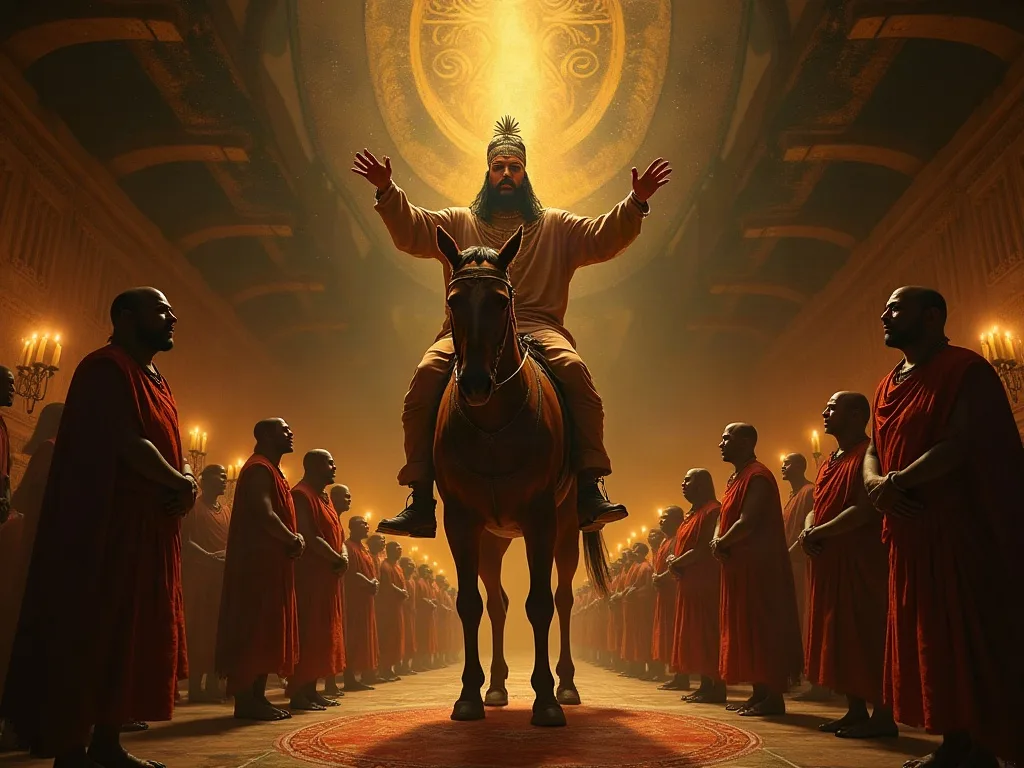
Possession does not end abruptly. It fades.
The mounted orixá will gradually become quieter. The initiated person's movements slow. Their facial expressions become less vivid. Slowly, incrementally, something like the original consciousness begins to return. It is not an on-off switch. It is more like waking from a dream, the dream world dissolving, the ordinary world re-establishing itself.
When the initiate fully returns, they often seem disoriented. They may not remember much or anything of what happened during possession. They may ask: "Did I dance? Did my orixá speak?" Others fill in the gaps. "Yes, Xangô arrived and he was magnificent. He spoke three prophecies."
The body is exhausted. A person who has been possessed for twenty minutes may feel as though they have run a marathon. Their muscles ache. They are drenched in sweat. They may sit quietly for hours afterward, reintegrating.
In some cases, the integration is immediate and complete. In others, an initiate may remain in a half-present state for a while, moving slowly, answering in monosyllables. The mãe-de-santo may give them water blessed with herbs, food, rest.
It is understood that the orixá takes something from the body. Mounting costs energy. This is why ongoing ebó, offerings of food and care, are essential. You are feeding the orixá so it can return and mount again, so the relationship stays alive.
The Initiate's Own Experience: Consciousness and Agency
One of the deep paradoxes of Candomblé possession is the relationship between consciousness and agency. Who is in control?
Some initiates report complete amnesia. They remember nothing. They wake up as if from a blank sleep.
Others report a strange dual consciousness. They are aware that they are doing things they would not normally do, but they feel compelled by a force they cannot resist. It is like being a passenger in your own body, watching from the back seat.
Still others report a sense of merger: the experience of being themselves and the orixá simultaneously, the boundary between self and other dissolving completely. They move with the orixá's power but remain sentient.
These variations within Candomblé theology are understood as reflecting different degrees of spiritual development and preparation. An initiate who has been practicing for many years may have a more complete and conscious relationship with their orixá than a newly initiated person.
What is clear is that Candomblé does not ask the initiate to deny what they experience. If an initiate says they remember nothing, that is valid. If another says they remained aware, that is equally valid. The theology is flexible enough to hold both.
Possession Across the Diaspora: Candomblé and Its Cousins
Possession trance is not unique to Candomblé. It appears in religions across the African diaspora in the Americas.
In Haitian Vodou, lwa (spirits of the dead and the divine) mount their chwal (horse, initiate) in ceremonies called servitaj. The mounted lwa may dance, speak prophecies, demand offerings. The theological framework is nearly identical to Candomblé, though the spirits involved and the ritual procedures differ.
In Cuban Santería, the orishas (a different transliteration of the Yoruba word) mount their aleyo (initiates) in similar ways, with similar theological meaning.
In Brazilian Spiritism, particularly the tradition of Candomblé de Caboclo, possession by ancestral spirits and indigenous figures coexists with Candomblé proper. A person may be mounted by an enslaved ancestor, a Tupi warrior, or an African orixá in the same ceremony.
In US hoodoo and African American folk religion, possession and direct encounter with the divine appear less formally, but the principle is present. A person may be "filled with the Holy Ghost" in charismatic Christianity in ways that structurally echo possession in Candomblé.
Candomblé Possession
The orixá mounts an initiate called a filho-de-santo (child of the saint). The orixá's behavior reflects its individual personality and history. Mounting requires years of initiation. The experience may range from complete amnesia to dual consciousness. The community witnesses and validates the mounting.
Haitian Vodou Possession
A lwa (spirit) mounts an initiate called a chwal (horse). The lwa's behavior similarly reflects its personality. Initiation is less lengthy but still formal. Possession is expected and ritualized. The community witnesses and sometimes asks the lwa for guidance, protection, or intervention.
All these traditions inherit a common theological principle: the boundary between the human and the divine, between the living and the ancestral, is permeable. The sacred is not distant. It can arrive in a body, speak through a throat, and change minds.
The Debate: Possession, Psychology, and Authenticity
The experience of possession in Candomblé has attracted scholarly attention from anthropologists, psychologists, and neuroscientists. The debate remains active.
Some researchers argue that possession is a learned behavior, a form of culturally sanctioned dissociation. The initiate is taught to expect possession, primed by ritual and rhythm to achieve an altered state, and their culture validates the interpretation of that state as the arrival of an orixá. From this view, the "orixá" is real as a psychological and social phenomenon, but the theological claim of divine presence is metaphorical.
Other researchers, including some working within Candomblé communities, argue that this explanation is incomplete. They point to cases in which possessed individuals speak knowledge they should not have access to, move in ways they have never been taught, and demonstrate behavioral changes so radical that they exceed what learning and expectation can explain.
Candomblé practitioners themselves tend to reject the binary. The question "Is it real?" assumes a Western division between psychology and theology, between the imagined and the literal. Candomblé holds that the psychological experience is the theological event. The altered state is how the divine manifests. There is no fraud because there is no claim being made that the initiate is doing this through their own will. The claim is precisely that they have surrendered will, that they have made space for the orixá to act.
A person may be skeptical of that claim. But the skepticism runs against the fundamental theology of the religion.
The Ethics of Mounting: Consent, Control, and Trust
One of the less-discussed aspects of possession in Candomblé is the ethics of the practice.
An initiate consents to be mounted, but the nature of that consent is complex. They are often very young when they first enter a temple. They are taught to desire possession, to see it as an honor. Their family may push them toward it. By the time they experience their first mounting, they have been prepared, often for years, to experience it as inevitable and welcome.
This raises real questions. Is the consent of a 13-year-old to have their consciousness altered and their body inhabited truly informed consent?
Moreover, once possessed, the initiate has no control. They cannot revoke consent midway. If the mounting becomes painful or psychologically distressing, they cannot simply decide to stop.
Within Candomblé, these questions are addressed through structure and trust. The mãe-de-santo and pai-de-santo are responsible for the safety of those in their charge. They do not allow initiates who are unwell or unstable to mount. They intervene if a mounting becomes dangerous. The temple is understood as a space of care, not exploitation.
But it is also true that Candomblé exists within power dynamics. The mãe-de-santo has considerable authority. A person who objects to mounting, who expresses fear, may be pressured to overcome their fear, to be brave, to trust. The line between encouragement and coercion can blur.
This does not negate the profound spirituality of Candomblé. But it is a real dimension of the practice that deserves acknowledgment.
The Legacy of Possession: Candomblé in the Modern World
For four centuries, possession in Candomblé has remained remarkably consistent in its core features. Orixás still mount their children. Communities still gather to witness and validate the encounter. The drum rhythms that call the orixás down are the same patterns that came from Africa.
But the context has changed. In contemporary Brazil, Candomblé exists alongside Pentecostal Christianity, which also emphasizes the descent of the Holy Spirit and ecstatic religious experience. It exists in cities rather than rural communities. It is documented on video and posted to the internet. It is subject to discussion and critique.
Some Candomblé practitioners and scholars are now explicitly connecting possession trance to African diaspora resilience. The ability to mount the orixá, to bring African ancestral presence into embodied form in a land far from Africa, is understood as a form of spiritual resistance and reclamation. Through possession, the ancestors return. Through possession, Africa is present, speaking, healing, even in a Brazil that tried to erase it.
At the same time, Candomblé communities are more diverse than they once were. Not all initiates experience mounting. Not all temples practice it with equal emphasis. Some practitioners focus more on divination and offering. The tradition is living and changing, not frozen.
Frequently asked questions about possession trance in Candomblé
Frequently asked questions
Can anyone become possessed by an orixá, or do you have to be initiated?
Theoretically, any human being can experience what they interpret as spiritual possession. But in Candomblé, the practice is ritually structured. An initiate has been prepared through years of bathing in sacred herbs, learning the rhythms, fasting, and making offerings. This preparation opens what Candomblé calls the door. Without initiation, a person may experience something, but Candomblé would not validate it as the arrival of an orixá. The ritual framework is not decoration. It is the container that makes mounting possible and safe.
Do the orixás actually exist, or is possession a psychological phenomenon?
This is a question each person answers for themselves based on their own beliefs. Candomblé theology says the orixás are real ancestral forces that have become divine. Whether that is literal metaphysical presence or a powerful psychological and social reality is not a dispute Candomblé itself treats as settled. What is clear is that mounting produces real alterations in consciousness and behavior, and it has genuine social and healing consequences. Whether you call that the presence of a god or the power of cultural meaning depends on your framework.
Is possession dangerous, and has anyone been harmed by it?
Possession can be psychologically intense and physically exhausting. For most initiates, it is neither harmful nor disturbing. For some, particularly on first mounting, the disorientation and loss of control can be frightening. There are documented cases of people experiencing psychological distress after mounting. There are also documented cases of people being harmed by unscrupulous practitioners who exploit the practice. Like any powerful ritual, possession requires knowledge, ethical leadership, and informed consent. When these are present, harm is rare. When they are absent, risk is real.
What does an initiate remember during and after possession?
This varies widely. Some initiates report complete amnesia, as if they slept and woke up. Others remember fragments, like dream images. Still others claim continuous awareness, though often described as a watching from afar rather than direct control. Candomblé theology accepts all these variations as authentic. The memory difference does not determine whether the mounting was real. What matters is the community's validation and the behavioral effects that last after the orixá has departed.
How is possession trance different in Candomblé from spirit possession in other religions?
The core principle is the same across African diaspora religions: the sacred enters flesh, the boundary between human and divine becomes permeable, the community witnesses. But Candomblé's specific theology, rooted in Yoruba cosmology, shapes the details. The orixás have known histories, personalities, preferences. They are not generic spirits but ancestral forces with individual character. Mounting in Candomblé is expected to be specific. The way Xangô moves is different from the way Oshun moves. Other religions may emphasize the generic descent of the Holy Spirit or an anonymous ancestor. Candomblé insists on particularity.
Possession in the World Today: Ongoing Evolution and Resistance
The practice of possession trance in Candomblé continues to evolve in the twenty-first century. In digital spaces, videos of mounted orixás circulate globally. Practitioners film ceremonies and share them online. People who have never set foot in a temple see actual footage of the phenomenon, stripped of context, available for interpretation.
This visibility has double effects. It spreads knowledge of Candomblé and creates curiosity. It also opens the practice to skepticism and appropriation. Some people view the videos and see theater or fraud. Others view them and feel genuine spiritual call, seeking out temples to learn more.
At the same time, Candomblé faces pressures within Brazil. Evangelical Christianity has grown explosive in recent decades, and some evangelical churches explicitly condemn Candomblé possession as demonic. Practitioners report discrimination, and some have been harassed for their faith.
Within this context, possession has become more politically and spiritually charged. It is not just an intimate encounter with an orixá. It is an act of resistance, an assertion that African spirituality is valid and powerful even in a society that has often tried to minimize or criminalize it. When an orixá mounts a child of Candomblé, Africa speaks. The ancestors speak. The message is: we are still here.
The future of possession trance in Candomblé will be shaped by how the tradition navigates these forces. Whether it remains as central to the religion, whether it becomes more prominent or recedes, whether new technologies change how mounting happens or is understood, all remain open questions.
What seems clear is that as long as Candomblé persists, mounting will persist. The deep hunger to encounter the sacred, to have it enter your body and speak through your voice, to dissolve the boundary between self and cosmos: that hunger is older than any pressure against it, and Candomblé has fed it for centuries.
Read the full book
Want the whole story?
The complete edition is an instant PDF download here, with a paperback on Amazon for selected titles.
Candomblé
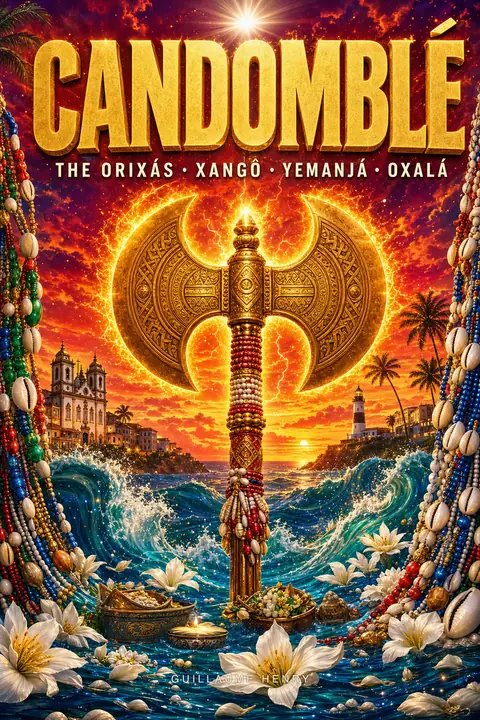
The Candomblé Book: The Orixás, Xangô, Yemanjá, and the Living Religion of Brazil
The Orixás: Xangô, Yemanjá, and Oxalá
The faith the enslaved carried across the ocean and refused to lose: the orixás of West Africa reborn in Brazil. Xangô of thunder, Yemanjá of the sea, Oxalá the creator, and the drums, foods, and colors that call them down. A living religion.
More from Candomblé
All articles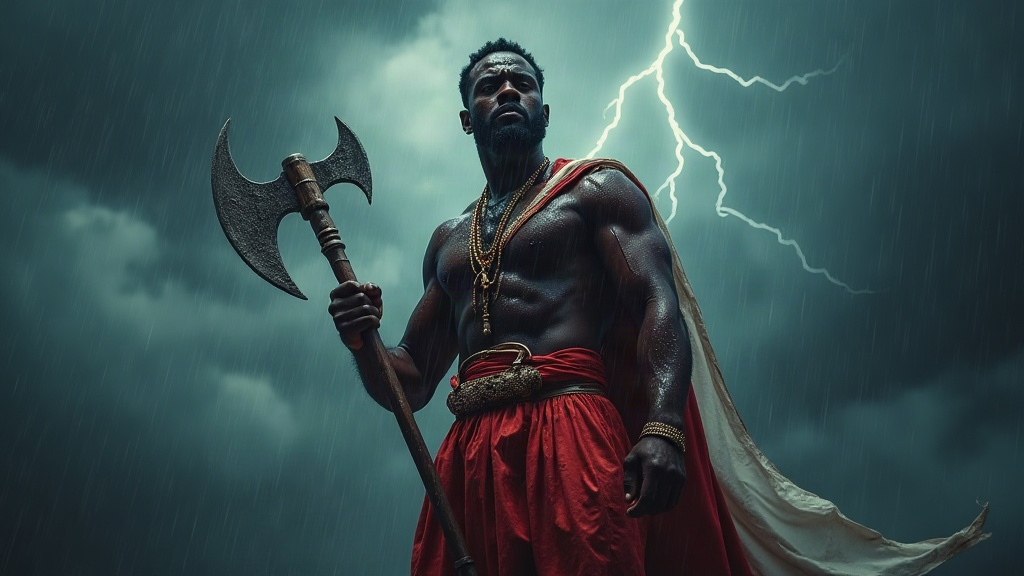
Candomblé
Xangô: The Thunder King and God of Justice
Xangô commands thunder and lightning, wielding a double axe as an instrument of divine justice. This Candomblé orisha embodies the warrior spirit, passion, and the power to strike down falsehood with sacred fire.

Candomblé
Oxóssi: Hunter God of the Forest
Oxóssi is the Candomblé deity of the hunt, forest abundance, and spiritual provision. His arrows strike with precision through the veil between worlds. Learn how this Yoruba orisha shapes African-Brazilian spirituality and why devotees invoke him for sustenance, clarity, and protection.

Candomblé
Oxum: Goddess of Fresh Waters, Love, and Fertility
Oxum rules the rivers and the human heart in Candomble. She is generosity itself: golden, sensual, protective of mothers and children. Learn how this Yoruba orisha became the most beloved goddess in Brazil and what her mythology reveals about devotion, abundance, and desire.
Candomblé
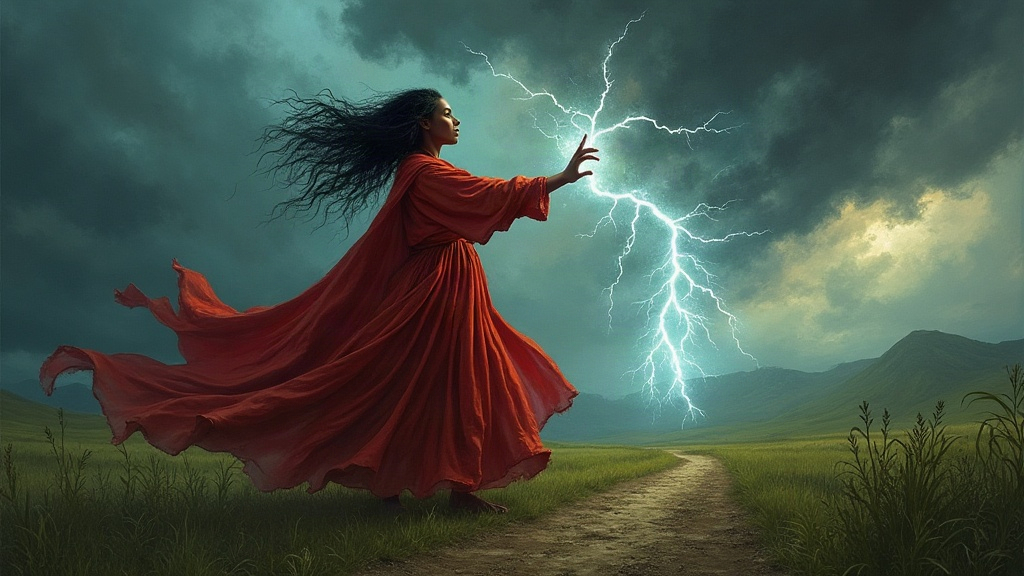
Iansã: Goddess of Winds, Storms, and the Dead
Iansã commands lightning and tempests, guards the edge between life and death, and embodies the fierce, unbounded energy of nature. In Candomblé, she is one of the most powerful and beloved orixás, syncretized with Santa Bárbara.