
The Seven Clans: Cherokee Social and Spiritual Structure
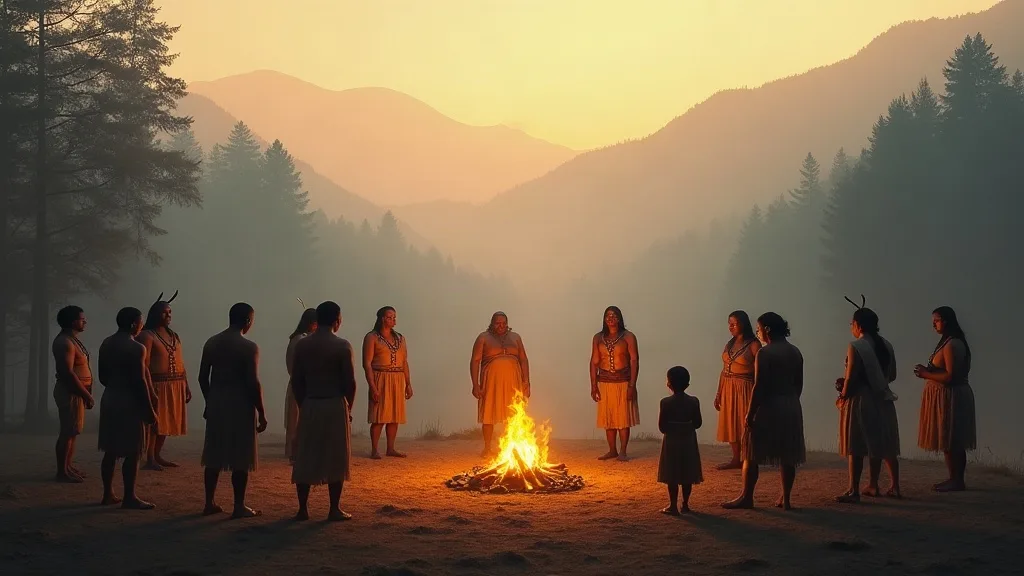
The Cherokee nation organized itself through seven matrilineal clans, each with its own spiritual role, animal symbol, and responsibility to the people. Discover how this ancient system shaped Cherokee law, kinship, identity, and survival for centuries.
Contents
The Seven Clans were not invented; they emerged from necessity, from the oldest Cherokee stories, and from the way a people organized themselves to survive, govern, and honor the sacred world around them. Every Cherokee person belonged to one clan at birth, inherited through their mother's line. That membership was identity, responsibility, and covenant rolled into one.
The clan system worked because it solved practical problems. It prevented chaos in a society without written law. It made every Cherokee answer to a code older than any constitution. It connected the human world to the animal world and the spirit world. And for more than a thousand years, it held the nation together through settlement, conflict, loss, and exile.
The Origin of the Clans in Cherokee Belief
The Cherokee people explain the origin of the Seven Clans through their own sacred narratives, passed down by medicine men and elders over centuries. Different versions exist, because Cherokee knowledge was oral, told and retold in the lodge fires, shaped by each storyteller's art.
One foundational account holds that the clans arose when the Original People divided themselves into seven groups to manage the work of the world. Each group took an animal as its guide and protector. Each received a spiritual purpose, a place in the ceremonial calendar, and a role in maintaining balance. The clans were not random: they reflected the natural order that the Cherokee saw around them and the spiritual truths they understood.
The earliest documented collection of this knowledge comes from ethnographic work by James Mooney, an anthropologist who lived among the Cherokee from 1887 to 1900. Mooney recorded elder accounts and wrote that the clans formed as the people grew in number and needed a way to organize themselves while maintaining harmony with the spirit world. His notes, preserved at the Smithsonian Institution, capture versions of the clan origins that elders shared with him in their own words.
The clan system was never static. Different bands and regions emphasized different aspects. Some traditions held that the seven clans derived from seven sacred mountains. Others traced them to seven original families. All agreed on this: the clans were the backbone of Cherokee nationhood.
The Seven Clans and Their Meanings
The Anigonwa (the Deer Clan), whose name derives from the Cherokee word for deer, was traditionally the peacemaker clan. Members of the Deer Clan served as counselors and mediators. They were known for gentleness and the ability to move quietly through dangerous terrain, much like the deer itself. In Cherokee tradition, deer represented grace, swiftness, and the power to navigate conflict without aggression.
The Aniwaya (the Wolf Clan) carried the warrior spirit. The wolf hunts in packs, with discipline and strategy. Members of this clan were protectors of the nation. They served as scouts, soldiers, and leaders in times of conflict. The wolf's loyalty to its pack mirrored the Cherokee value of unswerving commitment to one's people.
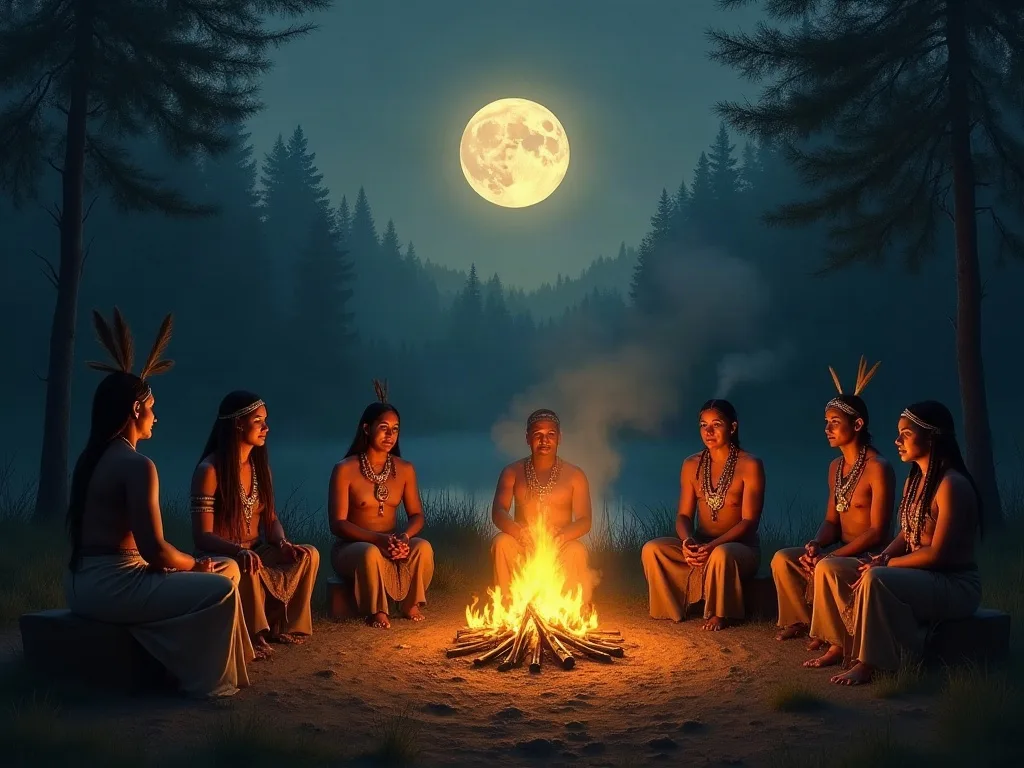
The Anigilohi (the Long Hair Clan) was associated with beauty, balance, and spiritual power. The name itself speaks to the visual symbol: long, flowing hair worn with care and respect. Members often included artists, healers, and ceremonial specialists. They maintained the aesthetics and rituals that kept the nation's spirit alive.
The Anitsiskwa (the Bird Clan) represented watchfulness and perspective from high places. Birds see what humans on the ground cannot see. The Bird Clan served as messengers and strategists. They brought wisdom earned from observing the wider landscape. In some accounts, the Bird Clan was closely associated with the eagle, the highest flyer and the keeper of the sacred fire.
The Aniwaiya (the Paint Clan), also called the Red Paint Clan or the Panther Clan in different regional traditions, had two significant roles. Members were known for their artistic knowledge, particularly the use of sacred colors in ceremonies and warfare paint. They also embodied the power of the panther or mountain lion, an animal respected for its stealth, strength, and solitary wisdom.
The Anisahoni (the Twister or Wind Clan) was linked to the sacred powers of air and lightning. Members were thought to have spiritual sensitivity and connection to weather and atmospheric phenomena. Healers and those with special spiritual gifts sometimes claimed Wind Clan ancestry, viewing it as a mark of spiritual openness.
The Anigatogewi (the Wild Potato Clan) represented sustenance and groundedness. The wild potato grows in the earth; it nourishes. Members of this clan were often associated with agricultural knowledge, fertility, and the keeping of sacred grounds. They represented the connection between the Cherokee people and the land that sustained them.
Each clan had its own emblem, songs, ceremonies, and stories. Each had rights and obligations. A young Cherokee child knew, from the moment of birth, which clan they belonged to, what that meant, and what was expected of them.
Matrilineality: How the Clan Passed Through the Mother
Membership in a Cherokee clan followed the mother's line, not the father's. This was the law of kinship among the Cherokee, and it shaped everything: property inheritance, social standing, spiritual identity, and even who you could marry.
If your mother was a member of the Deer Clan, you were Deer Clan. Your father's clan was irrelevant to your own identity. This meant that a man's own children did not belong to his clan; they belonged to his wife's clan. A Cherokee man's closest heirs were not his sons but his nephews, the children of his sisters.
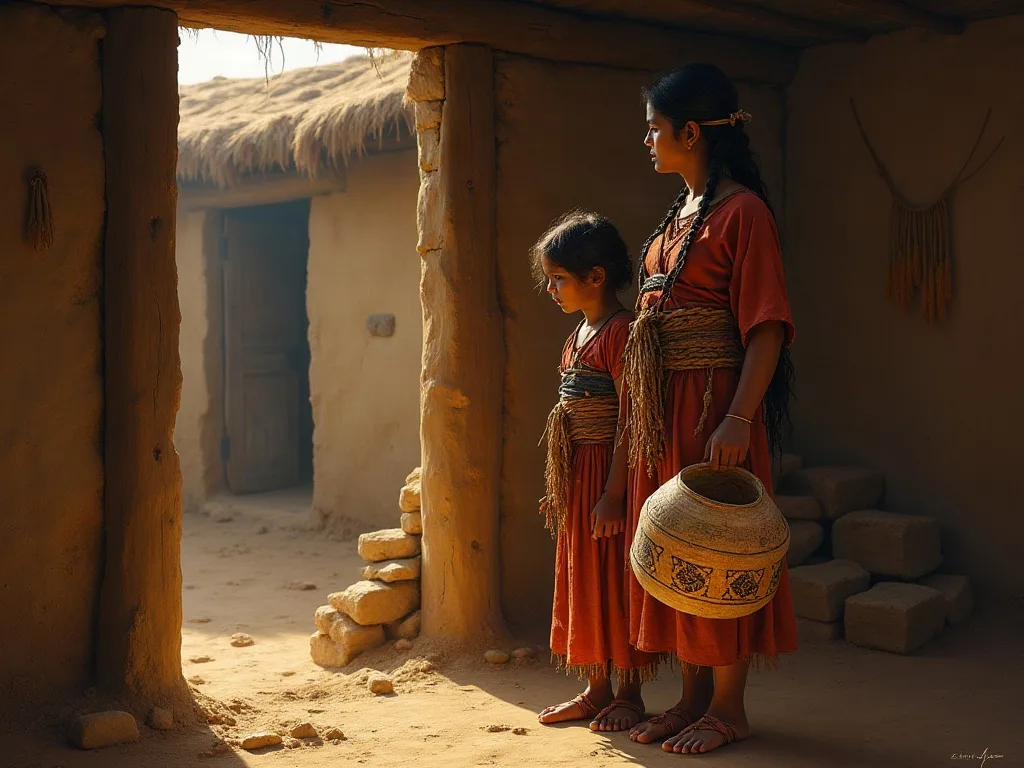
This matrilineal system had profound consequences. A Cherokee woman held power that would have been unthinkable in many European societies of the same era. She was the keeper of the clan identity. Her children's place in society flowed through her. Her property, her house, her fields, passed to her daughters, not her sons. A man could be prominent, a warrior or a counselor, but his authority was grounded in his mother's and his sisters' standing.
The system also prevented the kind of property disputes and inheritance wars that plagued patrilineal societies. A man's wealth and status could not be hoarded by a single son, creating rivalry and fracture. Instead, resources and knowledge moved through the female line, stabilizing the clan and the nation.
Marriage itself reflected this structure. A man joined his wife's household, not the reverse. If the marriage ended, the woman kept the children and the house. A man who displeased his wife or her family might find himself without a place to sleep. This gave Cherokee women a form of security and autonomy that gave them real authority in the home and in clan affairs.
Spiritual Responsibilities and Ceremonial Roles
Each clan did not merely exist as a social category. Each had spiritual responsibilities embedded in the Cherokee ceremonial calendar and cosmology.
The most important gathering was the Green Corn Ceremony, also called the Busk or the First Fruit Ceremony, held each year in late summer when the new corn ripened. The Cherokee purified themselves, forgave debts, and renewed the covenant between the human world and the natural world. Different clans led different parts of the ceremony. The fire keepers, often from the Fire Clan or the Long Hair Clan, maintained the sacred fire. The healers, drawn from clans with spiritual knowledge, prepared medicines and purifications. The singers and dancers, each clan contributing, moved through the four cardinal directions.
The Stomp Dance, performed at night during various ceremonies, saw each clan participate in a coordinated spiral. The order mattered. The arrangement reflected cosmological truth. As the people danced together, their physical movement reinforced their unity and their agreement to live under the old law.
Clans also had roles in healing and in maintaining sacred knowledge. Certain clans produced more herbalists, bone setters, or spiritual practitioners than others. This was not a rigid rule, but a pattern: families within a clan cultivated and passed down particular healing traditions. A person suffering from a specific illness might seek out a healer from a particular clan, trusting that the knowledge was strong in that bloodline.
Clan Law and Social Order
The Seven Clans were the basis of Cherokee law and social accountability. When a Cherokee committed a serious wrong, the response came not from a distant judge but from the offended clan. If a man from the Wolf Clan killed a man from the Deer Clan, the Deer Clan had the right to exact justice. This could mean demanding restitution, executing the killer, or accepting compensation.
This system prevented what the Cherokee would have seen as incomplete justice. The victim's family and clan had a direct stake in how the case was resolved. The killer's family could appeal to the victim's family for mercy, negotiate settlement, or face the consequences.
Over time, as the Cherokee encountered pressure from European colonizers and the United States government, the clan system remained a source of stability even as other institutions fractured. Treaties were negotiated with the understanding that clan leaders and hereditary chiefs maintained their authority. The Cherokee Nation, in whatever form it took, was always understood to be an alliance of seven clans.
The Clans During Removal and Modern Times
The forced removal of the Cherokee from their ancestral lands in what is now the southeastern United States, beginning in 1838 and culminating in the deadly Trail of Tears, fractured the nation physically. Families were separated. Clans scattered across the continent to the Indian Territory, now Oklahoma. Some Cherokee fled to the mountains of North Carolina and remained, founding what is now known as the Eastern Band of Cherokee Indians.
Yet the clan system survived the removal. Cherokee people, even as they endured starvation and disease on the long westward march, maintained their clan identities. The bonds between clan members from different family groups became lifelines. In the new territory, the clans reorganized, gathered together, and restored the ceremonies as much as survival allowed.
Today, the Cherokee Nation, the Eastern Band of Cherokee Indians, and the United Keetoowah Band of Cherokee Indians in Oklahoma all recognize the clan system as central to Cherokee identity. Enrollment in the Cherokee Nation requires proof of descent from a Cherokee ancestor on the Dawes Rolls, a historic census taken in the early 1900s. Modern Cherokee people continue to identify with their clans, honor clan responsibilities, and participate in ceremonies that reflect the old structure.
The clans no longer control law and order in the way they once did; that role has shifted to tribal governments with constitutions and courts. But the clans remain the root of Cherokee identity. Marriages between people of the same clan are discouraged or forbidden in some instances, maintaining the old taboo against clan marriage. Ceremonies are performed with clan participation. Elders teach young people about their clan identity as part of learning what it means to be Cherokee.
Debate Among Scholars: Origins and Variations
Scholars of Cherokee history and culture have long debated the precise origins of the Seven Clans. Some argue that the clan system was ancient, predating European contact by centuries. Others suggest that the system was refined and codified in response to European pressure, becoming a more rigid and formal structure than it had been in earlier times.
James Mooney's ethnographic work in the 1890s documented seven distinct clans and their responsibilities, and this documentation has become the baseline for modern understanding. However, some later researchers noted that different Cherokee bands and regions emphasized different clan lists or used different names. This variation is consistent with what we know about Cherokee culture: it was not uniform, but rather a network of related peoples with shared language, beliefs, and values, and significant local variation.
Another scholarly debate centers on whether the clans had totemic or sacred functions beyond their social ones. Some traditions suggest that members of a clan could not eat or harm their clan animal. Others suggest that the relationship was more metaphorical: the clan animal represented the character and role of the clan, but did not impose dietary or behavioral restrictions. The historical record does not resolve this conclusively.
What all scholars agree on is this: the Seven Clans were the organizational genius of Cherokee society. They created networks of kinship and obligation that bound thousands of people into a coherent nation. They preserved knowledge, maintained order, and connected the human and spirit worlds. They survived removal, adaptation, and the loss of most of the Cherokee Nation's traditional lands. They remain, in the 21st century, a core expression of Cherokee identity.
Frequently Asked Questions about the Seven Clans
Frequently asked questions
Could a Cherokee person marry someone from their own clan?
No. Marrying within your own clan was forbidden or at least strongly discouraged. The prohibition on clan marriage was a fundamental rule that prevented too much power or wealth from concentrating in a single clan, and it encouraged alliances between clans through marriage. Some Cherokee traditions treated clan marriage as a serious violation; others viewed it as an embarrassment or something to be corrected. This rule persists in some form in modern Cherokee communities.
Did all Cherokee people know which clan they belonged to?
Yes, clan membership was fundamental to Cherokee identity. A child learned their clan affiliation from birth, through their mother's lineage. Not knowing your clan was unthinkable in traditional Cherokee society. It was as essential to your identity as your name. Today, Cherokee people in the various Cherokee Nations and bands continue to identify their clan affiliation as part of their cultural identity.
Do the Cherokee clans still exist today?
Yes. All three federally recognized Cherokee nations and bands recognize the Seven Clans as part of Cherokee identity and culture. Modern Cherokee people continue to identify with their clans, and many participate in ceremonies and cultural practices organized around clan responsibilities. The clans are no longer the primary mechanism of law and governance, as that role has been taken up by tribal governments with constitutions, but they remain deeply important to Cherokee identity.
What happened to the clans during the Trail of Tears?
The forced removal of the Cherokee from their southeastern homeland in 1838-1839 was catastrophic, but it did not destroy the clan system. Thousands of Cherokee died during the journey west, and the trauma was immense. Yet the clan system proved remarkably resilient. Even during the removal, people maintained their clan identities and drew on clan bonds for survival and mutual aid. In the new territory and in subsequent generations, the clans continued to organize Cherokee life, and the system adapted to new circumstances.
Were the clans named after animals or did the animals come later?
The origin of the clan names is debated among scholars. Some Cherokee traditions hold that the clans came first and took animals as their guides and symbols. Others suggest that the animal associations were present from the beginning. What is clear from documented accounts is that by the time European contact occurred, each clan was firmly associated with a specific animal, which represented the clan's spiritual character and its place in the cosmic order.
The Clans as a Living Tradition
The Seven Clans: Cherokee Social and Spiritual Structure represents one of the most enduring and sophisticated systems of social organization ever created. It is not a museum piece or an artifact of the distant past. For contemporary Cherokee people in the Cherokee Nation, the Eastern Band of Cherokee Indians, and the United Keetoowah Band, the clans remain a living reality.
Young Cherokee people today learn the names of the seven clans, the animals and values associated with each, and the responsibilities they inherit through their mother's line. They participate in stomp dances where the clans move together in the old patterns. They marry according to clan rules, maintaining the principle that clans should intermarry, not consolidate. They draw strength from knowing that they belong to something larger than themselves, a structure that has held for centuries and will hold for centuries more.
The clans are also being studied, taught in Cherokee schools, and discussed in tribal councils as the Cherokee nations work to revitalize language and culture. Scholars at universities, many of them Cherokee themselves, research and document the system. Organizations dedicated to Cherokee cultural preservation publish materials about the clans in both English and the Cherokee language, Tsalagi.
The Seven Clans were never just a way to organize labor or settle disputes. They were a way of seeing the world, of understanding that a human being is not a solitary individual but part of a network that stretches backward through mothers and forward through daughters, connected to animals, to the land, to the spirit world, and to the sacred duty of maintaining balance. That vision endures.
Read the full book
Want the whole story?
The complete edition is an instant PDF download here, with a paperback on Amazon for selected titles.
Cherokee
The Cherokee Mythology Book: The Uktena, the Spirits, and the Sacred Stories
The Uktena, the Spirits, and the Sacred Stories
The sacred stories of the Cherokee: how the world was made on the back of a water beetle, the horned serpent Uktena and its blazing crystal, the Little People who live inside the mountains, and the medicine that holds it all together. Recorded from the elders before it could be lost.
More from Cherokee
All articles
Cherokee
The Trail Where They Cried: Mythology and Memory of Removal
The Trail of Tears reshaped Cherokee mythology itself. Discover how forced removal in 1838-1839 became a sacred narrative of survival, covenant, and the land's eternal connection to a people who refused to disappear.
Cherokee
Sequoyah: Creator of the Cherokee Syllabary
Sequoyah invented a written system for the Cherokee language in just 12 years, transforming a spoken-only tradition into a literate nation. His genius was practical, not mystical: he saw that other peoples had captured their words on paper, and he figured out how.
Cherokee
The Green Corn Ceremony: Cherokee Harvest Renewal Ritual
The Green Corn Ceremony, or Iisgano'asdi in Cherokee, is the nation's most sacred annual gathering: a four-day harvest festival where the people renew their covenant with the Creator, cleanse themselves of past wrongs, and begin the year anew. Discover how a single ear of corn became the axis of Cherokee identity and spiritual restoration.
Cherokee
The Origin of Fire: How Water Spider Brought the Flame
Water Spider risked everything to steal fire from the other side of the world and bring it to the cold Cherokee people. Discover how a small creature's bravery shaped the dawn of Cherokee civilization.