
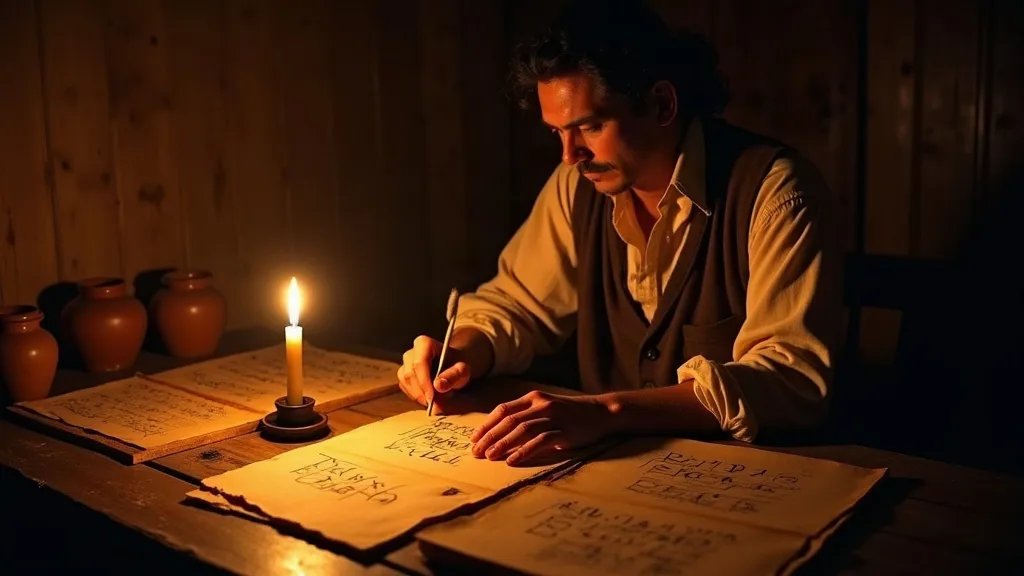
Sequoyah: Creator of the Cherokee Syllabary
Sequoyah invented a written system for the Cherokee language in just 12 years, transforming a spoken-only tradition into a literate nation. His genius was practical, not mystical: he saw that other peoples had captured their words on paper, and he figured out how.
Contents
In 1821, a Cherokee man named Sequoyah stood before the nation's leaders and proved that their language could be written. He had no formal education, could not read English, and had invented something that would alter the course of Cherokee history: a syllabary, eighty-six characters that perfectly captured the sounds of Cherokee speech. Within months, thousands of Cherokee learned to read and write in their own language. Within a generation, the Cherokee had published their own newspaper, kept records in their own script, and preserved their knowledge on paper instead of memory alone.
His life was not a legend wrapped in myth. Sequoyah was a real man whose mind worked like an engineer's. He saw a problem: his people had no way to fix their words to a page. He spent twelve years testing, discarding, refining. He drew inspiration from the writing systems he had glimpsed in English, Spanish, and other languages, but he did not copy them. He invented something entirely new, shaped to the genius of Cherokee speech itself.
The Man Before the Achievement
Sequoyah (c. 1770-1843) was born in what is now eastern Tennessee, probably near present-day Knoxville. His mother was Cherokee; his father was a Scottish trader named Nathaniel Gist (or Guess), though Sequoyah never knew him and grew up among the Cherokee, shaped by their customs, language, and land. The name he used as an adult, Sequoyah, comes from the Cherokee word for the giant redwood trees of California, though the exact reason remains unclear.
He was a skilled craftsman. Sequoyah worked as a silversmith and blacksmith, making ornaments, utensils, and weapons. His hands were used to precision work, to understanding how materials fit together. Those same hands would eventually hold a brush and transform Cherokee into writing.
During the Creek War (1813-1814), Sequoyah served with the Cherokee Nation against the Creek Confederacy. He was not a war chief; he was a soldier. Historians suggest that during this conflict, he may have encountered written English records kept by military officers, and the sight of words fixed to paper in a foreign tongue planted a seed in his mind: why could Cherokee words not be captured the same way?
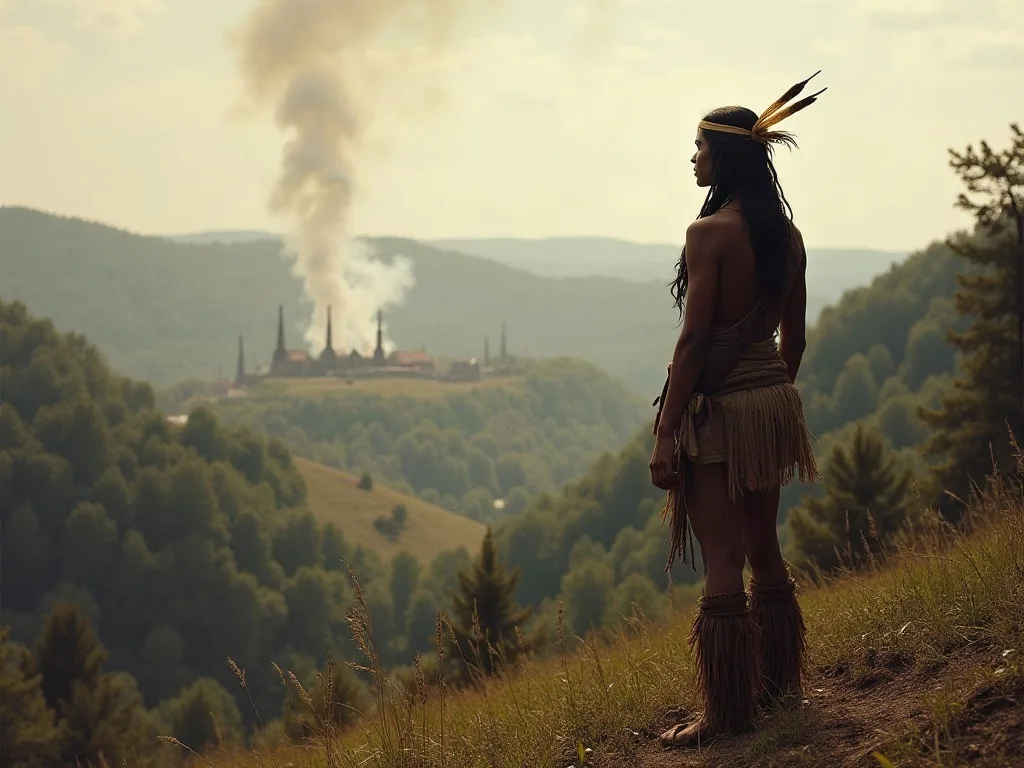
Sequoyah spent most of his early life in the traditional Cherokee world. He hunted, farmed, and lived in a community where knowledge was carried in stories, songs, and spoken instruction. Yet by the early 1800s, the Cherokee Nation was negotiating treaties with the United States, and those treaties were written in English. Cherokee leaders had to rely on interpreters. Information was filtered, delayed, sometimes distorted. Sequoyah saw this clearly: a people without writing faced a people who wielded it like a weapon.
The Obsession Takes Shape (1809-1821)
Around 1809, Sequoyah began his work. He did not announce it. He did not seek permission. He worked in private, on his own time, refining his system through trial and refinement.
The challenge was immense. English, Spanish, and other languages he had studied used alphabets: twenty-six letters or more to represent individual sounds. But Cherokee did not work that way. A Cherokee speaker heard syllables, not isolated consonants and vowels in sequence. The English word "cat" is three sounds: k, a, t. But a Cherokee word might compress many sounds into one syllable that an English ear could barely separate.
Sequoyah understood this in his bones. He was not educated in linguistics, but his ear was native. He realized that Cherokee required a different approach: not an alphabet, but a syllabary. Each character would stand for a whole syllable, not a single sound.
He began by experimenting with English letters. He took letters he knew: A, B, C, D, and others. He assigned them Cherokee syllable values. For example, he used the letter D to represent the sound "da," the letter R for "ar," and so on. But this proved incomplete. English had only twenty-six letters, and Cherokee had far more syllables.
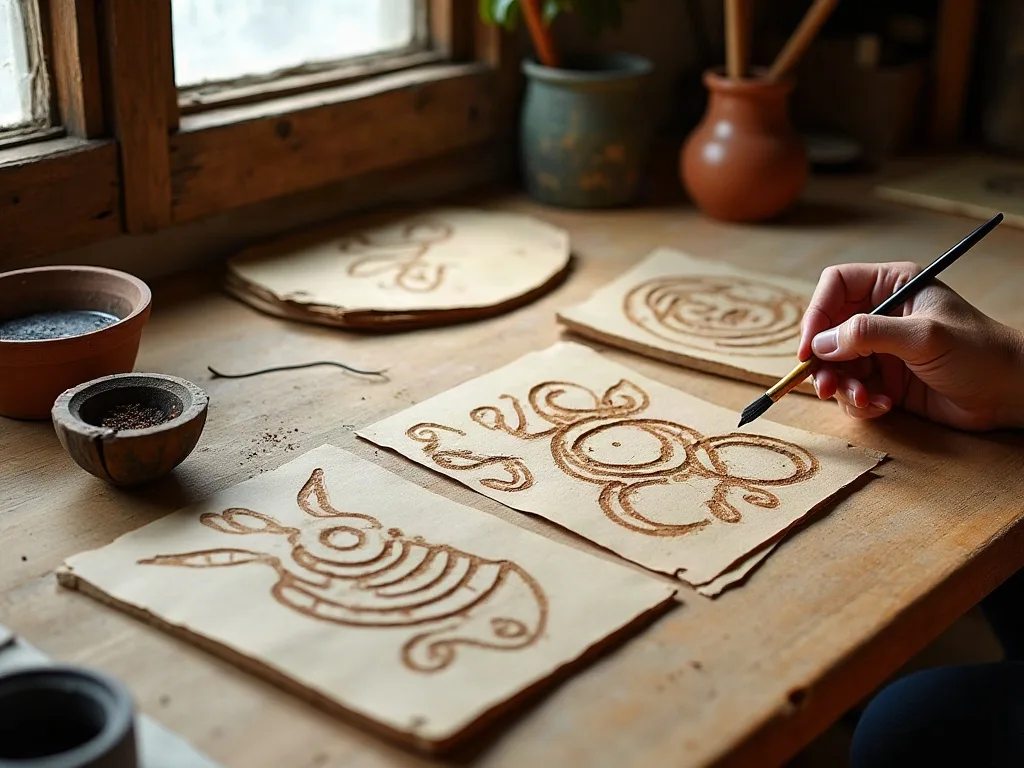
So Sequoyah invented new characters. He drew symbols inspired by English letters but transformed them. He created characters from whole cloth, shapes that meant nothing in English but that his eye could recognize and his hand could write quickly. His syllabary grew: 80, then 82, then 86 symbols.
He tested them. He wrote down words and read them back to himself. He gave samples to Cherokee friends and family and asked them to read the marks aloud. Did they produce the right sounds? Yes. Could Cherokee speakers learn to recognize and use these characters? Yes.
By 1818 or 1819, his system was mature. He had refined it to eighty-six characters, each one representing a distinct syllable in the Cherokee language. The system was elegant. It was learnable. A person with no formal education could master it in days or weeks, not years.
The Demonstration and Acceptance
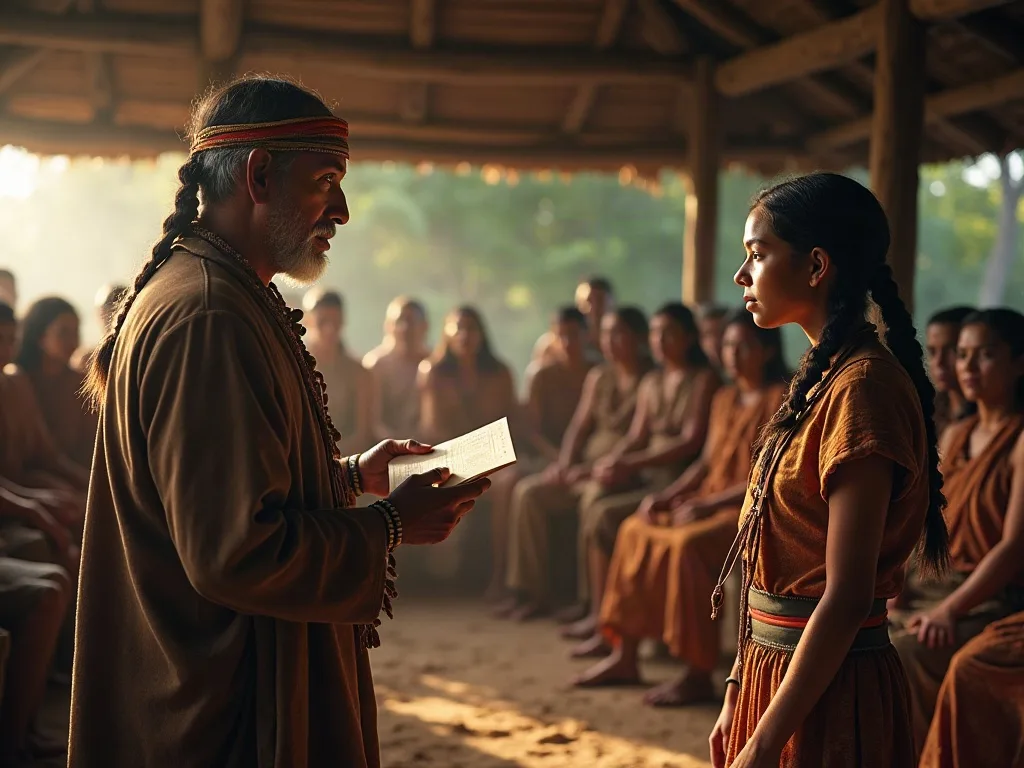
In 1821, Sequoyah brought his syllabary before the Cherokee Nation's governing council. He had his young daughter, Ayoka (also called A-yo-ka), read aloud from marks he had written. She had no prior knowledge of what the marks meant; Sequoyah had taught her nothing beforehand. As the council watched, she read the words correctly, proving that the system worked. A reader who had never seen the marks before could decode them. The syllabary did what Sequoyah had promised: it converted spoken Cherokee into visible, readable form.
The nation's leaders recognized the significance immediately. This was not magic. It was not a trick. It was a practical solution to a real problem. Within months, the Cherokee government endorsed the syllabary and encouraged its spread.
The adoption was swift. By 1825, a significant portion of the Cherokee Nation could read and write. By the late 1820s, printing presses began producing books, newspapers, and official documents in the Cherokee syllabary. In 1828, the Cherokee Phoenix, the nation's first newspaper, began publication, printed half in Cherokee syllabary and half in English. Missionaries printed hymns in Cherokee. The nation printed its laws in Cherokee. Knowledge that had been locked in spoken memory could now be recorded, shared, preserved.
Sequoyah's invention did not make Cherokee written language easier than English or other languages. It made it possible. And for a people facing pressure to abandon their traditions, the ability to read and write their own language became an act of cultural survival.
The Syllabary's Design and Genius
The Cherokee syllabary was a marvel of practical engineering. It contained eighty-six characters. Each one represented a distinct syllable: "a," "e," "i," "o," "u," "ga," "ka," "na," "ha," "ma," and so on. A Cherokee word could be spelled out by stringing syllable characters together, much as English words are spelled with letters.
Sequoyah's choice of syllabary over alphabet was not accidental. He had observed that Cherokee speakers naturally perceived their language in syllable units. A child learning Cherokee did not learn individual consonants and vowels in isolation; they learned whole syllables as functional units of sound. By creating a syllabary, Sequoyah aligned his writing system with the way Cherokee speakers actually processed their own language.
The characters themselves were diverse. Some drew faintly from English letters (the letter D was used for "da"), but many were entirely new. Sequoyah used curved lines, crossed lines, angles, and circles. Each shape was distinct enough that it could not be mistaken for another, yet simple enough that a person with no prior literacy training could copy it by hand and memorize it.
The system had no capital letters, no punctuation in the English sense, and no spaces between words. Cherokee text was written in continuous flow, with syllable characters running together. A reader learned to parse the boundaries through practice and context.
Spread and Transformation of Cherokee Society
The impact on Cherokee society was immediate and profound. Literacy is never merely a technical skill; it is a technology that reshapes how a community thinks, remembers, and organizes itself.
With the syllabary, the Cherokee could keep written records of land ownership, birth and death, family lineage. They could write contracts, wills, and formal agreements without relying on English-speaking intermediaries. Young people could learn from written texts rather than oral instruction alone. Knowledge could be standardized and spread across the nation.
The Cherokee Nation established a printing press in New Echota, Georgia (their national capital). The Cherokee Phoenix, edited by Elias Boudinot, printed government announcements, religious content, and news. Within a decade, the Cherokee had one of the highest literacy rates of any Native American nation and arguably higher than some settler communities in the early 19th century.
Missionaries also embraced the syllabary. Baptist, Methodist, and Moravian missionaries translated Christian texts into Cherokee. They printed hymnals. The syllabary became a tool of spiritual instruction as well as civic and practical learning.
This literacy was not passive consumption of texts written by others. Cherokee people used the syllabary to write their own thoughts, to record their own histories, to create literature and intellectual culture. The syllabary was an instrument of Cherokee autonomy, not assimilation.
The Invention in Context: Why Sequoyah Succeeded
Sequoyah's achievement stands out partly because it was rare. Creating a new writing system is extraordinarily difficult. Most writing systems evolved over centuries, refined by countless hands across generations. Sequoyah invented one almost entirely alone, in isolation, drawing inspiration but no direct instruction from other systems.
Several factors enabled his success. First, he understood Cherokee language at the deepest level. He was a native speaker whose ear was attuned to every sound distinction that mattered in Cherokee speech. Second, he had exposure to other writing systems without being trained formally in any of them. He could observe how English, Spanish, and other languages captured speech in symbols without being constrained by the rules and conventions of any particular tradition. Third, he was pragmatic. He was not trying to create a "perfect" system that captured every nuance of pronunciation. He was trying to create a system that worked: one that Cherokee speakers could learn quickly and use reliably.
Fourth, he had the obsession and patience to spend twelve years refining his work. He was not paid to do this. He received no recognition until his system was proven. He persisted through what must have been countless failed experiments.
Finally, he was fortunate in timing. By the early 1820s, the Cherokee Nation was engaged in a process of nation-building and modernization. The leadership was receptive to innovations that strengthened Cherokee sovereignty. A generation earlier, the syllabary might have been rejected. A generation later, the forced removal of the Cherokee westward on the Trail of Tears would have made its spread far more difficult. Sequoyah's invention arrived at the moment when the Cherokee Nation had the stability and vision to embrace it.
Sequoyah's Later Life and Legacy
After his invention was accepted, Sequoyah continued to refine and teach the syllabary. He gave instruction to Cherokee individuals and families. He worked with missionaries and educators. His name became respected throughout the nation.
In the 1830s, as pressure mounted on the Cherokee Nation to relocate westward, Sequoyah became involved in politics. He supported the Treaty of New Echota (1835), which provided for Cherokee removal to what is now Oklahoma. This decision was controversial; many Cherokee opposed the treaty and the forced removal that followed (1838-1839, remembered as the Trail of Tears). Sequoyah himself eventually moved west and lived out his final years in Oklahoma, continuing to teach the syllabary.
He died around 1843, in his early seventies. By then, his creation had already changed Cherokee history. The syllabary would survive the Trail of Tears, travel west with the removed Cherokee people, and remain in use for generations.
The Syllabary as Technology and Symbol
The Cherokee syllabary was technically a marvel, but it also became a symbol. It represented the idea that Cherokee people could innovate, adapt, and preserve their culture simultaneously. In the face of pressure to abandon Cherokee language and adopt English, the syllabary made Cherokee writing not only possible but practical and dignified.
The system proved so successful that it spread beyond the Cherokee Nation. Some Seminole people adopted the syllabary to write their language. Missionaries and linguists studied it. Scholars recognized it as a unique achievement in the history of writing systems: a complete, functional syllabary invented by a single person outside any formal educational institution.
Over the following decades, as the Cherokee faced the horrors of removal and exile, the syllabary became even more precious. In Oklahoma, where many Cherokee were forced to relocate, the syllabary kept the language alive in written form. Schools used it to teach Cherokee children their own language. Families used it to communicate across distances. The syllabary was not just a practical tool; it was an anchor to Cherokee identity.
Today, the Cherokee syllabary remains in use. The Cherokee Nation and other Cherokee communities continue to teach it in schools and cultural programs. Books, newspapers, and digital content are still produced in the syllabary. The characters that Sequoyah invented two centuries ago are still recognized and read.
The Question of Influence: Sequoyah and Writing History
Scholars have sometimes wondered whether Sequoyah was influenced by the Paleo-Hebrew writing system or other ancient scripts. Some have speculated about possible connections to syllabaries from other cultures. Yet the evidence points in a simpler direction: Sequoyah observed English letters and other writing he encountered, but he did not base his syllabary on any existing system. He created something new because Cherokee language demanded something new.
This raises a larger question in the history of writing: how often do people within a tradition innovate writing systems for their own languages? The answer is: rarely. Most writing systems are borrowed from neighboring peoples or emerge gradually through centuries of evolution. Sequoyah's invention stands as one of the few documented instances of an individual creating a complete, practical writing system for a language that had no written form.
His achievement challenges a common assumption: that literacy and writing are technologies that spread from "advanced" to "less advanced" peoples, a one-way flow from civilizations with writing to those without. Sequoyah's story reverses that narrative. A Cherokee man, educated outside formal institutions, facing the inadequacy of borrowed writing systems for his own language, created something superior for his specific purpose.
Frequently Asked Questions About Sequoyah and the Cherokee Syllabary
Frequently asked questions
How long did it take Sequoyah to invent the Cherokee syllabary?
Sequoyah worked on his syllabary for approximately twelve years, from around 1809 to 1821. He spent this time observing other writing systems, experimenting with different characters, testing his system with speakers, and refining the symbols until he had a complete, functional set of eighty-six characters.
Could Sequoyah read and write English before he invented the Cherokee syllabary?
No. Sequoyah could not read or write English. He had no formal education in any written language. He observed English letters and other writing systems, but he learned them as visual patterns, not through formal instruction. His invention was entirely his own, without the constraint of formal linguistic or orthographic training.
Is the Cherokee syllabary still used today?
Yes. The Cherokee syllabary remains in active use among Cherokee communities. Schools teach it as part of Cherokee language preservation programs. The Cherokee Nation publishes materials in the syllabary, and digital resources, websites, and social media content are produced in Cherokee script. The syllabary is considered central to Cherokee cultural identity and language preservation.
How many Cherokee people learned to read and write using the syllabary?
Within one year of the syllabary's acceptance by the Cherokee Nation in 1821-1822, thousands of Cherokee people could read and write. By the late 1820s, literacy in the Cherokee syllabary was widespread throughout the nation. The Cherokee Phoenix newspaper and other printed materials in the syllabary reached a large audience. The Cherokee Nation achieved one of the highest literacy rates of any Native American nation during the early 19th century.
Why did Sequoyah choose a syllabary instead of an alphabet?
Sequoyah understood Cherokee language at a native speaker's level and recognized that Cherokee speech naturally divides into syllable units, not individual consonants and vowels. An alphabet would have required Cherokee speakers to learn many more characters and to parse syllables that their native intuition did not separate. A syllabary aligned perfectly with how Cherokee speakers actually heard and spoke their language, making it far easier to learn and use.
Did Sequoyah base his syllabary on any existing writing system?
Sequoyah drew inspiration from English letters and other writing systems he had observed, but he did not base his syllabary on any existing system. He created entirely new characters for syllables that had no equivalent in English or other languages he knew. The result was a unique system designed specifically for Cherokee phonetics, not an adaptation of another language's writing.
Sequoyah's Place in Cherokee Memory and World History
Sequoyah is remembered in Cherokee communities as a hero of cultural preservation and innovation. His name is honored in the curriculum of Cherokee schools. In 1917, the giant redwood trees of California (which share the Cherokee name "sequoia") were named after him, extending his legacy into the natural world.
In broader Native American history, Sequoyah stands as a figure who challenges stereotypes about indigenous innovation and literacy. He was not a passive recipient of "civilization" or written language from European culture. He was an inventor, an innovator who recognized a problem and engineered a solution that served his people better than any borrowed system could have.
His syllabary was an act of resistance and preservation. At a time when the Cherokee Nation faced pressure to abandon its language and adopt English, the syllabary made Cherokee literacy possible without assimilation. It was a way of saying: we can have written language and remain Cherokee. We can embrace new tools without losing ourselves.
In the 21st century, as indigenous communities worldwide work to preserve languages threatened by globalization and the dominance of major languages, Sequoyah's syllabary remains a model and inspiration. It shows that linguistic preservation is not about freezing a language in amber; it is about giving a language the tools it needs to survive and thrive in new circumstances. Sequoyah gave Cherokee that tool, and the language endures because of it.
Read the full book
Want the whole story?
The complete edition is an instant PDF download here, with a paperback on Amazon for selected titles.
Cherokee
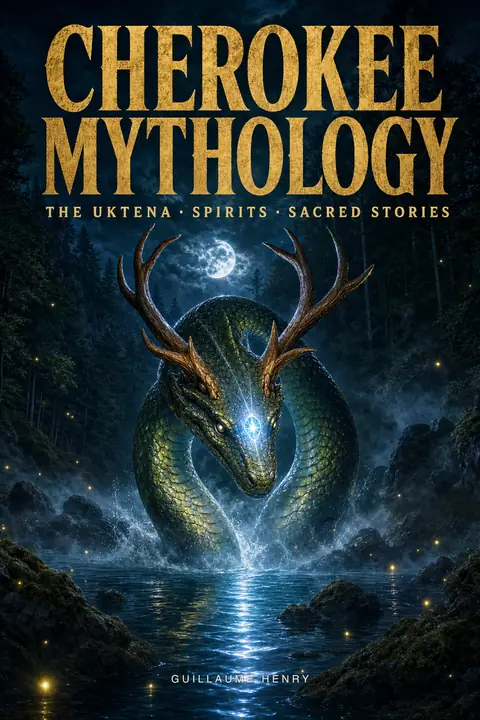
The Cherokee Mythology Book: The Uktena, the Spirits, and the Sacred Stories
The Uktena, the Spirits, and the Sacred Stories
The sacred stories of the Cherokee: how the world was made on the back of a water beetle, the horned serpent Uktena and its blazing crystal, the Little People who live inside the mountains, and the medicine that holds it all together. Recorded from the elders before it could be lost.
More from Cherokee
All articles
Cherokee
The Trail Where They Cried: Mythology and Memory of Removal
The Trail of Tears reshaped Cherokee mythology itself. Discover how forced removal in 1838-1839 became a sacred narrative of survival, covenant, and the land's eternal connection to a people who refused to disappear.

Cherokee
The Seven Clans: Cherokee Social and Spiritual Structure
The Cherokee nation organized itself through seven matrilineal clans, each with its own spiritual role, animal symbol, and responsibility to the people. Discover how this ancient system shaped Cherokee law, kinship, identity, and survival for centuries.
Cherokee
The Green Corn Ceremony: Cherokee Harvest Renewal Ritual
The Green Corn Ceremony, or Iisgano'asdi in Cherokee, is the nation's most sacred annual gathering: a four-day harvest festival where the people renew their covenant with the Creator, cleanse themselves of past wrongs, and begin the year anew. Discover how a single ear of corn became the axis of Cherokee identity and spiritual restoration.

Cherokee
The Origin of Fire: How Water Spider Brought the Flame
Water Spider risked everything to steal fire from the other side of the world and bring it to the cold Cherokee people. Discover how a small creature's bravery shaped the dawn of Cherokee civilization.