

Spearfinger (U'tlun'ta): The Stone-Fingered Witch
U'tlun'ta, the Spearfinger, is one of Cherokee mythology's most terrifying figures: a shape-shifting stone witch who stalks the mountain forests, her finger a blade of obsidian. Here is her full story.
Contents
A child wanders too close to the tree line. The air smells of liver and smoke. Something steps out of the pines wearing a grandmother's face, humming a soft song. By the time the child notices the finger, the long stone blade already gleaming in the afternoon light, it is far too late.
Spearfinger (U'tlun'ta) is one of the most chilling figures in the entire oral tradition of the Cherokee people. She does not roar or threaten. She sings. She deceives. She kills with a single, precise thrust of her one terrifying weapon: a forefinger made entirely of stone, sharpened to a point as keen as an obsidian knife. Among monsters who populate the mountains of what is now the southern Appalachians, she stands apart, not for her size or her rage, but for her patience and her craft.
The word U'tlun'ta means, roughly, "she had it sharp" or "she who has sharp things protruding," drawn from the Cherokee language as recorded by the ethnologist James Mooney in his landmark 1900 collection Myths of the Cherokee, the single most important primary source for most of what we know about her today. Mooney gathered these accounts directly from Cherokee storytellers in North Carolina during the late nineteenth century, and the vividness of the tradition he documented suggests the story had been told and refined for many generations before he ever wrote it down.
Who U'tlun'ta Is: Her Body, Her Powers
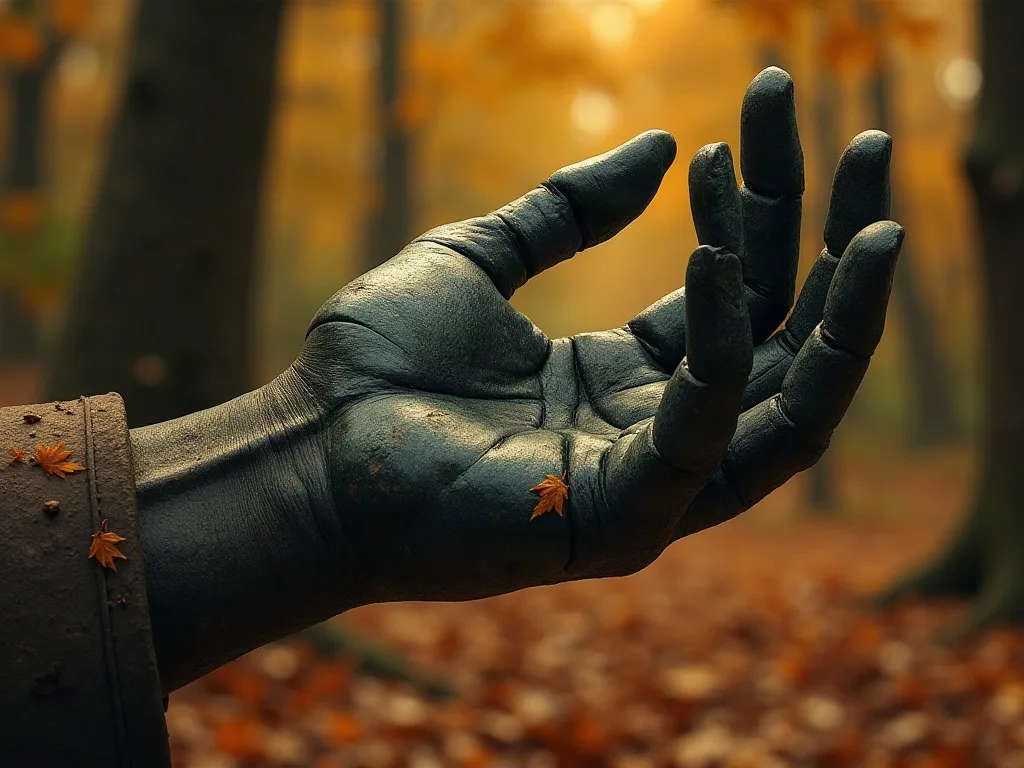
U'tlun'ta is described in Mooney's accounts as a creature of stone flesh. Her skin is not merely tough; it is literal rock, a kind of fused, stony hide that makes conventional weapons useless against her. Arrows bounce off. Clubs shatter. She is, in a very real sense, armored by her own body, and she knows it. She moves through the forest with the confidence of something that cannot be hurt in any ordinary way.
Her right forefinger is the weapon that gives her both names. The English translation "Spearfinger" captures it efficiently: that single finger is a spear, a knife, a surgical instrument all at once. With it, she can slip between a person's ribs without tearing the skin noticeably, find the liver, sever it cleanly, and withdraw. The victim feels almost nothing. They may even feel momentarily fine.
Her other great power is transformation. U'tlun'ta is a shapeshifter of considerable skill, and her preferred disguise is an old woman, a grandmother, someone safe and familiar. She reportedly mimics voices and adopts the mannerisms of community elders so convincingly that children and young adults approach her willingly. In some versions of the story recorded from Cherokee narrators, she can also mimic the appearance of specific relatives whom the victim would trust completely.
She favors certain seasons, particularly autumn, when the leaves turn and the mountain paths fill with fallen debris that muffle sound. She has a taste for human liver specifically, a detail that appears consistently across multiple versions of the legend. In Cherokee physiological thinking, the liver was a vital, life-sustaining organ, and targeting it was not random cruelty but something more purposeful, a direct assault on a person's vitality at its source.
The Mountains She Haunts: Her Territory
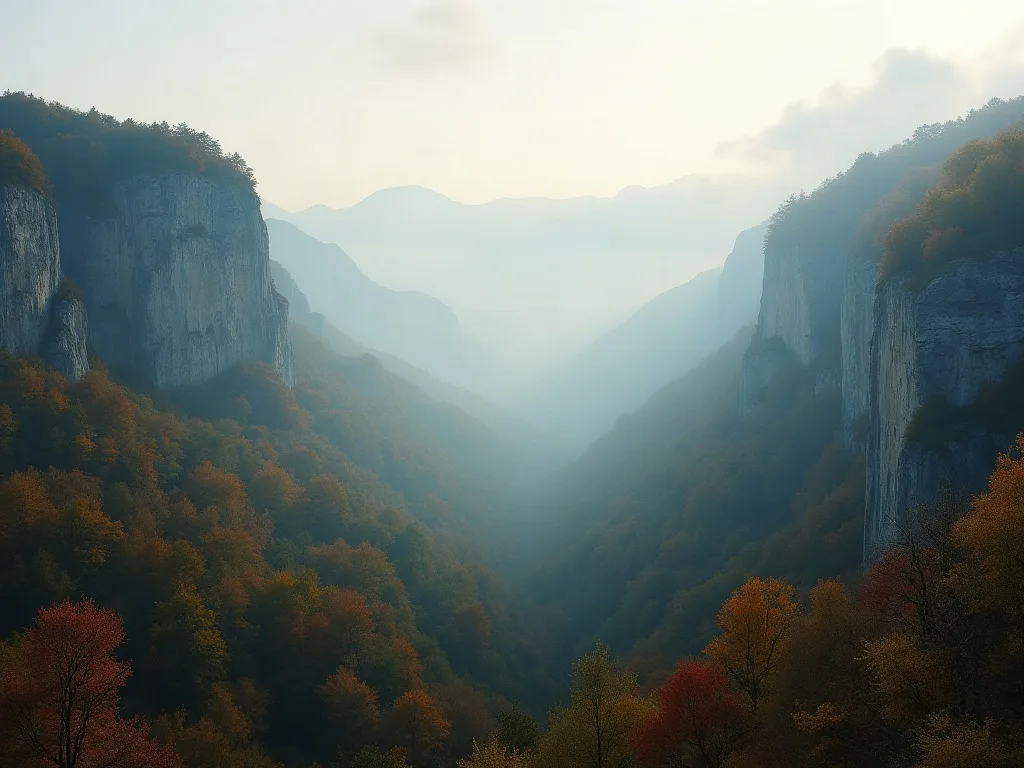
The landscape of U'tlun'ta's world is the Blue Ridge and the southern Appalachians, the heartland of traditional Cherokee territory. These are old, heavily forested mountains, some of the most biologically rich temperate forests on the planet. In autumn, the canopy turns deep red and amber; mist settles in the valleys every morning; ridgelines vanish into cloud.
For the Cherokee, this landscape was not merely scenery. It was a living environment dense with spirit presences, both helpful and dangerous. The Cherokee tradition maintained a complex cosmological system in which certain high places, deep river pools, and rock formations were understood as points where the ordinary world and the spirit world pressed close together. U'tlun'ta belongs to that liminal geography. She appears at the edge of the village, at the transition between cleared ground and deep forest, at the boundary of the known and the unknown.
She is also associated specifically with rocky outcroppings and cliff faces. Some accounts describe her as able to construct stone bridges across ravines almost instantaneously, slapping rocks together with her bare hands, flattening them into usable surfaces. This detail is not incidental. It underlines that she is not simply a creature who lives in the rock world; she commands rock as a substance, shapes it with her body, uses it as both material and metaphor.
The Myth in Full: How the Cherokee Fought U'tlun'ta
The most complete narrative preserved in Mooney's Myths of the Cherokee reads almost like a siege story. The creature is terrorizing the community. People are dying without visible wounds. The community eventually realizes something is wrong and organizes a collective response, which is itself significant: this is not a hero story in the Western mode, where one champion goes alone to slay the monster. This is a community story, dependent on cooperation, shared knowledge, and, ultimately, on a piece of crucial information that comes from an unlikely source.
The men organize a large hunting party disguised as a gathering, constructing a pit trap and trying to lure U'tlun'ta into it. She falls in, and here is where the stone-flesh detail becomes pivotal: their weapons do no damage at all. Spears shatter. Arrows glance. The pit was meant to be the end of it, but she simply begins to climb out.
What breaks the deadlock is a small bird, specifically identified in some versions as a small chickadee. The bird begins to sing and flutter near U'tlun'ta's left hand, near her heart region. This signals to the warriors where to strike. The creature's body is all stone except for one point, her heart, which in several versions is located not in her chest but in her right hand, the hand that holds the lethal finger. Once the warriors understand this, they strike at the right place and bring her down.
The story ends with her death and with an implied lesson: pure force fails against a monster armored by deception. Knowledge defeats her, not strength.
The Liver, the Living, and What She Represents
It would be reductive to call U'tlun'ta simply "evil." In Cherokee oral tradition, monsters are rarely pure antagonists without symbolic weight. U'tlun'ta is interesting precisely because of what she takes. She does not destroy villages. She does not wage war. She targets individuals, moving quietly, taking the one organ associated with life and warmth in the human body, leaving the shell of the person apparently intact.
Several scholars of Native American folklore have noted that this kind of "invisible wound" predator has parallels across many Indigenous traditions: a creature that kills without leaving obvious marks, whose victims walk around unknowingly dying. The horror here is not spectacle; it is erasure. U'tlun'ta removes the essential thing and leaves the appearance of wholeness.
Some interpretations, drawing on broader Cherokee cosmological thinking, read her as a figure representing the danger of the unchecked boundary between the human and the more-than-human world. She wears a human face, she mimics human speech, but she is stone inside. She is the community's warmth and trust weaponized against the community itself.
Parallels Across Traditions: The Shape-Shifting Grandmother
U'tlun'ta does not stand alone in world mythology. The figure of the predatory grandmother, the creature that wears an elder's comforting face to lure victims close, appears across an extraordinary range of cultures.
The most obvious comparison is Baba Yaga, the Slavic forest witch who occupies a hut on chicken legs at the edge of the human world and the wild world. Baba Yaga is unpredictable, can be helpful or lethal, and is associated specifically with bones and death. Like U'tlun'ta, she operates at a boundary and her power depends partly on whether the person who meets her understands the correct ritual behavior.
In Japanese mythology, the yamauba (mountain crone) is a similar figure: an old woman encountered on a mountain path who harbors predatory intentions beneath a domestic exterior. The Japanese mythological tradition produced several such mountain-dwelling female spirits who collapse the distinction between nurturer and hunter.
Even within the Americas, parallels exist. Among various Puebloan traditions, there are female supernatural figures associated with stone, with dangerous touch, and with the predatory misuse of nurturing roles.
What unites these figures is a consistent structural logic: the trusted caregiver becomes the source of death, the domestic disguise conceals the predatory interior, and the community must develop collective knowledge rather than individual heroism to survive the encounter. These are, in the deepest sense, stories about the limits of trust and the cost of assuming safety.
How U'tlun'ta Lived in Cherokee Community Life
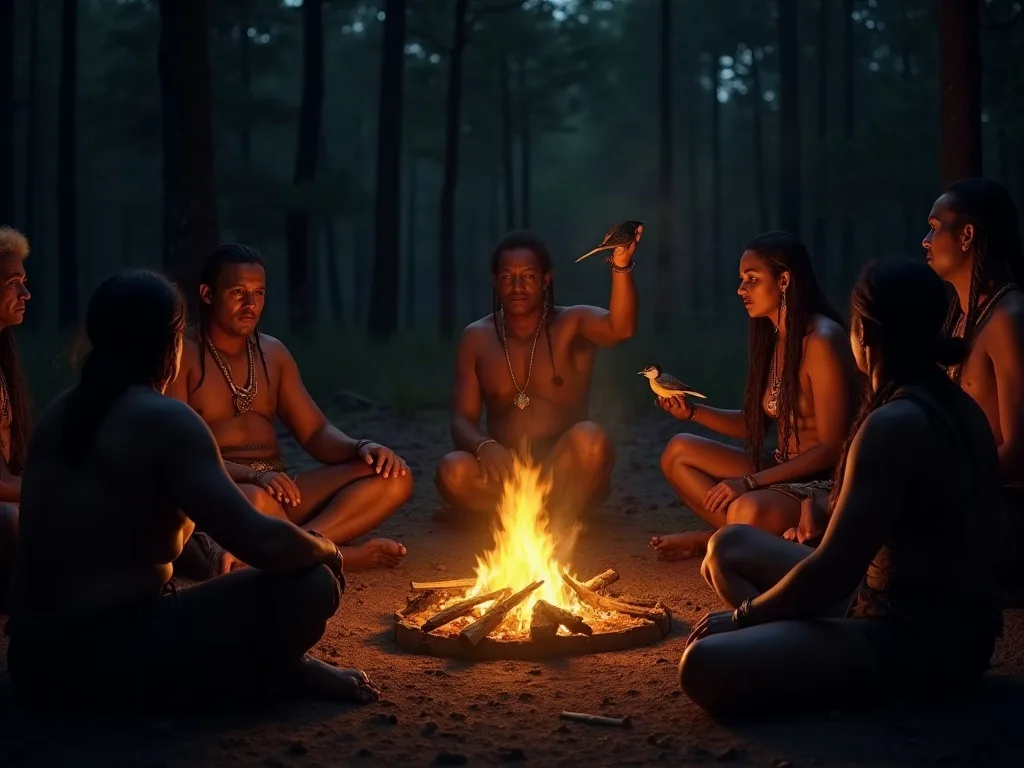
Mooney's informants were clear that U'tlun'ta was not simply a bedtime-story monster. She functioned in the community as a warning, a shaping myth that taught specific behaviors. Children were taught not to wander alone into the forest, especially in autumn. Elders who were unknown, who appeared suddenly on a path and were overly eager to be close, were treated with caution. The story enforced real social rules about strangers, about the forest, about the boundary of the village.
This is how oral mythologies actually work in living communities. They are not entertainment first. They are knowledge delivery systems, carrying practical information about the environment and social behavior in a form that sticks in the memory because it is attached to vivid narrative and emotional weight. A child who knows U'tlun'ta's story has a cognitive template: old woman, isolated path, autumn, insistence on closeness. That template is useful.
Mooney also documented related figures in Cherokee tradition, including the Uktena, the great horned serpent of the mountain pools, and the Raven Mocker, another figure who targeted the dying and extracted life force. U'tlun'ta fits into this ecology of dangerous beings, each of whom represents a specific kind of threat and demands a specific kind of knowledge or behavior in response.
The Raven Mocker and U'tlun'ta make an interesting pair. Both feed on the vital essence of humans rather than their physical bodies. Both are invisible or disguised during their attacks. Both require the community to possess esoteric knowledge, knowledge that the victim alone cannot have, in order to be stopped. They suggest a Cherokee framework in which the most dangerous threats are not the ones you can see coming.
U'tlun'ta in Contemporary Culture
The story of U'tlun'ta has moved well beyond its original Appalachian context. She has appeared in horror fiction, in games, and in graphic novels, usually stripped to her most visually dramatic element: the stone skin, the blade finger, the false grandmother face. This is both a testament to how well the original narrative travels and a reminder of what can be lost in translation.
The most notable recent appearance is in the video game Until Dawn (2015), which drew loosely on the legend for one of its main antagonists, though the game took considerable creative liberties with the source material and removed the community-knowledge dimension that makes the original story so structurally distinctive.
In literary horror, several Indigenous authors have engaged with U'tlun'ta directly as part of a broader project of reclaiming Native American supernatural traditions from the distorting lens of pulp horror. Writers like Stephen Graham Jones, though more focused on the Blackfoot tradition, have helped create space for Cherokee voices to revisit figures like U'tlun'ta on their own terms.
The Eastern Band of Cherokee Indians, based in western North Carolina near the Great Smoky Mountains, maintains an active relationship with their oral literary traditions. For them, U'tlun'ta is not a cultural artifact but a living part of a still-living tradition.
Frequently Asked Questions About Spearfinger (U'tlun'ta)
Frequently asked questions
What does the name U'tlun'ta actually mean in Cherokee?
The name is generally translated as "she had it sharp" or "she who has sharp things protruding." James Mooney, the ethnologist who recorded the most detailed accounts of the legend in his 1900 work Myths of the Cherokee, noted that the name refers directly to her weapon: the long, sharp stone finger that gave her the English name Spearfinger. Cherokee is a polysynthetic language, meaning a single word can carry the meaning of an entire phrase, and U'tlun'ta's name encapsulates both her identity and her danger in a single utterance.
How was U'tlun'ta killed, and why was it so difficult?
Killing U'tlun'ta was nearly impossible because her body was made of stone, making conventional weapons useless. In the main narrative recorded by Mooney, the community trapped her in a pit, but their weapons could not penetrate her hide. A small bird, often identified as a chickadee, revealed the one vulnerable point: her heart, which was located in her right hand rather than her chest. Warriors who aimed at that specific point were able to kill her. The difficulty of killing her is itself part of the lesson: defeating her required specific knowledge, not raw force.
Why did Spearfinger specifically target the liver?
In Cherokee physiological and spiritual thinking, the liver was associated with vitality and life force. U'tlun'ta's preference for the liver was not arbitrary cruelty; it was a precise assault on the seat of a person's living essence. Removing the liver without a visible wound meant the victim continued walking and living for days, unaware of what had happened, until they died. This detail reflects a sophisticated understanding of how the most dangerous predation is the kind that leaves its victim apparently whole.
Is U'tlun'ta connected to other Cherokee supernatural beings?
Yes. She exists within a broader ecology of dangerous beings in Cherokee tradition. The Raven Mocker, another supernatural predator documented by Mooney, similarly feeds on the vital essence of humans, specifically targeting the dying. The Uktena, a great horned serpent said to live in mountain pools, represents a different category of threat but shares the quality of being unkillable without specific ritual knowledge. U'tlun'ta, the Raven Mocker, and the Uktena together map out a Cherokee understanding of the types of invisible, disguised, or overwhelming danger that the community must be collectively prepared to recognize and resist.
Are there similar figures to Spearfinger in other world mythologies?
The predatory disguised-grandmother figure appears across a striking range of traditions. Baba Yaga in Slavic folklore, the yamauba mountain crone of Japanese mythology, and various Mesoamerican earth-mother figures with lethal aspects all share structural similarities with U'tlun'ta. Each operates at the boundary of the human and the wild, each uses domesticity as camouflage, and each demands collective or specialized knowledge to defeat. These similarities likely reflect independently developed responses to universal anxieties about trust, community boundaries, and the danger hidden in familiar appearances.
What is the main primary source for U'tlun'ta's story?
The primary written source is James Mooney's Myths of the Cherokee, published in 1900 as part of the 19th Annual Report of the Bureau of American Ethnology. Mooney conducted fieldwork with Cherokee communities in North Carolina during the 1880s and 1890s, recording oral narratives directly from Cherokee speakers. His account of U'tlun'ta remains the most detailed version in the ethnographic record. It is important to note, however, that the oral tradition is older and richer than any single written transcription, and contemporary Eastern Band Cherokee storytellers continue to hold and transmit versions of these narratives.
The Stone That Still Remembers
The Appalachian ridgelines where U'tlun'ta moved are still there. The fog still settles into the hollows in October. The chestnuts are gone now, lost to blight a century ago, but the oaks and the maples still turn red-gold in autumn, still drop enough leaves to muffle footsteps on the trail.
The Eastern Band of Cherokee Indians has persisted in these mountains through removal, displacement, and the long pressures of the twentieth century. Their oral tradition has persisted alongside them. U'tlun'ta is, in a real sense, a monument to that persistence: a story so precisely structured, so well designed to carry meaning across generations, that it survived everything the last two centuries threw at it.
Scholars of folklore and mythology have increasingly recognized that figures like U'tlun'ta are not primitive superstitions to be explained away but sophisticated narrative technologies. They encode environmental knowledge, social norms, physiological understanding, and community psychology in a form durable enough to survive oral transmission across unknown generations. The stone-fingered witch is, among other things, a memory palace, a container for things the community needed to remember.
Her story also raises a question that no myth fully answers: what happens to a community that stops believing? The chickadee knew where to look. The warriors knew to listen to the bird. That chain of knowledge, from the natural world to the human defender, required everyone in it to be paying attention. U'tlun'ta's legend is, at its core, a story about the cost of not paying attention, and about what waits at the edge of the forest for those who forget how to be careful.
Read the full book
Want the whole story?
The complete edition is an instant PDF download here, with a paperback on Amazon for selected titles.
Cherokee
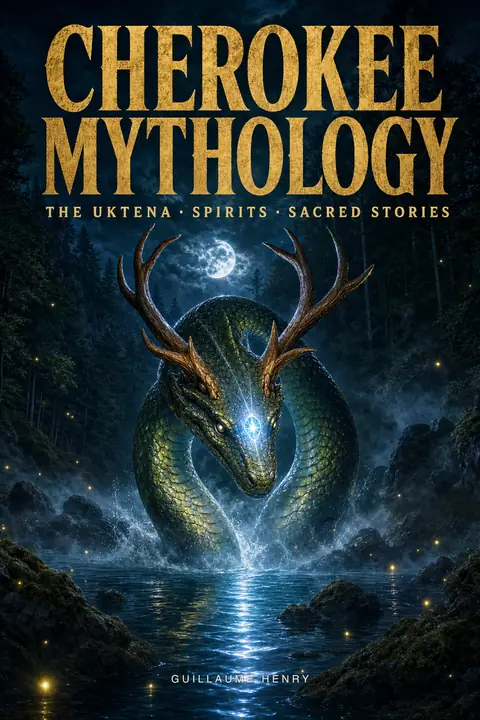
The Cherokee Mythology Book: The Uktena, the Spirits, and the Sacred Stories
The Uktena, the Spirits, and the Sacred Stories
The sacred stories of the Cherokee: how the world was made on the back of a water beetle, the horned serpent Uktena and its blazing crystal, the Little People who live inside the mountains, and the medicine that holds it all together. Recorded from the elders before it could be lost.
More from Cherokee
All articles
Cherokee
The Trail Where They Cried: Mythology and Memory of Removal
The Trail of Tears reshaped Cherokee mythology itself. Discover how forced removal in 1838-1839 became a sacred narrative of survival, covenant, and the land's eternal connection to a people who refused to disappear.

Cherokee
The Seven Clans: Cherokee Social and Spiritual Structure
The Cherokee nation organized itself through seven matrilineal clans, each with its own spiritual role, animal symbol, and responsibility to the people. Discover how this ancient system shaped Cherokee law, kinship, identity, and survival for centuries.
Cherokee
Sequoyah: Creator of the Cherokee Syllabary
Sequoyah invented a written system for the Cherokee language in just 12 years, transforming a spoken-only tradition into a literate nation. His genius was practical, not mystical: he saw that other peoples had captured their words on paper, and he figured out how.
Cherokee
The Green Corn Ceremony: Cherokee Harvest Renewal Ritual
The Green Corn Ceremony, or Iisgano'asdi in Cherokee, is the nation's most sacred annual gathering: a four-day harvest festival where the people renew their covenant with the Creator, cleanse themselves of past wrongs, and begin the year anew. Discover how a single ear of corn became the axis of Cherokee identity and spiritual restoration.