
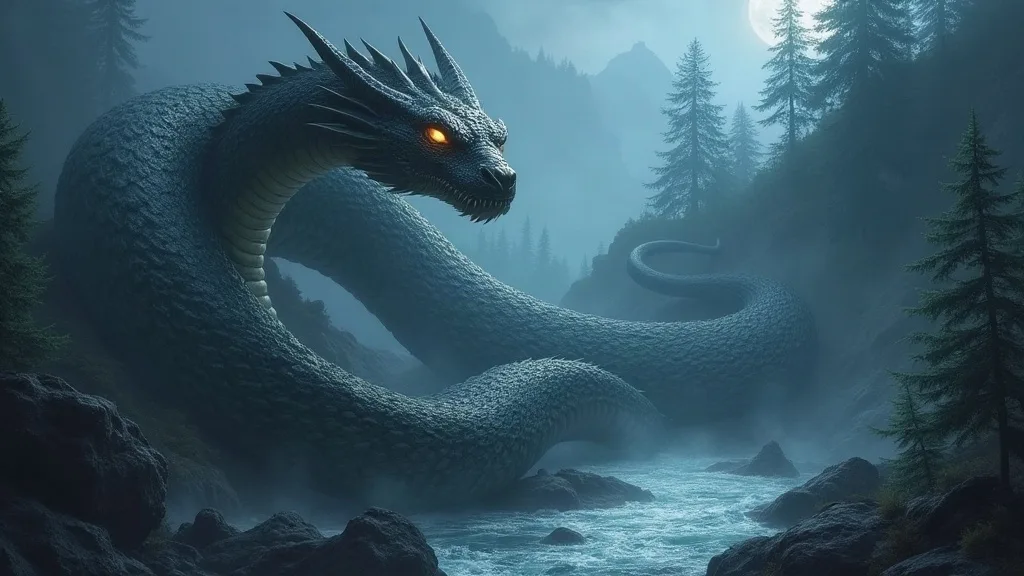
The Uktena: The Great Horned Serpent of Cherokee Myth
The Uktena is a massive horned serpent from Cherokee myth, feared across the Southeast and hunted by heroes. Learn the origins, powers, and lasting legacy of this primal creature.
Contents
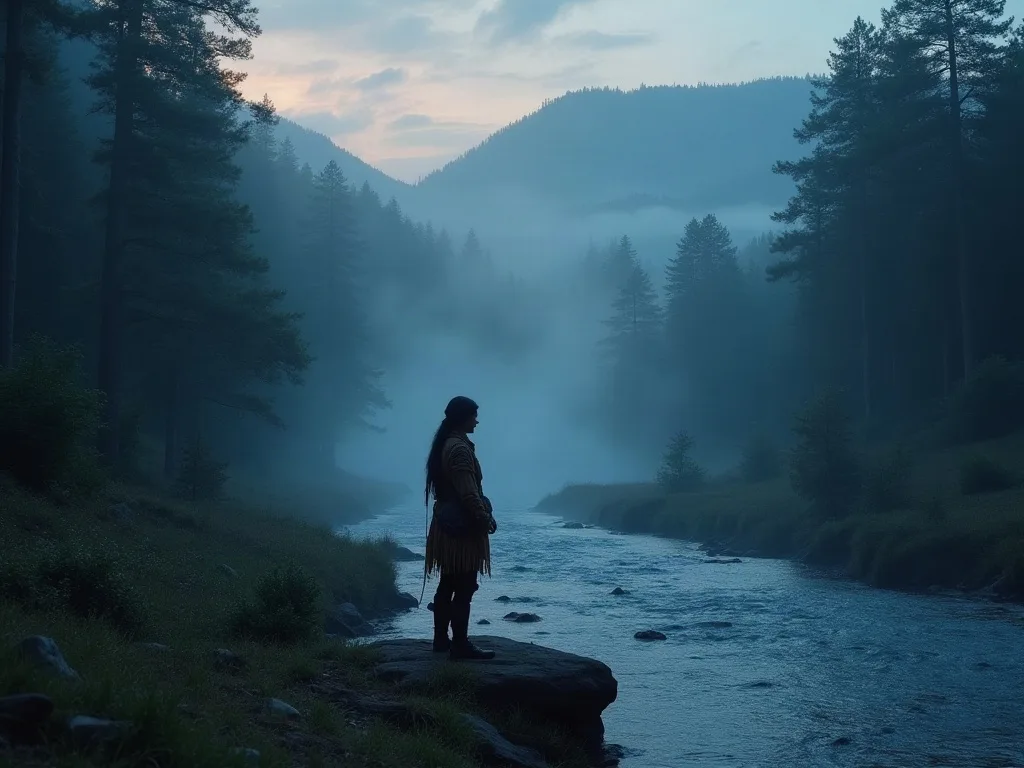
A hunter climbs into the mist-covered hills of the old Cherokee lands. His breath comes shallow. He has heard the stories since childhood: a serpent so large it can swallow a man whole, so ancient it remembers when the world was still forming. Its horn glows with medicine so powerful that a single scratch from it brings sickness, madness, death. The creature is called the Uktena, and it lurks in deep waters and hidden hollows, waiting.
The Uktena is the Great Horned Serpent of Cherokee tradition, a being that stands at the intersection of creation and danger, reverence and terror. It is not simply a monster to be slain; it is a force of nature that tests the courage and wisdom of those who would encounter it. Across the Southeast, from the mountains of what is now Tennessee and North Carolina to the river valleys of the Mississippi drainage, Indigenous peoples told versions of this creature's story. The Uktena belonged to a world older than human memory, and to know it was to know something fundamental about power itself.
Origins and the Nature of the Uktena
The Cherokee understood the Uktena as one of the eldest beings in creation. In the ancient times, when the world was still new and boundaries between animal and spirit were not yet fixed, the Uktena moved through the primordial waters and dark places. It was not made by the gods in the way smaller creatures were made. It simply existed, arising from the deep structures of the earth itself.
Some traditions say the Uktena was once human. A hunter, impossibly ambitious or monstrously proud, drank from a forbidden spring or spoke words of power he had no right to speak. The transformation came not as punishment alone but as inevitable consequence: his ambition made flesh, his hunger made manifest, his strength multiplied beyond reason. His body elongated and hardened into scales. His teeth became fangs. A horn grew from his forehead, radiating with the concentrated medicine of all his transgression. Once changed, he could never return to human form. He would move beneath the earth and under the waters forever, a warning to those who would presume too much.
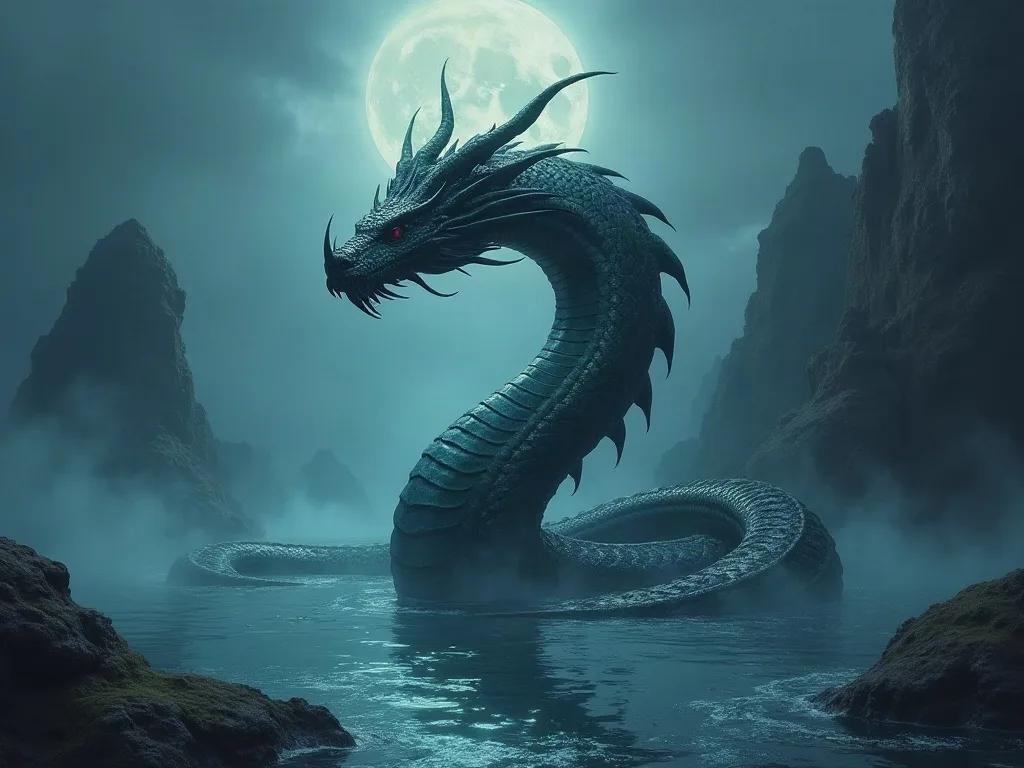
Other accounts say the Uktena was never human at all, but a primordial being that existed before humans came to the land. It belonged to the same ancient order as the Thunder Beings and the underwater powers, entities that predated human settlement. From this perspective, the Uktena was neither created nor born in any ordinary sense. It simply was, as fundamental to the world's structure as stone or water.
The creature lived most often in deep water: in the bottoms of rivers, in hidden lakes within mountain hollows, in underground springs where no sunlight reached. It was a being of the dark places, the spaces beneath and between. Some accounts place it in the waters of the Mississippi itself, others in the mountain streams of the Smoky country. But wherever it dwelt, the Uktena remained solitary, possessing neither herd nor kind. It was unique, a singleton of tremendous power and age.
Appearance and the Horn of Medicine
The Uktena possessed a form both serpentine and alien. Its body stretched to impossible lengths, sometimes said to be as long as the greatest rivers, covered in scales that caught light with an otherworldly gleam. The scales themselves held medicine and danger in equal measure. Some were said to be translucent, catching the reflection of moonlight in patterns that could hypnotize those who stared too long. Others bore a brightness all their own, as though they had absorbed generations of sunlight and held it beneath their surface.
The horn that crowned its head was the Uktena's most distinctive and most fearsome feature. This was no small protrusion but a substantial spike, sometimes described as spiraling, sometimes as straight and keen as a blade. The horn was the seat of the creature's power, the repository of all the medicine and danger the Uktena embodied. It glowed faintly, especially at night or in shadow, with a light that had no clear source. Contact with the horn brought immediate and terrible consequence: sickness, madness, wasting, or death. Even a scratch could curse a person for generations.
Some accounts describe the Uktena as having eyes that gleamed with intelligence and memory. These were not the eyes of a mere beast but of a being that had watched the world change across eons. Its gaze could be transfixing, drawing in the unwary. Its mouth could open vast enough to swallow a full-grown man. Yet for all its serpentine nature, the Uktena was not cold-blooded in temperament. It possessed will, intention, even something that might be called personality. It was territorial, possessive of its waters and its solitude.
Powers and Medicine
The Uktena commanded a range of supernatural abilities rooted in its connection to water, earth, and the oldest forms of power. Its primary and most terrifying faculty was its horn, which concentrated all its medicine into a single point. This horn could kill with a touch or even with proximity. Those who looked upon the Uktena while its horn was active could fall ill from the very sight. The creature could weaponize its own presence, turning its ancient nature into a force that disrupted the health and harmony of those around it.
The Uktena could also move between waters and through the earth with ease. It was said to tunnel beneath the ground, emerging where it wished, vanishing back underground when threatened. It could travel along rivers and streams at impossible speeds, racing from one place to another. Some accounts describe the Uktena as able to create whirlpools or redirect water flow simply through its movement. It belonged to the watery and earthen realms as fully as it belonged to the visible world.
The creature possessed also a deep knowledge of medicine and poison. The medicine contained within its scales and horn was not good medicine in the sense of healing, but it was real power nonetheless: knowledge of sickness, of the forces that unmake and transform. A tiny scale or even dust from the horn could be fashioned into charms or poisons of tremendous potency. Those who could obtain such items without dying in the attempt gained access to power that few possessed. This is why brave hunters sometimes pursued the Uktena despite the danger. To kill it and harvest its parts was to gain control over forces of death and transformation themselves.
The Hunters of the Uktena
The Uktena did not go unchallenged. Across Cherokee tradition, stories emerged of great hunters, warriors, and medicine people who pursued the creature. These were not random acts of violence but deliberate quests, undertaken by those with specific reasons: to protect their people, to prove their courage, to gain access to the creature's medicine for protective or spiritual purposes.
The pursuit of the Uktena required not mere physical strength but strategy, medicine knowledge, and often a journey into dangerous country. Hunters needed to know where the creature dwelt, to understand the signs that marked its presence. They had to approach with proper ritual preparation, often fasting or taking medicines to protect themselves from the creature's deadly influence. Many hunters died in pursuit of the Uktena. For every story that celebrated a successful hunter, there were unsung failures: men who ventured into the high country or the deep rivers and never returned.
Some traditions speak of hunters who succeeded in wounding or even slaying the Uktena. These were treated as great deeds, worthy of long remembrance. The successful hunter would take parts of the creature: scales, teeth, sometimes remnants of the horn itself. These items became heirlooms, kept in families or towns as sources of tremendous power. They were not displayed casually but kept wrapped and hidden, brought out only in times of genuine need or during certain ceremonies. To possess a scale or fang of the Uktena was to hold something that connected you directly to one of the oldest, most dangerous beings in the world.
The Uktena in Cherokee Cosmology
Within the broader Cherokee understanding of the world, the Uktena occupied a specific and important place. It was not simply an evil to be eliminated but a force that belonged to the natural order. The world contained both helpful and dangerous beings. The Thunder Beings brought rain but also destruction. The Little People of the forest could aid or confuse. The Uktena, similarly, was dangerous but ultimately part of the structure of existence.
The creature represented several important principles. First, it embodied the power and danger of the deep places, the waters and hidden hollows. These places held medicine and knowledge but also risk. Those who went unprepared into such places faced consequences. Second, the Uktena represented the dangers of unchecked ambition, the transformation that came from seeking power beyond one's proper measure. If the creature had once been human, its story was a warning: to reach too far was to change irreversibly.
Third, the Uktena stood as a test of courage and wisdom. A hunter who pursued it did not do so simply to kill a monster but to prove something about himself and to potentially gain access to power. The encounter with the Uktena, whether successful or not, transformed the person who sought it. This connected the Uktena to a broader pattern in Cherokee and other Southeastern traditions: the idea that meaningful transformation came through trials, through facing genuinely dangerous situations, through the willingness to risk death for something worth gaining.
Comparisons with Other Horned Serpents
The Cherokee Uktena was not unique to that people alone. Across the Southeast, from the Mississippi basin to the Atlantic coast, many Native traditions included similar creatures: horned serpents that dwelt in water, possessed dangerous medicine, and figured in hero tales and spiritual systems.
Uktena (Cherokee)
Horned Serpents (Broader Southeast)
The horned serpent appears in the iconography of the Mississippian peoples (a complex of societies that flourished before European contact), depicted in copper plates, carved in stone, and woven into textiles. These representations show serpents with distinctive horns or antlers, sometimes with wings, sometimes with eyes that gaze directly outward. Whether these Mississippian serpents are direct ancestors to the Cherokee Uktena or represent parallel developments from shared cultural roots remains a matter of scholarly discussion. What seems clear is that the horned serpent was a powerful and enduring symbol across the Southeast, representing forces of water, power, and danger.
In broader North American tradition, serpent beings appear across many nations, from the Great Serpent of the Great Lakes to serpents in Southwest traditions. The horn, however, seems more specific to the Southeast and particularly prominent in Cherokee accounts. This detail may reflect the importance of distinctive fauna in the Cherokee landscape (deer antlers, for instance) or may represent a particular development within Cherokee religious thinking about concentrated medicine and power.
Historical Records and Ethnographic Documentation
European colonists and early American observers left scattered references to the Uktena and similar creatures. These accounts are valuable but require careful interpretation, filtered as they were through non-Cherokee perspectives and often distorted by cultural misunderstanding.
In the 18th and 19th centuries, traders and travelers recorded Cherokee accounts of a great serpent in the rivers and mountains. Some accounts refer to sightings of unusual water phenomena: whirlpools, waves moving against the current, unexplained disturbances in deep water. These observations were sometimes attributed to the Uktena's movement. Whether such reports reflected literal belief, metaphorical understanding, or misunderstandings by outsiders remains unclear. What is evident is that the Uktena was a living part of Cherokee belief and practice well into historical times.
Ethnographers who worked with Cherokee communities in the late 19th and 20th centuries documented stories and knowledge about the Uktena. These accounts, while filtered through the translation and interpretation process, provide valuable windows into how the creature was understood and discussed within Cherokee oral tradition. The consistency across multiple sources, despite variations in detail, suggests a stable core narrative and understanding.
The Uktena in Medicine and Ritual
The Uktena was not merely a figure of stories but a being integrated into Cherokee medicine and spiritual practice. Shamans and healers sometimes made reference to the Uktena in the context of certain illnesses or spiritual conditions. An unexplained wasting sickness, a persistent nighttime vision, or a haunting sense of being pursued might be attributed to the influence of the Uktena or to a curse that involved the creature's medicine.
Protection against the Uktena's influence was a recognized need in Cherokee spiritual life. Certain medicines, prayers, and ritual practices were said to provide safeguard against the creature's reach. A person traveling into the high mountains or along certain rivers might take protective medicines or carry charms specifically designed to ward off the Uktena's attention. This was not considered excessive caution but practical wisdom: recognition that danger existed in certain places and from certain beings, and that preparation was necessary.
Conversely, some practitioners sought the Uktena's medicine deliberately, either for personal power or to help others. The acquisition of such medicine was dangerous and required both knowledge and courage. A person who possessed a scale or tooth of the Uktena had to know how to handle it properly, how to store it, how to deploy it. Used incorrectly, such medicine could rebound on the user. Used with wisdom, it could be a tremendous source of power for healing, protection, or justice.
The Uktena in Modern Cherokee Culture
The Uktena remains present in contemporary Cherokee consciousness, though the forms of that presence have changed. In the Cherokee communities that survived removal and displacement, the creature appears in stories told at family gatherings, in ceremonial contexts, in the teaching of younger generations about traditional knowledge and values.
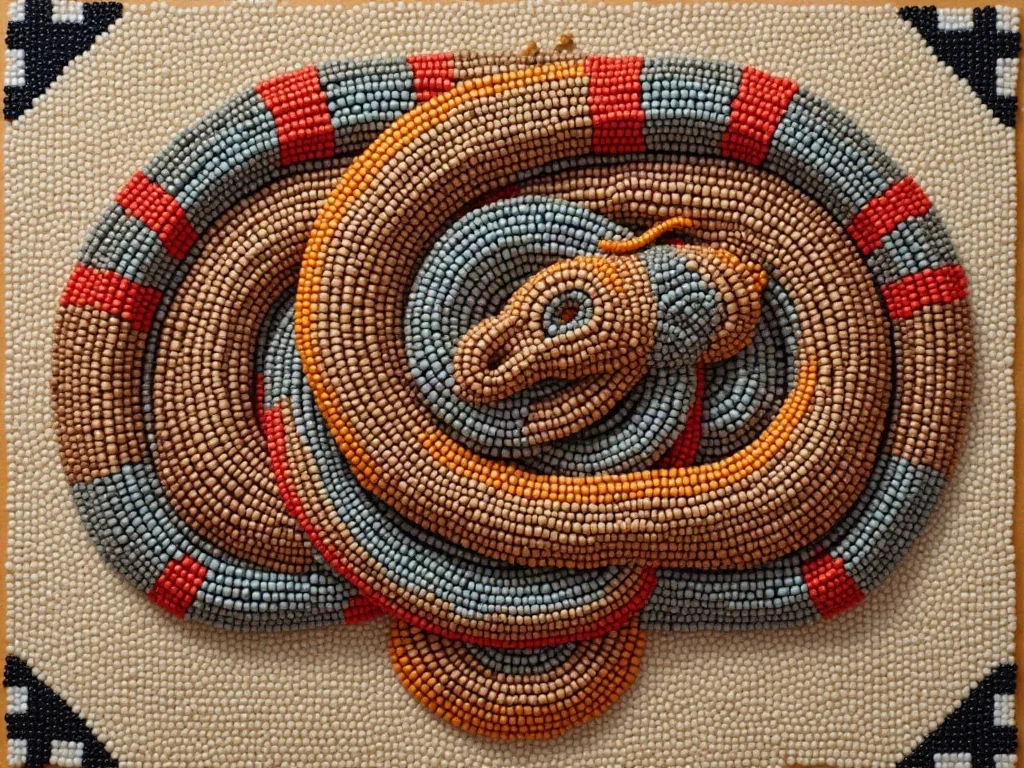
Contemporary Cherokee artists have created paintings, sculptures, and beaded works depicting the Uktena. These pieces blend traditional imagery with modern artistic sensibilities, keeping the creature visible and alive in a contemporary context. Writers of Cherokee descent have woven the Uktena into novels, stories, and poetry, exploring both the literal narratives and the metaphorical possibilities. The creature's meaning extends beyond historical recreation into commentary on power, danger, nature, and the relationship between humans and the more-than-human world.
Academic and community-based efforts to document and preserve Cherokee oral tradition have centered on creatures like the Uktena as subjects of vital cultural knowledge. These initiatives recognize that understanding the Uktena is not merely a matter of folklore collection but of engaging with Cherokee philosophy, values, and cosmological understanding.
Why the Uktena Endures
The staying power of the Uktena in Cherokee tradition and imagination speaks to something fundamental about the creature's design and meaning. It is not a monster that appears, causes trouble, and vanishes from consciousness. It is a being that raises ongoing questions: about courage and wisdom, about the relationship between humans and nature, about the powers that exist in deep places beyond human control, about the consequences of transgression and ambition.
The Uktena embodies several universal themes that ensure its continued relevance. It represents the wild, untamed forces of nature that persist despite human efforts at civilization and control. It asks the question that many ancient traditions pose: what happens when humans encounter something genuinely more powerful than they are? It explores the relationship between danger and power, suggesting that the same forces that threaten can, if properly approached and respected, offer genuine benefit.
The creature also exists at the intersection of multiple modes of meaning. It is literal in certain contexts: a physical being that can be hunted, that leaves traces, that must be reckoned with practically. It is metaphorical in others: a representation of sickness, of spiritual danger, of the consequences of certain choices. It is cosmological, fitting into a specific understanding of how the world is structured and what forces animate it. This multiplicity of meaning ensures that the Uktena can be engaged with by people at different levels of understanding and need.
Frequently asked questions about the Uktena
Frequently asked questions
Was the Uktena ever actually killed by a hunter?
Cherokee traditions include multiple accounts of hunters pursuing and wounding or slaying the Uktena, though these exist as part of oral tradition rather than documented historical events. The stories emphasize the hunter's courage, preparation, and wisdom, suggesting that success against the Uktena was possible but extraordinarily difficult. Whether these narratives describe actual historical events, spiritual experiences interpreted through the Uktena framework, or entirely traditional tales remains a matter of interpretation within Cherokee communities.
What makes the Uktena different from the horned serpents found in other Southeastern traditions?
While horned serpents appear across the Southeast in the traditions of Muscogee, Choctaw, Chickasaw, and other nations, the Uktena is distinctly Cherokee in its detailed characterization, the emphasis on its horn as a seat of concentrated medicine, and its integration into Cherokee hero tales and spiritual practice. The creature appears as a unique being rather than a type, and the narratives surrounding it emphasize specific qualities valued in Cherokee culture: courage, wisdom, respect for power, and the consequences of transgression.
Could contact with the Uktena's medicine be beneficial, or was it only harmful?
In Cherokee understanding, the Uktena's medicine was neither wholly beneficial nor wholly harmful but powerfully transformative. Its horn and scales could indeed kill or cause sickness, but they could also be harvested and used by those with proper knowledge for healing, protection, or justice. This reflects a broader Cherokee understanding that power itself is neither good nor evil but depends entirely on intent, knowledge, and proper use.
Are there written Cherokee sources that document the Uktena, or does the tradition exist only in oral form?
The Uktena belongs primarily to Cherokee oral tradition, passed down through storytelling, family teaching, and ceremonial contexts. Some early ethnographic documentation from the 19th and 20th centuries recorded Cherokee accounts of the creature. Contemporary Cherokee writers and scholars continue to document and interpret these traditions, ensuring their preservation and ongoing relevance.
What does the Uktena's story teach about courage and wisdom in Cherokee values?
The Uktena narratives emphasize that true courage involves more than physical strength; it requires preparation, knowledge, respect for danger, and understanding of one's own limitations. A hunter who pursued the Uktena without proper medicine knowledge or ritual preparation was likely to die. One who proceeded with wisdom and careful preparation had a genuine chance at success. This reflects Cherokee values that prioritize wisdom and proper knowledge alongside physical capability.
The Uktena as Mirror and Teacher
The Uktena endures because it teaches lessons that each generation must learn anew. It shows what happens when power operates without constraint, whether that power is personal ambition or the forces of nature itself. It asks what responsibility comes with knowledge and strength. It reminds that the world contains forces beyond human control that must be respected, approached carefully, and engaged with humility.
In contemporary times, when relationships with the natural world are again being questioned and reimagined, the Uktena offers a different model from much Western tradition. It is not an evil to be slain and forgotten but a being to be reckoned with, understood, potentially negotiated with. Its presence in a landscape matters. Its medicine demands respect. Those who know of it adjust their behavior accordingly. This way of thinking about dangerous and powerful beings, far from being primitive or outdated, offers a framework worth considering as humans face questions about coexistence with wildness and power in an era of rapid change.
Read the full book
Want the whole story?
The complete edition is an instant PDF download here, with a paperback on Amazon for selected titles.
Cherokee
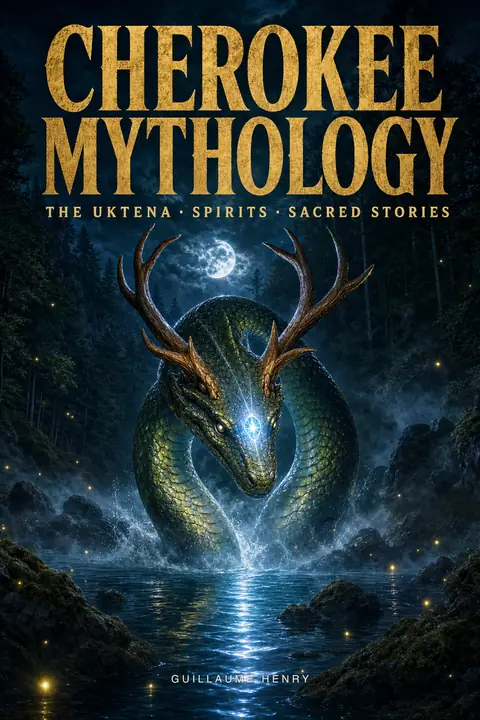
The Cherokee Mythology Book: The Uktena, the Spirits, and the Sacred Stories
The Uktena, the Spirits, and the Sacred Stories
The sacred stories of the Cherokee: how the world was made on the back of a water beetle, the horned serpent Uktena and its blazing crystal, the Little People who live inside the mountains, and the medicine that holds it all together. Recorded from the elders before it could be lost.
More from Cherokee
All articles
Cherokee
The Trail Where They Cried: Mythology and Memory of Removal
The Trail of Tears reshaped Cherokee mythology itself. Discover how forced removal in 1838-1839 became a sacred narrative of survival, covenant, and the land's eternal connection to a people who refused to disappear.

Cherokee
The Seven Clans: Cherokee Social and Spiritual Structure
The Cherokee nation organized itself through seven matrilineal clans, each with its own spiritual role, animal symbol, and responsibility to the people. Discover how this ancient system shaped Cherokee law, kinship, identity, and survival for centuries.
Cherokee
Sequoyah: Creator of the Cherokee Syllabary
Sequoyah invented a written system for the Cherokee language in just 12 years, transforming a spoken-only tradition into a literate nation. His genius was practical, not mystical: he saw that other peoples had captured their words on paper, and he figured out how.
Cherokee
The Green Corn Ceremony: Cherokee Harvest Renewal Ritual
The Green Corn Ceremony, or Iisgano'asdi in Cherokee, is the nation's most sacred annual gathering: a four-day harvest festival where the people renew their covenant with the Creator, cleanse themselves of past wrongs, and begin the year anew. Discover how a single ear of corn became the axis of Cherokee identity and spiritual restoration.