
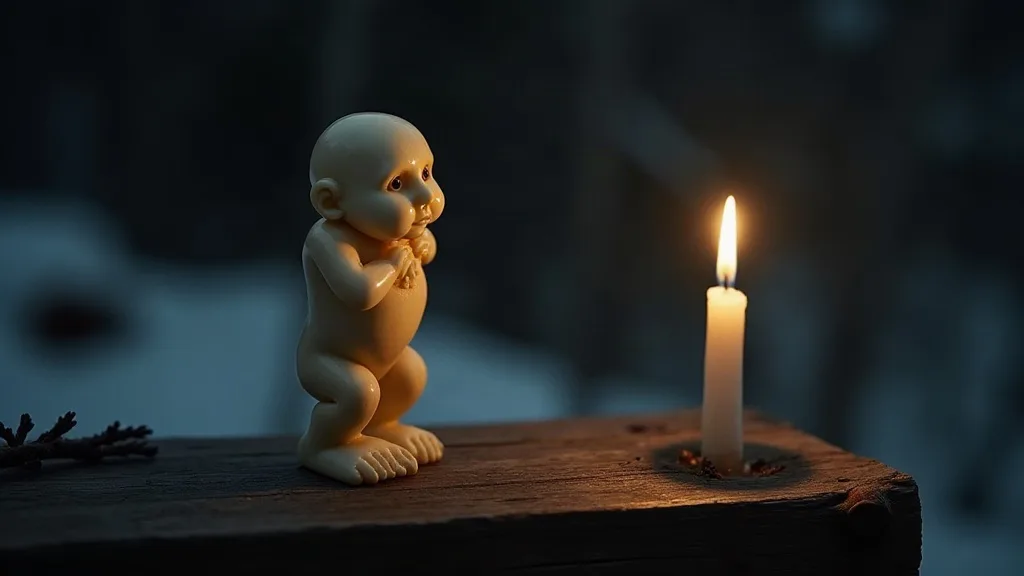
Tupilak: The Vengeful Monster of Sorcery
The Tupilak is an Inuit creature born from a sorcerer's rage: a tiny, grotesque figure carved from bone or ivory, animated by dark magic to hunt and kill a chosen enemy. Discover how this vengeful spirit embodies the moral boundaries of Arctic shamanism.
Contents
When an Inuit hunter felt the sting of betrayal or the weight of a blood debt, he sometimes chose a path few would dare walk. He would carve a small figure from walrus ivory or bone, whispering curses into its form. He would feed it seal fat and speak the name of his enemy. Then he would bury it near his rival's home and wait. The figure would transform. It would rise as the Tupilak, a creature of pure malice sent to stalk, terrify, and ultimately kill its target.
The Tupilak (also spelled Tupiluk, Tupilac, or Toopilak) is one of the most dreaded creations in Inuit spirituality. Unlike the benevolent spirits that shamans called upon for hunting luck or healing, the Tupilak embodies a darker art: sorcery aimed at destruction. It is not a god or a demon imported from another religious tradition. It is an Inuit invention, born from the harsh realities of Arctic survival where grudges could fester for years in small, ice-bound communities, and where a carver's skill with bone and ivory could literally become a matter of life and death.
The Origins and Carving of a Killer
The word tupilak comes from Greenlandic and East Greenlandic Inuit languages and means "something that was hidden" or "that which was secreted away". The tradition appears most documented in the archaeological and ethnographic record of Greenland, particularly East Greenland, though similar practices existed among other Inuit peoples of the Arctic coast.
A Tupilak was not an abstract curse. It was a physical object: a small carved figurine, usually no more than a few inches tall, fashioned from bone, walrus tusk, or sometimes wood. The carver worked in secret, often at night or in a hidden place. The figure itself was grotesque. It might have a human torso fused with an animal head, a seal's flippers grafted to human shoulders, or a bird's beak protruding from a distorted face. Some Tupilaks combined multiple creatures: a man's legs, a seal's body, a raven's wings, all twisted together in anatomical impossibility.
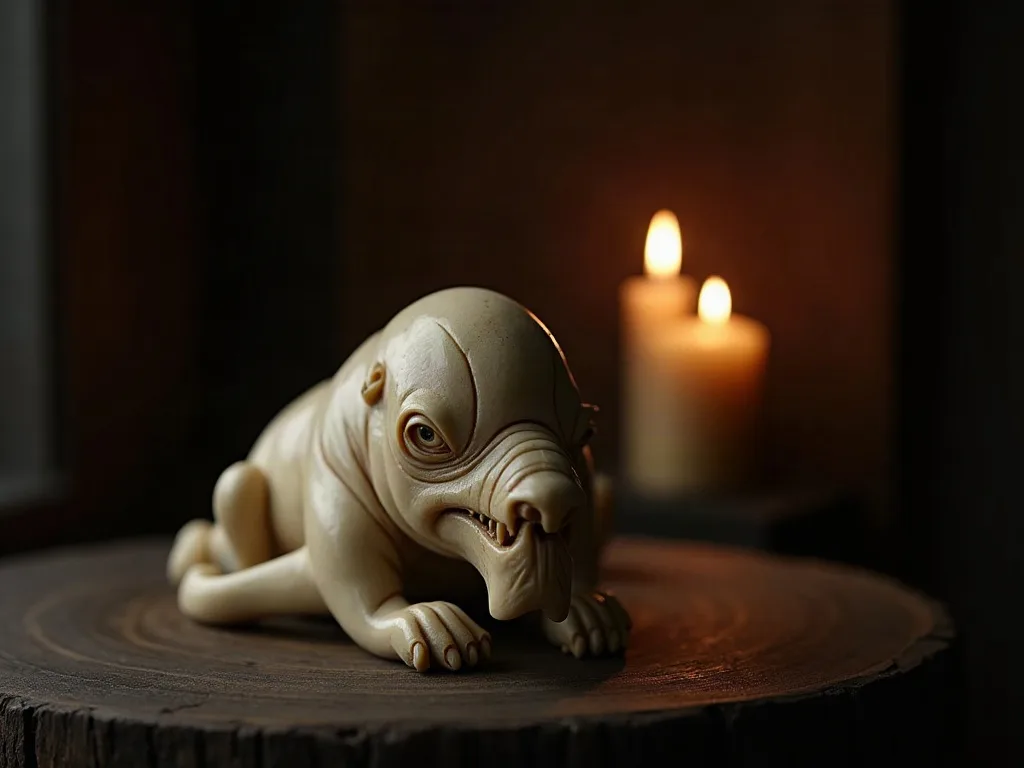
The carver's intention shaped the figure's purpose from the beginning. A hunter who wanted to harm a rival might create a Tupilak with the rival's name or a recognizable feature carved into it. The craftsman would whisper incantations as he worked, binding his rage and will into the ivory. Some accounts describe the carver feeding the figure seal fat or fish oil, as if it were a living thing that needed nourishment to awaken.
The burial of the figure was the moment of activation. The Tupilak would be placed in the ground, hidden in a place the target frequented: near a seal hunt, beneath a dwelling, or along a path. Some accounts say it would be wrapped in sealskin or hidden in a walrus bladder for extra concealment. The sorcerer would then wait. According to Inuit belief, the figure would animate slowly, shedding its ivory skin like a chrysalis and emerging as a living (or semi-living) creature of rage and hunger.
The Hunt and the Terror
Once awakened, the Tupilak became a supernatural predator. Accounts from Greenlandic hunters and shamans describe creatures that were nearly impossible to see with the naked eye. They moved unseen at night, or appeared and vanished as if shifting between worlds. Some Tupilaks were said to be invisible except to their intended victim.
The creature's method of attack varied. Some accounts describe a Tupilak that would simply appear at the edge of a hunter's vision, growing closer each night, each appearance more vivid and terrifying. The psychological toll was immense. A man haunted by a Tupilak would lose sleep, lose appetite, and begin to sicken from fear alone. Others tell of Tupilaks that attacked directly: pulling a man from his bed at night, or leaping at him during a seal hunt, leaving strange wounds that would not heal.
The victims of Tupilak attacks often died not from physical injury but from an inability to survive the terror. A hunter's strength came from his confidence and his connection to the spirits. If a Tupilak broke that confidence, if it convinced a man that he was hunted by an invisible force that could not be outrun or fought, he would weaken. He would sicken. The creature became self-fulfilling: the victim's belief in the Tupilak gave it power.
There are historical accounts from 18th and 19th-century European traders and missionaries who recorded Inuit testimonies of Tupilak attacks. In some cases, the targets died suddenly; in others, they wasted away over weeks. The cause was often attributed to the Tupilak's presence, whether through direct harm or through the victim's own surrender to despair.
The Moral Boundaries of Arctic Sorcery
Despite the fearsome nature of the Tupilak, creating one was not a casual act. Inuit spirituality, like most traditions, maintained ethical boundaries. Shamans who worked with benevolent spirits for healing and hunting guidance were respected. A sorcerer who created Tupilaks existed in a moral gray zone, sometimes tolerated, sometimes feared, sometimes hunted down.
The reason was simple: a Tupilak, once created, was believed to be difficult to control or contain. Stories abound of sorcerers who crafted a Tupilak to kill an enemy, only to have the creature turn on them, or target the wrong person, or begin hunting indiscriminately once its creator died. Some accounts describe Tupilaks that grew in power and malice after their creator's death, becoming rogue spirits that haunted entire regions.
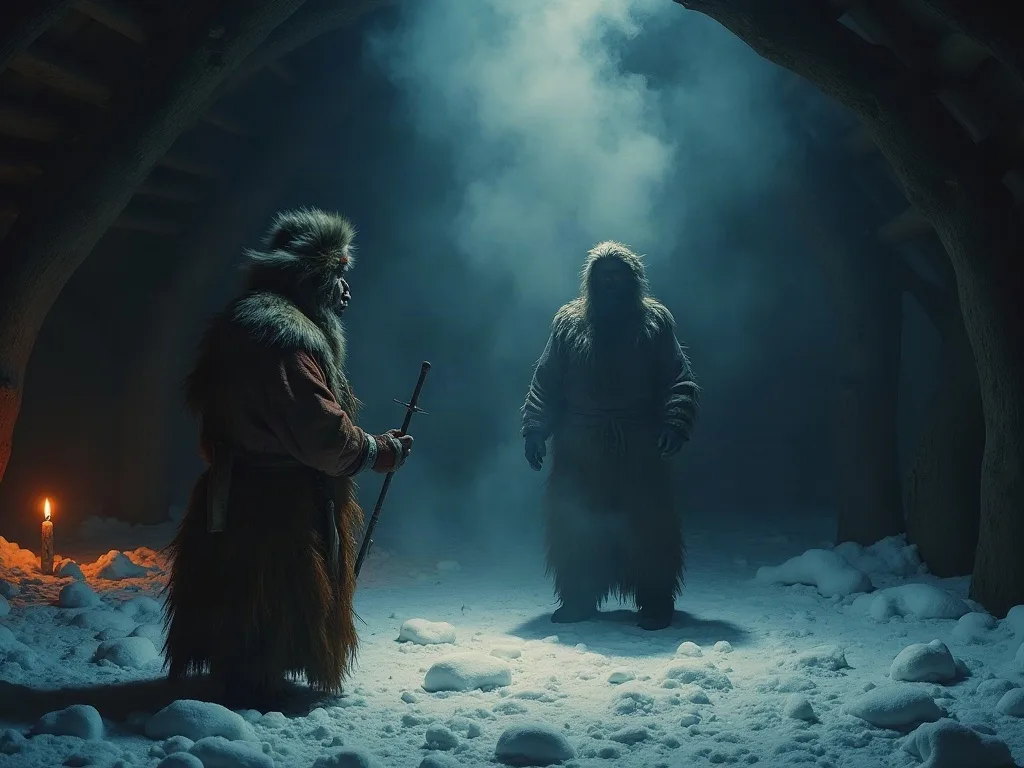
This unpredictability made the Tupilak a tool of last resort. A hunter who resorted to sorcery risked not only his enemy's life but his own soul and his community's spiritual balance. The most skilled shamans could supposedly detect a Tupilak and either neutralize it or redirect its curse back to the sorcerer. Some accounts describe shamans who would find a buried Tupilak and perform a counter-ritual, releasing it from its binding and forcing it to lose power.
One documented case from 19th-century Greenland describes a community that discovered a Tupilak had been created against one of their members. The sorcerer was identified and publicly condemned. In some versions, the community would destroy the figure or force the sorcerer to perform a counter-ritual. The trial and punishment of Tupilak makers would have reinforced the taboo against their creation, maintaining a kind of social balance in communities where direct violence and revenge could destabilize survival.
The Spiritual Underpinnings
The Tupilak connects to broader Inuit concepts of spirit, agency, and transformation. In Inuit cosmology, the boundary between the physical and spiritual worlds was permeable. A skillful shaman could cross between them. An animal could be inhabited by a human spirit. A carved figure, invested with sufficient intention and ritual, could become a locus for supernatural power.
The Tupilak also reflects the Inuit understanding of anima, or life force. To the Inuit, not only animals and humans possessed this vital essence. Carefully crafted objects, especially those made from animal bone or ivory, could be believed to carry a kind of dormant awareness. A shaman working with the spirits would coax this latent essence into wakefulness. A sorcerer creating a Tupilak would deliberately corrupt it, bending it toward murder.
The creature also embodies a specific kind of spiritual danger: the danger of unbounded will and appetite. Most Inuit spirits, even dangerous ones, had a role in the cosmic order. A hunting spirit guided seals to the hunter. A weather spirit brought wind and snow. A Tupilak had only one purpose: to kill. It served no ecological function, upheld no cosmic balance. It was pure hunger and rage given form. This made it fundamentally antithetical to the Inuit understanding of how power should be wielded.
The Tupilak in the Historical Record
Most of what we know about Tupilaks comes from ethnographic accounts collected in the 18th and 19th centuries by European traders, missionaries, and later by anthropologists. The earliest detailed accounts come from Greenland, particularly from East Greenland, where the tradition appears to have been most active and best documented.
One of the most significant sources is the work of early Greenlandic missionaries and traders, who recorded accounts of Tupilak creation and attacks. These accounts were often skeptical (the recorders were Christian Europeans trying to document "pagan superstitions"), yet they present remarkably consistent details: the carving of small figures, the burial, the targeting of specific enemies, the psychological and physical effects on the victim.
By the 19th century, the practice appears to have been waning, at least in terms of active use. Christianization, the introduction of European legal systems, and the breakdown of traditional Inuit community structures all contributed. The Tupilak became a thing of the past, remembered in stories and in the carved figures that European museums began collecting.
Yet the tradition never entirely disappeared. In the 20th century, both anthropologists and Inuit cultural historians continued to document Tupilak stories and to record the memories of elders who had witnessed or heard firsthand accounts of the practice. Some Tupilak figures carved in the 19th century and early 20th century survive in museum collections, both in Greenland and in European and North American museums. These physical artifacts confirm that the figures were real, carved with distinct stylistic features and with evident care and skill.
The Tupilak and Other Arctic Traditions
The Tupilak is distinctly Inuit, but it exists within a broader Arctic context of spirit-work and shamanic practice. The Sami peoples of northern Scandinavia had similar magical practices, including the creation of carved figures for malevolent purposes. The Aleut peoples of the Aleutian Islands had shamanic traditions that included both benevolent and dangerous spirit work.
What sets the Tupilak apart is its specificity: the detailed protocols for carving it, the named intention behind its creation, and the physical burial as an activation ritual. Other Arctic traditions might achieve similar effects through different means, drum work, trance induction, or spoken curses. The Tupilak represents a distinctive Inuit solution to a universal problem: how to harm an enemy when direct violence is constrained by community or circumstance.
The Tupilak also reflects a particular Inuit emphasis on craftsmanship as spiritual action. Carving, in Inuit culture, was never merely practical. A hunter's harpoon head was shaped with intention. A shaman's mask was carved to embody a specific spirit. A Tupilak, grotesque and malevolent as it was, represented the carver's skill directed toward a specific supernatural end.
Tupilak Figures in Museum Collections
Several Tupilak carvings survive in museum collections, providing physical evidence of the tradition. These figures range from a few inches to perhaps a foot in height, crafted from walrus ivory, bone, or sometimes wood. Many show signs of great age and careful preservation. Some bear names or labels indicating the region and approximate date of carving, and sometimes the name of the intended victim or the sorcerer who made it.
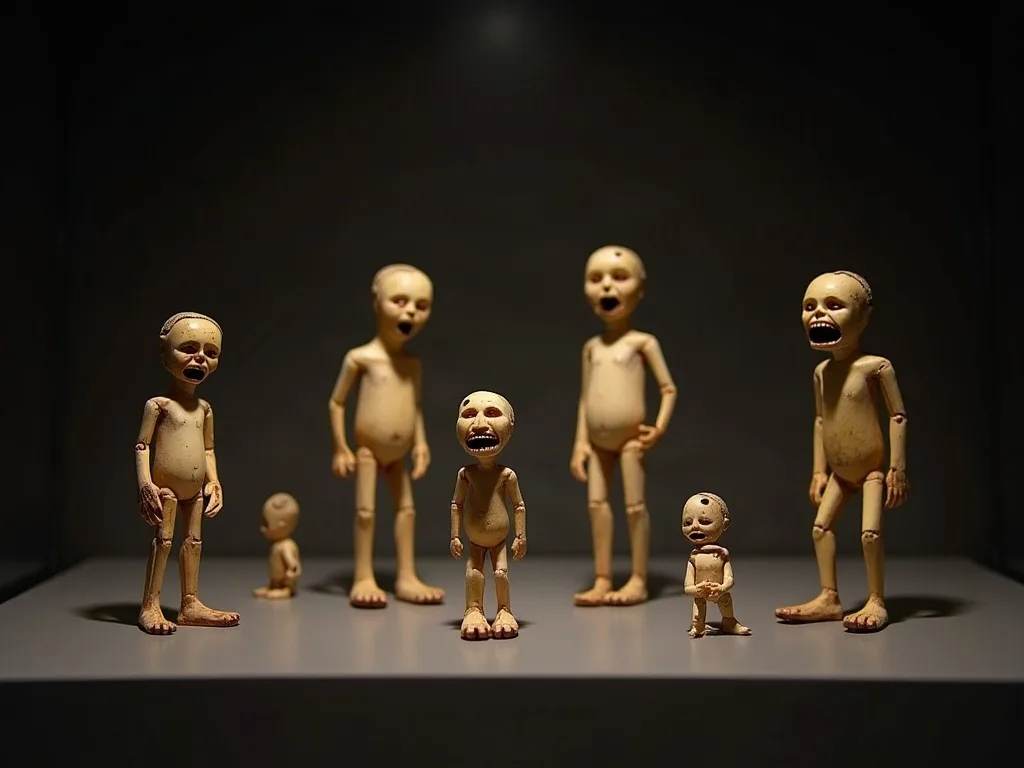
These museum pieces are invaluable for understanding the actual practice. They show that Tupilaks were crafted with considerable artistic skill. Many display sophisticated understanding of anatomy, proportion, and the grotesque, the distorted features and impossible combinations are clearly deliberate, not the product of crude carving. Some figures incorporate both human and animal elements with remarkable seamlessness, as if the artist were depicting a form that existed between worlds.
The existence of these figures also raises an interesting historical question: why did some Tupilaks survive to be collected and preserved? Some may have been discovered and neutralized (rendered harmless through counter-ritual or simply kept in a museum, separated from their intended victim). Others may have been traded away or stolen by Europeans before they could be activated. A few may have been collected from sorcerers' estates or from communities that no longer believed in their power. The survival of these figures is somewhat ironic: the very objects meant to be buried and hidden are now displayed openly in museums, their power (in the Inuit understanding) rendered inert by being removed from their proper context and purpose.
Frequently asked questions about the Tupilak: The Vengeful Monster of Sorcery
Frequently asked questions
Was the Tupilak a real creature, or purely spiritual?
The Tupilak existed in a liminal space between the physical and spiritual. The carved figure itself was real and tangible, still visible in museum collections. The Inuit belief was that once properly activated through ritual, the figure could become a semi-physical or entirely spiritual creature. The victims experienced very real effects: fear, sickness, sometimes death. Whether these resulted from the actual supernatural power of a cursed object or from the psychological impact of believing oneself hunted remains unknowable. What matters historically is that the Tupilak was treated as real by those who created and feared it, and that people died as a result.
Could a Tupilak be stopped or destroyed?
According to Inuit accounts, a powerful shaman could detect and neutralize a Tupilak. Some shamans were said to be able to find the buried figure and either destroy it or perform a counter-ritual that would break the sorcerer's spell and reverse the curse. Other methods supposedly included identifying the sorcerer and forcing him to undo his work. The fear was that without such intervention, a Tupilak could continue to hunt indefinitely, or even after its creator's death.
Why did the Inuit create Tupilaks if they were so dangerous?
In small Arctic communities, conflicts over hunting grounds, women, or insults could fester for years without legal recourse or a clear way to settle the score. The Tupilak offered a way to act on grievances that could otherwise spiral into endless feuding. For a sorcerer willing to take the spiritual and social risks, it provided a means of revenge that required no direct confrontation and no witnesses. The danger and taboo nature of the practice actually reinforced its psychological power: a man who believed his enemy had commissioned a Tupilak against him was already halfway to being defeated by fear.
Are Tupilaks still created today?
The practice appears to have largely died out by the early-to-mid 20th century as a result of Christianization, European legal systems, and the breakdown of traditional Inuit community structures. Some Inuit communities may preserve stories or knowledge about the tradition, but active creation of Tupilaks for malevolent purposes is not documented in modern times. The tradition lives on in museum collections, ethnographic records, and in the cultural memory of Inuit peoples.
How does the Tupilak compare to similar creatures in other Arctic traditions?
The Sami, Aleut, and other northern peoples had magical practices that could produce harm similar to a Tupilak's effects. However, the Tupilak is distinctive in its combination of a physical carved object with elaborate activation rituals, its specific role as a revenge weapon, and its emergence as a significant part of documented Inuit spiritual practice. The Tupilak reflects a particular Inuit approach to the relationship between craftsmanship, intention, and spiritual power.
The Tupilak's Legacy in Modern Understanding
The Tupilak has captured the imagination of modern readers, anthropologists, and fiction writers because it represents something profound about human belief and power. It is a creature born entirely from Inuit innovation, not borrowed from Christian demonology or shamanic traditions of Siberia or Central Asia. It speaks to the reality of living in one of Earth's harshest environments, where a community might number in the dozens, where grudges could not be easily resolved or forgotten, and where spiritual power and physical survival were intimately connected.
The Tupilak also challenges modern Western assumptions about "primitive" or "indigenous" magic. These were not crude superstitions, but sophisticated systems of psychology and ritual designed to produce real effects in the minds and bodies of believers. The modern reader who dismisses the Tupilak as mere folklore misses the point: for the Inuit hunter who found a carved figure near his home and recognized it as a Tupilak, the danger was real, the fear was rational, and the consequences could be fatal.
Contemporary Inuit artists and writers have reclaimed the Tupilak as part of their cultural heritage, exploring its meaning in modern contexts. Museums have begun to repatriate Tupilak figures to Inuit communities, acknowledging that these objects carry cultural and spiritual significance that extends beyond their status as historical artifacts. The practice of creation itself remains taboo, but the history and meaning of the Tupilak continue to be valued as expressions of Inuit cosmology and artistic tradition.
The Tupilak endures because it embodies a truth about power that transcends its historical moment: that intention, belief, and crafted form can combine to reshape reality. In the frozen darkness of the Arctic, where survival depended on reading signs and trusting in unseen forces, the Tupilak was not an anomaly. It was the logical extension of a worldview in which the spiritual and physical were never separate, and where a carver's skill could literally become a matter of life and death.
Read the full book
Want the whole story?
The complete edition is an instant PDF download here, with a paperback on Amazon for selected titles.
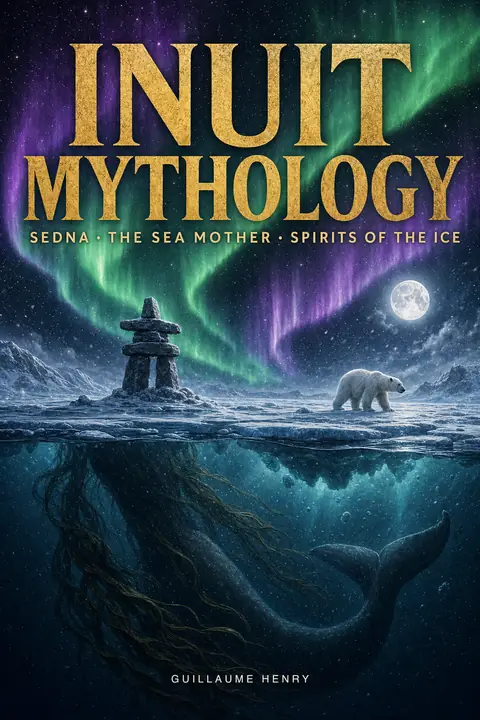
Inuit
The Inuit Mythology Book: Sedna, Sila, and the Sacred Stories of Ice, Hunger, and the Sea-Goddess at the Bottom of the World
Shamans, Spirits, and Survival in the Arctic
The mythology of the Arctic peoples: Sedna at the ocean floor, Sila in the wind, and the angakkuq shamans who flew between worlds. Drawn from primary sources.
More from Inuit
All articles
Inuit
Inuksuk: Stone Markers of the Arctic Landscape
The Inuksuk stands as a silent guardian across the Arctic: stacked stones shaped by Inuit hands to guide hunts, mark sacred places, and embody the spirit of community. Learn how these markers bridge the visible and spiritual worlds.

Inuit
The Moon Man and Sun Sister: Cosmic Pursuit Myth
In Inuit cosmology, the Moon Man chases his sister, the Sun, across the sky in an endless celestial pursuit born from darkness and shame. Discover how this myth explains the rhythm of day and night, and why it still echoes in Arctic cultures today.

Inuit
Sila: The Breath of Life and Weather Spirit
Sila is the Inuit spirit of weather, breath, and life force itself, a boundless presence that moves through air and water, sustaining hunters and demanding respect. Discover how Arctic peoples understood this invisible power that controlled their survival.

Inuit
Angakkuit: Inuit Shamans and Spirit Mediators
Angakkuit are the shamans and spirit mediators of Inuit cultures, channeling power from the animal and spirit worlds to heal, guide, and maintain balance between the human and sacred realms. Discover how these intermediaries shaped Arctic survival and cosmology.