
Nanook: The Polar Bear Spirit Master
Nanook rules the Arctic as the supreme master of polar bears in Inuit belief. Learn his origin, his laws of the hunt, and why hunters still honour him today.
Contents
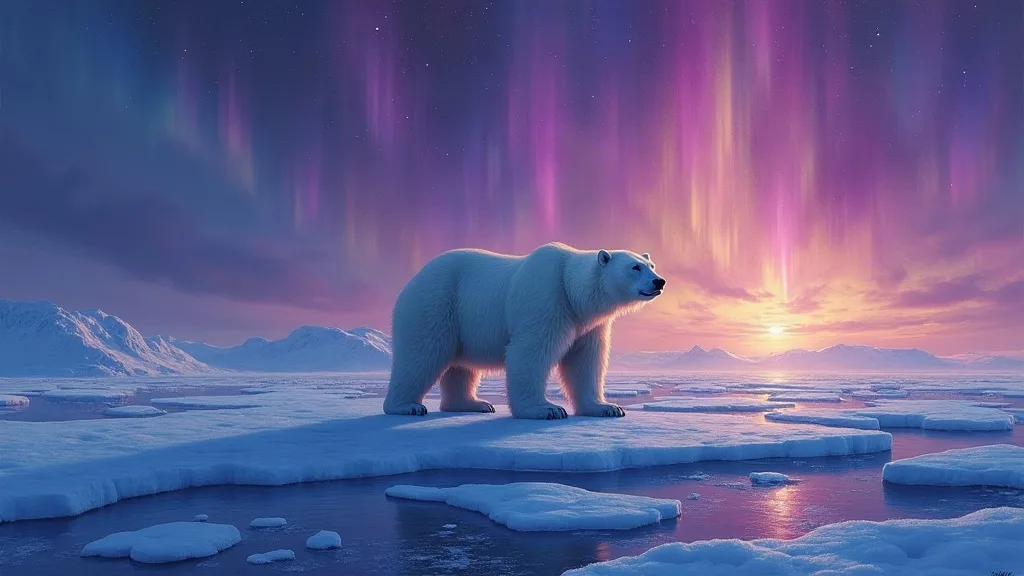
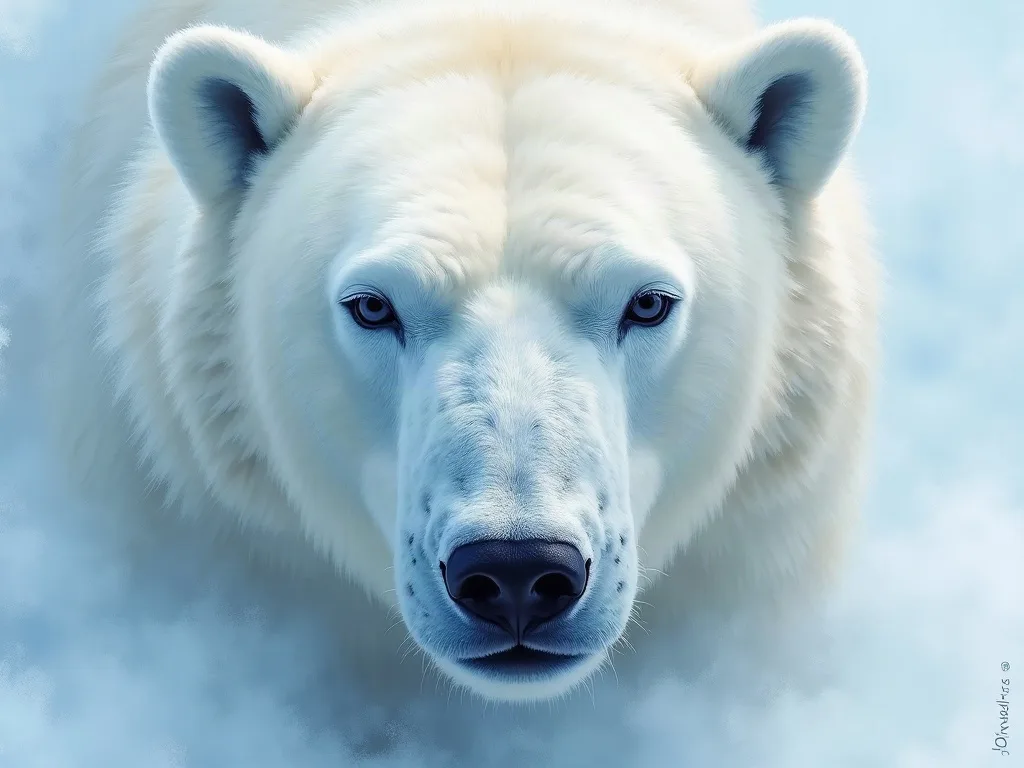
The bear rises from the snow like a white hill coming alive. It turns, scents the air, and for one held breath the hunter on the ice recognises something behind those black eyes that is not quite animal. In Inuit belief, that recognition is real. The polar bear is never just a bear. It is a being of tremendous power wearing an animal coat, and behind every polar bear stands Nanook: the Polar Bear Spirit Master, the one who decides whether the hunt succeeds or fails, whether the people eat or starve through the long Arctic winter.
His name comes from the Inuktitut word nanuq, simply "polar bear," yet the being it names is far more than a species label. Nanook is at once a spirit lord, a moral judge, and a teacher. He watches how hunters treat the animals they kill. He rewards the respectful and withdraws his favour from the careless. Across the many Inuit groups spread from Alaska through northern Canada to Greenland, the details of his stories vary, but the core conviction does not: the polar bear and the human being share something deep, something almost kin, and Nanook stands at the centre of that bond.
This article moves through his origins, his role in the hunt, the rituals that kept hunters in his good graces, and the living legacy that carries his name into the present.
The Arctic Cosmos Nanook Inhabits
To understand Nanook, you first need to feel the world he comes from. Inuit cosmology, as recorded by ethnographers such as Knud Rasmussen during his Fifth Thule Expedition (1921-1924), is not divided neatly into heaven, earth, and underworld. It is layered with sila (the living air, the breath of the cosmos) and populated by inuat, the "persons within" every animal, stone, weather system, and geographical feature. Nothing in the Arctic is merely matter.
The polar bear holds a singular rank in this living world. Where other animals have inuat who are roughly human-sized spirits inside animal bodies, the polar bear's inner person is something grander. Rasmussen, recording the words of the Iglulik shaman Aua, noted that the bear is considered the most powerful land animal, and its spirit the most dangerous to offend. In Aua's own words, as Rasmussen transcribed them: "The greatest peril of life lies in the fact that human food consists entirely of souls." That observation applies with special force to the polar bear, whose soul Aua ranked above all others that walked on land. Some traditions place Nanook as the presiding lord over all bears, a kind of apex tuurngaq who can see through every bear's eyes at once.
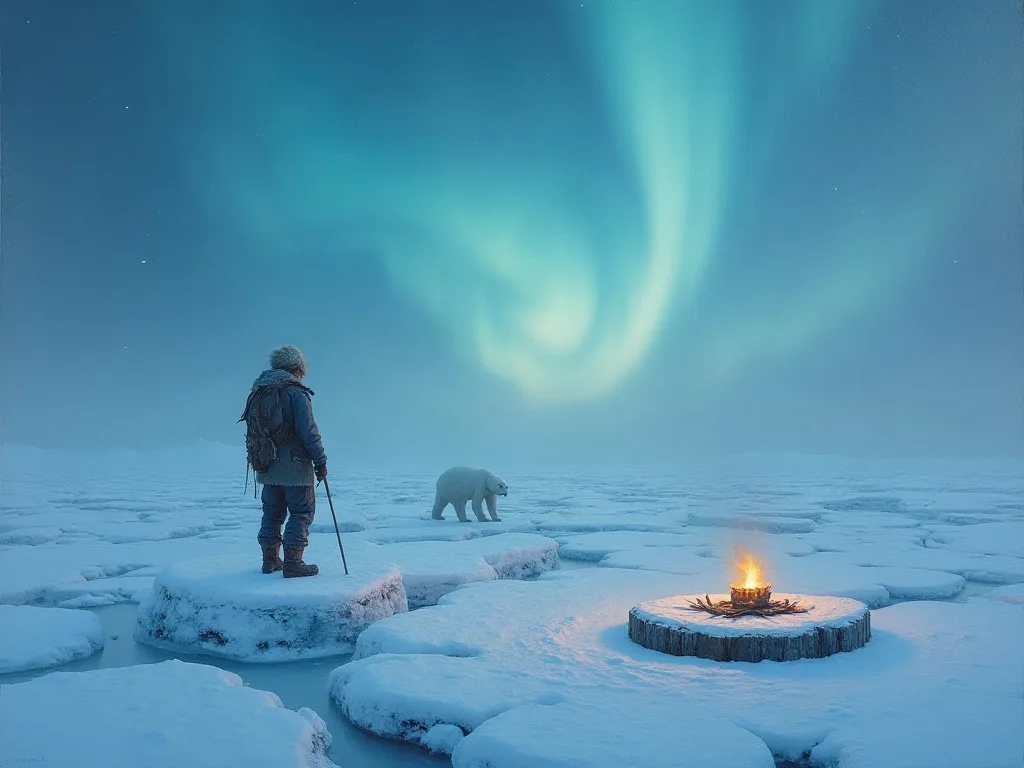
The sea, the ice, and the land are governed by different spirit forces. Sedna, the great sea spirit who lost her fingers and became the mother of all sea creatures, rules the waters beneath the ice. Nanook rules the surface: the pressure ridges, the open leads, the breathing holes where seals surface. Between them, these two powers define the hunter's entire world.
How Nanook Became the Master of Bears
Inuit oral tradition does not have a single creation scripture like the Norse Prose Edda (a medieval Icelandic text compiling older Viking myths) or the Mayan Popol Vuh (the K'iche' Maya book of creation). Stories were kept alive through winter tellings, passed from elders to children during the months of darkness. Several of these origin stories have been collected, most notably by Rasmussen, by the anthropologist Franz Boas in his 1888 work "The Central Eskimo," and by later scholars such as Krupnik and Fitzhugh in their 2001 volume "Gateways: Exploring the Legacy of the Jesup North Pacific Expedition."
One of the most widely spread accounts says that in the time before the world settled into its present form, humans and animals spoke the same language and could change shape freely. A great polar bear, older and stronger than all others, chose to remain permanently in bear form because that form suited his nature best. He became so attuned to the ice world, so perfectly powerful, that the other bears recognised him as their leader. When the separation between humans and animals happened, this bear did not fully cross over. He kept one foot in each world, understanding human need, feeling animal nature, becoming the bridge between them. That bear became Nanook.
Another tradition, recorded among the Copper Inuit groups of what is now Nunavut, describes Nanook as having been a great hunter who was transformed into a bear by the spirits as a reward for his perfect conduct. In this version he teaches from experience: he was human, he knows what hunters need, and he will provide it if they behave as he once behaved.
Both stories point toward the same moral truth. Nanook earns his position not through birth or conquest but through excellence and right relationship with the world.
The Laws of the Hunt: What Nanook Demanded
The practical expression of Nanook's power lived in the rules hunters followed before, during, and after killing a bear. These were not superstitions. They were understood as a contractual relationship: the bear gave its body willingly, under Nanook's authority, and in return the hunter was bound to specific acts of respect.
Boas documented several of these practices among the Central Inuit in the late 19th century:
- A freshly killed polar bear's skull was placed facing the direction from which the bear had come, so its spirit could find its way home to Nanook.
- The hunter offered the bear's spirit a small gift, often a piece of the hunter's own equipment, acknowledging the bear's sacrifice.
- Among some groups, a killed bear's skin was kept in the house for a set number of days (four for a female bear, five for a male) before being used, giving the spirit time to depart peacefully.
- The bear's bones were never given to dogs or discarded carelessly. They were returned to the sea or the land with ceremony.
The Yupik people of Alaska, who share many cosmological structures with the broader Inuit world, held a comparable set of obligations around their own bear ceremonies. The Nalukataq (blanket toss) festival and other seasonal ceremonies acknowledged the spirit world's generosity in providing animals for food.
Breaking these rules had consequences. The hunter who treated a bear carelessly, who let dogs chew the bones or threw the skull aside, signalled to Nanook that he was unworthy. Future hunts would yield nothing. Worse, the bear's spirit, offended and unable to return to its lord, could become a tupilak (a vengeful spirit), causing illness or misfortune. Rasmussen recorded the shaman Aua making exactly this point: a hunter who failed the dead animal's spirit did not merely suffer empty hands but risked drawing tupilat that targeted his family. The rules were, in the most literal sense, a matter of survival.
Nanook and the Shaman's Journey
No exploration of Nanook is complete without the Inuit angakkuq (shaman, pronounced roughly "ah-nga-KOOK"). The angakkuq was the community's spiritual specialist, the person who could travel between the visible and invisible worlds to negotiate on behalf of the living. Training as an angakkuq was brutal and long, often involving isolation, starvation, and visions. At the end of that process, the shaman acquired tuurngait (spirit helpers), and among the most powerful helpers a shaman could have was a bear spirit.
Rasmussen's conversations with Iglulik shamans in the early 1920s produced some of the most detailed records of this relationship. Aua told him that a bear spirit helper could travel farther and faster than almost any other, could break through obstacles in the spirit world that would stop a lesser helper, and could confront dangerous spirits without flinching. Having Nanook or a bear tuurngaq beside you was the closest thing the spirit world offered to armour.
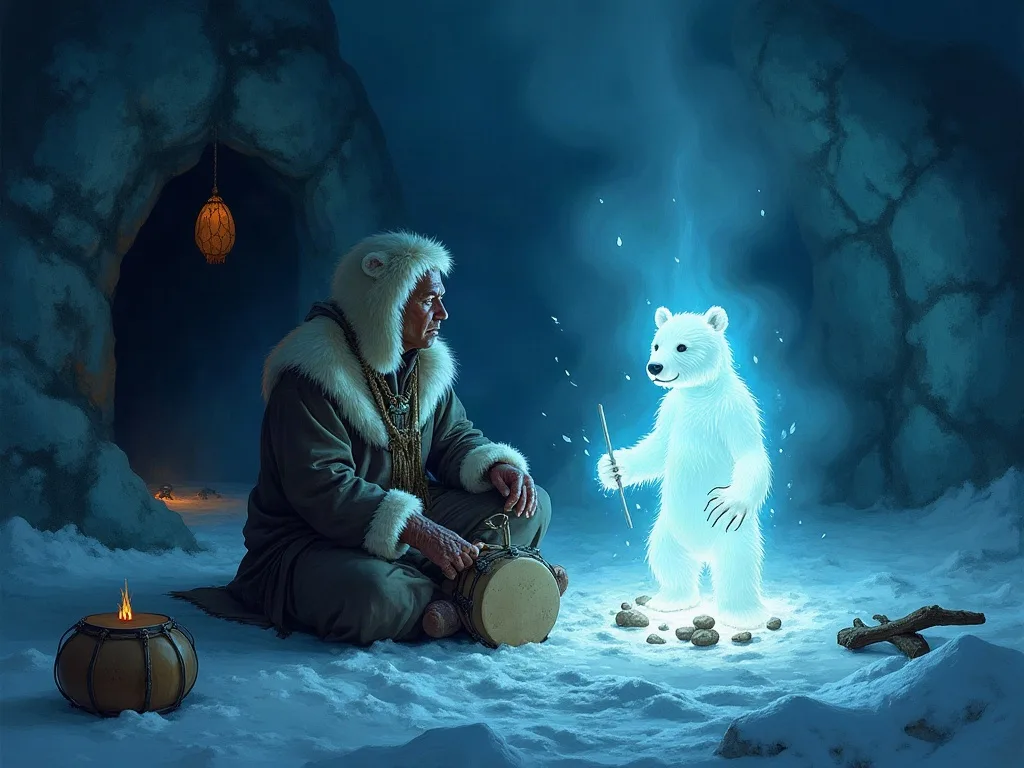
The angakkuq who called on a bear helper often wore or carried bear-related objects: a claw, a tooth, a piece of skin. These were not trophies. They were antennas, objects that kept the channel open between the human shaman and the bear world where Nanook presided. Some shamans were said to actually transform into bears during their spirit journeys, seeing the world through the bear's low, wide senses, smelling the hidden seal beneath three feet of ice. The Netsilik shaman Orpingalik, another of Rasmussen's interlocutors, described these journeys as a kind of dissolving: "I could no longer feel my own weight. I was the bear."
This bear-shaman connection is not unique to the Inuit. Across the circumpolar world, from the Sami of Scandinavia to the Ainu of northern Japan, bear veneration and shamanic practice are woven together. But among the Inuit, Nanook gives the connection its sharpest form: one named, specific, morally active spirit lord who can be addressed, pleased, and offended.
The Kinship Between Bears and Humans
One of the most striking threads in Nanook's mythology is the persistent idea that polar bears and humans are not simply similar. They are kin. Several Inuit groups tell stories of women who married polar bears and had children who moved between both worlds. The bear-husband in these stories is always recognisably human in behaviour when inside his home; he removes his bearskin coat the way a human removes a parka.
This image, the animal removing its skin to reveal a human beneath, is one of the most repeated images in Arctic oral literature. It appears in seal wife stories, Raven stories, and most powerfully in bear stories. The philosopher and ecologist David Abram, writing in "The Spell of the Sensuous" (1996), connects this motif to a broader indigenous understanding of animal persons: the idea that personhood is not a human monopoly but a quality distributed through the living world.
Nanook is the guardian of that truth. He does not allow humans to forget that the bear they face on the ice is a person. The ritual obligations he demands are, at their root, the obligations you owe to a person: acknowledgement, gratitude, care for their remains, honesty about your intentions. A hunter who went onto the ice thinking only of meat was already failing the test Nanook set. A hunter who went with full awareness, who said with his actions "I see you, I am grateful, I will honour this," was already in right relationship before the hunt began.
Nanook Across the Inuit World: Regional Voices
The Inuit are not a single homogeneous group. The term covers many distinct peoples across a vast geography: Yupik and Iñupiat in Alaska, Inuvialuit in the western Canadian Arctic, Kivalliq and Kitikmeot Inuit in central Canada, Nunavimmiut in northern Quebec, Nunatsiavummiut in Labrador, and Kalaallit in Greenland. Each group has its own dialect, its own specific ceremonies, its own emphases.
Nanook appears across most of these traditions, though his name and exact attributes shift:
- Among the Iñupiat of northern Alaska, the polar bear lord is deeply tied to hunting ceremony and the first-kill ritual, where a young hunter's first bear kill is celebrated and the spirit is carefully thanked. Iñupiat elders interviewed by anthropologist Ann Fienup-Riordan in the 1990s described this first-kill ceremony as the moment a hunter formally entered into covenant with the bear world, a covenant that would define his relationship with Nanook for the rest of his life.
- In Greenlandic Inuit tradition (as recorded in texts compiled by the Greenlandic scholar Aron of Kangeq in the 19th century), bear spirits appear frequently in shaman narratives, and the bear retains its status as the most dangerous and respected animal. Aron's illustrated manuscripts, now held in the Royal Library of Copenhagen, show shamans riding bear spirits through storm clouds, a vivid image of the angakkuq's journey made visible.
- Among the Nunavut Inuit, the name nanuq is used both for the living animal and as a shorthand for the spirit presence behind it, making the line between the physical bear and the spiritual Nanook deliberately blurry.
What unites all these regional variations is the ethical weight placed on the hunter-bear relationship. The geography changes. The ceremonies differ in detail. The core moral logic does not.
Sedna, Sila, and the Spirit World Nanook Belongs To
Nanook does not stand alone. He functions within a web of relationships that gives Inuit cosmology its coherence. Sedna, the finger-joint woman whose severed fingers became seals, walruses, and whales, is perhaps the most widely known Inuit spirit outside the Arctic, but she is one of several powerful forces that hunters needed to stay in balance with.
Sila, the breath of the world, the intelligence that moves through wind and weather, is sometimes described as the most fundamental force of all, older and more pervasive than any named spirit. Rasmussen recorded the words of the Iglulik angakkuq Aua on Sila directly: "Sila is a great spirit, supporting the world and the weather and all life on earth... it is so fine and gentle that it cannot be touched, yet it is so strong that it moves the greatest forces." The angakkuq had to be in right relationship with Sila as well as with specific spirit lords like Nanook.
The moon spirit, Aningan (or Igaluk in some traditions), governed the tides and the movement of animals. He and Nanook operated in overlapping domains: the moon controlled when animals moved, Nanook controlled whether the hunter deserved to find them. Together, these named powers and the unnamed ones built a cosmos that demanded attention, skill, and humility from every person who lived in it.
The Raven as trickster and creator also moves through many of these stories, and his relationship with Nanook is a study in contrast: Raven is clever, unpredictable, appetite-driven. Nanook is patient, powerful, just. Where Raven disrupts, Nanook enforces order. Both are necessary.
Frequently Asked Questions About Nanook, the Polar Bear Spirit Master
Frequently asked questions
Is Nanook a god or a spirit in Inuit belief?
Nanook sits in his own category. Inuit cosmology does not use the Western division between gods and spirits the way Greek or Norse mythology does. Nanook is a tuurngaq, a spirit-being of very high rank, the presiding master of all polar bears. He has moral authority over the hunt and real power over hunters' lives, which makes him functionally similar to what other traditions call a god, but his authority is relational rather than absolute: it depends on humans holding up their side of the covenant.
What primary sources do we have about Nanook?
The richest primary documentation comes from Knud Rasmussen's reports from the Fifth Thule Expedition (1921-1924), particularly "Intellectual Culture of the Iglulik Eskimos" (1929). Franz Boas recorded Central Inuit practices in "The Central Eskimo" (1888). Aron of Kangeq's 19th-century Greenlandic manuscripts preserve West Greenlandic oral traditions. These sources are supplemented by more recent ethnographic work, including Krupnik and Fitzhugh's 2001 volume and ongoing collaborative research with Inuit communities themselves.
Why did Inuit hunters perform ceremonies after killing a polar bear?
Because in Inuit belief the bear's spirit did not simply vanish at death. It remained present and aware for a period, capable of reporting back to Nanook whether the hunter had behaved honourably. Ceremonies like placing the skull toward the bear's homeland, offering gifts, and carefully handling the bones were acts of respect owed to the bear as a person. Failing these acts risked offending Nanook and losing his favour in future hunts.
How does Nanook relate to Sedna in Inuit mythology?
Nanook and Sedna govern different but complementary domains. Sedna rules the ocean and the sea mammals beneath the ice. Nanook rules the ice surface and polar bears. A hunter's world was bounded by both powers. Shamans often had to negotiate with both: travelling spiritually to Sedna's undersea home to release the animals she held, and maintaining correct ritual behaviour on the ice to keep Nanook's approval. The two powers are cooperative, not competing, both necessary for survival.
Is the name 'Nanook' used outside of mythology?
Yes. Robert Flaherty's 1922 documentary film "Nanook of the North," one of the earliest documentary films ever made, brought the name to global audiences. The main subject, an Iñuk man named Allakariallak, was given the name Nanook for the film. The word has since entered English as a recognisable Arctic reference, though its mythological depth is often lost in popular use. The name also appears in place names, sports teams, and commercial brands across the circumpolar world.
Do Inuit communities still honour Nanook today?
Many do. Across Nunavut, Alaska, and Greenland, Inuit hunters maintain practices rooted in the old relationship with bear spirits, even within communities that are also Christian. The specific ceremonies vary by family and region. Cultural organisations in communities like Iqaluit and Utqiagvik actively work to preserve and transmit traditional knowledge about animal spirits, including the obligations owed to the polar bear. The spirit of the covenant Nanook represents has not disappeared; it has adapted.
Nanook in a Warming World: What the Spirit Master Means Now
The polar bear is, at the start of the 21st century, the animal most visually associated with climate change. Its shrinking sea ice, its extended swims, its thinning condition are among the most documented ecological consequences of a warming planet. For Inuit communities, this is not an abstract environmental statistic. It is a disruption of the world that Nanook was believed to maintain.
Inuit elders across the circumpolar North, speaking to journalists, scientists, and their own youth, often frame environmental change in terms that echo the old cosmology. The ice is behaving wrongly. The animals are moving in ways they did not move before. The relationship between humans and the animal world, carefully tended for thousands of years through ceremony and respect, has been broken by forces originating far from the Arctic. The Inuit, who contributed almost nothing to the emissions causing this change, are living the consequences most directly.
This disruption has found its way into formal political language. The Nunavut Land Claims Agreement of 1993, the largest Indigenous land claim settlement in Canadian history at the time, established Inuit rights over roughly two million square kilometres of Arctic territory and embedded Inuit Qaujimajatuqangit (traditional knowledge, often abbreviated IQ) as a foundational principle of territorial governance. The Nunavut Wildlife Management Board, created under that agreement, explicitly incorporates IQ into decisions about polar bear quotas, recognising that the knowledge systems built around relationships with Nanook carry real empirical weight about animal behaviour, migration, and population health. The covenant with the bear spirit, in other words, has not only survived into the present; it has been encoded in the governance structures of an entire territory.
Nanook, read through this lens, becomes more than a historical figure in an old belief system. He stands as a mirror. The obligations he demanded from hunters were a working model of what ecologists now call sustainable relationship: take only what you need, honour what you take, think about the consequence for the animals that remain. The moral logic that built the covenant with Nanook is the same logic that climate scientists, conservation biologists, and indigenous rights advocates are trying to rebuild globally, under different names, with less ceremony and often less success.
Some contemporary Inuit artists and writers invoke Nanook explicitly for this reason. The printmaker Kenojuak Ashevak (1927-2013), one of the most celebrated Inuit artists internationally, produced work throughout her career that kept Arctic animal spirits visible in a world that had stopped looking at them carefully. Younger artists in the Nunavut arts community continue that work.
The polar bear on the ice is still a white hill coming alive. Whether the world behind those black eyes is still in balance is the question Nanook would ask every hunter, every government, every person burning fuel in a warm city far from the ice. He is patient. But he has always kept count.
Read the full book
Want the whole story?
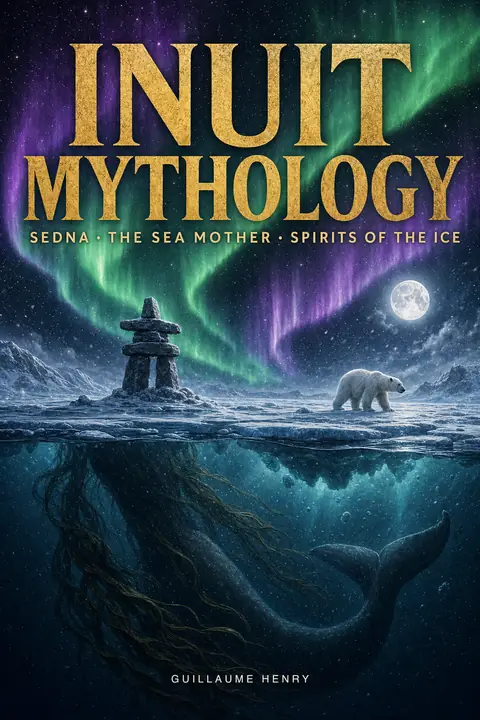
The complete edition is an instant PDF download here, with a paperback on Amazon for selected titles.
Inuit
The Inuit Mythology Book: Sedna, Sila, and the Sacred Stories of Ice, Hunger, and the Sea-Goddess at the Bottom of the World
Shamans, Spirits, and Survival in the Arctic
The mythology of the Arctic peoples: Sedna at the ocean floor, Sila in the wind, and the angakkuq shamans who flew between worlds. Drawn from primary sources.
More from Inuit
All articles
Inuit
Inuksuk: Stone Markers of the Arctic Landscape
The Inuksuk stands as a silent guardian across the Arctic: stacked stones shaped by Inuit hands to guide hunts, mark sacred places, and embody the spirit of community. Learn how these markers bridge the visible and spiritual worlds.
Inuit
The Moon Man and Sun Sister: Cosmic Pursuit Myth
In Inuit cosmology, the Moon Man chases his sister, the Sun, across the sky in an endless celestial pursuit born from darkness and shame. Discover how this myth explains the rhythm of day and night, and why it still echoes in Arctic cultures today.

Inuit
Sila: The Breath of Life and Weather Spirit
Sila is the Inuit spirit of weather, breath, and life force itself, a boundless presence that moves through air and water, sustaining hunters and demanding respect. Discover how Arctic peoples understood this invisible power that controlled their survival.

Inuit
Angakkuit: Inuit Shamans and Spirit Mediators
Angakkuit are the shamans and spirit mediators of Inuit cultures, channeling power from the animal and spirit worlds to heal, guide, and maintain balance between the human and sacred realms. Discover how these intermediaries shaped Arctic survival and cosmology.