
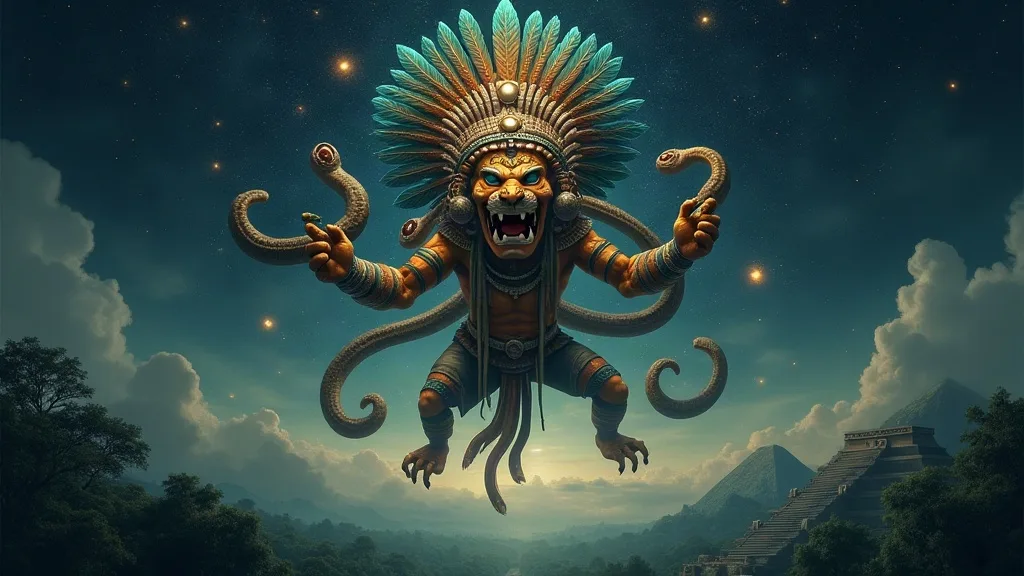
Itzamna: Supreme Creator Deity of the Maya
Itzamna ruled the Maya cosmos as the first and greatest of all gods, shaping creation itself. Discover how this ancient jaguar deity embodied wisdom, healing, and the sacred order that held the universe together.
Contents
In the darkest moment before time itself existed, there was Itzamna: an old man with the features of a crocodile and a jaguar, floating alone in the cosmic waters. From nothing, he willed the world into being. He spoke the mountains into place. He painted the sun and moon across the sky. Then, exhausted, he rested. This is how the Maya imagined their creation, and Itzamna stood at the absolute center of it.
Itzamna: Supreme Creator Deity was not a god of war or love or thunder. He was the architect of existence itself, the keeper of all knowledge, the healer of sickness, the guardian of the maize that fed his people. Every god that came after him served some corner of his great design. To the ancient Maya, from the Yucatán Peninsula to the highlands of Guatemala, Itzamna was not merely a deity to invoke in times of trouble. He was the reason there was anything at all.
The First Father: Origins and Creation
The creation accounts from the Popol Vuh, the sacred Maya text recorded by K'iche' scribes in the 16th century, describe a cosmos that had to be built step by step. The world was not spontaneous. It required intention, failure, learning, and finally, success. Itzamna presided over all of it.
Before the Popol Vuh's famous account of the Hero Twins and their trials, there was Itzamna. The oldest surviving Maya codices, the Dresden Codex, the Paris Codex, and the Madrid Codex, all from the Classic and Postclassic periods, depict him as the primal creator who separated the sky from the sea, established the four corners of the world, and planted the cosmic tree, Yggdrasil-like, that connected the underworld to the heavens.
In some versions, Itzamna did not create alone. He worked with a council of elder gods, the Bacabs, who took up residence at the four corners of the world and held the sky aloft on their shoulders. Yet Itzamna remained supreme: the intellect behind the plan, the voice that spoke things into being. He was not a warrior-king god like Zeus or Indra from the Hindu pantheon. He was a philosopher-priest, ancient and contemplative, who understood the mathematics of the stars and the hidden names of things.
The Maya believed creation was cyclical. The world they lived in was not the first world, nor would it be the last. Before this age, Itzamna had destroyed previous worlds through flood and fire when they had become corrupt or flawed. He would do so again if necessity demanded. This made him not cruel but responsible, a judge and gardener of reality itself.
The Many Faces of Itzamna
Itzamna was not a simple deity. He wore many masks, each reflecting a different facet of cosmic order and knowledge.
The Sky God
The most ancient conception of Itzamna placed him as the sky itself. The ceiling of the world. In the Postclassic period, he was explicitly called Itzamna Cab Ain, meaning "Itzamna, Face of Heaven." His face was the pattern of stars and planets. His breath was the wind. His blood was rain. When a Maya astronomer gazed at the sky to predict drought or flood, he was reading the body of Itzamna.
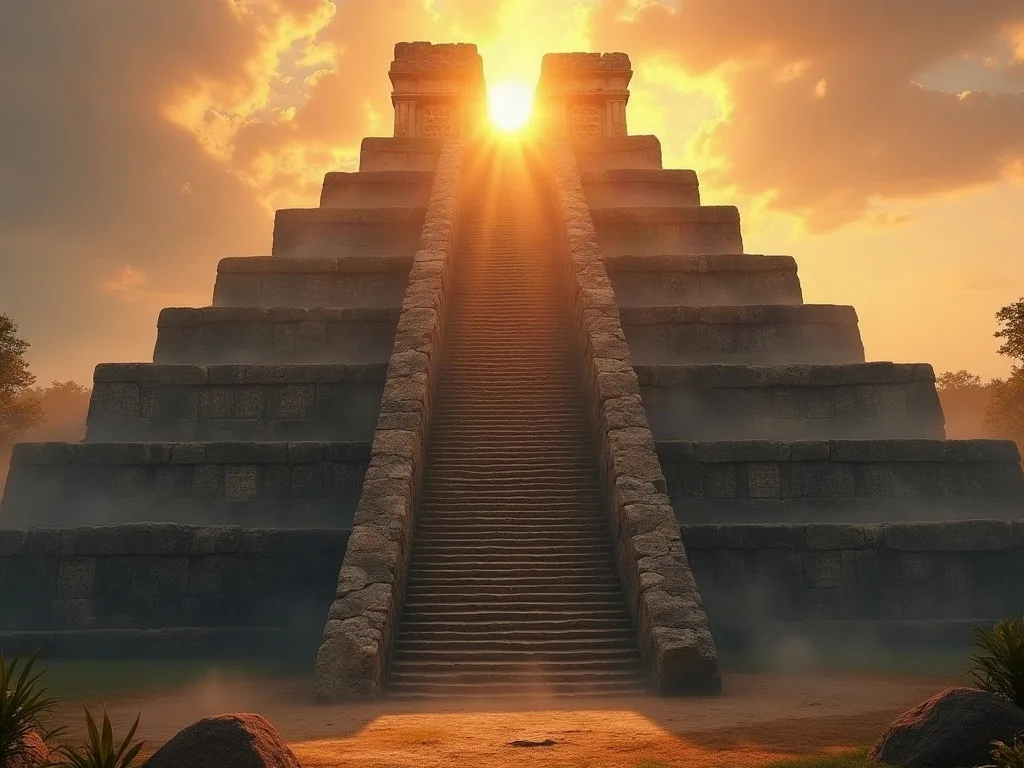
Temples built in his honor were oriented to track the movements of the sun and planets through his domain. The great pyramid at Chichen Itza was partly constructed as a solar calculator, each step representing a day in the solar year, the entire structure a hymn to Itzamna's rulership of time itself.
The Maize God
In Maya civilization, maize was not merely a crop. It was the flesh of humanity itself. The Popol Vuh describes humans being sculpted from maize paste by the creator gods. Itzamna controlled the growth and abundance of this sacred plant. Farmers left offerings at his altars before planting, whispering prayers that the rains would come, the weeds would stay sparse, the harvest would be generous.
In this guise, Itzamna appeared as a youthful, beautiful god crowned with maize leaves. Yet this was still Itzamna: the young face of the ancient principle of fertility and sustenance.
The Healer and Keeper of Medicine
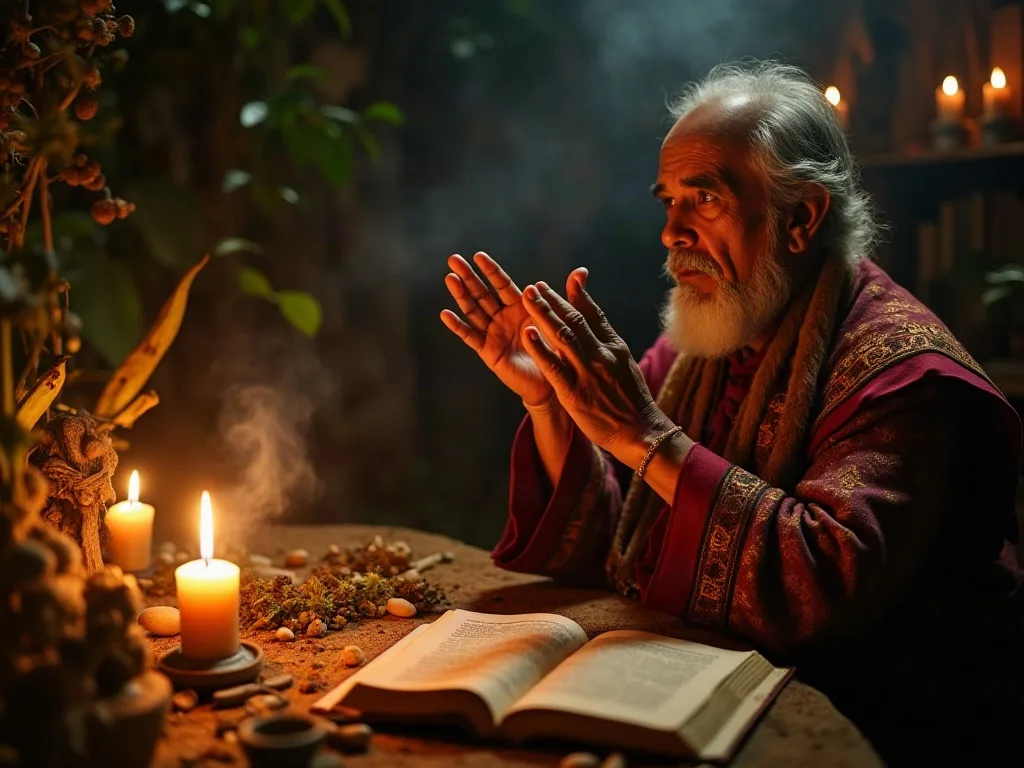
Illness was understood by the Maya as a loss of cosmic balance, a rupture in the world-order that only a being of Itzamna's stature could repair. When a person fell gravely sick, priests invoked Itzamna as the supreme healer. He was said to possess the knowledge of all herbs, all incantations, all remedies. Midwives prayed to him during difficult births. Physicians burned copal incense in his honor, asking him to guide their hands.
One of the most sacred rituals in Maya religion was the New Year ceremony, held at the beginning of each tun (a 20-year period in the Maya calendar). During this ceremony, priests would publicly confess sins and ask Itzamna to renew the world, to heal its wounds, and to grant another cycle of prosperity. The ritual acknowledged that only the supreme creator could grant such renewal.
The Keeper of Writing and Knowledge
The Maya were among the few ancient civilizations to develop a full written script. They attributed this gift to Itzamna himself. He was the god of scribes, the lord of books and the sacred knowledge written in the codices. When a scribe prepared to paint glyphs in a new manuscript, he made an offering to Itzamna, asking for clarity of hand and accuracy of message.
This aspect of Itzamna had no direct equivalent in other Mesoamerican traditions. While Quetzalcoatl, the feathered serpent of the Aztecs, was associated with wind and knowledge, Itzamna's connection to writing was uniquely Maya. It reflected the profound importance of the written word in Maya sacred life.
The Cosmic House and the Underworld
The name Itzamna, "Iguana House", refers not to a literal dwelling but to a cosmic principle. The "house" was the entire framework of creation itself, the mansion of reality. To enter this house was to exist. To be cast out of it was to cease to exist.
Yet Itzamna's authority extended even into the underworld, the Xibalba of K'iche' tradition. In the Popol Vuh, when the Hero Twins journeyed to Xibalba to avenge their father's death, they carried with them the hidden blessing of Itzamna. Every trial they faced, every ball game, every house of fire, every darkness, was part of Itzamna's grand design, a test that would ultimately lead to the proper ordering of creation.
The underworld was not a place of simple punishment or oblivion. It was a mirror of the upper world, necessary to the cosmos's balance. Itzamna permitted it to exist. He set its boundaries. He ensured it did not spill into the realm of the living and cause chaos.
This is why Itzamna was sometimes depicted as an old man descending into the earth, or as part crocodile, the crocodile being a creature that lives between the waters, between the hidden depths and the sunlit surface. He was the god of liminality, of thresholds, of the boundaries that held the cosmos together.
Itzamna in the Codices and Archaeological Record
The surviving Maya codices offer glimpses of how Itzamna was actually worshipped. In the Dresden Codex, he appears in almanacs governing specific days and seasons. In the Madrid Codex, ritual instructions call for offerings to him during times of drought or sickness. In the Paris Codex, he is shown overseeing the New Year ceremonies.
Iconographically, Itzamna was usually depicted as an elderly man with prominent teeth, often crocodilian or serpentine features, sometimes wearing a headdress in the shape of a cosmic bird or a celestial serpent. His eyes were sometimes shown as large and unblinking, the gaze of a being who sees everything, past and future alike. He held the tools of his role: writing implements, or astronomical instruments, or sometimes a double-headed serpent that represented the axis mundi, the world-tree connecting heaven and earth.
Temples dedicated to Itzamna were typically built on high ground, oriented toward astronomical alignments. The buildings themselves served as calendars and observatories. This was practical knowledge encoded in stone: the Maya did not separate the sacred from the mathematical. To honor Itzamna was to honor the order of the universe, and that order could be measured, predicted, written down.
Excavations at sites like Copán, Caracol, and the Petén region have uncovered shrines with offerings of jade, obsidian, and copal incense bearing Itzamna's name glyph or iconographic markers. These were not peripheral rituals conducted by fringe sects. They were central to Maya religious life, conducted by the highest priests and most powerful rulers.
Itzamna and the Maya Rulers
The Maya kings, the K'uhul Ajaw (divine lords), claimed direct descent from Itzamna. They saw themselves not as his representatives but as his human embodiments, vessels through which his cosmic power flowed into the world. This made kingship a sacred burden, not a privilege.
A Maya ruler's primary duty was to maintain cosmic order through ritual. If he failed, if droughts came, if enemies attacked, if the calendar fell out of alignment, the fault was his. The people might blame him and depose him. But if he succeeded, if the rains came on time and the crops flourished and the stars moved in their predicted courses, it was because he had properly honored Itzamna and kept the cosmic machine running.
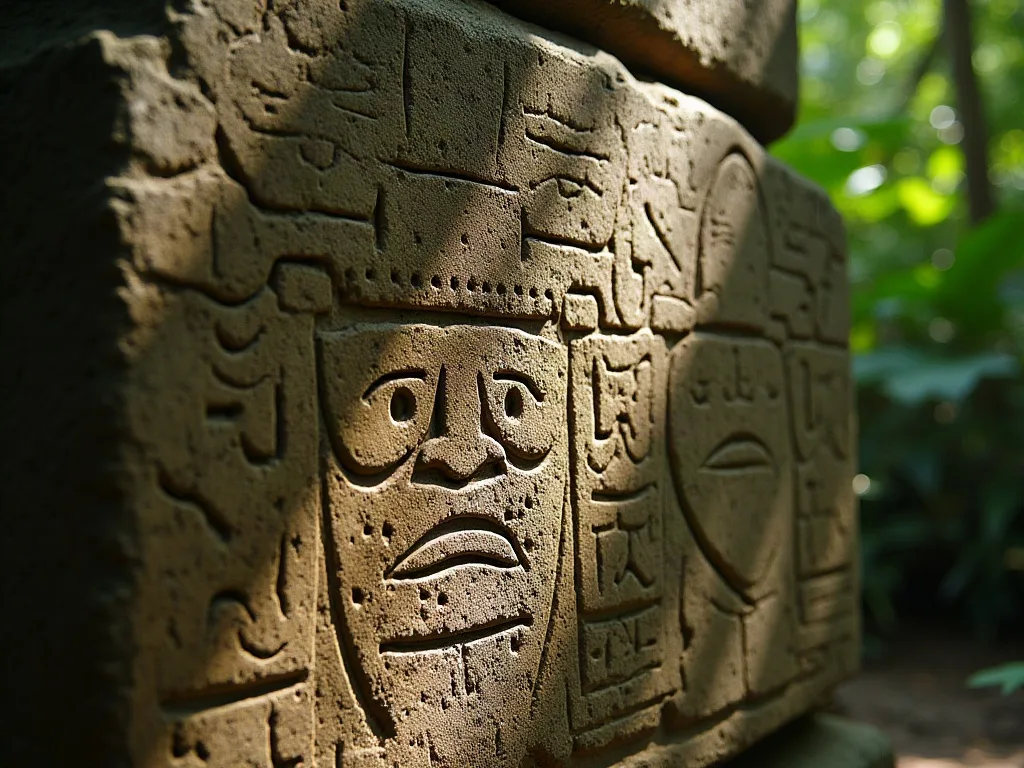
This explains why Maya monuments are so obsessively calendrical. Why kings commissioned stelae and altars carved with exact dates, astronomical observations, and ritual records. They were creating a record, a proof, a contract with Itzamna: "I, your human agent, have kept the order. I have made the offerings. The world has been maintained."
The Survival and Transformation
When Spanish conquistadors arrived in the Maya lands in the 16th century, they brought Christianity. The old temples were destroyed or buried. The codices were burned. The priests were silenced. Yet Itzamna did not entirely vanish.
In remote highland communities where the Spanish presence was weaker, people continued to invoke Itzamna in secret, sometimes folding his attributes into the figure of a Catholic saint or the Virgin Mary. In K'iche' texts like the Popol Vuh, which was recorded and preserved by indigenous scribes after the conquest, Itzamna's legacy was woven into the narrative of creation itself.
Today, in Yucatán and Guatemala, some Maya communities preserve oral traditions that trace back to Itzamna, though the name is often not spoken aloud, a sign of the reverence and the trauma that surrounds it. Anthropologists and scholars have worked to reconstruct his theology from the fragmented evidence: the codices, the stelae, the architecture, the accounts of Spanish friars who recorded what they were told (often while trying to suppress it).
Modern Maya thinkers have reclaimed Itzamna as a symbol of indigenous knowledge and cosmic wisdom, a counter-image to the chaos and exploitation of colonialism. In this sense, he remains alive, not as a god to worship in the old way, but as an archetype: the keeper of order, the ancient one who knew the secret names of things.
Itzamna and the Wider Mesoamerican World
While Itzamna was distinctly Maya, traces of similar supreme creator deities appear across Mesoamerica. The Aztec Ometeotl (the Dual God) served a similar cosmic function: the ultimate source, the being beyond gender and form who dwelt in the highest heaven and set creation in motion. The Olmec, the civilization that preceded the Maya, likely venerated an ancestor figure or primal deity who shared some of Itzamna's attributes.
What made Itzamna unique was the degree to which the Maya integrated his worship into their daily life, their mathematics, their calendar, their art. He was not a distant abstraction. He was present in the movement of the sun, in the growth of maize, in the glyphs on a stela, in the hands of a healer.
Frequently asked questions about Itzamna: Supreme Creator Deity
Frequently asked questions
Was Itzamna worshipped everywhere in the Maya world?
Yes. Unlike many Maya deities who had regional variations or local importance, Itzamna was revered across the entire Maya civilization, from the Yucatán to Guatemala, from the Classic period through the Spanish conquest. He is the closest thing the Maya had to a universally acknowledged supreme god, which is why early Spanish friars sometimes tried to equate him with the Christian God.
What does the name Itzamna actually mean?
Itzamna means "Iguana House" or "Lizard House" in Yucatec Maya. The name refers not to a literal dwelling but to the cosmic framework of creation itself, the "house" in which all existence dwells. The iguana and lizard associations speak to his shape-shifting nature and his connection to boundaries between worlds.
How do we know about Itzamna if so much of Maya civilization was destroyed?
Our knowledge comes from several sources: the surviving codices (the Dresden, Paris, and Madrid Codices), which contain ritual calendars and astronomical texts mentioning him; archaeological inscriptions on temples and stelae; accounts recorded by Spanish friars in the 16th century; and oral traditions preserved in texts like the Popol Vuh. Scholars piece together these fragments like an archaeological dig, each source adding to the picture.
Did Itzamna have a conflict with other Maya gods?
Not in the way that Zeus fought the Titans or Indra battled demons. The Maya pantheon was hierarchical: Itzamna was supreme, and other gods served specific functions under his overall order. However, the cosmos itself required balance between opposing forces, creation and destruction, light and darkness, life and death, which other deities embodied. Itzamna oversaw this balance but did not personally wage war against the other gods.
Why is Itzamna depicted as an old man?
Age in Maya cosmology represented wisdom, patience, and cosmic authority. An old man is someone who has seen the world through many cycles, who understands the patterns and secrets of existence. This made Itzamna's age not a weakness but a sign of his supreme knowledge and his role as the elder architect of creation itself.
What rituals did the Maya perform to honor Itzamna?
The most important were the New Year ceremonies at the beginning of each tun (20-year period), when priests would renew the world and ask Itzamna for healing and restoration. Healers and midwives invoked him during births and illnesses. Scribes made offerings before writing sacred texts. Farmers left gifts at his altars before planting maize. The rituals varied regionally and seasonally but all shared the goal of maintaining cosmic order.
The Enduring Question: Creator or Cosmic Principle?
One of the deepest puzzles about Itzamna is whether the ancient Maya conceived of him as a personal god, a being with intention, emotion, relationships, or as a cosmic principle, something closer to the philosophical idea of "Being" or "Order" itself.
The evidence suggests both. In practical prayer, Maya people addressed Itzamna as a being who could hear and respond: they made requests, left offerings, expected results. In theological speculation, priestly texts seemed to treat him as the ultimate ground of existence, something prior to personhood, beyond form. He was simultaneously intimate and infinite, a god to pray to and a principle to understand.
This ambiguity is not confusion. It is sophistication. It reflects the Maya recognition that the deepest truths about existence cannot be captured in a single image or a simple narrative. Itzamna could be the old crocodile god floating in primordial waters. He could be the eye of the sun. He could be the structure of time itself. All of these were true.
Modern readers, shaped by religions that insist on one answer, sometimes struggle with this. But the Maya theological tradition was expansive. It held multiple truths in balance. To know Itzamna fully was to learn to think like the Maya: to see the cosmos not as a mechanism but as a living presence, and to understand yourself not as separate from it but as a necessary part of its continued existence.
Read the full book
Want the whole story?
The complete edition is an instant PDF download here, with a paperback on Amazon for selected titles.
Mayan
The Mayan Mythology Book: Hunahpu, Xbalanque, Kukulkan and the Sacred Stories of the Rainforest Mathematicians
The Popol Vuh, Xibalba, and the Cosmos Calculated in 13s and 20s
The Hero Twins descend to Xibalba. Kukulkan returns at equinox. Itzamna writes the first books. The complete mythology of the Maya who calculated the cosmos and left us the Popol Vuh.
More from Mayan
All articles
Mayan
Ixchel: Goddess of the Moon and Childbirth in Maya Mythology
Ixchel ruled the night sky and the sacred threshold where life enters the world. As the aged moon goddess and divine midwife of the Yucatan, she embodied both the gentleness of birth and the ferocity of storms.

Mayan
The Mayan Calendar System: Tzolk'in and Haab' Explained
The Mayan calendar tracks time across multiple overlapping cycles: the 260-day Tzolk'in and the 365-day Haab' align every 52 years in a sacred pattern. Discover how the Maya read the cosmos in numbers.
Mayan
Bloodletting Rituals: Sacred Sacrifice in Mayan Religion
Mayan bloodletting rituals were not acts of violence but profound spiritual transactions. Kings pierced their own bodies to feed the gods, sustain the cosmos, and commune with ancestors in ceremonies that shaped civilizations for over two thousand years.

Mayan
The Maize God: Symbol of Life and Resurrection in Mayan Mythology
The Maize God embodies the Mayan cycle of death and rebirth through corn, the lifeblood of Mayan civilization. Discover how this deity shaped creation myths, ritual, and the Mayan understanding of existence itself.