
Ixchel: Goddess of the Moon and Childbirth in Maya Mythology
Ixchel ruled the night sky and the sacred threshold where life enters the world. As the aged moon goddess and divine midwife of the Yucatan, she embodied both the gentleness of birth and the ferocity of storms.
Contents
In the darkness before dawn, the Maya peoples looked up and saw not just a pale disk but a grandmother watching over them. This was Ixchel, the goddess of the moon, fertility, and childbirth. Her name means "lady rainbow" in Maya language, a fitting title for a deity who appeared at dawn and dusk, standing at the edge between worlds. When a woman labored to bring a child into existence, they whispered Ixchel's name. When the rains came and threatened to flood the fields, she brought them. When the night sky held its secrets, she kept them safe.
The Maya understood their goddesses not as distant abstractions but as present forces in the daily rhythm of survival and wonder. Ixchel was woven into every major transition: the month's cycle, the woman's body, the cycle of seasons, the flood and the drought. She was at once fierce protector and nurturing grandmother, and this duality made her one of the most powerful divinities in the Mesoamerican pantheon.
Origins and Names of the Moon Goddess
Ixchel appears throughout Classic Maya texts and imagery, though her worship intensified in the Post-Classic period (roughly 1200 CE onward) in the northern Yucatan. The glyph for her name in Maya writing shows a stylized female face, often with the symbol for water or lunar cycles nearby. Her full titles varied across regions and centuries, as did the specific stories told about her, but the core threads remained: moon, water, fertility, medicine, and weaving.
Different Maya city-states and time periods called her by variations of this name, and she often appeared alongside or blended with other female deities of water and renewal. The Codex Madrid, one of the three surviving Pre-Columbian Maya books, shows her extensively. So does the Popol Vuh, the creation epic of the Quiche Maya, though her role there is less central than in ritual practice and in the codices that tracked the sacred calendar.
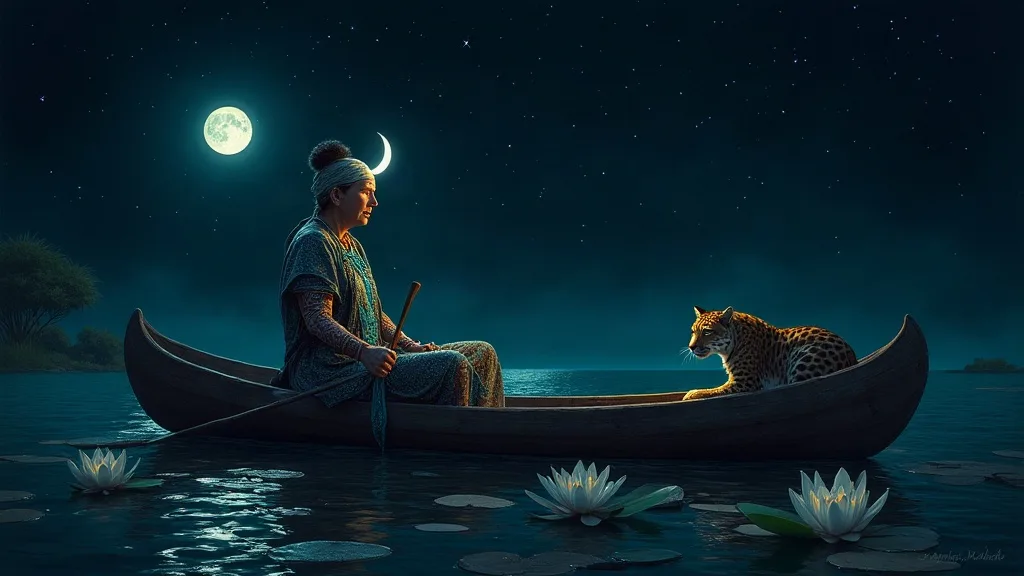
The iconography is consistent: Ixchel was depicted as an older woman, often with a crescent moon on her forehead, sometimes riding in a canoe over waters. She wore a huipil, the traditional Maya woven garment, often decorated with water symbols and crosshatching. In some images she held a serpent or sat upon a serpent throne; in others she stood with water pouring from her hands or womb. The water symbolism was not accident. Ixchel was a water goddess as much as a moon goddess. The Maya saw these as interconnected: the tides, the waters of the womb, the rains that fell at her command.
Ixchel as the Moon and Its Cycles
For the Maya, the moon was not abstract. It was a body in the sky with a personality, a history, and direct influence on earthly life. Ixchel's connection to the lunar cycle was literal and sacred. Each month, her face grew bright, then faded, then returned. This rhythm governed planting and harvest, menstruation and fertility, tides and weather.
The Maya tracked the moon with extraordinary precision. They understood that a lunar year was approximately 354 days, and they adjusted their calendar accordingly through a system of intercalation. Ixchel embodied this knowledge made divine. When she was visible in the night sky, she offered protection and guidance. When she disappeared into the dark of the new moon, she was thought to descend into the underworld, the Xibalba, where she encountered trials and spiritual forces.
The crescent moon was especially sacred to Ixchel. It represented the moment of transformation, the threshold between fullness and darkness. This imagery connected her to other threshold deities in Mesoamerican tradition, particularly Tezcatlipoca, the Aztec god of night and transformation. While the deities and mythologies differed, the concept was shared: the edge of visibility, the liminal space, held divine power.
The aged appearance of Ixchel in many depictions was significant. She was not a young maiden but a crone, a grandmother. This positioned her as the keeper of old wisdom, the one who had seen many cycles, whose experience made her counsel valuable. In societies where the moon's phases controlled so much of life, an ancient moon goddess made spiritual sense. She had witnessed countless births and deaths, countless seasons and droughts.

Ixchel as Divine Midwife and Protector of Birth
For the Maya, childbirth was sacred work and terrifying risk. Women died in labor. Infants did not always survive. The pain was real, the stakes absolute. In this context, Ixchel as goddess of childbirth was not a distant symbol but a presence called upon in the room where life hung in balance.
Midwives invoked her name during labor. Women wore amulets with her image or symbol. Prayers to Ixchel survive in the ethnographic record of Maya communities that preserved ritual language despite centuries of colonial pressure. These prayers called her "our grandmother," acknowledging her protective role and her wisdom earned through age.
The connection between moon cycles and menstruation was not lost on the Maya. They understood that the month of the moon matched the month of the female body's cycle. This made Ixchel not just a goddess of childbirth but of female fertility itself, of the body's capacity to generate new life. She governed conception as well as birth, the hidden process as well as the visible outcome.
Ixchel's role extended beyond protection into education. She was associated with midwifery knowledge, the practical lore of delivering babies safely, treating complications, and caring for mother and child afterward. Midwives were honored specialists in Maya society, and they were often said to be initiated by Ixchel herself, receiving their knowledge through dreams or through apprenticeship with elder midwives who carried the goddess's teachings.
This sacralization of women's reproductive work contrasts sharply with later European Christian perspectives that often treated childbirth as punishment or as a merely biological process divorced from spiritual meaning. For the Maya, Ixchel transformed birth into an act of spiritual power and divine partnership.
Ixchel and Water: Rain, Floods, and Cosmic Waters
The Maya lived in a landscape shaped by water. The limestone bedrock of the Yucatan Peninsula channeled water into underground cenotes, sacred wells that were the lifeline of civilization. Above ground, the seasonal rains brought life or, if too heavy, destruction. Ixchel governed both the gentle rain and the destructive flood, making her a deity whose mood could mean survival or catastrophe.
In Maya cosmology, the boundary between the visible world and the supernatural realm was often marked by water. Cenotes were literal gateways to Xibalba, the underworld. Rivers and seas connected the earthly realm to the domain of water deities and the ancestors. As a goddess linked to both the moon and water, Ixchel existed at this boundary, mediating between realms.
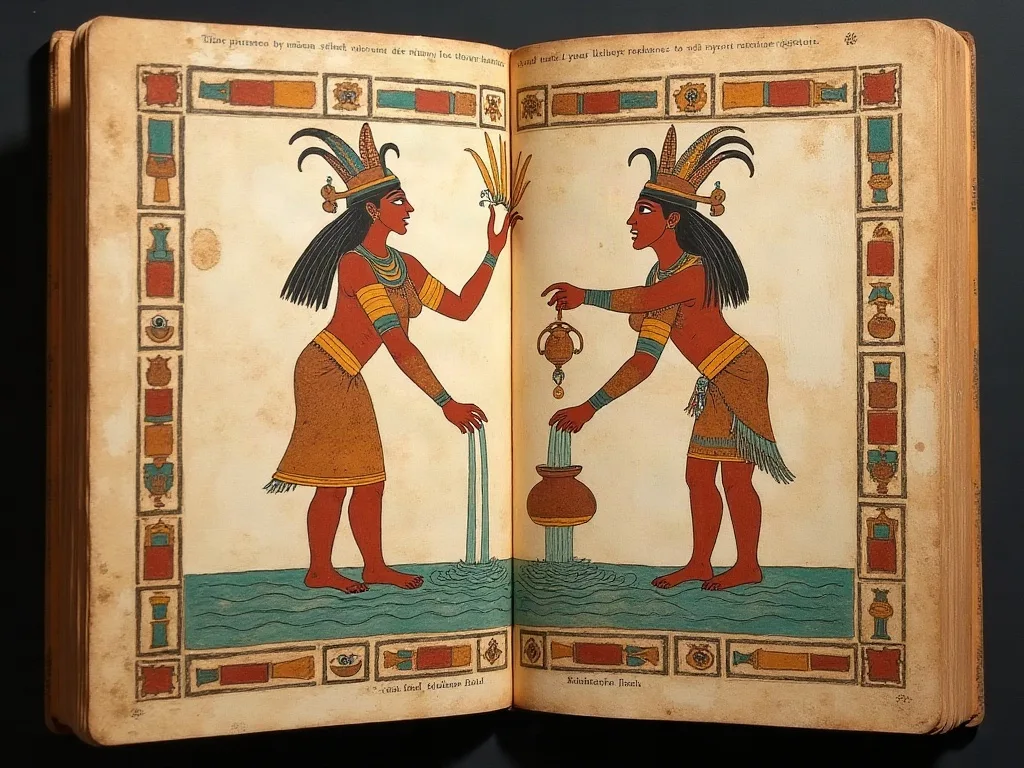
The Codex Madrid shows Ixchel pouring water from a jug or vessel, an image that likely represented the rains. The same codex also depicts her in scenes of flooding and destruction, her presence acknowledging that the same force that nourishes can devastate. This was not contradiction but wholeness. A goddess who governed fertility could not be purely gentle. The earth requires water to grow food, but too much water destroys crops. The woman's womb must open to let life pass, but that opening risks hemorrhage and death.
Some texts suggest that Ixchel brought hurricanes and storms. The Maya experienced the Atlantic hurricane season directly; winds and rains could destroy entire communities. If Ixchel's anger was thought to manifest in these storms, it was because such catastrophes were incomprehensibly powerful, and assigning them to a goddess made them part of the cosmos's order rather than random chaos. A named, known deity could be negotiated with, prayed to, appeased.
Ixchel in Creation and the Hero Twins
The Popol Vuh, the creation epic of the Quiche Maya recorded in the 16th century, includes Ixchel as a figure in the cosmos, though she plays a less dominant role than in earlier Classic Maya sources or in the ritual calendar. The text shows her as mother to deities and as a presence in the supernatural landscape, though the focus falls more on the Hero Twins (Hunahpu and Xbalanque) and their trials in the underworld.
What matters is that Ixchel existed within the same mythic framework. She was part of the generation of deities who existed before the creation of the maize people, the proper humans who would inhabit the fourth world. Her influence persisted through the generations of gods and into the age of humans. This made her an ancestral presence, a grandmother not just to individual women but to humanity itself.
Xibalba, the underworld in Maya belief, is described as a realm of trials, deception, and darkness. The Hero Twins descended there to defeat the lords of that realm. As a goddess linked to the underworld through the nighttime moon and through water (which flowed into cenotes leading downward), Ixchel had her own relationship with Xibalba. She was not conquered by its lords but moved between its realm and the surface world, never entirely belonging to either, mediating between them.
This hybridity made her powerful. She was of the sky (the moon) and of the earth (water, fertility), and of the underworld (the nocturnal journey, the descent into the dark of the new moon). She embodied cycles and transitions, never static, never fully captured by any single realm.
Ixchel's Imagery in Maya Codices and Archaeology
The surviving Maya codices offer the most detailed visual record of Ixchel. The Dresden Codex, the Codex Madrid, and the Codex Paris all include her image. In these painted books, Ixchel appears with consistent iconographic markers: the crescent moon on her forehead or headdress, the serpent motif (sometimes as a headdress, sometimes as a companion), the water symbols, and her aged or matronly appearance.
One striking recurring image shows Ixchel wearing a jaguar skin or seated upon a jaguar. The jaguar was the supreme predator of the rainforest, a creature of night and power. Its association with Ixchel reinforced her link to nocturnal knowledge and hidden forces. In Maya thought, to wear or ride the jaguar was to claim its power and independence.
Archaeological evidence from cenotes and Maya settlements reveals pottery, figurines, and votive offerings bearing Ixchel's image or symbols. At the site of Isla Mujeres (Island of Women), off the coast of Yucatan, a temple complex has been identified as likely dedicated to Ixchel, based on figurines and offerings found there. The island's name itself may derive from the goddess's association with women, reinforcing the deep cultural memory of her presence in that landscape.
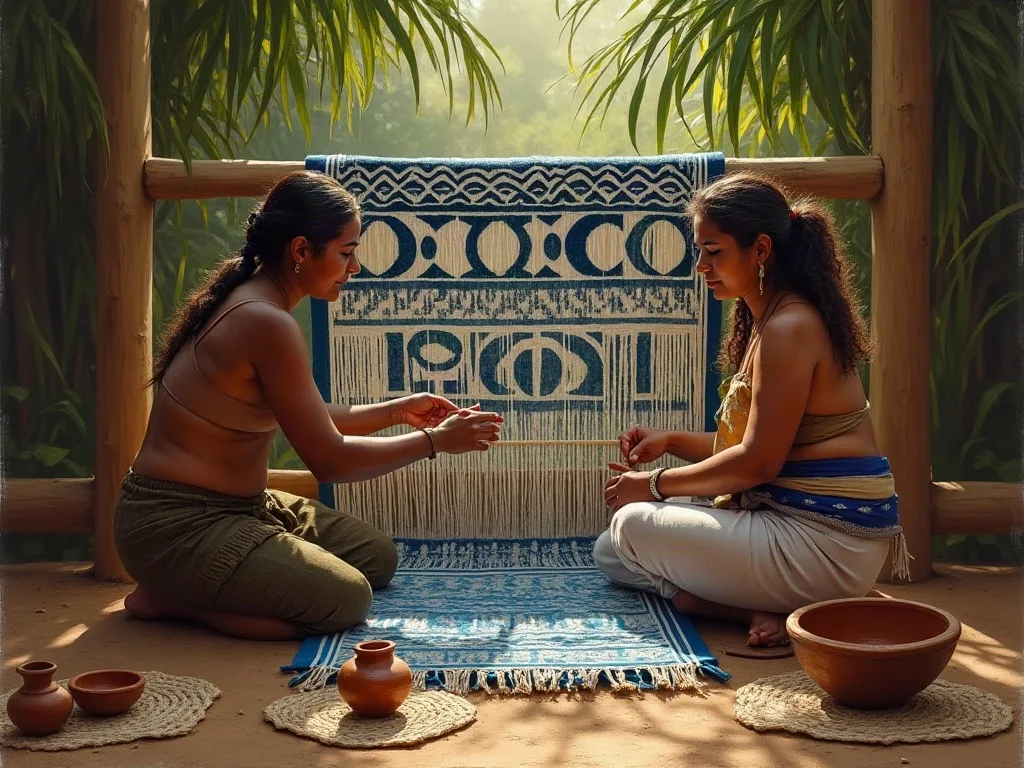
Textile designs, particularly in modern and historic Maya weaving, often incorporated lunar and water symbols connected to Ixchel. The act of weaving itself became sacred through her association, as she was patroness of that craft. When a Maya woman sat at her loom, she was participating in an art form sanctified by the goddess.
Ixchel and the Sacred Calendar
The Maya tracked time through interlocking calendar systems, most famously the 260-day tzolkin and the 365-day haab. Within these systems, Ixchel occupied specific sacred days and time periods that connected her worship to seasonal and ceremonial rhythms. Different day numbers and month positions were governed or influenced by her presence.
The tzolkin, the ritual calendar, was used for divination and to determine auspicious times for ceremonies, births, and planting. Certain day combinations within this calendar were associated with Ixchel and were considered especially potent for rituals related to fertility, childbirth, healing, and women's work. Midwives and healers would consult this calendar to plan their most important interventions.
The correlation between Ixchel's calendar days and women's rituals reinforced the sacredness of female biological processes within Maya society. Menstruation, pregnancy, labor, and nursing were not hidden or shameful but marked as spiritually significant, timed to cosmic rhythms overseen by a powerful goddess. This framework gave women's bodies theological weight.
Ixchel festivals likely occurred at specific times of the year, though the exact dates and rituals have been partially lost to colonization and time. Colonial Maya communities and contemporary Maya people have preserved fragments of these traditions, keeping alive a continuity with pre-Columbian practice that stretches back over a thousand years.
Ixchel's Evolution and Legacy After the Spanish Conquest
The Spanish conquest of the Yucatan in the 16th century brought Christianity and colonial rule. Ixchel did not disappear. Instead, like so many indigenous deities across the Americas, she transformed and found new expression within the imposed Catholic framework.
The Virgin Mary, particularly in her role as mother and protector, absorbed qualities that the Maya had attributed to Ixchel. Many indigenous Mesoamerican communities began to pray to the Virgin under local names and with continued connection to native sacred sites and symbols. The identification was not unconscious syncretism forced upon passive victims but, in many cases, an active Maya choice to preserve and adapt their spiritual heritage.
Colonial records and later ethnographic work document that Ixchel's worship continued in some form in remote communities. The goddess persisted in folk medicine, in midwifery practices, in the deep cultural memory embedded in weaving patterns and oral stories. Contemporary Maya communities in Mexico and Guatemala maintain traditions and prayers that some scholars believe descend from pre-Columbian veneration of Ixchel, though the exact lineage is difficult to trace through the opacity of four centuries.
In modern times, Ixchel has experienced a revival of interest, both among Maya people reclaiming their heritage and among broader audiences fascinated by indigenous American spirituality. She appears in contemporary Maya literature, art, and spiritual practice. Online communities and published works dedicated to her teachings have grown, particularly among people interested in goddess spirituality and indigenous feminism.
This revival carries both authenticity and danger. Some modern interpretations are grounded in genuine cultural knowledge and in collaboration with Maya communities. Others romanticize or appropriate, projecting contemporary Western feminist ideals onto ancient deities rather than allowing them to remain complex and historically specific. The challenge is to honor Ixchel as a figure of real power and presence within her actual cultural and historical context, not as a blank screen for modern desires.
Ixchel and Other Moon Goddesses Across Cultures
Ixchel was not alone in embodying the moon and fertility across ancient world mythologies. The Greek Selene rode her chariot across the night sky. The Egyptian Thoth governed the moon's cycles and wisdom. The Sumerian Nanna-Sin was moon god and divine timekeeper. The Norse Mani drove the moon's chariot, pursued by a wolf.
What made Ixchel distinctive was her explicit link to the female body and to childbirth. While some lunar deities governed the night or time or wisdom in abstract terms, Ixchel's power was viscerally tied to menstruation, pregnancy, labor, and postpartum recovery. She was not a distant cosmic principle but a presence in the room where women suffered and created.
This focus on embodied female experience connects her to other birth goddesses like the Greek Eileithyia or the Hindu Parvati, though the specific cultural contexts and mythological narratives differ profoundly. Each tradition embedded its understanding of gender, body, and divine power into the stories and worship of its goddesses.
The widespread cultural investment in lunar and fertility deities across unrelated civilizations suggests something deeper than coincidence. The moon's visible cycle, the connection between that cycle and women's menstruation, the dependence of agriculture on water and seasons, and the universal mortality risk of childbirth created common religious needs. Different cultures answered those needs differently, but the questions were recognizable across time and space.
Frequently asked questions about Ixchel
Frequently asked questions
Did the Maya worship Ixchel before the Post-Classic period?
Yes, though the evidence from the Classic Maya period (200-900 CE) is less abundant than from later centuries. Moon goddesses appear in earlier Maya texts and imagery, and Ixchel or her predecessors were likely venerated then, but the full elaboration of her mythology and ritual prominence seems to have developed or intensified in the Post-Classic period (1200-1500 CE) in the northern Yucatan. The surviving codices and ethnographic records come mostly from the Post-Classic era.
What was the relationship between Ixchel and other Maya goddesses?
The Maya pantheon was complex, and different deities sometimes blended or appeared in different contexts. Ixchel was distinct as the moon and fertility goddess, but other female deities governed water, maize, and other domains. Some scholars debate whether certain appearances in codices represent Ixchel or related but distinct deities. The boundaries were not always rigid, reflecting how Maya religious thought allowed for multiplicity and transformation.
How did colonization affect the worship of Ixchel?
Spanish conquest disrupted open practice of indigenous religion, but Ixchel's worship did not simply vanish. Many Maya communities incorporated her qualities into devotion to the Virgin Mary or preserved her veneration in hidden or adapted forms. Contemporary ethnographic work suggests continuities of practice, though often syncretic, blending indigenous and Catholic elements. The exact lineages are complex and varied by community and time period.
What archaeological evidence proves Ixchel was real and worshipped?
The codices, particularly the Madrid Codex, contain explicit depictions of a moon goddess with the name glyph and consistent iconography. Pottery, figurines, and votive offerings from Maya sites, especially cenotes and temple complexes, bear her symbols. Isla Mujeres, in particular, shows archaeological evidence of a temple and offerings likely connected to Ixchel worship. Ethnohistorical records from early Spanish contact preserve accounts of Maya rituals and deities that include references to goddess worship connected to childbirth and the moon.
Why was Ixchel always depicted as old, not young?
Age in Maya (and many ancient) cultures conferred wisdom and authority. An ancient moon goddess had witnessed countless cycles, seen births and deaths, understood the patterns of time and water and fertility. This made her counsel reliable and her power rooted in experience rather than youth or beauty. Her age also positioned her as a grandmother figure, a protector and teacher, not a romantic or sexual object, which fitted her role as a healer and midwife rather than a lover goddess.
Ixchel in Contemporary Maya Spirituality and Global Consciousness
Today, Ixchel holds a place both within living Maya communities and in the broader global conversation about indigenous spirituality and goddess religion. For some contemporary Maya people, reconnecting with Ixchel is an act of cultural recovery and spiritual authenticity after centuries of colonial erasure. For others outside Maya cultures, Ixchel represents an example of how ancient societies honored female power and grounded spirituality in natural cycles and women's embodied experience.
This modern attention carries responsibility. To invoke Ixchel authentically means to study the actual historical record, to listen to Maya voices and knowledge holders, and to avoid imposing contemporary Western categories onto a deity and tradition that emerged from a radically different worldview. It means recognizing that Ixchel was not a "proto-feminist" goddess by modern standards, but a divine figure who occupied a particular role in a particular culture's understanding of cosmos and survival.
What remains true across time is that Ixchel embodies something powerful: the idea that the processes of women's bodies, the cycles of the moon, the flow of water, and the continuation of human life are sacred, divine, and central to cosmic order. Whether through direct historical continuity or through contemporary reimagining, that idea continues to speak to people who seek spirituality grounded in nature, in the female body, and in the cycles of time and renewal.
Read the full book
Want the whole story?
The complete edition is an instant PDF download here, with a paperback on Amazon for selected titles.
Mayan
The Mayan Mythology Book: Hunahpu, Xbalanque, Kukulkan and the Sacred Stories of the Rainforest Mathematicians
The Popol Vuh, Xibalba, and the Cosmos Calculated in 13s and 20s
The Hero Twins descend to Xibalba. Kukulkan returns at equinox. Itzamna writes the first books. The complete mythology of the Maya who calculated the cosmos and left us the Popol Vuh.
More from Mayan
All articles
Mayan
The Mayan Calendar System: Tzolk'in and Haab' Explained
The Mayan calendar tracks time across multiple overlapping cycles: the 260-day Tzolk'in and the 365-day Haab' align every 52 years in a sacred pattern. Discover how the Maya read the cosmos in numbers.
Mayan
Bloodletting Rituals: Sacred Sacrifice in Mayan Religion
Mayan bloodletting rituals were not acts of violence but profound spiritual transactions. Kings pierced their own bodies to feed the gods, sustain the cosmos, and commune with ancestors in ceremonies that shaped civilizations for over two thousand years.

Mayan
The Maize God: Symbol of Life and Resurrection in Mayan Mythology
The Maize God embodies the Mayan cycle of death and rebirth through corn, the lifeblood of Mayan civilization. Discover how this deity shaped creation myths, ritual, and the Mayan understanding of existence itself.
Mayan
Hunahpu and Xbalanque: The Hero Twins Who Defeated the Lords of Death
Discover how the Hero Twins outwitted the Lords of Xibalba and reshaped the Maya cosmos. Their triumph over death itself becomes the foundation of human existence.