
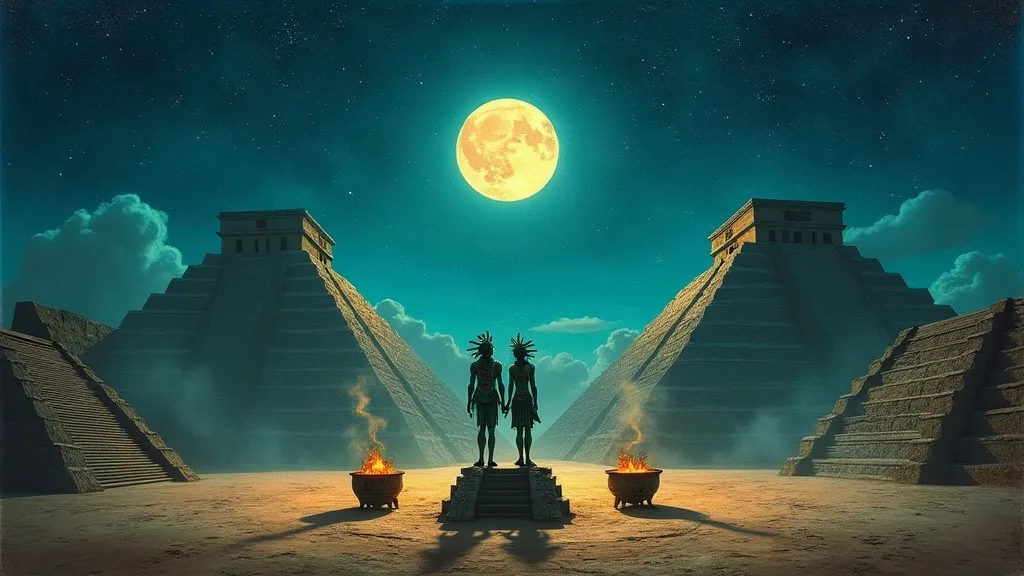
Hunahpu and Xbalanque: The Hero Twins Who Defeated the Lords of Death
Discover how the Hero Twins outwitted the Lords of Xibalba and reshaped the Maya cosmos. Their triumph over death itself becomes the foundation of human existence.
Contents
The Sons Born from a Severed Head
The story begins not with a mother, but with a death. Hun Hunahpu, the father who would never meet his sons, played ball against the Lords of Xibalba, the dark realm beneath the earth. These were not games for sport or glory. In the Mesoamerican ballgame, the stakes climbed toward the cosmos itself. Hun Hunahpu lost. The Lords of Xibalba killed him and placed his severed head in a calabash tree.
The head still spoke. One day, a young woman named Xquic (Lady Blood) approached the tree, curious about the skull that hung there. The head spat into her palm, and from that moment forward, she carried a child. She fled to the surface world, where she gave birth to twins: Hunahpu and Xbalanque.
This origin marks them as children of both the living world above and the dead below. Their father's defeat echoes in their blood. Their mother's courage runs deeper still.
The twins grew in hiding, raised by their grandmother while their uncle, Vucub Hunahpu, lived a careless life. When Hunahpu and Xbalanque became young men, they played the same ballgame that had claimed their father's life. They were brilliant. They won every match. Their fame reached even into Xibalba.
The Lords of the underworld grew angry. They sent messengers to demand that the twins descend and play against them. The twins accepted. They knew what had happened to their father. They went anyway.
The Trials of the Underworld
Xibalba was no palace. The ancient Maya text the Popol Vuh describes it as a realm of filth, pain, and relentless torment. The Lords who ruled it were personifications of disease, blood, pus, and agony. One pair was called Xiquiripat and Cucbatz, the flying demons who brought hemorrhage and blood loss. Another was Ahalgiyana and Ahalpuh, demons of pus who made flesh rot. Then came Ahalmez and Ahaltocob, demons of jaundice. The list went on, a catalogue of every suffering the ancient Maya knew.
The twins were taken to a series of trials, each designed to kill them. First came the House of Gloom, where they were given cigars to smoke and torches to carry through the night. The rule was simple: the torches and cigars must burn until sunrise without being consumed. Hunahpu and Xbalanque outsmarted the test. They used fireflies, insects that glow but do not burn. They used the tailfeathers of a macaw that glowed orange. When dawn came, the cigars and torches appeared whole. The Lords were confounded.
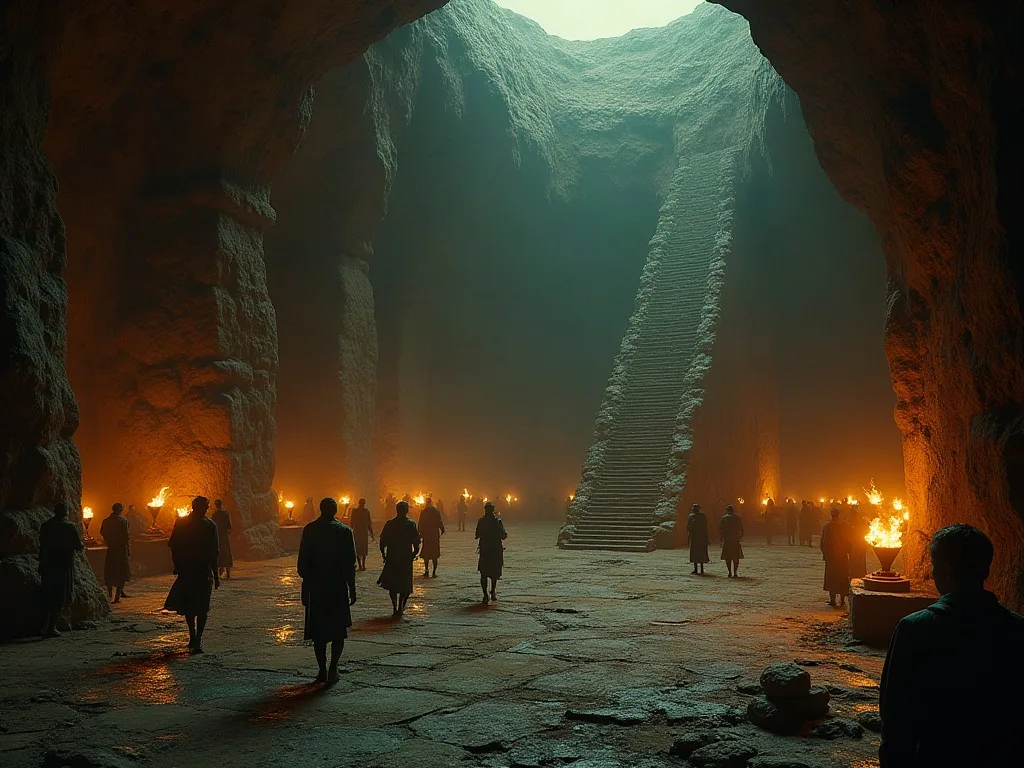
Next came the House of Cold, where snow fell so thick that it froze everything. The twins survived by building a fire. Then the House of Jaguars, where hungry beasts prowled the darkness. Hunahpu and Xbalanque threw bones to the animals instead of their own flesh, and the beasts ate and slept, leaving them unharmed. Trial after trial unfolded: the House of Fire, where flames consumed everything; the House of the Bats, where creatures with obsidian wings sliced through darkness hunting blood.
But it was the ballcourt itself that nearly ended them both.
The Ballcourt and the Sacrifice
The Lords commanded them to play. They took their place on the ballcourt of Xibalba, Hunahpu and Xbalanque facing opponents whose power ran deeper than flesh. During the game, a death bat emerged from the darkness. It severed Hunahpu's head. The twins had won their first trials, but they had not won the game.
Xbalanque thought quickly. He gathered one of the gourds that grow in the ballcourt, the round fruit with its hard shell, and used it to replace his brother's head. The moment the head touched his shoulders, Hunahpu returned to his senses. The Lords believed the twins had been defeated at last. They took the head and placed it on a spike on the ballcourt as trophy, just as they had done with their father.
But Hunahpu and Xbalanque had not finished their game.
Resurrection and Deception
The twins pretended to accept their defeat. They spoke to the Lords with calm voices and asked a simple favor: let them see how the ballcourt would look if their heads were mounted as trophies. The Lords, tasting victory and drunk on arrogance, agreed. They brought the head from the spike. In that moment, Hunahpu seized his own head back, placing it on his shoulders where it belonged. The skull on the spike transformed into a calabash gourd, a trick born from the very magic of creation.
The Lords realized they had been outwitted. Rage consumed them. They called for the twins' blood, but Hunahpu and Xbalanque were already speaking words of power. They told the Lords of Xibalba something that terrified them more than any weapon.
"We are not like our father," one of the twins declared. "We cannot be killed here. We were born from the underworld, yes. But we return to the world above."
The twins told the Lords that if they wished to truly understand their power, the Lords must die first. Then the twins would bring them back to life. The Lords, curious and foolish, agreed. Hunahpu and Xbalanque killed them. Xiquiripat and Cucbatz fell. Ahalgiyana and Ahalpuh crumbled to dust. One by one, the Lords of pain, disease, and suffering died.
But when Hunahpu and Xbalanque attempted to bring them back, the magic failed. They had spoken truly: the Lords could not be resurrected. Xibalba had been defeated not through battle but through trickery, and the underworld would never again hold dominion over the Hero Twins.
The Ascension and the New Creation
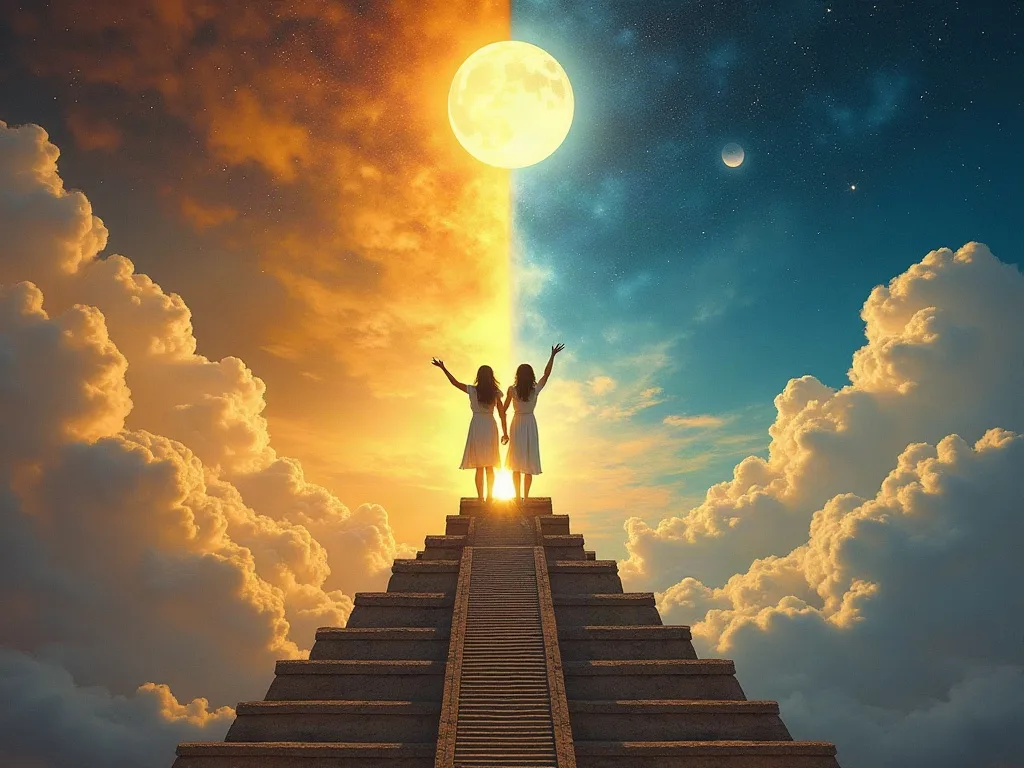
Having conquered death, Hunahpu and Xbalanque rose from Xibalba. The Popol Vuh tells us that they ascended into the sky itself, becoming the sun and the moon. Hunahpu became the sun (the day sun), and Xbalanque became the full moon. This transformation was not metaphorical. In the Maya calendar and cosmology, the Hero Twins' triumph was the triumph that allowed the world itself to exist.
The significance of this ascension cannot be overstated. The ancient Maya saw in the daily journey of the sun across the sky the eternal reenactment of the twins' victory. Each night, the sun descended into the underworld. Each dawn, it was reborn. Death was not the end; it was transformation.
But Hunahpu and Xbalanque left their earthly vessel behind. Hun Hunahpu, their father, was also raised. He became a god of maize and agriculture. The cycles of planting, growth, death, and harvest mirrored the cycles of the twins themselves: descent and return, death and resurrection, the eternal renewal of life through sacrifice and rebirth.
The Symbolism of the Twin Myth
The Hero Twins story is not merely entertainment or history. It is cosmology. In Mesoamerican thought, Hunahpu and Xbalanque represented the paradoxes that governed creation itself.
They were mortal and divine. They were clever and physically vulnerable. They won through wisdom, not strength. They could die and yet could not be killed. They descended into the worst darkness that existence could offer and emerged transformed into the very heavens. In their story, the ancient Maya encoded fundamental truths about how they understood the world.
The ballgame itself held sacred meaning. It was not merely sport but a metaphor for cosmic struggle, the eternal contest between order and chaos, life and death, the world above and the world below. When the twins defeated the Lords at the ballcourt, they defeated the forces of entropy itself. They ensured that creation would continue.
The defeat of the Lords of Xibalba also served a practical religious function. The ancient Maya rituals of bloodletting and sacrifice were understood as continuation of the twins' work. When a Maya ruler or priest let blood, or when captives were sacrificed at the ballcourt, these acts were not separate from the Hero Twins' story. They were reenactments of it. The sacrifice continued the cosmic work the twins had begun.
Echoes Across Mesoamerican Cultures
The Hero Twins story belongs primarily to the K'iche' Maya, whose account was preserved in the Popol Vuh, a text written down after the Spanish conquest but based on far older oral traditions and hieroglyphic records. However, similar tales circulate among other Maya groups and throughout Mesoamerica more broadly.
Other cultures of ancient Mexico and Central America told parallel stories of twins battling the underworld or of divine youths triumphing over impossible odds. The Aztec god Quetzalcoatl in some versions descended to Mictlan, the Aztec underworld, on his own quest of transformation. The broader Mesoamerican worldview imagined a cosmos locked in eternal struggle between opposing forces. The twins were merely the most vivid expression of that struggle.
Archaeological evidence supports the antiquity of the ballgame narrative. Maya stelae and murals from the Classic Period (roughly 250-900 CE) depict scenes that parallel the Popol Vuh account. Hieroglyphic texts reference the ballgame and the underworld, suggesting that the myth was ancient long before it was written down by K'iche' scribes.
The Twins in Classical Maya Art and Architecture
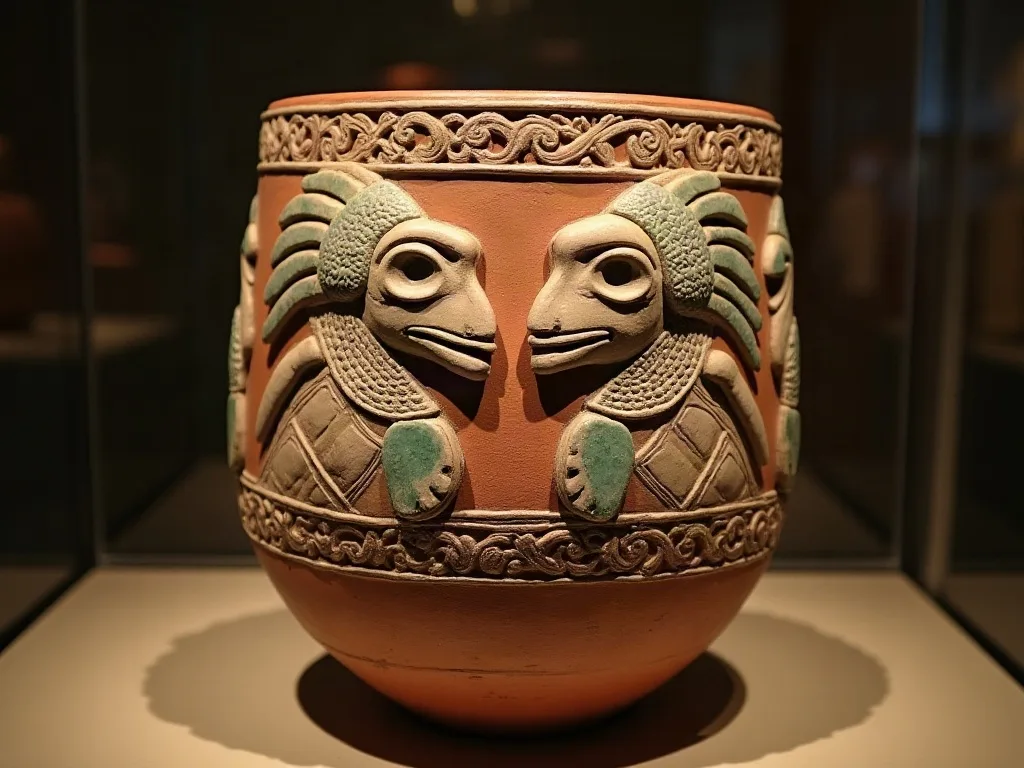
During the height of Maya civilization, from roughly the 3rd to the 10th century CE, images of Hunahpu and Xbalanque appeared on ceramic vessels, stone carvings, and architectural ornament. Maya artisans depicted them as young men in jade armor, often holding trophy heads or standing triumphant in the ballcourt. Some scenes show them preparing for trials; others show them descending into the gaping mouth of Xibalba, a monstrous visage carved into stone.
These images were not merely decorative. They adorned tombs, temples, and the homes of nobles. Placing the Hero Twins' image in a tomb meant the deceased would follow their path: descent and return, death and resurrection. The image was a promise that the cosmos operated on principles the twins had already proven. Death was not final.
The Twins' Legacy in Colonial and Modern Maya Culture
When Spanish conquistadors arrived and systematized the conquest of Mesoamerica, the Hero Twins story survived. The Popol Vuh was nearly lost entirely, but fragments were preserved. In the 18th century, a Spanish friar named Francisco Ximénez discovered a copy and transcribed it, preserving the K'iche' text alongside a Spanish translation. Without his careful work, one of humanity's greatest mythic texts would have vanished.
Modern Maya communities continue to honor Hunahpu and Xbalanque in ritual and story. The ballgame itself persists in modified forms across the region. The twins remain central to Maya spiritual understanding, even in communities that have adopted Christianity. In syncretized traditions, the twins sometimes merge with Christian saints, yet retain their essential character as figures of transformation and triumph over death.
The Popol Vuh and Primary Sources
The Popol Vuh is the foundational text for understanding the Hero Twins. Written in K'iche' Maya language probably in the mid-16th century by Maya scribes using the Latin alphabet, it draws on oral traditions and earlier hieroglyphic texts that are now lost. The text survived in a single Colonial-era manuscript, transcribed by Francisco Ximénez. Later copies and translations have proliferated, each offering slightly different emphases and interpretations.
Modern scholars like Dennis Tedlock, Michael Coe, and Christensen have devoted careers to analyzing the Popol Vuh and its context. Tedlock's translation is praised for preserving the poetic voice of the original. Coe's work connecting the written text to Maya art and archaeology has deepened understanding of how pre-Columbian Maya conceived the twins' story. Archaeological evidence from sites like Copan and Palenque confirms that ballgame scenes and references to the underworld journey were central to Maya religious thought centuries before the Popol Vuh was written down.
The Hero Twins story is not a single fixed narrative. Regional variations, local emphases, and interpretive layers have accumulated over centuries. Yet the core remains constant: two clever youths descend into death, outwit the forces of darkness through intelligence and magic, and return transformed to ensure the cosmos continues. That pattern, that victory, echoes through Mesoamerican culture and beyond.
Frequently Asked Questions About Hunahpu and Xbalanque
Frequently asked questions
Why did the Hero Twins play the ballgame if they knew it was dangerous?
The twins inherited the ballgame from their father Hun Hunahpu, whose defeat had echoed through their entire lives. Playing was not optional; it was their destiny. Moreover, the Popol Vuh suggests the twins possessed knowledge and magical ability their father lacked. They descended not as victims but as agents carrying out a cosmically necessary task: defeating the Lords of Xibalba so that creation could continue. In Maya thought, such trials were not obstacles to avoid but sacred duties to fulfill.
What does it mean that Hunahpu and Xbalanque became the sun and moon?
In Maya cosmology, the sun and moon were not distant objects but active divine forces that governed the structure of reality itself. By becoming sun and moon, the twins achieved immortal presence in the sky. Their daily journey across the heavens reenacted their victory over death each day. Every sunrise was a resurrection; every sunset was a controlled descent into the underworld from which return was guaranteed. The twins did not leave the world; they became its fundamental rhythm.
How old was the Hero Twins story when it was written down in the Popol Vuh?
The Popol Vuh was committed to writing in the 16th century, but the story itself is vastly older. Archaeological evidence shows that ballgame imagery and underworld mythology were central to Classic Maya culture from at least the 3rd century CE onward, and likely much earlier. Scholars estimate the narrative traditions behind the Popol Vuh may reach back 1,500 years or more, passed down through oral transmission before being encoded in hieroglyphic texts, and finally preserved in alphabetic script after the Spanish conquest.
Did Maya people actually practice ritual ballgames connected to the Hero Twins myth?
Yes. Ballgame imagery dominates Maya art, architecture, and hieroglyphic texts. The ancient Maya built elaborate stone ballcourts at major cities. Sculpted panels and ceramic vessels depict ballgame scenes with elaborate ceremony. Hieroglyphic texts confirm that ballgames were tied to ritual, sacrifice, and cosmic reenactment. The sport was not merely recreation; it was a sacred reenactment of the mythological struggle between order and chaos, life and death, echoing the Hero Twins' victory over Xibalba.
Are there other Mesoamerican cultures with similar twin or underworld myths?
The ballgame and underworld descent appear in cultures across Mesoamerica. The Aztecs had extensive underworld mythology, though their primary underworld was Mictlan, ruled by Mictlantecuhtli. The Zapotecs and Mixtecs had their own variant narratives. However, the Hero Twins story as told in the Popol Vuh is distinctly K'iche' Maya in its detailed form. What unifies Mesoamerican cultures is the shared understanding that the cosmos operates through cyclical struggle between opposing forces, and that sacrifice and ritual reenactment maintain cosmic order.
The Twins as Model of Maya Philosophy
To understand Hunahpu and Xbalanque is to understand something fundamental about how the ancient Maya experienced the world. They did not see death as an ending or a defeat to be mourned passively. They saw it as a necessary transition, a descent that preceded transformation and return.
The twins embodied virtues the Maya admired: intelligence over brute force, humility masking deeper confidence, cooperation between paired opposites. They won not through invincibility but through cleverness, magic, and a deep understanding of how their enemy thought. They succeeded because they were willing to die, because they knew that death itself could be outsmarted.
In this, the Hero Twins story carries wisdom that transcends its original context. It teaches that darkness is not permanent, that apparent defeat can contain hidden victory, and that transformation is always possible for those clever and brave enough to face the deepest fears.
Read the full book
Want the whole story?
The complete edition is an instant PDF download here, with a paperback on Amazon for selected titles.
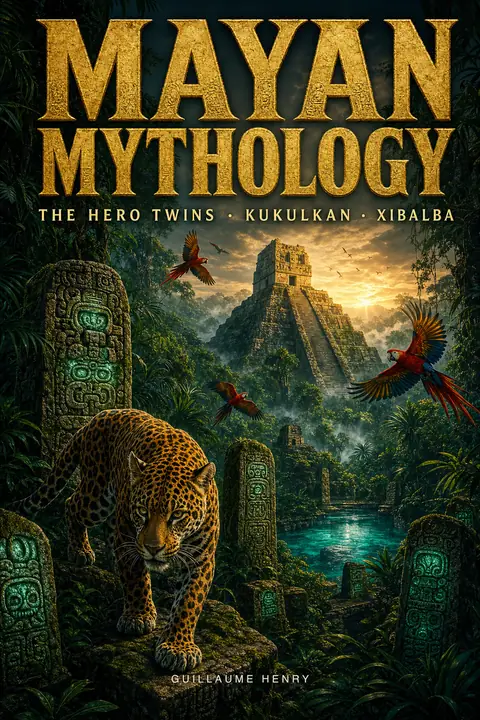
Mayan
The Mayan Mythology Book: Hunahpu, Xbalanque, Kukulkan and the Sacred Stories of the Rainforest Mathematicians
The Popol Vuh, Xibalba, and the Cosmos Calculated in 13s and 20s
The Hero Twins descend to Xibalba. Kukulkan returns at equinox. Itzamna writes the first books. The complete mythology of the Maya who calculated the cosmos and left us the Popol Vuh.
More from Mayan
All articles
Mayan
Ixchel: Goddess of the Moon and Childbirth in Maya Mythology
Ixchel ruled the night sky and the sacred threshold where life enters the world. As the aged moon goddess and divine midwife of the Yucatan, she embodied both the gentleness of birth and the ferocity of storms.

Mayan
The Mayan Calendar System: Tzolk'in and Haab' Explained
The Mayan calendar tracks time across multiple overlapping cycles: the 260-day Tzolk'in and the 365-day Haab' align every 52 years in a sacred pattern. Discover how the Maya read the cosmos in numbers.
Mayan
Bloodletting Rituals: Sacred Sacrifice in Mayan Religion
Mayan bloodletting rituals were not acts of violence but profound spiritual transactions. Kings pierced their own bodies to feed the gods, sustain the cosmos, and commune with ancestors in ceremonies that shaped civilizations for over two thousand years.

Mayan
The Maize God: Symbol of Life and Resurrection in Mayan Mythology
The Maize God embodies the Mayan cycle of death and rebirth through corn, the lifeblood of Mayan civilization. Discover how this deity shaped creation myths, ritual, and the Mayan understanding of existence itself.