
Spider Woman: Hopi Creator Goddess and Weaver of Life
Spider Woman shapes reality itself in Hopi cosmology, weaving worlds into being through song and sacred thread. Discover how the Hopi deity embodies creation, craft, and the threads that bind all life together.
Contents
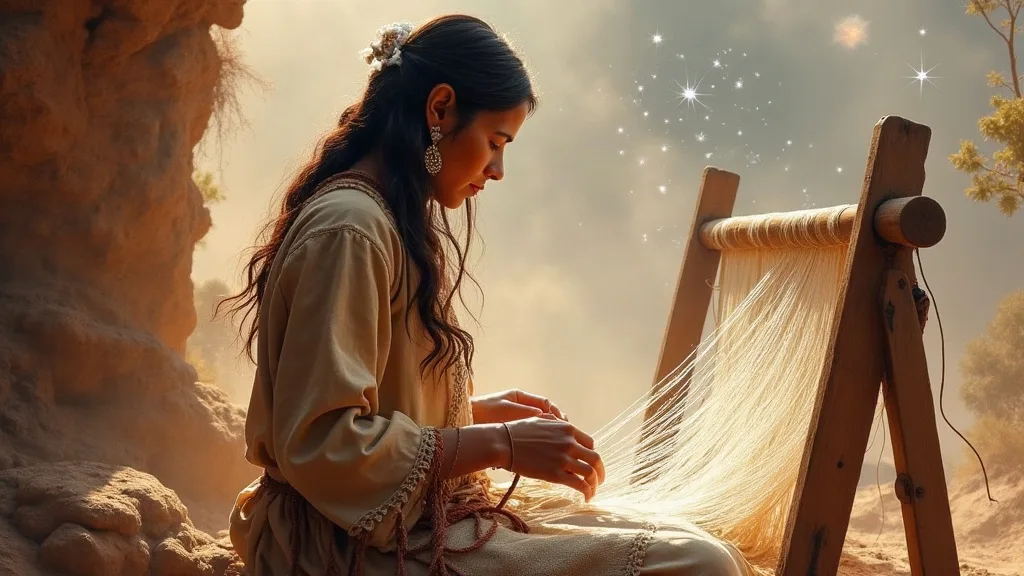
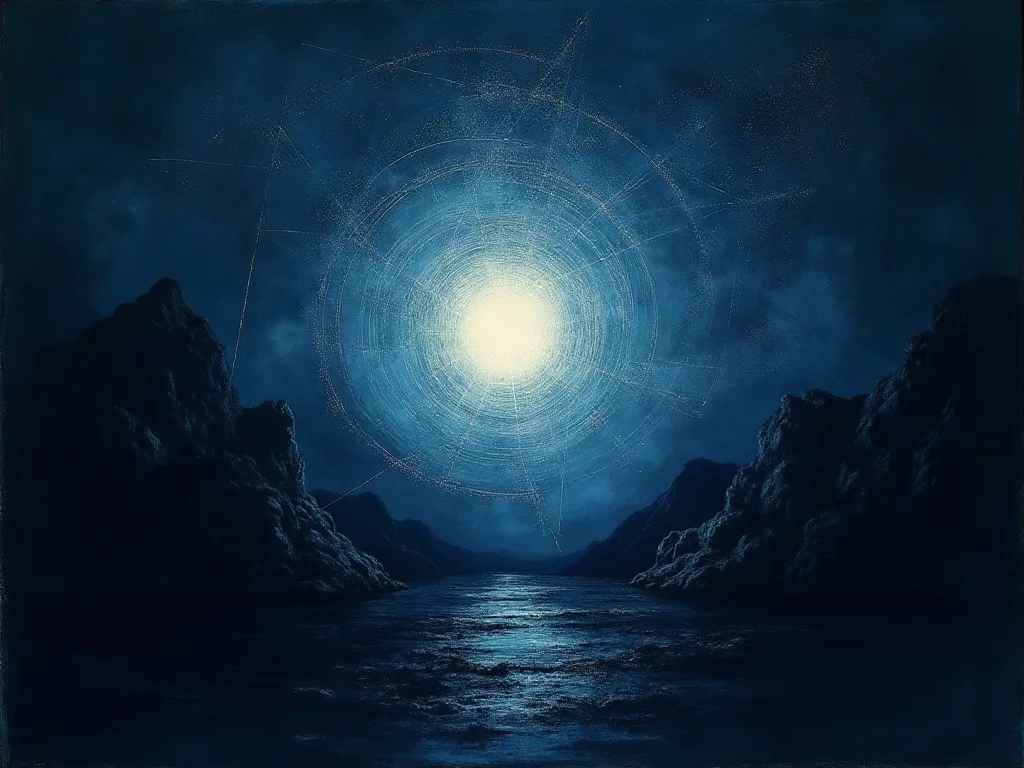
In the beginning, there is darkness. No earth, no sky, no living thing. Into this void moves Spider Woman, called Kokyangwuti in the Hopi language. She hums. She spins. From the vibrations of her voice and the threads of her loom, the first world takes shape. Mountains rise. Water gathers. Light breaks through. This is not metaphor in Hopi understanding; this is the literal architecture of existence. Spider Woman: Hopi Creator Goddess stands at the center of one of North America's most coherent and poetic creation cosmologies, a figure whose influence ripples through every Hopi ceremony, every woven basket, every act of deliberate creation in the pueblos of northeastern Arizona.
The Hopi people, whose name means "peaceful ones," have maintained their spiritual traditions without major outside interruption for over a thousand years. At the heart of their worldview sits this ancient goddess, sometimes called Taiowa's companion, sometimes the Great Weaver. She is not distant or abstract. She creates not through divine decree alone, but through the collaborative act of weaving, singing, and conscious will. In Hopi thought, Spider Woman's method becomes the template for all creative work: intention, patience, repetition, and the patient interlocking of many small threads into something whole and alive.
The Creation Song: How Spider Woman Wove the Worlds
The Hopi emergence story, preserved in oral tradition and recorded in anthropological texts like Frank Waters' "Book of the Hopi," begins with Spider Woman's awakening to consciousness in the darkness of the First World. She exists alone, aware but without form. She recognizes that her thoughts, her songs, her very vibrations can shape reality. So she begins to sing.
Her song is not abstract prayer. It is a technological act. As she sings, she pulls threads from her own being, extending them outward in patterns. These threads congeal into substance. The vibrations crystallize. Her loom becomes active, and from this weaving emerges first the sky, then the earth, then all living creatures: birds, insects, animals, and finally humans, the last and most fragile creation.
The Hopi cosmology unfolds not in one act but in four worlds or epochs. In each world, Spider Woman plays a central role. Humanity's task in each epoch is to live according to the Law of Maat, the Hopi ethical principle of balance and righteous living. When humans forget this law, the world falls into chaos. Spider Woman sometimes allows that world to be destroyed, and leads the survivors to the next one. In the emergence from the Third World to the Fourth (our present world), it is Spider Woman who guides the people up through the reed, teaching them the songs and ceremonies necessary to maintain the balance between the physical and spiritual realms.
This is not a myth of passive creation, where humans wait for divine gifts. It is a myth of responsibility. Spider Woman creates humans knowing they will be tested, knowing they will sometimes fail. Her loom continues to weave even in darkness. The threads bind not just matter but obligation.
The Weaver's Art: Symbol and Sacred Technology
In Hopi culture, weaving is not separate from spirituality; it is spirituality made visible. Spider Woman's loom is the cosmic loom, and every Hopi weaver, every basket maker, every person engaged in the deliberate creation of something useful or beautiful is participating in her work. This is not romantic poetry imposed by outsiders; it is the lived understanding of Hopi artisans.
The Hopi practice several distinct textile arts, each with its own ceremonial and practical significance. Katsina masks are decorated with specific patterns that honor Spider Woman's original designs. Katsina dolls, carved figures that teach children about spirits and the seasonal cycle, are given to young people during ceremonies. The patterns on these pieces, the colors chosen, the materials selected (often cotton, which requires its own careful cultivation and preparation), all reflect the creator goddess's original act of intentional craft.
When a Hopi weaver sits at her loom, she is not merely producing a utilitarian object or an art piece for sale. She is consciously engaging in the act of creation as Spider Woman modeled it. The alignment of the warp threads, the patience required to work through thousands of passes of the shuttle, the attention to pattern and proportion, the choice of dyes and materials; all of this is prayer made manifest. A weaver might spend months on a single textile, and that investment of time and attention is itself a form of ceremony.
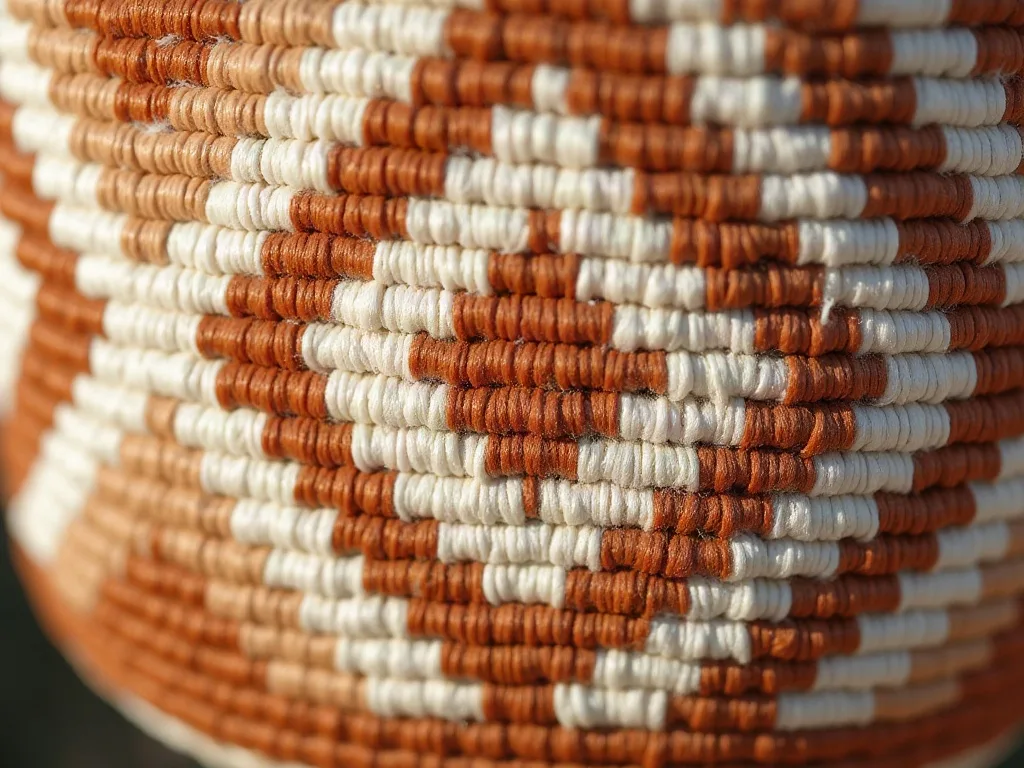
The Hopi also practice a form of basket weaving using yucca fiber and other plant materials. These baskets often feature geometric designs that carry symbolic meaning. Spirals represent emergence and the spiral of life. Lightning bolts represent divine communication. Patterns that close on themselves represent the completed cycle, the way Spider Woman's threads always loop back and reconnect.
This understanding of weaving as sacred technology extends to the spider itself. Real spiders are respected and often left undisturbed. They are understood as visible reminders of the creator goddess at work, spinning their webs in the spaces of human dwellings, catching food, creating structures of astonishing precision with their bodies and their instinct. To kill a spider in a Hopi home would be disrespectful, an act of ingratitude toward the creator.
The Multiple Worlds: Spider Woman and the Cycles of Destruction and Renewal
Hopi cosmology teaches that the current world, the Fourth World or Tuwaqachi, is not eternal or guaranteed. Like the three worlds before it, it too will eventually fall into imbalance and end. This is not presented as tragedy but as the structure of reality. Each world has its lifespan. Each epoch allows humanity to learn. Spider Woman oversees these transitions.
In the emergence stories, each transition happens differently. In one version, Spider Woman aids the survivors of the Third World by weaving a great web strong enough to carry the people upward to safety. In another, she teaches them the songs needed to find their way through the waters that separate worlds. The constant element is her participation: she does not simply destroy; she provides escape routes, she teaches what must be learned, she ensures continuity.
Some Hopi elders speak of five or six worlds rather than four, and the exact cosmological structure varies between different Hopi villages and different families. But the principle remains constant: Spider Woman's role as the guardian of creation across multiple epochs structures Hopi understanding of time itself as cyclical rather than linear. The Fourth World may fall. The Fifth World may come. What matters is maintaining right relationship with the natural and spiritual worlds during whatever epoch we inhabit.
This cyclical understanding profoundly shaped Hopi responses to colonization, Christianity, and the pressures of modernity. If worlds end and are remade, then no single historical moment is final. Traditions can be preserved in secret, practice continues, and eventually the right conditions for open practice return. This is not naive optimism but a cosmological framework that offers both spiritual resilience and a realistic assessment that change is inevitable.
The Dual-Faced Aspect: Creation and Destruction
Like many creator deities across world religions, Spider Woman contains within herself both creative and destructive potential. She builds worlds and permits their destruction. She nurtures life and enforces its limitations. This is not a contradiction in Hopi thought but the natural balance of existence.
In some versions of the emergence story, Spider Woman is paired with or serves alongside Tawa, the Sun Spirit, who represents the masculine creative force. Together they accomplish creation. Tawa provides the life-giving energy of light and heat; Spider Woman provides the weaving, the ordering, the structure that gives that energy form and meaning. Their partnership reflects a fundamental Hopi principle: creation requires both masculine and feminine principles working together.
The destructive aspect of Spider Woman appears most clearly in stories about the end of worlds. When humans become corrupted, when they forget the law, when they turn toward greed or violence, Spider Woman may withdraw her protection. The world falls into flood, fire, or ice. But even in destruction, her hand is not random or cruel; it is corrective. The survivors emerge chastened and renewed, ready to rebuild according to better understanding.
This duality also appears in Spider Woman's relationship with witchcraft and harmful magic. In some Hopi traditions, there are witches who pervert the principles of creation, who use their knowledge of how to make things happen for selfish or destructive purposes. Spider Woman's power is the same power they misuse; the difference is in intention and allegiance. A creator goddess who has no connection to destructive power would be incomplete, less real.
Spider Woman in Hopi Ceremony and Contemporary Practice
The living presence of Spider Woman in Hopi religious practice cannot be overstated. She appears in multiple ceremonies throughout the Hopi calendar, though not always in the same form or under the same name across different villages and ceremonial lineages. Some of the most sacred ceremonies are closed to outsiders, and specific details about Spider Woman's role are restricted knowledge held by initiated members of kivas (ceremonial underground chambers).
What can be said publicly is that Spider Woman is honored in the Wuwuchim and Soyal ceremonies, major winter ceremonies that occur in November and December respectively. These ceremonies mark the transitions of seasons and the continuation of the world. In Soyal particularly, which focuses on the winter solstice and the renewal of the sun's strength, Spider Woman is invoked in songs and prayers. Young boys are initiated into manhood partly through gaining knowledge of Spider Woman's role in creation and their own responsibility to maintain cosmic balance.
The Katsina ceremonies, which run from winter solstice through July and occupy a central place in Hopi spiritual and social life, feature masked dancers representing various katsinas (spirits or ancestors). While not all katsinas are directly identified with Spider Woman, many of the teachings and songs that accompany these dances reference the creator goddess. Katsinas teach children about proper behavior, seasonal timing, and the reality of the spiritual world through concrete, vivid, sometimes humorous enactment. Spider Woman's principles are embedded in these teachings.
In contemporary times, Hopi artists and activists draw explicitly on Spider Woman as a symbol of cultural resilience and creative continuity. The phrase "Spiderwoman's descendants" has become a rallying point for Native American women artists and writers. Indigenous creators invoke Spider Woman as the model for their own work: patient, intentional, rooted in tradition yet responsive to the present moment. The American Indian artist and writer Jaune Quick-to-See Smith has created works explicitly titled in reference to Spider Woman. Native American women's art collectives have taken her name as their own.
This contemporary invocation honors something real in the original tradition: Spider Woman is fundamentally a figure of artistic agency and conscious creation. She does not create passively or through accident. She acts with intention, knowledge, and persistent effort. For indigenous people navigating colonization, cultural suppression, and the ongoing need to maintain traditions under pressure, Spider Woman offers a powerful model.
Spider Woman and Other Native American Traditions
While Spider Woman is most fully developed in Hopi religion, spiders and spider figures appear across Native American mythologies, suggesting ancient and possibly shared origins of these ideas. The Navajo tradition, close neighbors to the Hopi and with significant cultural exchange between the two peoples, has Spiderwoman (sometimes Ts'its'naako) as a creator figure who taught the Navajo people weaving. In Navajo stories, Spiderwoman literally invented the loom and taught humans how to use it, after which weaving became central to Navajo culture and economy.
The Anishinaabe peoples of the Great Lakes region speak of Spiderwoman in their Midéwiwin tradition as a teacher and protector. In Menominee mythology, the creator takes the form of a great spider. These similarities across geographically separated cultures suggest either ancient shared traditions or the parallel development of similar symbolic associations between spiders (real creatures of intricate artistry and tangible presence) and the creative principle itself.
The details differ significantly between traditions. Hopi Spider Woman is fundamentally cosmic; she creates the physical world itself. Navajo Spiderwoman is more focused on teaching human craft. But the core insight remains: spiders are models of creation, and the deity who teaches weaving teaches also the fundamental principle of how existence is made.
Some scholars suggest that spider imagery in North American indigenous traditions may derive from Mesoamerican sources, particularly from Aztec or Mayan religious ideas about Itzpapalotl, the obsidian butterfly, or from other Mesoamerican divine spiders. Others argue for independent development or for transmission routes through trade and cultural contact that predate written history. The exact origins remain uncertain, but the significance of Spider Woman as a major cosmological figure in the Southwest is beyond question.
Sacred Geometry and the Pattern of Creation
Hopi understanding of creation includes a sophisticated spatial and geometric dimension. Spider Woman's weaving creates not just form but order, proportion, and the right relationships between things. This shows up in Hopi art, architecture, and the layout of villages themselves.
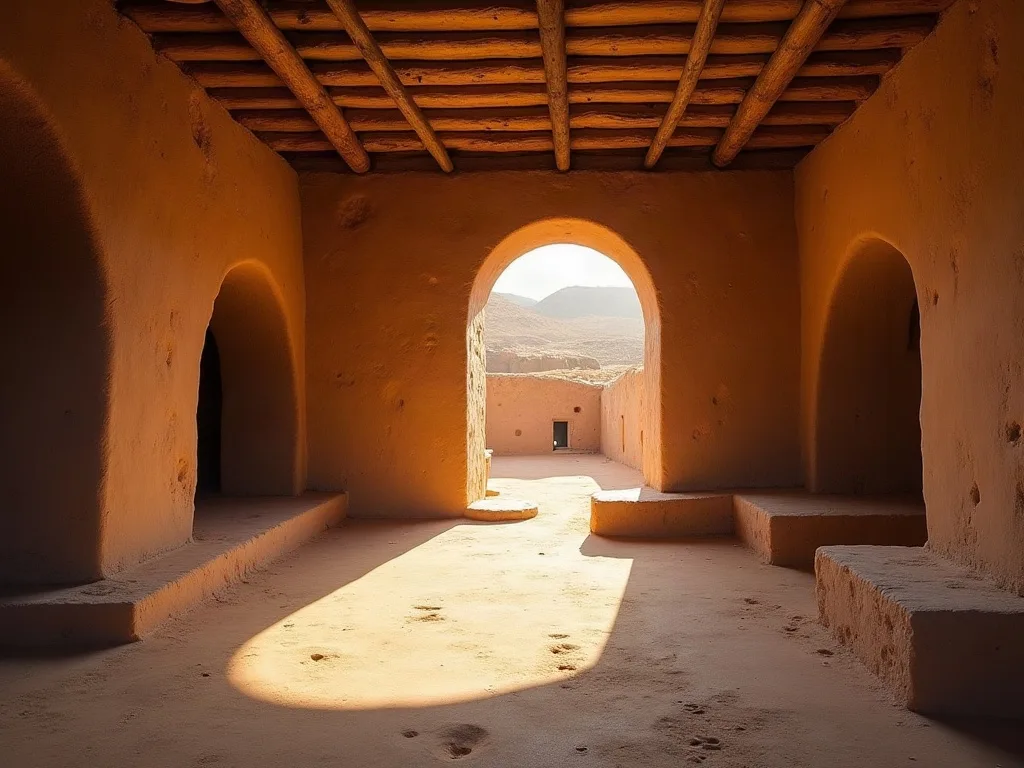
Hopi villages are traditionally built in patterns that reflect cosmological understanding. The placement of kivas, the orientation of buildings, the location of shrines all follow principles that are at once practical (taking advantage of water sources, creating shelter) and sacred (aligning with cardinal directions, marking the sun's passage through the year). A village is, in a sense, Spider Woman's design made visible on the landscape.
The patterns that appear in textiles and baskets also reflect this geometric sophistication. The meander pattern (a continuously winding line) appears frequently and represents both water and the ongoing cycle of life. The diamond pattern represents the structure of existence. The step or pyramid pattern represents mountains and emergence. These are not arbitrary decorative choices but deliberate encoding of cosmological principles into objects of daily use.
This integration of sacred geometry into practical craft represents a fundamental Hopi way of thinking: the cosmos and daily life are not separate. The same principles that ordered the world at creation continue to order the work of living. To make something well, with attention and proper intention, is to participate in creation itself.
Frequently asked questions about Spider Woman, the Hopi creator goddess
Frequently asked questions
Is Spider Woman the same in all Hopi villages?
Spider Woman's fundamental role as creator and weaver is consistent across Hopi communities, but specific names, stories, and ceremonial details vary between villages. The First Mesa, Second Mesa, and Third Mesa villages each maintain distinct ceremonial cycles and may emphasize different aspects of Spider Woman's nature. Some villages keep more complete creation stories oral-only and restricted to initiated members, so what is publicly known varies. This is typical of Hopi religion generally; there is shared tradition and also significant village-specific variation.
How does Spider Woman compare to creator goddesses in other traditions?
Spider Woman shares with goddesses like Nut (Egyptian), Aditi (Hindu), and Ixchel (Mayan) the role of fundamental cosmic creator. But her specific method is distinctive: she creates through weaving and song, not through bearing children or manifesting through sexual union. This emphasizes conscious craft over biological reproduction. The focus on Spider Woman's loom as the model for all human creation work also sets her apart; most creator goddesses are honored but not imitated as directly or personally in daily practice.
Why is the spider itself sacred in Hopi culture?
The spider is sacred because it embodies Spider Woman's principle in miniature. Real spiders create intricate geometric structures through their own effort and knowledge. They provide food and protection through their webs. They are present, visible, and tangibly miraculous. By treating spiders with respect, Hopi people honor the creator goddess and maintain awareness of her presence in the everyday world. Killing a spider is understood as ingratitude and disrespect toward the creator.
What is the relationship between Spider Woman and the Hopi calendar or seasonal cycle?
Spider Woman is honored throughout the Hopi ceremonial year, but is particularly central to winter ceremonies when the sun must be renewed and the world's continuation is most directly addressed. The Soyal ceremony specifically invokes her in relation to the winter solstice. Many Hopi ceremonies incorporate songs that reference her role in the original creation and humanity's obligation to maintain balance. The ceremonial cycle itself is understood as a continuous recommitment to the principles Spider Woman established at creation.
How do contemporary Native American artists relate to Spider Woman?
Contemporary indigenous artists invoke Spider Woman as a symbol of creative agency, cultural continuity, and resistance to cultural erasure. Phrases like "Spiderwoman's descendants" emphasize the idea that indigenous artists are continuing the creator goddess's work of intentional making. This honors the original Hopi understanding that creation is not a one-time event but an ongoing activity that requires knowledge, skill, patience, and commitment. For artists working within or revitalizing indigenous traditions, Spider Woman offers a powerful ancestral model.
The Eternal Loom: Spider Woman's Presence Beyond Creation
The depth of Spider Woman's influence on Hopi thought extends far beyond formal theology. She shapes Hopi understanding of time, work, ethics, and the human place in the cosmos in ways so fundamental that they often remain implicit rather than explicitly stated.
In Hopi philosophy, time is not a line moving from past to future but a spiral. This is sometimes attributed directly to Spider Woman's pattern of creating by spiraling thread outward from a center. The spiral is both forward motion and return; it remembers where it has been even as it moves outward. This gives Hopi religion its distinctive character of emphasizing balance and return rather than progress and linear development.
Work, in Hopi understanding, is inherently sacred. Labor is not punishment or mere survival mechanism but participation in the act of creation. A farmer tending corn fields, a potter shaping clay, a builder constructing a house, a weaver at a loom; all are engaging in the work Spider Woman showed how to do. This sanctification of craft and patient work stands in profound contrast to modern industrial capitalism's treatment of labor as expendable and interchangeable.
Ethical obligation is tied directly to the creation story. Humans exist because Spider Woman created them. They exist in a world she wove. This generates not privilege but responsibility. The Hopi Law of Life, the ethical framework that guides Hopi conduct, is fundamentally understood as gratitude made manifest. To live rightly is to honor the creator goddess and maintain the balance she established.
In our contemporary moment, when indigenous knowledge systems face pressure from all sides, when young Hopi people navigate between traditional culture and the demands of the wider world, Spider Woman offers something that religious traditions often lack: a model of creation that is simultaneously ancient and infinitely renewable. The cosmic creation happened once, at the beginning of this world. But creation also happens now, in every woven basket, every act of careful attention, every deliberate choice to continue the tradition. Spider Woman's loom is not a historical artifact. It spins still.
Free 25-page sample
Want the whole story?
Take the first 25 pages free. If it pulls you in, the full edition is yours as an instant PDF download, with a paperback on Amazon for selected titles.
Native American
The Native American Mythology Book: Raven, Coyote, Spider Woman, and the Sacred Stories of Turtle Island
From Pacific Raven to Atlantic Glooscap
The unbroken pre-contact mythology of North America: Raven stealing light, Coyote's tricks, Spider Woman weaving creation, Sedna beneath the ice, and the kachina spirits of the mesa.
More from Native American
All articles
Native American
The Vision Quest: Rite of Passage and Spiritual Revelation
The vision quest stands at the heart of many Native American spiritual traditions: a solitary journey into wilderness where seekers fast, pray, and await contact with the sacred. Discover how this ancient ceremony marks the threshold between boyhood and manhood, illness and healing, confusion and purpose.

Native American
The Sun Dance: Plains Ceremony of Renewal and Sacrifice
The Sun Dance stands as the most sacred communal ceremony of the Great Plains nations, a multi-day ritual of piercing, fasting, and prayer where participants offer their bodies to restore balance and healing to their people. We trace its origins, structure, and enduring power across Lakota, Cheyenne, Arapaho, and Shoshone traditions.
Native American
The Medicine Wheel: Sacred Symbol and Ceremonial Structure
The Medicine Wheel represents the interconnected nature of existence across countless Native American traditions. Discover how this ancient symbol functions as both spiritual map and healing practice, grounded in real ceremonies that still guide communities today.

Native American
Sedna: Inuit Goddess of the Sea and Marine Animals
Sedna rules the Arctic depths as the Inuit goddess of the sea and marine animals. Her story begins with betrayal and transformation: a fallen maiden becomes the sovereign of the ocean, controlling the seal, whale, and fish that sustained Arctic peoples for millennia. Discover how her myth shaped survival, hunting ritual, and the spiritual bond between humans and the sea.