
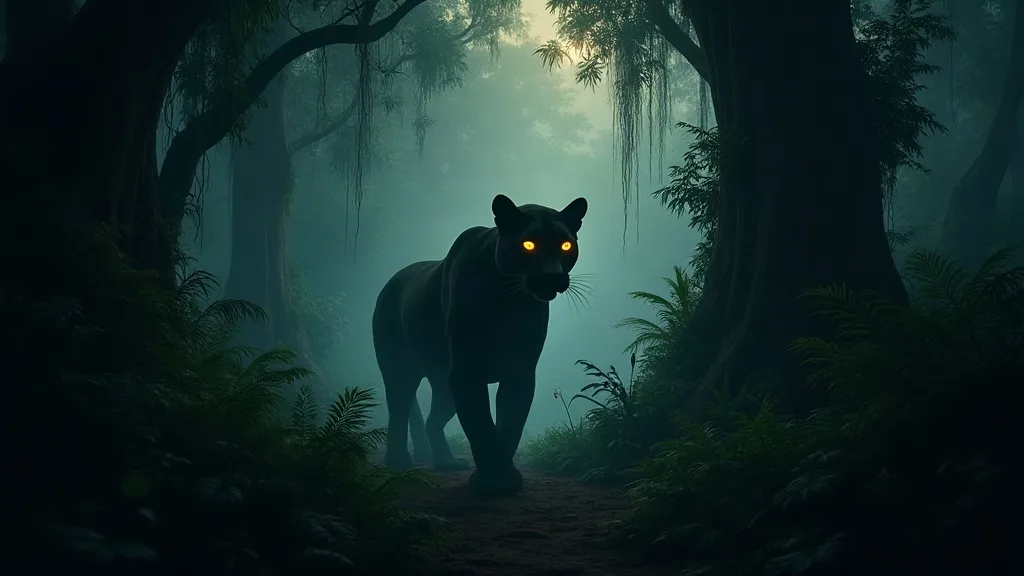
Anhangá: The Forest Protector and Trickster Spirit
Anhangá is the shape-shifting guardian of Tupi-Guarani forests, a spirit who punishes hunters who show disrespect to animals and plants. Part protector, part deceiver, this creature embodies the deep ecology of Amazonian belief.
Contents
In the depths of the rainforest, where tangles of vine and shadow hide untold creatures, the Tupi and Guarani peoples knew a presence that was neither fully animal nor fully divine. Anhangá was that presence. A guardian. A trickster. A teacher of consequences.
The ancient Tupi called him the master of the forest. Jesuit missionaries who arrived in Brazil in the 16th century recorded his name and his nature with a mixture of fascination and alarm. He walked the green world in many forms. A deer one moment. A serpent the next. A bird with eyes like coals. The Tupi word anhang itself carried weight: it meant spirit, ghost, the presence of something alive but not quite alive, something that moved between worlds.
Anhangá was not cruel by nature. But he was exacting. He watched how hunters treated their prey. He observed whether a man took only what he needed or if he slaughtered in arrogance. When he found disrespect, he punished it with a swiftness that made villages whisper warnings to their young hunters for generations.
The Shape-Shifter's Domain and Sacred Laws
The Tupi and Guarani lived inside the forest, not above it. Anhangá was the law that held the forest together. His domain stretched from the canopy to the root-tangle, from the rivers to the deepest thickets where jaguars hunted. He was the reason a man did not kill more than he could carry home. He was why you spoke to a deer before you killed it, why you never took a mother bird and her eggs together, why you left certain groves untouched.
Colonial-era sources, particularly the writings of priest José de Anchieta in the 16th century, describe Anhangá as a being of moral weight. The forests were not empty wilderness to be conquered; they were a living system with rules. Anhangá enforced those rules. A hunter who violated the sacred protocols would find himself lost, even in familiar territory. His arrows would miss though the deer stood still. Fever would find him in the night. Dogs would refuse to hunt with him. The forest itself would turn him around until he stumbled out days later, aged in spirit if not in body.
This was not arbitrary punishment. It was ecological law wrapped in spirit-form. The Tupi understood that if every hunter killed without restraint, the deer would vanish. The rivers would dry. The great anacondas would starve. Anhangá protected the balance. In doing so, he protected human survival itself.
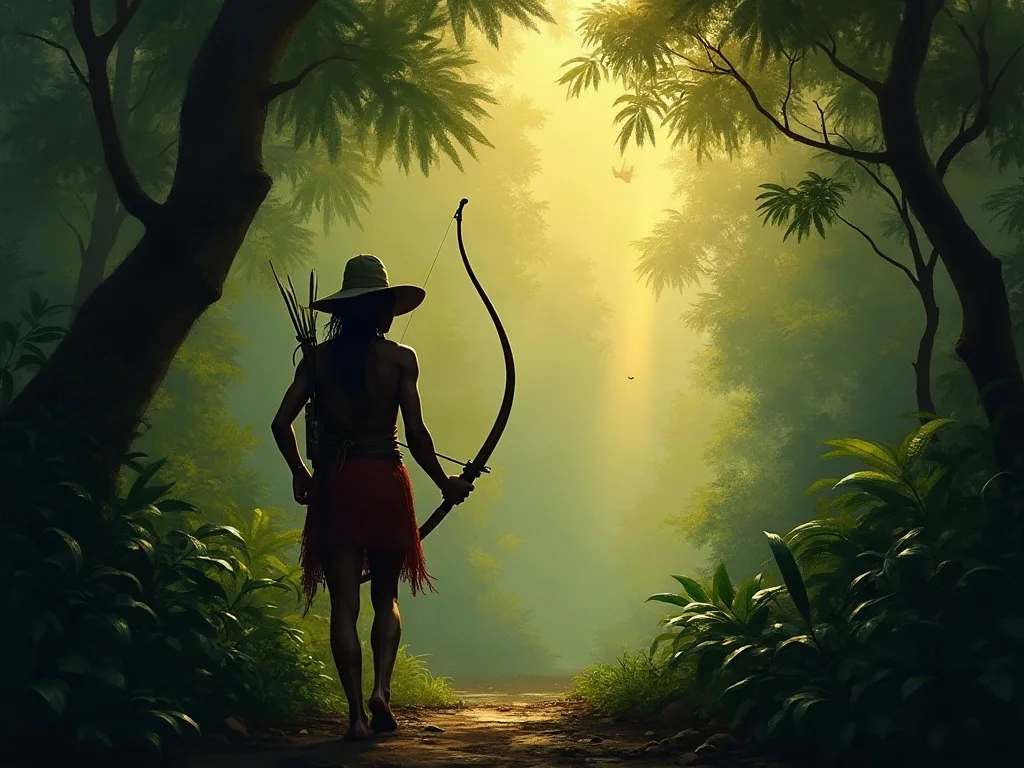
The spirit moved with terrible grace. The chronicler Gabriel Soares de Souza, who lived among the Tupi in the 1580s, recorded that Anhangá could assume the shape of any forest creature. A whistling sound in the night might be him. A shadow moving sideways. A bird that circled too low. A jaguar that watched too long from the undergrowth. The Tupi hunter learned to read these signs the way a sailor reads water.
The Trickster's Double Nature
Anhangá as trickster spirit complicates the story. He was not a rigid enforcer of rules. The Tupi understood that forests were chaotic, alive in ways that defied simple categories. Anhangá embodied that chaos. He lied. He deceived. He led hunters astray for reasons that were not always clear.
A man might do everything right. Speak respectfully. Kill only what he needed. Leave offerings. And still, Anhangá might tangle his path so he could not find his way home, spinning him in circles until he collapsed in confusion. Why? Sometimes the Tupi said it was a test. Sometimes they said Anhangá simply enjoyed the game. The spirit had a sense of humor that was sharp and pitiless.
This duality, the blending of protective and malicious force, made Anhangá fundamentally different from later ideas of good and evil spirits. He was not good. He was not evil. He was wild. He was alive. He operated according to the logic of the forest itself, which does not ask permission before it strikes and does not explain when it nurtures. A child lost in the forest and guided home by an animal might credit Anhangá's mercy. Another lost and found days later, barely alive, would curse his cruelty. Both understandings were true.
The Tupí-Guaraní cosmology, preserved in oral tradition and fragmentary colonial records, shows Anhangá as one being among many spirits, each with their own domain and their own inscrutable purposes. He was neither supreme nor insignificant. He was simply present, in the way a river is present, indifferent and powerful.
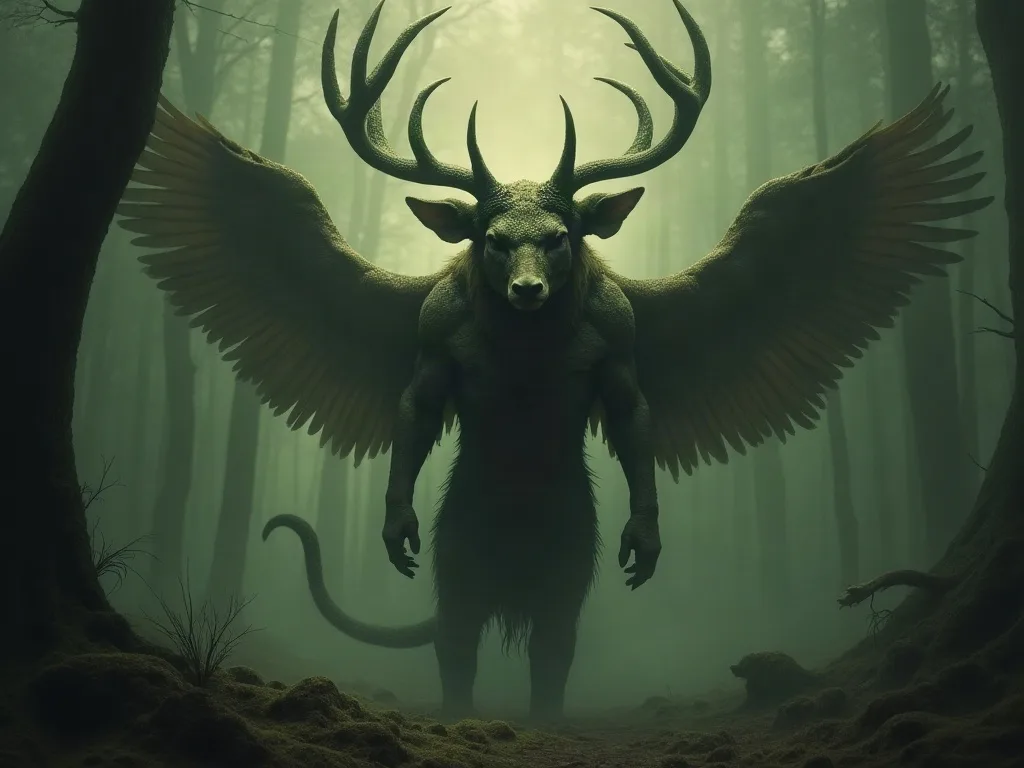
Anhangá and the Broader Spirit World
To understand Anhangá fully, you must place him in the web of Tupi-Guarani spirituality. The Tupí believed in a universe thick with spirits. Yacumama, the water mother, guarded rivers. Iara was the river spirit who seduced men. Curupay was the guardian of the forest at night. The sky had its spirits. The underworld had its own inhabitants. Anhangá was one thread in an enormous tapestry of agency and presence.
What made Anhangá distinctive was his role as a moral actor. Many spirits in Tupi-Guarani belief simply existed, powerful and strange but not particularly concerned with human conduct. Anhangá cared. Or more precisely: he operated as if the rules mattered. A hunter who disrespected the prey world faced Anhangá's judgment. This suggests a cosmology where the boundaries between human and animal, culture and nature, were not fixed. They were negotiable. And Anhangá was the negotiator, the one who made certain that humans remembered their place in the greater order of living things.
The Guaraní, a distinct but culturally related people, had their own regional variations on similar figures. Some sources speak of Angá or Ãngá as distinct beings. The linguistic and mythological lines blur across the centuries and across the diaspora of Tupi-Guarani peoples. What remained consistent was the core idea: a forest spirit who could be helper or hazard, who watched, who judged, who moved between forms.
How the Colonizers Encountered Anhangá
The arrival of Portuguese missionaries profoundly shaped how Anhangá's story survived into written form. The Jesuits, particularly in the 16th and 17th centuries, were acute observers of indigenous belief. They did not simply dismiss native spirits as demons, though some did. Rather, they translated them, mapped them onto Christian categories, sometimes with nuance and sometimes with brutal simplification.
Anhangá posed a problem for Christian theology. He was neither God nor Devil. He was amoral in ways that Catholicism found disturbing. The priests sometimes identified him with the demonic, a way of making sense of his cruelty. But the deeper logic did not convert easily. Anhangá punished those who broke ecological law, not those who sinned against God. He moved through the forest exercising a kind of justice that the Christian framework had no ready name for.
Over centuries, as the Tupi-Guarani peoples experienced displacement, slavery, forced conversion, and cultural fragmentation, knowledge of Anhangá persisted in oral tradition, in family stories, in the practices of communities who maintained contact with the forest. Contemporary indigenous groups, descendants of the Tupi and Guarani, continue to carry these narratives. They are living inheritances, not museum pieces.
Anhangá in Modern Context and Scholarly Interpretation
Anthropologists and folklorists who have worked with surviving Tupi-Guarani communities document Anhangá-like figures with remarkable consistency. Eduardo Viveiros de Castro, a leading scholar of Amazonian indigenous thought, argues that beings like Anhangá reveal a fundamentally different way of organizing reality. Not nature versus culture, but a world where animals have perspectives, where spirits have intentions, where the boundary between observer and observed is thin and permeable.
In this framework, Anhangá is not a primitive superstition but a sophisticated ecological philosophy. He embodies the principle that nature is not a resource to be extracted without thought. He is a voice of consequence. A hunter who kills without respect has not simply broken a taboo; he has violated the reciprocal relationship that holds the living world together.
Modern Tupi-Guarani communities have also reclaimed their traditions in the face of environmental destruction. Anhangá has become a symbol of resistance to deforestation and exploitation. If the forest is watched, if there is a presence that holds power and knows when the law has been broken, then destroying it is not simply an economic choice. It is a violation with cost. This reframing does not invent new meanings; it returns Anhangá to his original function: a guardian whose presence demands accountability.
Anhangá as Mirror of Our Own Wild Boundaries
What strikes the contemporary reader about Anhangá's legacy is how thoroughly he challenges the nature-culture divide that shapes modern Western thought. He lived in the crack between those categories. He was wild but lawgiving. Chaotic but moral. Animal and spirit at once.
The Tupi understood something that industrial societies have largely forgotten: that we live inside an ecological system that has its own logic, its own needs, its own way of enforcing those needs. Anhangá was the name they gave to that enforcement. The fever that comes when you disrespect the hunt. The animal that appears at the moment it is needed. The forest that confuses you until you find your way back to right conduct.
In an age of climate crisis, of mass extinction, of forests burning while corporations extract, Anhangá's image has gained a strange new resonance. Not as a literal spirit in the contemporary sense, but as a symbol of something true: that there are rules that nature will enforce whether we acknowledge them or not. That restlessness and fever and confusion are not psychological phenomena separate from ecological reality. They are the same thing. Anhangá knew this. The Tupi knew it. The knowledge was never lost. It was only drowned out.
Frequently asked questions about Anhangá
Frequently asked questions
Was Anhangá worshipped as a god?
Anhangá was not a god in the way later monotheisms understand divinity. The Tupi had no temples dedicated to him and no formal priesthood. Instead, they engaged with Anhangá through right action: respectful hunting, restraint in taking from the forest, and offerings. He was a force to be negotiated with, not a being to be asked for favors. The distinction matters: Anhangá was a presence with rules, not a deity with demands for worship.
Could Anhangá be found outside the forest?
The historical sources describe Anhangá primarily as a forest spirit. Rivers and water sources were the domain of other spirits like Iara. Some accounts suggest Anhangá's influence extended to hunting grounds and the pathways hunters took, but his essential nature was tied to the deep forest, to the canopy, to the wild places where human order did not fully penetrate. The forest was not his home; it was him, in a sense.
Did the Tupi believe Anhangá could be appeased with sacrifice?
Sacrifice in the Christian sense did not characterize Tupi-Guarani religion. What mattered was right behavior: killing only what you needed, honoring the animals you hunted, leaving parts of the forest undisturbed as belonging to Anhangá. Some accounts mention offerings of food or first fruits, but these were acts of respect and reciprocity, not propitiatory bargains. Anhangá's judgment was not for sale.
How do contemporary indigenous peoples understand Anhangá today?
Tupi-Guarani descendants continue to carry Anhangá narratives, particularly in communities that maintain forest connection. In recent decades, indigenous activists and scholars have reclaimed Anhangá as a symbol of ecological resistance and indigenous knowledge. He represents the principle that nature has agency and will, that extraction and destruction have costs, that humans are not the measure of the world. This is both a continuity with ancient understanding and a contemporary reclamation in the face of environmental crisis.
What evidence do we have about Anhangá from primary sources?
The most important sources are the accounts of Jesuit missionaries like José de Anchieta and Gabriel Soares de Souza, who recorded Tupi belief systems in the 16th and 17th centuries. These accounts are shaped by the chroniclers' own worldviews and the pressures of colonial ideology, so they must be read with care. Oral tradition preserved in contemporary indigenous communities offers another layer of evidence. No Tupi-Guarani written mythology survives from before colonization, so reconstruction relies on these layered, imperfect records.
The Spirit Who Still Watches
The forest has not stopped watching. Whether you call the watcher Anhangá or something else, the principle remains: there are costs to carelessness. The jaguar still stalks. The fever still comes. Paths still tangle for those who move without respect. The Tupi lived this knowledge daily. They passed it down not as superstition but as wisdom about how to live inside a living world, how to take without emptying, how to move without trampling everything beneath you.
In the 21st century, as Amazonian forests burn and indigenous territories shrink, Anhangá's story becomes more than history. It becomes a memory of what was lost, and a blueprint for what might still be recovered. The shape-shifter who walked between worlds, who enforced the law of reciprocity, who reminded humans that they were not the only agents in the forest, has much to teach those willing to listen.
Free 25-page sample
Want the whole story?
Take the first 25 pages free. If it pulls you in, the full edition is yours as an instant PDF download, with a paperback on Amazon for selected titles.
Tupi-Guarani
The Tupi-Guarani Mythology Book: The Land Without Evil, the Twin Heroes, and the Spirits of the Rainforest
Namandu, the Twin Heroes, and the Land Without Evil
The mythology of the Tupi and Guarani peoples of the Amazon and the Atlantic forest: Namandu the creator who unfolded the world out of darkness, the twin heroes raised by jaguars, Tupa of the thunder, the fire-serpent Boitata, and the long search for the Land Without Evil.
More from Tupi-Guarani
All articles
Tupi-Guarani
Tupã: The Thunder God and Supreme Creator of Tupi-Guarani Myth
Tupã commands the sky as both destroyer and creator: the Tupi-Guarani supreme god who speaks through thunder, shapes the cosmos, and rules over all lesser powers. Discover how this ancient deity shaped the worldview of millions across the Amazon and beyond.

Tupi-Guarani
The Origin of Manioc: Mani and the Gift of Cassava
In Tupi-Guarani lore, a girl named Mani died of a broken heart and transformed into the cassava root, becoming the foundation of survival for generations. Discover how a myth of grief became the story of a continent's staple crop.

Tupi-Guarani
Sumé: The Culture Hero and Civilizing Prophet of the Tupi-Guarani
Sumé taught agriculture, language, and moral law to the Tupi-Guarani peoples before vanishing into the sea. This foundational culture hero bridges the sacred and the everyday in South American oral tradition.

Tupi-Guarani
Curupira: The Backward-Footed Guardian of the Jungle
Curupira is a red-haired forest spirit from Tupi-Guarani mythology whose feet point backward to confuse hunters and loggers. This creature embodies the jungle's fierce protection of its own, punishing those who kill animals without respect or destroy trees needlessly. Learn how a figure born from indigenous ritual belief became a living warning about the price of ecological excess.