
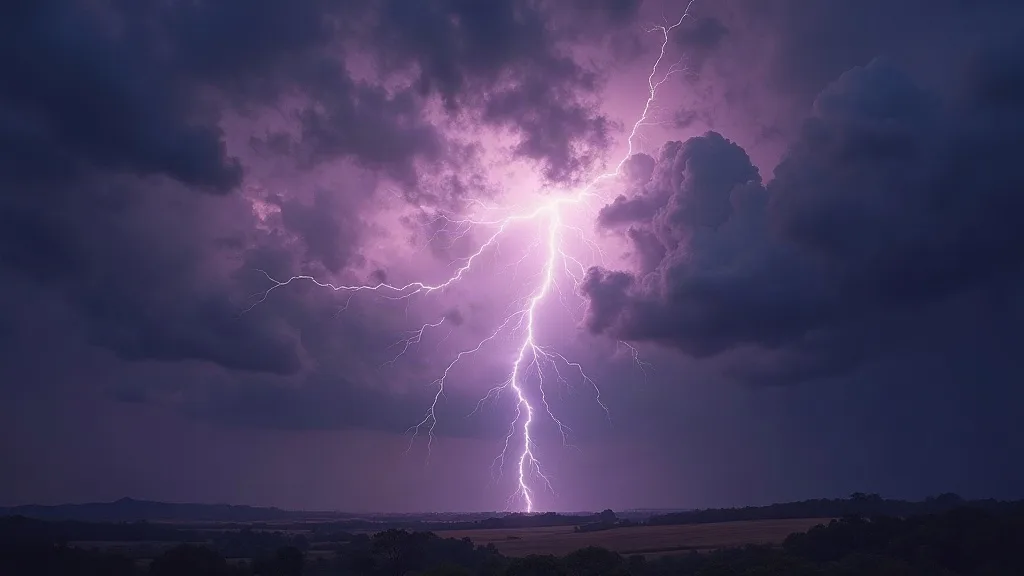
Tupã: The Thunder God and Supreme Creator of Tupi-Guarani Myth
Tupã commands the sky as both destroyer and creator: the Tupi-Guarani supreme god who speaks through thunder, shapes the cosmos, and rules over all lesser powers. Discover how this ancient deity shaped the worldview of millions across the Amazon and beyond.
Contents
In the beginning, before the world took solid form, there was only the sky. Tupã dwelt there, invisible and boundless, existing in a state the Tupi people understood as mbya - a kind of spiritual completeness that contained all potential. Then came the first sound: thunder. It was not a noise of destruction but of creation, the voice of Tupã speaking the cosmos into being. This is the opening note of one of the Americas' most profound theological systems, centered on a god who was simultaneously the highest creator, the most terrible force of nature, and the judge of human conduct.
The Tupi-Guarani peoples inhabited vast regions of South America, from the Amazon Basin to the Atlantic coast and deep into what is now Paraguay and southern Brazil. For centuries before European contact, millions of people oriented their spiritual lives around Tupã. The god's thunder was not metaphorical to them; it was the actual voice of cosmic law, audible in every storm, every flash that split the sky. To understand Tupã is to glimpse how an entire civilization read meaning into the natural world and built their ethics, their cosmology, and their sense of human purpose around a single towering figure.
Tupã as the Supreme Creator and Cosmic Architect
The Tupi-Guarani cosmological system places Tupã at the absolute apex. He is not simply the strongest of many gods, nor is he a god among peers. Early Jesuit missionaries, arriving in the 16th and 17th centuries, noted with surprise that indigenous peoples spoke of Tupã in ways that resembled monotheism. The god transcended the usual categories of deity found in other American traditions; he was closer to what later theologians would call the "deus otiosus," a supreme being who created the cosmos and then largely withdrew, leaving the daily governance to subordinate powers.
Yet Tupã never truly withdrew. He remained present in every storm, every act of judgment. The Tupí texts preserved in missionary accounts and oral traditions collected by anthropologists describe creation not as a single moment but as an ongoing process. Tupã continued to shape the world through his actions. When he moved, the earth trembled. When he spoke, thunder rolled across the sky and rain fell to nourish crops. The Tupi understood that survival depended on maintaining proper relationship with this force, neither through fixed ritual formulae nor elaborate temple systems, but through moral alignment.
The creation of the earth itself was Tupã's work. He made the land firm, the waters bound. But more importantly, Tupã established the laws that govern existence. Time moves in cycles under his gaze. The seasons turn because Tupã commands them. Plants grow and animals multiply according to ordinances he set in place. Death itself, in Tupi theology, is part of Tupã's design; it is not chaos or accident, but a necessary movement in the cosmic order.

Thunder, Violence, and Divine Judgment
What made Tupã fearsome was not abstract power but its manifestation in the visible world. The Tupi people lived in a landscape of sudden, violent storms. The tropical sky could turn from blue to black in moments. Lightning struck with terrible precision, sometimes killing people in their homes or on the trail. For the Tupi, every storm was a direct encounter with the divine, and every thunderbolt carried moral significance.
The god's violence was never arbitrary. Tupã punished wrongdoing. Stories preserved in oral tradition and recorded by early missionaries describe how the god would strike down those who violated fundamental laws: murderers, the deeply dishonest, those who showed cruelty to kin. A person struck by lightning was understood not as a victim of accident but as someone who had incurred cosmic judgment. Conversely, a warrior who survived a storm unharmed might be seen as blessed by Tupã, marked for greatness or holy purpose.
This equation of thunder with moral force gave the Tupi-Guarani spiritual system a distinctive character. It was not primarily a religion of appeasing angry powers through sacrifice, though offerings were made. Rather, it was a religion of alignment. Proper conduct, truthfulness, generosity, and bravery were not merely social virtues but cosmic requirements. Tupã's thunder validated this order; it was the universe ratifying human ethics at the grandest scale.
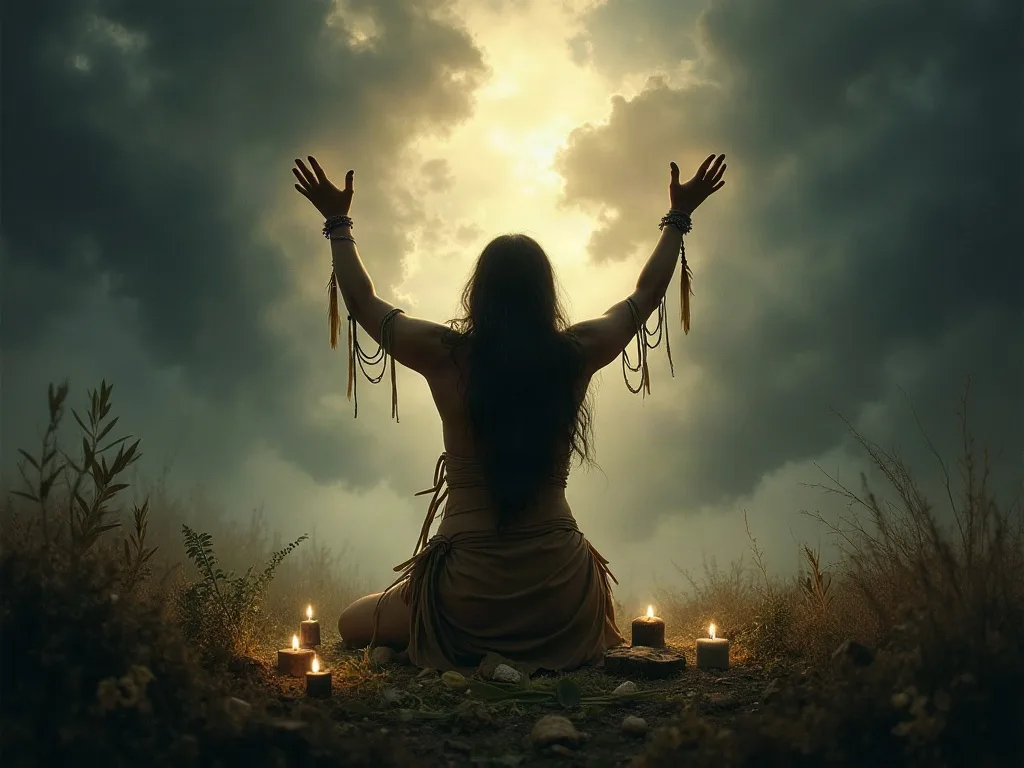
Shamans and spiritual leaders claimed to communicate with Tupã directly. They would enter trance states, often during storms, and report conversations with the supreme god. These shamans, called pajé or payé, served as intermediaries between the human and divine realms. Their authority derived from their claimed contact with Tupã. If a shaman's predictions came true or his invocations seemed answered by rain or clear skies, his status grew. If he failed repeatedly, he could be dismissed as a fraud or, worse, accused of witchcraft and sorcery.
The Hierarchy of Tupi-Guarani Spirits and Gods
Tupã existed at the summit of a complex spiritual hierarchy that included numerous other beings. Below him were entities like Ypapema, sometimes called the "disease-maker," who brought illness and misfortune. There were forest spirits, water spirits, and the souls of ancestors, each with their own domain and power. The Tupi-Guarani religious imagination was not barren; the cosmos teemed with spiritual presences. Yet none of these beings rivaled Tupã.
One figure who deserves mention is Ygwara (also recorded as Jaguara or Yguara in various missionary accounts), who in some traditions is associated with the earth and agriculture. Yet even Ygwara, in accounts that mention both deities, remains subordinate to Tupã. The relationship is comparable to that of creative associates; Ygwara might oversee the fertility of crops, but Tupã established the cycle of seasons that made agriculture possible.
Another notable being is Nanderuvusu or Nanderyguey, recorded in later Guarani traditions as a kind of culture hero or second-creator who shaped certain aspects of human life after the initial cosmic order was set in place. These secondary deities and spirits did not diminish Tupã's supremacy; they filled out a universe where the highest god had established law but allowed other forces their sphere of action.
The Tupi-Guarani cosmos was not rigidly monotheistic. It was henotheistic: one supreme god with a court of subordinates. This structure proved surprisingly resilient when Christianity arrived. Many Tupi peoples found it relatively easy to identify Tupã with the Christian God, particularly because both were understood as supreme, transcendent, and associated with sky and thunder (lightning being reminiscent of divine wrath). Some missions recorded that indigenous people called the Christian God by Tupã's name, while others maintained Tupã as a separate entity even as they accepted Christian theology. This syncretism was not always acknowledged by the missionaries, who often assumed indigenous peoples had completely abandoned their former beliefs.
Tupã and the Creation of Humanity
The stories of how humanity came to be, and how Tupã shaped human nature and destiny, reveal the theological sophistication of Tupi-Guarani thought. In several accounts preserved by missionaries and anthropologists, Tupã did not simply create humans once and leave them. He shaped them deliberately, in response to what the cosmos needed.
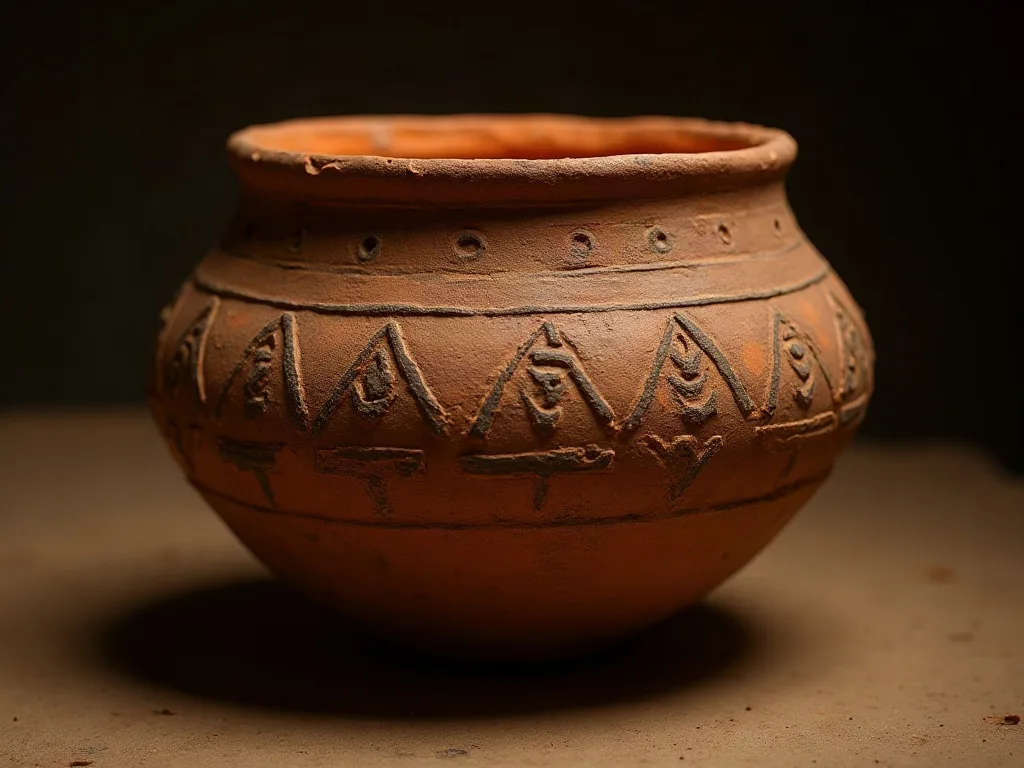
One account describes Tupã creating humanity from clay or mud, molding them much as a potter shapes clay. This act was not careless or experimental; it was purposeful. Tupã gave humans the capacity for speech, for reason, for moral discernment. He also gave them desire, passion, and the capacity for sin. This was not seen as a flaw in creation but as a necessary condition for humans to be truly free. Without the ability to do wrong, humans could not be virtuous; virtue requires genuine choice.
Tupã established the fundamental laws that humans must follow. The first peoples were given commandments about how to treat one another, how to relate to the natural world, and how to properly worship the divine. The Tupi traditions speak of an age when humans lived in harmony with these laws, a golden age when sickness was rare and death seemed almost unreal. But gradually, humans fell away. They became proud, violent, and forgetful of the cosmic order. Tupã witnessed this decline and, in some accounts, resolved to reshape the world through cataclysm.
Stories of a great flood appear in various Tupi-Guarani traditions. In these narratives, Tupã sent water to cover the earth as a kind of cosmic reset, destroying a corrupt humanity and allowing for new beginnings. Some accounts suggest that only the righteous or the specially chosen survived these floods, perhaps by climbing to high ground or being transported to safety by Tupã himself. These flood myths share structural similarities with deluge accounts from other American traditions and also resonate with Christian flood narratives; anthropologists have debated how much is indigenous and how much reflects post-contact syncretism.
What is clear is that the Tupi-Guarani saw human history as cyclical, not linear. Ages come and go. Humanity rises and falls. Tupã oversees all these movements, judging and reshaping as cosmic law requires.
Tupã in Ritual and Daily Practice
The worship of Tupã did not require elaborate temples or a priestly hierarchy in the way that Aztec or Inca religion did. The Tupi-Guarani peoples were semi-nomadic or maintained smaller villages, and their spiritual practice reflected this social organization. Tupã was present everywhere; every person could address him through prayer or invocation.
Offerings were made, particularly during storms or in times of crisis. The Tupi would present food, sometimes animals, to Tupã, asking for his blessing or intervention. These offerings were not compulsory ritual payments but expressions of respect and appeals for favor. A warrior might offer a portion of a hunt kill to Tupã, asking for courage in future battles. A family might leave food at a sacred site during drought, beseeching the god for rain.
Fasting and vigils were also practiced. A young person seeking a vision or spiritual power might fast and remain isolated, calling out to Tupã in hopes of receiving instruction or a sign. The god might respond through dreams, through a storm, or through an encounter with an animal that the seeker interpreted as carrying Tupã's message. These experiences were not seen as hallucinatory or subjective but as genuine divine communication.
The pajé, or shaman, occupied the center of Tupi-Guarani spiritual practice. These individuals underwent lengthy training and initiation, learning herbal remedies, the names and properties of spirits, and the techniques for entering ecstatic states. A powerful pajé could supposedly journey to the sky realm where Tupã dwelt, or communicate with Tupã's messengers. They diagnosed illness as often stemming from spiritual causes and worked to heal through spiritual means. When someone died, the pajé might help guide the soul to the proper afterlife. The pajé's authority derived from claims of access to Tupã and the other powerful beings that filled the cosmos.
The Linguistic and Conceptual Roots of Tupã
The word "Tupã" itself carries meaning in the Tupi language. Some scholars propose connections to roots meaning "to make" or "to form," suggesting that the name itself encodes the god's creative function. The tup- element appears in various Tupi-Guarani words related to creation, formation, and causation. This linguistic dimension is not trivial; in Tupi thought, names carried power and meaning. To name something was to participate in its nature. The name Tupã was not arbitrary but descriptive, pointing to the god's essential role.
The Tupi language itself was fluid and rich in imagery. The same word could carry multiple meanings depending on context, and metaphorical language was embedded throughout spiritual discourse. This linguistic flexibility meant that religious concepts could be expressed with considerable nuance. When missionaries tried to explain Christian theology using Tupi language and concepts, they found themselves navigating a semantic landscape where Christian ideas did not always map neatly onto existing categories.
The question of how much the recorded traditions of Tupã reflect pre-contact belief versus post-contact syncretism remains open. Most surviving detailed accounts come from Jesuit missionaries of the 16th and 17th centuries, who were writing for a European audience and filtered indigenous belief through their own theological lenses. Yet anthropologists working with contemporary Tupi-Guarani peoples in the 20th and 21st centuries have documented persistent elements of Tupã veneration and cosmological concepts that appear consistent across centuries and geographic regions, suggesting deep historical roots.
Tupã and the Afterlife: The Journeys of the Soul
Tupi-Guarani conceptions of the afterlife were intimately connected to Tupã's cosmic order. Death was not seen as an end but as a transition. The soul (angetu or anguéru in some dialects) departed from the body and journeyed to the spirit realm. The ethics of a person's life determined the character of this journey.
A person who had lived righteously, who had honored the laws Tupã established, could expect a favorable afterlife. Some traditions speak of a blessed realm in the sky, a place of abundance and peace, where the ancestors dwell in the presence of Tupã. There, they feast, rest, and await eventual return or final reunion with the divine. Other accounts mention a journey westward, toward the direction of the setting sun, where the land of the ancestors is located.
Conversely, those who violated fundamental moral laws faced punishment after death. Their souls might wander in darkness, tormented by malevolent spirits. Some traditions describe a kind of underworld or lesser realm where the wicked are confined. This was not necessarily permanent; some accounts allow for the possibility of expiation and eventual movement to a better state. The key point is that cosmic justice extended beyond life. Tupã's moral order was enforced not just in the living world through storms and misfortune, but in the afterlife as well.
The responsibility for guiding the soul fell partly to the pajé. After someone died, the shaman would perform rituals to help the soul find its way. These rituals involved singing, chanting, and invocations to Tupã and other spiritual powers, asking them to receive and protect the deceased. The community would also gather to remember the person, reinforcing the tie between the living and the dead. This was not mere sentiment but a cosmological practice; maintaining connection with the ancestors ensured that they remained beneficent toward the living.
Tupã and Environmental Knowledge
An often-overlooked dimension of Tupã worship is its connection to careful observation of the natural world. The Tupi-Guarani peoples developed sophisticated knowledge of their environment: which plants were edible and which poisonous, which animals signaled danger, which weather patterns preceded storms or drought. This knowledge was not merely practical; it was understood through the lens of Tupã's cosmic order.
A shaman's ability to predict a coming storm, based on subtle changes in cloud formation or animal behavior, was interpreted as communication from Tupã. The pajé understood the patterns of nature because Tupã had revealed them. Similarly, knowledge of medicinal plants, particularly potent ones used in shamanic ritual, was understood as Tupã's gift. The god had placed these plants in the world deliberately, so that humans could use them for healing and for communicating with the divine.
This framework meant that environmental knowledge carried spiritual weight. To be ignorant of the natural world was to be ignorant of Tupã's handiwork. To be skilled in reading weather, in identifying plants, in understanding animal behavior was to be in closer communion with the supreme god. This integration of practical knowledge with spiritual meaning created a holistic worldview where human survival and cosmic understanding were inseparable.
Tupã's Legacy and Persistence
When Europeans arrived in the territories of the Tupi-Guarani peoples, they brought Christianity. The encounter was catastrophic in many ways: disease, slavery, and warfare devastated the indigenous population. Many Tupi peoples were enslaved or forcibly moved. Their territories were colonized and transformed. Yet something of Tupã's presence persisted.
In many parts of Brazil and Paraguay, folk Catholicism incorporated elements of Tupi-Guarani belief. Saints sometimes took on attributes associated with Tupã or other indigenous deities. Rituals and prayers blended Christian formulas with indigenous invocations. Among contemporary Tupi-Guarani communities, some groups have maintained distinct religious practices that honor both Christian and indigenous frameworks, keeping alive the memory of Tupã and the ancestors.
Scholars and anthropologists have documented surprising persistence of core Tupã concepts among indigenous groups who had undergone missionary conversion. The cycle of creation and destruction, the moral order enforced by divine judgment, the role of the shaman as intermediary, the journey of the soul: these themes recur in the testimony of Guarani peoples in Paraguay and Brazil interviewed in the 20th century. This suggests that Tupã's theology possessed considerable resilience, perhaps because it addressed fundamental human questions about meaning, morality, and the nature of existence in ways that resonated across cultural contexts.
In recent decades, as indigenous movements have worked to recover and revitalize traditional knowledge and spirituality, Tupã has regained visibility. Academic research into Tupi-Guarani religion has deepened, drawing on missionary accounts, archaeological evidence, and ongoing communication with living indigenous communities. Tupã is now recognized as one of the major theological figures of the pre-Columbian Americas, comparable in importance to Quetzalcoatl among the Aztecs or Viracocha among the Inca.
Tupã and the Comparative Study of Creator Gods
Scholars of comparative mythology have noted intriguing parallels between Tupã and creator deities from other traditions. The thunder god who is also supreme creator appears across many cultures: Indra in Vedic tradition, Zeus in classical Greece, and Thor among the Norse peoples. Yet Tupã differs in important ways from these figures.
Unlike Indra, Tupã is not simply the strongest among many gods; he is fundamentally unique in his transcendence. Unlike Zeus, Tupã does not engage in complex genealogies or dynastic struggles. Unlike Thor, Tupã is not primarily a warrior god defending a tribe of gods against giants. Rather, Tupã combines supreme creative power with absolute moral authority and direct involvement in human affairs through storms and punishment. This combination is theologically distinctive.
What Tupã shares with other thunder gods is a fundamental association with seasonal cycles and agriculture. Many cultures that depend on rainfall for crops venerate a thunder deity as the source of fertilizing water. The Tupi-Guarani peoples relied on agriculture, particularly manioc cultivation, and Tupã's thunder and rain were essential to survival. The god was not merely frightening but essential, not only terrible but generous in his provision.
Frequently asked questions about Tupã: The Thunder God and Supreme Creator
Frequently asked questions
How did Tupã differ from the Christian God in Tupi theological thinking?
Many Tupi peoples found it relatively easy to identify Tupã with the Christian God, partly because both were conceived as supreme, transcendent, and associated with the sky and divine judgment. Early missionaries sometimes encouraged this identification as a bridge to conversion. However, Tupã remained anchored in indigenous cosmology and environmental cycles (lightning, rain, thunder) in ways that made the equation imperfect. Contemporary indigenous communities often maintain a more nuanced understanding, honoring both frameworks without complete merger.
Did the Tupi-Guarani peoples make offerings or sacrifices to Tupã?
Yes, but differently than in Aztec or Maya traditions. The Tupi made offerings of food, sometimes animals, particularly during storms or times of crisis, but these were not part of an obligatory daily ritual system. Rather, offerings were expressions of respect and appeals for favor. Fasting, vigils, and shamanic invocation were more central to Tupã worship than organized temple sacrifice.
What role did shamans play in communicating with Tupã?
Shamans called pajé or payé served as intermediaries between humans and the divine. They claimed to journey to Tupã's sky realm, receive visions, and communicate the god's will to the community. Their authority derived from these claimed contacts with Tupã and their demonstrated ability to predict weather, heal illness, and guide souls after death. A successful shaman's prestige could be enormous; a failed one might be dismissed or accused of witchcraft.
How does Tupã compare to other American creator deities like Quetzalcoatl or Viracocha?
All three are supreme deities associated with cosmic creation and moral order. However, Tupã is more exclusively a sky god and thunder deity, while Quetzalcoatl also has strong associations with wind and civilization-bringing, and Viracocha is typically depicted as an anthropomorphic creator. Tupã's power manifests directly in observable natural phenomena (thunder and lightning), whereas the others are sometimes depicted as more distant or mediated through culture heroes.
Do contemporary Tupi-Guarani peoples still worship or honor Tupã?
Yes, among many indigenous Guarani communities in Brazil and Paraguay, elements of Tupã veneration and cosmological concepts persist, often interwoven with Christian practice. Anthropologists have documented continuity of core theological concepts across centuries. Contemporary indigenous movements increasingly emphasize the recovery and revitalization of traditional spirituality, including Tupã-centered cosmologies.
Tupã in Modern Indigenous Spirituality and Scholarship
The recovery of Tupã as a central figure in American religious thought has accelerated in recent decades. Academic conferences, monographs, and collaborative research with indigenous scholars have brought Tupi-Guarani theology into conversation with global comparative mythology. This scholarly recognition is not merely academic; it has political and spiritual implications for indigenous communities working to reclaim and revitalize their heritage.
Contemporary Guarani leaders and spiritual practitioners are actively teaching younger generations about Tupã and the broader cosmological system. This work occurs in a context of ongoing struggle for indigenous land rights and cultural survival. For many, honoring Tupã is not a retreat into the past but an assertion of indigenous identity and sovereignty in the present. The god who commands the sky and enforces cosmic justice becomes a symbol of resilience and moral authority that cannot be colonized or erased.
The study of Tupã also challenges Western assumptions about indigenous American religions. The existence of a sophisticated monotheistic or henotheistic theology, centered on a supreme being with clear moral agency, contradicts older anthropological stereotypes that portrayed indigenous religions as primitive or chaotic. Tupã's theology demonstrates abstract philosophical thinking, theological consistency across time and geography, and a coherent response to fundamental questions about creation, justice, and human purpose. This recognition is long overdue and continues to reshape how scholars understand pre-Columbian American civilizations.
Free 25-page sample
Want the whole story?
Take the first 25 pages free. If it pulls you in, the full edition is yours as an instant PDF download, with a paperback on Amazon for selected titles.
Tupi-Guarani
The Tupi-Guarani Mythology Book: The Land Without Evil, the Twin Heroes, and the Spirits of the Rainforest
Namandu, the Twin Heroes, and the Land Without Evil
The mythology of the Tupi and Guarani peoples of the Amazon and the Atlantic forest: Namandu the creator who unfolded the world out of darkness, the twin heroes raised by jaguars, Tupa of the thunder, the fire-serpent Boitata, and the long search for the Land Without Evil.
More from Tupi-Guarani
All articles
Tupi-Guarani
The Origin of Manioc: Mani and the Gift of Cassava
In Tupi-Guarani lore, a girl named Mani died of a broken heart and transformed into the cassava root, becoming the foundation of survival for generations. Discover how a myth of grief became the story of a continent's staple crop.

Tupi-Guarani
Anhangá: The Forest Protector and Trickster Spirit
Anhangá is the shape-shifting guardian of Tupi-Guarani forests, a spirit who punishes hunters who show disrespect to animals and plants. Part protector, part deceiver, this creature embodies the deep ecology of Amazonian belief.

Tupi-Guarani
Sumé: The Culture Hero and Civilizing Prophet of the Tupi-Guarani
Sumé taught agriculture, language, and moral law to the Tupi-Guarani peoples before vanishing into the sea. This foundational culture hero bridges the sacred and the everyday in South American oral tradition.

Tupi-Guarani
Curupira: The Backward-Footed Guardian of the Jungle
Curupira is a red-haired forest spirit from Tupi-Guarani mythology whose feet point backward to confuse hunters and loggers. This creature embodies the jungle's fierce protection of its own, punishing those who kill animals without respect or destroy trees needlessly. Learn how a figure born from indigenous ritual belief became a living warning about the price of ecological excess.