
Repun Kamuy: The Orca God of the Sea
The Ainu revered Repun Kamuy, the orca deity who commands the sea and guides fishers through treacherous waters. Discover how this killer whale god shaped maritime survival, ritual, and the spiritual relationship between the Ainu and the ocean.
Contents
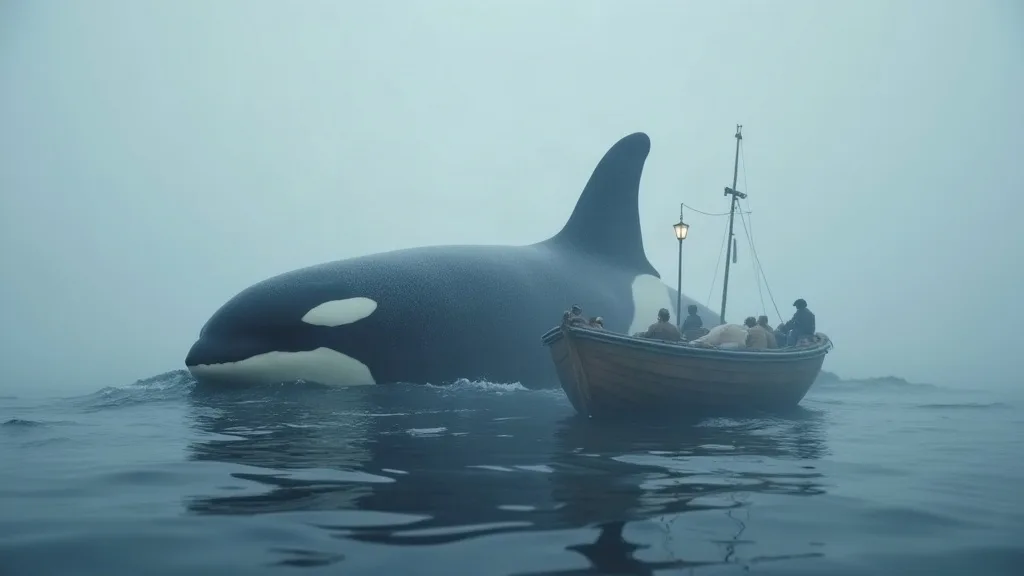
A hunter's boat creaks across the waves off Hokkaido. The sea is gray and cold. Suddenly, a massive dark shape cuts through the water. Its white patches gleam. The Ainu oarsmen do not reach for weapons. They bow. Repun Kamuy, the orca god, has come. This is a greeting, not a threat. This is the presence of the sea itself made flesh.
In Ainu spirituality, the boundary between animal and divinity blurs like salt spray into mist. Repun Kamuy, the orca god, stands at that threshold. He is no abstract force. He is the ocean's conscience, the killer whale's strength, the protector of hunters, and a being so powerful that his very approach demanded respect and prayer. The Ainu did not invent this god by sitting in a longhouse. They met him on the water. They learned his patterns. They built ceremony around his presence.
The sea in Ainu lands does not forgive carelessness. Hokkaido's coasts are violent. Currents shift. Storms rise without warning. Fish vanish. A man who sails without the blessing of Repun Kamuy does not return home. This made the orca god indispensable. Every fishing community kept his memory alive through chant, offering, and story. He was not a legend. He was a neighbor.
Repun Kamuy in Ainu Cosmology
The Ainu understood the world as layered. Above sat the sky realm. Below lay the underworld. The human world occupied the middle. But the sea was its own realm, sovereign and alive. It had its own gods. Among them, Repun Kamuy held rank. He was not the only sea deity. Wakka Ush Kamuy, the water wave god, shared some dominion. But Repun Kamuy commanded respect in a different register. He was mighty. He was dangerous. He could feed you or drown you.
The Ainu word kamuy (カムイ) carries weight. It means god, spirit, or sacred other. Not all sacred beings are equal. A kamuy is a force that humans must negotiate with, not control. Repun Kamuy belonged to this highest order. His name literally means "of the sea" (repun = sea, kamuy = god). Simple. Clear. This was the god you sang to when the hull creaked and the horizon disappeared.
In Ainu oral tradition, preserved in yukar (poetic incantations) and uwepeker (historical narratives), Repun Kamuy appears as a guardian who tests and rewards. He was not kind in the way a parent is kind. He was just. He protected those who showed proper respect. He swept away the careless and the arrogant. Fishers understood this contract. Prayer was not begging. Prayer was acknowledgment.
The orca itself held sacred status. It was enormous, intelligent, coordinated in hunts. To watch a pod work together was to see intention and strategy beyond mere animal instinct. The Ainu saw in this behavior the presence of divinity. The orca did not act like other whales. It had character. It had politics. To encounter an orca was to brush against something more than meat and muscle.
The Orca as Divine Form
The Ainu recognized that gods took bodies in the material world. This is not metaphor. In Ainu cosmology, the line between representation and presence is thin. When an orca hunted, it was Repun Kamuy hunting. When it protected fishers by driving away storms, it was the god's direct action. The animal and the deity were not two things. They were one thing experienced in two ways.
This theology shaped how the Ainu treated orcas. Hunting a whale was not simple predation. It carried spiritual weight. The Ainu did hunt whales, including orcas, but the act was wrapped in ritual. Before the hunt, prayers addressed Repun Kamuy directly. The hunter did not ask for permission as a subordinate asks a master. He framed the hunt as a necessary exchange. The whale's body fed the community. In return, the community honored the god through proper use and respectful consumption. Nothing was wasted. Every part served a purpose.
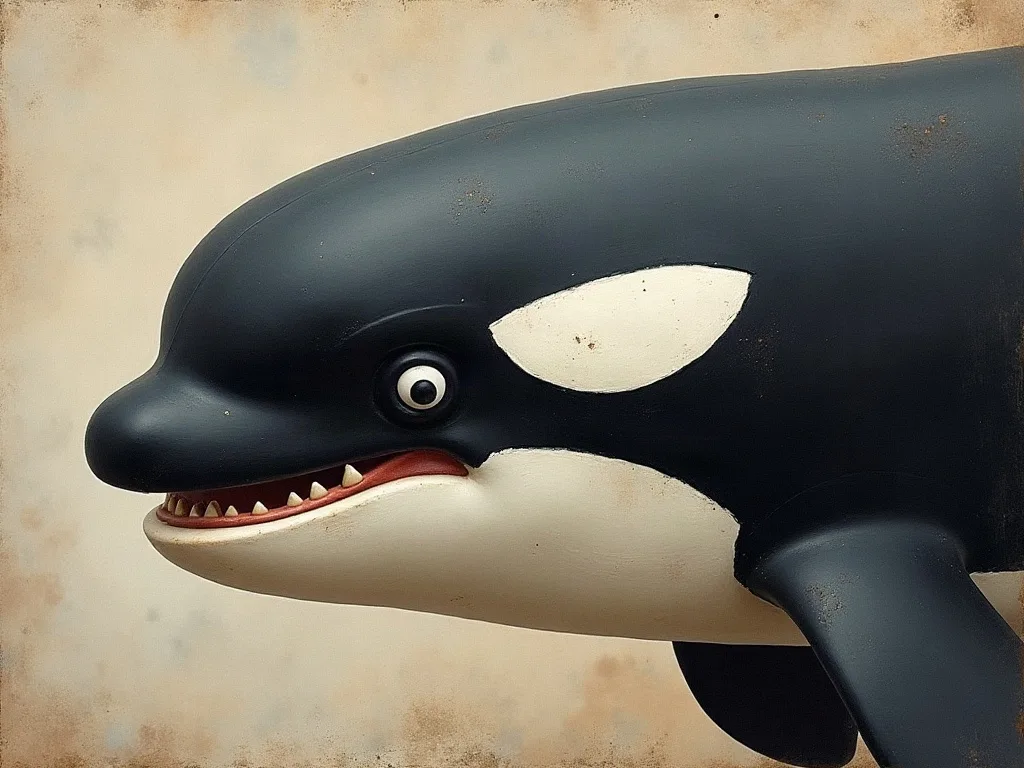
The orca's distinctive white eye patches fascinated Ainu observers. These marks became sacred signs. In Ainu art and carving, the eye patches are deliberate. They mark the orca as distinct, recognizable, set apart. When a fisherman spotted an orca with bright white patches on dark skin, he knew he was in the presence of something rare. This individual might carry extra spiritual weight. Some oral traditions suggest that certain orcas were direct manifestations of Repun Kamuy himself, not mere animals wearing the god's form.
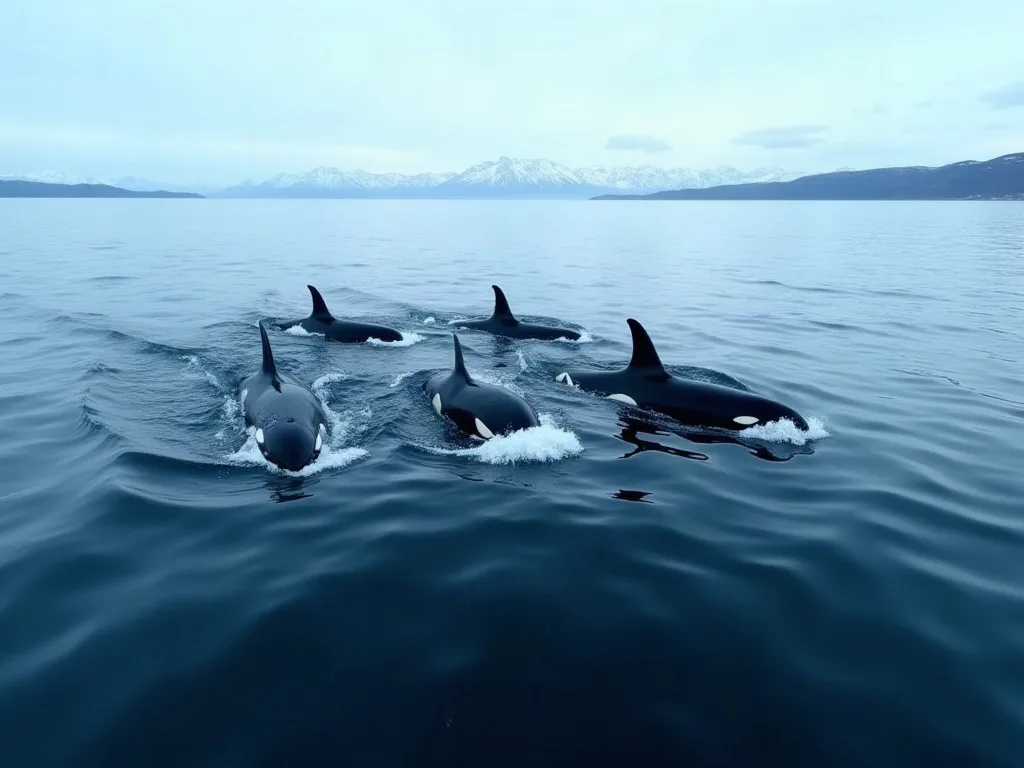
The orca's hunting prowess added to this sacred status. A pod could bring down creatures far larger than itself. Whales, seals, dolphins all fell to coordinated orca attacks. This intelligence, this tactical brilliance, could not be explained by appetite alone. It spoke of consciousness. It spoke of agency. The Ainu saw in orca hunts the exercise of divine will.
Repun Kamuy and the Protection of Fishers
Ainu fishers lived on a knife's edge. The sea provided fish, seals, and other food that sustained coastal communities. But the sea also killed. Waves capsized boats. Sudden squalls came from nowhere. Men vanished. In this environment, Repun Kamuy served as a lifeguard and spiritual instructor. The god's role was paradoxical. He could save or destroy, but always with purpose.
Stories preserved in Ainu oral tradition tell of Repun Kamuy intervening to protect hunters. One narrative describes a boat caught in a terrible storm. The crew lost all orientation. Waves tall as mountains bore down. In desperation, the captain performed the proper prayers and offerings. An orca surfaced near the boat. The creature did not attack. Instead, it moved ahead of the boat, and the boat followed. The orca led them safely to shore. When they landed and looked back, the orca vanished. Repun Kamuy had guided them home.
These stories were not entertainment. They were instruction. They taught younger fishers how to respond in crisis. When afraid, pray. When uncertain, watch for signs from the sea. When you see the orca, understand that you are not alone. The god is present. This theology turned fear into structured action. It made the dangerous sea inhabitable because it offered relationship.
Repun Kamuy's protection extended beyond physical rescue. The god also ensured good hunting. Fishers who treated the sea with respect and performed the proper offerings found fish in abundance. Their nets filled. Their families ate well. In contrast, those who acted with arrogance or carelessness faced Repun Kamuy's withdrawal. Fish vanished. Boats failed. The message was not punishment in a moral sense. It was consequence. The god was simply no longer providing. This forced communities to maintain discipline and consciousness about their relationship to the sea.
Rituals and Offerings to Repun Kamuy
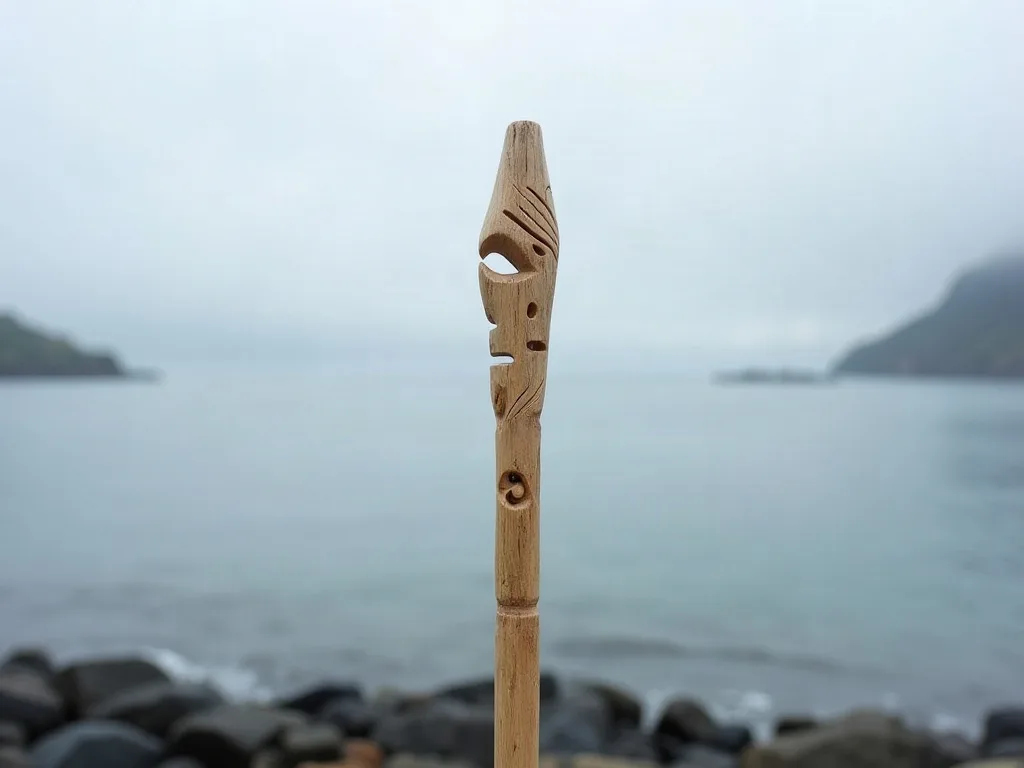
The Ainu did not construct temples to Repun Kamuy. They built no stone altars or grand structures. Instead, they created inau, prayer sticks made of shaved wood or willow. These sticks, carved with deliberate patterns, served as focal points for prayer. When a fisherman wanted to address Repun Kamuy, he would create an inau, speak his petition into it, and then place it where it could reach the sea. The inau became a messenger between the human and divine worlds.
Before launching on a fishing expedition, captains performed elaborate rituals. These were not hasty or perfunctory. A captain might spend an entire morning in preparation. He would create inau. He would speak a yukar, a sacred chant that addressed Repun Kamuy by name and acknowledged the god's power. The chant was poetic, rhythmic, designed to carry prayer across the boundary between worlds. Some yukar addressed the orca directly. Others spoke to the sea itself, asking it to remain calm. Some asked Repun Kamuy to guide fish into the nets.
The language of these chants reveals theological sophistication. The Ainu did not grovel. They spoke as one conscious being to another. A yukar might say, in effect: "Repun Kamuy, I am about to enter your realm. I seek only what I need to feed my family. I will use all that I take. I will waste nothing. Guard my boat. Guard my crew. Let us return safely." This is negotiation dressed in respect, not servile begging.
Offerings to Repun Kamuy took several forms. Fish was offered to the sea before eating. A portion was burned or released into the water. Sake (rice wine) was poured into the sea. In some regions, special foods prepared for Repun Kamuy were placed on altars near the shore. These offerings were not transactions in a commercial sense. They were exchanges that acknowledged the god's sovereignty over the sea. They said: I recognize you. I honor you. I remember that I am a guest in your realm.
After successful hunts, more elaborate ceremonies took place. The Ainu might hold a feast called an iomante or bear ceremony, though that term more properly applied to rituals honoring the bear god. But similar structures applied to honoring Repun Kamuy. A seal or whale taken from the sea was dressed in its own inau. The community gathered. They ate together. They sang songs of gratitude. The bones were treated with care, often burned so that the animal's spirit could return to the god with honor intact.
The timing of rituals also mattered. Fishing seasons had rhythms. Spring and fall were often prime hunting times. Before these seasons began, communities made special offerings to Repun Kamuy, asking for abundant seas and safe passage. After successful seasons, they held thanksgiving ceremonies. In winter, when the sea was most dangerous and fishing diminished, some communities still maintained contact with Repun Kamuy through prayer and small offerings, keeping the relationship alive during dormant months.
The Orca God and Maritime Navigation
Ainu fishers were extraordinary navigators. Despite having no written charts or sophisticated instruments by European standards, they moved across the sea with precision. They read currents, wind, animal behavior, and subtle signs in the water. Repun Kamuy was woven into this navigational knowledge.
Orcas served as living indicators of good fishing grounds and safe passage. When a pod appeared, experienced fishers understood that fish would likely be nearby. Orcas hunted where food concentrated. Following the orca's movements could lead a boat to abundance. This observation was practical, but it was also theological. The orca was not just an indicator. The orca was the god marking the way.
Storms presented the deepest challenge to Ainu navigation. A sudden squall could transform the sea from gray and rolling to white chaos in minutes. In these moments, the Ainu relied on Repun Kamuy's guidance. They would look for orcas or other signs. They would sing prayers. Some accounts describe Ainu mariners following orcas toward safety when visibility dropped to nothing. Whether this was literal animal guidance or the Ainu's own knowledge expressed through the language of the sacred, the effect was the same: the god's presence provided psychological and practical orientation.
The concept of kamuy nomi, or "god's path," referred to routes through dangerous water that were believed to be protected by specific gods. Repun Kamuy's path would be the safest passages through treacherous straits or around rocky coastlines. Senior fishers taught younger ones to recognize these paths through accumulated experience. But the teaching was framed spiritually: here, Repun Kamuy watches over us. Here, he will provide protection if we show respect.
Cross-Cultural Echoes of the Orca God
The Ainu were not alone in revering the orca. Across the North Pacific, cultures separated by vast distances held similar beliefs. The Tlingit and Haida peoples of the Pacific Northwest Coast created art and stories centered on the orca. In their cosmology, too, the killer whale was a chief among animals, a being of power and intelligence. Some Tlingit clans traced their ancestry to orcas. The animal appeared prominently in totem poles and ceremonial masks.
The parallel likely arose from shared maritime experience. The orca's behavior in the North Pacific is consistent. Its intelligence is observable. Its hunting prowess is evident. Cultures that lived close to the sea and depended on it developed similar mythologies not through borrowing, but through independent recognition of the animal's sacred status. This convergence suggests something deeper: different peoples reaching the same theological conclusion about the orca's place in the cosmos.
What distinguishes Repun Kamuy from orca deities in other traditions is the Ainu emphasis on relationship and reciprocal obligation. The orca god was not a force to be manipulated or a source of power to be claimed. He was a sovereign being to be negotiated with. This reflects a broader Ainu cosmology in which humans occupied one niche among many, not a position of dominance. The sea was Repun Kamuy's realm first. Humans were fortunate guests.
The Decline and Persistence of Repun Kamuy Tradition
The arrival of Japanese settlers and then state modernization transformed Ainu life. Traditional fishing practices declined. Younger Ainu left ancestral lands for cities. Schools taught that the old beliefs were superstition. Throughout the twentieth century, the practice of creating inau and singing yukar to Repun Kamuy nearly vanished. Many younger Ainu had no contact with these traditions.
But something remarkable happened in the late twentieth and early twenty-first centuries. Ainu cultural activists and scholars began documenting and reviving traditions. Elderly people who remembered the old prayers and songs shared them with younger generations. Museums collected inau and recorded yukar chants. Anthropologists who had studied with Ainu elders published their findings. The result was not a perfect recovery. You cannot simply resurrect a living tradition as if pressing pause and play on a recording. But the thread was not entirely broken.
Today, some Ainu communities have reinstated ceremonies honoring Repun Kamuy. Young Ainu artists incorporate the orca god into contemporary art. Musicians compose pieces based on traditional yukar melodies. Fishers who have Ainu heritage sometimes perform the old prayers before going to sea, even if they are part-time practitioners. The god has moved from the exclusively oral realm into written documentation, digital recording, and modern artistic expression.
This persistence matters. It shows that Repun Kamuy was never merely a relic of a vanished past. The god embodied an understanding of the human relationship to nature that retains meaning. In a time of climate change and overfishing, the Ainu theological insight that the sea is a sovereign realm to be respected rather than dominated, that fishing requires reciprocal relationship and restraint, sounds newly urgent. Repun Kamuy is not just a historical curiosity. He is a spiritual resource that contemporary people are actively retrieving.
Frequently asked questions about Repun Kamuy
Frequently asked questions
Was Repun Kamuy worshipped only by coastal Ainu communities?
The god was primarily significant to fishing communities, but Ainu societies were deeply interconnected through trade and ceremony. Inland communities knew the stories and participated in rituals honoring Repun Kamuy, even if they did not hunt him directly. The god represented the sea as a living force that touched all Ainu life, not just those living on coasts.
Did the Ainu hunt orcas for food?
Yes, though less frequently than seals or smaller fish. Hunting an orca was a major undertaking requiring a large crew and careful planning. When an orca was killed, it provided enormous quantities of meat, fat, and bone that sustained communities for extended periods. Importantly, the hunt was preceded by prayers to Repun Kamuy, framing the act as a necessary exchange rather than mere slaughter.
Are there written sources documenting Repun Kamuy, or is the tradition purely oral?
The tradition was oral for most of Ainu history. However, from the nineteenth century onward, Japanese anthropologists and later Ainu scholars began collecting and recording yukar chants, stories, and ritual practices. These are documented in academic publications and museum archives. The most detailed sources come from twentieth-century fieldwork with elderly Ainu communities who remembered the pre-modern religious practices. Written sources preserve the tradition but cannot fully capture the experience of living relationship that once characterized it.
How does Repun Kamuy compare to gods in other Japanese religious traditions?
Repun Kamuy emerged from distinctly Ainu spirituality and differs substantially from the Shinto pantheon that dominates mainland Japan. While both traditions recognize sacred forces in nature, the Ainu theological framework emphasizes reciprocal negotiation with divine beings, whereas Shinto places more emphasis on purification and the interconnection of kami. Repun Kamuy represents a specifically maritime and Ainu understanding of divinity.
Is Repun Kamuy still worshipped today?
Some Ainu communities and individuals maintain or have revived practices honoring Repun Kamuy, particularly in coastal regions of Hokkaido. These may include traditional ceremonies, the creation of inau, and the teaching of yukar chants to younger generations. However, the scope is modest compared to pre-modern practice. The god remains culturally significant but is no longer a central focus of daily life for most Ainu people, though interest in reviving Ainu traditions is growing.
The Orca God's Contemporary Resonance
The return of Repun Kamuy to Ainu consciousness is not sentimental nostalgia. It represents a reckoning with how power and knowledge work. The Ainu developed a spiritual framework for living on the sea that lasted millennia. It sustained communities. It prevented overexploitation. It embedded ethical restraint into daily practice. The god was the mechanism through which that restraint became lived reality.
In the modern era, industrial fishing has decimated whale populations. Climate change transforms ocean currents and fish migrations. Coastal communities face uncertainty about the future of the sea. In this context, the Ainu insistence that the sea is not a resource to be exploited but a realm to be respected gains unexpected relevance. Repun Kamuy is not proposing answers to twenty-first-century environmental problems. But he embodies a different relationship to the non-human world, one in which humans negotiate rather than dominate.
Artists and intellectuals working with Ainu traditions have begun to position Repun Kamuy as a figure of resistance and alternative knowledge. To invoke the orca god is to assert that the Ainu perspective on the sea is valid, that indigenous understanding of nature has value that industrial culture lacks, that the boundary between human and animal, between subject and sacred other, might be drawn differently than Western modernity has drawn it.
Some Ainu scholars have pushed further. They argue that Repun Kamuy should be understood not merely as a historical artifact but as an active participant in contemporary Ainu identity and activism. This is not metaphorical. In the Ainu understanding, gods are not dormant. They are always present. If you speak to Repun Kamuy with respect and sincerity, the god is there. This belief has profound implications. It means that reviving the tradition of honoring Repun Kamuy is not recreating the past. It is engaging with a presence that never fully disappeared.
Free 25-page sample
Want the whole story?
Take the first 25 pages free. If it pulls you in, the full edition is yours as an instant PDF download, with a paperback on Amazon for selected titles.

Ainu
The Ainu Mythology Book: The Kamuy, the Bear Spirit, and the Sacred World of Hokkaido
The Kamuy, the Bear Spirit, and Hokkaido
The beliefs of the indigenous people of northern Japan: a world where everything (fire, water, owl, and bear) is a kamuy, a god wearing a disguise, who visits the human world as a guest and must be sent home with honor. Preserved in the great epic songs, the yukar.
More from Ainu
All articles
Ainu
The Ainu Creation Story: How the World Rose from the Primordial Sea
Before Japan existed, before humans walked the earth, the Ainu tell of a time when only water and sky collided. Discover how divine beings created the islands, brought forth life, and shaped a world where nature itself is sacred.

Ainu
Inaw: Sacred Wooden Offerings in Ainu Ritual and Spirit Communication
Inaw are carved wooden sticks that carry prayers between the human and spirit worlds in Ainu religion. Learn how these humble offerings bridge the sacred and everyday, and why they remain central to Ainu cultural identity today.

Ainu
Kotan Kor Kamuy: The Village Guardian Owl
Meet Kotan Kor Kamuy, the watchful owl spirit who guards Ainu villages from harm. In Ainu belief, this kamuy oversees human settlements and stands as protector of community bonds. Discover how a vigilant nocturnal hunter became one of the Ainu peoples' most trusted spiritual guardians.

Ainu
Ainu Mosir: The Quiet Land of the Humans
Ainu Mosir is the sacred homeland where humans live in balance with nature and the kami spirits. Discover how the Ainu people understood their island world, its spiritual geography, and the delicate relationship between the seen and unseen realms.