
The Ainu Creation Story: How the World Rose from the Primordial Sea
Before Japan existed, before humans walked the earth, the Ainu tell of a time when only water and sky collided. Discover how divine beings created the islands, brought forth life, and shaped a world where nature itself is sacred.
Contents
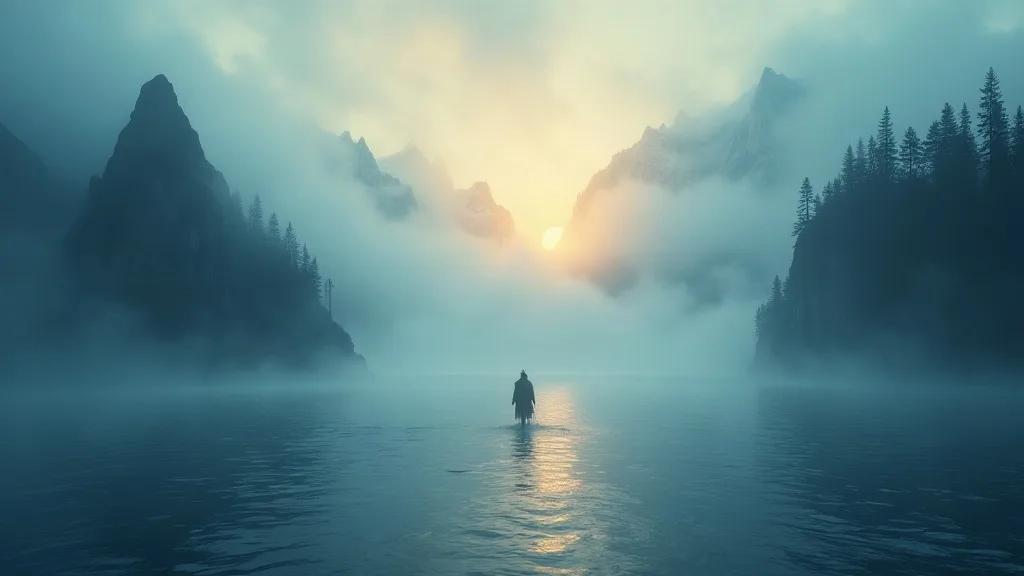
In the beginning, there was no land. The Ainu, the indigenous people of northern Japan's Hokkaido and the Kuril Islands, describe a cosmos drenched in primordial water. Above it hung the sky, below stretched an infinite ocean, and between them moved divine beings whose breath and will could sculpt reality itself. This is how the world was made: not through conflict between warring gods, but through patient creation by spirits called kamuy (deities or sacred beings), each tending to their domain with reverence and purpose.
The Ainu Creation Story begins not with a battle for supremacy, but with an act of longing. According to Ainu oral tradition, preserved through yukar (chanted narratives) passed down through generations and later collected by ethnographers, the earth rose because it was needed. The story feels less like divine mandate and more like a natural unfolding, a world coming into being because the rhythm of creation demanded it. This sensibility shapes everything that follows: the Ainu view of the cosmos is less about hierarchy than about harmony between seen and unseen realms.
The Kamuy and the Birth of Earth
The Ainu cosmos was never empty. From the beginning, kamuy inhabited every space. Some dwelled in the sky realm, others beneath the waves, and many occupied the liminal spaces between. The most significant figure in the creation account is Okikurumi (also rendered as Oinakamuy or Aioina), who emerges as both creator and culture hero. Okikurumi is sometimes described as the son of the sky deity, sometimes as a being who simply appeared, born from the will of the universe itself. The Ainu cosmology, preserved in sources like the Ainu Shinsenfu (Ainu Poems of the Gods) and documented by ethnographers like Shiro Hattori and Shiro Harada in the mid-20th century, does not impose rigid genealogies the way Greek or Norse mythologies do.
According to the yukar, a water-dwelling kamuy dove deep into the primordial ocean. This being, sometimes called the Earth-Diver, took mud and debris from the seabed and cast it upward. Layer by layer, sediment accumulated above the water. The process was neither swift nor catastrophic. The earth rose slowly, as if the ocean were releasing it reluctantly, grain by grain. As the land emerged, it took shape and form. Mountains rose where the diver's hands pressed deepest. Valleys formed where water pooled in the emerging hollows.
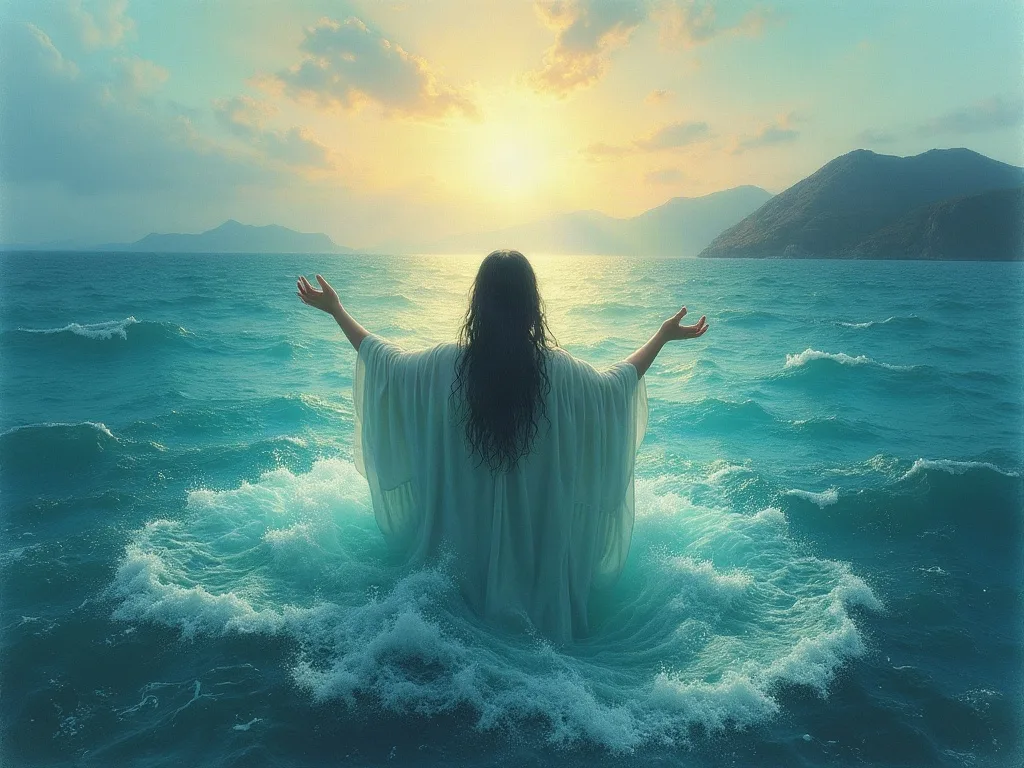
Okikurumi and other kamuy then began their work of ordering the new world. They placed the sun and moon in their courses. They set boundaries between seasons. They brought forth plants and animals, each imbued with its own kamuy spirit. In Ainu belief, nothing exists without spirit; even a river, a stone, or a hunting bow possesses its own kamuy, its own sacred inner essence. Creation, in the Ainu view, was not about domination of matter by mind, but about awakening consciousness throughout all things.
The Human World Takes Shape
The Ainu did not see themselves as separate from this sacred cosmos. When humans arrived, they came as part of the world's natural unfolding, not as a later afterthought. The oral traditions vary; some versions describe the first humans being shaped by Okikurumi himself, fashioned from wood or clay or woven together by divine intention. Other accounts suggest humans simply appeared, emerging as naturally as plants from soil, gifted with the ability to speak and hunt.
What matters most in the Ainu Creation Story is not a specific moment of human genesis, but the relationship humans were to have with their world. The first people learned from the kamuy. They learned that plants should be harvested with gratitude. Animals should be hunted only for genuine need, and their spirits should be thanked and honored through ritual. Salmon ascending rivers were not mere food but manifestations of the salmon kamuy, deserving of respect. Bears prowling the forests were not threats but fellow inhabitants of a shared sacred space, with their own minds and territories and rights.

One particularly vivid yukar tells of how fire came to humans. A kamuy appeared to the first people and taught them to kindle flame. But fire itself was understood to be a being, a spirit with its own will. The hearth at the center of an Ainu chise (traditional house) was never merely functional; it was the abode of the fire kamuy, hi no kamuy, deserving daily respect and offerings of food scraps and prayers.
The Structure of the Ainu Cosmos
Unlike the Norse Yggdrasil with its nine worlds stacked vertically, or the Hindu cosmos with its concentric realms, the Ainu cosmos operated as a series of overlapping domains. The kainu (upper world) was the realm of sky and air deities. The kaina (middle world) was the human realm, the visible earth and sea. The kamuy mosir (land of the deities) existed parallel to the visible world, sometimes describable as below the earth, sometimes as coexisting in an invisible layer that only the most spiritually attuned could perceive.
Shamanic practitioners called iomante specialists or yukarahkontar could move between these realms. They could communicate with kamuy, learn their true names, and intercede on behalf of the community. Crucially, creation was not a one-time event in Ainu cosmology. The Ainu Creation Story implies an ongoing process of maintenance and renewal. Each season required ritual reenactment of creation's themes. The Iyomante, the bear-sending ceremony, was not just a hunt's end but a ritual return of the bear's spirit to the kamuy realm, a recreation of cosmic balance.
Origins of the Islands and the Sacred Landscape
Hokkaido itself, the heartland of Ainu culture, was understood through the lens of creation mythology. Certain peaks, waterfalls, and river sources were recognized as places where the boundary between worlds grew thin. Mount Komagatake (Shinshir in Ainu), the active volcano near where Okikurumi often appeared in the narratives, was a site of particular spiritual potency. The warm waters and geothermal features scattered across Hokkaido were described as evidence of the kamuy still working beneath the earth, still shaping and reshaping the world.
Rivers held special significance. The Okhotsk, the Kushiro, and other major waterways were not merely geographical features but characters in ongoing creation narratives. Each river had its own kamuy, a being who governed the flow of water and the cycles of salmon return. The Ainu relationship to salmon especially reveals how creation mythology permeated daily life. Salmon appearing in the rivers each year was understood not as a mechanical biological phenomenon, but as the salmon kamuy choosing to give itself to human communities, a gift that required reciprocal respect and ritual acknowledgment.
Darkness, Light, and Cosmic Cycles
Some versions of the Ainu Creation Story address the origins of day and night, light and darkness. Okikurumi and other kamuy debated how long the sun should shine. Some argued for eternal daylight so crops would grow swiftly. Others insisted darkness was necessary for rest and the tending of spiritual matters. The compromise they reached created the natural cycle: periods of light and darkness in balance, neither dominating the other. This mythological explanation for the daily and seasonal rhythms reflects the Ainu's sophisticated observation of their northern environment, where seasons shift dramatically and the summer brings near-total daylight while winter brings extended darkness.
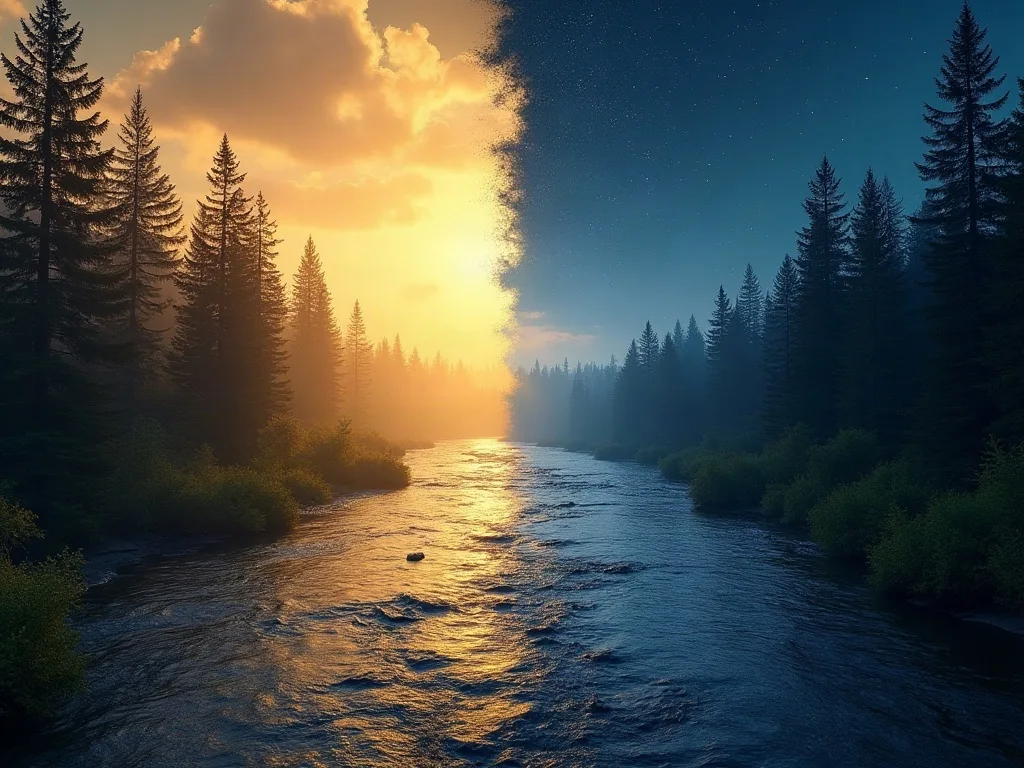
The creation of darkness was not understood as evil or the absence of something good, but as a necessary principle. Winter itself was not a punishment but a season with its own kamuy, its own beauty and purpose. This balanced cosmology appears in numerous Ainu narratives and distinguishes the Ainu Creation Story from traditions where light symbolizes good and darkness symbolizes evil or ignorance.
Connections to Neighboring Mythologies
The Ainu creation narrative exists in proximity to Japanese Shinto cosmology, recorded in texts like the Nihon Shoki and the Kojiki (8th-century compilations of Japanese mythology). Both traditions involve emergence of land from primordial waters and the action of divine beings in shaping the world. However, the Ainu version centers on cooperation and balance among spirits rather than the hierarchical genealogy of imperial descent that characterizes Shinto accounts. The Ainu kamuy system more closely resembles animistic traditions found across the Pacific and northern Asia, where spirits inhabit all natural phenomena and human society exists in negotiated coexistence with the non-human world.
The water-diver motif in Ainu creation mythology appears in traditions across Siberia, the Altai, and even among some Native American peoples, suggesting a deep cultural layer shared across northern latitudes. The Ainu, as maritime and forest peoples, adapted this universal theme to their specific environment: the cold northern sea, the cedar forests, the rivers teeming with salmon.
Rituals as Reenactment of Creation
To understand the Ainu creation story fully, one must understand it not as a historical account but as a living framework for ritual and community life. The Ainu Creation Story was reenacted through ceremonies, particularly the Iyomante and the spring and autumn festivals that marked the transition between seasons.
The Iyomante, often translated as the "bear-sending ceremony," was far more than a ritual hunt finale. It was a cosmic drama in miniature. A bear raised from a cub was understood to be a guest from the kamuy realm, voluntarily inhabiting animal form to test human virtue and to provide sustenance. At the ceremony's climax, the bear's spirit was sent back to the kamuy mosir with gifts and prayers, completing a cycle of exchange that mirrored creation itself: the kamuy gives form and life, humans receive and reciprocate with gratitude and ritual respect, and the cycle renews.
Similarly, the spring festival marked the "return" of the sun's full warmth and the expectation of salmon runs, reimagining creation's gift each year. These ceremonies transformed the Ainu Creation Story from distant mythological past into present liturgy. Every community member participated in maintaining cosmic balance.
The Influence of Japanese Colonization and Modern Preservation
For much of the 20th and 21st centuries, Ainu cultural practices and oral traditions faced suppression. The Meiji government's assimilation policies and later Japanese occupation policies actively discouraged Ainu language, ritual, and storytelling. However, dedicated ethnographers and Ainu cultural practitioners worked to preserve the yukar and cosmological teachings. Figures like Shiro Hattori, Atsuko Aoki, and later Kayano Shiro documented and compiled Ainu narratives, ensuring the Ainu Creation Story survived in written form even as oral transmission weakened.
In recent decades, there has been a global and local resurgence of interest in Ainu culture. UNESCO recognition of Ainu as an endangered intangible heritage, combined with Ainu activism and education initiatives, has revived transmission of creation stories and spiritual practices. Today, Ainu cultural organizations, museums, and schools work to keep the yukar alive, teaching new generations the stories of how the world was made and how humans fit into the cosmos.
How Does the Ainu Creation Story Compare to Other Origin Myths?
Frequently asked questions
Is the Ainu Creation Story recorded in a single sacred text like the Bible or the Quran?
No. The Ainu Creation Story exists primarily in oral tradition, preserved through yukar, chanted narratives passed down within families and communities. Some versions were collected and written down by ethnographers in the 20th century, particularly Shiro Hattori's work in the 1930s-1960s. Unlike textual religions with fixed canonical versions, Ainu mythology allowed variation and regional adaptation while maintaining core themes of creation through kamuy action and ongoing cosmic balance.
Why does the Ainu Creation Story emphasize balance between light and darkness rather than good versus evil?
Ainu cosmology developed in the subarctic and boreal forest environments of northern Japan and the Kuril Islands, where dramatic seasonal cycles are fundamental to survival and observation. Both daylight and darkness, summer and winter, are essential and honored. This reflects a worldview where the sacred encompasses all natural phenomena, not a dualistic tradition where one principle opposes and defeats another. The Ainu saw creation as ongoing cooperation among spirits, not as victory of good over chaos.
What role do shamans play in the Ainu Creation Story?
Shamanic practitioners, particularly yukarahkontar or iomante specialists, were understood as people who could communicate directly with kamuy and move between the visible and invisible realms. They did not create the world but acted as intermediaries who helped maintain the cosmic relationships established at creation. Through ritual and spiritual practice, shamans reenacted and renewed the original creative acts, ensuring the community remained in harmony with the spirit world.
Are there versions of the Ainu Creation Story that differ significantly from one another?
Yes. Like most oral traditions, the yukar and creation narratives vary by region, family lineage, and individual narrator. Some versions emphasize Okikurumi as the sole creator, others describe multiple kamuy working cooperatively. Timing and sequence of events shift between accounts. However, core elements remain consistent: a primordial watery cosmos, emergence of land, animation of the world with spirit, and establishment of reciprocal human-kamuy relationships. This flexibility is characteristic of oral tradition and does not indicate corruption or error but rather living cultural transmission.
How does the Ainu understanding of creation relate to their environmental practices and hunting traditions?
The Ainu Creation Story directly shapes Ainu environmental ethics. If the world was created by cooperative spirits inhabiting all things, then every plant, animal, and natural feature deserves respect. Hunting was understood not as exploitation but as participation in an exchange relationship with animal kamuy. Overhunting or disrespecting prey was believed to offend the spirits and bring misfortune. This cosmological framework functioned as an ecological wisdom system, sustaining fish and game populations and maintaining forest health across centuries.
The Ainu Creation Story in Contemporary Culture
Today, the Ainu Creation Story is undergoing a remarkable renaissance. Younger Ainu generations are reclaiming storytelling practices. Museums in Hokkaido, particularly the Ainu Museum in Shiraoi and cultural centers in Asahikawa, present yukar through multimedia installations and live performances. International audiences encounter Ainu cosmology through literature, film, and academic publication, bringing global attention to a tradition nearly suppressed into oblivion.
The worldview embedded in the Ainu Creation Story also speaks to contemporary environmental concerns. As global consciousness shifts toward recognition of ecological interconnection and non-human sentience, the Ainu cosmological framework of universal spirit-presence and reciprocal relationship gains new relevance. The idea that salmon, bears, rivers, and forests possess their own agency and deserve respect resonates with modern environmental ethics and indigenous futurism.
The Ainu Creation Story endures not as a relic but as a living tradition, continuously reinterpreted by Ainu communities and shared with audiences worldwide. It offers an alternative cosmology where creation is patient, where balance matters more than dominance, and where the sacred pulses through every living thing.
Free 25-page sample
Want the whole story?
Take the first 25 pages free. If it pulls you in, the full edition is yours as an instant PDF download, with a paperback on Amazon for selected titles.
Ainu
The Ainu Mythology Book: The Kamuy, the Bear Spirit, and the Sacred World of Hokkaido
The Kamuy, the Bear Spirit, and Hokkaido
The beliefs of the indigenous people of northern Japan: a world where everything (fire, water, owl, and bear) is a kamuy, a god wearing a disguise, who visits the human world as a guest and must be sent home with honor. Preserved in the great epic songs, the yukar.
More from Ainu
All articles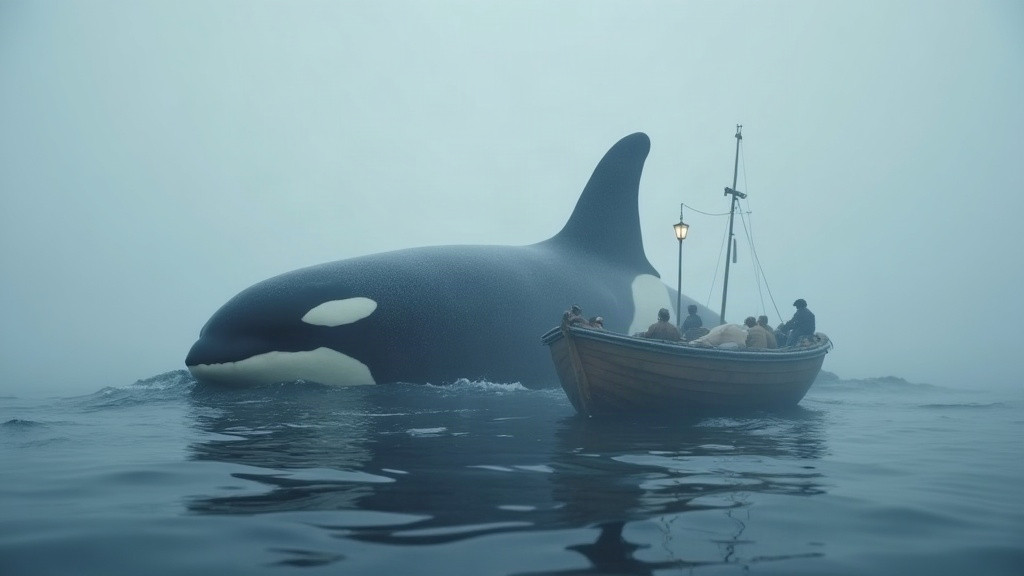
Ainu
Repun Kamuy: The Orca God of the Sea
The Ainu revered Repun Kamuy, the orca deity who commands the sea and guides fishers through treacherous waters. Discover how this killer whale god shaped maritime survival, ritual, and the spiritual relationship between the Ainu and the ocean.

Ainu
Inaw: Sacred Wooden Offerings in Ainu Ritual and Spirit Communication
Inaw are carved wooden sticks that carry prayers between the human and spirit worlds in Ainu religion. Learn how these humble offerings bridge the sacred and everyday, and why they remain central to Ainu cultural identity today.
Ainu
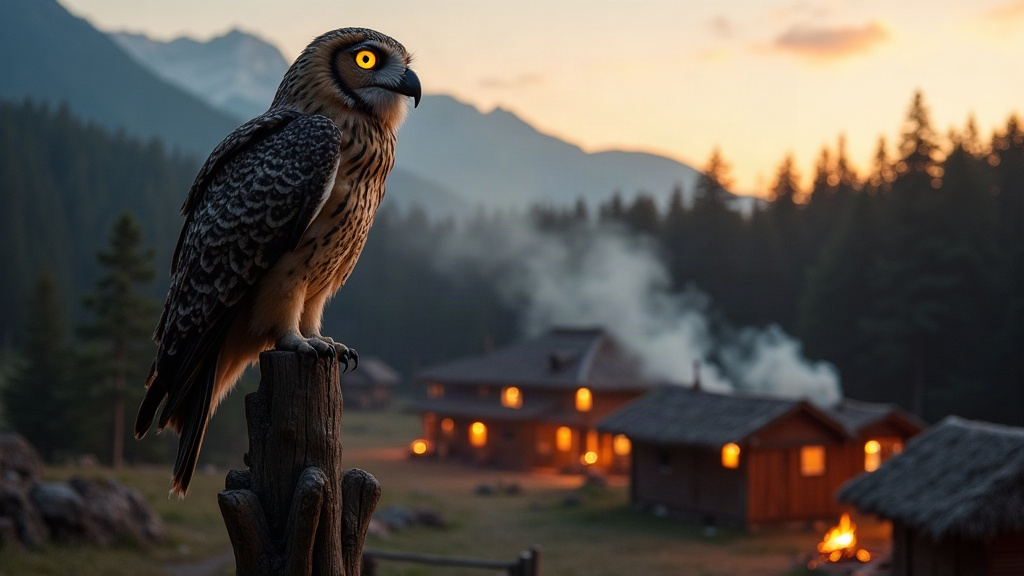
Kotan Kor Kamuy: The Village Guardian Owl
Meet Kotan Kor Kamuy, the watchful owl spirit who guards Ainu villages from harm. In Ainu belief, this kamuy oversees human settlements and stands as protector of community bonds. Discover how a vigilant nocturnal hunter became one of the Ainu peoples' most trusted spiritual guardians.
Ainu
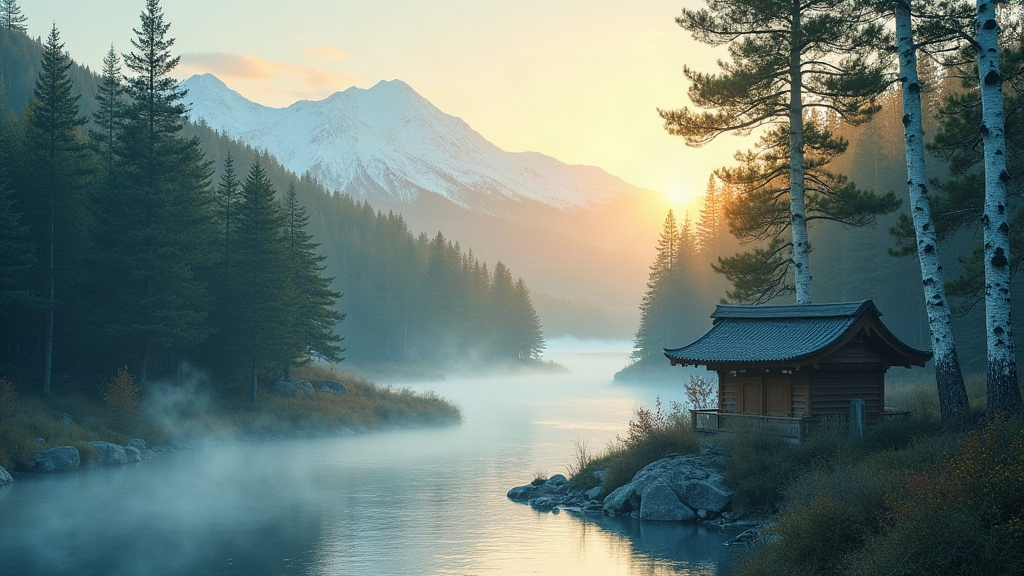
Ainu Mosir: The Quiet Land of the Humans
Ainu Mosir is the sacred homeland where humans live in balance with nature and the kami spirits. Discover how the Ainu people understood their island world, its spiritual geography, and the delicate relationship between the seen and unseen realms.