
Inaw: Sacred Wooden Offerings in Ainu Ritual and Spirit Communication
Inaw are carved wooden sticks that carry prayers between the human and spirit worlds in Ainu religion. Learn how these humble offerings bridge the sacred and everyday, and why they remain central to Ainu cultural identity today.
Contents
A priestess stands alone at dawn beside a river in Hokkaido. In her hands are strips of willow wood, their bark curled back in spirals like peeled fingers. She raises them to the sky, speaking softly to the kamui, the Ainu spirits. These sticks are inaw. They carry her words across the boundary that separates the living world from the realm of gods and ancestors. The kamui will read them. The spirits will listen.
Inaw: sacred wooden offerings form the backbone of Ainu spiritual practice. They are not tokens sold in temples, not decorative charms. An inaw is a message carved in wood, a physical prayer that dissolves the distance between human need and divine attention. To understand the Ainu people, you must understand what inaw mean to them: tools of covenant, proof that the living still remember the spirits, gestures of respect that keep the world in balance.
The Form and Making of Inaw
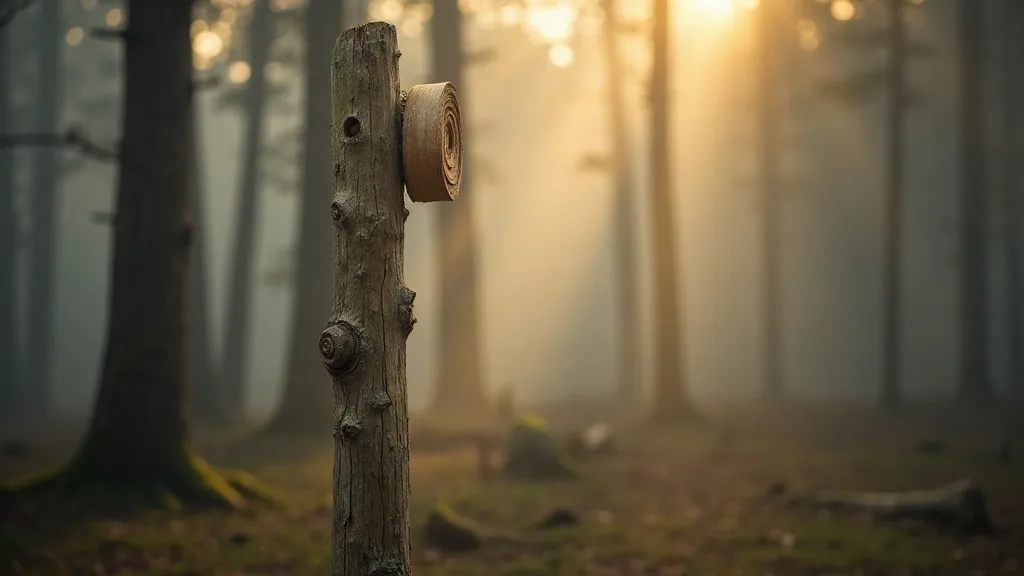
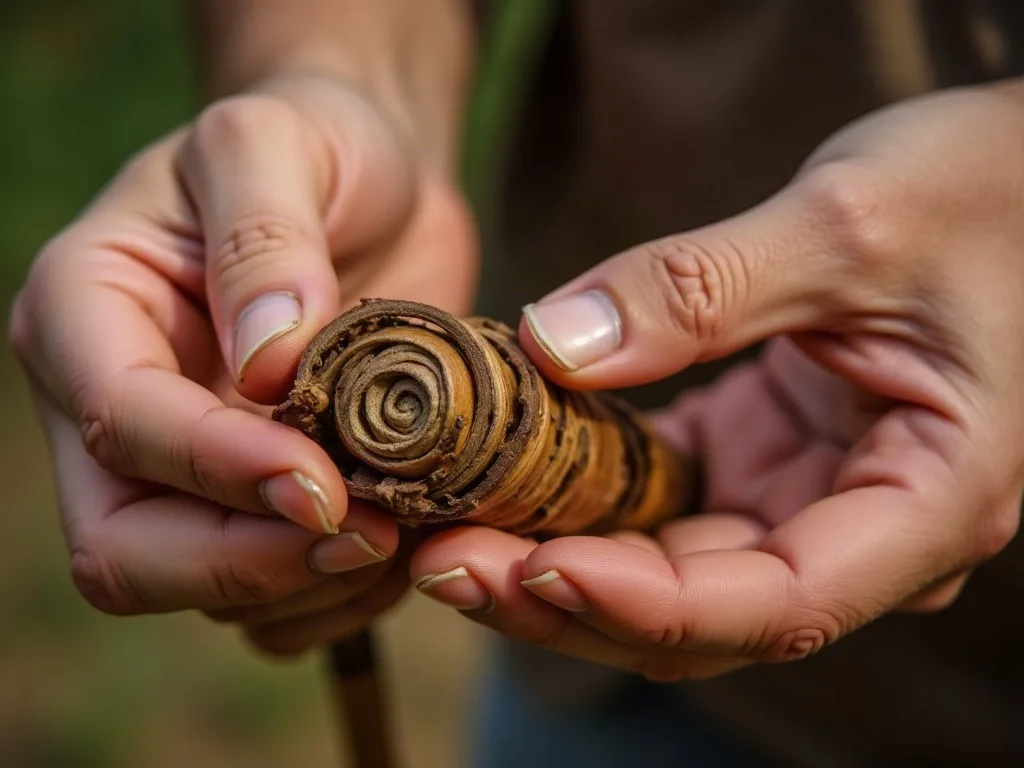
An inaw begins with wood. The Ainu traditionally use willow, though elder and other flexible woods also work. The priestess or ritualist peels back the bark in long spirals, leaving it attached at the base. The strips stand up like the frayed edges of an offering, vulnerable and deliberate. Some inaw are no larger than a hand. Others stretch several feet high. The size depends on the ritual's purpose and the spirit's rank.
The act of carving is itself a prayer. An inaw made hastily or with anger will not carry the message. The carver must be calm, focused, sometimes fasting. Each cut in the wood becomes part of the speech. There is no single pattern. Some inaw have notches that spiral around the shaft. Others bear thin horizontal lines scored at intervals. A few are left nearly bare, their significance lying in the gesture of offering rather than the object's complexity.
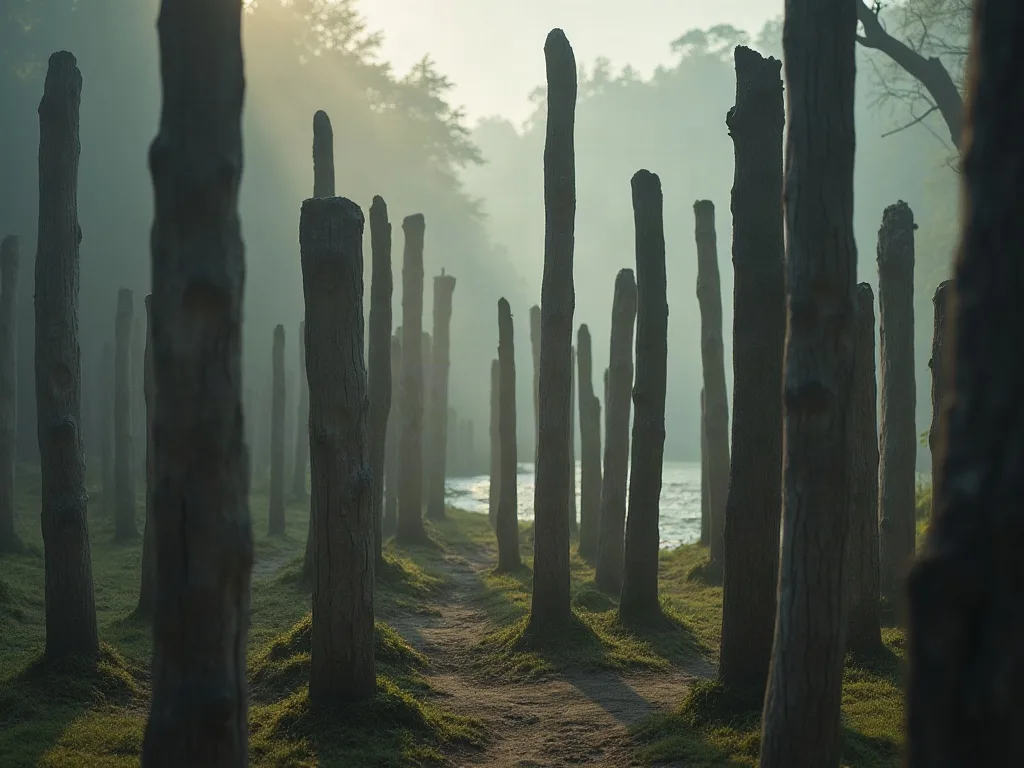
The bark strands are the inaw's voice. When the wind moves them, the spirits hear. When they catch fire in a ceremonial flame, the smoke carries the prayer upward. This is why inaw appear at riverbanks and mountain shrines throughout Hokkaido and the Ainu homeland. They are burnt offerings, yes, but they are also standing witnesses. A grove thick with inaw stakes shows the spirits that the Ainu have not forgotten them.
Spiritual Purpose: Messages to the Kamui
The Ainu cosmos is inhabited by kamui (spirits), who govern every element. There is the kamui of fire, water, mountains, illness, abundance, and death. Humans live alongside them in a relationship that is never neutral. The kamui must be thanked for good fortune. They must be appeased when offended. They must be asked for help in difficult times. The inaw is the language this relationship uses.
When an Ainu person faces hardship, sickness, or uncertainty, they prepare an inaw. The act of making it is often done by a priestess or shaman, though individuals may carve their own. The inaw's design and placement communicate the prayer's intent. An inaw offered to the fire kamui might be placed at the hearth. One meant for the water spirits goes to a river. An inaw made for healing is sometimes burned, so its essence reaches the spiritual realm more directly.
The wood itself carries meaning. Willow is flexible and resilient. It grows near water and survives harsh winters. By offering willow, the Ainu ask the spirits to grant those same qualities to their lives. The spiral bark, when stripped back, resembles both an unfolding scroll and exposed skin. It is an honest offering, something vulnerable, not wrapped in pretense.
The Ritual Context: When and How Inaw Are Used
Inaw appear in almost every major Ainu ceremony. In the Iomante, the bear-sending ritual, inaw are placed around the space where the ceremony takes place. The Iomante is one of the most sacred Ainu rites. A captive bear, believed to be a divine being temporarily in animal form, is honored and released to the spirit world. The inaw stakes mark the boundary between the human and sacred space. They tell the kamui that the Ainu are aware of what is happening, that they respect it, that they ask for the bear's blessing.
In rites meant to honor the sun, the wind, or ancestral spirits, inaw are again central. A woman's coming-of-age ceremony involves offerings of inaw. A funeral includes them. The logic is consistent: whenever the boundary between worlds grows thin, inaw appear as anchors and bridges.
The placement of inaw follows geography and custom. In some villages, they accumulate at a riverbank shrine over years or decades, creating a forest of wooden prayers. Older, weathered inaw stand next to fresh ones. The bark on older offerings has begun to bleach and fray. Some have bent with snow and wind. This gradual decay is not loss. It is the offering being accepted, the message being read and absorbed, the prayer dissolving back into the natural world from which the wood came.
Inaw and the Concept of Reciprocal Exchange
To understand inaw, one must grasp the Ainu concept of exchange with the spirit world. This is not a one-way petition. The kamui give gifts to humans: abundance, health, protection. In return, humans must give gifts to the kamui. Without reciprocal exchange, the balance breaks. Illness, misfortune, and spiritual disorder follow. Inaw offerings are the Ainu's way of saying: "We receive. We acknowledge. We give back."
This principle shapes every detail of Ainu religious life. Food offerings, prayers, and rituals all flow from this understanding. The inaw is perhaps the most visible expression because it lasts. A bowl of food is consumed. Words fade. But the wooden offering stands for days, weeks, sometimes longer. The spirits see it every time they pass. The human community sees others' inaw and remembers that gratitude and respect are not private feelings but shared responsibilities.
The Ainu call this exchange ayutsbe, reciprocal gift-giving. An inaw carved and offered says: "Kamui, you have given us life, water, fire, food. We offer you this wood, this prayer, this attention. May our worlds remain in balance."
Regional Variations and Sacred Places
Across Hokkaido and the Ainu territories, different regions developed distinct styles of inaw. In some areas, the spiral bark strands are left wide and loose. In others, they are carved into precise, narrow ribbons. Some inaw are painted with ochre or ash. Others remain natural wood color. These variations are not random. They reflect local custom, the wood available in a region, and the particular spirits honored there.
Certain places became especially sacred because of their inaw groves. The Akan region, near volcanic hot springs, has hosted inaw offerings for centuries. Mount Ainu-Fureppa, visible for miles across the landscape, served as a focal point for offering rituals. The Ainu understood landscape as saturated with spiritual presence. A mountain was not merely geography; it was the dwelling of a powerful kami. Rivers were not only water but living presences deserving respect and reciprocity.
Priestesses, who held deep knowledge of which kami inhabited which places, would direct people to the right location for their offering. If you sought blessing for a birth, you went to a particular shrine. If you needed protection from illness, you went to another. The placement of inaw created a kind of spiritual map, a geography of human need and divine response.
The Priestess Tradition and Knowledge Keepers
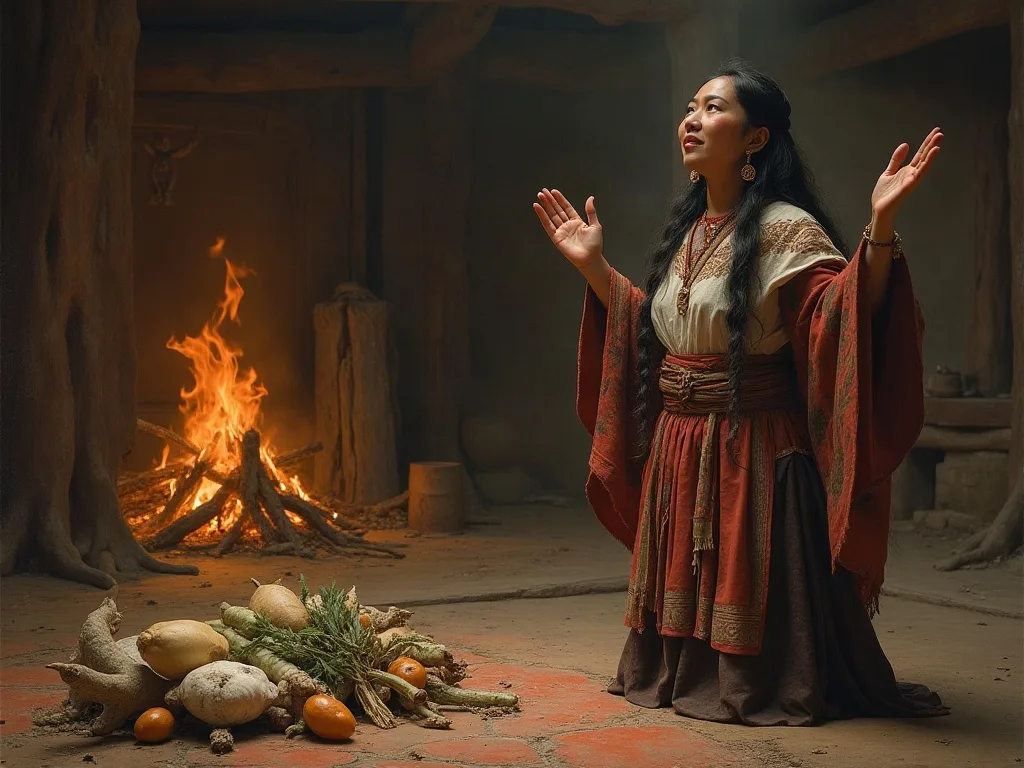
For centuries, Ainu priestesses (mante) served as the primary makers and interpreters of inaw. A mante studied for years under an elder priestess, learning the dialects of different kamui, the proper forms of address, the correct wood and carving techniques. This knowledge was held almost entirely by women, making them the guardians of Ainu spiritual continuity.
A mante could read the spirit world through divination, interpret signs, and craft inaw that carried precise messages. Her skill was not theatrical. She did not perform for spectators. She communicated directly with the spirits, and the inaw was her language's physical form. When she carved, she was translating human longing into something the kamui could receive.
The Japanese colonial period (1868 onwards) and forced assimilation severely disrupted this priestess tradition. Many Ainu spiritual practices were suppressed or driven underground. Younger generations were discouraged from learning traditional rituals. The knowledge of how to carve and offer inaw nearly vanished. In recent decades, however, Ainu communities have worked to revive these practices. Priestesses are teaching again. Young Ainu people are learning to carve inaw. The tradition, though strained, has not broken.
Inaw in Contemporary Ainu Practice and Cultural Revival
Today, inaw offerings remain a living practice among Ainu communities in Hokkaido and diaspora communities elsewhere. The National Ainu Museum opened in 2008 in Shiraoi, Hokkaido, and it features exhibits on inaw carving and ritual use. Visitors can see historical inaw and learn about their spiritual significance. More importantly, active priestesses and ritual specialists continue to make and use them.
Modern inaw carving has become a form of cultural expression and identity. Ainu artists and community leaders carve inaw not only for private ceremonies but also for public events, memorials, and gatherings. When the Ainu held mourning ceremonies for those killed in historical massacres, inaw were placed at the sites. When Ainu youth groups organize cultural education events, inaw carving is often included, teaching the next generation how to use this language of the spirits.
This revival is not nostalgic performance. It is living spirituality. For many Ainu people, inaw represent resistance to centuries of suppression and a reclamation of identity. To carve an inaw today is to say: "Our spirits are not forgotten. Our relationship with the kamui continues. We are still Ainu." The wooden offering carries spiritual meaning and political meaning at once.
Cross-Cultural Echoes: Sacred Wooden Offerings Beyond Ainu
The practice of carved wooden offerings appears in other traditions across Asia and beyond, though the forms and purposes vary. In Japanese Shinto, ema are small wooden plaques on which worshippers write prayers and hang them in shrine precincts. These function similarly to inaw in some ways: they are wooden, they carry written or carved prayers, they remain visible for spirits and visitors to see. Yet ema are typically smaller, mass-produced, and more individualistic. The Ainu inaw carries collective memory and custom in a way ema often do not.
In some Siberian indigenous traditions, carved wooden poles and staffs served ritual purposes. The Sami people of northern Scandinavia used wooden offerings in their sacred practices. These practices predate Japanese colonial influence and likely represent parallel developments in cultures that share similar environments and worldviews. Indigenous peoples living close to forests naturally developed wooden offering traditions. Wood is abundant, visible, and enduring. It makes sense as a medium for prayer.
The specific genius of the Ainu inaw lies in its combination of simplicity and spiritual sophistication. The practice requires no complex machinery, no priesthood's exclusive knowledge, no expensive materials. A priestess with a knife and the right wood can craft powerful offerings. Yet the practice encodes profound spiritual ideas: the balance between human and spirit worlds, the need for reciprocal exchange, the use of natural materials as a language that kamui understand.
Frequently asked questions about Inaw: Sacred Wooden Offerings
Frequently asked questions
Can anyone carve and offer an inaw, or must a priestess do it?
Traditionally, priestesses (mante) held specialized knowledge and authority in carving inaw for major ceremonies. However, individuals also made their own inaw for personal prayers, particularly in household rituals. The priestess's inaw carried more ceremonial weight and spiritual authority, but the principle of ordinary people communicating with kamui through wooden offerings was never restricted to priests alone. Today, community members are learning inaw carving as part of cultural revival efforts.
What happens to an inaw after it has been offered?
An inaw remains in place until it weathers and decays naturally, or until it is ceremonially burned. The gradual breakdown of the wood is understood as the spirit accepting and absorbing the offering. Burning an inaw is faster and more dramatic; the smoke carries the prayer directly to the spirit realm. Both processes are valid. Some inaw accumulate at shrine sites for years, creating forests of offerings at sacred places.
Are inaw only used in major ceremonies like the Iomante, or are they part of everyday spiritual life?
While inaw appear prominently in major rituals like the Iomante (bear-sending ceremony), they are also central to everyday Ainu spirituality. Households made inaw for personal prayers, blessings, and protection. They were offered when illness struck, before hunts, after successful harvests, and at life transitions. The everyday use of inaw reflected the Ainu understanding that the spirit world is not distant or separate; kamui are present in daily life and constant communication with them is necessary and natural.
How did colonial suppression affect inaw practices, and are they being revived today?
Japanese colonization (from 1868 onwards) suppressed Ainu spiritual practices, including inaw rituals, as part of forced assimilation policies. Many priestesses stopped practicing openly; younger generations lost access to this knowledge. Since the late 20th century, Ainu communities have worked to recover and revive these traditions. The National Ainu Museum, opened in 2008, teaches inaw carving and significance. Contemporary priestesses, community leaders, and young Ainu people are actively learning and practicing these rituals, making inaw a living, evolving tradition rather than a historical artifact.
What is the difference between inaw and other Ainu spiritual objects like charms or amulets?
Inaw are fundamentally different from personal charms or amulets in their purpose and scale. An inaw is not worn or carried; it is placed in sacred space or burned to communicate with spirits directly. It is a message, not a protective object one keeps. Ainu charms (such as fuchi, protective knots and woven items) serve personal defense, while inaw serve communal prayer and reciprocal exchange with kamui. Both are part of Ainu spirituality, but they operate in different registers.
The Enduring Language of Wooden Prayer
The Ainu relationship with inaw reveals something essential about how indigenous peoples communicate across the boundary between material and spiritual worlds. Wood is humble. It is abundant in Hokkaido's forests. It is not precious in an economic sense. Yet in the hands of a priestess with knowledge and intention, a simple piece of willow becomes a conduit for the sacred.
This is where the power of inaw lies. The offering succeeds not because it is grand or expensive, but because it represents genuine attention and respect. The kamui, in Ainu belief, respond to authenticity. An inaw carved carefully, placed thoughtfully, spoken to with sincerity carries more weight than elaborate rituals performed by rote. The spiral bark, the wood grain, the individual carver's hands, all matter because they show that this prayer is real, particular, honest.
Today, as Ainu communities fight to preserve and restore their cultural identity after centuries of oppression, inaw have become symbols of spiritual resilience and political assertion. They are no longer only private prayers. They are public declarations. When an Ainu artist carves an inaw at a museum exhibition or cultural gathering, they are teaching visitors that this tradition never truly died. The spirits were never forgotten. The language of wooden offerings still works.
To see an inaw grove at a sacred site in Hokkaido, to watch the bark strips move in the wind, to understand that each stick carries a human prayer and a kamui's attention, is to grasp something that no amount of academic explanation can convey. The inaw speaks in silence. It bridges worlds. It proves that the Ainu and their spirits remain in conversation, generation after generation, through the humble language of carved wood.
Free 25-page sample
Want the whole story?
Take the first 25 pages free. If it pulls you in, the full edition is yours as an instant PDF download, with a paperback on Amazon for selected titles.

Ainu
The Ainu Mythology Book: The Kamuy, the Bear Spirit, and the Sacred World of Hokkaido
The Kamuy, the Bear Spirit, and Hokkaido
The beliefs of the indigenous people of northern Japan: a world where everything (fire, water, owl, and bear) is a kamuy, a god wearing a disguise, who visits the human world as a guest and must be sent home with honor. Preserved in the great epic songs, the yukar.
More from Ainu
All articles
Ainu
The Ainu Creation Story: How the World Rose from the Primordial Sea
Before Japan existed, before humans walked the earth, the Ainu tell of a time when only water and sky collided. Discover how divine beings created the islands, brought forth life, and shaped a world where nature itself is sacred.

Ainu
Repun Kamuy: The Orca God of the Sea
The Ainu revered Repun Kamuy, the orca deity who commands the sea and guides fishers through treacherous waters. Discover how this killer whale god shaped maritime survival, ritual, and the spiritual relationship between the Ainu and the ocean.

Ainu
Kotan Kor Kamuy: The Village Guardian Owl
Meet Kotan Kor Kamuy, the watchful owl spirit who guards Ainu villages from harm. In Ainu belief, this kamuy oversees human settlements and stands as protector of community bonds. Discover how a vigilant nocturnal hunter became one of the Ainu peoples' most trusted spiritual guardians.

Ainu
Ainu Mosir: The Quiet Land of the Humans
Ainu Mosir is the sacred homeland where humans live in balance with nature and the kami spirits. Discover how the Ainu people understood their island world, its spiritual geography, and the delicate relationship between the seen and unseen realms.