
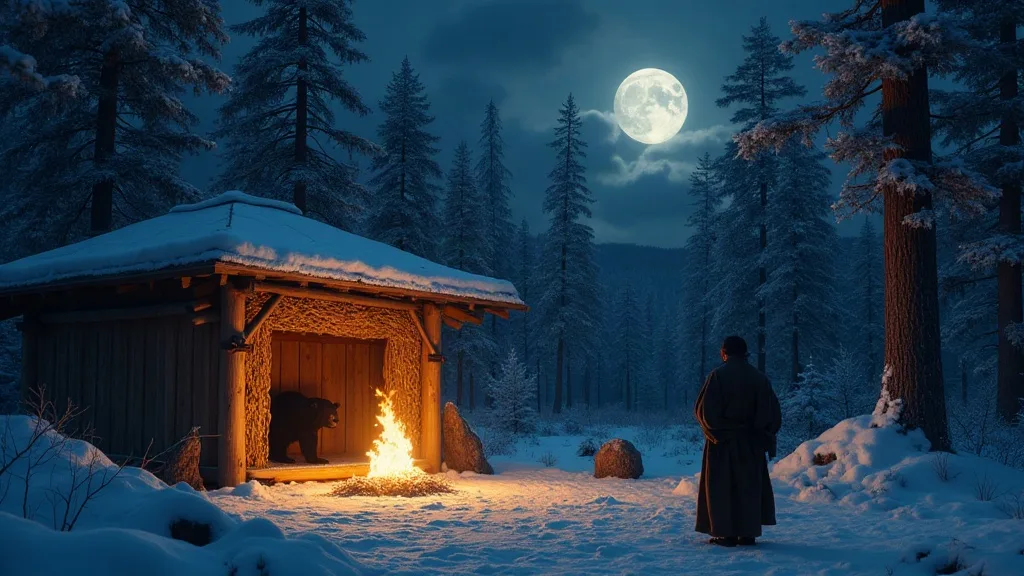
Iyomante: The Bear Sending Ceremony and the Ainu Sacred Bond with Nature
The Iyomante is the Ainu people's most sacred ritual: a ceremony to send a bear's spirit back to the divine realm after its capture. Through dance, prayer, and feasting, the Ainu honor the animal as a god who has temporarily lived among them, a rite that reveals how indigenous spirituality treats hunting not as dominion but as reciprocal relationship.
Contents
The Ainu people of Hokkaido, Japan's northernmost island, have orchestrated one of the world's most distinctive ceremonies for over a thousand years. In the depths of winter, when snow blankets the forest, they gather to send a bear's spirit back to the heavens. This ritual, called Iyomante (literally "sending off"), is not a sacrifice of property or livestock. It is a farewell to a god who has walked the earth in animal form, a ceremony that transforms hunting from an act of death into an exchange between the human and divine realms.
To witness Iyomante is to understand how the Ainu see the natural world: not as a resource to exploit, but as a community of persons to whom humans have obligations. The bear is kamui (divine spirit); the ritual honors both the animal and the cosmic order it represents. The ceremony binds hunter and hunted in a sacred compact that has outlasted empires.
The Iyomante and the Divine Bear
The foundation of Iyomante rests on a theological premise central to Ainu religion: all creatures are kamui, spirits with agency and consciousness. The bear, however, holds special status. Known as Kim-un-kamui (mountain god) or Ainu-kamui (the god closest to humans), the bear is understood to be a deity who has chosen to manifest in animal form, living among the Ainu as a teacher and provider of vital resources.
When an Ainu hunter killed a young bear, he did not see this as simple predation. Instead, he understood the moment as the beginning of a transaction. The bear, in its divine nature, had temporarily given itself to the human world. By receiving the animal's body, humans incurred a debt. The only way to repay this debt was to conduct Iyomante: a ceremonial return of the bear's spirit to the kamui realm, accompanied by prayers of gratitude and offerings of fine goods.
This theological framework explains why the ceremony was not optional. Failure to send a bear's spirit home properly could anger other kamui, bringing misfortune to hunters and their families. The ritual was therefore a spiritual necessity, as vital to community survival as the hunt itself.
Origins and Historical Evidence
The Ainu oral tradition, preserved in yukar (ceremonial chants), speaks of Iyomante as ancient practice, embedded in the spiritual laws the Ainu received from the kamui. Written documentation, however, is scarcer. Japanese colonial records from the Edo period (1603-1867) describe bear-sending ceremonies among Ainu groups, often with a tone of anthropological interest tinged with suspicion. European travelers in the late 19th and early 20th centuries documented versions of the ritual, including the explorer John Batchelor, who lived among the Ainu and recorded his observations in detail.
The oldest known extended account comes from Ainu oral narratives recorded by scholars in the early 20th century. These texts, collected by figures like Shiro Hattori and later synthesized by anthropologist Shiro Koizumi, emphasize that Iyomante was not a single standardized practice but rather a family of related ceremonies, with regional variation. Coastal Ainu conducted certain rituals differently from mountain Ainu. The scale and expense of the ceremony also varied with a family's means and the prestige of the deceased bear.
What remained constant across variants was the core purpose: to honor the bear as a divine being and to facilitate its spiritual return home.
The Ceremony in Practice: From Capture to Farewell
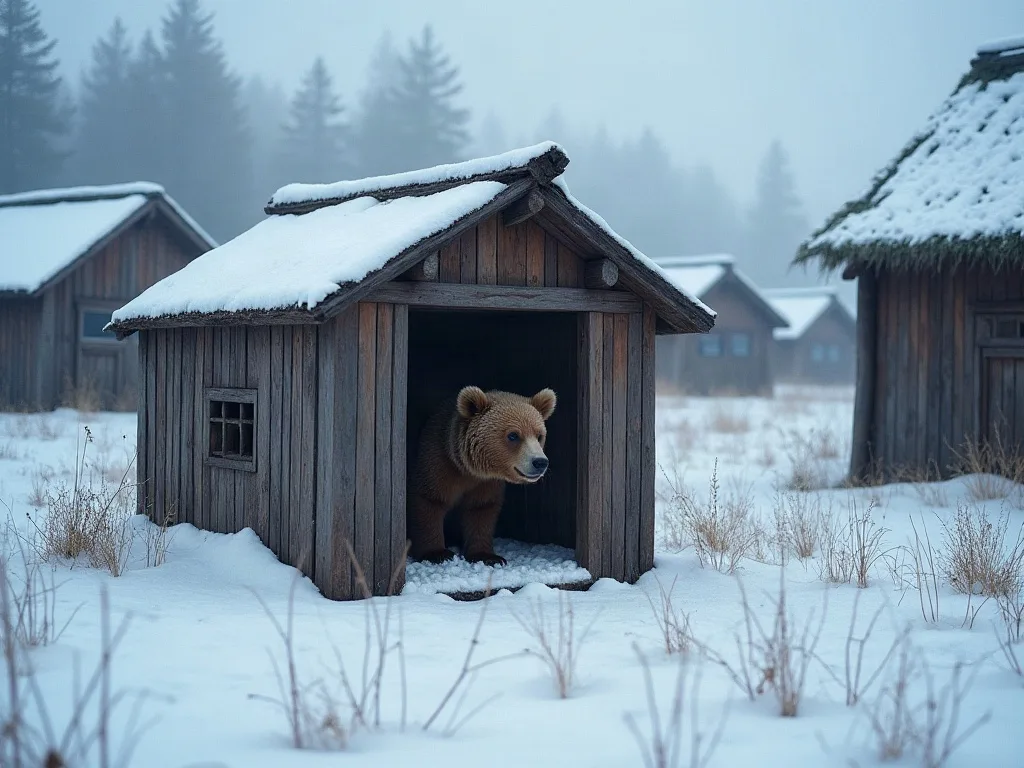
Historically, the full Iyomante cycle began not when the bear died, but sometimes years earlier, when hunters captured a young bear alive. This animal, kept in a wooden enclosure (gunomi), was fed and tended as a semi-sacred creature. The bear lived on the boundary between the human village and the wild forest, neither fully tame nor free. Children were sometimes forbidden to mock or strike the captive bear, as this would dishonor the kamui.
When the time came to conduct Iyomante, the ceremony unfolded over several days and involved the entire Ainu community. The ritual followed a general sequence, though local variations existed:
The Morning Ritual and Prayer
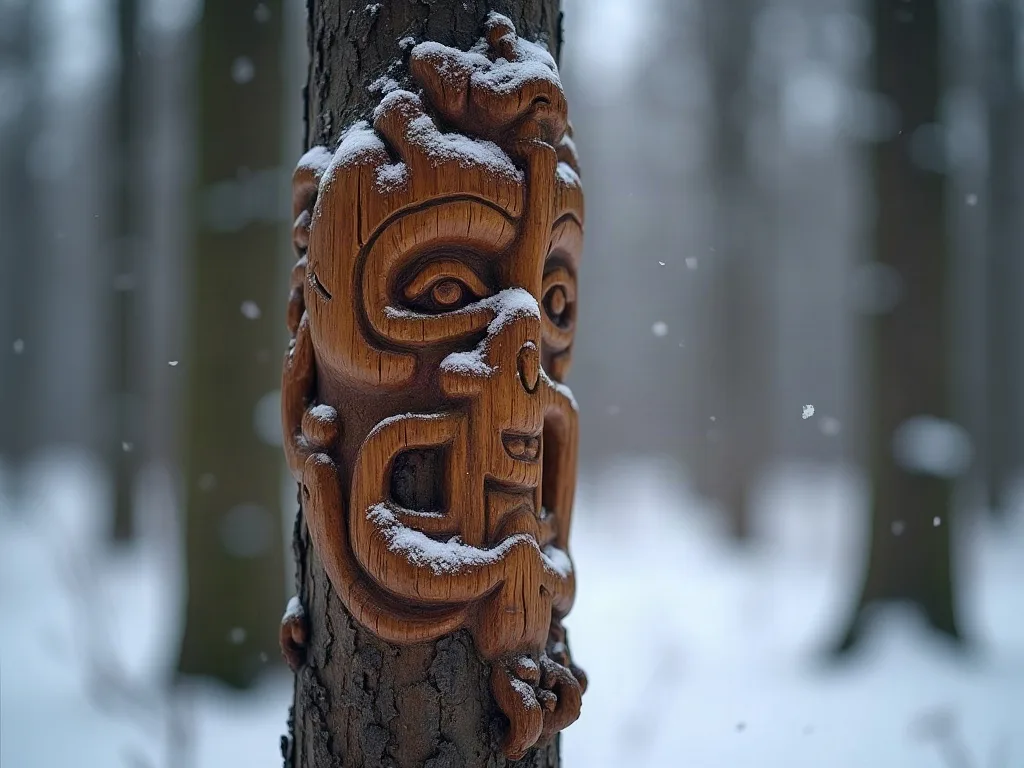
Before dawn, the family lit a bonfire and made offerings of sake (rice alcohol), dried fish, and other precious goods at a sacred wooden pole called an inao. The inao, topped with whittled wooden shavings that curled back on themselves, served as a physical conduit between the human and divine realms. An Ainu elder or shaman (itak) chanted prayers in the archaic ritual language, addressing the bear-kamui directly: "O great one, you have come to visit us. We have cared for you. Now return to your home in the mountains, and tell the other kamui of our respect."
The Feast and Celebration
The day of Iyomante itself was marked by feasting. The bear was killed (historically by bow and arrow, or by being surrounded and struck with wooden clubs; later, by rifle). Its body was then ritually processed. The meat was divided according to custom: the finest cuts went to honored guests and relatives; other portions were distributed to ensure every family received a share. This was not gluttony but sacred communion. By eating the bear's flesh, the Ainu community literally incorporated the blessing of the kamui.
Alongside the feasting came ceremonial drinking, singing, and dancing. Young men performed dances that mimicked the bear's movements, honoring its power and dignity. The music was rhythmic, hypnotic, performed on traditional instruments. Elders sang yukar, epic chants that narrated the bear-kamui's divine origins and thanked it for its generosity.
The Final Sending
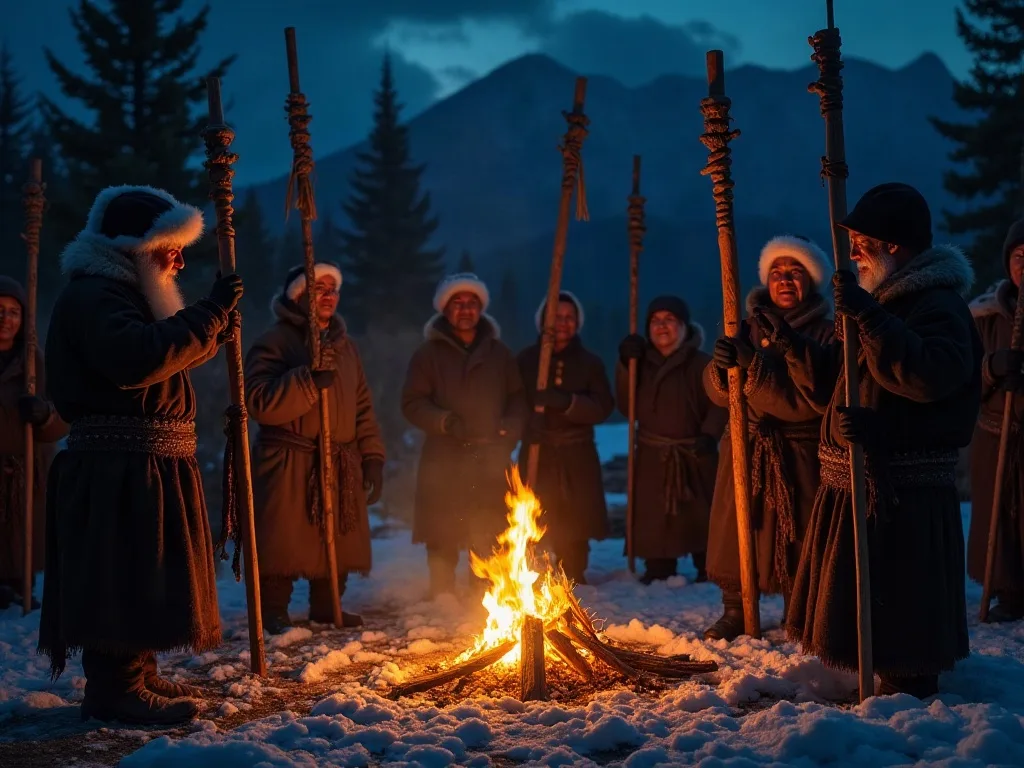
The climax came when the bear's head was presented as the final offering. Among some Ainu groups, the head was placed on a pole or hung from a sacred post, wreathed in inao and facing toward the mountain. Elders sprinkled sake and described elaborate gifts that the ceremony was "sending" back with the spirit: bolts of cloth, jewelry, and other treasures (some of which were actually burned or buried as a symbolic transfer to the spirit world). The prayers became more urgent and emotional, a goodbye that acknowledged both gratitude and sorrow.
"Go home now, honored one. Tell your mother that we have treated you well. Tell the mountain kamui that we are ready to receive your brothers and sisters, and we will honor them too."
By nightfall, the physical remains of the ritual were carefully disposed of, and the ceremony concluded with a final feast where the remaining meat was consumed in peaceful communion.
The Spiritual Purpose: Reciprocity and Cosmic Balance
Iyomante reveals a fundamentally different relationship between humans and nature than the one dominant in industrial cultures. It is not founded on the idea that animals exist as resources for human use. Rather, it is grounded in the principle of chitatke (reciprocal obligation).
The Ainu hunter did not thank the bear for dying. He thanked the bear for choosing to give itself. This distinction is crucial. It means the bear retained agency and honor even in death. The ritual was the human side of a cosmic contract: the bear provides its body; the human provides the ceremony, the feast, the prayers, and the gifts sent back to the kamui realm.
By conducting Iyomante with diligence and respect, the Ainu ensured that:
- The bear's spirit would not harbor resentment or bring curse to the hunters.
- Other kamui would witness human gratitude and be more likely to present themselves to Ainu hunters in future seasons.
- The balance between the human and divine worlds would be maintained.
- The community would be blessed with continued success in the hunt.
In this worldview, ecological sustainability and spiritual devotion were not separate concerns. A hunter who conducted Iyomante poorly risked not merely spiritual punishment but the genuine depletion of game, because the kamui would withdraw their presence from lands where they were disrespected.
Regional Variations and the Bear's Status
Although Iyomante was most closely associated with the bear, the Ainu conducted versions of this sending ceremony for other animals of spiritual importance: deer, whales (among coastal groups), and occasionally eagles. Each had its own local protocols. However, the bear ceremony was universally recognized as the most elaborate, the most costly, and the most spiritually urgent.
This prominence reflected the bear's supreme status in Ainu cosmology. The bear was not merely a source of meat and fur (though it was both). It was the embodiment of mountain power, a kamui that could kill a human as easily as it could feed one. Respect for the bear was therefore respect for a being that could take back what it had given. The ceremony acknowledged this asymmetry and sought to make peace with divine power that could not be controlled, only honored.
Regional variations included:
- Hokkaido mountain groups conducted elaborate multi-day ceremonies with dozens of guests, extensive feasting, and the creation of numerous inao poles.
- Coastal Ainu sometimes incorporated whale-hunting rituals into their ceremonial calendar, conducting both bear and whale sendings as complementary exchanges with different regions of the spiritual world.
- Smaller family groups held less elaborate ceremonies, sometimes combining the sending of several animals into a single ritual event.
What unified these variations was the theological principle: the animal was a kamui, and its spirit must be respectfully returned.
Iyomante in the Colonial Period and Modern Era
The arrival of Japanese administrative authority and then Japanese colonization transformed Ainu life. By the Meiji era (1868 onward), the Japanese government actively discouraged Ainu cultural practices, including Iyomante. Bears were hunted to near-extinction across Hokkaido, and Ainu communities were pressured to assimilate. For much of the 20th century, the ceremony became rare, maintained only in isolated communities or revived in selective, abbreviated forms.
In the 1960s and 1970s, as Ainu cultural consciousness reasserted itself, intellectuals and elders began documenting Iyomante through interviews and recorded performances. Shiro Hattori's linguistic work preserved detailed accounts of the ceremonial language. The anthropologist Kazuyoshi Ohtsuka produced ethnographic monographs on Ainu ritual practice that helped establish Iyomante as a subject of serious scholarly attention.
Today, Iyomante exists in a complex state. The ceremony itself is rarely performed in its full historical form, partly because bears are protected under Japanese wildlife law and partly because the Ainu population has been deeply disrupted by assimilation and economic displacement. However, the ritual has become a powerful symbol of Ainu cultural identity and resistance. Some Ainu communities have revived abbreviated versions as cultural performances and educational events, ensuring that the knowledge and spiritual meaning are not lost to future generations.
Iyomante and the Broader Ainu Worldview
Understanding Iyomante requires grasping the Ainu concept of the universe. The Ainu understood existence as layered: the human world (aynu-mosir, the land of humans), the divine realm (kamui-mosir, the land of the gods), and various intermediate realms. Unlike many traditions where gods dwell in a distant heaven, the Ainu kamui were present and active in the natural world. Mountains, rivers, fire, storm, and animal species each had a presiding kamui or were themselves kamui in disguise.
This was not mere animism in the sense of ascribing human-like personality to natural objects. Rather, it was a recognition that other beings possessed agency, consciousness, and spiritual substance. Respect, therefore, was not sentimentality but recognition of real power and presence.
The ritual complex surrounding Iyomante included other ceremonial acts:
- Inao-making: the carving and decoration of sacred poles as offerings and places of prayer.
- Yukar-chanting: the recitation of epic poems that narrated divine narratives and established a shared spiritual memory.
- Libation and offering: the pouring of sake and presentation of goods, through which material generosity became spiritual communication.
All of these elements cohere into a religious practice that is simultaneously practical (managing the psychological and social dimensions of hunting) and metaphysical (maintaining cosmic balance).
Cross-Cultural Echoes
Scholars have noted structural similarities between Iyomante and other bear-sending or animal-honoring ceremonies among circumpolar peoples. The Sami of Scandinavia conducted bear rituals with comparable theological logic: the bear was a divine being whose spirit must be released. Siberian indigenous groups, including the Gilyak and some Nivkh communities, conducted ceremonies that honored killed bears as returning to an ancestral or divine realm.
These parallels suggest that cultures adapted to harsh northern environments, dependent on large predators for survival, developed theological frameworks that transformed hunting from a simple extraction into a reciprocal relationship. The Iyomante is one of the most fully documented and elaborate expressions of this principle.
At the same time, the Ainu ceremony had distinct features. The multi-year captivity of the bear, the involvement of the entire community in a protracted feast and celebration, and the deeply elaborated spiritual language of the yukar give Iyomante a character that is recognizably Ainu and not simply a generic circumpolar practice.
How Iyomante Was Conducted: A Detailed Ceremony
The full ceremonial sequence of a major Iyomante (as documented in early 20th-century accounts) typically unfolded as follows:
Day One: Preparation and Gathering
Word spread through the village and to neighboring settlements that a major Iyomante would occur. Guests began arriving days in advance. The family conducted preliminary prayers at inao poles, asking the bear-kamui for patience and assuring it that a proper ceremony was being prepared. Alcohol was brewed or purchased. Food stores were brought out. Young men were dispatched to gather bark and wood for the construction of additional inao.
Day Two or Three: The Initial Feast
A feast began, often with dance and music continuing through the night. The gathered community acknowledged the occasion's importance. Speeches were made by elders, sometimes in the archaic ritual language, describing the bear's generosity and the human obligation to honor it.
The Killing and Butchering
The bear was then killed, often with ceremonial precision. The body was carefully processed, with special attention to the head and certain bones, which held spiritual significance. The meat was divided into portions, with designated shares for particular categories of people: honored guests received the finest cuts; distant relatives received smaller shares; the poorest members of the community also received meat, ensuring that the blessing of the kamui was distributed across the social body.
The Climactic Offering
As evening approached, the ritual reached its intensity. The bear's head, prepared and positioned facing toward the mountains, became the focal point. Multiple inao poles, newly carved, stood nearby. An elder or shaman addressed the bear directly, sometimes for hours, in long poetic prayer:
"O divine one, we thank you for coming to us in bear form. We have fed you well. Your meat will nourish our children. Your bones will teach us. Now return to your home. Tell your mother that we have treated you with honor. Tell the mountain spirits that the Ainu remember the covenant. Go with these gifts."
Gifts (often bolts of cloth, beads, or other valuable items) were placed on or near the inao, symbolically packaged for the spirit journey. Sake was poured. The prayers became more emotional, almost elegiac.
The Final Night and Departure
The ritual concluded with communal eating and drinking, the mood shifting from solemnity to celebration. By dawn, the physical site of the ceremony was cleaned, remaining meat was distributed or preserved, and the gathered guests began their journeys home. The ceremony itself was complete, though the spiritual benefit was understood to last indefinitely, binding the Ainu community to the mountain kamui through the memory of this particular act of respect.
The Iyomante in Contemporary Scholarship and Ainu Activism
Modern Ainu scholars have positioned Iyomante as central to understanding indigenous knowledge systems and environmental ethics. The ceremony demonstrates that the Ainu did not exploit their environment recklessly but rather operated within a framework of reciprocal relationship and spiritual accountability. This insight has influenced global conversations about indigenous land management and sustainability.
Ainu cultural activists have also claimed Iyomante as a symbol of cultural sovereignty. In the face of centuries of marginalization, the ceremony represents an unbroken line of spiritual practice and intellectual sophistication. Museums and cultural centers in Hokkaido now feature detailed explanations of Iyomante, and some communities have organized cultural performances that honor the ritual's meaning without repeating its historical killing of bears.
The theological and ethical questions raised by the ceremony remain urgent. How should modern societies think about the relationship between humans and animals? What can indigenous traditions teach about sustainability and respect? The Iyomante, precisely because it took the killing of an animal seriously (both spiritually and morally), offers resources for reflection that many modern practices lack.
Frequently asked questions about Iyomante
Frequently asked questions
Was the bear kept alive in captivity for the entire ceremony?
Historically, yes. Young bears were often captured alive and kept in wooden enclosures for months or even years before the ceremony. The bear's captivity was part of the ritual structure: it lived in a liminal state between the wild and the human world, embodying the temporary presence of the kamui among humans. The killing occurred during the ceremony itself, at a designated moment of ritual significance.
Did all Ainu conduct Iyomante, or only certain families?
The ceremony required significant resources and labor, so smaller families or those with fewer means sometimes conducted simpler versions or participated in larger community ceremonies. However, the obligation to conduct some form of sending ritual for killed bears was considered universal among Ainu communities. Neglecting to do so was believed to bring spiritual and practical misfortune.
How does Iyomante compare to hunting practices in other cultures?
Many indigenous cultures developed ceremonies to honor killed animals, but Iyomante is distinctive for its scale, duration, and the explicit theological framework that treats the bear as a temporarily incarnate divinity. The Ainu understanding of the bear as kamui (a god in animal form) is more elaborate than simple animal veneration and creates a more complex ethical relationship to the hunt.
Is Iyomante still performed today?
Full traditional ceremonies are rare, partly due to bear conservation laws and partly due to the disruption of Ainu communities through colonization and assimilation. However, some Ainu communities have revived abbreviated ceremonial forms as cultural education and remembrance. The knowledge and spiritual significance of Iyomante remain central to contemporary Ainu cultural identity.
What was the significance of the inao poles in the ceremony?
The inao, carved wooden poles with shaved bark curling back on themselves, served as physical conduits between the human and divine realms. Offerings and prayers were made at the inao to communicate with the kamui. In Iyomante, multiple inao would be created and positioned around the ritual space, each one facilitating a particular prayer or offering intended for the bear's spirit journey.
Did the Ainu believe the bear suffered or consented to the ceremony?
The Ainu theological framework understood the bear as a kamui (divinity) who had chosen to manifest in animal form and to give itself to the human community. Whether the bear "consented" in a modern ethical sense is a complex question, but the Ainu understanding was that the bear was not a victim but a divine being whose presence and gift deserved honor and reciprocal obligation. The ceremony was meant to ensure that this exchange remained balanced and respectful.
The Sacred Geometry of Human-Animal Relationship
The Iyomante ceremony stands as one of the world's most philosophically sophisticated responses to the fundamental problem of killing animals for sustenance. By framing the hunt not as domination but as participation in a cosmic exchange, the Ainu created a ritual practice that acknowledged the moral weight of taking life while affirming the necessity of that act within the food chain.
The ceremony's persistence (and its revival in contemporary cultural practice) reveals something essential about the Ainu people: a capacity to hold complexity, to honor both gratitude and sorrow, to recognize the dignity of prey while acknowledging human need. This is not sentimentality. It is a mature ethical vision, tested across centuries.
Modern observers, whether scholars or general readers, often approach Iyomante from the outside, looking for lessons about sustainability or indigenous wisdom. This is valuable but risks missing the inner experience: what it meant to stand in the village on that winter night, firelight illuminating the inao poles, hearing the elder's voice calling across the boundary between worlds, knowing that a sacred exchange was occurring and that the community's relationship to the land and the divine was being reaffirmed through this act of careful, respectful, costly honor.
Free 25-page sample
Want the whole story?
Take the first 25 pages free. If it pulls you in, the full edition is yours as an instant PDF download, with a paperback on Amazon for selected titles.
Ainu
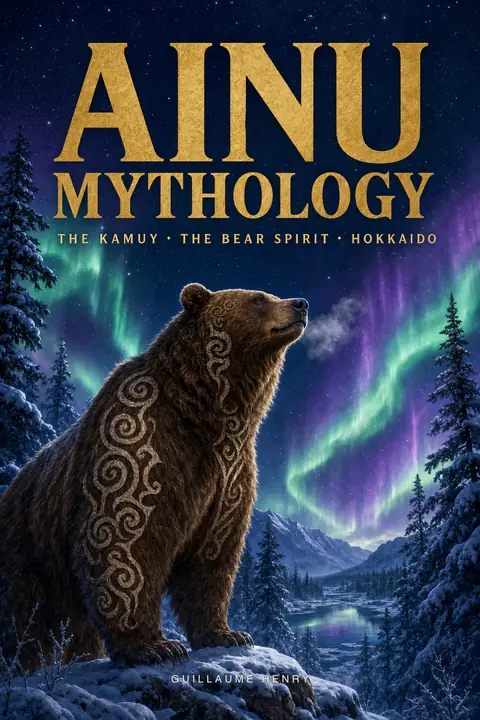
The Ainu Mythology Book: The Kamuy, the Bear Spirit, and the Sacred World of Hokkaido
The Kamuy, the Bear Spirit, and Hokkaido
The beliefs of the indigenous people of northern Japan: a world where everything (fire, water, owl, and bear) is a kamuy, a god wearing a disguise, who visits the human world as a guest and must be sent home with honor. Preserved in the great epic songs, the yukar.
More from Ainu
All articles
Ainu
The Ainu Creation Story: How the World Rose from the Primordial Sea
Before Japan existed, before humans walked the earth, the Ainu tell of a time when only water and sky collided. Discover how divine beings created the islands, brought forth life, and shaped a world where nature itself is sacred.
Ainu
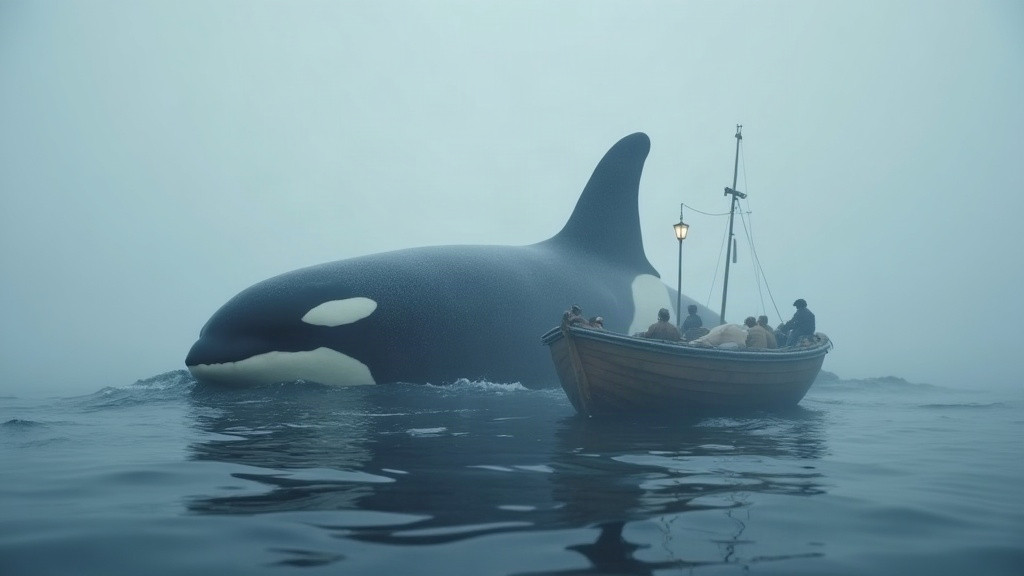
Repun Kamuy: The Orca God of the Sea
The Ainu revered Repun Kamuy, the orca deity who commands the sea and guides fishers through treacherous waters. Discover how this killer whale god shaped maritime survival, ritual, and the spiritual relationship between the Ainu and the ocean.

Ainu
Inaw: Sacred Wooden Offerings in Ainu Ritual and Spirit Communication
Inaw are carved wooden sticks that carry prayers between the human and spirit worlds in Ainu religion. Learn how these humble offerings bridge the sacred and everyday, and why they remain central to Ainu cultural identity today.
Ainu
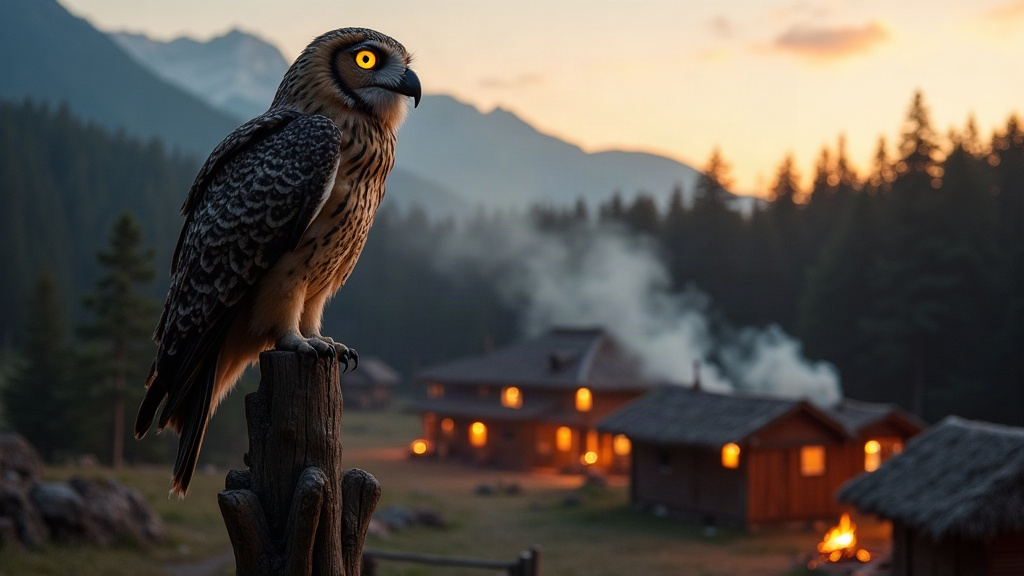
Kotan Kor Kamuy: The Village Guardian Owl
Meet Kotan Kor Kamuy, the watchful owl spirit who guards Ainu villages from harm. In Ainu belief, this kamuy oversees human settlements and stands as protector of community bonds. Discover how a vigilant nocturnal hunter became one of the Ainu peoples' most trusted spiritual guardians.