
Krishna: The Divine Cowherd and Supreme God
Dark-skinned, flute in hand, Krishna stands at the center of Hindu devotion: trickster, warrior, philosopher, and the universe itself wearing a peacock feather.
Contents
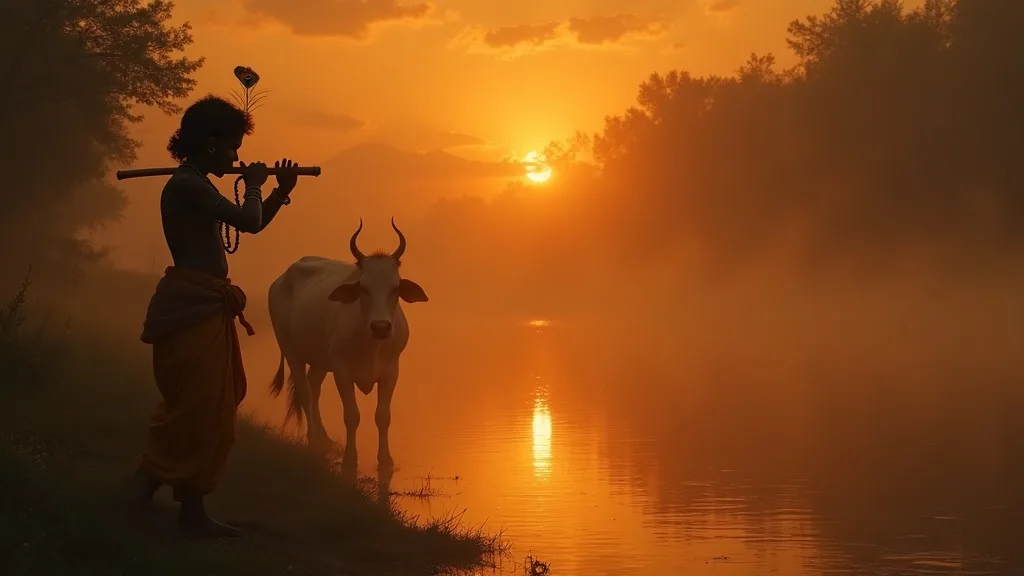
The flute sounds before dawn in Vrindavan. Cattle stir. The gopis - the cowherd women - wake not from habit but from something that pulls at the chest, something older than habit. The boy playing at the riverbank is barefoot, his skin the color of a monsoon cloud, a single peacock feather tucked above his ear. He grins like he knows every secret the three worlds hold. He does.
Krishna: The Divine Cowherd and Supreme God occupies a position in Hindu thought that no single label can contain. He is the eighth avatar of Vishnu, the supreme being in his own right according to the Bhagavata Purana, a divine child who stole butter and the hearts of an entire village, a warrior-philosopher who stood between two armies and recited what became the Bhagavad Gita. Few figures in world religion carry so many registers - playful, terrifying, tender, cosmic - without the seams ever showing.
The earliest textual threads appear in the Mahabharata (roughly composed between 400 BCE and 400 CE), but the full flowering of Krishna theology arrives with the Bhagavata Purana (c. 9th-10th century CE), a text that treats his childhood as a sustained meditation on how the infinite becomes intimate. To read these sources in sequence is to watch a historical person, a clan hero of the Yadavas, gradually absorb the whole of the divine until there is nothing left outside him.
The Origins of Krishna: Clan Hero, Avatar, and Absolute
The name Krishna derives from the Sanskrit root krish, meaning "to draw" or "to attract," and the suffix na, yielding "the one who attracts all." Classical commentators also read it through krishna meaning "black" or "dark," anchoring his iconography to the deep blue-black skin that sets him apart from every other major Hindu deity.
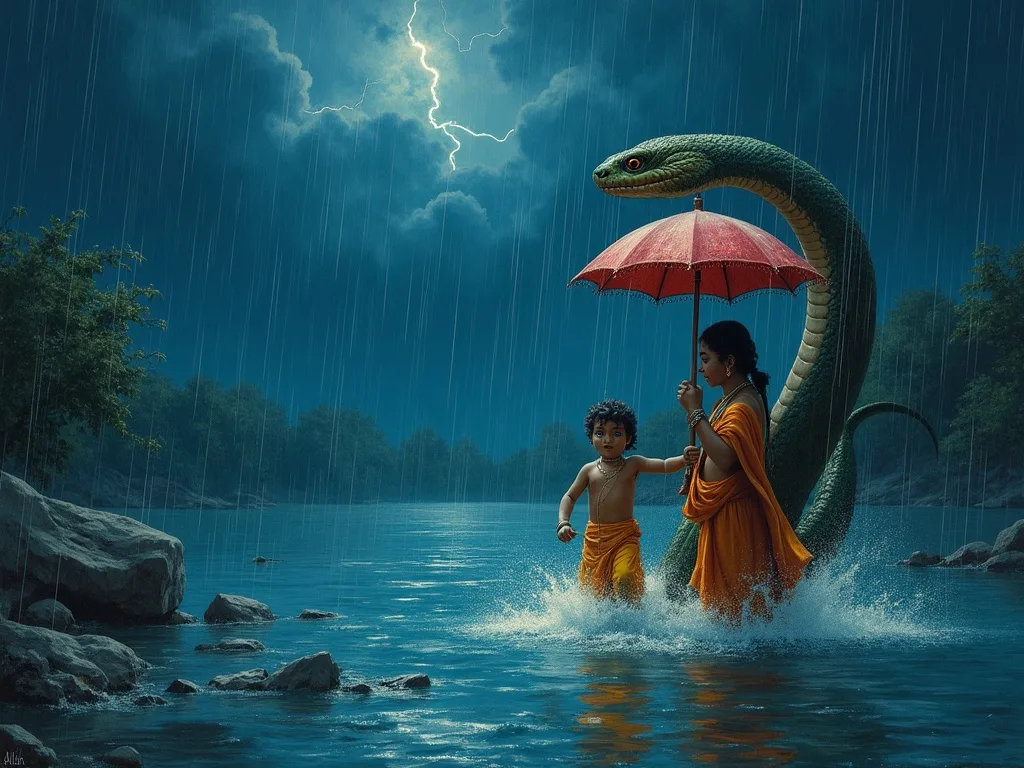
His biographical story begins in crisis. King Kamsa of Mathura, warned by a divine voice that his sister Devaki's eighth child would destroy him, imprisons both Devaki and her husband Vasudeva and kills each child born to them. When Krishna arrives as the eighth, Vasudeva carries the infant across a flooded Yamuna River in the dead of night - the river parts, a celestial serpent shields the child from rain - and places him in the home of the cowherd Nanda and his wife Yashoda in Gokula.
This birth-night crossing is not simply narrative setup. It rehearses a pattern visible across many traditions: the divine child threatened by a tyrant (Herod and the infant Jesus, Acrisius and the infant Perseus), the miraculous passage through water, the hidden upbringing in pastoral simplicity. Krishna's Mathura is both a real city on the Yamuna and a metaphysical prison, the world governed by ego and fear. Vrindavan, where he grows up among cowherds, represents a different order entirely: a place where the divine is not hidden behind rites or hierarchy but walks barefoot among ordinary people and steals their butter.
Scholarly debate persists about whether a historical Krishna existed. The Yadava hero mentioned in the Chhandogya Upanishad as a student of the sage Ghora Angirasa (c. 8th-6th century BCE) may preserve the earliest record. Megasthenes, the Greek ambassador to the Maurya court (c. 300 BCE), reported a figure the Greeks identified with Heracles venerated by the Surasena people near Mathura. These fragments suggest a real chieftain around whom theological elaboration accumulated across centuries.
Childhood in Vrindavan: The Theology of Butter and Play
The Vrindavan chapters of the Bhagavata Purana read like no other sacred text. They are tender, funny, and shot through with longing. Krishna as a toddler crawls through Yashoda's courtyard getting into everything. He eats dirt. He steals butter from the neighbors' pots, recruiting his friends as accomplices, then lies about it with spectacular confidence to his foster mother. Yashoda catches him and tries to tie him to a mortar as punishment. The rope is always two fingers too short.
That two-finger gap is a doctrine. Classical commentators, especially Vallabhacharya (1479-1531 CE), founder of the Pushtimarg devotional tradition, read it as a statement about divine grace: Krishna allows himself to be caught but never fully contained. Infinite being cannot be bound by finite rope. Yet he lets Yashoda try, because her love is precisely the force the infinite cannot resist.
The episode of the cosmic mouth crystallizes this theology. When Yashoda finally forces open her son's mouth to check whether he swallowed dirt, she sees inside it the entire universe: all the stars, all the oceans, all the ages of time. Then he closes his mouth and smiles. She forgets what she saw. The Bhagavata Purana specifies that Krishna causes her to forget through his own yogamaya (divine illusive power) - not to deceive her, but because the full weight of cosmic vision would collapse the intimacy that makes their relationship what it is. The infinite chooses to be a child for her.
The gopis - the cowherd women - carry a different register of this intimacy into adulthood. Krishna's adolescent years in Vrindavan generate the erotic-mystical literature of the Gita Govinda (composed by the poet Jayadeva around the 12th century CE), where his relationship with Radha becomes the supreme metaphor for the soul's longing for the divine. Radha appears only marginally in the Bhagavata Purana itself but dominates later Vaishnava poetry and the theological systems of Chaitanya Mahaprabhu (1486-1534 CE), who taught that Radha represents the highest form of devotion (bhakti), so total it transcends even the need for reciprocity.
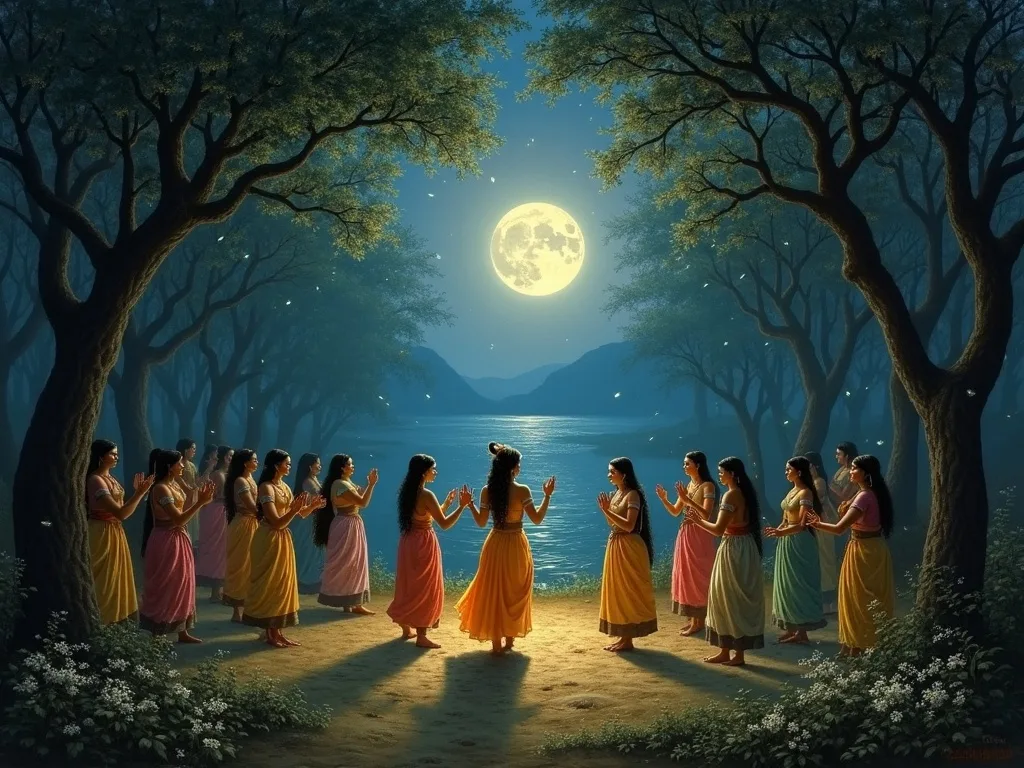
The rasa lila - the circular dance Krishna performs with the gopis on an autumn night, multiplying himself so each woman dances with what feels like her personal companion - is one of the most commented-upon passages in all of Sanskrit literature. Surdas (c. 1478-1583 CE), the blind poet-saint of the Agra-Mathura region, composed thousands of padas in Braj Bhasha about these nights. The 16th-century Braj school of devotional poetry treats every moment in Vrindavan as simultaneously historical and eternally recurring: the dance still happens, in a dimension where nothing ends.
Krishna and the Mahabharata: Warrior, Kinsman, and God
Vrindavan is where the theology of love lives. Kurukshetra is where it breaks open into philosophy.
By the time the Mahabharata places Krishna beside the warrior Arjuna on a chariot between two armies, he is no longer the butter-thief of Gokul. He has already killed Kamsa, liberated Mathura, founded the city of Dwarka on the western coast (a city the text says was eventually swallowed by the sea), and married multiple queens, most notably Rukmini and Satyabhama. He has navigated the entire catastrophic family dispute between the Pandavas and Kauravas, attempting diplomacy before acquiescing to war.
His role on the battlefield is deliberately paradoxical. He agrees not to fight himself - carrying no weapon, driving Arjuna's chariot - yet he is the deciding factor. When Arjuna drops his bow at the sight of his kinsmen arrayed against him and refuses to fight, Krishna's response over the next eighteen chapters is the Bhagavad Gita, arguably the most influential single text in Hindu intellectual history.
The Gita operates on several registers at once. At the literal level it is a battlefield conversation. At the philosophical level it synthesizes three paths to liberation: jnana (knowledge), karma (action), and bhakti (devotion), with Krishna advocating nishkama karma - action without attachment to its fruits. At the theological level it is Krishna revealing his own nature. "I am the taste in water," he tells Arjuna (7.8). "I am the light of the sun and moon. I am the syllable Om in all the Vedas."
The Vishvarupa episode in Chapter 11 is the Gita's climax. Arjuna asks to see Krishna's true form. Krishna grants him divine sight. What Arjuna sees is not the flute-player: it is a figure with thousands of mouths and arms, containing the whole cosmos, with the armies of both sides already flowing into his open mouths like rivers into the sea. Arjuna trembles. He asks Krishna to return to his familiar human form. The episode is structurally identical to the cosmic-mouth vision Yashoda experienced in Vrindavan - the same infinite glimpsed and then re-closed - but the theological stakes are explicitly cosmic rather than domestic.
The Philosophy of Lila: Why the Supreme God Plays
The concept at the center of Krishna theology is lila (Sanskrit: lila), usually translated as "divine play" but carrying resonances that translation misses. Lila is not playfulness in the sense of frivolity. It is the idea that the actions of the infinite are not driven by necessity, lack, or consequence. The supreme being, lacking nothing, creates and acts purely out of the overflow of its own joy.
This distinguishes Krishna theology sharply from traditions in which the divine acts from duty, wrath, or plan. Krishna does not create the world to fulfill a purpose. He plays it into existence the way a musician improvises: the structure is real, the notes matter, but no individual phrase was ever compelled. The Bhagavata Purana uses this framework to explain what looks like moral ambiguity in Krishna's biography - his theft, his erotic play with married women, his political maneuvering during the war.
Classical Vaishnava theology, particularly as articulated by the Gaudiya school founded by Chaitanya, distinguishes between the ordinary moral rules (dharma) that govern human life and the lila of the divine, which cannot be judged by those rules without a category error. This is not a license for human imitation. It is a statement about ontological difference. The finite has duties. The infinite plays.
The Brahma Sutras and the commentaries of Ramanuja (1017-1137 CE) situate Krishna within the Vishishtadvaita ("qualified non-dualism") framework: the world is real, individual souls are real, but both subsist within and are pervaded by Vishnu-Krishna as their inner controller (antaryamin). Madhva (1238-1317 CE), founder of the Dvaita school, goes further in asserting absolute distinction between the supreme lord and the individual soul, making devotion the only bridge. Both thinkers wrote commentaries in which Krishna's Bhagavad Gita is the central philosophical text.
Krishna in Iconography: The Grammar of the Blue God
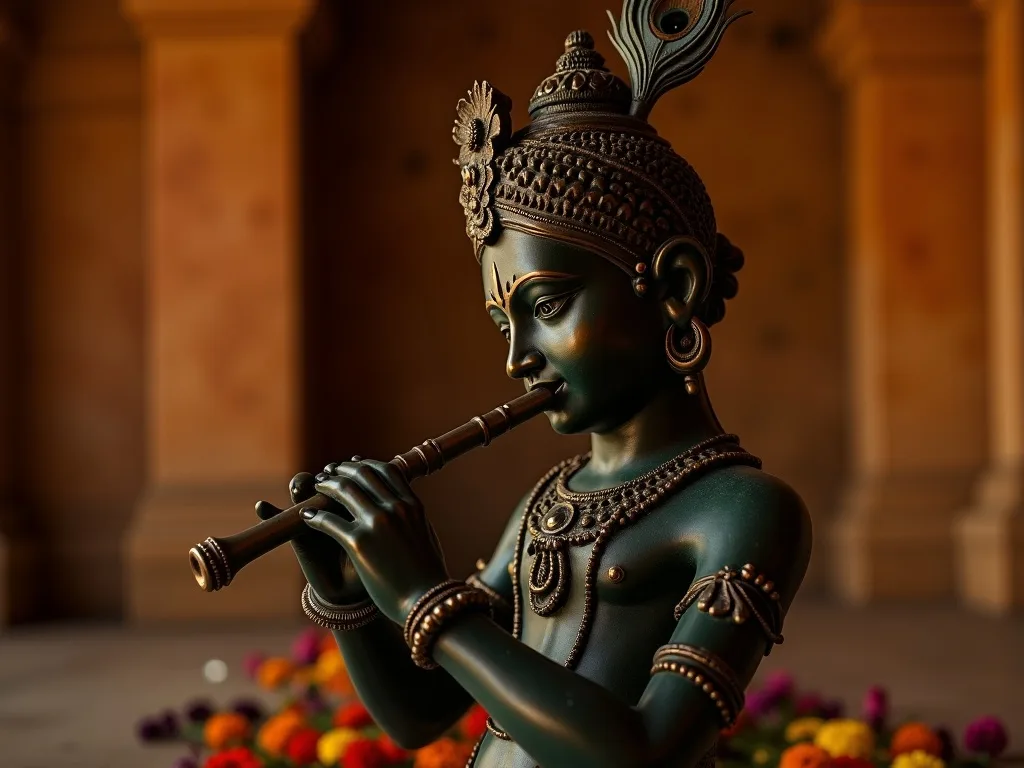
Walk into any Vaishnava temple from Vrindavan to Udupi to Puri and Krishna is immediately recognizable, not because every image is identical, but because the iconographic grammar is consistent enough to be read across wildly different regional styles.
The standard elements:
- Skin color: deep blue or blue-black (shyama), representing infinity, the sky, the depths of the ocean. Some traditions render him as greenish-blue; a few regional forms use gold.
- The flute (bansuri): almost always present in his Vrindavan form (Venugopala), held transversely, bent slightly at the wrist in the tribhanga (triple-flexed) pose.
- The tribhanga stance: weight on one hip, body forming an elegant S-curve, signifying ease and grace rather than martial power.
- The peacock feather: tucked in his crown, referencing both his Vrindavan boyhood and the peacock's association with rain clouds, linking back to his dark complexion.
- The Sudarshana Chakra: in his Vishnu-aligned warrior forms (Trivikrama, Vaikuntha), the spinning disc-weapon replaces the flute.
The Puri Jagannath tradition, centered on the great temple in Odisha (where the annual Rath Yatra chariot festival draws millions), presents Krishna in a radically abstract form: a large-eyed, armless wooden figure that deliberately strips away the refined iconographic conventions of later sculpture to assert something more primal. The Jagannath form (Jagannath meaning "Lord of the Universe") dates to traditions that predate classical Sanskrit culture in Odisha, possibly incorporating a pre-Aryan tribal deity subsequently identified with Krishna-Vishnu.
Radha and the Theology of Sacred Longing
No account of Krishna is complete without Radha, even though she appears nowhere in the Mahabharata or the Vishnu Purana, and only indirectly in the Bhagavata Purana. Her explicit story belongs to Jayadeva's Gita Govinda and the regional traditions of Braj (the Mathura-Vrindavan region in modern Uttar Pradesh).
Radha is not simply a romantic interest. In Gaudiya Vaishnava theology she represents Krishna's own hladini shakti - the power of bliss, the capacity for divine love personified and then separated from him so that the joy of reunion can exist. She is, in a precise theological sense, not separate from Krishna but the highest expression of his own nature turned outward. Their union is therefore not the union of two different beings but the return of divided joy to itself.
This makes the love story inseparable from the metaphysics. The viraha (separation, longing) that Radha experiences when Krishna leaves Vrindavan for Mathura to fulfill his destiny is not simply grief - it is held to be the highest spiritual state, love so pure it burns even in the absence of its object. The Braj poet-saints, including Mirabai, who lived in the 16th century, drew on this theology to frame their own lives as Radha-like devotion, identifying themselves completely with longing for Krishna as the only authentic response to the divine.
Krishna's Death and the End of Dvapara Yuga
The Bhagavad Gita presents Krishna as eternal and beyond death. The Mahabharata and Bhagavata Purana nonetheless narrate his physical death in terms that are unflinching in their strangeness.
After the Kurukshetra war, the Yadava clan - Krishna's own people - falls into internal conflict and eventually destroys itself in a drunken brawl, killed by reeds that grew from iron filings thrown into the sea after a curse. Krishna, the last of his line, withdraws to the forest. There, a hunter named Jara (whose name means "old age") mistakes Krishna's foot, resting in the undergrowth, for a deer's ear. He fires an arrow. The shaft strikes the one vulnerable point on Krishna's body - the sole of his foot - and Krishna dies.
The Mahabharata frames this not as defeat but as deliberate withdrawal. Krishna had already set aside his human form in his own timing. The hunter Jara recognizes his error immediately; Krishna absolves him. Some textual traditions connect this to Krishna's previous life as Rama, the seventh avatar of Vishnu, in which Rama had killed the monkey king Vali with an arrow fired from hiding, and Jara was Vali's reincarnation completing the karmic circuit.
With Krishna's departure, the Kali Yuga - the current and most degenerate of the four cosmic ages - begins. His death is therefore not an ending but a threshold. The Bhagavata Purana specifies that the moment Krishna's foot left the earth, dharma itself departed with him.
Krishna's Living Presence: Temples, Festivals, and Global Reach
The devotional traditions centered on Krishna: the divine cowherd and supreme god remain among the most practiced forms of religious life on earth. The International Society for Krishna Consciousness (ISKCON), founded by A.C. Bhaktivedanta Swami Prabhupada in New York in 1966, brought Gaudiya Vaishnava practice to a global audience, introducing kirtan (congregational chanting), the Hare Krishna mantra, and the Bhagavad Gita to millions of non-Hindu practitioners.
Annual festivals mark the year's sacred rhythm. Janmashtami (Krishna's birth, celebrated on the eighth day of the dark half of the lunar month of Bhadra, typically falling in August or September) involves fasting until midnight, bhajan singing, and at the stroke of the birth hour, the rocking of a cradle containing a small image of the divine child. Holi, the spring festival of colors, commemorates Krishna's play with the gopis and his love for Radha. The Rath Yatra of Puri, held each summer, moves the Jagannath icon on a massive wooden chariot through the streets - the English word "juggernaut" derives from Jagannath, testimony to how visually staggering medieval European observers found the procession.
The living tradition of Bharatanatyam and Odissi classical dance draws extensively on Krishna's iconography and lila episodes, making his theology inseparable from one of India's primary art forms. The tribhanga stance of the dancer replicates the Venugopala posture directly.
Frequently Asked Questions About Krishna
Frequently asked questions
Is Krishna the same as Vishnu, or a separate god?
The answer depends on which theological tradition you ask. In the Vaishnava mainstream, Krishna is the eighth avatar (incarnation) of Vishnu, one of ten primary descents. But the Bhagavata Purana reverses the hierarchy: it treats Krishna as the original supreme being (svayam bhagavan) of whom Vishnu is himself a manifestation. Gaudiya Vaishnava theology, following Chaitanya, holds this second view: Vishnu, Rama, Narayana, and all other divine forms are expansions of Krishna, not the other way around. Both positions are textually grounded; the distinction matters enormously within devotional practice.
What is the Bhagavad Gita and why is it attributed to Krishna?
The Bhagavad Gita ("Song of God") is an 18-chapter philosophical poem embedded within the Mahabharata (Book 6, the Bhishma Parva). It records a conversation between Krishna and the warrior Arjuna immediately before the Kurukshetra war. Krishna speaks as both charioteer and the supreme divine, offering teachings on duty (dharma), non-attachment, the nature of the self (atman), and paths to liberation. Most scholars date the text's composition to somewhere between the 2nd century BCE and the 2nd century CE. It remains the single most translated Sanskrit text in history and the central scripture of most Vaishnava traditions.
Who is Radha and why does she matter theologically?
Radha does not appear in the earliest Krishna texts but becomes central in medieval devotional poetry, especially Jayadeva's Gita Govinda (c. 12th century CE). In Gaudiya Vaishnava theology she represents Krishna's own hladini shakti - the power of bliss externalised as a being who loves him completely. Her state of viraha (longing in separation) is considered the highest spiritual attainment, surpassing even union, because it represents love without any self-interest. Traditions that include Radha are called Radhavallabha or Sakhibhava; those like the Udupi temple tradition following Madhva do not emphasise her role equally.
How old is Krishna worship, and what is the earliest evidence?
The Chhandogya Upanishad (c. 8th-6th century BCE) mentions a Krishna Devakiputra as a student of the sage Ghora Angirasa, which many scholars treat as an early reference. The Pancharatra and Bhagavata movements, dedicated to Vasudeva-Krishna worship, are attested by the 4th-3rd century BCE through inscriptions and Greek accounts. The Mahabharata's core war narrative, featuring Krishna as Arjuna's charioteer, likely reached its present form by the 4th century CE. The mature devotional theology of the Bhagavata Purana dates to approximately the 9th-10th century CE.
What is the Hare Krishna movement and how does it relate to classical tradition?
The International Society for Krishna Consciousness (ISKCON), founded by A.C. Bhaktivedanta Swami Prabhupada in 1966, belongs squarely to the Gaudiya Vaishnava lineage that traces itself to Chaitanya Mahaprabhu (1486-1534 CE). Chaitanya taught achintya bhedabheda ("inconceivable difference-in-non-difference"): the soul is simultaneously identical to and distinct from Krishna. ISKCON follows Gaudiya theology closely, centralizing the Bhagavad Gita and Bhagavata Purana, practicing kirtan (congregational chanting of divine names), and recognizing Krishna as the original supreme person. It is not a modern innovation but a global transmission of a 500-year-old Bengali devotional school.
Why does Krishna have blue or dark skin in iconography?
Multiple explanations exist. The Sanskrit name Krishna itself means "dark" or "black," making the skin color etymologically literal. Iconographic tradition associates deep blue with the sky, the ocean, and infinite space, making blue-black skin a visual metaphor for the boundless. Some regional traditions connect it to the monsoon cloud (megha-shyama, "cloud-dark"), linking Krishna to life-giving rain. The Bhagavata Purana describes his complexion as nila-megha-shyama (dark as the rain-cloud). Modern art has often rendered this as bright blue for readability, but older Pahari and Rajput miniature traditions use a more accurate deep blue-black.
Krishna Beyond Vrindavan: Scholarly Debates and Global Resonances
The question of comparative mythology shadows Krishna scholarship. 19th-century European scholars, particularly those working within the Comparative Religion school, noted structural parallels with Christ: divine birth threatened by a tyrant, miraculous childhood, salvific death, metaphysical identity with the godhead. Some went further, arguing for direct influence, a claim that most contemporary historians regard as unsubstantiated given the timeline and geographical barriers involved. The parallels are real but likely reflect convergent mythological grammar - the pattern of the divine child hidden among commoners recurs in Sargon of Akkad, Moses, Romulus, and Cyrus the Great.
More productive has been the comparison with Dionysus, the Greek god of wine and ecstasy. Both figures move between human and divine registers, both are associated with intoxicated states of devotion, both attract followers who abandon social norms in their presence, and both carry a tragic dimension beneath the festivity. Dionysus's dismemberment by the Titans and Krishna's death from a hunter's arrow share the structure of the vulnerable god, the divine made mortal at the hinge of a cosmic age.
The unresolved scholarly debate that carries the most weight is the question of the Bhagavata Purana's intellectual relationship with the Tamil Alvars. The twelve Alvar poet-saints (c. 6th-9th century CE), composing in Tamil rather than Sanskrit, produced the Nalayira Divya Prabandham (Four Thousand Sacred Verses), a body of Krishna-Vishnu devotional poetry that many historians believe directly shaped the theology and emotional register of the Bhagavata Purana. If so, what presents itself as Sanskrit Brahminical theology is partly a northward transmission of southern vernacular devotion. The debate remains active and its implications for understanding how bhakti theology moved across the subcontinent are significant.
What is beyond debate is the scale of Krishna's presence in global culture today. The Bhagavad Gita sits on the reading lists of figures as different as Gandhi, Emerson, Oppenheimer (who quoted it at the Trinity test site), and T.S. Eliot. The Rath Yatra procession, once a spectacle that astonished medieval European travelers, now rolls through London, Toronto, and New York. The Hare Krishna mantra has been recorded by the Beatles and chanted in Times Square. The butter-thief from Gokul has traveled very far, and the two-finger gap in the rope around his waist remains, still, exactly two fingers wide.
Free 25-page sample
Want the whole story?
Take the first 25 pages free. If it pulls you in, the full edition is yours as an instant PDF download, with a paperback on Amazon for selected titles.
Hindu
The Hindu Mythology Book: Vishnu, Shiva, Brahma, the Mahabharata, and the Sacred Stories of India
Vishnu, Shiva, Brahma, the Mahabharata, and the Sacred Stories of India
The Rigveda, the Mahabharata, the Ramayana, and the major Puranas. Every god, every avatar, every sacred epic.
More from Hindu
All articles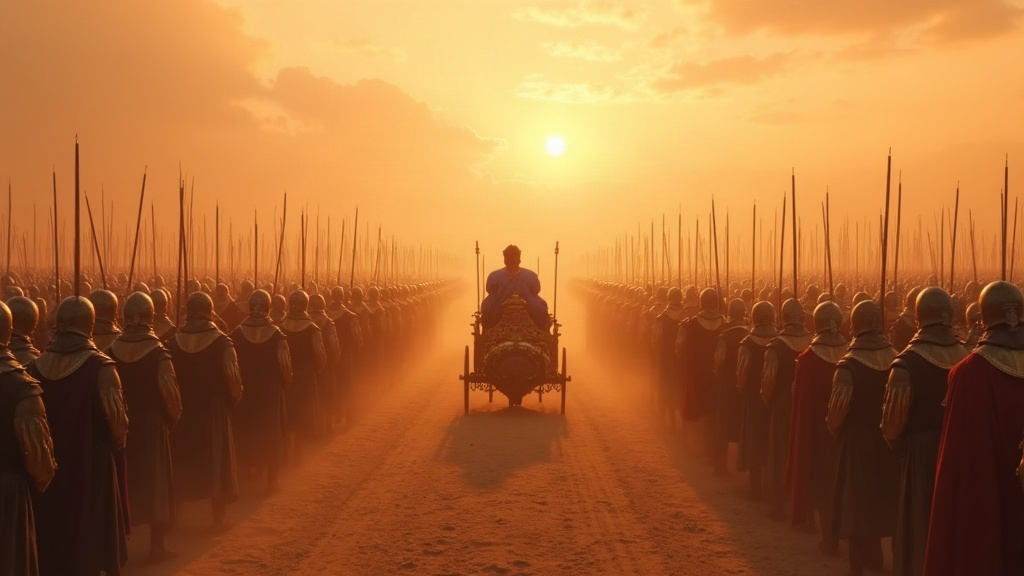
Hindu
The Bhagavad Gita: Krishna's Discourse on Duty and Devotion
On the eve of the Kurukshetra war, Krishna reveals the nature of the soul, duty, and liberation to a trembling Arjuna. The Bhagavad Gita's 700 verses have shaped Hindu thought for over two millennia.
Hindu
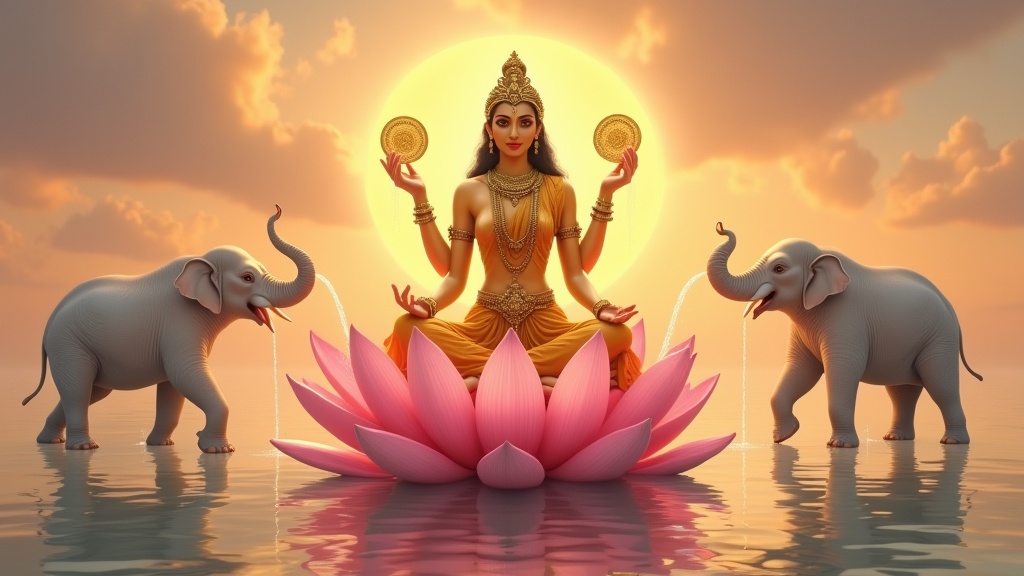
Lakshmi: Goddess of Wealth and Prosperity
Lakshmi stands at the center of Hindu cosmic order as the goddess who grants wealth, fortune, and abundance. Her eight forms, her lotus throne, and her ancient origins reveal a deity far richer than any single attribute.

Hindu
Hanuman: The Monkey God of Devotion and Strength
Half-divine warrior, half-devoted servant, Hanuman stands as one of Hinduism's most beloved figures. His story is one of extraordinary power placed entirely at the feet of love.
Hindu
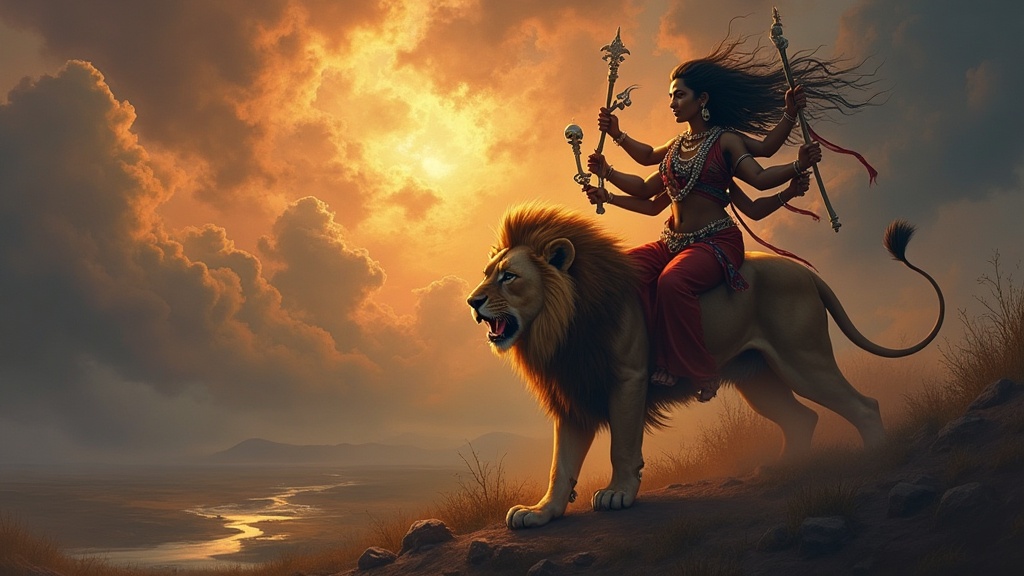
Durga and Kali: The Fierce Goddesses of Power
Durga rides a lion into battle; Kali stands on Shiva's chest, tongue red with demon blood. Two faces of the same cosmic fire, they reveal what Hindu theology understands about divine wrath, liberation, and the nature of time itself.