
The Besa: Sacred Code of Honor in Albanian Culture
The Besa is Albania's oldest unwritten law: a sacred pledge of honor, protection, and hospitality that has shaped Albanian identity for centuries. Discover how this ancient code binds community, defies conquest, and survives in modern Albania.
Contents
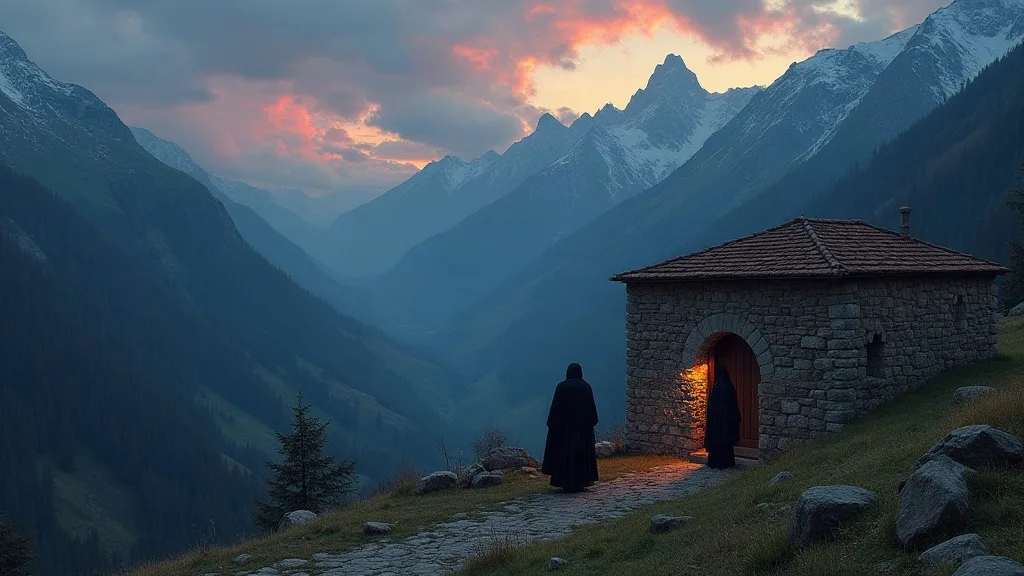
A stranger arrives at an Albanian household during a blood feud. The host knows his guest carries enemies outside the door. He shelters him anyway, feeds him, guards him with his own life. Not because law commands it. Because besa demands it.
The Besa is the heart of Albanian culture, a concept so old its origins dissolve into the pre-Islamic, pre-Ottoman mists. It is a sacred code of honor, a personal pledge that binds a person to absolute fidelity, protection, and hospitality. When an Albanian gives his besa, he offers his word, his reputation, his life. To break besa is to become jo-man (inhuman), cast out from the community that sustains him.
For over five centuries, while Ottoman rulers imposed imperial law, the Besa held. During the Nazi occupation and the Cold War that followed, it persisted. Today, in a globalized Europe, it still moves Albanians. The Besa is not myth in the sense of ancient gods or legendary heroes. It is mythology lived: a code that has shaped behavior, resolved conflicts, and protected lives across generations.
The Origins: Ancient Roots and Pre-Islamic Foundations
No single text records the birth of the Besa. No king declared it. Instead, it emerged from the bedrock of Balkan life: a mountainous land where state power was distant or absent, where families held more authority than kings, and where a person's word was often the only contract available.
The Albanian highlands, the Malësia, were isolated for centuries. Snow, sheer peaks, and dense forests separated villages from the Ottoman administrators in the valleys below. In this isolation, communities developed their own systems of law and order. The Besa was one of the foundational pillars.
Scholars argue the Besa carries pre-Indo-European roots, possibly echoing Illyrian tribal customs that preceded even the Roman conquest. The anthropologist Ismail Kadare, drawing on oral tradition and family records, suggests the Besa crystallized in its most formal version during the period of Ottoman rule, when Albanians needed an internal code to preserve their identity without openly defying the Sultan.
What is certain: by the time the Ottoman Empire expanded into the Balkans in the 14th and 15th centuries, the Besa already existed as a binding force in Albanian society. Turkish administrators recognized it, negotiated with it, and sometimes used it to govern indirectly. A besa oath sworn between an Albanian and a Ottoman official could seal a truce, guarantee safe passage, or bind a pledge of loyalty.

The Besa sits alongside other ancient honor codes. The Norse honor-oath, the Greek xenia (sacred guest-friendship), the Bedouin codes of tribal hospitality: all share the Besa's core conviction that some pledges transcend the law, rooted instead in personal integrity and community survival. Yet the Besa is distinct. It is not tied to a single transaction or moment. It is a way of being.
The Code: How Besa Works
The Besa is paradoxical. It is unwritten, yet universally understood. It binds absolutely, yet depends entirely on voluntary acceptance. There is no enforcement mechanism, no court of appeals. A broken besa destroys only one thing: the breaker himself.
When an Albanian gives his word under besa, he is making a promise of absolute fidelity. The pledge can cover many situations: protection of a guest, safe passage through dangerous territory, silence about a secret, or neutrality in a blood feud. A host who grants besa to a fugitive becomes his guardian, liable to death if the guest is discovered and taken.
The code operates on several principles:
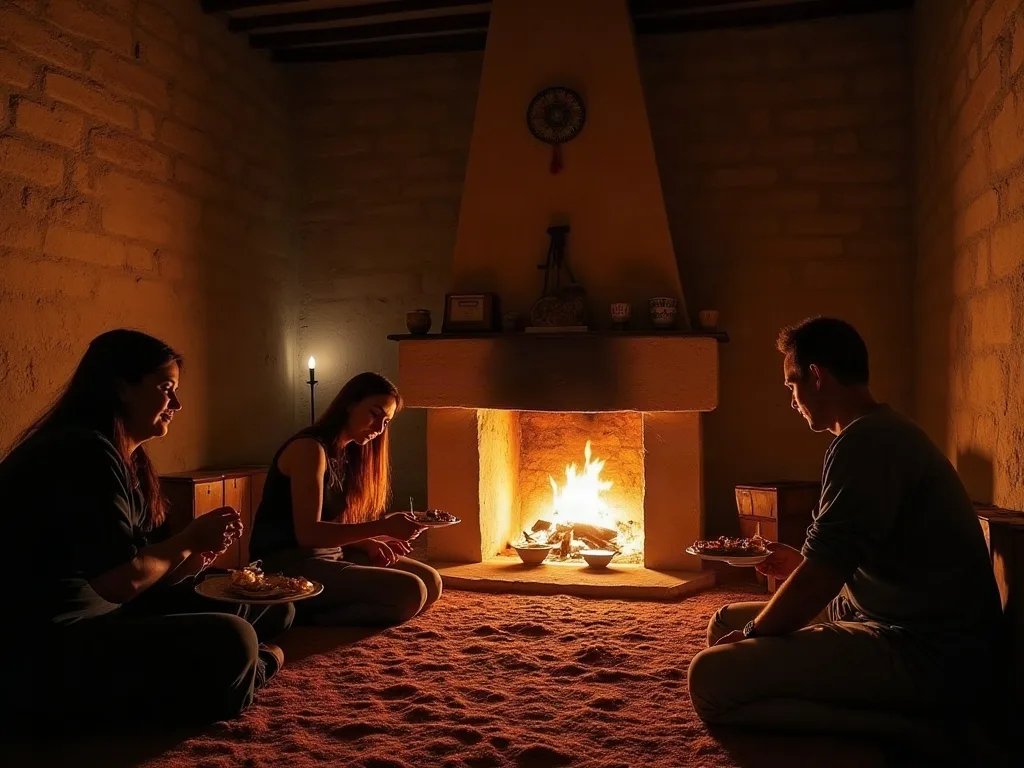
Hospitality is sacred. When a stranger crosses the threshold of an Albanian home, he is under besa. The host must provide food, shelter, and protection without question and without asking the guest's name, business, or past. This hospitality can last days or weeks. It is not a transaction; it is a moral obligation rooted in the belief that any human being, by virtue of being human, deserves respect.
A word is a bond. Once besa is given, it cannot be rescinded or negotiated. To attempt to qualify it ("I meant to protect you only until sunset") is to dishonor oneself. The pledge is absolute because its power depends on its absoluteness. If besa could be hedged, it would be worthless.
The community is the witness. Besa is often sworn before witnesses. This is not to enforce it legally, but to make the breach public, irreversible. Everyone will know if you break your word. Shame becomes the punishment.
Death before dishonor. If honoring a besa pledge means facing death, the honorable Albanian accepts it. This is not fatalism. It is the conviction that a life lived without honor is not worth living. Better to die with besa kept than to live with besa broken.

The anthropologist Margaret Hasluck documented these practices in her 1954 study, "The Unwritten Law in Albania." She recorded cases where men died protecting guests they had sheltered for only hours. She noted that the Besa extended not only to individuals but to whole families. If one member of a household gave besa, all members were bound by it.
The Besa also functions in conflict resolution. In the feuding highlands, where a killing could trigger a chain of retaliatory murders lasting generations, besa offered a way to pause the cycle. A third party could negotiate a besnime (a period during which besa is honored, and killing is forbidden). During this truce, families could speak, grieve, and sometimes find paths toward compensation and forgiveness. The Besa did not eliminate feuds, but it created spaces where feuds could be managed, contained, or healed.
The Kanun: Besa in Written Form
In the 15th century, a legal code began to crystallize among the mountain tribes of northern Albania. Scholars believe it was compiled over centuries, but it took written form under the figure of Lek Dukagjin, a regional lord who lived in the 14th and 15th centuries. This code is called the Kanun of Lek Dukagjin, and it is the closest thing to a written constitution the Besa ever received.
The Kanun is vast, covering blood feuds, marriage, property, crime, and hospitality. Yet it is not a law code in the modern sense. It does not establish a state apparatus or police force. Instead, it codifies the unwritten customs already in practice, giving them formal language so they can be invoked and interpreted consistently.
Within the Kanun, the Besa appears as a sacred principle. Section 1, on honor and hospitality, makes clear: a guest is inviolable. A host who betrays a guest loses his right to be called a man. The Kanun specifies the duration of guest-friendship (three days and three nights was standard), the quality of hospitality owed, and the penalties for violation.
The Kanun also addresses besa in the context of feuds and truces. It sets out how a besnime is declared, who can declare it, and what happens if it is broken. To violate a besnime was considered one of the gravest offenses, comparable to murder. A man who broke a truce sworn in besa was pursued with the same ferocity as a murderer.
For centuries, the Kanun was preserved orally, passed from father to son, invoked by elders in dispute. It was not universally followed; different regions had variations. But its core principles, including the Besa, became the bedrock of Albanian customary law.
The first written collection of the Kanun was made by a Catholic priest, Shtjefën Gjeçovi, in 1913. He traveled the highlands, recording the oral laws. His work preserved the Kanun for scholarship, but by then, Ottoman law, then Austro-Hungarian law, then Yugoslav communist law had layered themselves over the old customs. The Kanun as a living legal system was fading, though the Besa itself endured.
Besa Under Ottoman Rule: Continuity and Adaptation
When Ottoman forces conquered Albania in the 15th century, they faced a land where local customs held more power than imperial decrees. Rather than erase these customs, Ottoman administrators learned to work with them. The Besa became a bridge between local Albanian society and the Ottoman state.
Ottoman officials negotiated besa agreements with Albanian tribal leaders. A leader might give his besa that his tribe would pay taxes, remain at peace, and provide soldiers for the Sultan's armies. In return, the Sultan guaranteed (implicitly through his own honor) that Albanian customs would be respected, that the community would not be forcibly converted to Islam, and that a degree of self-governance would be permitted.
This arrangement was fragile and often broken. Yet the Besa language provided a framework. Both sides understood that a pledge sworn in besa was more binding than any written contract. Betrayal of besa was not merely a legal violation; it was a spiritual transgression.
Some Albanians converted to Islam during the Ottoman centuries. Islam brought its own codes of honor and hospitality. Yet the Besa remained distinct. It was not religious in origin; it was cultural. A Muslim Albanian could honor besa just as readily as a Catholic or Orthodox Albanian. The Besa transcended religion.
By the 19th century, as Ottoman power weakened and European influence grew, Albanians began to assert their national identity explicitly. Figures like Gjergj Kastrioti (Skanderbeg), who resisted Ottoman expansion in the 15th century, became national heroes precisely because they fought with honor and kept their besa to their followers and allies. The Besa became linked to Albanian nationalism: to uphold besa was to remain true to the Albanian people.
The Besa During War and Occupation
The 20th century tested the Besa severely. During World War II, when Nazi forces occupied Albania, Albanians faced an impossible choice: collaborate with the occupiers or resist and risk brutal reprisal.
Many Albanians chose resistance, and in doing so, they invoked the Besa. Partisan fighters sheltered each other, pledged loyalty to the movement, and gave besa that they would not betray comrades under torture. The Besa became a binding force in the Resistance, more reliable than ideology or law.
There are documented cases where Albanians gave besa to protect Jews and Roma from Nazi persecution. Families risked their lives to shelter fugitives, driven by the ancient code that a guest under one's roof is inviolable. The Yad Vashem institution has recognized Albania as a nation where Jews were protected, and part of that protection came from the Besa tradition.
After the war, communist rule under Enver Hoxha sought to erase the Besa. Communism offered a different code: loyalty to the party, obedience to the state, class consciousness. The Besa was seen as feudal, backward, a relic of tribal society. The government discouraged the practice, though it could not eliminate it.
Yet the Besa persisted in hidden places. In villages, elders still taught the code to young men. Families still honored the ancient hospitality rules. The Besa lived in whispered stories, in the bonds of trust that held communities together when state surveillance threatened to shatter them.
Besa in Modern Albania: Survival and Transformation
The fall of communism in 1991 brought a sudden opening. The Besa, suppressed for decades, resurged in public discourse. Scholars began to collect and publish the Kanun. Anthropologists documented the code's persistence. Novelists and filmmakers drew on the Besa as a symbol of authentic Albanian identity, a counterweight to the globalization that was sweeping the country.
Today, the Besa exists in tension with modern law and European values. Albania is a candidate for European Union membership. The EU demands that Albania strengthen its state institutions, establish rule of law, and reduce informal social practices. The Besa, which bypasses the state and operates outside formal law, is sometimes viewed as an obstacle.
Yet the Besa has also transformed. In modern urban Albania, few people shelter fugitives or negotiate blood feuds. Yet the code still shapes behavior in subtle ways. Business contracts between Albanians are often sealed with a handshake and a reference to besa, suggesting that personal honor matters more than written terms. Political alliances invoke besa language. Even in diaspora communities, Albanians invoke the Besa when discussing family loyalty or the bonds of community.
The Besa also appears in Albanian literature and film as a symbol of identity and resistance. Ismail Kadare's novels repeatedly invoke the Besa as a counterpoint to imperial power and ideological oppression. In his work, the Besa becomes not just a practical code but a spiritual anchor, a way of being Albanian that no occupier or ideology can fully suppress.
Some scholars have noted that the Besa shares characteristics with honor codes in other Mediterranean and Balkan cultures: the Greek philotimia (honor-love), the Italian omertà (code of silence), the Balkan vendetta system. Yet the Besa is more comprehensive. It encompasses not just honor in combat or in maintaining silence, but hospitality, loyalty, fidelity, and personal integrity as a unified whole.
Cross-Cultural Parallels: Honor Codes Across Traditions
The Besa is not unique. Every culture has developed codes of honor, and some of these codes are strikingly similar.
The Norse honor-oath or binding oath (sannr orðabinding) in the Icelandic sagas operated on a similar principle: once sworn, it could not be broken without devastating consequences. A man's word was his bond, and to break it was to lose his standing in society.
In ancient Greece, xenia (guest-friendship) was sacred. Zeus himself was the guardian of guest-friendship, and to violate it was to invite divine punishment. The Odyssey is partly about the violation of xenia: Penelope's suitors abuse the sacred duty of hospitality, and pay with their lives.
The Bedouin tribes of Arabia developed elaborate codes of hospitality and tribal loyalty that function similarly to the Besa. A guest is protected absolutely, and breaking the code brings shame and exile.
In feudal Japan, the Bushido code of the samurai emphasized loyalty, honor, and the willingness to die for one's lord. Like the Besa, it placed personal integrity above survival.
Yet the Besa differs from these codes in important ways. It is not tied to a warrior class or military hierarchy. It applies to all Albanians, rich or poor, strong or weak. It is not codified in a single text or enforced by a centralized authority. Instead, it is maintained by collective memory and communal shame. A broken besa brings no legal punishment because there is no court to administer it. The punishment is social death: becoming jo-man, excluded from the community that defines human worth.
This makes the Besa peculiarly resistant to state power. A government can outlaw feuds, establish courts, and punish violence. But it cannot force a person to accept a guest or to keep a secret. The Besa operates in the space between the individual conscience and the community, a space where state law cannot fully reach.
Besa and Religion: Secular Code, Sacred Power
One of the most striking features of the Besa is its religious neutrality. It is not rooted in any specific faith. Albanian Catholics, Orthodox Christians, and Muslims all practice the Besa. Its sacred character comes not from divine revelation but from social necessity and moral conviction.
This is unusual among honor codes. The Greek xenia is explicitly connected to Zeus and the gods. Japanese Bushido developed within Buddhist and Shinto contexts. The Besa, by contrast, predates the major religions in Albania. It survived multiple waves of religious change because it is fundamentally cultural, not doctrinal.
Some scholars have suggested that the Besa may preserve elements of ancient Illyrian religion and tribal custom, layered beneath subsequent religious practices. The reverence for the guest, the sacred nature of a spoken word, the emphasis on community integrity: these may echo pre-Abrahamic cultures of the Balkans.
When Islam arrived in the Ottoman period, it was absorbed into Albanian society in a way that preserved the Besa. Islamic law emphasizes hospitality and the sanctity of a person's word, values that align with the Besa. Muslim Albanians could incorporate Islamic teachings into the existing code without contradiction.
This religious flexibility is one reason the Besa has persisted so long. It is not vulnerable to religious change. An Albanian can abandon one faith for another and still be bound by besa. The code belongs to the culture, not to the church.
Scholarly Perspectives: Interpreting the Besa
Modern scholarship on the Besa has been shaped by a handful of key figures. Margaret Hasluck, in her pioneering anthropological work in the 1950s, documented the Besa as a living system. She spent time in Albanian villages, recorded oral accounts, and translated sections of the Kanun. Her work remains essential, though some scholars have criticized it for romanticizing the code and underplaying the violence that often accompanied it.
Ismail Kadare, the Albanian novelist, has interpreted the Besa as a response to imperialism. In his view, the Besa is how Albanians maintained their identity despite centuries of foreign rule. It is a code that cannot be conquered because it lives in the hearts of individuals, not in institutions or borders. This perspective, while literary rather than strictly academic, has deeply influenced how Albanians understand their own heritage.
Anthropologists and historians continue to debate the Besa's origins. Some argue for deep antiquity, linking it to pre-Indo-European Balkanic customs. Others suggest it crystallized during the Ottoman period as a response to external rule. Still others see it as a product of mountain geography: in isolated communities where state law is absent, informal codes like the Besa emerge naturally.
There is also scholarly disagreement about the Besa's contemporary relevance. Some see it as increasingly marginal, a relic of a pre-modern society that is being replaced by state law and modern institutions. Others argue that the Besa is being transformed, not abandoned: that it now operates in different contexts (business, diaspora communities, political alliances) but remains fundamentally influential.
The Besa in Art, Literature, and Film
The Besa has become a central symbol in Albanian cultural expression. Ismail Kadare's novel "The General of the Dead Army" (1963) opens with an Italian general visiting Albania to retrieve the bones of fallen soldiers. The novel explores how the Besa shapes encounters between the occupier and the occupied, how honor and resentment coexist.
In more recent Albanian cinema, the Besa appears as a plot device and a moral center. Niki Caro's film "The Silencing" (2014), while not explicitly Albanian, echoes Besa themes: the protagonist shields a fugitive, violating legal obligations but honoring a deeper moral code.
Contemporary Albanian artists have reclaimed the Besa as a symbol of resistance to globalization and cultural erasure. Murals in Tirana and Durrës depict scenes from the Kanun and invoke Besa language. Street art celebrates the Besa as an emblem of Albanian authenticity and pride.
In literature, younger Albanian writers are revisiting the Besa with critical distance. Rather than simply celebrating it as a noble code, they explore its constraints, its capacity to perpetuate violence (particularly in the context of blood feuds), and its tension with individual freedom. This more complex portrayal reflects a maturing Albanian culture that honors its past while questioning its implications.
The Besa has also entered the diaspora imagination. Albanians living abroad invoke the Besa to explain their cultural values to outsiders. In this context, the Besa becomes a bridge: something distinctly Albanian, yet comprehensible to people from other cultures because honor codes are universal.
Besa and Blood Feuds: The Code's Dark Shadow
The Besa did not eliminate violence from Albanian society. Instead, it channeled and regulated violence through the system of blood feuds. When one person killed another, the victim's family had the right (and the obligation) to kill the perpetrator or a member of his family in retaliation. This could trigger cycles of killing that lasted generations.
The Besa functioned to manage these cycles. A besnime (a truce sworn in besa) could pause the feud. During this period, members of rival families could not kill each other without violating the sacred code. The Besnime created space for negotiation, compensation, and sometimes forgiveness.
Yet the Besnime also perpetuated feuds by making them permanent. A feud could last centuries if it was regularly renewed through fresh acts of killing. The most famous blood feuds in Albanian history lasted for dozens of generations.
In the 20th century, under Ottoman, then Yugoslav, then modern Albanian law, the blood feud system was gradually suppressed. However, it never entirely disappeared. In the 1990s, after the fall of communism, some feuds flared up again, particularly in the northern highlands. Men were killed for crimes committed by their fathers decades earlier.
This dark aspect of the Besa's history cannot be ignored. The code that protected the innocent guest also enabled the perpetuation of vendetta. The sacredness of a pledge could bind men to kill. The Besa, like all honor codes, has an ambiguous moral legacy.
Modern Albanian society has largely moved away from blood feuds, though the memory of them shapes cultural attitudes toward justice, honor, and law. The challenge for contemporary Albania is to preserve the Besa's virtues (hospitality, fidelity, community integrity) while rejecting its capacity to perpetuate cycles of violence.
Besa in the Context of Modern European Law
As Albania has sought to integrate with Europe and join the EU, the Besa has become a point of tension. European law is based on the principle of legal positivism: law is made by the state, applied uniformly, and enforced through courts and police. The Besa, which operates outside this framework, can appear to European observers as a violation of the rule of law.
In particular, the Besa's role in resolving disputes informally (without involving state institutions) is sometimes seen as a barrier to judicial independence and institutional development. If Albanians prefer to settle disputes through besa-based negotiation rather than courts, the argument goes, they are undermining the legal system.
Yet this critique misses something important. The Besa has shown a capacity to resolve conflicts and maintain social order in contexts where the state is weak or absent. It has survived five centuries of foreign rule partly because it does not depend on state institutions. In fragile or post-conflict societies, informal codes like the Besa can stabilize communities in ways that formal law alone cannot.
Some contemporary Albanian scholars argue that the Besa should not be abandoned but rather integrated thoughtfully into modern legal frameworks. They suggest that informal mediation based on besa principles could complement formal courts, particularly in rural areas where state institutions are weak. This would preserve the Besa while strengthening the rule of law.
Others worry that any attempt to formalize or institutionalize the Besa would destroy its essence. The Besa's power comes precisely from its informality and its grounding in personal honor. The moment it becomes law, enforced by courts, it ceases to be besa and becomes merely another statute.
This debate reflects a broader challenge for Albania: how to modernize without losing cultural identity, how to build institutions without abandoning the informal social codes that have held the nation together through centuries of turmoil.
Frequently asked questions about the Besa?
Frequently asked questions
What happens if someone breaks their besa?
The breaker faces social death within their community. They become jo-man (inhuman), excluded from family and village networks that sustain social life. There is no legal punishment because the Besa is not enforced by courts, but the shame and isolation are severe. In historical contexts, breaking besa could trigger blood feuds or exile. The punishment is ultimately delivered by the community through withdrawal of trust and social support.
Is the Besa still practiced in modern Albania?
Yes, though in transformed ways. Young urban Albanians may not shelter fugitives or negotiate blood feuds, but the Besa still shapes behavior in business, politics, and family life. Handshake agreements between Albanians often invoke besa language, suggesting personal honor supersedes written contracts. In rural areas, the code remains more explicit and influential. The Besa is also invoked in diaspora communities as a marker of Albanian identity and values.
How does the Besa compare to other honor codes like samurai Bushido or Greek xenia?
All three codes emphasize personal honor, fidelity, and the willingness to die rather than break one's word. Yet the Besa differs in key ways: it is not tied to a warrior class or religious doctrine, it applies to all Albanians regardless of status, and it centers on hospitality and community protection rather than military loyalty. The Besa is also uniquely secular in origin, predating major religions in the Balkans, making it more culturally malleable than codes rooted in specific faiths or social hierarchies.
What is the Kanun of Lek Dukagjin?
The Kanun is a comprehensive customary law code that codifies centuries of Albanian oral tradition. It covers honor, hospitality, blood feuds, marriage, property, and crime. Scholars believe it was compiled over centuries but took written form in the 15th and 16th centuries. The Besa appears throughout as a sacred principle, particularly in sections on guest-friendship and feuding. The Kanun was preserved orally until 1913, when it was first systematically collected in writing by priest Shtjefën Gjeçovi.
Did the Besa protect people during the Holocaust and World War II?
Yes. Documented cases exist where Albanian families gave besa to shelter Jews and Roma fleeing Nazi persecution. The Besa required that a guest be protected absolutely, regardless of danger. This ancient code of hospitality transcended the ideology of the occupation and the politics of the moment. Albania is recognized by Yad Vashem as a nation where Jews were protected, and part of that protection came directly from the Besa tradition of inviolable guest-friendship.
Can the Besa be formally integrated into modern European legal systems?
This is debated among Albanian scholars. Some argue that besa-based informal mediation could complement formal courts, particularly in rural areas, strengthening both community stability and legal development. Others insist that formalizing the Besa would destroy its essence, which depends on voluntary acceptance and personal honor rather than institutional enforcement. The challenge for Albania is to modernize its legal system while preserving the informal social codes that have sustained communities through centuries of upheaval.
The Besa as a Living Inheritance
The Besa is not a museum piece. It is a code that Albanians still live by, whether they are conscious of it or not. When an Albanian keeps a secret despite pressure to betray it, when a family shelters a stranger in crisis, when a businessman honors a handshake agreement over a profitable breach, the Besa is present.
What makes the Besa remarkable is not that it exists (all cultures have honor codes), but that it has survived intact through five centuries of Ottoman rule, decades of communist suppression, and the dislocations of globalization. It has done so because it is rooted not in institutions or texts, but in the lived experience of communities, passed from generation to generation through stories, examples, and the weight of social expectation.
The Besa also reveals something profound about human culture. In the absence of strong state institutions, people do not descend into chaos. Instead, they create codes that bind them together, that make trust possible, that create order through personal commitment rather than legal coercion. The Besa is a reminder that law and order are possible without the modern state apparatus, that societies can be held together by honor, shame, and the simple human need for community.
Yet the Besa also carries cautionary lessons. A code that elevates honor above all else can perpetuate cycles of violence. A system based on family and community loyalty can exclude outsiders and reinforce insularity. An unwritten code interpreted by village elders can be as oppressive as any written law.
Contemporary Albania faces the task of honoring the Besa while transforming it, of drawing on its strengths while addressing its limitations, of building modern institutions without abandoning the cultural heritage that has sustained the nation. This is not a contradiction. It is the work of a living culture, always in conversation with its past, always adapting to new circumstances while remaining rooted in what has always mattered: trust, honor, and the bonds that hold communities together.
Read the full book
Want the whole story?
The complete edition is an instant PDF download here, with a paperback on Amazon for selected titles.

Albanian
The Albanian Mythology Book: The Kulshedra, the Drangue, and the Spirits of the Mountains
The Kulshedra, the Drangue, and the Zana
The mythology of the Albanian highlands: the Kulshedra, a fire-belching dragon-hag who hoards the rains, the Drangue, winged heroes born to fight her, and the Zana, mountain nymphs who bless and curse. A pagan world that survived in the songs of the highland warriors.
More from Albanian
All articles
Albanian
The Shtriga: Witch-Vampire of Albanian Folklore
The Shtriga is a witch-vampire hybrid from Albanian folklore who feeds on the life force of sleeping children. Part demon, part woman, entirely dangerous, she embodies the fears of a culture caught between Christianity, Islam, and older Balkan beliefs.

Albanian
Muji and Halili: The Epic Heroes of Albanian Legend
Muji and Halili are the legendary twin heroes of Albanian epic poetry, warriors bound by blood and honor who defend their land against mythical monsters and foreign invasion. Discover how their deeds shaped Albanian cultural identity for centuries.

Albanian
E Bukura e Dheut: The Earthly Beauty and Goddess of Nature in Albanian Mythology
E Bukura e Dheut embodies the earthly beauty and goddess of nature in Albanian mythology, representing fertility, growth, and the sacred landscape. Discover how this ancient figure shaped Albanian spiritual life and persists in folk tradition today.

Albanian
The Zana: Mountain Nymphs and Warrior Maidens of Albanian Folklore
The Zana embody the wild spirit of Albanian mountains: supernatural maidens who heal the wounded, challenge warriors to combat, and guard their domains with ferocity. Learn how these mountain nymphs shaped centuries of Balkan folklore.