
Muji and Halili: The Epic Heroes of Albanian Legend
Muji and Halili are the legendary twin heroes of Albanian epic poetry, warriors bound by blood and honor who defend their land against mythical monsters and foreign invasion. Discover how their deeds shaped Albanian cultural identity for centuries.
Contents
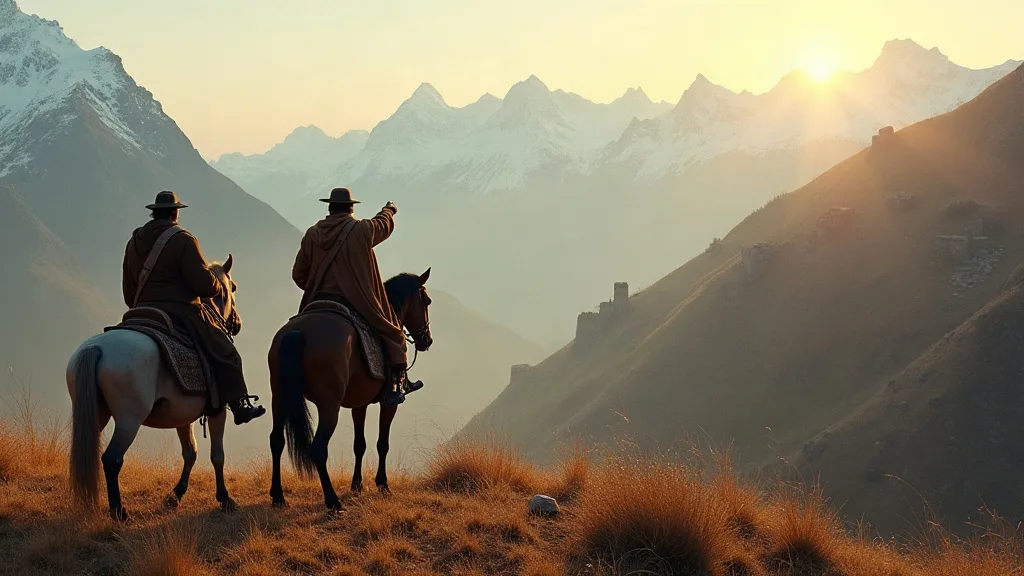
Two warriors ride toward the mountains of old Albania. Their names are Muji and Halili, and the epic songs about them have been sung in Albanian homes for over five hundred years. They are not gods, exactly. They are something closer to what their people needed: heroes who fight with courage, stay loyal to each other, and face down creatures that embody chaos itself.
The songs about these two men are called the Këngë të Këqija (the Harsh Songs), and they form the backbone of Albanian heroic tradition. Unlike the epics of Homer or the Norse skalds, these verses were carried orally, changing slightly with each singer, each village, each retelling around a fire. What survived were stories of two brothers, inseparable in battle, whose deeds echo through the mountains and valleys of the Balkans.
Who Were Muji and Halili in Albanian Legend
The basic facts are few but powerful. Muji is the elder, the leader, the strategist. Halili is his loyal shadow, his sword arm, his second self. The relationship between them defines the entire epic: not competition, but perfect brotherhood. They stand together against threats that come from beyond the human world.
Their origins in the epic cycles vary depending on which ballad you hear. Some versions place them as sons of kings. Others make them orphans raised by shepherds. The specifics matter less than the deeper truth: they emerge as the heroes their moment needs. The Këngë të Këqija describe a world under siege, where monstrous beings threaten Albanian lands and foreign powers press in from all sides. Muji and Halili step into this chaos as defenders.
The epic tradition places them in a timeless past that feels both ancient and intimate. The songs refer to real geography: the mountains around present-day northern Albania, the valleys of Kosovo, places where real shepherds grazed real flocks. This grounding in actual landscape gives the legends a credibility that pure fantasy could never achieve. The listener knows these mountains. They can imagine the heroes riding through them.
The Core Myth: Muji Defeats the Three-Headed Monster
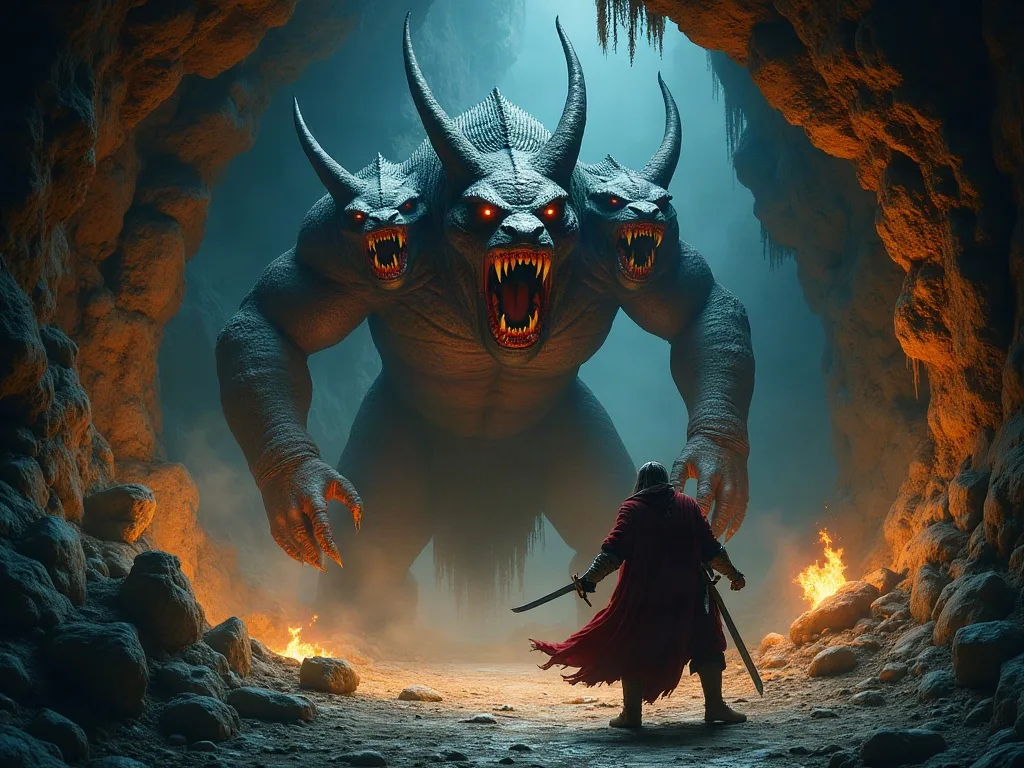
The central achievement attributed to both heroes, though Muji often takes the lead role, is the slaying of a monstrous being. Different versions call it different things, but the core remains: a creature of impossible power, often described as having three heads, or breathing fire, or possessing magical strength that no ordinary weapon can pierce.
This monster terrorizes the people. It devours livestock. It kills warriors. It represents everything that cannot be reasoned with, everything wild and destructive that threatens civilization. When Muji learns of this plague, he decides to hunt it.
The battle itself is rendered in vivid, brutal detail across versions. Muji must travel to a hidden place, often a cave or a fortress belonging to the creature. Sometimes Halili accompanies him directly. Sometimes Halili waits, ready to ride to his brother's aid. The fight itself is described in physical terms: strength against strength, cunning against rage. Muji uses wit as much as his sword. He may trick the monster into a vulnerable position. He may discover a magical weakness (often the creature can only be harmed if struck in a specific spot, or if blood from a certain animal touches it).
When the monster falls, the land is freed. The people sing songs of gratitude. This victory becomes Muji's defining act, the reason his name carries weight for centuries after.
The Bond Between Brothers: Loyalty Above All
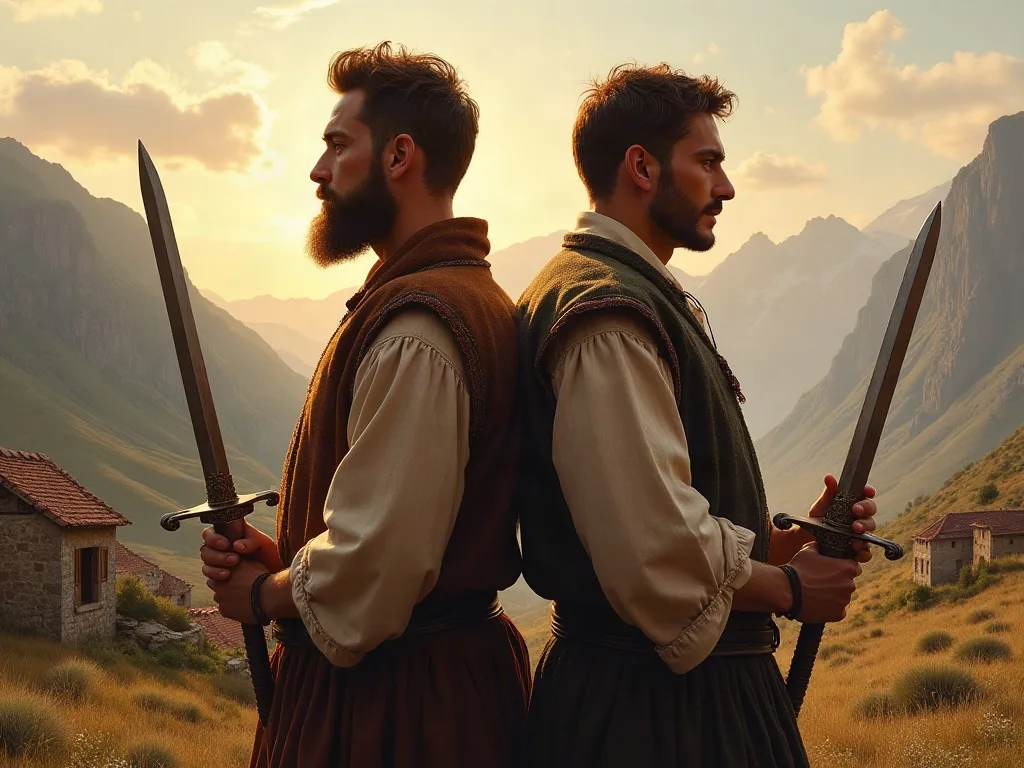
What sets the Muji and Halili cycle apart from many European heroic traditions is the absolute primacy of fraternal loyalty. In Western epics, heroes often compete, betray, or struggle with one another. The Norse gods rarely trust each other completely. Greek heroes are frequently rivals. But in the Albanian epic tradition, Muji and Halili are inseparable not through circumstance but through choice and principle.
Halili is never depicted as jealous of Muji's fame. When Muji accomplishes great deeds, Halili's joy is genuine. Conversely, Halili's courage and skill are repeatedly affirmed. The two men operate as one unit, each knowing the other will die before abandoning him.
This emphasis on brotherhood reflects deeper values embedded in Albanian culture. The traditional kanun, the unwritten code of law that governed Albanian mountain communities for centuries, placed extraordinary emphasis on family loyalty and collective honor. Betraying a brother was among the gravest sins. Dying rather than abandoning a kinsman was not just honorable; it was the only choice a man of worth could make.
The epic songs reinforce this code constantly. In moment after moment, Muji and Halili choose each other over personal advantage. If a challenge comes that could elevate one brother above the other, they find a way to face it together. If enemies try to turn them against each other, the attempt fails because their bond is unbreakable.
Muji and Halili in Historical Context: The Ottoman Period and Cultural Resistance
The popularity of Muji and Halili ballads surged dramatically during the Ottoman occupation of the Balkans, which began in the 15th century and lasted until the early 20th century. This timing is not coincidental. As foreign rule solidified, as Albanian Orthodox and Muslim communities alike found themselves under Ottoman governance, the epic songs took on new meaning.
Muji and Halili became symbols of a free, pre-conquest past. Their victories over monsters and foreign threats spoke to a people living under foreign occupation, unable to openly resist but able to sing songs of heroes who could. The epics became a form of cultural memory, keeping alive the idea of Albanian independence and martial honor even during centuries of Ottoman rule.
Scholars of Balkan folklore, including the work of translators like Margaret Hasluck in the early 20th century, began documenting these oral traditions precisely as this period of occupation was ending. Their recordings capture singers who had inherited these ballads from previous generations, each adding their own flourishes, their own understanding of what Muji and Halili represented.
The songs also reflect the complex religious history of the region. Some versions emphasize Muji as a Christian hero. Others present him in Islamic terms or in a form that transcends religious specificity. This flexibility suggests the legends existed before or above religious division, belonging to a deeper layer of Albanian identity.
The Literary Sources: Where the Legends Survive
Unlike the Greek myths preserved in Homer or the Norse myths recorded in the Eddas and sagas, the Muji and Halili cycle exists primarily in oral tradition and in the ballads collected by folklorists in the 19th and 20th centuries. There is no single authoritative written text composed in antiquity. Instead, there are many versions, each reflecting the voice and understanding of the singer.
This matters enormously for how we approach these legends. When you read about Muji and Halili, you're reading a reconstruction, a snapshot of living tradition caught in writing. The "original" stories, if they ever existed as a single fixed text, are long lost. What survives is the essence preserved through centuries of oral retelling.
The most significant collections come from folklorists working in the late 1800s and early 1900s. Margaret Hasluck recorded versions as an outsider observer. Kolë Idromeno and other Albanian scholars documented ballads in their native tradition. These texts, translated and reinterpreted by later scholars, form the basis of modern understanding.
What emerges from these sources is a picture of a hero cycle that resembles, in some ways, the material preserved in Serbian folk traditions and other Balkan epics, yet remains distinctly Albanian in character, emphasis, and moral framework.
Muji and Halili in Comparative Mythology
The two-hero pattern appears throughout world mythology. The Greek Castor and Pollux are inseparable twins. The Norse Vidar and Modi are related through their father Odin. The Hindu Rama and Lakshmana in the Ramayana exemplify devoted brotherhood.
What distinguishes Muji and Halili is their grounding not in divine origin or cosmic significance but in human struggle and local resistance. They are not demi-gods or the children of gods. They are men who rise to greatness through courage and loyalty. This makes them more accessible to ordinary people, more immediately relatable.
The monster-slaying pattern itself connects Muji to a vast tradition. Beowulf fights Grendel. Sigurd battles Fafnir. The Hindu hero Indra defeats Vritra. Each culture tells stories of champions overcoming forces of chaos and destruction. The Albanian tradition contributes its own vital chapter to this universal narrative.
The Trials of Muji: Specific Adventures and Tests
Different ballad versions describe Muji undergoing trials and facing challenges that test his worthiness as a hero. In some accounts, he must prove himself in combat against rival champions. In others, he faces supernatural obstacles: enchanted forests, rivers that cannot be crossed, fortresses protected by magic.
One recurring motif involves Muji being captured or imprisoned and having to escape through wit or strength. These stories echo patterns found in Celtic hero tales and in the broader Indo-European tradition of testing heroes through ordeal. The captivity and escape reaffirm the hero's superiority not just in battle but in resilience and cleverness.
Another set of adventures involves Muji defending his honor against false accusers or betrayers. Someone claims he is not truly a hero, or spreads lies about his deeds. Muji must confront the accuser, prove the truth through trial by combat, and restore his honor. These narratives reinforce the Albanian cultural value of reputation and the absolute necessity of defending one's good name.
The relationship between Muji and Halili is tested in some versions. A tempter or malevolent figure tries to come between them, suggesting that one brother is more worthy than the other, or that they should compete rather than cooperate. These temptations always fail, affirming the unbreakability of their bond.
Religious Dimensions: Pre-Islamic, Islamic, and Christian Layers
The Muji and Halili cycle exists in a religious landscape that is deeply complex. Albania, in its history, has been home to Illyrian pagans, Orthodox Christianity, Catholicism, and Islam. The epic traditions preserved in the ballads reflect this layered history.
Some versions of the Muji and Halili ballads contain pre-Islamic elements: references to old deities, to rituals and practices that predate the Ottoman conversion of much of the region. Other versions are explicitly Islamic, with Muji and Halili described as defenders of Islam or as pious believers fighting to protect their faith. Still others present them in Christian terms, particularly in versions preserved in Albanian communities that remained Orthodox or Catholic.
This religious flexibility is not random. It reflects the actual historical experience of Albanian peoples. As religions changed and coexisted, the old stories absorbed new language and frameworks without losing their essential meaning. Muji and Halili could be Christian heroes in one village's version and Muslim heroes in another's, because the core values they embodied, courage, loyalty, defense of the people, transcended religious boundaries.
Modern scholarship suggests that the Muji and Halili cycle may contain echoes of pre-Indo-European and Illyrian traditions, filtered through centuries of Slavic, Greek, and Ottoman cultural influence. This layering makes the legends a kind of archaeological site of the Balkans itself, containing visible strata of different periods and peoples.
The Legacy of Muji and Halili in Modern Albania
In contemporary Albania, the Muji and Halili ballads continue to hold cultural significance. They appear in school curricula as examples of national literary heritage. They are referenced in modern Albanian literature and film. The heroes' names and their deeds are part of the shared cultural knowledge that binds Albanians together, even across the geographical and political divisions of the diaspora.
The post-World War II period saw renewed scholarly interest in these legends as part of a broader effort to recover and celebrate Albanian national culture. During the Ottoman period, such celebration was necessarily muted or hidden. With independence, the epic cycles could be studied openly, translated, and taught as part of Albanian heritage.
Contemporary artists have reinterpreted the Muji and Halili stories in various media. Modern poets have written new versions inspired by the old ballads. The themes of loyalty and heroism continue to resonate, even in contexts far removed from medieval mountain warfare. This suggests something enduring in the stories themselves, something that speaks to values that persist across time.
Frequently asked questions about Muji and Halili
Frequently asked questions
Were Muji and Halili real historical figures?
Most scholars believe Muji and Halili are legendary figures rather than historical individuals, though the ballads about them may preserve memories of real conflicts and heroes. The epic cycle likely developed over centuries, with various historical events and figures blended into a legendary narrative. The giants and monsters in the stories are clearly mythological, but the structure of the tales, defense of territory, alliance with other heroes, struggles against foreign powers, mirrors real medieval Balkan conflicts.
How did Albanian ballads about these heroes survive if they were only oral tradition?
Folklorists and scholars, particularly in the 19th and 20th centuries, traveled through Albania and neighboring regions recording these ballads directly from singers who had learned them from previous generations. Margaret Hasluck, Kolë Idromeno, and others preserved versions in writing. Additionally, the ballads remained alive in family and community singing, especially in rural mountain regions less affected by modernization. This combination of oral preservation and scholarly documentation saved the cycles from disappearing.
Are there any connections between Muji and Halili and other Balkan hero cycles?
Yes. The epic traditions of Serbia, Bosnia, and other Balkan peoples contain similar stories of heroic warriors, monsters, and loyal companions. Some scholars suggest cross-pollination between traditions, while others argue these patterns reflect common Indo-European narrative structures. The Albanian cycle appears to have developed somewhat independently but was certainly influenced by and influenced neighboring epic traditions.
What is the significance of their loyalty to each other in Albanian culture?
The unwavering bond between Muji and Halili reflects the values encoded in the Albanian kanun, the traditional unwritten code emphasizing family loyalty and collective honor. In a culture where blood relations determined survival and social standing, the brothers' loyalty became a model for ideal kinship. This resonated especially during Ottoman rule, when ethnic and family bonds were often the only reliable forms of solidarity against foreign governance.
Do modern Albanians still sing or tell stories about Muji and Halili?
While traditional oral singing of the full ballad cycles has declined with urbanization and modernization, the stories remain part of Albanian cultural consciousness. They are taught in schools, referenced in literature, and studied by scholars. Some traditional singers still know portions of the ballads, particularly in rural areas. The names Muji and Halili remain recognized across Albanian communities, evidence of the legends' deep cultural embedding.
The Unresolved Mystery: Which Version is Truest
One of the enduring fascinations with the Muji and Halili cycle is that no single "true" version exists. Each ballad singer had their own understanding, their own elaborations, their own emotional investment in the stories. A singer in the mountain valleys might emphasize different elements than a singer in a lowland settlement. A Christian singer might highlight certain aspects that a Muslim singer would downplay.
This variation is not a flaw in the tradition; it is the tradition's essential character. These are living stories, not fixed texts. They change, adapt, and evolve with each retelling. The question of which version is most authentic may be unanswerable, and perhaps it should be. The ballads belong to their communities, and each community's version has validity.
Modern scholars continue to discover new variations and to reanalyze known versions, finding layers of meaning that previous generations missed. Some versions seem older, containing linguistic or narrative elements that suggest earlier composition. Others appear to be later elaborations. Teasing apart this chronology remains a complex, ongoing scholarly project.
What remains constant across all versions is the core: two heroes, bound by blood and honor, defending their people against threats that embody chaos. That essential story has proven remarkably resilient, carrying through centuries and across vast cultural shifts. That constancy itself is a kind of proof of the cycle's power and meaning in Albanian life.
Read the full book
Want the whole story?
The complete edition is an instant PDF download here, with a paperback on Amazon for selected titles.
Albanian
The Albanian Mythology Book: The Kulshedra, the Drangue, and the Spirits of the Mountains
The Kulshedra, the Drangue, and the Zana
The mythology of the Albanian highlands: the Kulshedra, a fire-belching dragon-hag who hoards the rains, the Drangue, winged heroes born to fight her, and the Zana, mountain nymphs who bless and curse. A pagan world that survived in the songs of the highland warriors.
More from Albanian
All articles
Albanian
The Shtriga: Witch-Vampire of Albanian Folklore
The Shtriga is a witch-vampire hybrid from Albanian folklore who feeds on the life force of sleeping children. Part demon, part woman, entirely dangerous, she embodies the fears of a culture caught between Christianity, Islam, and older Balkan beliefs.
Albanian
The Besa: Sacred Code of Honor in Albanian Culture
The Besa is Albania's oldest unwritten law: a sacred pledge of honor, protection, and hospitality that has shaped Albanian identity for centuries. Discover how this ancient code binds community, defies conquest, and survives in modern Albania.
Albanian
E Bukura e Dheut: The Earthly Beauty and Goddess of Nature in Albanian Mythology
E Bukura e Dheut embodies the earthly beauty and goddess of nature in Albanian mythology, representing fertility, growth, and the sacred landscape. Discover how this ancient figure shaped Albanian spiritual life and persists in folk tradition today.

Albanian
The Zana: Mountain Nymphs and Warrior Maidens of Albanian Folklore
The Zana embody the wild spirit of Albanian mountains: supernatural maidens who heal the wounded, challenge warriors to combat, and guard their domains with ferocity. Learn how these mountain nymphs shaped centuries of Balkan folklore.