

The Kukudh: Plague-Bringing Evil Spirit of Albanian Mythology
The Kukudh is Albanian folklore's most feared disease-bringer, a shape-shifting evil spirit that spreads plague with a touch. Learn what the old stories say about how it hunts and how to stop it.
Contents
The village is quiet, the kind of quiet that settles wrong. A dog stops barking mid-howl. The air thickens. Then the sickness comes, first one child, then half the street, then the cemetery fills faster than the priest can keep up. The neighbors whisper a single word: Kukudh.
The Kukudh is one of Albanian folklore's most feared supernatural beings, a creature that does not merely frighten but kills, spreading disease across households and flocks with terrifying efficiency. Across the villages of northern and central Albania, and among Arbëreshë communities scattered through southern Italy since the fifteenth century, the Kukudh has haunted the oral tradition for centuries. It belongs to a layered world of Albanian spiritual belief that long predates the region's Islamization and Christianization, drawing on pre-Roman Illyrian-era notions of contaminating, vengeful forces that operate at the border between the living and the dead.
This is not a ghost story in the comfortable, modern sense. The Kukudh is a working explanation for real suffering: why epidemics strike, why children waste away overnight, why entire flocks die before the shepherd can call for help. Understanding it means stepping inside the worldview of people who built their cosmology from mountain silence, ancestral memory, and hard experience with death.
What the Kukudh Actually Is
The Kukudh resists easy classification. It is not a demon in the Christian sense, not a ghost, and not quite a monster in the way Western traditions picture monsters. Albanian folklorists in the late nineteenth and early twentieth centuries, notably Johann Georg von Hahn writing in 1854 in his Albanesische Studien, and later Maximilian Lambertz collecting material in the early twentieth century, describe it consistently as a spirit of contagion and malevolent supernatural origin.
In its most common description, the Kukudh appears as a formless or shape-shifting presence. It can take animal form, sliding into a village as a black dog, a cat, or a night bird. In some accounts collected in the Shkodër region of northern Albania, villagers described it as a moving darkness, a shadow that walks without a body casting it. Whatever form it wears, the effect it produces is the same: those who come into contact with it, or simply pass through a space it has occupied, fall sick. High fever, wasting, sudden death in the night.
The creature is explicitly associated with the concept of sëmundja e keqe, "the bad sickness," a catch-all phrase in Albanian village speech for epidemic illness whose origin could not be seen or traced. It functions, in a very concrete way, as the pre-scientific community's answer to the question of contagion: something is moving through us, something with will and malice.

Origins and Spiritual Mechanics
Where does a Kukudh come from? The folk tradition gives several answers, and they are not contradictory; they are cumulative, each one adding detail to the same basic picture.
The most common explanation in northern Albanian oral accounts holds that a Kukudh is born from an improperly buried person, most often a suicide, a murder victim whose killer was never punished, or someone who died having committed a grave wrong that was never made right. The soul, unable to rest, does not dissolve back into the natural order but curdles into something hostile. It attaches itself to the body's vicinity at first, then ranges further, driven by unresolved grievance or the sheer poison of an unclean death.
A second strand, preserved among Arbëreshë villages in Calabria and documented by scholars of Albanian diaspora tradition, holds that certain living people can become Kukudh temporarily, particularly during sleep or in states of fever, projecting a spirit-double that wanders and contaminates. This brings the Kukudh into contact with similar European traditions: the Slavic mora, the Romanian strigoi, the Greek vrykolakas, all creatures that blur the boundary between the corrupted living and the restless dead.
A third, older-feeling account treats the Kukudh less as an individual soul and more as a force that collects around places of concentrated grief or violence. A battlefield site, a spot where plague already struck, a crossroads where a body was abandoned. The creature does not travel so much as it emanates from places the living have made spiritually dangerous.
All three accounts share one core logic: the Kukudh is what happens when the normal cycle of death, burial, grieving, and release breaks down. It is disorder made animate.
How the Kukudh Spreads Disease
Albanian folk belief is remarkably precise about the mechanics of Kukudh contagion. This is not vague supernatural menace; the tradition worked out specific pathways, because naming the pathway helped people feel they had some control over what touched them.
Contact transmission was primary. If the Kukudh passed through a doorway, the doorway itself was considered contaminated. Anyone who crossed that threshold within a certain period, usually three days in the accounts collected by the Albanian ethnographer Faik Konica in the early twentieth century, risked absorbing the sickness. This belief had a practical consequence: when an epidemic was blamed on a Kukudh, villagers would block certain doors with specific apotropaic materials, painted crosses in Christian areas, knotted cords, herbs of protective association, particularly borzilok (basil) and garlic.
Breath transmission came second. The Kukudh could breathe sickness into a sleeping person, particularly children, who were considered spiritually more open and less defended than adults. The habit of covering a sleeping child's face, noted in multiple Albanian ethnographic accounts, was partly practical but also partly protective against exactly this kind of spirit intrusion.
Third, and perhaps most striking, was ocular transmission: the Kukudh could carry the evil eye in a specialized form, not the ordinary envious glance of a neighbor but a concentrated, intentional sickness-gaze. An animal that looked at the Kukudh directly might die by morning. This explains a cluster of herding practices recorded in the Dukagjin highlands, where shepherds avoided letting their dogs range at night alone during known epidemic periods.

Encountering the Kukudh: the Village's Defense
The community was not passive against the Kukudh. Albanian folk tradition built a dense toolkit of avoidance, detection, and expulsion, and the logic behind each practice is worth understanding on its own terms.
Detection relied heavily on the behavior of animals. Dogs were the primary early-warning system. A dog that refused to approach a particular house, or that barked facing a blank wall in the small hours, was read as evidence that a Kukudh was nearby. Horses were also considered sensitive; a horse that shied away from a familiar path without visible cause could be signaling presence.
Protective materials centered on:
- Garlic, hung at doors and windows, whose sharp smell was believed to repel the creature
- Basil (borzilok), both burned as incense and kept as growing plants at thresholds
- Red thread, tied around the wrists of children or around the necks of young animals
- Iron, particularly iron nails driven into doorposts, which appears in Albanian protective magic broadly, not only against the Kukudh
Expulsion rituals were more elaborate and required either the village's most senior woman or, in later Christianized practice, a priest or hoxhë (Muslim religious leader). In pre-Christian accounts, the ritual involved a procession around the affected household at midnight, with participants carrying fire. The Kukudh was believed to fear both fire and the sound of metal striking metal, so the procession made noise, clanging pots, striking sickles together, raising a wall of sound the creature could not penetrate.
In some northern Albanian village traditions, the expulsion ritual was called largimi i të keqes, "the sending-away of the bad thing," deliberately avoiding naming the creature directly during the rite, because naming it was considered an invitation for it to turn its attention toward the speaker.
This combination of detection, protection, and expulsion made the community's response to epidemic illness structured and socially cohesive. When a Kukudh was suspected, the village organized. The ritual gave people something to do with their fear.
Albanian mountain spirits and the Ora play a related protective role in this cosmology, acting as guardian counterweights to the Kukudh's destructive force.
Kukudh
Kucedra / Kulshedra
The Kukudh Among Albanian Mountain Laws
Albanian highland society was organized for centuries around the Kanun, a body of customary law codified most famously by Lekë Dukagjini in the fifteenth century, though its roots run much deeper. The Kanun governed hospitality, blood feud, property, and the treatment of the dead. Its rules about burial, mourning periods, and the obligations owed to the dead were not merely sentimental; they were prophylactic. A properly mourned and properly buried person did not become a Kukudh.
The Kanun's insistence on correct burial rites, on ensuring that a dead person received their due lament (vajtim), and on settling blood debts so that a murder victim's soul was not abandoned to injustice, served as spiritual public health measures. The risk of producing a Kukudh was one of the implicit costs of violating these norms. Failing to bury someone properly did not merely dishonor them; it endangered the whole community.
This gives the Kukudh a social function beyond simple fear. It enforced community norms about how the dead should be treated. It made correct death-ritual a matter of collective survival, not just individual piety. The fis, the extended clan unit at the heart of highland Albanian social organization, bore collective responsibility both for the living and for ensuring the dead passed cleanly out of the world of the living. A Kukudh rising from a fis's neglected dead was a stain on the entire lineage.

Cross-Cultural Echoes
The Kukudh is not unique in structure. It belongs to a broader Balkan and Mediterranean family of contaminating spirits, and tracing those family resemblances sharpens the picture of what the Kukudh specifically is.
The Romanian strigoi shares the origin story of the improperly buried dead returning to harm the living, though the strigoi typically targets blood and life-force rather than spreading disease to crowds. The Bulgarian karakondzhul, a creature that inhabits the dangerous twelve-day period between Christmas and Epiphany, similarly occupies liminal time and space, but its operation is more localized and less epidemiological. The Greek vrykolakas comes closest in the disease-spreading function; Nikos Politis, the nineteenth-century Greek folklorist, documented accounts in which a vrykolakas touching a village doorway was enough to infect the household, a near-exact parallel to the Kukudh mechanics.
Further out, the comparison with plague-spirit traditions in the ancient Near East is suggestive. The Mesopotamian demon Namtar, servant of Ereshkigal in the Underworld, was an explicit disease-bringer: his name translates roughly as "fate-cutter" and he commanded sixty diseases. The parallel is structural, not historical; Albanian folk belief did not derive from Mesopotamian religion. But it shows that naming a disease-spirit, giving it form and mechanics, is a near-universal human response to epidemic illness.
What makes the Kukudh distinctly Albanian is its integration into the specific social structures of highland Albanian life: the Kanun's death obligations, the extended family's (fis) collective responsibility for the dead, the close-knit village unit that both detected and expelled the creature together. The Drangue, the winged Albanian hero, represents the opposite pole of this cosmology: where the Kukudh is dissolution and contamination, the Drangue is protective, ordered force. The two figures define the moral extremes of the Albanian supernatural world.
The Kukudh in Modern Memory
By the early twentieth century, in most Albanian cities, the Kukudh had retreated into folk metaphor. Educated Albanians might use the word to describe a person who brings nothing but trouble, "he's a real Kukudh," with no literal belief implied. This is a common path for supernatural beings in modernizing societies: the creature becomes a social insult before it disappears entirely from active belief.
But the retreat was not total. Ethnographic fieldwork conducted in the 1990s and early 2000s in rural areas of northern Albania, particularly in the Mirditë and Dukagjin regions, found that older villagers still used protective practices against disease spirits without necessarily naming them, keeping basil at the threshold, avoiding certain crossroads at night, maintaining particular burial customs with careful attention to the rules. The creature's name had faded, but the architecture of belief it generated was still standing.
Among Arbëreshë communities in Italy, preservation has been stronger. Communities like Civita and San Demetrio Corone in Calabria maintained their Albanian dialect and with it a living vocabulary of spirit belief that the homeland itself sometimes lost to modernization. Folklorist Agostino Giordano of the University of Cosenza, who conducted field interviews in these communities between 2008 and 2014, documented Kukudh-adjacent terminology and threshold-protection customs still actively observed by elder household members, findings published in the Rivista di Albanologia and cited in subsequent comparative Balkan folklore studies.
The creature also found an unlikely afterlife in modern Albanian literature. Ismail Kadare, Albania's most internationally recognized novelist and long-time Nobel Prize contender, draws heavily on the landscape of Albanian folk belief in works like Broken April and The Palace of Dreams. While Kadare does not name the Kukudh explicitly in his major novels, the atmosphere of contaminating fate, of something unseen moving through a community and selecting its victims, runs through his fiction like a fever. Readers familiar with the Kukudh tradition will recognize the shape of it in the blood-feud curse of Broken April: an unstoppable, invisible force that passes from household to household, following the logic of a broken social compact.
Frequently Asked Questions About the Kukudh
Frequently asked questions
Is the Kukudh the same creature as the Kucedra in Albanian mythology?
No, they are distinct beings. The Kucedra (Kulshedra in some dialects) is a serpentine female monster associated with drought, storms, and water-hoarding, a creature of epic scale fought by the hero Drangue. The Kukudh operates on a much more intimate, village-level scale and is specifically associated with epidemic disease and contamination rather than natural catastrophe. The two share the quality of malevolence but differ sharply in origin, form, and function. The Comparison block above maps those differences at a glance.
Could the Kukudh be killed, or only expelled?
Albanian folk tradition generally speaks of expulsion rather than destruction. The Kukudh, as a spirit rather than a physical body, could not be killed by ordinary means. The goal of protective rituals was to drive it away from the affected household or village, redirect it, or prevent its entry in the first place. In accounts where a specific human burial was identified as the Kukudh's source, some traditions held that correctly re-burying the person with full rites could neutralize the spirit, not killing it exactly, but resolving the unfinished business that sustained it.
What primary sources document the Kukudh?
The earliest systematic documentation appears in Johann Georg von Hahn's Albanesische Studien (1854), where he records spirit beliefs from interviews in Shkodër and Ioannina. Maximilian Lambertz's early twentieth-century folklore collections add considerable detail on protective practices. Faik Konica's ethnographic writings and the collected folklore of the Albanian Institute of Folk Culture in Tirana, especially material gathered in the 1970s before rural traditions changed rapidly, are the core scholarly record. Arbëreshë-specific documentation comes from researchers at Italian universities, notably Agostino Giordano at the University of Cosenza, working with diaspora communities in Calabria and Basilicata.
How did Albanian Christians and Muslims adapt Kukudh belief?
The arrival of Christianity (dominant by the medieval period) and later Islam (spreading from the sixteenth century onward under Ottoman rule) did not erase the Kukudh but layered new vocabulary onto existing belief. Christian Albanians often attributed the Kukudh's power to divine permission, a spirit allowed to punish a sinful community, and incorporated priestly blessing and holy water into expulsion rites. Muslim Albanians used Quranic recitation and called on the hoxhë to perform protective prayers. The creature itself, and the community logic around it, persisted underneath both religious overlays, which is why ethnographers find consistent Kukudh-related practices across regions that differ sharply in formal religious affiliation.
Are there Albanian rituals still practiced today that connect to Kukudh belief?
Directly named Kukudh rituals are rare in contemporary practice. However, ethnographers working in northern Albania in the early 2000s found that threshold-protection customs (basil plants, garlic, iron nails at doorposts) were still maintained by older households, often described simply as "what you do" without specific supernatural justification. The semantic shell of the ritual survived after its explicit meaning faded. Among Arbëreshë communities in Italy, Agostino Giordano's fieldwork found more explicit retention of the vocabulary and associated protective customs, particularly around the treatment of deceased community members and the preparation of the threshold before a body is carried out of the home.
The Kukudh and the Logic of Living with Epidemic Fear
What Albanian mountain communities built around the Kukudh was not superstition in the dismissive sense. It was a coherent, socially functional response to one of the most destabilizing experiences human beings face: the sudden, invisible arrival of mass sickness.
Giving the thing a name mattered. A named creature can be reasoned about, prepared for, and pushed back against. The Kukudh's characteristics, its pathways of transmission, its fear of fire and iron and garlic, its origin in social failure around the dead, gave communities both an explanation and an action plan. The explanation located the epidemic in a moral framework that also reinforced community obligations. The action plan gave people coordinated things to do, which is itself a form of resilience.
Modern epidemiology replaced the Kukudh as an explanation. The creature's mechanisms were wrong in their specifics. But the impulse behind them, to map the invisible, to name what kills, to build community practice around keeping it out, was exactly right. The Kukudh is a reminder that human beings have always been very serious about understanding the things that threaten them, even when the tools available were stories, herbs, and the sound of iron striking iron at midnight.
The spirit world of Albanian mythology holds many such figures, built over millennia at the intersection of Illyrian heritage, Balkan geography, and the hard logic of mountain survival. The Kukudh is among the darkest, but also among the most instructive: a creature born from community failure, held at bay by community action. Every garlic clove at a doorpost, every midnight procession with clanging sickles, was a community telling itself the same essential truth: we are responsible for each other, and that responsibility does not end at death.
Read the full book
Want the whole story?
The complete edition is an instant PDF download here, with a paperback on Amazon for selected titles.
Albanian
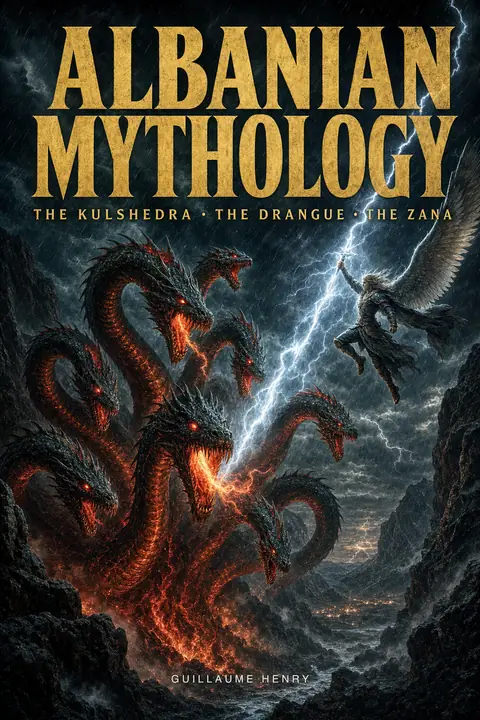
The Albanian Mythology Book: The Kulshedra, the Drangue, and the Spirits of the Mountains
The Kulshedra, the Drangue, and the Zana
The mythology of the Albanian highlands: the Kulshedra, a fire-belching dragon-hag who hoards the rains, the Drangue, winged heroes born to fight her, and the Zana, mountain nymphs who bless and curse. A pagan world that survived in the songs of the highland warriors.
More from Albanian
All articles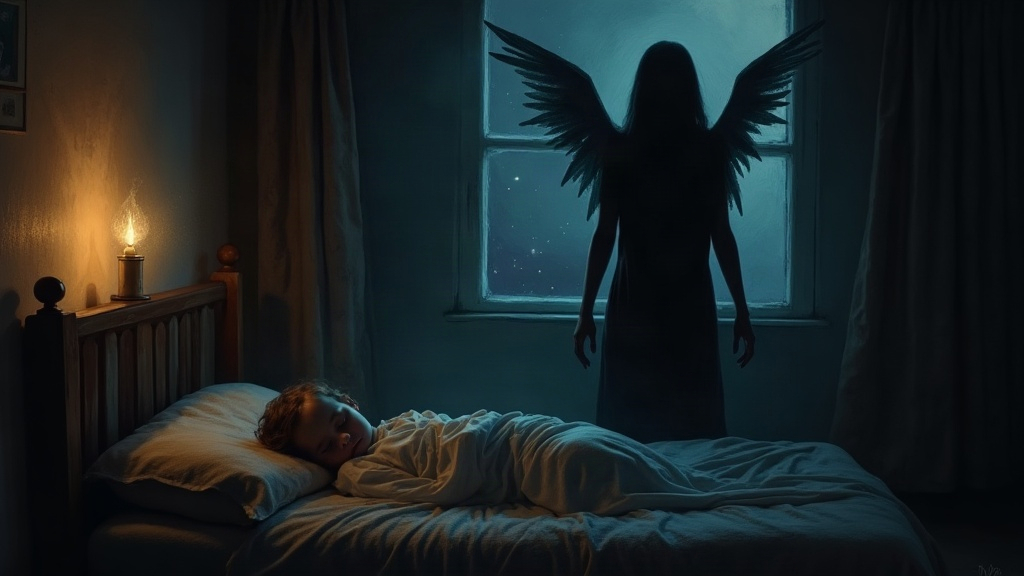
Albanian
The Shtriga: Witch-Vampire of Albanian Folklore
The Shtriga is a witch-vampire hybrid from Albanian folklore who feeds on the life force of sleeping children. Part demon, part woman, entirely dangerous, she embodies the fears of a culture caught between Christianity, Islam, and older Balkan beliefs.
Albanian
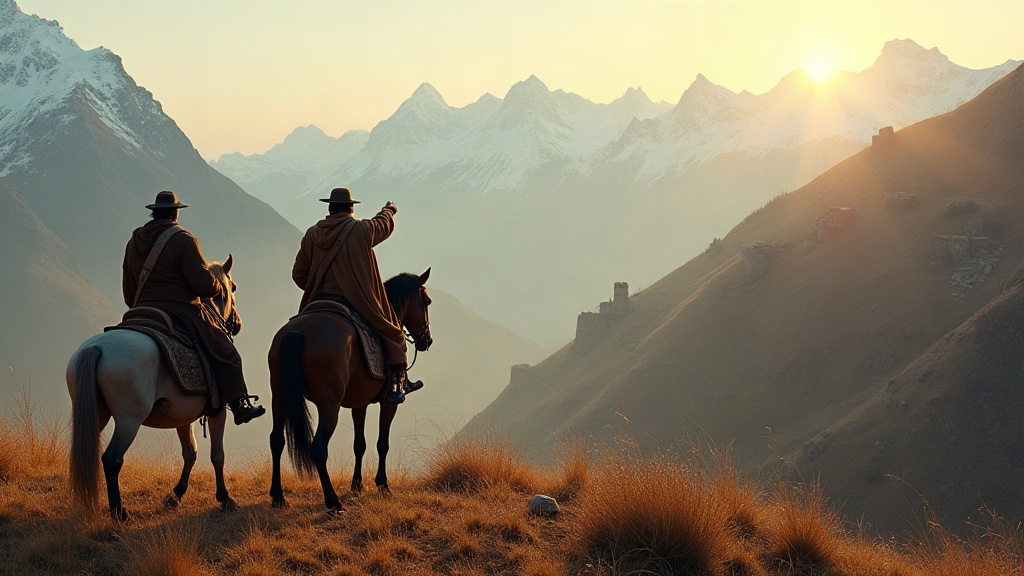
Muji and Halili: The Epic Heroes of Albanian Legend
Muji and Halili are the legendary twin heroes of Albanian epic poetry, warriors bound by blood and honor who defend their land against mythical monsters and foreign invasion. Discover how their deeds shaped Albanian cultural identity for centuries.
Albanian
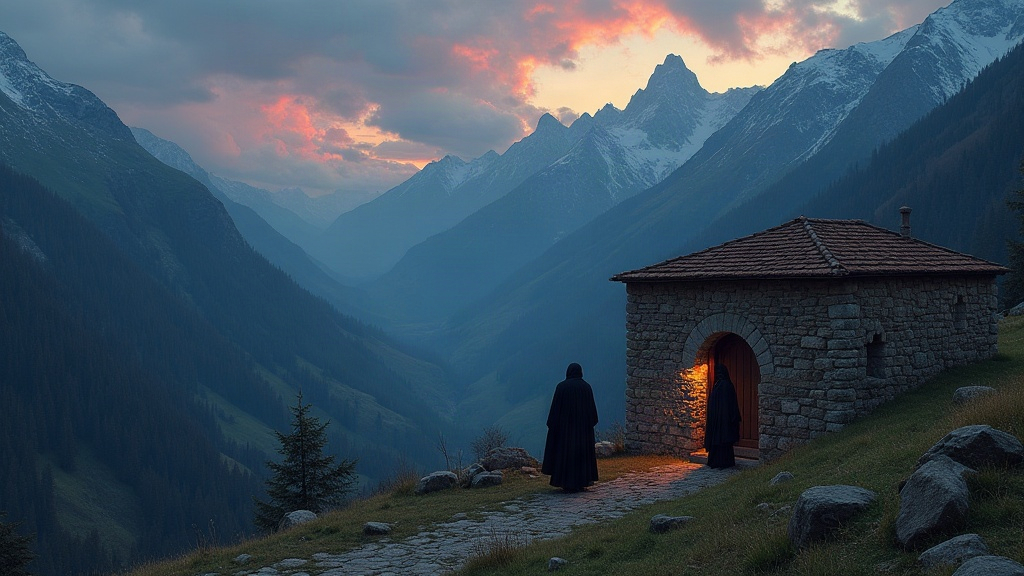
The Besa: Sacred Code of Honor in Albanian Culture
The Besa is Albania's oldest unwritten law: a sacred pledge of honor, protection, and hospitality that has shaped Albanian identity for centuries. Discover how this ancient code binds community, defies conquest, and survives in modern Albania.

Albanian
E Bukura e Dheut: The Earthly Beauty and Goddess of Nature in Albanian Mythology
E Bukura e Dheut embodies the earthly beauty and goddess of nature in Albanian mythology, representing fertility, growth, and the sacred landscape. Discover how this ancient figure shaped Albanian spiritual life and persists in folk tradition today.