
Dita e Verës: Spring Festival and Ancient New Year
Dita e Verës, Albania's Spring Festival, marks the ancient new year on March 14 with fire, food, and rites older than Christianity. Discover its mythic roots and living traditions.
Contents
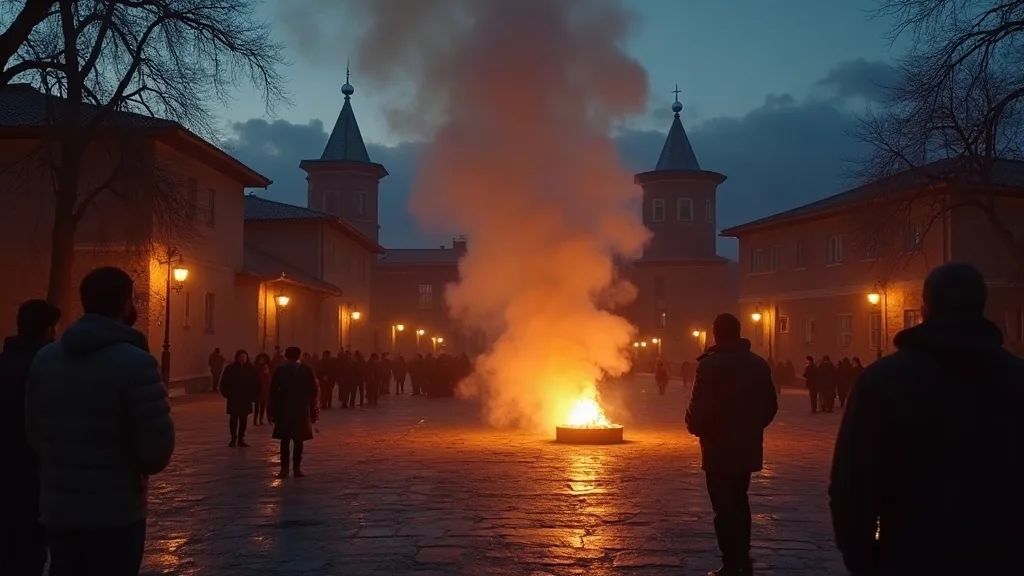
The fire is lit before dawn. Across the city of Elbasan and throughout Albanian villages, women press warm ballokume - a sweet cornmeal cake baked only on this day - into the hands of every person who crosses the threshold. Children run into the street. Older men burn the last logs of winter. The date is March 14, and the holiday is Dita e Verës: Spring Festival and Ancient New Year, the oldest continuously observed public celebration in Albania.
It is not a quiet festival. It smells of woodsmoke and anise, sounds like drumbeats and laughter, looks like bonfire light against a cold pre-dawn sky. Scholars place its roots deep inside pre-Christian Albanian belief, connecting it to the calendar systems of the ancient Illyrians and, before them, to whatever unnamed people first measured time by the thaw of the earth. Celebrated on the first day after the Roman calendar's Ides of March, its survival through Ottoman rule, communist atheism, and rapid modernization is itself a kind of myth.
What "Dita e Verës" Actually Means
Dita e Verës translates directly from Albanian as "Day of Summer" - though the meaning is older and stranger than modern Albanian "summer" implies. In archaic usage, verë carried the sense of the warm season as a whole, the half of the year when the earth is alive. Marking March 14 as its start was not an error or poetic license. It reflects a much older northern Mediterranean and Balkanic count of seasons: two halves, not four quarters. Winter ended. Summer began. A new year opened.
The word shares a distant etymological relationship with terms across the wider Indo-European family for spring renewal, though Albanian linguists, including work collected by Eqrem Çabej in the 20th century, are careful to note how much of the Albanian vocabulary is genuinely archaic and irreducible to neat borrowing from Latin or Greek. Verë is Albanian's own word. So is the holiday it names.
The Illyrian Calendar and the Ancient New Year
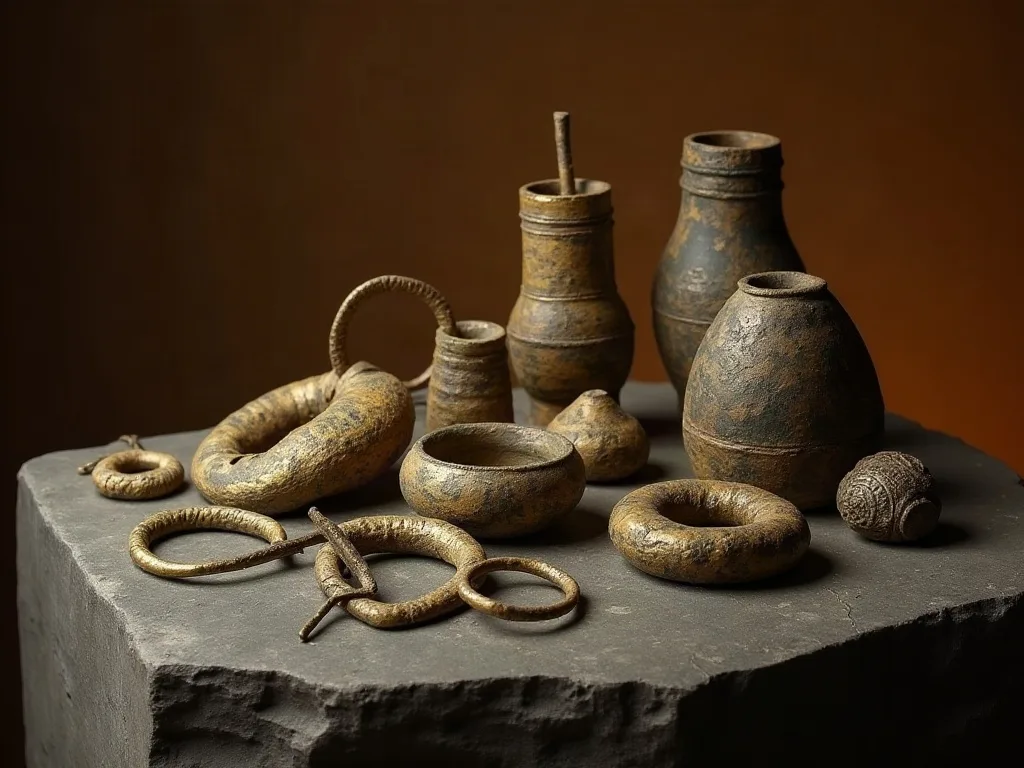
The Illyrians - the pre-Roman peoples who occupied the western Balkans from roughly 1000 BC onward - kept a calendar oriented around agricultural cycles. Roman sources, including Livy and later Strabo, noted the distinctiveness of Illyrian ritual practice, though they rarely described it in detail. What archaeology has recovered from Illyrian sites in modern Albania, Kosovo, and North Macedonia includes bronze fibulae, decorated ceramics, and cult objects associated with solar and seasonal rites.
Dita e Verës as the new year positions itself at the cusp of agricultural awakening: the ground is still cold, but the days have grown measurably longer since the winter solstice. In many ancient calendar systems, this threshold - around the Ides of March in Roman reckoning, March 14-15 - marked the end of the dead season. The Roman month of March itself was originally the first month of the year. The connection is not coincidence. It reflects a shared Balkanic and Mediterranean understanding that the real turn of the year happens when seeds can go back into soil.
Historian Robert Elsie, who documented Albanian folk tradition extensively, noted that the Albanian ritual calendar retained pre-Christian structural features well into the 20th century, with seasonal boundary moments marked by fire, food sharing, and symbolic acts of renewal. Dita e Verës fits this pattern precisely.
Fire, Ash, and the Body of Winter
No element of Dita e Verës carries more weight than fire. On the eve of March 14, families gather the last firewood of winter and burn it completely. The act is not simply practical. Anthropologists who have documented the festival describe it as a form of symbolic expulsion: you are not just finishing the wood, you are ending winter as an active force.
In villages of central Albania, it was customary for the oldest woman in a household to sweep the ash from the hearth outward through the front door at sunrise on March 14. She would say, in some versions of the practice: "Flee, old year; come in, new summer." The ash represents winter's body, literally pushed out of the house. This is a logic found across many pre-Christian European traditions, from the Slavic burning of an effigy of winter called Marzanna to the Celtic bonfire customs of Imbolc, but the Albanian form has its own specific grammar: it centers the woman of the household, the hearth-keeper, as the agent of the ritual turn.
The bonfire rites of Dita e Verës also carried a protective function. People would leap over the flames - a gesture found in Zoroastrian Nowruz celebrations in Iran, in Iberian Midsummer fires, and in Roman Parilia. The shared logic: fire purifies, and the body that passes through smoke or flame enters the new year clean.
Ballokume: The Sacred Cake of Elbasan
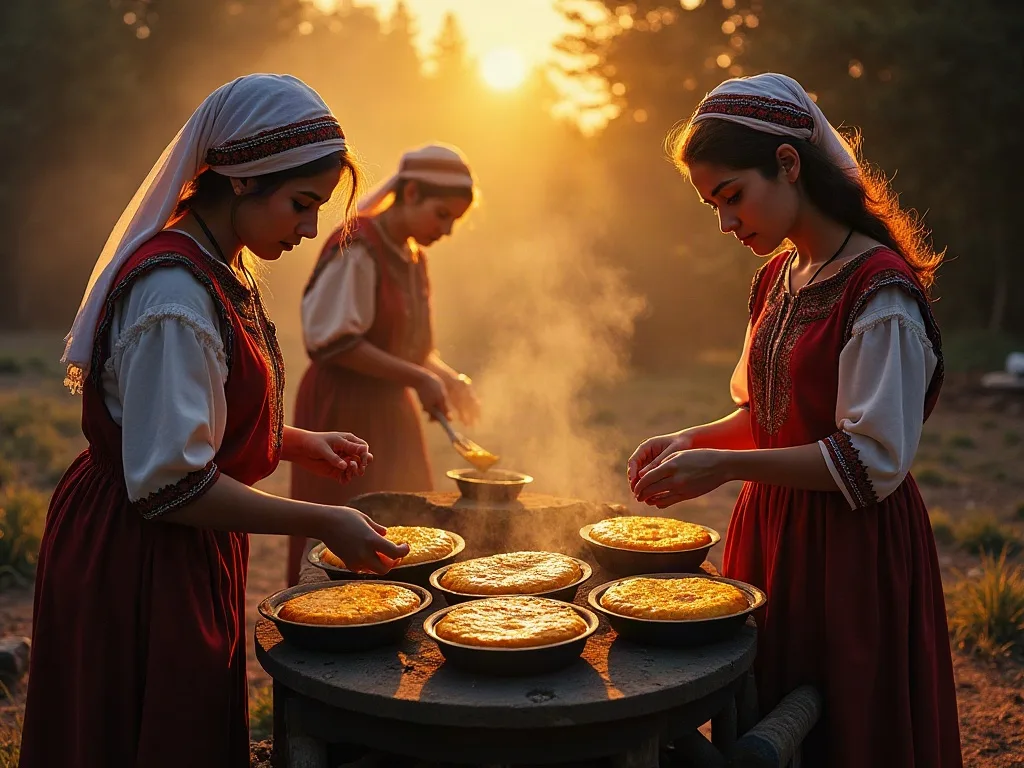
The food of Dita e Verës is specific, named, and unrepeatable. Ballokume is a small, round, flat cake made from cornmeal, eggs, butter, and sugar, baked in shallow pans over low heat until it has a pale golden crust and a dense, slightly crumbly interior. Its flavor is mild and rich, somewhere between shortbread and polenta cake. It is made only on this day. You cannot buy it in a shop in December. Its appearance marks the calendar.
The word ballokume has resisted confident etymology, which itself suggests age. Food anthropologists who have studied Albanian culinary tradition point to the cake's simplicity - cornmeal, fat, sweetness - as a marker of ancient ritual food practice: ingredients that were once precious and were reserved for high moments in the cycle of the year. Offering ballokume to guests, neighbors, and strangers on March 14 is an act of social binding. The cake crosses the threshold. It says: we are still community, winter did not break us.
In Elbasan, the city that has become the ceremonial center of the festival, families begin baking ballokume before sunrise. By midmorning, the city smells of warm butter and baking corn. Visitors arrive from Tirana, from the diaspora, from neighboring villages. The cake is pressed into hands freely. You do not pay for it at the door.
Zana, Vitore, and the Spirits of the New Season
Dita e Verës does not exist in mythological isolation. It connects to the wider network of Albanian sacred beings whose power waxes and wanes with the seasons. The Zana - mountain spirits, female, fierce, and beautiful, who appear in Albanian oral epic as guardians of warriors and hunters - were understood to grow more active as the cold lifted. To antagonize a Zana in winter was one kind of danger. To fail to honor the returning warmth they personified was another.
The figure of Vitore, a luminous female spirit associated specifically with spring and the new year in some Albanian regional traditions, gives the festival its supernatural patron in the south. Vitore appears in folk songs collected in the 19th century by Johann Georg von Hahn, the Austrian consul and folklorist who produced the first systematic study of Albanian mythology. She is greeted in these songs as a guest arriving from a long journey, bringing the light back with her. The songs addressed to Vitore on March 14 are called këngë e Vitores - "songs of Vitore" - and some survive in the repertoire of folk ensembles today.
This connection between the festival and a named female divine figure is significant. It places Dita e Verës inside a pattern common to many pre-Christian spring festivals across Europe and the Near East: the return of a goddess, a spirit, or a divine female principle signals that the earth is ready to receive seed again. Persephone's ascent from the underworld in Greek myth follows the same structural logic, though the Albanian version is not derived from Greek mythology but runs parallel to it.
The Ottoman Centuries and the Survival of the Festival
When the Ottoman Empire absorbed Albania through the 15th and 16th centuries, the new political and religious order might have been expected to extinguish a celebration so clearly rooted in pre-Islamic and pre-Christian practice. It did not. Dita e Verës survived, and its survival tells us something important about how cultures protect what they cannot afford to lose.
Part of the answer is Bektashism. The Bektashi Sufi order, which became deeply rooted in Albanian religious life under Ottoman rule, was notably tolerant of pre-Islamic folk practices. Bektashi tekkes (lodges) in Elbasan and across central Albania did not suppress the spring festival. In some accounts, they absorbed elements of it, allowing March 14 to function simultaneously as a folk seasonal celebration and a flexible moment in a heterodox spiritual calendar. This religious syncretism is a hallmark of Albanian cultural history.
Part of the answer is also simply the stubbornness of agricultural memory. When the calendar of your body - when to plant, when to expect warmth, when to move the flocks - aligns with a festival, that festival does not require the approval of any empire. It survives because the earth keeps arriving at the same threshold.
Communist Albania and the Re-Framing of an Ancient Rite
The 20th century brought a different kind of threat. Enver Hoxha's communist government, which held power from 1944 until 1992, declared Albania the world's first officially atheist state in 1967. Religious practice of all kinds was suppressed. Churches and mosques were closed. Folk customs with obvious religious or supernatural connotations were scrutinized.
Dita e Verës was not abolished. Instead, it was re-framed. The communist state repositioned the festival as a celebration of "people's culture" and of the arrival of the working season. The fire rites, the ballokume, the songs, the gathering in the streets - all of this was permitted because it could be narrated as secular folk culture rather than religious observance. Elbasan was designated the festival's official center, partly because the city's industrial character made it easier to frame the event as a celebration of labor and collective life.
The irony is rich: a government committed to erasing the past accidentally preserved an ancient new year celebration by wrapping it in a secular label. The mythological content went underground into private memory, into grandmothers' kitchens, into folk song, while the public form of the festival continued. When communism fell, the deeper layers resurfaced.
Dita e Verës in the Albanian Diaspora
By the early 21st century, Dita e Verës had traveled with Albanian communities to Italy, Greece, Germany, the United States, and beyond. In New York and in Calabria in southern Italy, where the Arbëreshë communities - descendants of 15th-century Albanian refugees - have maintained Albanian language and custom for over five centuries, March 14 is still marked with bonfires and ballokume.
The Arbëreshë case is particularly striking. These communities left the Albanian mainland before the full Ottoman consolidation, preserving an older layer of Albanian culture that mainland Albanians themselves sometimes lost or altered. Their version of the Albanian Spring Festival retains ritual elements that were later modified or dropped in Albania proper, acting as a kind of living archive. Scholars like Italo Costante Fortino, who has studied Arbëreshë language and culture, have noted how the diaspora's preservation of Dita e Verës offers a comparative baseline for understanding what the festival looked like before 16th-century changes.
Frequently Asked Questions About Dita e Verës
Frequently asked questions
Why is Dita e Verës celebrated on March 14 specifically?
March 14 falls the day after the Ides of March in the Roman calendar, which was originally the first month of the year. For pre-Roman and Illyrian calendar traditions, this position at the mid-March threshold marked the end of winter and the beginning of the warm agricultural half of the year. The date was not chosen arbitrarily: it reflects a deep Balkanic and Mediterranean consensus about when the year genuinely turns, when soil temperature rises enough for cultivation to resume.
What is ballokume and why is it only made on this day?
Ballokume is a dense, sweet cornmeal cake made with butter, eggs, and sugar, baked in shallow pans on March 14. Its restriction to this single day is a classic feature of ritual food: scarcity and timing give the object sacred weight. By baking and sharing it only on the new year, Albanian communities signal that this food belongs to the threshold moment and cannot be separated from it. Eating ballokume is participating in the festival, not merely eating cake.
Is Dita e Verës connected to any other spring festivals in neighboring cultures?
There are structural parallels with the Persian and Central Asian Nowruz, celebrated on the spring equinox; with Slavic spring-fire traditions such as the burning of the Marzanna effigy; and with Greek folk celebrations of the Annunciation in late March. The Albanian festival runs parallel to these without being derived from them. Its clearest links are to pre-Christian Illyrian seasonal practice, shaped over centuries by Bektashi tolerance and Ottoman-era cultural negotiation.
How did the communist government affect the festival?
Rather than abolishing Dita e Verës outright, Enver Hoxha's government rebranded it as a secular folk celebration of the working season, stripping its explicit mythological framing while keeping the public rituals intact. Elbasan was designated its official center. The private, mythologically richer layers of the festival survived in domestic and community practice. After 1992, these layers were openly reasserted.
What UNESCO recognition does Dita e Verës have?
In 2020, UNESCO added Dita e Verës as practiced in Elbasan to its Representative List of Intangible Cultural Heritage of Humanity. The nomination specifically highlighted the community's continuity of practice across centuries, the role of ballokume preparation in social bonding, and the festival's function as a living carrier of pre-Christian Albanian seasonal knowledge.
Who is Vitore, and what role does she play in the festival?
Vitore is a luminous female spirit associated with spring renewal in southern Albanian folk tradition. She appears in 19th-century folk songs collected by Johann Georg von Hahn, addressed as a returning traveler who brings warmth and light back to the world. Songs called këngë e Vitores were sung on March 14 to welcome her return. She functions as the festival's supernatural patron in regions where this tradition is maintained, and her mythological profile resembles other pan-European spring goddess figures without being directly borrowed from any of them.
The Living Archive: What Dita e Verës Carries Forward in 2026
A celebration that has crossed Illyrian, Roman, Byzantine, Ottoman, Communist, and post-communist time does not arrive at the present unchanged. But what has changed is mostly the framing. The structure is remarkably stable: fire at the boundary, food pressed into the hands of every person who appears, a named feminine spirit greeting the warmth, the ash of winter pushed out the door.
What this stability tells us is that Dita e Verës is not merely a folk curiosity or a heritage item preserved in amber. It is a functioning technology for marking time, for holding community together at the moment when the cold could still win, for saying collectively that the warm half of the year has arrived and will be met with fire, sweetness, and open doors. The UNESCO inscription of 2020 was significant not because it saved the festival - the festival was not dying - but because it made visible to a global audience what Albanian communities already knew: this is one of the oldest continuously lived ritual systems in Europe.
In Elbasan in 2026, the bonfires will be lit before anyone checks the weather forecast. The ballokume will come out of ovens before the city is fully awake. Someone's grandmother will sweep ash through the front door and say the old words. The Zana are said to move through the mountain passes when the snow begins to soften. The earth does not need a calendar to know when to begin. It just begins.
Read the full book
Want the whole story?
The complete edition is an instant PDF download here, with a paperback on Amazon for selected titles.
Albanian
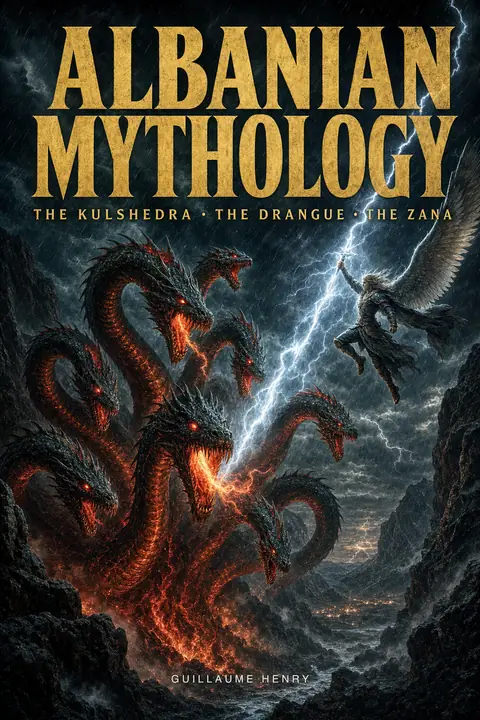
The Albanian Mythology Book: The Kulshedra, the Drangue, and the Spirits of the Mountains
The Kulshedra, the Drangue, and the Zana
The mythology of the Albanian highlands: the Kulshedra, a fire-belching dragon-hag who hoards the rains, the Drangue, winged heroes born to fight her, and the Zana, mountain nymphs who bless and curse. A pagan world that survived in the songs of the highland warriors.
More from Albanian
All articles
Albanian
The Shtriga: Witch-Vampire of Albanian Folklore
The Shtriga is a witch-vampire hybrid from Albanian folklore who feeds on the life force of sleeping children. Part demon, part woman, entirely dangerous, she embodies the fears of a culture caught between Christianity, Islam, and older Balkan beliefs.
Albanian
Muji and Halili: The Epic Heroes of Albanian Legend
Muji and Halili are the legendary twin heroes of Albanian epic poetry, warriors bound by blood and honor who defend their land against mythical monsters and foreign invasion. Discover how their deeds shaped Albanian cultural identity for centuries.
Albanian
The Besa: Sacred Code of Honor in Albanian Culture
The Besa is Albania's oldest unwritten law: a sacred pledge of honor, protection, and hospitality that has shaped Albanian identity for centuries. Discover how this ancient code binds community, defies conquest, and survives in modern Albania.
Albanian
E Bukura e Dheut: The Earthly Beauty and Goddess of Nature in Albanian Mythology
E Bukura e Dheut embodies the earthly beauty and goddess of nature in Albanian mythology, representing fertility, growth, and the sacred landscape. Discover how this ancient figure shaped Albanian spiritual life and persists in folk tradition today.