
Ragnarök: Apocalypse and Renewal in Norse Mythology
Ragnarök is the Norse end of the world: a cataclysm where gods fall, giants rise, and creation begins anew. Discover what the Eddas reveal about this apocalypse and why it shaped how Vikings saw death, duty, and destiny.
Contents
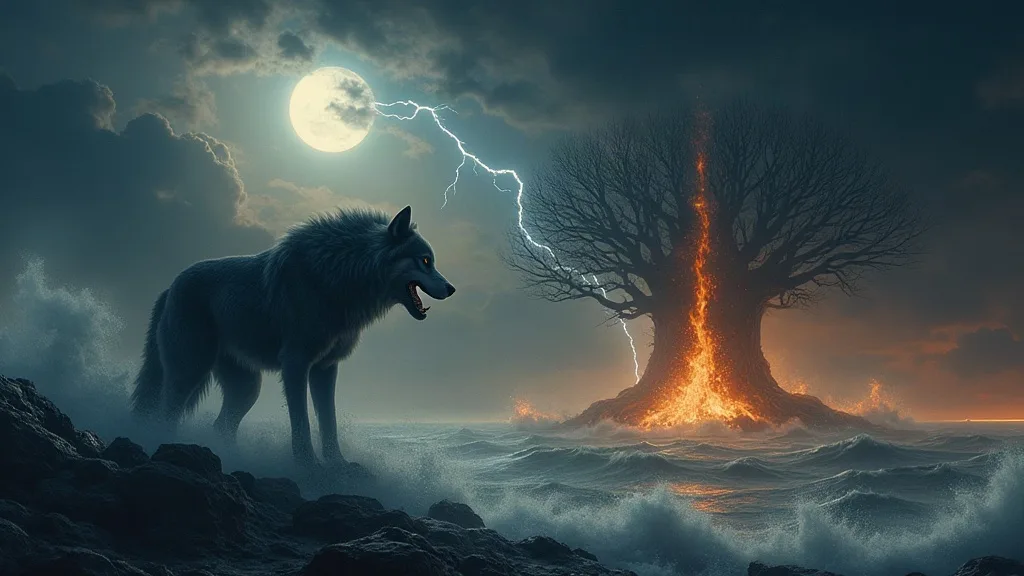
The sun turns black. The stars vanish from the sky. The earth sinks into the sea. A wolf swallows the sun. Another devours the moon. The bonds that held the giants break, and chaos floods the nine realms.
This is not a vision of damnation unique to one faith. This is Ragnarök, the Twilight of the Gods, and it sits at the heart of Norse mythology as neither tragedy nor terror, but transformation. The old world burns so a new one can grow. The gods know this will happen. They prepare for it anyway. That paradox, that defiance in the face of certain doom, shaped how the Norse thought about courage, duty, and meaning itself.
The two primary sources for Ragnarök come from the Poetic Edda and the Prose Edda, both compiled in Iceland around the 13th century but preserving far older oral traditions. The Poetic Edda's "Völva's Prophecy" (also called Völuspá) is the most vivid account, spoken by a wise woman (völva) who recites the birth and death of the cosmos to Odin himself. The Prose Edda, written by Snorri Sturluson, offers systematic explanations and theological commentary. Together, they give us a myth of ending that is also always about beginning.
The Breaking of Bonds: When the Nine Realms Fall Apart
Before Ragnarök comes Fimbulwinter, a season of cosmic winter that lasts three years with no mercy. Snow falls from every direction. The wind offers no warmth. The sun gives no heat. Hail beats down from all corners of the sky. Kinship breaks; fathers betray sons, mothers turn against daughters. The world grows cold and grey, its moral fabric as fractured as its climate.
The giants who have been bound since the beginning of time stir. Fenrir, the monstrous wolf who has been chained with the magical ribbon Gleipnir, breaks free. His jaws stretch so wide that his upper jaw touches the sky and his lower jaw scrapes the earth. He opens his mouth and swallows Odin, the All-Father himself, king of the gods.
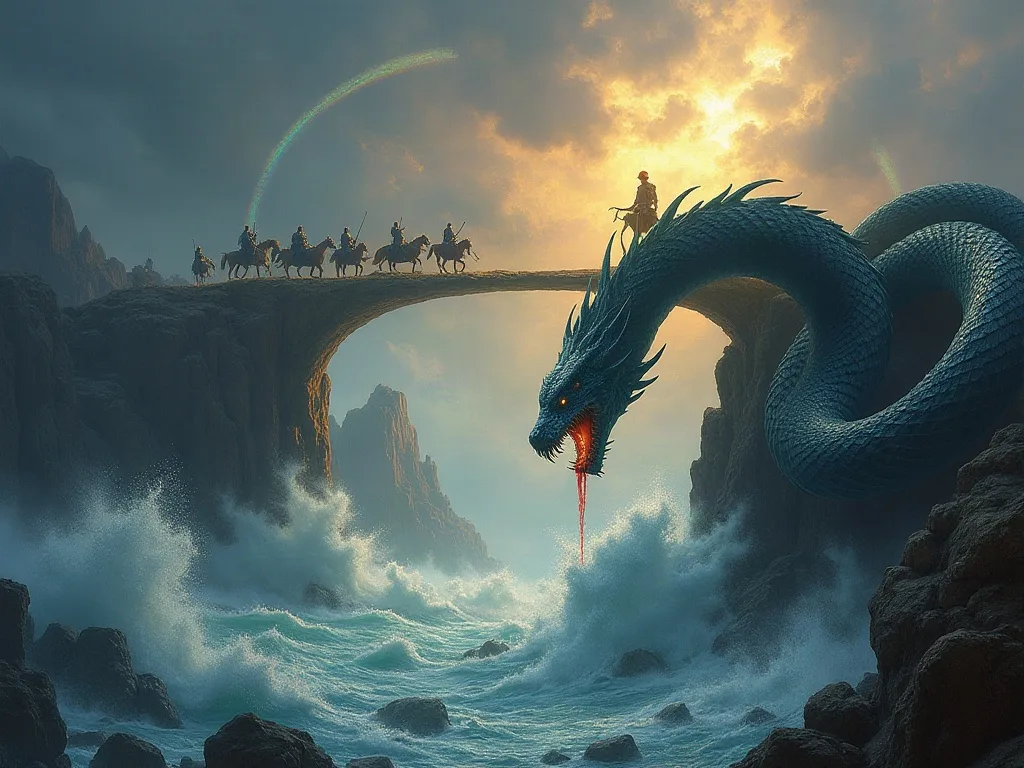
Jörmungandr, the world serpent (Midgard serpent) who encircles the earth in the ocean, thrashes so violently that waves rise and flood the land. The serpent moves toward the shore, its venom spraying into the air and sea. The ship Naglfar, built from the fingernails of the dead, breaks loose from its moorings and sails toward the realm of the gods with the giant Loki at its helm. Heimdall, the watchman of the gods, and Loki meet in final combat and slay each other.
The bridge Bifrost, the rainbow that connects Midgard (the human realm) to Asgard (the home of the Aesir gods), shatters under the weight of the fire giants riding across it. The giant Surtr, whose sword burns brighter than the sun, leads them. The stars disappear from the sky. The earth sinks into the sea. All seems lost.
The Gods Face Their Doom: Knowing and Acting Anyway
What makes Ragnarök unique among apocalyptic myths is this: the gods know it is coming. Odin consults the head of the giant Mimir, preserved and wise, to learn the future. The Völva herself tells him what will occur. Yet the gods do not despair or flee. They act. They prepare. They fight.
Thor, the thunder god, faces Jörmungandr one final time. He strikes the serpent with his hammer Mjölnir, and the blow is so mighty that the serpent's venom sprays across all nine realms. Thor falls back nine paces, drowned in the poison. Heimdall and Loki fight at the Bifrost. Both fall.
Heimdall and Loki kill each other. Odin is swallowed by Fenrir, but Odin's son Vidar steps forward and places one foot on the wolf's lower jaw. He tears the beast apart, avenging his father.
Freyr, the god of summer and fertility, fights Surtr without his magical sword (which he gave away long ago for love). He falls. Heimdall and Loki slay one another in single combat. The world tree Yggdrasil, which holds all nine realms in its branches and roots, shakes. Stars fall from the sky. The earth sinks.
The Völva does not dwell on loss. She moves forward in the same breath: "But the earth rises again from the sea, green and fertile." The myth refuses despair.

What Rises from the Ashes: A New Creation
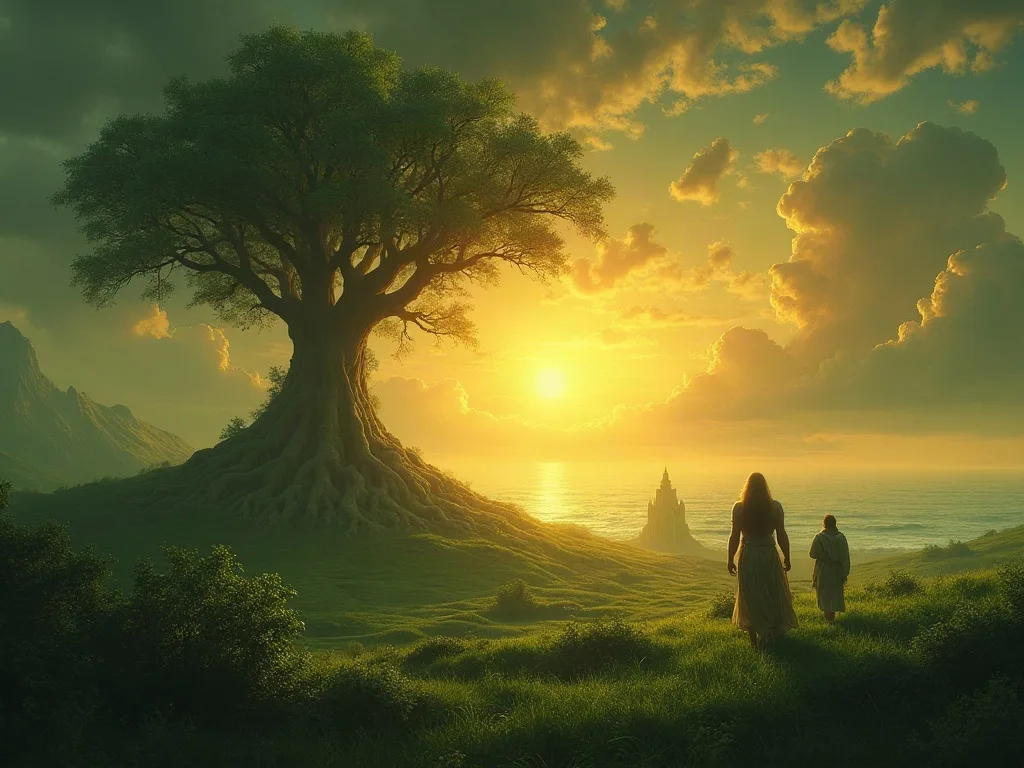
As the earth rises again, the sun has a daughter who will ride the sky as her mother once did. A new sun will light a reborn cosmos. Vidar and Modi (Thor's son) inherit Mjölnir and survive the cataclysm. Odin is eaten, but his sons live. Two humans, Lif and Lifthrasir, shelter in the branches of Yggdrasil and emerge to populate the new world.
The hall Gimle still stands, roofed with gold, brighter than the sun. The virtuous dwell there. A new god rises from the south, Baldr the beautiful, who was killed long before and whose return has been promised. He and his blind brother Hodr reconcile, their ancient feud healed. The old conflicts dissolve.
Some sources speak of a hall Brimir where good people drink mead. Others mention Sindri, a dwarf whose hall stands in the mountains. The point is constant: life continues. Beauty returns. Relationships broken in the first age are mended in the second.
This is the paradox that made Ragnarök so different from Christian concepts of apocalypse. There is no final judgment, no heaven or hell reserved for the righteous or the damned. There is only continuation, change, and the eternal cycle of death and rebirth writ large across the cosmos.
Why the Norse Accepted an Ending They Could Not Prevent
The Völva's prophecy is not hidden from the gods. They know what comes. Yet they do not try to hide or prevent it. Odin seeks knowledge precisely to accept it, to understand it, and to live with full awareness. This reflects a distinctly Norse philosophy: courage means acting rightly even when you know the outcome is loss.
This attitude shaped how warriors thought about death. If the gods themselves could not escape doom, then no human could. The proper response was not cowardice or surrender, but duty. A warrior faced battle knowing he might die. That knowledge did not excuse him from fighting well. It made the fight sacred.
The Norse also saw Ragnarök as punishment for failure to maintain cosmic order. When gods and humans stop acting with honor, when bonds break and kinship fails, chaos encroaches. Fimbulwinter is not an external force alone; it is the spiritual consequence of moral collapse. In a way, the end of the world is not something that happens to the gods and humans. It is something that unfolds from how they live.
Ragnarök in the Asatru Tradition Today
Modern Asatru practitioners, those who reconstruct Norse pagan belief, often interpret Ragnarök not as literal prophecy but as symbol. The myth teaches that all things change, that order requires constant effort, and that renewal follows dissolution. Some see Ragnarök in climate collapse or social upheaval and read the myth as a call to rebuild after ruin.
Others view it theologically: as a reminder that the gods are not omnipotent or untouchable, but bound by the same fate as humans. This makes them worthy of respect and kinship, not worship as distant powers.
The myth also shapes how Asatru communities think about ceremony and community bonds. If the world will end, then the relationships we forge now, the oaths we take, the duties we perform, matter precisely because they are temporary and fragile. They must be renewed constantly, maintained, defended against entropy. Ceremonies that honor the gods are also ceremonies that reinforce the bonds holding the cosmos together.
What the Eddas Actually Say: Reading the Sources
The Poetic Edda's "Völuspá" is composed in Old Norse fornyrðislag meter, a form that uses alliteration and rhythm to make the verse memorable in oral tradition. The opening "Völva's Prophecy" section proceeds chronologically: creation, the settlement of the nine realms, the war between Aesir and Vanir, the death of Baldr, and finally Ragnarök. The poet uses formulaic language ("I remember giants," "I know nine worlds") that gave the oral version a structure easy for skalds (poets) and listeners to recall.
Snorri Sturluson's Prose Edda provides narrative gloss and explanation. Writing in the 13th century, Snorri was Christian but deeply learned in the old lore. He explains that the giants and monsters are bound or imprisoned during the current age. Fenrir strains against Gleipnir. Jörmungandr writhes in the ocean. Loki is held captive beneath the earth, venom dripping onto his face. These restraints cannot last forever. When Fimbulwinter comes, they break.
One detail worth noting: the Eddas do not say the gods fail to prevent Ragnarök. They say the gods are swallowed by it. Odin is eaten by Fenrir. Thor drowns in poison. This is not failure in a military sense. It is submission to a force larger than themselves. The victory comes not in preventing the end, but in what grows after.
Ragnarök and Other Apocalyptic Myths: A World-Wide Pattern
Many traditions contain myths of cosmic ending and renewal. The Zoroastrian Frashokereti (making wonderful) describes a final judgment and the restoration of creation. Hindu Pralaya marks the dissolution of the universe at the end of a kalpa (cosmic age), followed by creation anew. The Mesoamerican Maya spoke of multiple world creations, each ending before the next begins.
What sets Ragnarök apart is its tone. It is bleak and unsparing, yet it is also expected, even necessary. The Norse did not see the end of the world as a punishment inflicted by the gods on humanity for sin. They saw it as the nature of existence itself. Everything that is born must die. Everything that dies may be reborn. The cosmos follows the same law as a person or a tree.
This outlook may explain why Norse culture produced warriors willing to die in battle, poets unafraid to speak truth to power, and explorers bold enough to sail beyond known waters. If the world itself was temporary and the gods themselves faced doom, then a human life was precious precisely because it was brief. Use it well. Stand for something. Let the consequences fall as they may.
Frequently asked questions about Ragnarök in Norse mythology
Frequently asked questions
Do the Norse gods actually die at Ragnarök, or do they survive?
Both happen. Odin is swallowed by Fenrir and dies. Thor kills Jörmungandr but drowns in the serpent's venom and also perishes. However, their sons survive: Vidar, Modi, and Magni inherit the gods' roles and power. Baldr, the beautiful god killed long before, returns to the new world. So there is loss, but also continuation. The age of the Aesir ends, but the divine does not disappear.
How long does Fimbulwinter last, and what causes it?
According to the Völva's Prophecy, Fimbulwinter lasts three years and brings cosmic winter with no mercy. Snow falls from all directions, winds offer no warmth, the sun provides no heat. The sources do not explain a physical cause. It appears to be a phase in the cosmos's natural cycle, not a punishment or consequence of any single action. However, Fimbulwinter also coincides with moral collapse: kinship breaks, fathers betray sons. This suggests the myth links physical and spiritual ruin as interconnected.
Is Ragnarök inevitable, or can the gods prevent it?
The Eddas present Ragnarök as inevitable. Odin learns of it from Mimir and the Völva precisely because it cannot be stopped. The gods do not try to prevent it. Instead, they act with awareness of what comes. This reflects the Norse philosophical stance: you cannot always change what happens, but you can choose how you face it. Courage lies in standing firm even when defeat is certain.
What happens to humans after Ragnarök?
Two humans, Lif and Lifthrasir, shelter in the branches of Yggdrasil and emerge to repopulate the new world. The virtuous dwell in Gimle, a golden hall brighter than the sun. Some sources mention other halls where good people gather. Unlike Christian afterlife theology, the Norse did not describe a single fate for all souls. Instead, the myth emphasizes renewal of the world itself and continuation of life in new forms.
How does Ragnarök compare to apocalypse myths in other religions?
Hindu mythology describes Pralaya, the dissolution of the universe at the end of each cosmic age (kalpa), followed by new creation. Zoroastrianism describes Frashokereti, a final restoration. Mesoamerican traditions speak of multiple world creations, each ending before the next. What makes Ragnarök distinctive is its tone: bleak and unflinching, yet presented as natural, cyclical, and even necessary. The Norse did not view the end as punishment or failure, but as part of existence itself.
Why did the Norse philosophy of Ragnarök matter to Viking culture?
If the gods themselves faced doom without trying to escape or hide, then human resistance to fate was not cowardice or futility. It was virtue. A warrior could die in battle knowing the cosmos itself would end, yet still choose to fight for honor, for kin, for his word. This shaped how Norse culture valued courage, duty, and oath-taking. Death was not defeat; it was a natural passage. What mattered was how you faced it.
The Unending Cycle: Why Renewal Matters More Than Ending
The most important truth about Ragnarök is often overlooked in modern tellings: the myth does not end with the cataclysm. It continues into rebirth. The Völva sees not just destruction but the green earth rising from the sea, the new sun shining on it, Baldr returning, kinship healed, Yggdrasil standing still at the center of all things.
This cyclical vision gave the Norse a way to think about time itself. Time was not a line running toward a final judgment. It was a wheel turning. Winter comes, but spring follows. Death comes, but the world continues. Your life ends, but your children live. Your name lives in the sagas. Your deeds echo. The cosmos itself dissolves and reforms. Nothing is truly lost; it transforms.
Modern readers sometimes find comfort in this vision after their own losses or in times of uncertainty. The myth does not promise that everything will be fine, that all will be restored perfectly, or that suffering will be rewarded. It promises only that change is certain, that endings are also beginnings, and that the proper response to doom is not despair but attention, duty, and the courage to act knowing that you act within a temporary world that you are privileged to inhabit and defend.
Read the full book
Want the whole story?
The complete edition is an instant PDF download here, with a paperback on Amazon for selected titles.
Asatru
The Asatru Book: Norse Paganism, Heathenry, and the Worship of the Old Gods
Norse Paganism, Heathenry, and the Old Gods
The living revival of Norse paganism: who the heathens worship, how the blót and the sumbel work, what the Nine Noble Virtues are, and how a faith that ended a thousand years ago came back to life in the modern world. Rooted in the Eddas, practiced today.
More from Asatru
All articles
Asatru
Mjolnir: Thor's Hammer as Symbol and Talisman
Mjolnir, Thor's legendary hammer, embodies divine power, protection, and order in Norse mythology. Discover how this symbol shaped Viking belief, ritual, and endures in modern culture.
Asatru
Winter Nights and Yule: Heathen Seasonal Festivals and Their Sacred Roots
Winter Nights and Yule are the two cornerstone heathen seasonal festivals that mark the darkest months of the year. Rooted in pre-Christian Norse and Germanic traditions, these observances honor the cycle of death and rebirth, ancestor veneration, and the sacred interplay between human and divine realms.
Asatru
Folkish versus Universalist Asatru: The Inclusion Debate
Asatru splits between two visions: one rooted in ancestry and ethnicity, one open to anyone who honors the Norse gods. We trace the ideological divide, its history, and how it shapes modern practice.
Asatru
Wyrd and Orlog: Fate and Personal Destiny in Norse Mythology
In Norse tradition, **Wyrd and Orlog** are the twin forces that shape destiny. Wyrd flows from the present moment, personal and mutable; Orlog is the ancient law laid down at creation. Together they answer the oldest question: how much of our fate is written, and how much is ours to choose?