
Wyrd and Orlog: Fate and Personal Destiny in Norse Mythology
In Norse tradition, **Wyrd and Orlog** are the twin forces that shape destiny. Wyrd flows from the present moment, personal and mutable; Orlog is the ancient law laid down at creation. Together they answer the oldest question: how much of our fate is written, and how much is ours to choose?
Contents
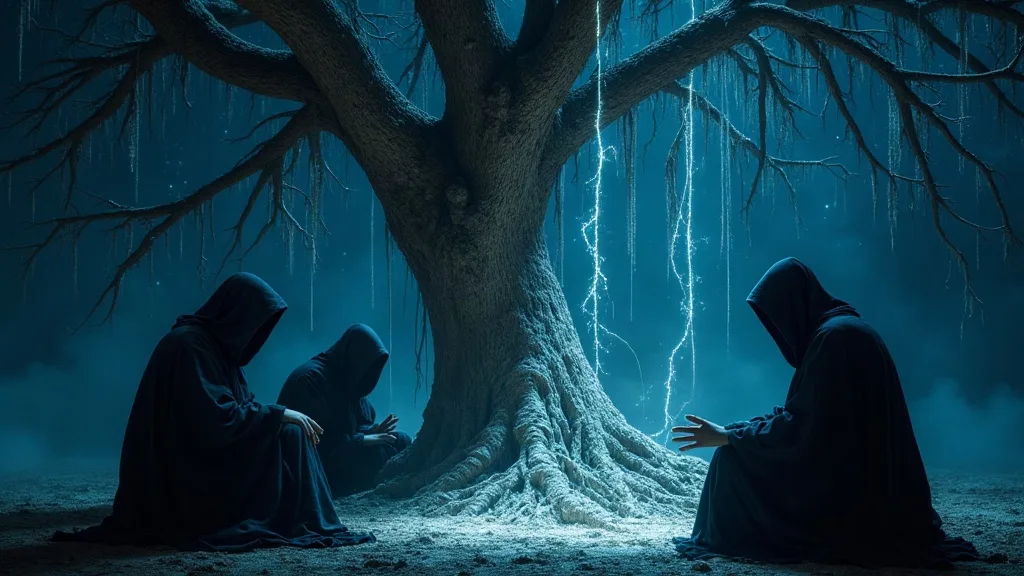
The three sisters sit at the base of Yggdrasil, the world tree. They carve runes into wood. They pour water on its roots. They weave the threads of every life that has ever lived and ever will live. No king can escape them. No giant can bargain with them. Their names are Urd, Verdandi, and Skuld: the three Norns. And together they rule what the Norse called wyrd and orlag.
These words, often lumped together as "fate", are not the same thing. They never were. The difference between them is the difference between a prophecy whispered at your cradle and the choices you make at dawn. It is the difference between what the universe promises and what you do with that promise. Understanding wyrd and orlog is understanding how the Norse saw human beings: not as puppets of iron destiny, but as creatures caught between two currents of power, each one real, each one shaping the other.
What Are Wyrd and Orlog? The Two Currents of Fate
Wyrd comes from the Old Norse wyrd, a word bound to the verb "to become". Wyrd is the weaving that happens now. It is the pattern of what has already occurred and what flows from it. Every action leaves a wake. Every choice ripples forward. Wyrd is not written in stone at the beginning of time; it is written by the moment you are living in. It is personal. It is yours, in a way that makes you responsible for what comes next.
Orlog, from ur (primal) and lag (law), points to something older and deeper. Orlog is the primal law, the baseline of fate laid down at creation itself. It is what the universe was given when the Norns first sat down to carve. It is shared. It is heavy. No human being escapes it entirely.
The Norse did not see these as opposites, exactly. They saw them as two forces in constant conversation. Orlog sets the boundary. Wyrd writes within it.
Think of it this way. You are born into a world where certain rules are absolute: you will age, you will face loss, you will eventually die. These boundaries are orlog. But how you live, whom you love, what you fight for, how you face death: that is wyrd. That is yours to shape. And as you shape it, you alter the wyrd of everyone around you.
The Norns and Their Work: Carving the Threads
The three Norns are the hands that write both. The sources, chiefly the Poetic Edda (a collection of Norse poems written down in Iceland around 1270 CE, though the traditions they record are much older) and the Prose Edda (Snorri Sturluson's 13th-century summary of mythology), describe them in vivid detail.
Urd ("What Became") looks backward. She tends the roots of Yggdrasil and pours water on them. She is the weight of what has already happened. Every day you have lived has become Urd's domain. Her name means something like "fate that was", and she carries the full archive of the past.
Verdandi ("What is Becoming") stands in the present moment. She is the spinner's wheel in motion. The thread passes through her hands right now. She is Urd's counterpart and her opposite: while Urd holds what is fixed, Verdandi works with what is still fluid. The Prose Edda says she carves the "measures" of human lives as they live them.
Skuld ("What Shall Be") represents what has not yet occurred. Her name can also mean "debt" or "necessity". She looks forward into the unknown, and her touch shapes what may come. But unlike a fortune-teller, she does not foretell; she influences. She is the weight of consequence hanging over choices not yet made.
All three are necessary. All three are present in any single moment. You cannot escape the past (Urd), you cannot deny the present (Verdandi), and you cannot escape the pull of what comes next (Skuld). Together, they weave what is called wyrd in the narrow sense: your personal thread, your run of luck, your becoming.
Orlog: The Ancient Law, Unchangeable and Universal
If the Norns write wyrd every day, orlog precedes them. Orlog is written once, at the creation of the cosmos itself.
The Norse sources do not spell out orlog as clearly as they do wyrd. But the concept threads through the texts. In the Voluspa, the creation poem that opens the Poetic Edda, the Norns are described as sitting by a well and carving runes and measuring lives. This happens after the Nine Worlds already exist. The act of creation itself, the laying of the nine realms, the binding of Loki in chains, the knowledge that Ragnarok (the end of all things) will come: these are orlog. They are not negotiable.
Every creature in the Norse cosmos knows orlog is real. The gods know Ragnarok will come. They know they cannot stop it. In the Poetic Edda, the seer tells Odin that the world will end. And Odin, the wisest of the Aesir, knows this is true and cannot be changed. Yet the gods do not despair. They do not simply wait to die. They act. They build walls. They raise children. They feast. They fight. They do everything they can within the frame of orlog.
This is the paradox that makes Norse fate different from pure determinism. Orlog is like a container. It is unbreakable. But inside the container, wyrd swirls and moves and responds to what you do.
How Wyrd Works: Personal Destiny and Luck
Wyrd is more intimate than orlog. It is tied to the individual. It is tied to luck, in the Norse sense of the word.
The Old Norse word hamingja refers to a kind of personal luck or fortune that flows with a family or a person. It is not random good fortune. It is more like a current. If you align yourself with your hamingja, if you act in a way that honors the pattern that is already flowing through your wyrd, things move more smoothly. If you fight against it, you exhaust yourself. But hamingja is not fixed. You can change it. Your choices affect it.
This is where wyrd becomes a tool, not a cage. The Norse understood that the present moment is always open. Your ancestors lived in a certain way. That shaped their wyrd, and it echoes into yours. But it did not determine you. You have the power to shift the current. You can break a cycle. You can honor a path. You can choose how to live within the constraints of orlog.
The sagas are filled with characters who understand this instinctively. A man might know he is doomed to die in battle (orlog). But he does not sit home waiting. He chooses how he will die. He chooses what he will be remembered for. He shapes his wyrd. He dies famous, or wise, or avenged, or at peace. The ending is written. The meaning is not.
The Role of Will, Action, and Effort
If the Norns write the threads, where is the human will in all this? The Norse answer is profound: your will is part of the weaving.
The concept of drengr (a man of honor, courage, and decisive action) is built on this understanding. A drengr acts. He does not ask whether his action is fated or free. He acts because action itself is how wyrd is woven. Your effort, your choice, your courage: these are not fighting against fate. They are fate becoming itself. You do not have the power to escape orlog. But you have the power, the duty, to act as if every moment matters, because it does. Every choice you make alters the wyrd you pass on to others.
This is radical in a way that purely deterministic systems are not. The Norse understood that humans are not slaves to prophecy. Odin himself strives against Ragnarok, knowing it will come anyway. This is not futile. This is dignity. This is wyrd at work: the endless present moment where you choose what kind of being you will be, even when the eventual outcome is written.
How Wyrd and Orlog Shape Individual Lives
The Norse applied these ideas to real life in ways that shaped their entire culture.
A child born into a family carried both orlog and wyrd from birth. The orlog was inherited: certain destinies, certain ends, certain family patterns that seemed almost fixed. But the wyrd was open. The child's actions, choices, and character could alter the family's fortune. A coward might be born into a line of heroes; he could still choose courage and shift his wyrd. A wise woman might be born into a clan at war; she could broker peace and alter what seemed inevitable.
The Norse also believed that promises and oaths were written into wyrd in a powerful way. When you swore an oath, you were not just making a social promise. You were weaving your wyrd. You were tying yourself to an outcome. Breaking an oath was not just dishonorable; it was a kind of cosmological wrench. It meant you were fighting against your own becoming. This is why oath-breaking was so serious in Norse culture. It was not just about reputation. It was about what you were doing to the fabric of fate itself.
Similarly, when a hero died, his death was thought to be written in his wyrd long before it occurred. But the meaning of that death, the way he would be remembered, the way his death would affect others: that was still unfolding. A man might have a prophecy that he would be killed by his own son. He might try to prevent it. His very efforts to prevent it might be what brings it about (as happens in many Norse sagas). But how he faces the inevitable: that shapes whether his death becomes legendary or forgotten.

Wyrd and Orlog Across Different Traditions
The Norse were not alone in thinking about fate this way. But their formulation was unique.
The Greeks had the Moirai, the three Fates, who are strikingly similar to the Norns in structure. They also represent past, present, and future. But the Greek tradition often emphasizes the inescapability of moira (fate) more heavily. A Greek hero fighting against prophecy often seems doomed precisely because he fights. The Norse hero, by contrast, seems ennobled by fighting. The difference is subtle but real: it comes down to whether the universe is against you or simply indifferent, and whether your choice matters.
The Hindu traditions of karma and dharma offer another comparison. Karma (action) and the results of action are bound together, much like wyrd. But in most Hindu formulations, the goal is eventually to escape the cycle entirely, to transcend karma and reach moksha (liberation). The Norse, by contrast, do not see wyrd as a trap to escape. They see it as the only real life available. Even the gods do not escape wyrd. They embrace it.
The Celtic traditions also have concepts of fate, though they are less systematized in the surviving sources. But there is a similar emphasis on the power of action, oath, and personal honor within a fated cosmos.
Prophecy, Foreknowledge, and the Open Future
A challenging question hangs over wyrd and orlog: if the Norns can see the future, is it truly open? If Odin knows the future (and he is famous for seeking such knowledge), does that knowledge close it off?
The Norse texts suggest a subtle answer. The Norns can see the threads. They can read what has been woven and what is weaving. But the future itself is not fixed until it is woven. The act of knowing is not the same as the act of deciding. A prophecy can be known and still be open. What determines its outcome is the choices made between now and then.
This is why Odin is endlessly seeking knowledge: he is trying to shift wyrd even in the face of orlog. He learns that Ragnarok will come. So he does what any Norse being would do: he acts. He gathers wisdom. He builds alliances. He prepares. He cannot stop the end, but he can shape what leads to it.
The same logic applies to human prophecy. A seer might tell a man he will die on a certain day. But the when, the how, the meaning are still open. Your response to the prophecy is itself part of the weaving. You cannot escape what you were told will happen. But you can meet it with courage or cowardice, wisdom or folly, and that choice is real and consequential.
Wyrd in Modern Practice and Interpretation
For modern practitioners of Norse tradition (often called Asatru or Heathenry), the concepts of wyrd and orlog remain central.
Many modern Heathens invoke wyrd in ritual as a force to be worked with, not against. They ask for insight into their personal wyrd, not to know the future, but to align their actions with the current they sense flowing beneath their lives. This is consistent with the old understanding: wyrd is not a fixed map you can read; it is a dynamic pattern you can participate in.
The concept also offers something valuable in a modern context. It suggests that while we cannot control all outcomes, we are not passive. Our choices matter. The future is not written until we live it. This sits between the extremes of rigid determinism and pure randomness. It acknowledges real constraints (orlog) while insisting on real freedom (wyrd).
Some modern interpreters have also connected wyrd to modern ideas about karma or even quantum probability, though these connections should be approached carefully. The Norse texts do not require such metaphysical scaffolding. They simply assert that the present moment is open, that your choices real, and that the meaning of fate emerges through your engagement with it.
The Twilight of All Things: Wyrd and Orlog at Ragnarok
The ultimate test of the Norse understanding of fate comes at the end of the world.
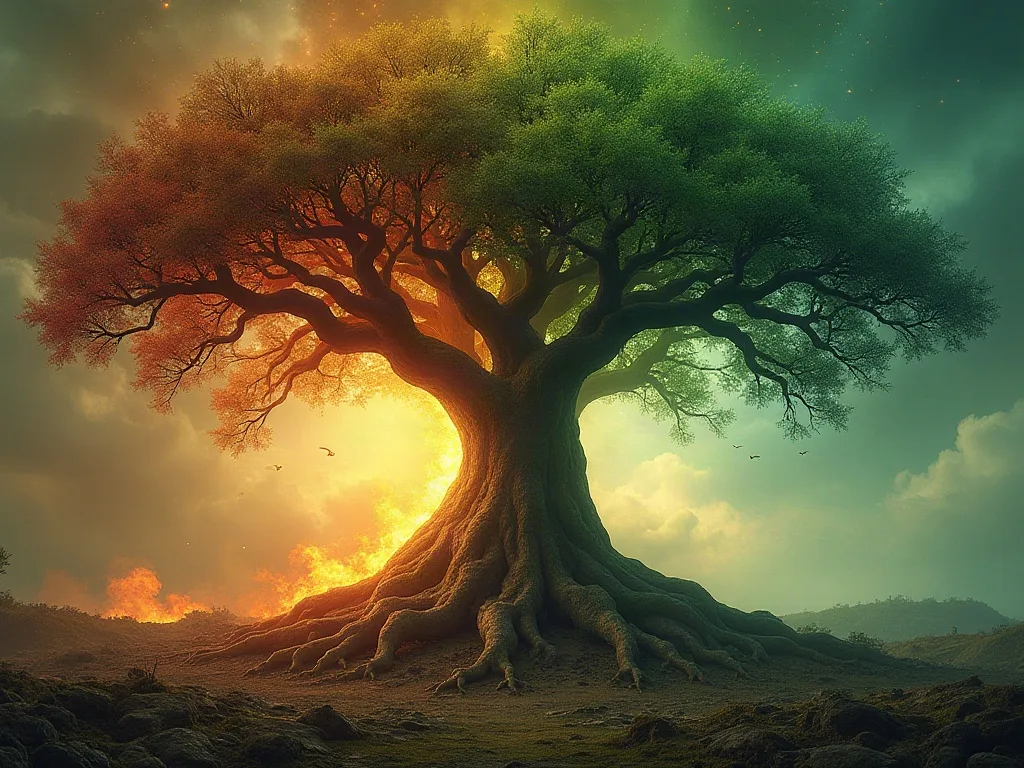
Ragnarok is orlog taken to its extreme: the fate that cannot be escaped, the inevitable end. The Voluspa describes it in terrible detail. The sun will be devoured. The stars will vanish. The earth will sink into the sea. Surtr, the fire giant, will burn the Nine Worlds. All the bonds that hold the cosmos in place will break.
But here is the crucial point: the Poetic Edda does not end with Ragnarok. It ends with what comes after. The earth rises from the sea again. The sun returns. New gods walk the earth. New humans are born. The cycle begins again.
This is wyrd reaching into orlog. The end is certain (orlog). But it is not final. What you do before the end shapes what comes after. The Norse gods know Ragnarok is coming. They know they cannot stop it. But they fight anyway, at Ragnarok, knowing that from their struggle a new world will be born. Their effort is not meaningless because the end is inevitable. It is meaningful precisely because they choose to act in the face of that inevitability.
This is the deepest wisdom of wyrd and orlog together. Your personal death is orlog. But how you live, what you create, what you inspire in others: that is wyrd. And that wyrd ripples forward into the world that comes after, even when you are gone.
Frequently asked questions about wyrd and orlog in Norse mythology
Frequently asked questions
Are wyrd and orlog the same thing?
No. Orlog is the primal, unchangeable law laid down at creation; it includes universal boundaries like death and the eventual coming of Ragnarok. Wyrd is the personal, unfolding pattern of your life in the present moment. You cannot escape orlog, but you can shift your wyrd through your choices and actions. They work together, not separately.
Did the Norse believe in free will?
Yes, but not the way modern Western culture defines it. The Norse understood that humans operate within real constraints (orlog) but have genuine power to choose how they respond and act within those constraints (wyrd). Your will is real. Your choices shape the pattern. But you cannot escape the larger framework. This creates a kind of freedom that is compatible with fate.
What did the Norns actually do?
According to the Poetic Edda, the three Norns (Urd, Verdandi, and Skuld) sat at the base of Yggdrasil and carved runes into the wood. They poured water from a sacred well on the tree's roots to keep it alive. They measured out the lengths of human lives and wove the threads of fate. They represented past, present, and future working together in the continuous act of creation.
Could Norse gods change their fate?
The Norse gods knew many fates were inevitable, especially Ragnarok. But they did not accept this passively. Odin spent enormous effort seeking knowledge that might alter outcomes. The gods built walls and prepared for the end even though they knew it would come. The Norse valued the effort itself, not just the outcome. Struggling against inevitable orlog was seen as noble and meaningful.
How does Norse wyrd compare to Greek fate?
Both cultures had three fate-like beings (the Norns and the Moirai). But the Norse tradition emphasizes human agency and dignity within fate more explicitly. A Greek hero fighting prophecy often appears doomed by his resistance. A Norse hero fighting his fate appears ennobled by it. The Norse saw fate not as a trap but as the condition of meaningful existence.
Wyrd and Orlog in Modern Spirituality and Art
The concepts of wyrd and orlog have experienced a quiet resurgence in contemporary culture, far beyond academic study of Norse mythology.
Modern novelists and creators have been drawn to the Norse vision of fate because it offers something that purely deterministic systems do not: dignity in the face of the inevitable. Stories from Tolkien to Neil Gaiman have echoed this sensibility: the hero who acts not because victory is assured, but because it is not.
In modern Heathen practice, wyrd and orlog remain touchstones. Practitioners speak of "walking their wyrd" as a spiritual discipline, meaning they seek to understand the current flowing through their lives and align their choices with it, rather than fighting blindly against circumstances. This is both practical and philosophical. It suggests that wisdom includes knowing what you cannot change and choosing brilliantly within those boundaries.
The balance between these forces also speaks to contemporary anxieties about determinism and free will. Neuroscience, genetics, and algorithms all suggest we are more constrained than we imagined. The Norse answer is not to deny these constraints but to insist that within them, your choices are real, consequential, and worth making with full attention and intention.
Read the full book
Want the whole story?
The complete edition is an instant PDF download here, with a paperback on Amazon for selected titles.
Asatru
The Asatru Book: Norse Paganism, Heathenry, and the Worship of the Old Gods
Norse Paganism, Heathenry, and the Old Gods
The living revival of Norse paganism: who the heathens worship, how the blót and the sumbel work, what the Nine Noble Virtues are, and how a faith that ended a thousand years ago came back to life in the modern world. Rooted in the Eddas, practiced today.
More from Asatru
All articles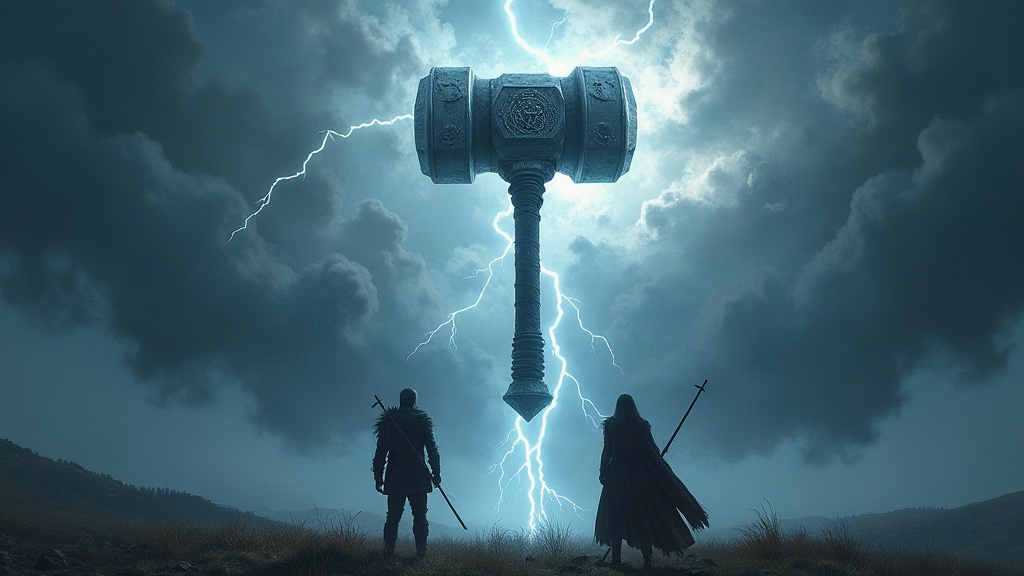
Asatru
Mjolnir: Thor's Hammer as Symbol and Talisman
Mjolnir, Thor's legendary hammer, embodies divine power, protection, and order in Norse mythology. Discover how this symbol shaped Viking belief, ritual, and endures in modern culture.
Asatru
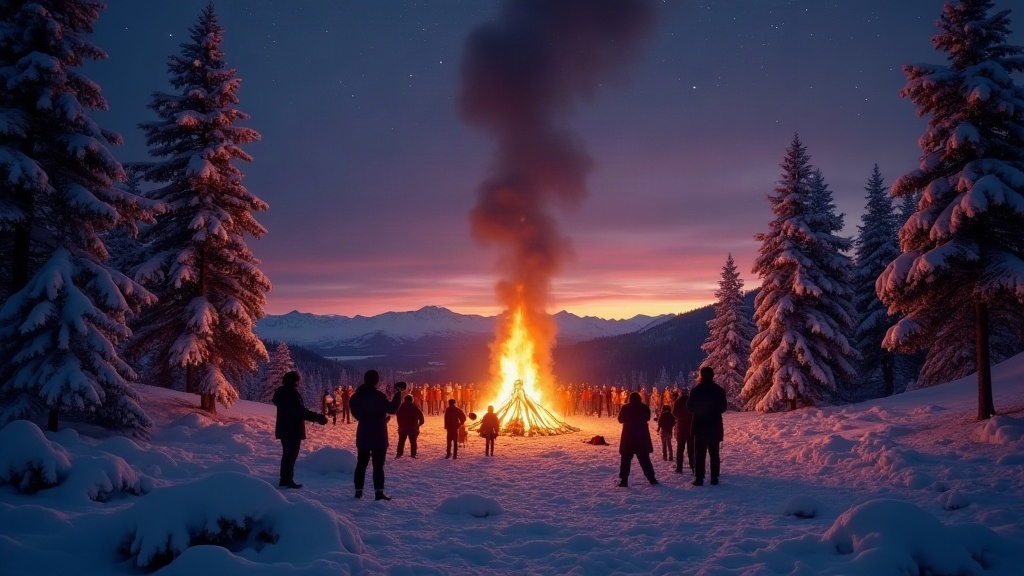
Winter Nights and Yule: Heathen Seasonal Festivals and Their Sacred Roots
Winter Nights and Yule are the two cornerstone heathen seasonal festivals that mark the darkest months of the year. Rooted in pre-Christian Norse and Germanic traditions, these observances honor the cycle of death and rebirth, ancestor veneration, and the sacred interplay between human and divine realms.
Asatru
Folkish versus Universalist Asatru: The Inclusion Debate
Asatru splits between two visions: one rooted in ancestry and ethnicity, one open to anyone who honors the Norse gods. We trace the ideological divide, its history, and how it shapes modern practice.

Asatru
Ragnarök: Apocalypse and Renewal in Norse Mythology
Ragnarök is the Norse end of the world: a cataclysm where gods fall, giants rise, and creation begins anew. Discover what the Eddas reveal about this apocalypse and why it shaped how Vikings saw death, duty, and destiny.