
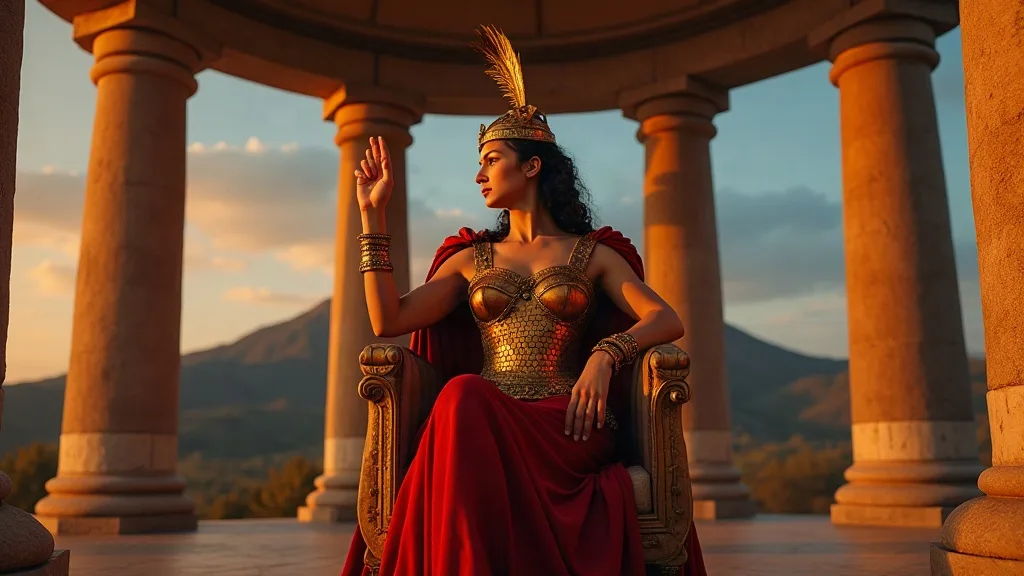
Uni: Etruscan Queen of the Gods
Uni ruled the Etruscan heavens as queen, protector of cities, and giver of life. Meet the goddess who shaped Italian religion long before Rome claimed her as Juno.
Contents
The city of Veii stood on a tufa plateau above the river Cremera, its temples gleaming with terracotta and its citizens convinced that a goddess watched over every gate. That goddess was Uni: Etruscan Queen of the Gods, and her presence was not symbolic. She was active, partisan, sometimes furious, and capable of abandoning a city to its enemies if the proper rites were ignored. When Rome besieged Veii for ten years and finally sacked it in 396 BC, the Roman general Camillus performed a ritual called the evocatio, calling Uni out of her temple and inviting her to take up residence on the Capitoline Hill in Rome. She accepted. The Romans renamed her Juno, and the rest, as they say, is history.
But before Rome absorbed her, Uni was already ancient. Her worship spread across Etruria from the Tyrrhenian coast inland to the Po valley, her name inscribed on bronze liver models used for divination, her image hammered onto gold plaques, painted inside tomb chambers, and fired onto rooftop antefixes. She was the first lady of the Etruscan divine order, equal in rank to Tinia, the sky god who held the thunderbolt. Together they formed the axis around which the Etruscan cosmos turned.
Understanding Uni means stepping into a religious world that was neither purely Greek nor purely Italian but wove both strands into something original. The Etruscans were voracious borrowers of myth and image, yet they transformed whatever they took. Their Uni is not a copy of Hera or of any Near Eastern goddess. She is herself: powerful, nuanced, and very much at home on the volcanic soil of central Italy.
The Name Uni and What It Tells Us
The etymology of Uni is debated, but several scholars point toward a root connected to the concept of the "one" or to a proto-Italic word for "life force." The linguist Giulio Facchetti argued that the name may share ancestry with the Latin Juno, both descending from a pre-Latin divine epithet meaning something like "vital power" or "the one who grants life-breath." That reading fits perfectly with what Uni actually does in the myths and rituals the Etruscans left behind.
Her name appears in the Liber Linteus Zagrabiensis, the longest surviving Etruscan text in existence. Written on linen bandages later used to wrap an Egyptian mummy (now housed in the Zagreb Archaeological Museum), this ritual calendar names Uni repeatedly in connection with specific months, offerings, and festivals. The passages are still only partially translated, but it is clear that Uni received regular propitiation across the ritual year, not merely at moments of crisis.
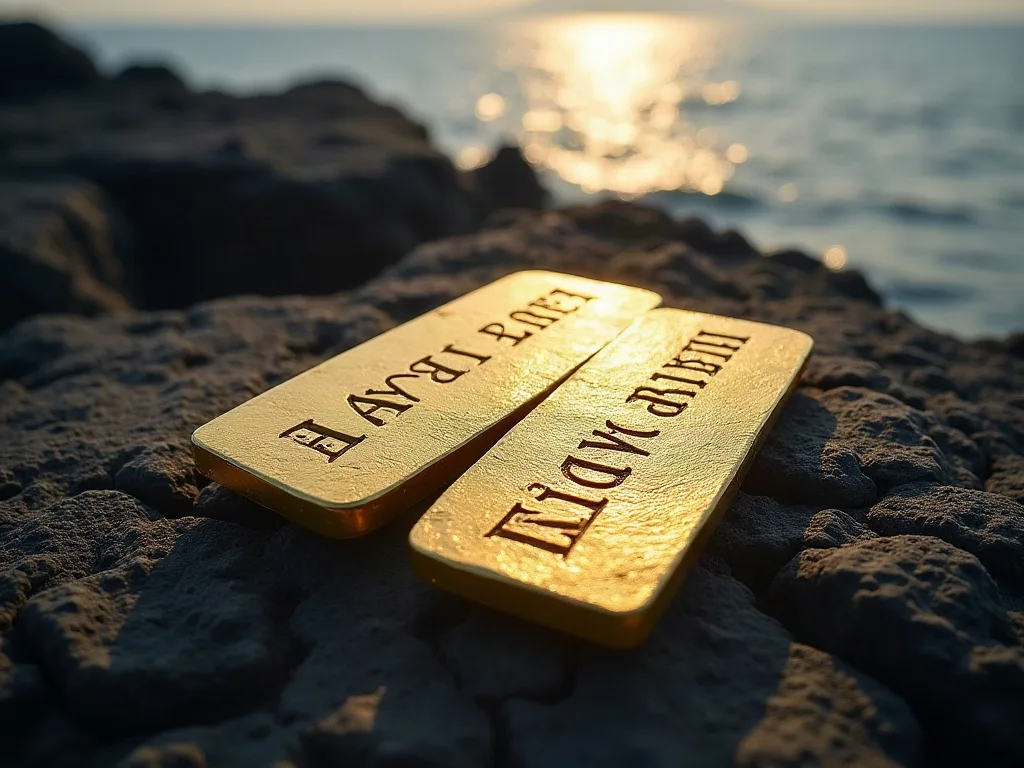
Uni's epithet in several inscriptions is Regina, queen. That is not a later Roman borrowing. Etruscan dedicatory texts from Pyrgi, dating to around 500 BC, call her Uni-Astarte, linking her to the Phoenician goddess Astarte in a formal bilingual dedication written in both Etruscan and Phoenician. The bilingual Pyrgi gold tablets are among the most important documents in ancient Mediterranean history, and they confirm that Uni's cult was cosmopolitan enough to be equated with a major Semitic goddess without anyone finding the equation strange.
The Pyrgi Tablets and the Goddess of the Sea-Coast
In 1964, archaeologists excavating the ancient port sanctuary of Pyrgi (modern Santa Severa, on the coast north of Rome) uncovered three thin gold tablets inside the foundations of a temple. Two were written in Etruscan, one in Phoenician. Together they recorded a dedication made by Thefarie Velianas, the king of Caere (modern Cerveteri), to Uni-Astarte around 500 BC.
The text is explicit. Thefarie Velianas built or expanded a sacred room (suthina) for the goddess and dedicated it during a specific festival, possibly timed to a lunar calendar. He did this, the inscription says, because Uni had granted him kingship and long life. She was, in the language of the tablets, the goddess who made kings.
This is a defining characteristic of Uni. She does not merely bless rulers. She creates them. Her favor is what legitimizes political power in the Etruscan world. The parallel with Hera's role as protector of sovereign authority in Greece is real, but Uni's version is sharper: she is personally involved, not merely presiding from a distance.
The equation with Astarte also matters. Astarte was a goddess of love, war, and the sea, worshipped from the Levant to Carthage to Cyprus. By fusing with her at Pyrgi, Uni absorbed a cosmopolitan horizon. Caere was one of the most commercially active Etruscan cities, trading with Carthage and the Greek colonies. The sanctuary at Pyrgi was, in effect, an international religious space. Uni belonged there because she had the breadth to hold it.
Uni, Tinia, and the Structure of Etruscan Heaven
The Etruscans organized their gods into a hierarchy that ancient Roman writers, particularly Martianus Capella writing in the fifth century AD, described as divided into sixteen celestial regions. Each region corresponded to a compass direction and housed specific deities. Tinia, the lightning god identified with Zeus and Jupiter, occupied the center. Uni stood beside him, and together with Minerva they formed the Capitoline Triad in its Etruscan version, called the Tria Numina of Voltumna or sometimes the triad of Velzna.
This three-part divine summit mirrors the later Roman Capitoline Triad of Jupiter, Juno, and Minerva, which scholars now largely accept as an Etruscan inheritance rather than an independent Roman invention. The Etruscans built their triad first. Rome, sitting on the doorstep of Etruria, adopted its architecture of heaven along with its temple-building techniques and its skill in reading the entrails of sacrificed animals.
Within this triad, Uni's role is distinct from Minerva's craft and Tinia's thunder. She governs the continuity of life: birth, growth, the protection of city walls, the legitimacy of rulers, and the welfare of communities under siege or stress. Ancient sources describe her temples as places where pregnant women prayed and where newborns were brought to receive her breath of life.
Uni as Mother and Life-Giver
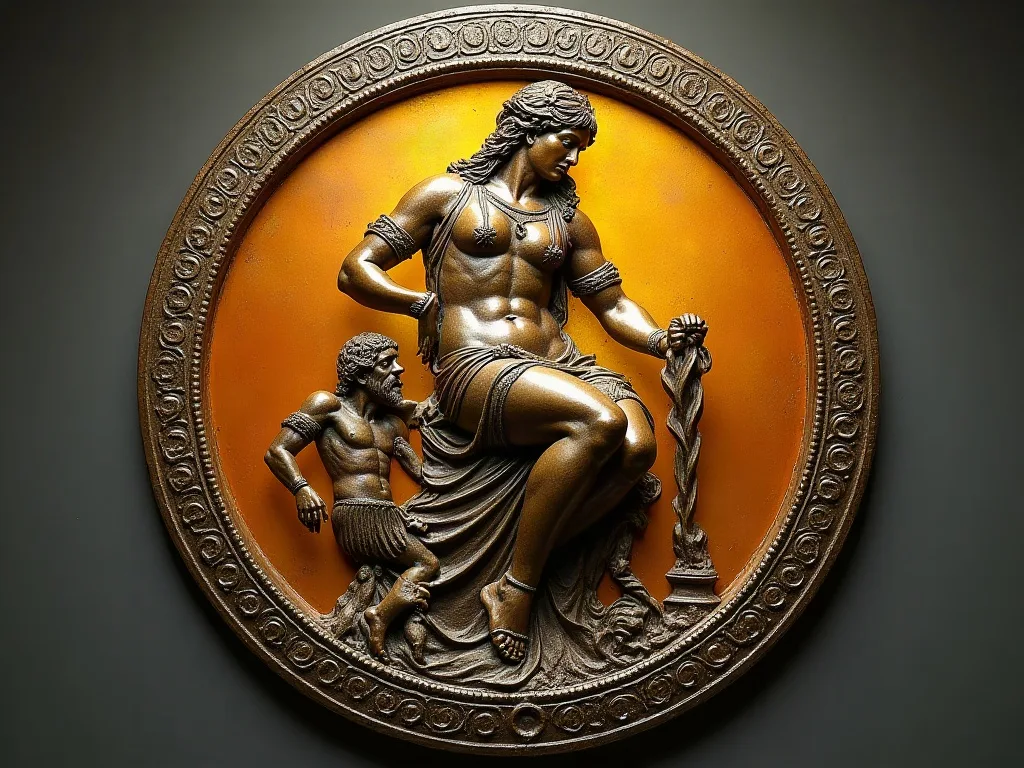
One of the most striking images of Uni in Etruscan art comes from a bronze mirror found at Volterra, now dated to the fourth century BC. It shows Uni nursing the adult hero Hercle (the Etruscan name for Hercules). The scene is identical in iconography to what the Greeks called the Galaktotrophousa, the nursing goddess, but the identities here are distinctly Etruscan.
In the Greek version of the myth, Hera accidentally sprays her milk across the sky, creating the Milky Way, while the infant Heracles suckles without her consent. The Etruscan version, at least as the Volterra mirror presents it, is consensual and dignified. Uni nurses the adult Hercle deliberately, making him immortal through her milk. She chooses to adopt him. The act is a formal grant of divine status, authorized by the queen herself.
This gesture shows Uni's maternal power operating on a cosmic scale. She does not produce children passively. She decides who belongs to the divine family. That authority over kinship and belonging extended, in Etruscan religious practice, to human families as well. Women appealed to her at marriage, at childbirth, and at the moment of naming a new child, because Uni was understood to be present at the threshold of new life.
Her association with the moon reinforced this. Several Etruscan mirrors and painted tomb chambers show Uni with lunar attributes, a crescent near her head or a disk behind her. The moon governs tides, menstrual cycles, and the rhythms of growth. Uni's lunar aspect made her a natural protector of everything that moves in cycles: the agricultural year, the human body, the turning of fortune.
The Warrior Face of the Queen
Uni was not only a goddess of life and maternity. She carried weapons. A number of terracotta antefixes and votive bronzes show her in full armor, her polos crown (a tall cylindrical headdress marking divinity) paired with a breastplate. This warrior aspect is not borrowed from Athena or Minerva; the iconography is Etruscan in its details, and the armor appears in contexts where the protection of city walls, not personal combat, is the theme.
Uni as protector of cities was perhaps her most politically urgent role. Every major Etruscan city had a tutelary deity, and Uni occupied that position in Veii, possibly in Caere, and in other centers where her cult is attested. The Latin sources say she was called Uni Populonia at Populonia, the coastal metalworking city, where her temple overlooked the harbor and the iron-rich island of Elba just offshore.
When Veii fell to Rome in 396 BC, the ceremony of evocatio was not a simple military gesture. It was a theological act. The Romans believed that a city's divine protector had to be formally invited to leave before the city could be safely destroyed. Camillus's ritual succeeded, according to Livy, when a Roman soldier asked the goddess's cult statue if she wished to come to Rome and the statue nodded. Whether the statue moved or a priest moved it, the message was clear: Uni had chosen Rome. That choice made her transition into Juno not an erasure but a continuation.
Uni in Etruscan Funerary Art
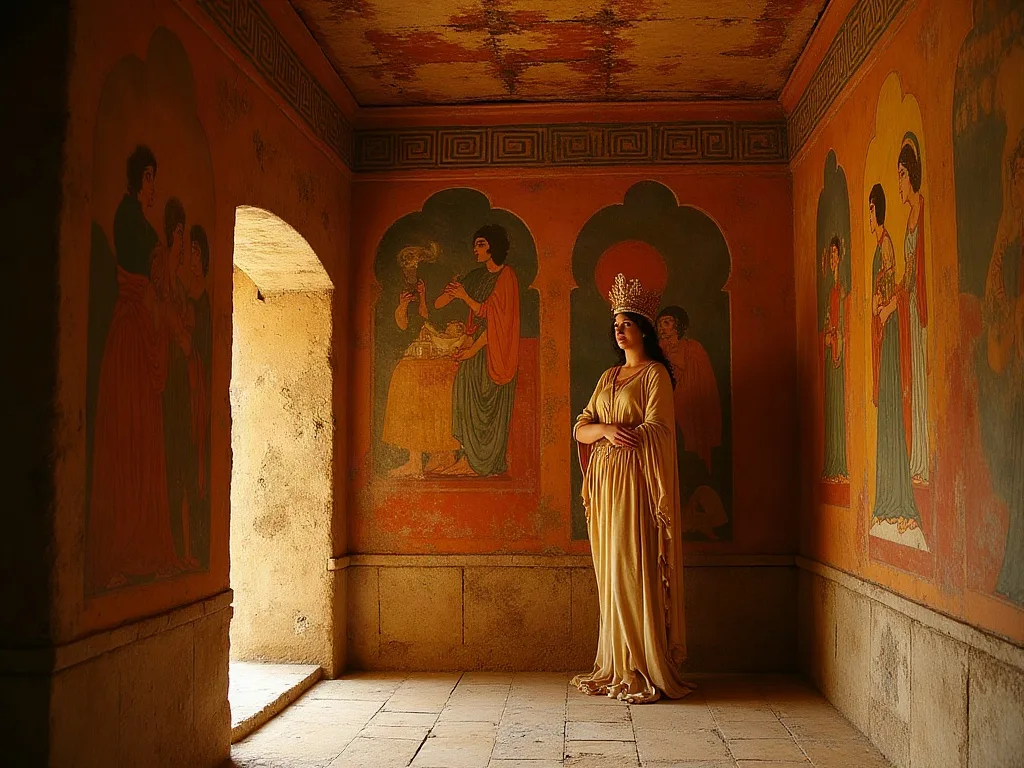
Walk into the painted tombs of Tarquinia, the great cemetery cities of Etruria, and Uni is everywhere. She appears as a witness at the banquet of the dead, seated beside Tinia while the deceased is welcomed into the underworld. She appears as an escort, sometimes standing between a deceased woman and the gate of the underworld, her hand on the woman's shoulder. She appears as a judge, though this role is more complex and involves other divinities like Charun and Vanth.
The funerary presence of Uni tells us that her authority did not end at death. She was a goddess of passage, and the last passage mattered to her. Etruscan tombs were built and decorated with extraordinary care, painted as banquet halls or domestic spaces, because the Etruscans believed the dead continued to exist and needed familiar comforts. The presence of Uni in these spaces meant that the queen of heaven kept her eye on her people even after they left the living world.
A painted sarcophagus from Vulci, now in the Museo Nazionale Etrusco di Villa Giulia in Rome, shows a woman identified by inscription as a priestess of Uni. Her face is individualized, not generic. She holds a pomegranate, a fruit associated across the ancient Mediterranean with fertility and the underworld. Behind her, a figure that can only be Uni raises one hand in what looks like a gesture of blessing or recognition. The priestess and the goddess face the same direction, moving together into the dark.
Cross-Cultural Echoes: Hera, Juno, and Astarte
Comparing Uni to her divine counterparts clarifies what makes her specific. The table below shows three parallel figures and where Uni overlaps or diverges.
Uni (Etruscan)
- Consensual adoption of heroes through nursing (Hercle myth)
- Explicit equation with Astarte, giving her a Semitic dimension
- Named as city-protector with an active warrior aspect
- Formally invited to change allegiance via the Roman evocatio ritual
- Appears in funerary contexts as an escort of the dead
- Legitimizes kingship through personal favor
Hera (Greek)
- Involuntary nursing of Heracles; the encounter is hostile
- No formal equation with Near Eastern goddesses in primary sources
- Protector of marriage and women, rarely of city walls directly
- Does not change loyalty to a new city
- Primarily an Olympian, not a funerary deity
- Queens derive status from Zeus's authority, not Hera's grant
The Juno comparison is even more interesting. Roman Juno absorbed so many of Uni's traits that distinguishing them becomes difficult after the third century BC. But there are tells. Roman Juno Moneta, whose temple on the Capitoline housed the Roman mint, has no obvious Etruscan precedent. The role of Juno Lucina, goddess of childbirth, maps almost perfectly onto what Uni did in Etruscan practice. Juno Regina (Queen Juno) is the direct translation of Uni's Etruscan title.
The Astarte link, meanwhile, connects Uni to a much older tradition. Astarte's Mesopotamian cousin was Ishtar, the goddess of love and war whose star was Venus. Whether Uni also carried a Venus connection is debated, but several scholars, including Larissa Bonfante in her work on Etruscan religion, have noted that Uni's morning associations and her coastal cult sites align with the astral dimension of Astarte worship. It is a thread, not a certainty. The Etruscans did not leave us a theology in prose; they left images and inscriptions that require careful reading.
The Shrines, the Priests, and the Living Cult
Uni's temples were large. Archaeology at Veii, Caere, and Pyrgi has revealed substantial structures, some with three cells in the Etruscan manner (a wider central chamber flanked by two smaller ones), their roofs decorated with terracotta figures of gods in combat, divine processions, and mythological scenes in brilliant ochre and red and black.
The priesthood that served Uni included women. Several dedicatory inscriptions name female dedicants with titles that suggest ritual office, though the specific Etruscan word for a priestess in Uni's service remains debated. What is not debated is that Etruscan women had a civic and religious visibility that puzzled Greek observers; Theopompus, a Greek historian writing in the fourth century BC, commented with some alarm on Etruscan women attending banquets alongside men, reclining as equals. A goddess like Uni, who chose kings and nursed heroes into divinity, did not exist in a culture where women were purely domestic.
Votive offerings found in Uni's sanctuaries include bronze figurines of swaddled babies, terracotta uteri and breasts (anatomical votives common across Italian religion), miniature shields, and model ships. The range tells the story: she received prayers for safe childbirth, for military victory, for the sea voyage, for the welfare of a new child. She was broad enough to hold all of it.
Frequently Asked Questions About Uni, Etruscan Queen of the Gods
Frequently asked questions
Is Uni the same goddess as Juno?
They share deep roots and many functions, but Uni predates Juno and has characteristics Juno does not. Uni was formally equated with the Phoenician goddess Astarte at Pyrgi around 500 BC, giving her a Near Eastern dimension absent from Roman Juno. When Rome sacked Veii in 396 BC, the Romans performed the ritual of evocatio to bring Uni into Rome, where she was renamed Juno. Over time the two fused, but Etruscan Uni was an independent divine figure with her own mythology and cult, not simply a provincial version of Rome's queen of heaven.
What primary sources tell us about Uni?
The most important are the Pyrgi gold tablets (around 500 BC), which name her directly in both Etruscan and Phoenician; the Piacenza Liver, a bronze divination model from around 100 BC that places her name in the highest celestial zone; the Liber Linteus Zagrabiensis, the linen book ritual calendar that names her in festival contexts; and the many inscribed bronze mirrors and tomb paintings from Tarquinia, Volterra, Vulci, and Caere. Roman sources such as Livy and Martianus Capella describe her cult from the outside but confirm her supreme rank.
Why was Uni associated with Astarte at Pyrgi?
Caere, the Etruscan city that controlled Pyrgi, maintained close commercial and diplomatic ties with Carthage and Phoenician traders in the western Mediterranean. The dedication by King Thefarie Velianas around 500 BC treated Uni and Astarte as the same goddess viewed through two cultural lenses. Both were sovereign goddesses with authority over life, the sea, and royal legitimacy. The bilingual tablets suggest that the sanctuary at Pyrgi served an international community where the equation made practical and theological sense. It was not syncretism as approximation; it was a formal diplomatic and religious statement.
What did the nursing of Hercle by Uni mean in Etruscan religion?
The scene, depicted on a fourth-century BC bronze mirror from Volterra, shows Uni nursing the adult hero Hercle (Hercules) in a deliberate, consensual act. Unlike the Greek version, where Hera's milk sprays accidentally, the Etruscan image presents the goddess choosing to adopt the hero and grant him immortality through her divine milk. For the Etruscans, this myth explained Hercle's divine status and placed it squarely under Uni's authority. She, as queen of heaven, decided who entered the divine family. The scene also reinforced Uni's role as the ultimate source of life-giving power.
How did Uni protect Etruscan cities?
Uni served as a tutelary goddess, meaning she took personal charge of a city's welfare. Her temples often stood on the highest ground, inside or near city walls, so that she watched over every gate and approach. At Veii, her cult statue was housed in a major temple and was considered the spiritual guarantee of the city's survival. When Rome besieged Veii, the Romans took the threat seriously enough to perform the evocatio, a ritual that formally invited Uni to leave before the final assault. Her warrior iconography, breastplate and polos crown, expressed this protective function in visual terms.
Did Uni have a role in the Etruscan afterlife?
Yes. Tomb paintings and funerary sarcophagi from Tarquinia and Vulci show Uni present at the threshold of the underworld, sometimes escorting the deceased, sometimes witnessing the banquet of the dead alongside Tinia. Her funerary role is distinct from that of the underworld deities like Charun (the Etruscan ferryman) or Vanth (a female underworld figure). Uni appears as a presence of continuity: the queen of heaven who does not abandon her people when they cross into death. Priestesses of Uni were sometimes depicted on their sarcophagi with the goddess standing beside them, a final mark of divine recognition.
Uni's Long Shadow Over Western Religion
The Romans absorbed Uni and called her Juno, but the absorption was never total. Traces of specifically Etruscan Uni survived in Roman ritual practice long after the political dominance of Etruria ended. The festival of the Matronalia, celebrated on the first of March in honor of Juno, preserved rhythms that Roman antiquarians themselves admitted were older than the Roman calendar. The ritual of evocatio, used again by Roman generals at Carthage, was an Etruscan theological invention. Even the Roman obsession with the flight of birds as divine omens, the practice of augury, derived in large part from Etruscan methods taught to Roman priests.
Beyond Rome, the question of whether Uni left traces in later Italian folk religion is genuinely open. Some scholars of medieval Italian devotion have pointed to the speed with which the cult of the Virgin Mary took root in precisely those regions of central Italy, Lazio, Tuscany, the Umbrian hill towns, where Uni's worship had been deepest. The theological leap from a pagan goddess to a Christian figure of grace is enormous, and no historian of religion makes the claim of direct inheritance lightly. But the topography is suggestive. Many Italian churches dedicated to the Madonna stand on sites where pre-Roman or Roman-era temples once stood, and several of those temples were associated with Juno, who was once Uni.
The debate is not one that can be resolved with the evidence currently available. The Etruscan language, still only partially understood, guards its secrets carefully. New inscriptions surface occasionally, and each one shifts the picture slightly. What is beyond reasonable doubt is that Uni, the Etruscan Queen of the Gods, shaped the religious landscape of central Italy for at least six centuries before Christianity arrived, and that the goddess Rome called Juno carried Uni's DNA in her ritual calendar, her titles, her temples, and her theology of sovereign life-giving power.
She was not a minor deity absorbed quietly into a larger system. She was the queen who chose which cities would stand and which would fall, who decided which heroes deserved immortality, and who kept her hand on the shoulder of the dead as they crossed into the dark. That is not a role you simply overwrite. You rename it, and it persists.
Read the full book
Want the whole story?
The complete edition is an instant PDF download here, with a paperback on Amazon for selected titles.
Etruscan
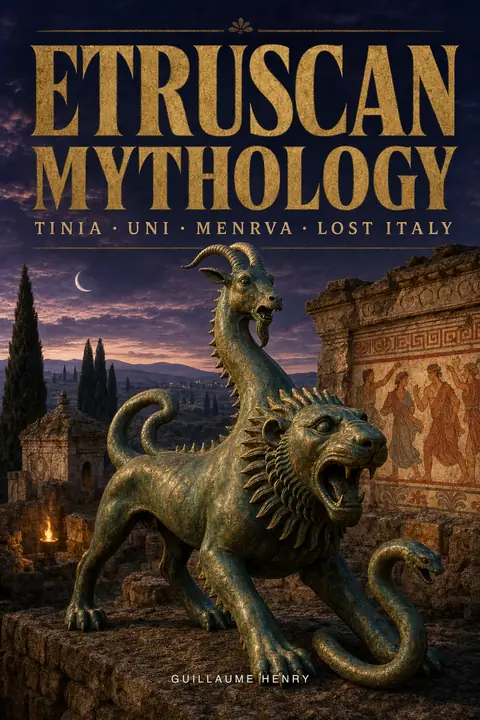
The Etruscan Mythology Book: Tinia, Uni, Menrva, and the Lost Religion of Italy
Tinia, Uni, Menrva, and Lost Italy
Before Rome, Italy belonged to the Etruscans: a people who read the future in lightning and livers, buried their dead in painted cities, and whose gods Rome quietly adopted. A mythology recovered from tombs, bronze mirrors, and the discipline of the haruspex.
More from Etruscan
All articles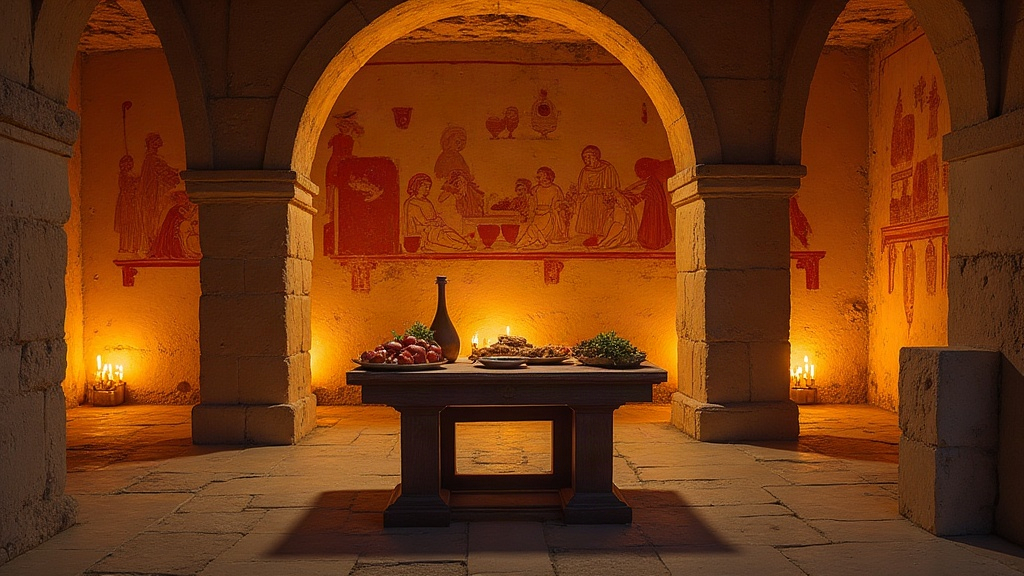
Etruscan
Etruscan Tomb Banquets: Feasting with the Dead
In Etruscan tombs, the dead reclined at eternal banquets. Through painted walls and grave goods, archaeologists recover a ritual that bound living and dead in a single meal. Discover how the Etruscans fed their ancestors and what it reveals about their afterlife beliefs.
Etruscan
The Etruscan Disciplina: Sacred Books and Ritual Knowledge
The Etruscan Disciplina preserved the cosmos in ritual codes and sacred texts. Explore how haruspicy, augury, and divine protocol shaped an entire civilization and influenced Rome itself.
Etruscan
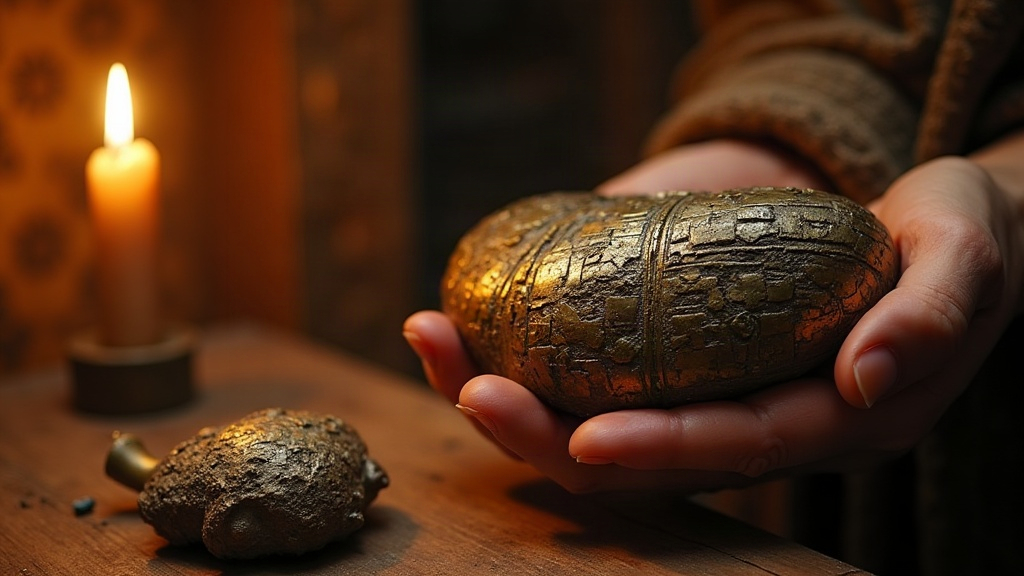
The Liver of Piacenza: Bronze Divination Model of the Etruscans
Discover how the Etruscan priests read fate itself: the Liver of Piacenza is a bronze model showing exactly where to look on a real liver for messages from the gods. It reveals the ancient art of haruspicy in bronze.

Etruscan
Tages: The Divine Child Prophet of Etruscan Divination
A child emerged from the earth to teach an Etruscan farmer the art of reading divine will. Tages, the Divine Child Prophet, became the source of all Etruscan divination knowledge, a figure so powerful that Roman priests carried his teachings for centuries.