
The Valkyries: Choosers of the Slain
They ride through smoke and carnage, deciding who lives and who dies. The Valkyries are far stranger, older, and more powerful than any modern retelling suggests.
Contents
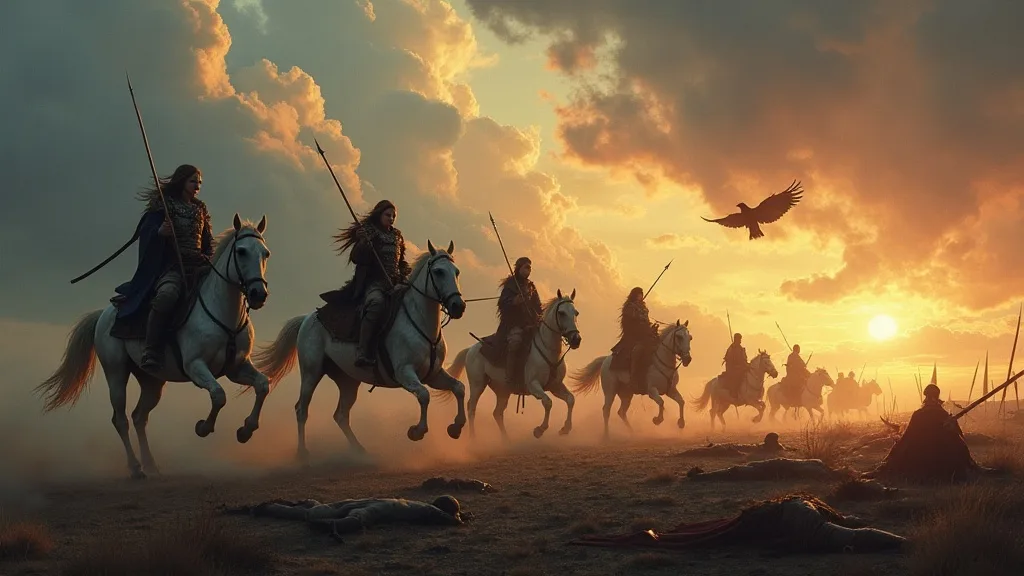
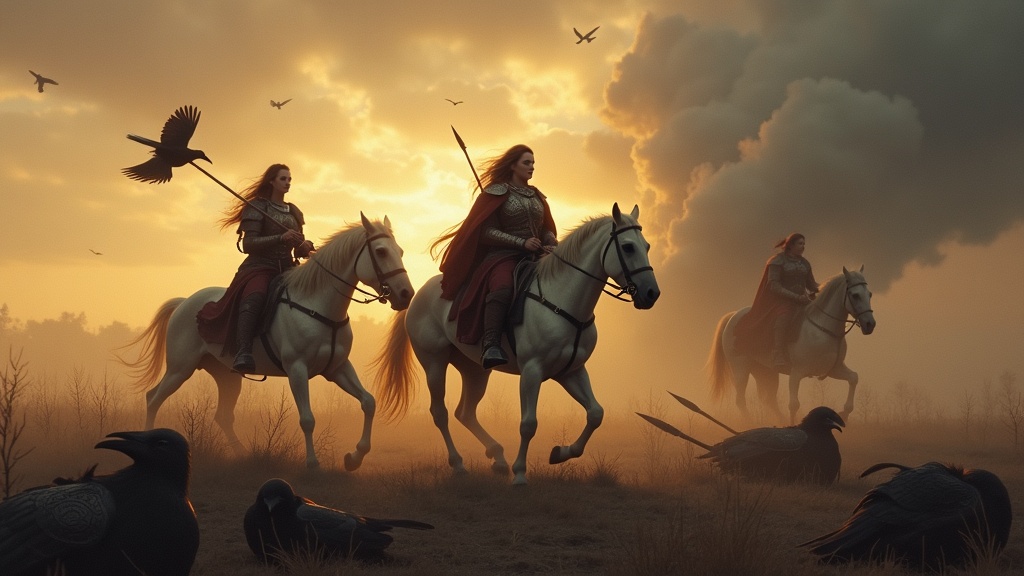
The battlefield falls quiet for just a moment. Then the air shifts. Horses appear above the smoke, their riders armored, silent, scanning the dead and the dying below. They are not mourners. They are not angels. They are the Valkyries: choosers of the slain, and the men they touch are already marked.
Old Norse sources describe them riding across both sky and sea, sometimes wearing swan feathers, sometimes carrying spears wet with fresh blood. The Prose Edda, compiled by the Icelandic scholar Snorri Sturluson around 1220 CE, names them as Odin's handmaidens, sent to every major battle to select which warriors will fall. But even that description barely scratches what these figures meant to the people who first imagined them.
The Valkyries carry a weight that goes far beyond battlefield logistics. They are agents of fate, projections of divine will, and in the oldest surviving sources, something much closer to spirits of death than servants of a god. Understanding them means reading carefully, starting with the earliest texts and working forward through centuries of transformation.
Where the Valkyries Come From: Origins in Old Norse Belief
The earliest traces of Valkyrie-like figures predate the Viking Age by centuries. Germanic tribes across northern Europe shared a concept of female spirits connected to fate and warfare. The dísir, a class of female supernatural beings mentioned across Old Norse poetry, carried protective and death-dealing power simultaneously. The norns, who wove the fates of gods and men at Yggdrasil, belong to the same broad family of female fate-figures.
What separates the Valkyries from these cousins is their direct connection to a single battlefield function and to Odin himself. The oldest skaldic poems, composed by court poets between the 9th and 11th centuries, treat them less as individuals and more as a collective force. They appear in Njál's Saga under a grim light: twelve Valkyries weave a loom made from human intestines, using severed heads as weights, singing about the approaching Battle of Clontarf in 1014 CE. This is not pageantry. It is an image of fate being physically constructed.
The Völuspá, the "Prophecy of the Seeress," one of the oldest and most authoritative poems in the Poetic Edda (a collection of Old Norse poems preserved mainly in the Codex Regius manuscript from around 1270 CE), lists several Valkyries by name without commentary. They simply exist, the way ravens and wolves exist at a battlefield: as expected presences.
Odin's Army: The Valkyries and Valhalla
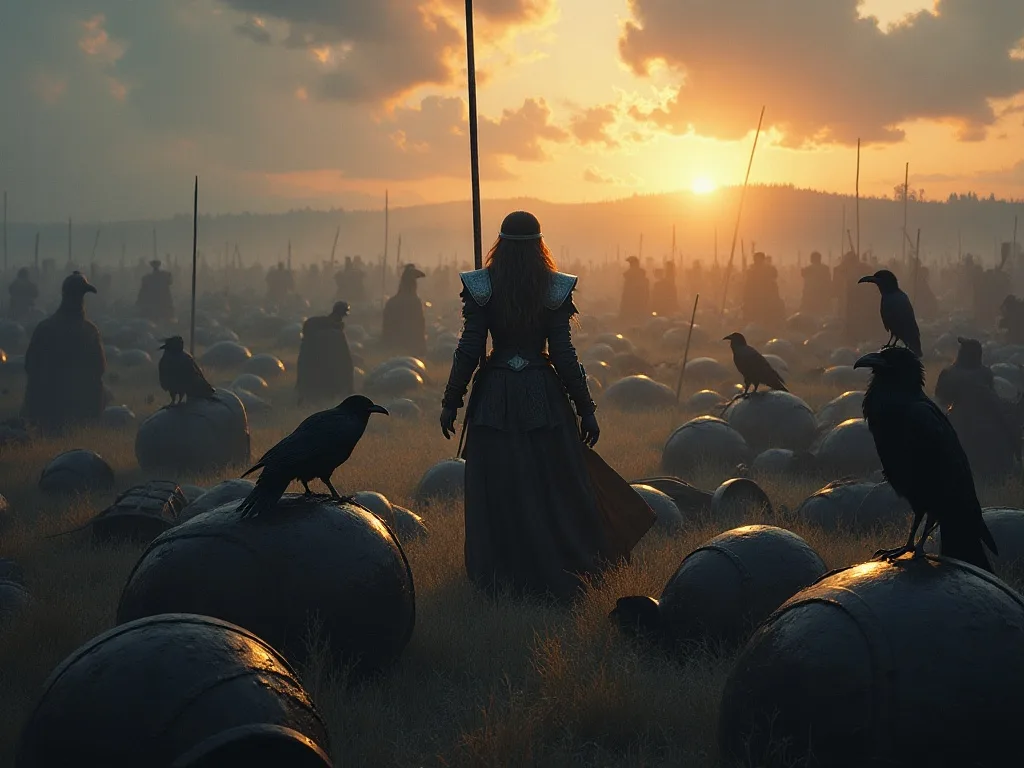
Selecting the dead is only half the job. After the battle, chosen warriors do not simply vanish. The Valkyries escort them to Valhalla, the hall of the slain, where Odin rules. Snorri Sturluson describes this journey in detail in the Gylfaginning section of the Prose Edda: the Valkyries ride across Bifröst, the rainbow bridge connecting the worlds, bearing the einherjar (the "lone fighters," meaning the honored dead) to their eternal training ground.
In Valhalla, the Valkyries continue working. They carry mead to the einherjar, who feast and fight every day, preparing for Ragnarök, the final battle that will consume the cosmos. The two roles, selecting the dead on the battlefield and serving them in the hall, were understood as a single continuous duty rather than two separate jobs.
This double function tells us something important about what death meant in Norse belief. Being chosen by a Valkyrie was not a tragedy. It was an honor. The men who died at home in their beds, the stráðauðr (straw-death), were the ones who had missed something vital. Warriors actively sought a battlefield death, in part because it meant a Valkyrie had deemed them worthy.
Their Names and What the Names Say
Norse mythological texts name anywhere from nine to thirteen individual Valkyries, depending on the source. The Grímnismál, a poem in the Poetic Edda spoken by Odin himself in disguise, lists eight. The Völuspá and other poems add more. What stands out is the vocabulary inside each name.
- Göndul: possibly "wand-bearer" or connected to magic
- Skögul: "shaker" or "high-towering"
- Hildr: simply "battle"
- Göndul and Herfjötur: "host-fetter," the Valkyrie who paralyzes warriors so they cannot fight, sealing their doom
- Sigrún: "victory-rune," a name that appears in a famous love story
The name Herfjötur is especially striking. Fettering, the magical act of binding a warrior so he cannot lift his sword or flee, appears repeatedly in Old Norse sources as a Valkyrie power. The hero Haraldr Hilditönn, according to Saxo Grammaticus's 12th-century Gesta Danorum, was betrayed on the battlefield by Odin himself taking the form of his charioteer and causing him to lose control. But in older strands of the tradition, this kind of battlefield paralysis belongs to the Valkyries. They do not only pick the dead; they sometimes cause the death.
Sigrún and Helgi: When Valkyries Love
Not all Valkyrie stories are about death rosters. The Helgakviða Hundingsbana poems, preserved in the Poetic Edda, tell the story of Sigrún and the hero Helgi Hundingsbane. Sigrún is a Valkyrie who falls in love with Helgi after he kills her unwanted betrothed. She fights alongside him, warns him of danger, and grieves when he is killed in battle by her own brother, Dagr.
The poem does not treat her love as a weakness or a corruption of her divine role. Sigrún weeps. She is also formidable. She led a shield-wall of Valkyries to protect Helgi during one of his battles, their spears leaving trails of light across the sky. When Helgi returns briefly as a spirit to their shared hall on the mountain Sevafell, she tends to him through the night, knowing he must return to Hel's realm by morning.
It is a story that refuses easy categorization. Sigrún is simultaneously a fate-figure, a warrior, a woman in grief, and someone caught between her duty to a divine order and her attachment to one specific mortal man. The Poetic Edda notes that both Sigrún and Helgi were believed to be reincarnated, living again under different names, though the poem breaks off before telling that second life in full.
Swan Maidens and Shape-Shifting: A Deeper, Older Layer
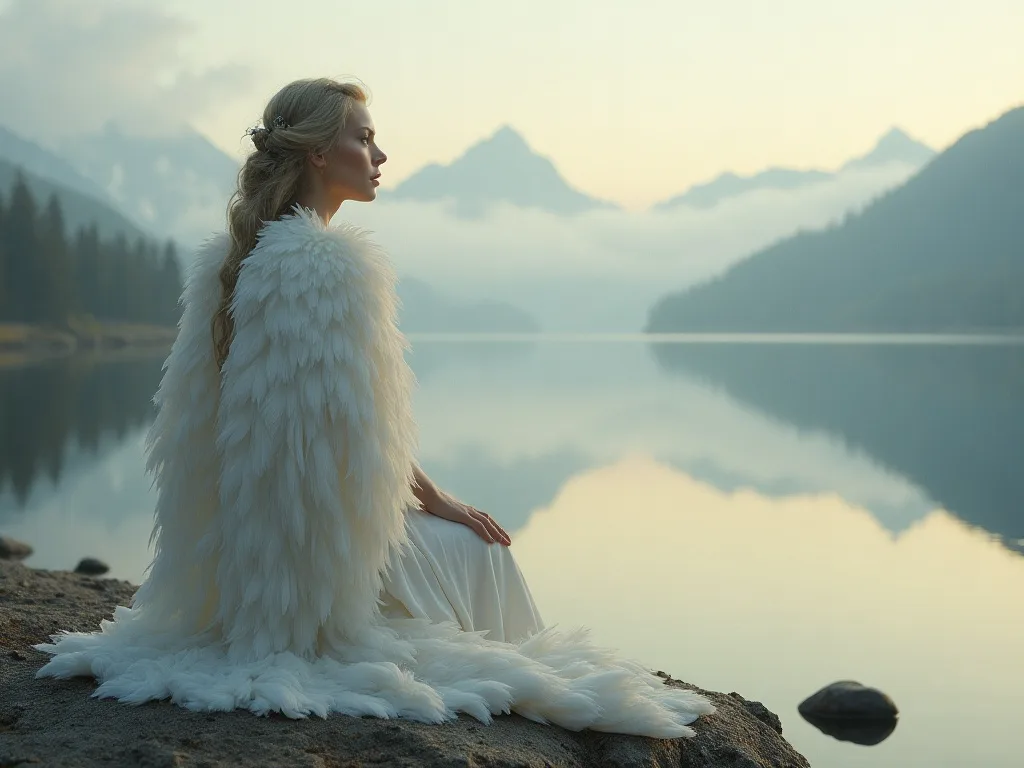
Several Old Norse texts describe Valkyries wearing feathered cloaks that allow them to fly in the form of swans. The Völundarkviða, one of the stranger poems in the Poetic Edda, opens with three Valkyries landing by a lake in Úlfdalir, removing their swan-feather cloaks, and sitting peacefully until three brothers find them and take them as wives. After nine years, the Valkyries reclaim their feathers and fly away, returning to war.
This motif connects the Valkyries to a much older, pan-Eurasian tradition of swan maidens: supernatural women who lose their power when their feathers or skins are taken, and reclaim it when they recover them. Similar figures appear in Finnish, Siberian, and Irish myth. In the Irish tradition, the Morrígan, the great crow-goddess of war, shape-shifts between woman and bird in ways that parallel Valkyrie behavior closely enough that scholars have debated a shared Proto-Indo-European root for both figures.
The Valkyries are not borrowings from Irish tradition, nor is the Morrígan borrowed from Norse. They are parallel branches of a very old idea: that the forces governing death in battle take female form, move between worlds, and are not fully subject to the rules that bind men or gods.
The Ride Across the Sky: How Valkyries Moved Through the Norse Cosmos
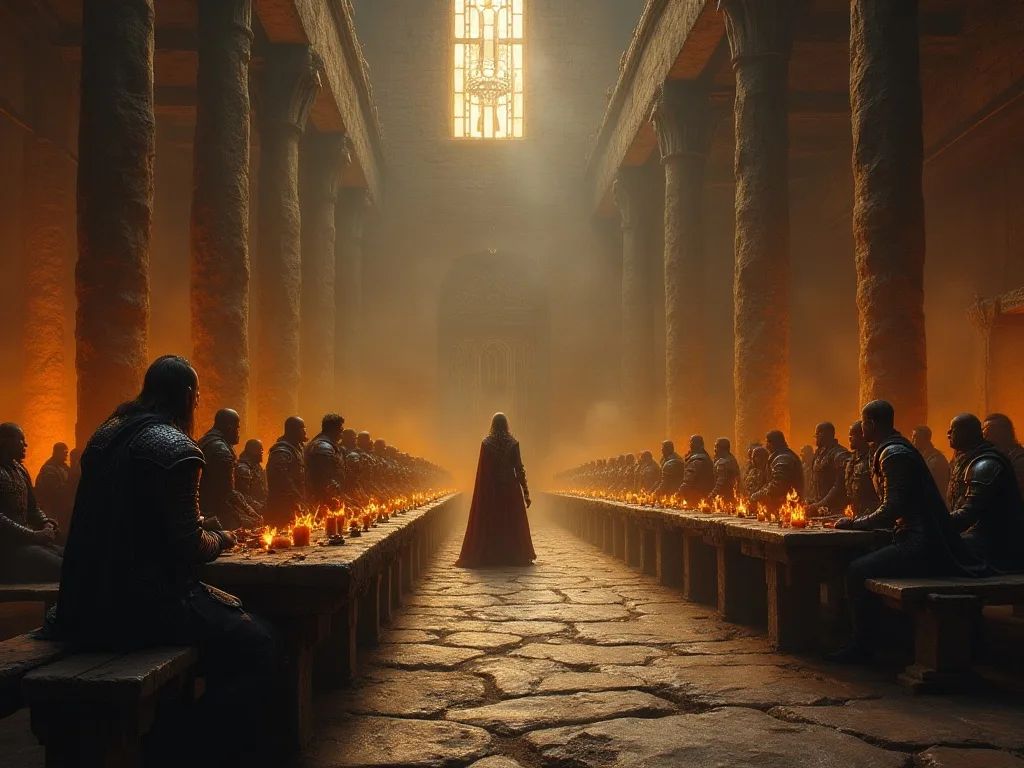
In the Prose Edda, Snorri describes Valhalla as having 540 doors, each wide enough for 800 warriors to march through side by side. The numbers are symbolic rather than architectural, meant to convey the scale of Odin's preparation for Ragnarök. The Valkyries are the mechanism that fills this hall.
Their route crosses the full vertical structure of Norse cosmology. They move from Midgard, the realm of humans, upward through the sky and across Bifröst to Asgard, home of the Aesir gods. In some traditions, they also descend to the edges of Hel, the realm of those who die without distinction. The einherjar they escort travel in the opposite direction, upward rather than down. Being chosen by a Valkyrie is, in this cosmological sense, a kind of rescue from a worse fate.
The Grímnismál poem, spoken by Odin while he is held captive and tortured between two fires (without either host knowing who he is), lists Valkyries by name in the same breath as describing Valhalla's geography. That juxtaposition is not accidental. The Valkyries are part of the architecture of the Norse afterlife, not visitors to it.
Valkyries and the Web of Fate: Witchcraft, Prophecy, and Seiðr
One area scholars have explored in recent decades is the overlap between Valkyries and the practice of seiðr (pronounced roughly "SAY-thr"), the Norse form of shamanic magic associated with fate-working, prophecy, and the manipulation of minds and destinies. Seiðr was primarily practiced by women, though Odin himself was said to have learned it from Freyja, the Vanir goddess.
The Valkyrie power to fetter a warrior, to make him unable to fight at the moment that matters, reads in several sources as a form of seiðr. The 11th-century poem Darraðarljóð, the "Song of the Spear," embedded in Njál's Saga, shows twelve Valkyries at a loom that is explicitly magical, weaving the outcome of the Battle of Clontarf. They chant as they work. They choose which side wins. This is not battlefield administration. It is fate-magic performed by beings who stand at the intersection of war, prophecy, and the supernatural feminine in Norse cosmology.
Jenny Jochens, a scholar of Old Norse literature, and more recently Carolyne Larrington, whose translation of the Poetic Edda (2014, Oxford University Press) remains a standard reference, have both noted how Valkyrie descriptions cluster around moments where normal causation breaks down: the great warrior who falls to a lesser opponent, the army that panics without reason, the sword that fails at the wrong instant. The Valkyries are the explanation Norse cosmology offers for those breaks.
Frequently asked questions about the Valkyries
Frequently asked questions
How many Valkyries are there in Norse mythology?
The sources disagree, and that inconsistency is itself informative. The Grímnismál lists eight by name. The Völuspá adds others. Snorri Sturluson, in the Prose Edda, assembles a list of thirteen. Modern scholars generally treat these as overlapping rather than contradictory: the Valkyries were a collective concept first, and individual names were assigned differently across regional traditions and time periods.
Did the Valkyries only take warriors to Valhalla?
Not all who died in battle went to Valhalla. The Valkyries selected a portion, specifically those Odin wanted for his army of einherjar. Others who fell in battle might go to Fólkvangr, Freyja's field, where she claimed half the slain by her own right. The goddess Hel received those who died of illness, old age, or other causes. The Valkyries were Odin's agents specifically, not universal escorts of the dead.
Were the Valkyries considered goddesses?
The Old Norse sources are careful with categories here. The Valkyries are not counted among the Aesir (the principal Norse gods) or the Vanir (the second family of gods). They are supernatural beings in Odin's service, closer in classification to the dísir and the norns than to Frigg or Freyja. Some Valkyries in narrative poems, like Sigrún, appear to have been mortal women chosen or reborn into the role, blurring the boundary further.
What is the oldest surviving source that describes Valkyries?
The earliest datable material comes from skaldic poetry composed in the 9th century, particularly verses attributed to the poet Bragi Boddason, often considered the first known Norse skald. However, the most detailed and coherent descriptions survive in the Poetic Edda, preserved in manuscripts from the 13th century, and Snorri Sturluson's Prose Edda, written around 1220 CE. The gap between oral composition and written record means earlier beliefs may be partially lost.
Are there parallels to Valkyries in other mythologies?
Yes, and the parallels are striking. The Irish Morrígan and her sisters Badb and Macha form a triple goddess of war, prophecy, and death with behaviors nearly identical to the Valkyries: they appear above battlefields, influence outcomes, take bird form, and are connected to fate-magic. The Greek Keres, dark spirits who hovered over the dying at Troy as described in Hesiod's Works and Days, serve a similar function. Many scholars propose a shared Proto-Indo-European origin for these figures rather than direct cultural borrowing.
How the Valkyries Survived: From Eddic Poetry to Wagner and Beyond
The Valkyries did not stay quietly in medieval Icelandic manuscripts. They traveled. Richard Wagner's four-opera cycle Der Ring des Nibelungen, completed in 1876, put Brünnhilde (his version of the Old Norse Brynhildr) at the center of one of the most performed works in operatic history. Wagner's Valkyries are daughters of Wotan (his name for Odin) who ride through storm clouds collecting heroes. The famous "Ride of the Valkyries" from Die Walküre became one of the most recognized pieces of orchestral music ever written.
Wagner drew heavily from the Völsunga Saga, a prose narrative compiled in Iceland around 1260-1270 CE, which tells the story of the hero Sigurðr and the Valkyrie Brynhildr. In the saga, Brynhildr is punished by Odin for disobeying his orders on a battlefield, cursed to live as a mortal woman and sleep within a ring of fire until a fearless hero wakes her. Sigurðr breaks through the fire. What follows is one of the great tragic love stories in world literature.
That story, Brynhildr's defiance and punishment, reveals something the battle-roster image of Valkyries tends to obscure. These figures had agency. Brynhildr chose the wrong man to let live, the man Odin wanted to die, and she paid for that choice with her divine status. The Valkyries were not mindless instruments. They made decisions, and those decisions had consequences that rippled across the mythological world.
In the 20th and 21st centuries, Valkyries appeared in Marvel comics and the Marvel Cinematic Universe, in Neil Gaiman's fiction, in video games, and in countless other modern retellings. Most strip away the fate-magic, the seiðr, the swan feathers, and the genuine terror of encountering one of them on a battlefield. The original figures were far less comfortable than their modern counterparts. They were not there to save you. They were there to decide whether your death had earned anything at all.
The question the oldest Norse poets asked, and which the Valkyries embody, was not whether death could be avoided. It was whether death could be made to mean something. The Valkyries, moving between worlds on horses that spray frost and fire, are the Norse cosmos answering that question with a choice rather than a verdict.
Free 25-page sample
Want the whole story?
Take the first 25 pages free. If it pulls you in, the full edition is yours as an instant PDF download, with a paperback on Amazon for selected titles.
Norse
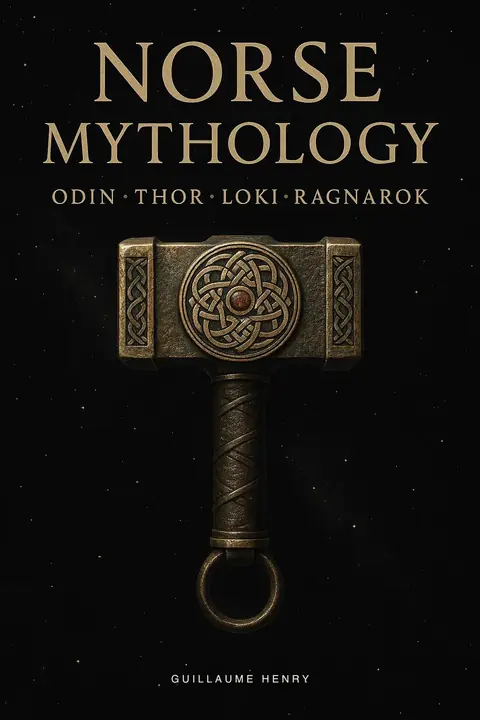
The Norse Mythology Book: Odin, Thor, Loki, Ragnarok and the Sagas of the Vikings
Odin, Thor, Loki, Ragnarok and the Sagas of the Vikings
The complete guide to Norse mythology drawn from the Eddas, the sagas, and the scholarship of those who read the source texts. Every god, every world, every myth.
More from Norse
All articles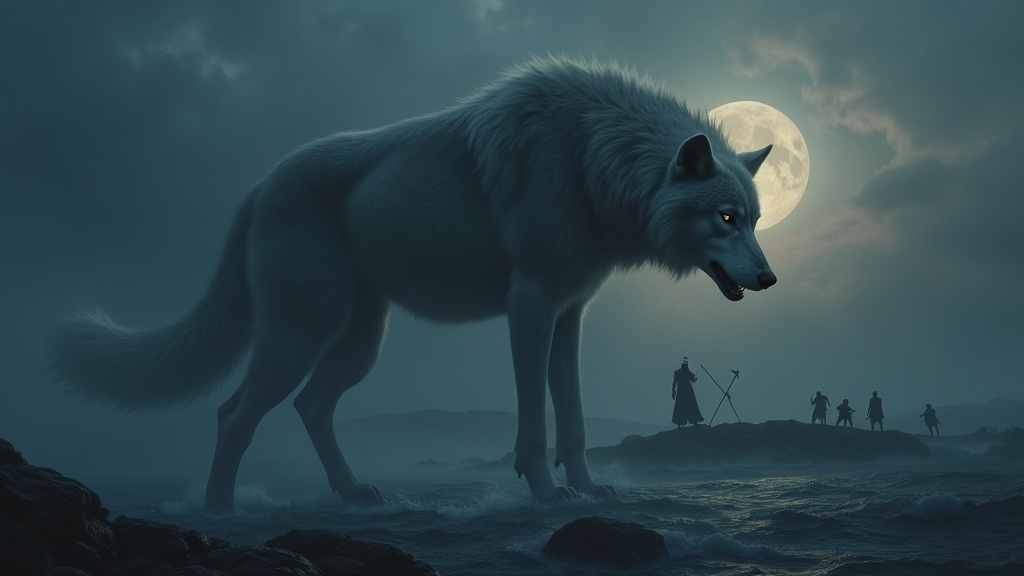
Norse
Fenrir: The Monstrous Wolf Destined to Kill Odin
Born of Loki and bound by the gods who feared him, Fenrir is Norse mythology's most terrifying wolf - the creature fated to swallow Odin at the end of the world.
Norse
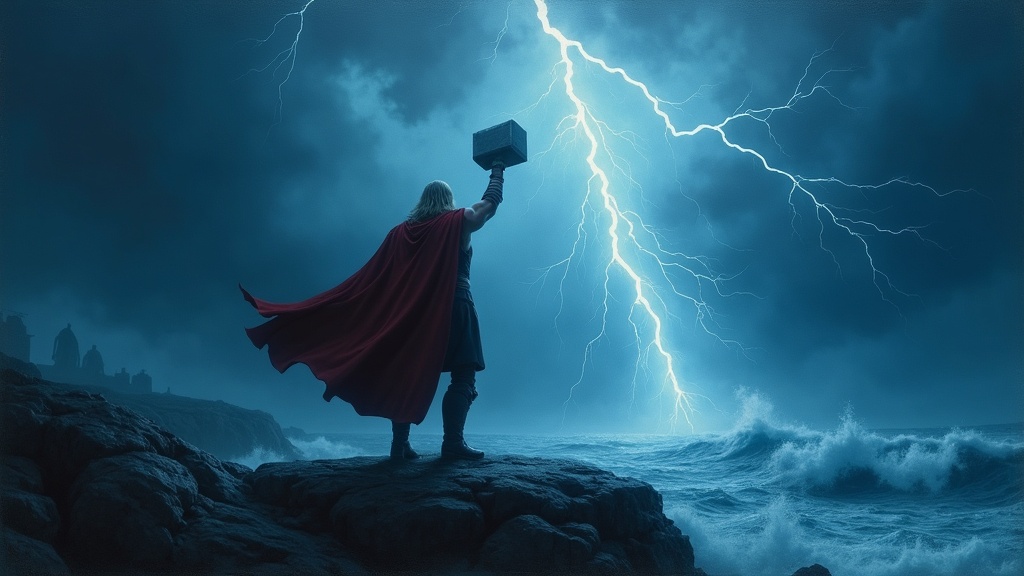
Mjolnir: Thor's Hammer and Symbol of Protection
Mjolnir was not just a weapon. Forged by dwarf smiths and carried by the thundergod Thor, it guarded gods, humans, and the living world against the chaos of giants. Here is its full story.
Norse
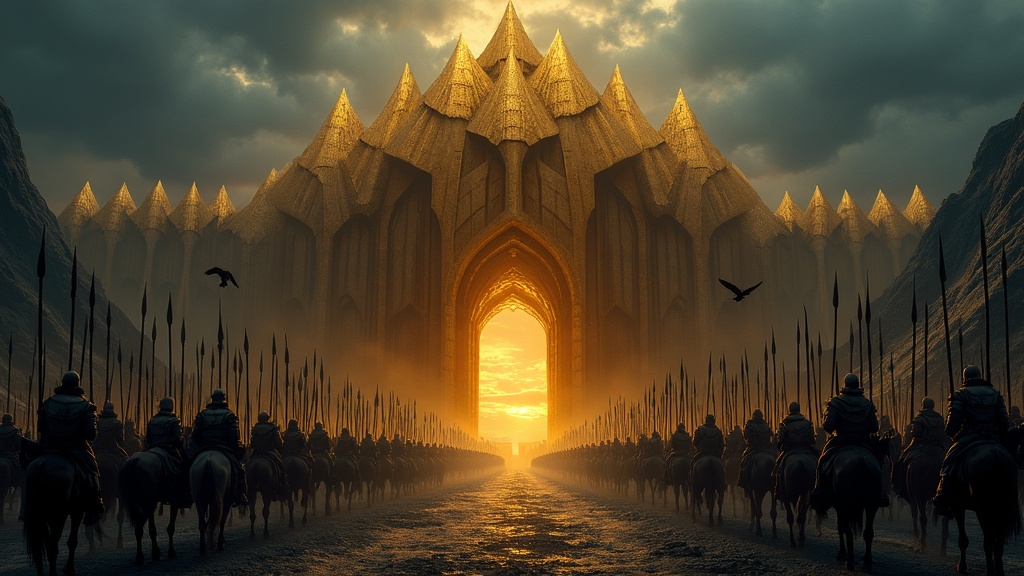
Valhalla: Odin's Hall of the Slain Warriors
High in Asgard, Valhalla rises as a hall of gold and spear-shafts where half the battle-slain feast, train, and await Ragnarok. Here is what the Eddas actually say.
Norse
The Valkyries: Choosers of the Slain in Norse Mythology
Armored, spear-bearing, and answerable only to Odin, the Valkyries rode into every battle to decide who lived and who fed the ravens. Here is the full story.