
Smoking Ceremonies: Purification Through Sacred Smoke
Among the oldest living ritual traditions on Earth, Australian Aboriginal smoking ceremonies use sacred smoke to cleanse, protect, and heal, connecting the living to Country and to the Dreaming.
Contents
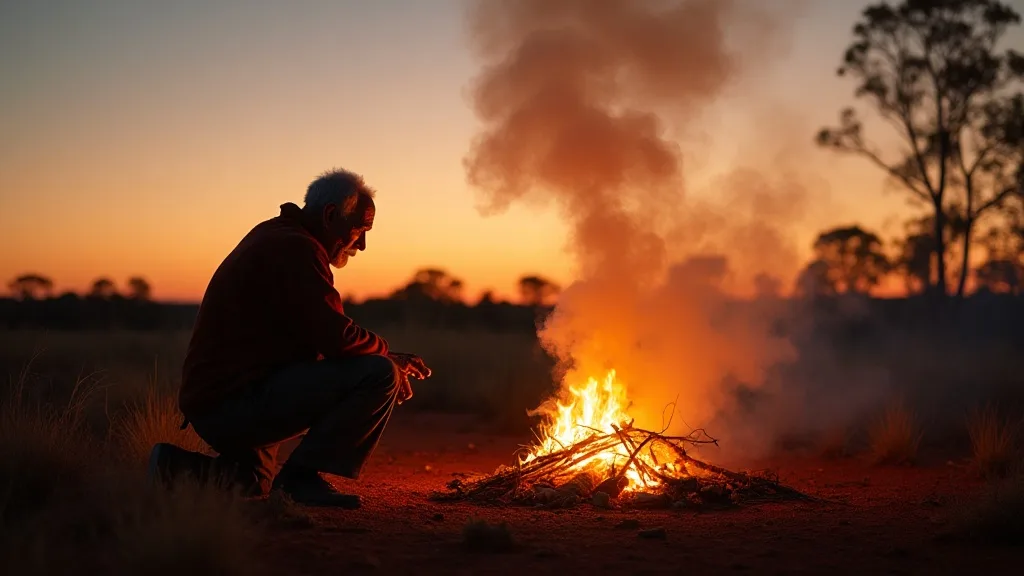
The smoke rises before anyone speaks a word. Green leaves are laid on coals, and within seconds a thick, pale column curls upward into the morning air. People step into it, fan it across their faces and arms, let it settle into their hair. No one rushes. The smoke does what it has always done, carrying something away, bringing something in.
Smoking ceremonies: purification through sacred smoke sit at the heart of Australian Aboriginal ritual life. They are not performances staged for visitors. They are functional, alive, and precise, each one shaped by the law of the Country in which it takes place. Across hundreds of distinct language groups, the underlying logic holds: smoke is a threshold substance. It moves between the physical and the spiritual, between the living and the ancestors, between sickness and health.
Scholars of Indigenous Australian religion, including W.E.H. Stanner in his landmark 1966 essays collected as White Man Got No Dreaming, note that ritual acts in Aboriginal cultures cannot be separated from the Dreaming, the Tjukurpa in Pitjantjatjara or Ungud in Ngarinyin, the foundational layer of reality in which ancestral beings shaped the land, its laws, and the living creatures within it. A smoking ceremony is not a symbol of purification. It is purification, enacted through the same channels the ancestors opened long ago.
The Dreaming Logic Behind the Smoke
To understand why smoke holds this power, you need to understand the Dreaming. The Dreaming (a translation that captures only part of the meaning of words like Tjukurpa, Alcheringa, or Bulan across different groups) describes a time before time, when ancestral beings moved across an empty land, singing, fighting, loving, dying, and in doing so, creating every river, mountain, plant, and creature.
Those ancestors did not vanish. They folded into the land itself. A particular hill is not just a hill; it is the solidified body of a snake ancestor. A grove of trees marks where a fire ancestor rested. Every feature of Country carries the living imprint of the beings who made it.
This is why plants matter so much in smoking ceremonies. The plants chosen for the fire are not arbitrary. They are, in the ceremonial logic of many groups, the living descendants of ancestral acts. When their leaves burn, they release something that belongs to that deep layer of time. The smoke becomes a carrier of ancestral presence, not metaphorically, but in the most literal sense the tradition recognises.
Stanner wrote that for Aboriginal Australians, ordinary and sacred reality were not opposed but layered, "as if there is always a past which is also present, if you know how to read it." The smoking ceremony is one of the clearest ways that layered reality becomes visible, tangible, and breathable.
Plants of Power: What Burns and Why
No two smoking ceremonies are identical. The plants used, the timing, the words spoken (or not spoken), the people permitted to stand in the smoke, all of these are governed by specific lore that belongs to specific Country and specific custodians.
That said, certain plants appear across wide geographic areas, reflecting both their availability and their established ceremonial reputation.
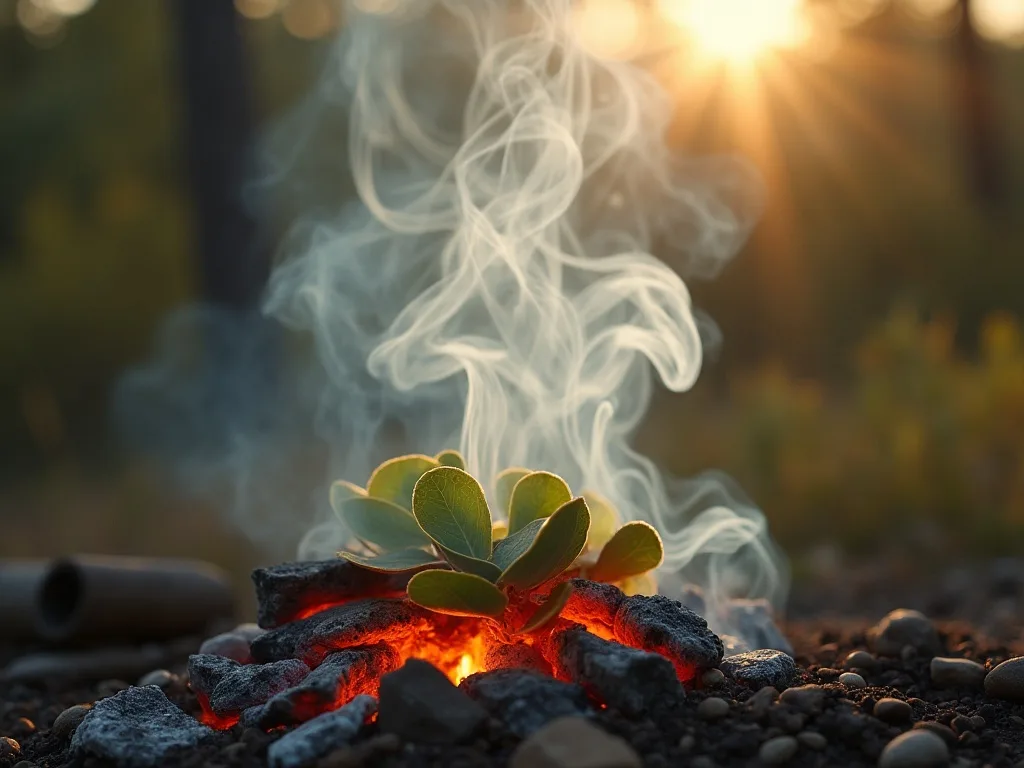
Eucalyptus species are the most widespread. Across southeastern Australia, the leaves of various eucalypts, particularly those with high oil content, are piled onto coals to produce the dense, aromatic smoke most visitors associate with Welcome to Country smoking ceremonies. The Wurundjeri people of the Melbourne region, for example, have used river red gum (Eucalyptus camaldulensis) in cleansing practices documented by ethnographers since the late nineteenth century.
Paperbark (Melaleuca species) appears strongly in coastal and wetland traditions, especially across Arnhem Land and the Top End of the Northern Territory. Its inner bark burns slowly and produces a softer, sweeter smoke, appropriate for ceremonies surrounding newborns or the recently bereaved.
Kangaroo grass (Themeda triandra) features in the ceremonies of the Ngunnawal people of the ACT and surrounding region, often burned together with leaves to create a mixed smoke with both cleansing and protective properties.
Sandalwood and native resins occur in the ceremonies of desert and semi-arid groups, where their rarity adds additional weight to their use. In several Western Desert traditions, resinous woods are reserved for the most serious ritual occasions, including smoking the possessions of the dead.
The Arrernte people of central Australia, whose ceremonies were extensively documented by Baldwin Spencer and Francis Gillen in The Native Tribes of Central Australia (1899), used smoke in conjunction with red ochre and sacred objects (churinga) during initiations and mourning rites. Spencer and Gillen noted that the smoke was understood to both prepare the initiate's body for what it was about to receive and to remove any contaminating influences that might interfere with the ceremony's power.
Ceremonies for the Living: Birth, Healing, and Welcome
Smoking ceremonies serve the living in immediate, practical ways. Different moments in a human life call for different forms of the ritual.
At birth, many groups across the continent practice a smoking of the newborn. The child is held above or near the smoke, sometimes with the mother, to strengthen the spirit, seal the child's connection to Country, and protect against illness or malevolent forces. The Yolngu people of northeast Arnhem Land, whose ceremonial traditions have been studied in depth by researchers including Ian Keen (Knowledge and Secrecy in an Aboriginal Religion, 1994), describe this act as introducing the child's birrimbirr (soul) to the ancestral beings of the clan's estate. The smoke carries the introduction.
For the sick, smoke acts as medicine in both physical and spiritual registers. Some eucalyptus smoke contains compounds with genuine antibacterial and antifungal properties. But in ceremonial logic, its work goes further. Illness is understood in many Aboriginal frameworks as a state of spiritual displacement, a breaking of connection with Country or with ancestral law. Smoke restores the connection. A sick person is cleansed of whatever has attached itself to them and brought back into alignment with their proper place in the Dreaming.
Welcome to Country ceremonies, now widely practiced at public events across Australia, are a visible expression of this same logic. When an Elder smokes newcomers arriving on their Country, the act is not symbolic courtesy. It signals that the visitors are known to the land, that they have been acknowledged and, in a sense, rendered visible to the ancestral beings watching. The smoke removes whatever foreign energies the visitors carry and places them, temporarily, within the protective framework of the host group's law.
Ceremonies for the Dead: Smoking the Grief Away
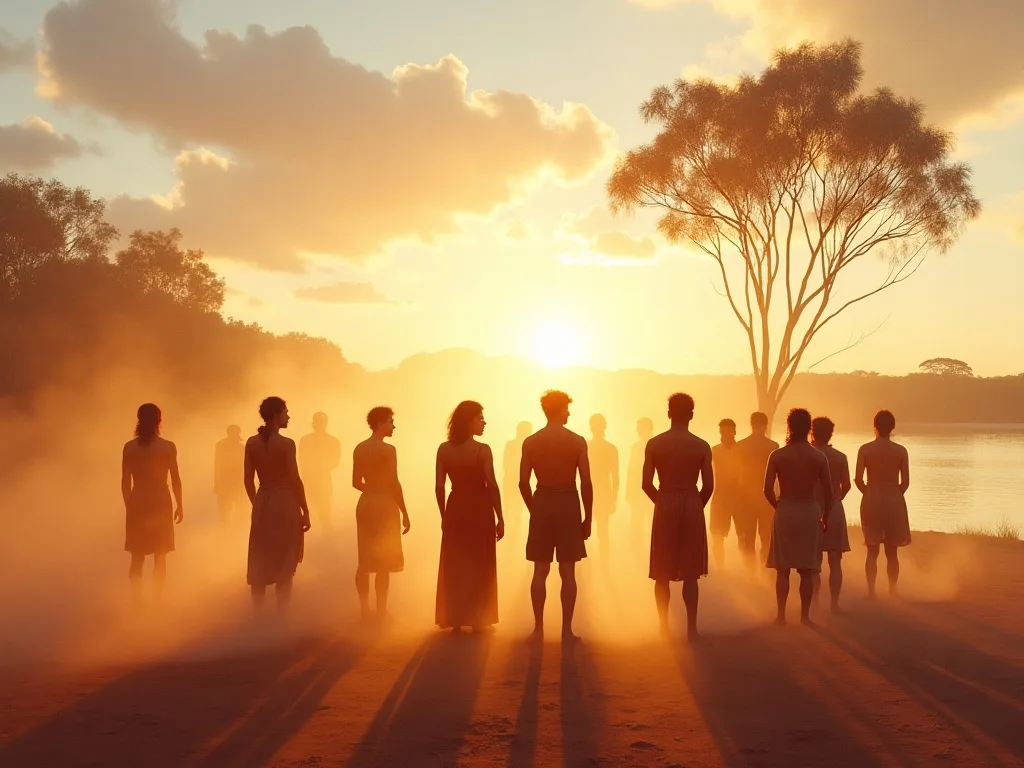
The most solemn application of sacred smoke purification sits in mourning rites. Across virtually every Aboriginal language group, smoke plays a central role in the period after a death.
The reasons are interconnected. Death creates a rupture in the relationship between the living community and the Dreaming. The spirit of the deceased, called by different names across different groups (mokuy among the Yolngu, pirli in some Western Desert traditions), must be helped along its way back to Country, back into the ancestral layer from which it came. Left unguided or held in place by the grief of the living, that spirit can become a source of danger. It lingers where it lived, and its presence, however beloved, can make the living sick.
Smoking the dwelling where a person died serves several purposes at once. It removes the direct sensory traces of the deceased. It signals to the spirit that the living are releasing it. It cleanses those who have been in close contact with the dying, who carry a particular spiritual weight called, in many southeastern groups, pirri or ngangkari (though specific terminology varies widely). And it marks a boundary: on this side, the living continue; on the other side, the ancestor returns to Country.
Smoking ceremonies used in mourning are among the most restricted in their specifics. Ethnographers have documented the broad outlines, but much of the detail remains within the custodianship of those who hold the relevant law. What the public record shows clearly, as documented by Deborah Bird Rose in Nourishing Terrains: Australian Aboriginal Views of Landscape and Wilderness (1996), is that these ceremonies are not grief therapy in the Western sense. They are practical management of spiritual forces that the community understands to be real and consequential.
The Ritual Body of the Ceremony
A smoking ceremony has a body. It has a beginning, a middle, and an end, and each part carries its own requirements.
The fire must be made correctly. In many traditions, this means starting from scratch using friction-fire methods, not a lighter, because the fire's origin matters. Fire that comes from Country, made by the hands of someone with the right to make it there, is not the same as fire imported from a box of matches bought in a town. The sacred smoke ritual requires a fire that belongs to the place.
The plants are gathered with care, often with quiet acknowledgment given to the plant itself before it is cut. This mirrors the broader Aboriginal understanding, documented extensively in the work of anthropologist Fred Myers (Pintupi Country, Pintupi Self, 1986) and others, that every living thing has a relationship to law, to Country, and to the people who belong to that Country. Cutting a plant without acknowledgment is a kind of rudeness toward the Dreaming.
The smoke is directed. It does not simply billow. A custodian fans it, moves it with hands or branches, directs it toward specific people or objects. The body is cleansed from feet upward in some traditions, from head downward in others. Objects, including tools, weapons, vehicles, and buildings in contemporary practice, can be smoked just as effectively as bodies.
Words may or may not accompany the smoke. In some traditions, specific songs are essential and inseparable from the act. In others, silence is the appropriate register. In either case, the ceremony requires presence of mind. Distraction is itself a kind of contamination. The person conducting the ceremony must hold the intention clearly.
Dreaming Ancestors and the Origins of Fire Ritual
The origin of smoking ceremonies, like all significant practices in Aboriginal law, is located in the Dreaming. Specific accounts vary by Country and are held by specific custodians. But across many traditions, fire itself was the gift, theft, or discovery of an ancestral being.
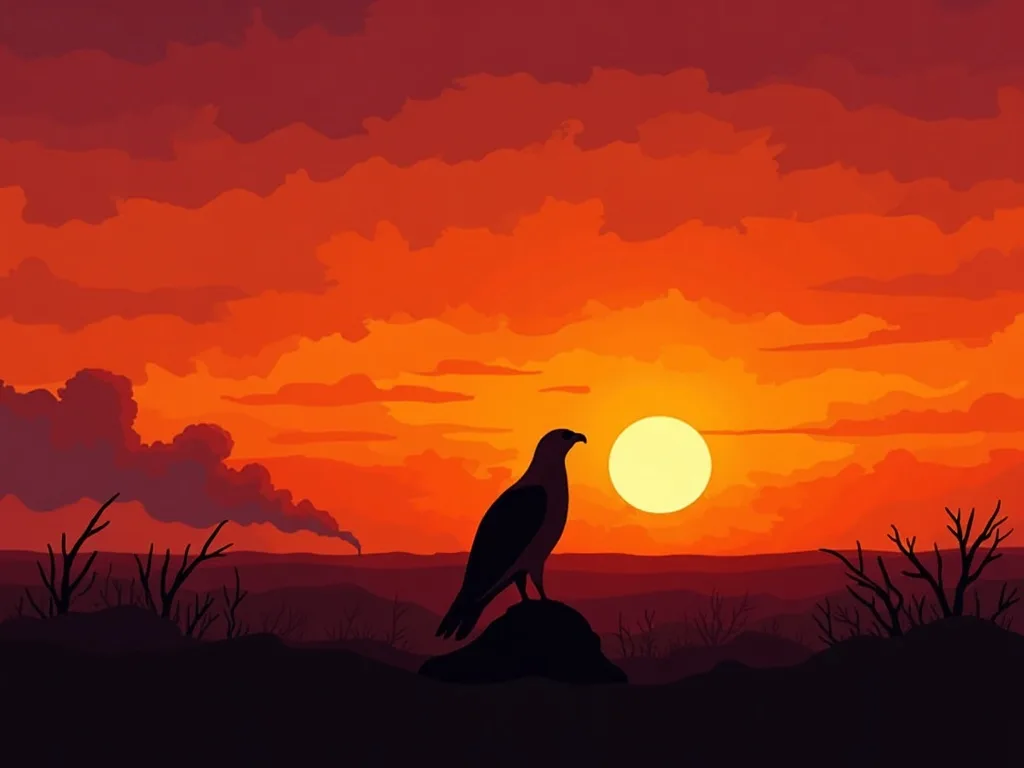
Among the Yolngu of Arnhem Land, fire is associated with Yaluk, the ancestral fire-hawk, a being who brought fire and with it the means to cook, to signal, and to purify. The connection between fire-hawks (several raptor species, including the black kite, Milvus migrans) and fire is so embedded in Aboriginal tradition that researchers in ecology have recently confirmed what Aboriginal knowledge-keepers have long stated: these birds actively spread grass fires by carrying burning sticks, behaviour documented in a 2018 paper by Bob Gosford and colleagues in the Journal of Ethnobiology. The ancestral story and the biological fact align.
In the Arrernte tradition, the ancestor Numbakulla (documented by Spencer and Gillen) brought order and ceremony to a formless world. The sacred objects and rituals he established included fire-based purification, and those rituals, passed down through initiation, remain active today.
The Kulin nations of southeastern Australia, including the Wurundjeri and Boon Wurrung peoples of the Port Phillip region, trace their ceremonies to the creator ancestor Bunjil, the wedge-tailed eagle, whose laws govern the relationships between people, Country, and the spirit world. Bunjil holds the fire law as part of the broader law of Country, and the smoking ceremony is understood as one expression of that enduring relationship.
Cross-cultural comparison is worth pausing on here. Smoke as spiritual medium appears in Ancient Egyptian kyphi incense rituals, in the Vedic yajna fire sacrifice, in the Mesoamerican use of copal at Aztec temples, and in the Christian tradition of censing with frankincense. The Aztec ritual use of copal shares a structural logic with Aboriginal smoking practices: both use aromatic smoke to create a conduit between the human world and a higher order of being. But Aboriginal smoking ceremonies are distinctive in their insistence that the smoke belongs to specific Country, is made from plants that are part of that Country's Dreaming, and returns its efficacy to the specific ancestral beings of that place. It is not universal incense; it is a local, living conversation with named beings.
Smoking Ceremonies in Contemporary Aboriginal Life
The practice did not freeze in the nineteenth century. It adapted, as all living traditions do, without losing its core.
Today, smoking ceremonies open parliamentary sessions in the ACT, welcome athletes at national sporting events, mark the arrival of ships and aircraft at some Australian ports, and begin school years at institutions with strong Indigenous community ties. When the Sydney 2000 Olympics opened, a smoking ceremony was among the first acts of the opening ceremony. When the Australian Parliament House in Canberra was opened, Ngunnawal and Ngunawal Elders performed a smoking ceremony on the land.
This expansion into public life has not been without tension. Some Aboriginal communities have raised concerns about the commercialisation of the practice, about non-custodians performing ceremonies they do not hold the law for, and about the reduction of a complex ritual to a quick gesture at corporate events. Marcia Langton, Foundation Chair of Australian Indigenous Studies at the University of Melbourne, has written and spoken extensively on the difference between genuine ceremonial practice and cultural display, arguing that the former requires custodianship and law while the latter can easily become a form of appropriation, however well-intentioned.
The ceremony's resilience, though, is notable. Through the violent disruptions of colonisation, the forced removal of children from communities (the Stolen Generations), the suppression of language and ceremony, the smoking ceremony survived. In some places it survived in secret. In others it was carried by Elders who kept the law alive at great personal cost. The Dreaming, which holds all of this, proved harder to extinguish than the fires that sustained the British Empire's project on this continent.
Contemporary practitioners, including AIATSIS (the Australian Institute of Aboriginal and Torres Strait Islander Studies) researchers and community-controlled cultural organisations, are now working to document regional variations with the explicit consent and guidance of custodians, ensuring that knowledge is preserved within communities rather than extracted from them.
Frequently Asked Questions About Smoking Ceremonies
Frequently asked questions
Who has the right to perform a smoking ceremony?
The right to conduct a smoking ceremony belongs to the custodians of the Country on which it takes place. This means the Traditional Owners of that specific land, people who hold the relevant law for that ceremony within their group. There is no single, pan-Aboriginal authority. Each ceremony belongs to a specific people, place, and Dreaming track. An Elder from one Country does not automatically hold the right to perform ceremony on another group's Country without invitation and proper protocol.
What plants are used in smoking ceremonies, and do they vary by region?
Yes, plants vary significantly by region and by the specific purpose of the ceremony. Eucalyptus leaves are common across southeastern Australia. Paperbark (Melaleuca) features in coastal and Top End ceremonies. Kangaroo grass, sandalwood, and native resins appear in inland and desert traditions. The choice is guided by what belongs to the Country in question and what the ancestral law of that Country prescribes for the specific type of ceremony, whether it is for birth, healing, mourning, or welcome.
What is the difference between a Welcome to Country and a smoking ceremony?
A Welcome to Country is a formal acknowledgment by a Traditional Owner that visitors are received onto their land. It may or may not include a smoking ceremony. A smoking ceremony is a distinct ritual act involving fire and smoke for purification or protection. The two can occur together, and often do at significant public events, but they are separate in structure and purpose. An Acknowledgment of Country, by contrast, is a statement made by anyone (including non-Indigenous people) recognising Traditional Owners but carrying no ceremonial dimension.
Are smoking ceremonies connected to the Dreaming?
Yes, fundamentally. The Dreaming (expressed as Tjukurpa, Alcheringa, Ungud, or dozens of other terms across different language groups) is the foundational layer of reality in Aboriginal cosmology, in which ancestral beings shaped the land and established its law. Smoking ceremonies are understood as enactments of ancestral law, not as human inventions. The plants, the fire, the smoke, and the intent are all understood to engage directly with the ancestral beings whose presence is embedded in the Country where the ceremony takes place. Anthropologist W.E.H. Stanner's essays, collected in White Man Got No Dreaming (1979), remain the clearest English-language introduction to this cosmological framework.
Have smoking ceremonies changed since European colonisation?
The core practice persists with its ceremonial logic intact, but the contexts in which it appears have expanded. Colonisation suppressed many ceremonies, forcing them underground. Post-1970s land rights movements and cultural revival programs helped restore and publicly reinstate many practices. Today, smoking ceremonies occur at parliamentary openings, sporting events, school beginnings, and corporate functions. This expansion has introduced genuine debates within communities about who holds the law for such ceremonies and when public performance serves versus dilutes genuine practice. The ceremonies themselves, when conducted by proper custodians on their own Country, retain the full weight of their ancestral law.
What Fire Remembers: Smoke and the Future of Living Ceremony
The oldest question about any ritual tradition is whether it can survive the world it was not built for. For Australian Aboriginal smoking ceremonies, the evidence so far says yes, and the reasons are worth sitting with.
A smoking ceremony is not doctrine. It does not depend on a text, a temple, or an institution that can be burned down or outlawed without remainder. It depends on Country, on plants, on fire, and on people who know the law. Country cannot be confiscated, at least not fully. The Yarra River still runs through Wurundjeri land. The red gum still grows on its banks. The law that connects those trees to the Dreaming, and the Dreaming to the living, was not written down where anyone could find and destroy it. It was carried in ceremony, in song, in the bodies of those initiated into it.
Researchers working alongside Aboriginal communities, including those contributing to the AIATSIS database and to projects like the Living Archive of Aboriginal Languages in the Northern Territory, are increasingly documenting the ceremonial knowledge that surrounds smoking practices, not to extract it but to return it to communities where it can be taught on community terms.
The smoke, when it rises, still does what it has always done. It crosses the boundary between what is visible and what is present but unseen. It announces: we are here, we know where we are, we remember who made this place. For a tradition that has held that knowledge for at least 65,000 years, according to the genetic and archaeological record, that is not a small thing to carry into a morning fire.
Read the full book
Want the whole story?
The complete edition is an instant PDF download here, with a paperback on Amazon for selected titles.
Australian Aboriginal
The Aboriginal Mythology Book: The Rainbow Serpent, Wandjina, Baiame, and the Dreamtime Stories of the World's Oldest Tradition
60,000 Years of Unbroken Ancestral Memory
The world's oldest continuous mythology. From the Rainbow Serpent to the Wandjina cloud spirits, explore the Dreamtime stories that have mapped Australia for 60,000 years.
More from Australian Aboriginal
All articles
Australian Aboriginal
Namarrgon: The Lightning Man of Arnhem Land
Namarrgon is the terrifying sky god of the Yolngu people who creates lightning and controls the monsoon storms that shape life across Arnhem Land. His thunderous presence reveals how Aboriginal cultures read the sky as a living, ancestral force.

Australian Aboriginal
The Dreamtime: Creation and Eternal Present in Aboriginal Belief
The Dreamtime is the Aboriginal foundation of existence: the era when ancestral beings shaped the land, set down the laws of kinship and ritual, and wove themselves into every rock, waterhole, and song. It is neither ancient history nor myth alone, but an ongoing reality that Aboriginal peoples access through ceremony, song, and country.

Australian Aboriginal
The Seven Sisters: Celestial Pursuit and Pleiades Myth in Aboriginal Australia
Seven sisters flee across the sky in Australian Aboriginal mythology, hunted by a man who will never catch them. This eternal chase, traced in the Pleiades star cluster, reveals how Aboriginal peoples read the cosmos as a living story of desire, escape, and sacred boundaries.
Australian Aboriginal
Yara-ma-yha-who: The Bloodsucking Tree Dweller of Australian Aboriginal Myth
Meet the Yara-ma-yha-who, a small but lethal tree-dwelling creature from Rainrainforest Aboriginal lore that hunts humans by bloodsucking and regurgitation. Discover what this creature reveals about danger, transformation, and survival in the deep Australian bush.