
Tane Mahuta: God of Forests and Birds
Tane Mahuta breathed life into the first forests, shaped the first woman from earth, and carried light itself into the sky. This is the full story of the Maori god who holds the living world together.
Contents
Long before the first tree stood on solid ground, the sky and earth lay locked together in a suffocating embrace. No light reached anything. No wind moved. The children of Ranginui (the Sky Father) and Papatuanuku (the Earth Mother) lay crushed between their parents' bodies, alive but blind in the dark. One of those children decided to act.
Tane Mahuta, god of forests and birds, pressed his shoulders against the earth and his feet against the sky. He pushed. Slowly, with enormous effort, he forced his parents apart, tearing open the space where the living world now exists. Light spilled in for the first time. Birds called out into the sudden air. The forests Tane would later plant began their long reach toward the light he had made room for.
That first act of separation is not a metaphor in Maori thought. It is the founding event of the cosmos, recorded in oral traditions across the Pacific and written down by Maori scholars and ethnographers from the nineteenth century onward. Tane stands at the center of it.
Separating the Sky: The First Act of Creation
The Maori creation narrative, preserved in accounts collected by scholars such as Sir George Grey in his 1855 Nga Mahi a Nga Tupuna ("Deeds of the Ancestors") and through oral traditions transcribed by Maori tohunga (expert practitioners), begins with a darkness called Te Kore (the void) and then Te Po (the night). From that darkness came Ranginui and Papatuanuku, and from their union came the great atua.
The children held a debate, as brothers do. Tumatauenga (the atua of humans) wanted to kill their parents. Rongomatane (atua of cultivated foods) counseled calm. Haumiatiketike (atua of uncultivated plants) agreed to wait. It was Tane Mahuta who offered the third path: separate them, gently and permanently, so that life could grow between them.
Tane's technique matters. He did not use his arms like a man lifting a weight. He placed his head against Papatuanuku and drove his feet upward into Ranginui, assuming the posture of a tree, roots down and branches reaching skyward. This is not an accident. Trees, in Maori understanding, mirror the cosmos. Their roots drink from the mother below; their canopy touches the father above. Every pohutukawa clinging to a cliff, every towering kauri in Northland, performs the same act Tane performed at the beginning.
Ranginui wept when his wife was torn from him. His tears became rain and fell on Papatuanuku. She breathed warm sighs upward. Their separation is the source of weather itself, a point that Maori elder Hirini Melbourne noted in discussions of traditional ecological knowledge recorded in the late twentieth century.
The Lord Who Dressed the World in Green
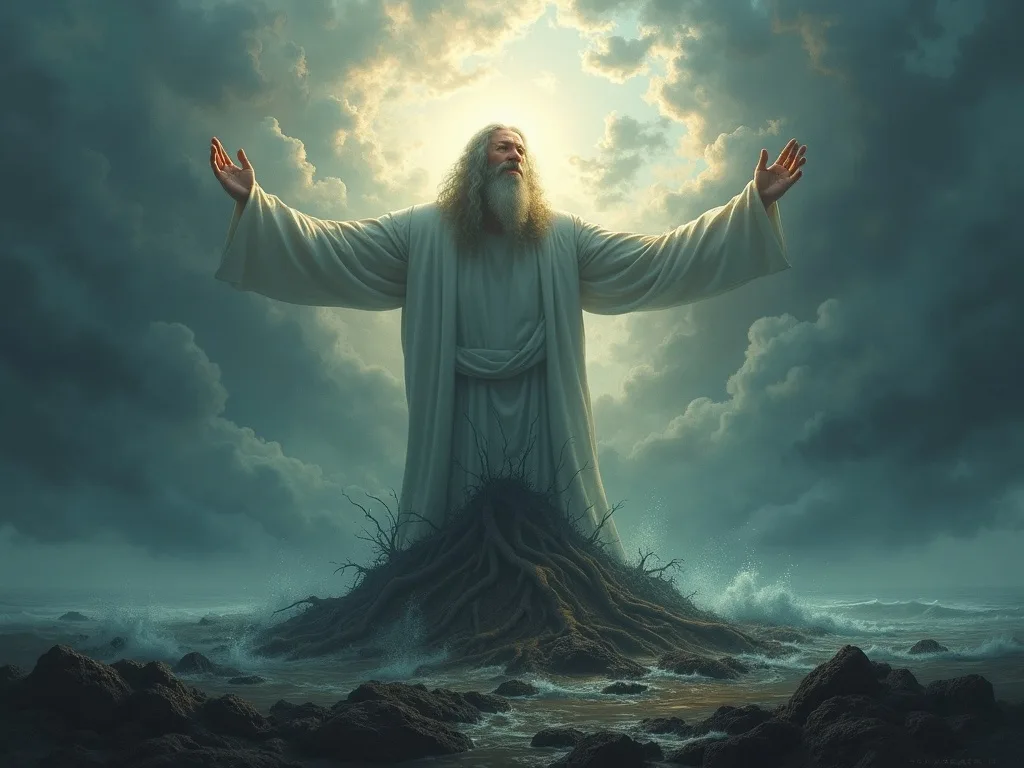
Once light existed, the world was bare. Papatuanuku lay exposed, and it was Tane's task to clothe her. He is the atua who planted the first trees, populated the sky with birds, and ordered the first forest.
In one major tradition recorded in the Whanganui region, Tane asked various creatures and plants to help him clothe Papatuanuku. Grasses came first, then ferns, then the great trees. He dressed her skin in forest, placed birds in the branches, and set insects to work in the soil beneath. The result was not decoration; it was the creation of a living system, what ecologists today would call a functioning ecosystem. Maori oral tradition understood reciprocity at the heart of it: the forest breathes, the birds carry seeds, the rain feeds roots, and Tane watches over all of it.
The largest living kauri tree in Aotearoa New Zealand, located in the Waipoua Forest in Northland, is named Te Matua Ngahere, "Father of the Forest." A second great kauri nearby carries the name Tane Mahuta directly. It stands approximately 51 meters tall and has a girth of just over 13 meters at its base. The Maori people of the area regard this tree as a living embodiment of the atua, not a symbol of him, but a presence.
Birds hold a special place in Tane's domain. The huia, the kokako, the tui, the kiwi: all are creatures of Tane's making, each with a role in keeping the forest alive. The extinction of the huia in the early twentieth century was mourned not only as an ecological loss but as the silencing of one of Tane's own voices.
For readers who want to connect Tane's domain to the wider Pacific tradition of sky-father and earth-mother cosmologies, the Maori mythology hub offers a full map of the atua and their relationships.
Tane and the First Woman: Hineahuone
After clothing the earth and filling it with life, Tane turned to a problem no other atua had solved: there was no human woman.
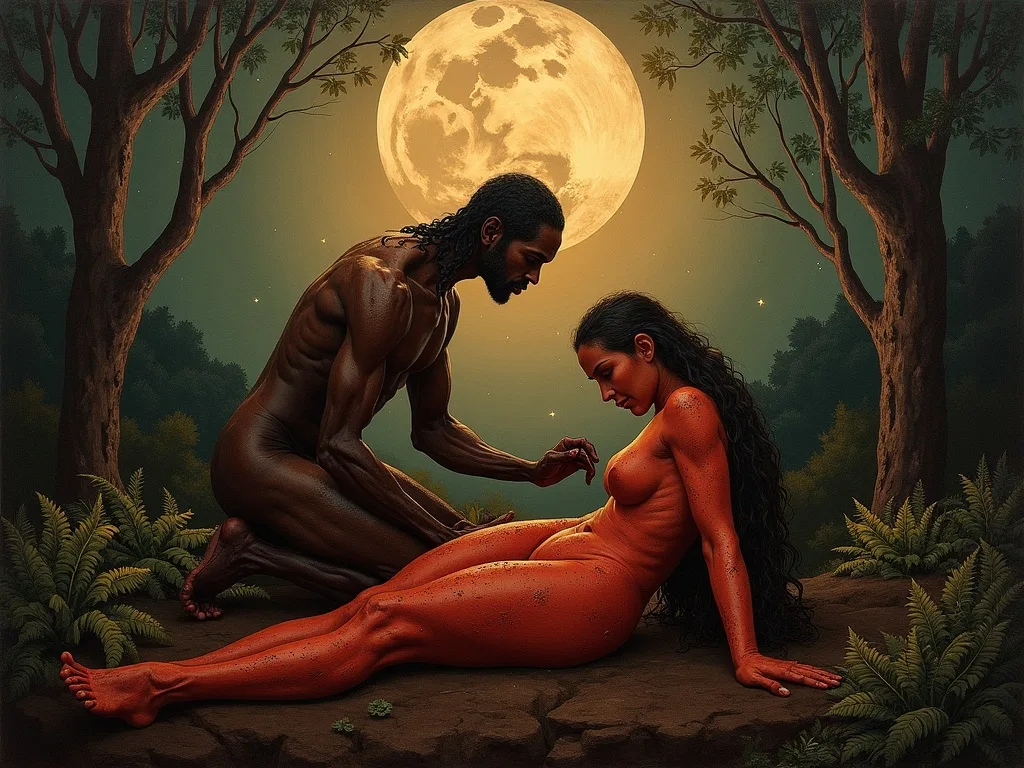
The tradition, recorded in detail by Maori scholar Te Rangikaheke in manuscripts from the 1840s and 1850s, describes how Tane shaped a woman from earth. He went to the sacred place called Kurawaka, located at the pubic mound of Papatuanuku herself, and there he shaped the figure of a woman from red clay. He breathed life into her nostrils, and she sneezed, coughed, and opened her eyes.
Her name was Hineahuone: "the earth-formed woman." She was the first human being, made by the lord of the forest from the body of the earth.
Tane took Hineahuone as his wife, and from their union came Hinetitama, the Dawn Maiden. It is here that the narrative takes a tragic turn. Tane also took Hinetitama as his wife, not revealing to her that he was her father. When Hinetitama discovered the truth, she was overwhelmed with shame and grief. She fled to the underworld, Po, the realm of darkness, and became Hinenuitepo: "the great woman of the night," the goddess of death.
Before she left, she spoke to Tane. She told him to return and tend to the living children of their line, and she would receive the dead when they came to her. Their story became the template for human mortality. Tane brought life into the world through Hineahuone. Hinenuitepo, his own daughter and wife, governs its ending. The god of creation is also, indirectly, the architect of death.
The Three Baskets of Knowledge
The most ambitious journey Tane undertook was not downward to the earth but upward, to the uppermost heaven, Tikanga or the twelfth heaven, depending on the tradition, in search of knowledge itself.
In the teachings recorded by Maori scholars including Te Matorohanga (whose words were preserved by Percy Smith in the late nineteenth century), the highest heaven, called Toi-o-nga-rangi, is where the supreme being Io Matua Kore (the Parentless One) resides, holding the three kete (baskets) of knowledge:
- Te Kete Tuauri: the basket of ritual knowledge, memory, and prayer.
- Te Kete Aronui: the basket of knowledge for human benefit, including arts and crafts.
- Te Kete Uruuru Matua: the basket of harmful or malevolent knowledge.
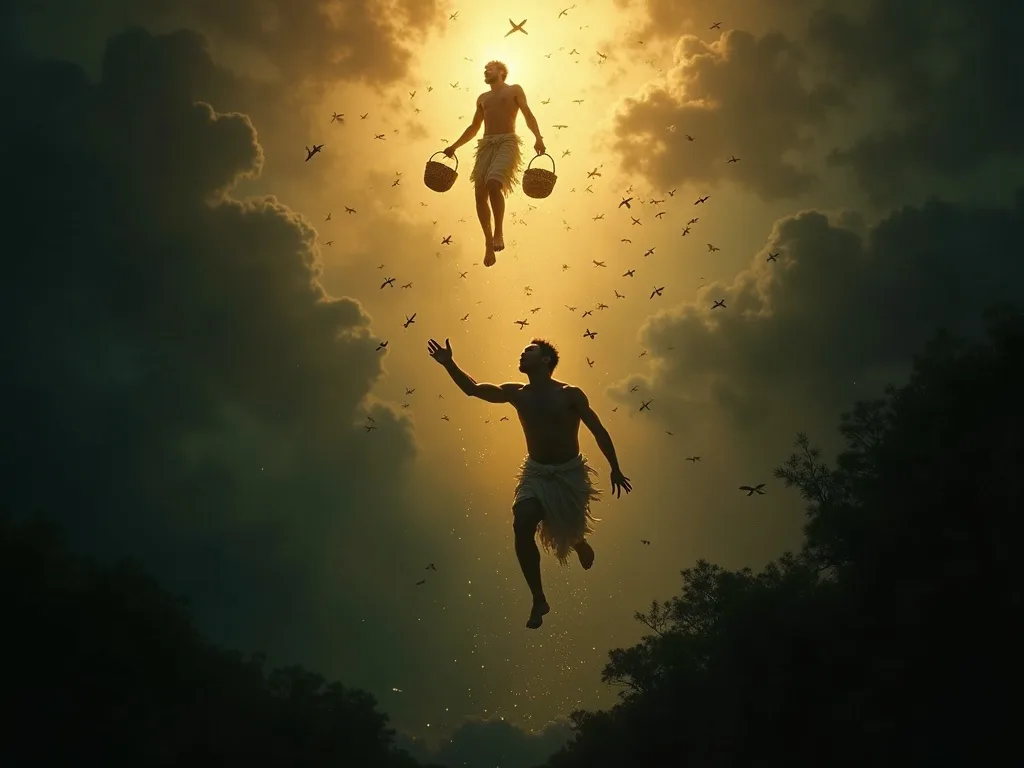
Tane climbed through the twelve heavens and stood before Io. He received all three baskets. He brought them back down to humans, making Maori people not just biological creatures but thinking, creating, praying ones. The transmission of knowledge through tohunga, the recitation of karakia (sacred chants), the practice of whakairo (carving): all of it flows from those three baskets Tane carried down from the sky.
This account is sometimes called esoteric Maori theology, meaning it was traditionally taught only within the whare wananga (schools of learning). The anthropologist Jane Simpson and others have noted that the Io tradition was the subject of academic debate in the twentieth century, with some scholars questioning whether it predates European contact or reflects later syncretism. Maori scholars themselves, notably Te Ahukarama Rua and others, have defended its authenticity as deep, pre-contact theology. The debate is real and unresolved, which makes it genuinely worth understanding.
Tane as Patron of Rites and Sacred Knowledge
Tane's role does not stop at creation. He is the atua who governs tohunga ritual practice, who blesses the planting of carved meeting house posts, and who presides over the hui (formal gatherings) where sacred knowledge changes hands.
The carved figures that stand at the entrance of a wharenui (meeting house) are consecrated to Tane. When a new canoe was built, prayers went to Tane for the timber. When a bird-snaring season began, it opened with karakia to Tane. Even the act of tattooing (ta moko) involves Tane, since the designs carry genealogical knowledge, and genealogy is a form of sacred memory.
In this sense, Tane occupies a structural position similar to figures in other traditions: the Norse Odin, who gave up an eye for wisdom and hung on Yggdrasil to receive the runes, also sits at the intersection of cosmic creation and the transmission of sacred knowledge. Both are sky-connected figures who descended (or climbed) to secure knowledge for their people. The parallel is structural, not genetic, but it rewards attention.
Tane Mahuta's role as patron of sacred knowledge runs through every layer of Maori traditional life. He is not a god you pray to once and forget. He is present in the timber of every house, the call of every forest bird, the genealogical lines recited at every gathering.
Tane in Conflict: The Battle with Whiro
No account of Tane is complete without Whiro, his brother and permanent adversary. Where Tane ascended to the upper heavens to bring back light and knowledge, Whiro descended into the lower worlds and became lord of darkness and evil.
The conflict between Tane and Whiro began, in several traditions, during the very journey to retrieve the baskets of knowledge. Whiro wanted those baskets for himself. He sent armies of insects, dark birds, and supernatural creatures to stop Tane as he climbed through the heavens. Tane fought through them all.
In other traditions, the brothers fought over precedence among the atua. Whiro believed he should rule; Tane prevailed. Whiro's defeat drove him downward, where he continues to send sickness, malevolence, and death upward through the earth into the world of the living.
This cosmic opposition, light against darkness, creation against destruction, forest against the underworld, is not resolved. It is ongoing. Every disease, every storm that breaks trees, every extinction of a forest bird can be understood within this frame as Whiro's continuing campaign against the domain of Tane. The balance is never permanent.
Tane's Living Legacy in Aotearoa New Zealand
The atua of the forest did not retire when the myths were first committed to writing. His name is carried by conservation projects, national parks, and ecological restoration programs across Aotearoa New Zealand.
The New Zealand Department of Conservation has worked with iwi (tribes) who consider themselves kaitiaki (guardians) of Tane's forests. The concept of kaitiakitanga (guardianship of the natural world) is explicitly grounded in the relationship between people and Tane's domain. The Waipoua Forest, home to the kauri named Tane Mahuta, is managed under agreements between the Crown and the local iwi, Te Roroa, that treat the land as a living atua, not just a resource.
In 2023, kauri dieback disease (Phytophthora agathidicida) was still threatening ancient kauri trees across Northland. Scientists, conservation workers, and Maori communities described the disease using both ecological and spiritual language: an attack on the body of Tane himself. Biosecurity checkpoints at forest entrances ask visitors to clean their boots before entering, framed as respect for the atua as much as science.
The connection between Tane and ecological stewardship is not new-age retrofitting. It is built into the original structure of the mythology. A god who personally clothed the earth in green, who populates the canopy with birds, who is present in every timber beam, creates an ethical framework in which destroying forest is not just bad policy but a kind of sacrilege.
For a comparative look at how Pacific island traditions handle divine creation figures, the Polynesian mythology section traces the shared threads between Maori, Hawaiian, Samoan, and other traditions.
Frequently Asked Questions About Tane Mahuta
Frequently asked questions
What does the name Tane Mahuta mean?
"Tane" is commonly translated as "male being" or "man," and "Mahuta" can mean "lord" or "to leap upward." Together, the name is usually rendered as "Lord of the Forest" or "Male Being Who Presides Over the Forest." Some scholars also note that Tane without the epithet simply means the principle of maleness and fathering in the Maori cosmological system. The name appears across Polynesian traditions, with cognates in Hawaiian (Kane) and Tahitian (Tane), suggesting a shared Proto-Polynesian ancestor figure.
Is the giant kauri tree in Waipoua Forest really named after the god?
Yes. The kauri tree in Waipoua Forest, Northland, officially known as Tane Mahuta, is the largest known living kauri by volume. It stands about 51 meters tall with a trunk girth exceeding 13 meters. The tree was formally measured in 1990 and is estimated to be between 1,250 and 2,500 years old. For the local iwi Te Roroa, it is not a tree named after a god but a living presence of the atua. Access is managed respectfully, and the area is subject to strict biosecurity measures to protect the tree from kauri dieback disease.
How is Tane related to the creation of humans?
Tane created the first human woman, Hineahuone, by shaping her body from red clay at the sacred place Kurawaka on Papatuanuku's body. He then breathed life into her. From Tane and Hineahuone came Hinetitama, and from Tane and Hinetitama (his own daughter) came the first fully mortal human line. When Hinetitama discovered her parentage, she fled to the underworld and became Hinenuitepo, the goddess of death. Tane's role in creating humanity is therefore inseparable from the origin of mortality itself.
What is the difference between Tane and the Hawaiian god Kane?
Tane (Maori) and Kane (Hawaiian) are cognate figures descended from a shared Proto-Polynesian ancestor deity. Both are associated with creation, forests, fresh water, and the sky. In Hawaiian tradition, Kane is one of the four great gods alongside Ku, Lono, and Kanaloa, and he is specifically linked to sunlight, fresh water, and the creation of the first man. In Maori tradition, Tane is more specifically the lord of forests and birds, and his creative act is the separation of sky and earth rather than the creation of light per se. The shared root confirms that both figures carry ancient Polynesian theology, though centuries of separate development produced distinct mythological personalities.
What are the three baskets of knowledge Tane retrieved?
In the esoteric Maori tradition recorded through the whare wananga (schools of learning), Tane climbed to the uppermost heaven to receive three kete (baskets) from Io Matua Kore. The first, Te Kete Tuauri, contained ritual knowledge: prayers, incantations, and sacred memory. The second, Te Kete Aronui, held knowledge beneficial to people: arts, crafts, and practical wisdom. The third, Te Kete Uruuru Matua, contained harmful and malevolent knowledge. By bringing all three down, Tane ensured that humans would have access to the full range of knowledge, including its dangerous dimensions.
Is the Io tradition in Maori theology considered authentic?
This is a genuine scholarly debate. Some twentieth-century anthropologists argued that the concept of Io Matua Kore, a supreme, singular, parentless deity, showed possible Christian influence from early missionaries. Maori scholars including Te Matorohanga (whose teachings were recorded by Percy Smith in the 1890s) and later researchers have defended the Io tradition as pre-contact theology, arguing it was preserved within restricted whare wananga instruction and not widely shared with outsiders. The debate remains open among academics, but many Maori communities treat the Io tradition as legitimate ancestral knowledge regardless of external scholarly consensus.
Tane's Reach Across the Pacific: A Living Cosmological Figure
What makes Tane Mahuta unusual among creation gods is how physically present he remains. Most creation deities in world mythology are cosmologically prior figures: they set things in motion and then recede. Tane does not recede. Every kauri forest in Northland is his body. Every tui calling from a kowhai branch is his voice. The timber in a carved meeting house is his gift.
The structural kinship between Tane and figures like Odin in the Norse tradition, or even Thoth in the Egyptian tradition, both of whom secured sacred knowledge from upper or liminal realms, invites a broader question: why do human cultures so consistently imagine a male creator figure who climbs upward to retrieve wisdom? The psychologist Carl Jung would call it an archetype. The comparative mythologist Joseph Campbell would see the hero's ascent. Maori scholars would say it is because Tane actually did it, and the patterns found elsewhere are echoes of a deeper truth.
What is clear is that in 2026, Tane Mahuta is not a museum piece. Conservation law in Aotearoa New Zealand increasingly incorporates Maori cosmological frameworks. The Whanganui River was granted legal personhood in 2017, and the language used in that legislation draws explicitly on the idea that natural features are living atua. Tane's forests have defenders. His birds are the subject of recovery programs. His name is spoken at the beginning of forest work, at the opening of carved houses, at the planting of trees.
The god who pushed the sky and the earth apart is still holding them open.
Read the full book
Want the whole story?
The complete edition is an instant PDF download here, with a paperback on Amazon for selected titles.
Maori
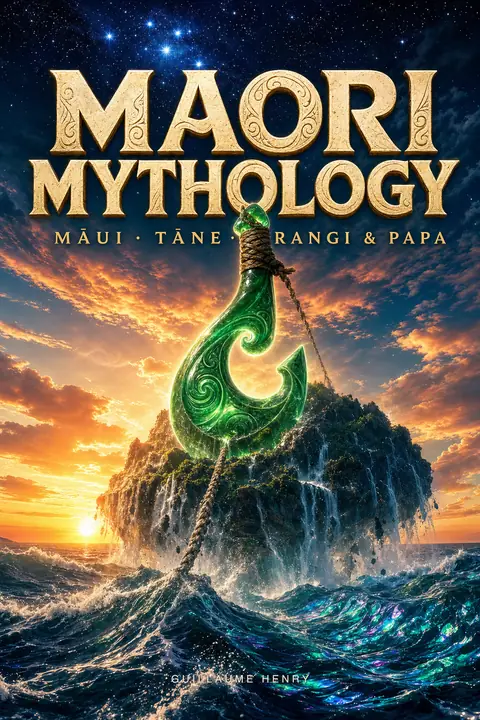
The Maori Mythology Book: Māui, Tāne, and the Gods of Aotearoa
Māui, Tāne, and Rangi and Papa
The mythology of New Zealand’s first people: the sky-father and earth-mother locked in an embrace, the children who forced them apart to let in the light, and Māui the trickster who fished up islands, snared the sun, and died trying to defeat death itself.
More from Maori
All articles
Maori
The Marae: Sacred Meeting Ground in Maori Culture
The marae stands at the heart of Maori identity: a sacred communal space where land, genealogy, and spiritual power converge. Discover how this open courtyard became the foundation of Maori society, ceremony, and connection to place.
Maori
Tiki: The First Man and Ancestral Symbol in Maori Mythology
In Maori creation myth, Tiki was the first human, carved from earth by Tane Mahuta, the god of forests. This symbol represents the bridge between the divine and human worlds, still vital in Maori art and culture today.

Maori
The Taniwha: Supernatural Guardians of Waterways in Maori Mythology
The taniwha are powerful supernatural beings in Maori mythology that guard rivers, lakes, and caves. These shape-shifting creatures demand respect and have shaped Maori settlement patterns for centuries.
Maori
Tapu and Noa: Sacred Restriction and Freedom in Māori Worldview
Tapu and Noa are the twin forces that shaped Māori life: one sacred, restricted, potent; the other free, ordinary, unrestricted. Learn how these concepts governed everything from food and ritual to social order and spiritual safety.