
Hawaiki: The Ancestral Homeland and Spirit Realm
Hawaiki is the sacred homeland that Polynesian peoples carried with them across the Pacific: a real place, a mythic origin, and the realm where the dead return. Few concepts in world mythology do so much work at once.
Contents
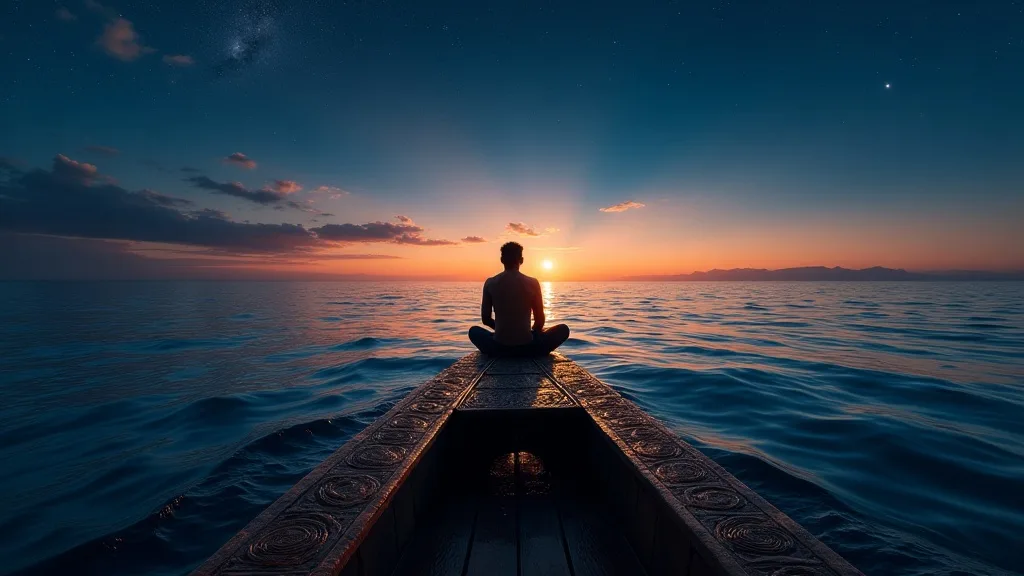
The canoe sets out before sunrise. No landmark is visible, only stars and the long, breathing swells of the open Pacific. The navigator holds the course not by compass but by memory, by the inherited knowledge of winds and currents and the rising points of particular stars. And beneath every decision is a single orienting idea: there is a place of origin, somewhere behind the horizon, from which all life came and to which the dead return. That place is Hawaiki.
It is one of the most layered concepts in all of world mythology. Hawaiki: the ancestral homeland and spirit realm is not simply a paradise at the edge of the ocean, nor is it only a political myth invented to justify conquest. It is all of those things at different moments, in different mouths, on different islands. Across Aotearoa New Zealand, Samoa, Tonga, Tahiti, the Cook Islands, and Hawai'i itself, the name shifts slightly in pronunciation but almost never in meaning: the place where we began, and the place where we will end.
The Name Across the Pacific: Variations on One Word
The word itself is ancient. Linguists working in the field of Austronesian studies trace its root to Proto-Polynesian, the reconstructed ancestor language spoken by the people who first sailed into the Pacific from near the Bismarck Archipelago, north of New Guinea, roughly three thousand years ago. The root appears to link to a word for "home" or "place of origin," though the exact reconstruction is still debated.
Across the Polynesian triangle, the name surfaces in recognisable forms:
- Hawaiki (Maori, Aotearoa New Zealand)
- Havai'i (Rarotongan, Cook Islands)
- Savai'i (Samoa, and the name of Samoa's largest island)
- Havai'i (Society Islands, Tahiti, where Ra'iatea was historically identified as the sacred centre)
- Hawai'i (the archipelago that became the fiftieth US state)
The convergence is not coincidence. Every Polynesian people who settled a new island carried the name with them. When Maori oral historians say their ancestors came from Hawaiki, they are reaching back through generations of oceanic travel to a homeland that is itself a palimpsest: layer upon layer of real places that merged into one mythic address.
The scholar Kenneth Luomala, writing in the mid-twentieth century on Pacific oral literature, noted that Hawaiki functions as a "floating" homeland, a concept that absorbs new geographical realities without losing its mythic core. That flexibility is part of its power. Each community could locate Hawaiki relative to their own coastline, their own sky, their own ancestors, without contradiction.
Hawaiki as the Homeland: The Great Migration Narratives
In Maori tradition, the most detailed and politically charged uses of Hawaiki appear in the whakapapa (genealogy recitations) and in the migration accounts preserved by Maori scholars and elders. The Polynesian Society, founded in 1892 by scholars including S. Percy Smith, collected and published many of these accounts in the Journal of the Polynesian Society, beginning the long academic effort to cross-reference oral tradition with linguistic and archaeological evidence.
The canonical account, as told in several Maori traditions, describes a sequence of migrations from Hawaiki to Aotearoa, with the great fleet of canoes, the waka hourua (double-hulled voyaging canoes), arriving roughly 700 years ago, around 1350 CE. The names of those canoes, the Tainui, Te Arawa, Mataatua, Kurahaupō, Tokomaru, Aotea, and Takitimu, remain central to Maori identity today. Each canoe is the founding vessel of a tribal lineage. To know your canoe is to know your place in the world.
The navigators who captained those canoes came from Hawaiki, and their routes were encoded in chant and story. The demi-god Maui, one of the great heroes of Polynesian mythology, is described in some traditions as having fished up the North Island of Aotearoa from the ocean floor while sitting in his canoe. The South Island was the canoe itself. In this framing, Aotearoa is not a random landfall but a place that was literally hauled into being, connecting the act of settlement to a cosmic geography rooted in Hawaiki.
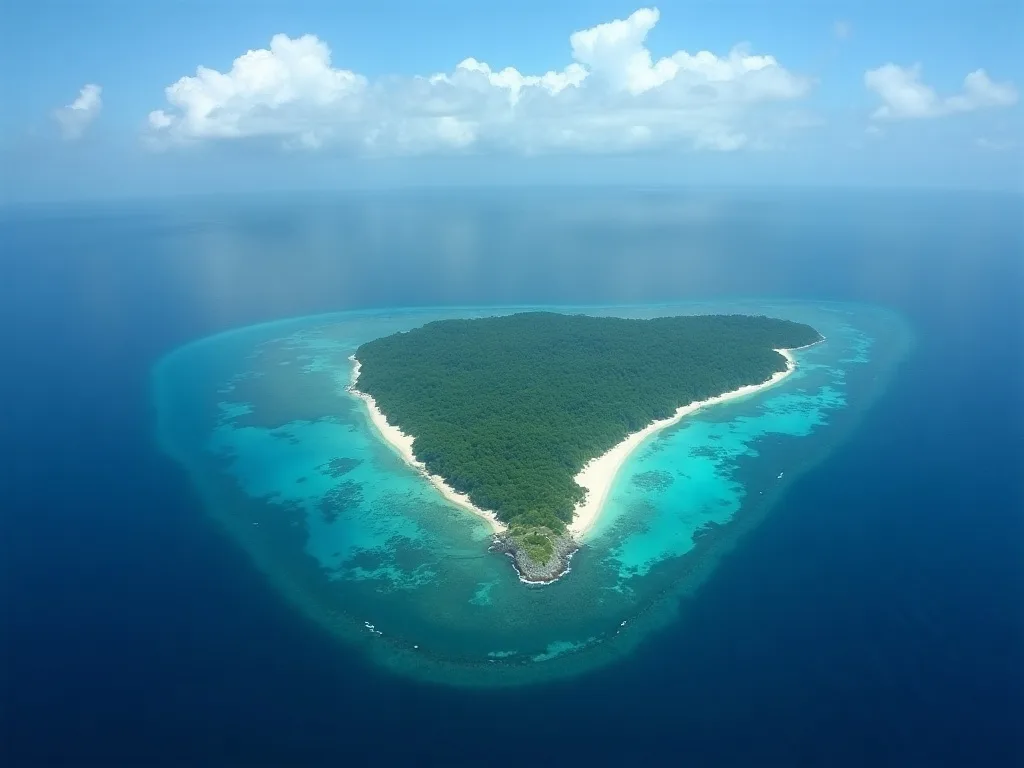
Elsewhere in the Pacific, the role of Hawaiki as homeland takes different forms. In Rarotongan tradition recorded by the scholar Te Rangi Hiroa (Sir Peter Buck) in his 1938 work Vikings of the Sunrise, the island of Ra'iatea in the Society Islands is identified as the most probable physical centre from which the last great waves of Polynesian eastward migration departed, roughly 1,000 to 1,200 years ago. Ra'iatea was home to the marae (ceremonial platform) of Taputapuatea, one of the most sacred ritual sites in all of Polynesia, dedicated to the god Oro. Ships carrying stones from Taputapuatea were said to carry the authority of the homeland wherever they landed.
Maui, the great Polynesian demi-god, whose exploits stretch from fishing up islands to lassoing the sun, appears in migration accounts across the Pacific, always tethered to this same idea of a world actively shaped by ancestral heroes reaching back toward Hawaiki.
Hawaiki as the Realm of the Dead
Alongside the migration narratives runs a second, equally ancient meaning. Hawaiki is where the dead go.
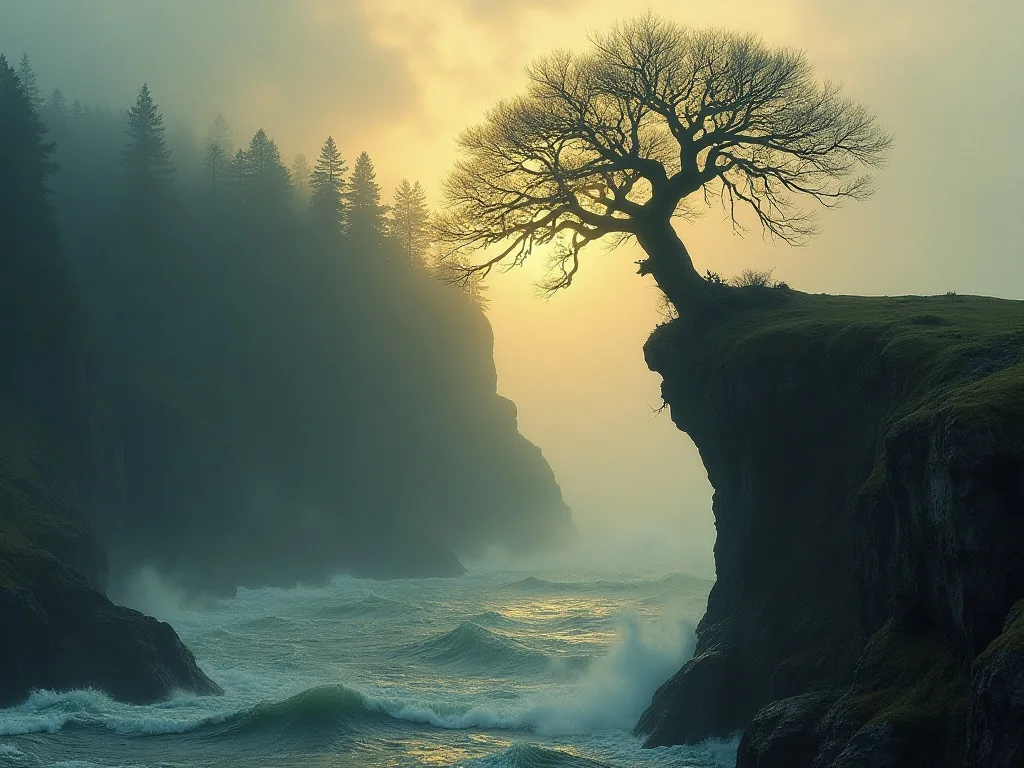
In Maori belief, when a person dies, their wairua (spirit) travels to the northernmost tip of Aotearoa, to a cliff called Te Reinga (also known as Te Rerenga Wairua, "the leaping place of spirits"). There, an ancient pohutukawa tree grows horizontally over the water. The spirit descends the gnarled roots of that tree, enters the sea, and follows an underwater pathway to Hawaiki, the spirit realm beneath and beyond the ocean.
This is not a uniquely Maori idea. Across Polynesia, the land of the dead is consistently placed to the west, or beneath the sea, or in the direction opposite to the rising sun. In Hawaiian tradition, the realm of the dead is sometimes called Pulotu, a name linguistically related to the Tongan and Samoan concept of the same space. In Samoa, Pulotu is the spirit land of the noble dead, understood to lie somewhere in the western ocean.
The dual nature of Hawaiki, both origin and destination, is not a contradiction but a cosmological loop. Life comes from Hawaiki, travels through the living world, and returns to Hawaiki. The ocean is not a barrier between these states but the medium through which they connect. For people whose entire civilisation was built on reading the sea, this is a deeply coherent picture of existence.
The Maori scholar and philosopher Rangi Mātāmua has written extensively on the relationship between the night sky and Maori spatial understanding, noting that the stars used for navigation were also used to locate the spirit world. The same star rising over the horizon that told a navigator "you are on course for Rarotonga" told a mourner "that is where the dead have gone." Navigation and cosmology were not separate disciplines.
The Gods Who Came From Hawaiki
Hawaiki is not only the home of human ancestors. The great gods themselves are rooted there.
In many Maori accounts, Tane, the god who shaped the first human from red earth and breathed life into her, came from the heavens that were themselves above Hawaiki. Tangaroa, lord of the sea, rules the waters that connect the living world to Hawaiki. Tu, the war god, draws his force from the ancestral reservoir of mana (sacred power) that flows from Hawaiki into the present world through lineage.
The concept of mana is central here. In Polynesian thought, mana is not invented by individuals. It flows from the ancestors, and the ancestors are in Hawaiki. A chief who could trace his genealogy in an unbroken line back to the great migration canoes, and through them back to the gods, was drawing mana from Hawaiki itself. This made genealogy a matter of spiritual power, not mere family record. A single error in a whakapapa recitation could be seen as cutting the line of transmission.
The Maori creation account recorded by the scholar John White in his 1887 collection The Ancient History of the Maori describes Io, the supreme deity in some Maori traditions (though Io's primacy is debated among scholars, some of whom suggest Io was a late elaboration), as dwelling in the uppermost of twelve heavens before the world was made. The lower heavens were arranged above the sea that surrounded Hawaiki. Creation moved downward and outward from that point, like ripples from a stone dropped in deep water.
Tane, the Maori god of forests and humanity appears in these accounts as the figure who separated sky from earth, making room for the world between. His actions begin in the domain connected to Hawaiki and extend outward into the populated world.
Archaeological and Linguistic Evidence: What Scholarship Says
For most of the twentieth century, the academic debate over Hawaiki centred on a single question: was there a real place?
The short answer is yes, in multiple layers. Archaeology has now established clearly that the Polynesian expansion into the Pacific was one of the most ambitious feats of human navigation in history. The Lapita cultural complex, named after a site in New Caledonia, marks the first archaeological signature of the people who would become Polynesian. By around 1000 BCE, Lapita communities had settled Tonga and Samoa. These islands became what scholars now call "Ancestral Polynesia," the incubation zone from which the rest of the Pacific was colonised.
Samoa's largest island, Savai'i, carries the direct phonetic equivalent of Hawaiki. Some scholars, including the linguist Bruce Biggs, have argued that Savai'i or the broader Samoan-Tongan region is the most historically plausible physical referent for the proto-Polynesian homeland. Ra'iatea in the Society Islands is a strong candidate for the immediate departure point of the last great eastward migrations. Both claims can be true at once, because Hawaiki accumulated real places across centuries of movement.
Genetic studies published in the 2010s and 2020s, particularly work by researchers at the Max Planck Institute for Evolutionary Anthropology using ancient DNA, have supported a model of rapid, deliberate migration from a Polynesian heartland outward into the Pacific between roughly 800 CE and 1300 CE. These timelines align well with the oral historical accounts of the Maori great fleet.
The picture that emerges is one in which myth and history are not opposites. The oral traditions encoded real navigational knowledge, real genealogical records, and real political claims, wrapped in sacred language that kept them alive across generations of transmission.
Hawaiki in Maori Arts, Ritual, and Living Culture
Hawaiki is not a museum piece. It remains alive in Maori ceremony, art, and law.
The haka (ritual dance and chant) performed at funerals and major gatherings often references the journey to and from Hawaiki. The tangi (funeral ceremony) is structured around the idea that the dead are returning home, not simply disappearing. Mourners do not say goodbye so much as they farewell the spirit on a known route.
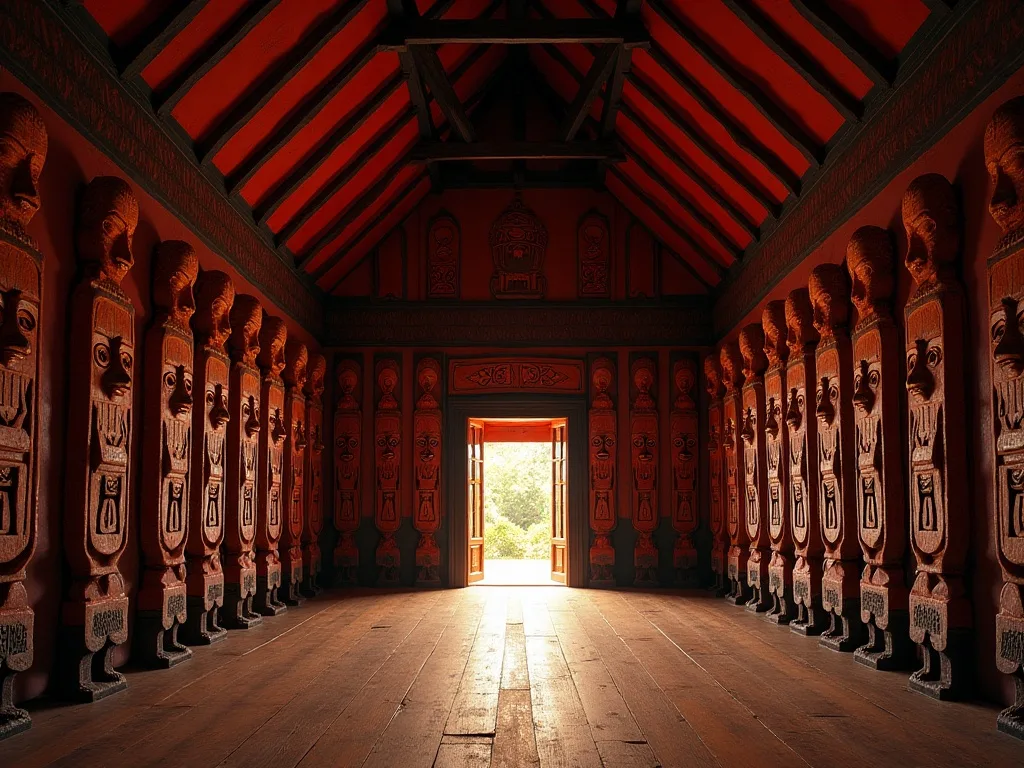
In the wharenui (carved meeting house), the wooden carvings of ancestors along the interior walls represent the lineage from the present community back to Hawaiki. Standing inside a wharenui is standing inside your genealogy, surrounded by the ancestors who made the journey and carried their mana into this new land.
New Zealand's Treaty of Waitangi, signed in 1840 between the British Crown and Maori chiefs, and the ongoing legal processes under the Waitangi Tribunal, frequently engage with concepts rooted in the Hawaiki migration model. Claims to land are grounded in the genealogical connection to specific canoes and their routes from Hawaiki. The mythic geography has legal weight in a modern democratic state.
Contemporary Maori artists, writers, and filmmakers return constantly to Hawaiki as a source of imagery and meaning. The novelist Witi Ihimaera, whose work includes The Whale Rider (1987), grounds stories of Maori identity in the ocean connection that Hawaiki represents. Patricia Grace, another major Maori novelist, weaves the layered temporality of Hawaiki, past and present existing simultaneously, into her narrative structures.
Hawaiki and the Wider Polynesian Cosmos
To understand Hawaiki fully, it helps to place it alongside how other Polynesian peoples understand space, time, and the sacred.
In Hawaiian tradition, the concept of aumakua (ancestral guardian spirits) is closely related to the idea that ancestors remain accessible from the spirit realm. The Hawaiian term for the Pleiades star cluster is Makali'i, named after a celebrated navigator. When Makali'i rises on the horizon, it signals the beginning of the Makahiki festival season, which is dedicated to the god Lono. The stars remember the navigators; the navigators found the way to and from Hawaiki.
In Tongan tradition, the sacred island of 'Eua is sometimes described as the oldest land in Tonga, a place of ancestral primacy, though the Tongans use Pulotu rather than Hawaiki for the spirit realm. In Samoan oral literature, Tagaloa, the creator god, fashioned the world from rock in the primordial ocean; the geography of that act points toward the same conceptual space that Maori call Hawaiki.
Tangaroa, the ocean god of Polynesia, appears across these traditions as the deity who holds the sea-space between the living world and the ancestral realm. He is the medium through which Hawaiki remains reachable.
The comparative mythologist Wendy Doniger, in her work on cross-cultural myth patterns, notes that the "lost homeland" is one of the most universal structures in human mythology. What makes Hawaiki distinctive is that for Polynesian peoples, it was never entirely "lost." It was a place they had physically left, whose routes they kept in memory, and to which they believed they could still navigate, in life through genealogy and ritual, in death through the spirit's journey west.
Frequently Asked Questions About Hawaiki
Frequently asked questions
Was Hawaiki a real place or purely a mythological concept?
Both, in different layers. Linguists and archaeologists broadly agree that the word Hawaiki descends from a Proto-Polynesian term for a homeland, likely rooted in the Samoan-Tongan region where Polynesian culture developed before the great Pacific migrations. Samoa's largest island, Savai'i, carries the same root phonetically. Ra'iatea in the Society Islands has strong claims as the departure point for later migrations eastward. Over centuries of movement, the name accumulated onto multiple real places while also developing a purely spiritual meaning as the realm of the dead and the source of sacred power.
How does Hawaiki connect to the Maori great fleet migration?
Maori oral tradition holds that the founding ancestors of the main tribal groupings arrived in Aotearoa New Zealand by canoe from Hawaiki, roughly 700 years ago. The names of the canoes, including Tainui, Te Arawa, and Mataatua, remain central to Maori identity and land rights today. The Polynesian Society and scholars like Te Rangi Hiroa (Sir Peter Buck) spent much of the twentieth century cross-referencing these accounts with linguistic and archaeological evidence. Genetic studies since the 2010s have supported the broad timeline of the migration narratives.
Why is Hawaiki also described as the land of the dead?
In Maori cosmology, life originates from Hawaiki and returns there after death. The spirit travels north to Te Reinga, descends into the sea via the roots of an ancient pohutukawa tree, and follows a submarine pathway back to the ancestral realm. This creates a cosmological loop rather than a linear timeline: Hawaiki is both source and destination. Across Polynesia, the dead are consistently associated with the western ocean or the deep sea, the same waters the ancestors crossed during the great migrations.
Is Hawaiki the same as Pulotu in Samoan and Tongan tradition?
They are closely related but not identical. Pulotu appears in Samoan and Tongan traditions as the spirit realm of the dead, particularly of high-ranking individuals. Linguists note that Pulotu and Hawaiki likely developed from overlapping conceptual territory in Proto-Polynesian belief, both referring to the sacred space beyond the horizon where gods and ancestors dwell. As Polynesian peoples spread eastward and their traditions diverged, these two names settled into slightly different cultural frameworks, but they describe a recognisably shared cosmological structure.
How does Hawaiki appear in modern Maori life?
Hawaiki remains active in Maori ceremony, legal frameworks, and art. Funeral rites are structured around the spirit's return to Hawaiki. The carved ancestral figures inside a wharenui (meeting house) represent the lineage connecting a community to Hawaiki through the great migration canoes. Under New Zealand's Waitangi Tribunal process, tribal land claims are grounded in genealogical connections to specific canoes from Hawaiki, making the ancestral geography legally relevant today. Maori writers, including Witi Ihimaera and Patricia Grace, draw on Hawaiki as a source of narrative structure and cultural identity.
The Horizon That Keeps Receding: Hawaiki in the Modern Pacific
There is something telling about a concept of home that can never quite be located on a map but never quite disappears from one either.
Since the 1970s, a renaissance of traditional Polynesian navigation has brought Hawaiki back into lived, physical conversation. The founding of the Polynesian Voyaging Society in Hawai'i in 1973 and the construction of the voyaging canoe Hokule'a (named after Arcturus, the star that marks the latitude of Hawai'i) launched a project to recover traditional wayfinding skills. In 1976, Hokule'a sailed from Hawai'i to Tahiti without instruments, guided by navigator Mau Piailug from Satawal in Micronesia, who had kept the old methods alive. The voyage was a cultural event across the Pacific, not just a nautical one.
Hokule'a completed a worldwide voyage in 2017, circumnavigating the globe using traditional navigation principles. What that voyage demonstrated is something Polynesian oral tradition had always insisted on: the ocean is not a barrier. It is a road. And somewhere along it, in the direction your prow is pointing, is Hawaiki.
The debate among scholars about the precise origins of Polynesian peoples has not closed. New ancient DNA studies continue to refine the picture, and the question of when and how many times different islands were settled remains alive. But the debate itself validates what the tradition always claimed: that this is a history worth tracing, a homeland worth finding, a concept deep enough to sustain inquiry across centuries.
Hawaiki does not ask to be pinned down. It asks to be remembered.
Read the full book
Want the whole story?
The complete edition is an instant PDF download here, with a paperback on Amazon for selected titles.
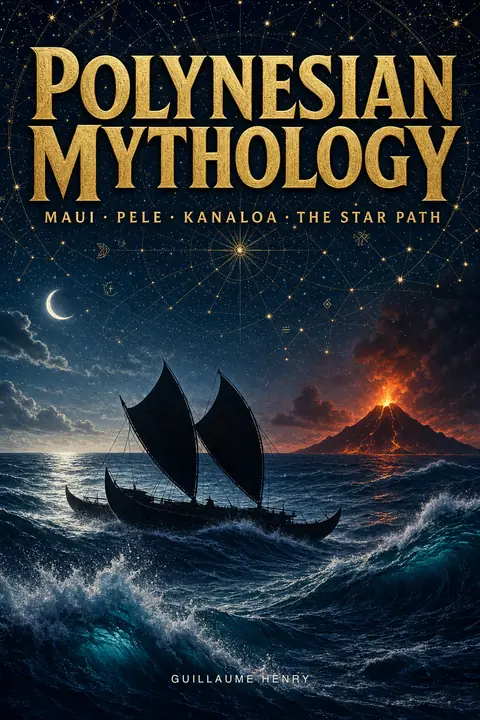
Polynesian
The Polynesian Mythology Book: Maui, Pele, Tangaroa, and the Sacred Stories of the Navigator Cultures
From Hawaii to New Zealand: The Gods Who Shaped the Pacific
The trickster Maui who fished up islands, Pele's volcanic fury, Tangaroa's ocean realm, and the separation of sky and earth. The mythology that sailed 10 million square miles of Pacific.
More from Polynesian
All articles
Polynesian
Tangaroa: God of the Sea and Ocean Depths
Tangaroa rules the ocean across Polynesia, commanding fish, tides, and the boundary between human and divine realms. Discover how this primordial god shaped creation and why fishermen still honor him today.
Polynesian
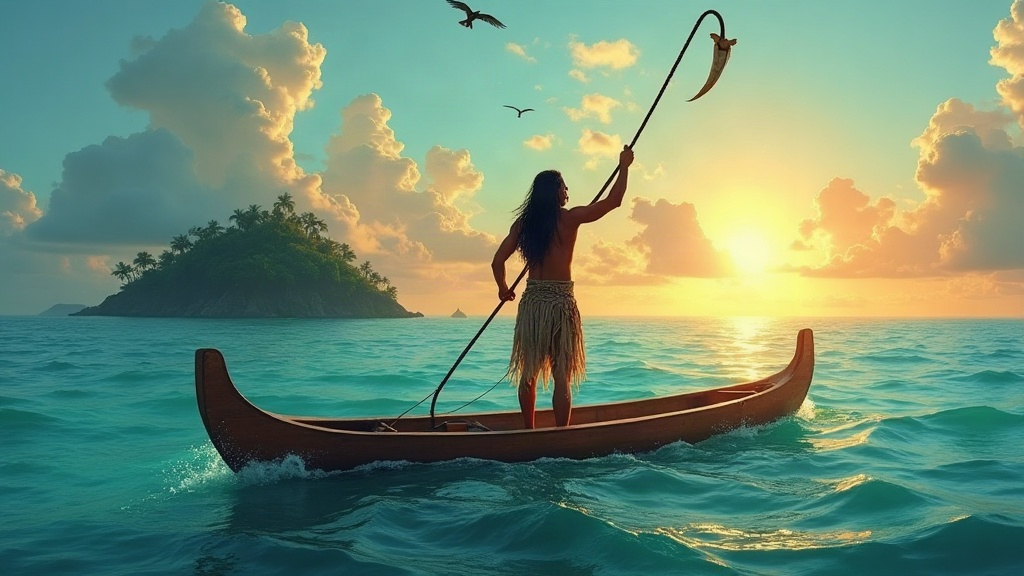
Māui: The Trickster Hero Who Fished Up Islands
The demi-god Māui outwits gods and giants to reshape the Pacific. Discover how this Polynesian trickster hero slowed the sun, pulled islands from the sea, and became the ancestor of human achievement across the islands.
Polynesian
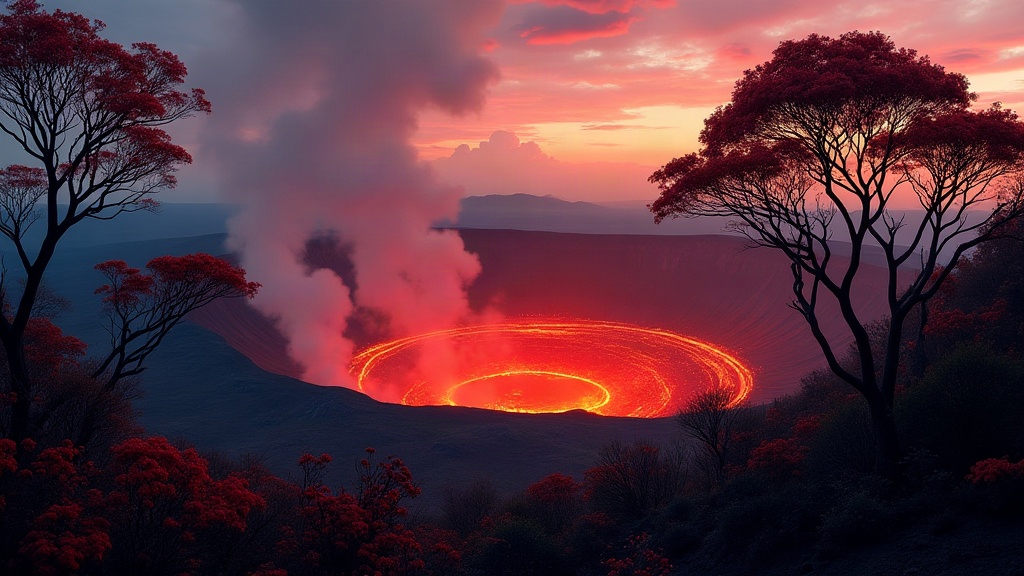
Pele: Hawaiian Goddess of Volcanoes and Fire
Pele is the fierce Hawaiian goddess who creates and destroys islands through volcanic fire. Learn how this shape-shifting deity shaped Hawaiian cosmology, sacred landscape, and cultural identity from ancient times to today.

Polynesian
Tāne: God of Forests, Birds, and Creation in Polynesian Mythology
Tāne stands among Polynesia's most vital deities, separating sky from earth and populating the world with forests, birds, and human life. Discover how this divine carpenter shaped creation itself in Māori, Hawaiian, and Tahitian traditions.