
Imilchil Marriage Festival: Sacred Betrothal Rite of the Atlas Mountains
In the high valleys of Morocco's Middle Atlas Mountains, the Imilchil Marriage Festival brings together hundreds of Amazigh couples each September for a mass wedding ceremony rooted in pre-Islamic Berber tradition. Discover how this living ritual transforms ancient matrimonial law into a modern celebration of community, identity, and sacred union.
Contents
Every September, as the summer heat breaks above the Middle Atlas Mountains, Amazigh (Berber) families descend from remote villages to the town of Imilchil. They come for one purpose: marriage. Hundreds of couples gather in this high-altitude settlement to exchange vows in a ceremony that has changed little in form for centuries. The Imilchil Marriage Festival is not a modern tourist invention. It emerges from Amazigh customary law, from a time when marriage required public witness and binding ritual.
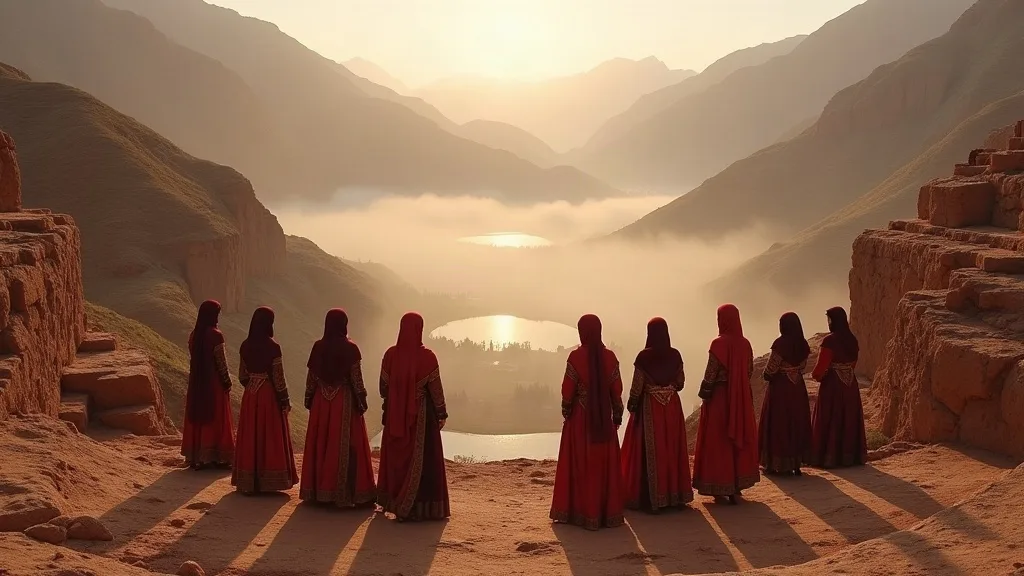
The festival unfolds as something between a wedding fair and a spiritual gathering. Women in brilliant scarlet and indigo dresses process through mountain streets. Men wear the traditional aghanim, a heavy woolen robe fastened with a broad belt. The air carries music, negotiation, and the weight of family bonds being forged. At its heart lies a sacred contract: marriage as a pillar of Amazigh social order, witnessed by the community and overseen by tradition.
What makes this festival remarkable is not the spectacle, but its roots. The Imilchil Marriage Festival represents a living archive of Berber matrimonial practice, preserved not in museums but in living flesh and repeated ceremony. To understand it is to glimpse how pre-Islamic North African societies ordered kinship, property, and female voice within marriage. Scholars who study Tamazight oral tradition place this festival alongside other ancient Amazigh assemblies as evidence that customary law survived every wave of conquest.
The Origin Legend and Early History
The Imilchil Marriage Festival does not date to tourism or recent invention. Local Amazigh oral tradition holds that the festival began centuries ago, born from a tragic love story. Two young people from rival clans fell in love, but their families forbade the union. The couple left the villages and walked into the mountains. They wept beside two pristine lakes high above Imilchil. Their tears, the legend says, formed those lakes. Moved by this devotion, the tribe decreed that once each year, young people should gather at Imilchil to marry freely, transcending clan rivalry.
This narrative contains a kernel of historical truth. Amazigh societies did practice seasonal gatherings where legal business, trade, and marriage negotiations happened. The agharoum, as these assemblies were called, served as neutral grounds where local disputes could be settled and young people could meet under controlled conditions. Imilchil's location at a high pass between major tribal territories made it ideal for such gatherings. The assembly tradition is not unique to North Africa: in ancient Ireland, the óenach performed a nearly identical function, mixing law, trade, and courtship at seasonal fairs.
The festival as a formalized annual event likely solidified during the colonial period, when French administrative pressure pushed Berber societies to codify oral practice. Yet the marriage rite itself, the pledge structures, and the role of elders in validation all reflect pre-colonial Amazigh law. What we see today is continuity disguised as revival.
The Ceremony: Structure and Sacred Elements
The Imilchil Marriage Festival wedding ceremony unfolds in stages, each one anchored in Amazigh custom. The rite is not religious in the Islamic sense, though many participants are Muslim. Rather, it is cultural and legal, concerned with the transfer of rights and the creation of kinship.
The ceremony begins with negotiation. Before any couple reaches the point of public marriage, their families have spent weeks or months discussing asraf (the bride price) and tajmat (the gift from the groom's family to the bride). These are not simply payments. Asraf compensates the bride's family for her labor and presence; tajmat becomes the bride's property, her insurance within the marriage. Money, jewelry, cloth, and livestock move between families. This open transaction, witnessed by negotiators and elders, is not considered shameful. It is transparent, recorded, and protects both parties.
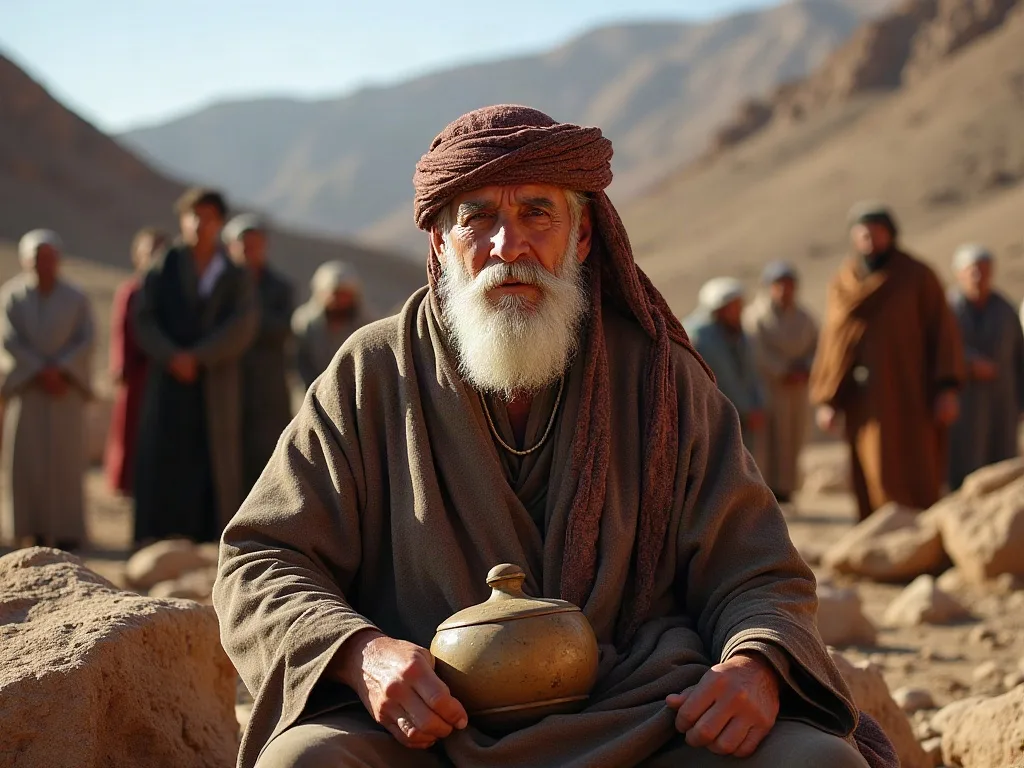
On the festival day itself, couples stand before witnesses. An amghar (village elder or judge) presides. The groom and bride state their intention. The bride, crucially, speaks her own acceptance. This is not a silent transfer. Her voice matters. The elder asks: do you take this man? She answers yes, or she remains silent, which means no. Historically, refusal was not uncommon. If a bride refused, the ceremony halted. No coercion was permitted before witnesses.
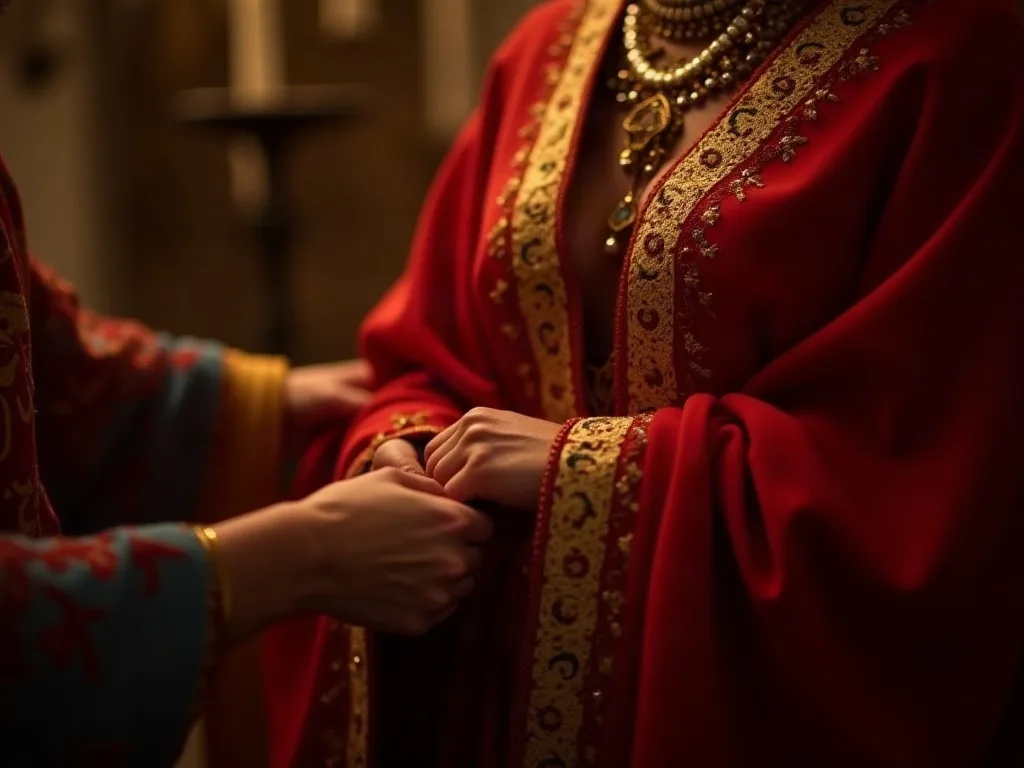
The groom's taddart (household representatives) and the bride's family then exchange the negotiated gifts in full view. Jewelry is placed on the bride's wrists, neck, and head. The bride's mother dresses her in a new takachchabit, the heavy red dress with gold embroidery reserved for married women. These garments are not mere decoration. They signal status. A married woman wears different cloth than a girl. The entire community reads this change.
The rite concludes with the bride's procession to her new home, accompanied by music and celebration. In older practice, this procession took days, winding through villages to announce the new union. Today it may be shorter, but the principle holds: the marriage becomes public property, witnessed, recorded, binding. This public architecture mirrors how Yoruba betrothal ceremonies structure the transfer of bride gifts before community witnesses.
Women's Rights Within Amazigh Marriage Law
One of the most misunderstood aspects of the Imilchil Marriage Festival is its relationship to female autonomy. Western observers often frame Berber marriage customs as restrictive. Yet within the legal framework of customary Amazigh practice, women possessed rights that European women in the same era did not.
A married Amazigh woman retained property rights. Her tajmat was hers alone; her husband could not touch it without her consent. If the marriage dissolved through divorce or death, that property returned to her. She could inherit land, hold livestock, and conduct trade. In some Berber societies, women owned houses. A widow could remain in her husband's home with her children if she chose, or she could leave and take her property with her.
This protection existed because Amazigh societies were not monolithic. Some were matrilineal: property and clan membership passed through the mother. Others were patrilineal but granted women strong usufruct rights (the right to use and profit from land). The Imilchil Marriage Festival codifies this protection through public contract. By speaking her acceptance before witnesses, the bride enters a binding agreement that both sides understand protects her.
One of the earliest external records of these protections comes from 19th-century French colonial ethnographers. Officers compiling the Coutumiers berbères (Berber customary law codifications) between approximately 1880 and 1930 documented that women in the Ait Hadiddou tribe, the very group central to Imilchil, could retain and manage their tajmat independently of their husbands. These same records noted that elders could adjudicate disputes over property brought to the marriage, treating the wife's holdings as a separate legal estate. Anthropologist Ernest Gellner, writing in Saints of the Atlas (1969), confirmed that such property norms persisted well into the 20th century in the Middle Atlas region.
Divorce, too, had rules. A man could repudiate his wife, but this brought shame and financial consequence. He forfeited her tajmat. A woman could divorce by returning to her family's home and declaring the marriage dissolved. Neither party could simply vanish. The legal architecture, preserved in ritual, demanded accountability.
This is not to romanticize Berber marriage. Patriarchal power existed. Husbands held authority over household decisions. Women's movement and social life were constrained. Yet compared to many contemporary systems, including later Islamic law imposed on North Africa, the customary Amazigh framework gave women explicit voice and property protection. The Imilchil Marriage Festival preserves this voice in its requirement that the bride speak her own vows. For further comparison, the Norse marriage rite also required a woman's spoken consent before witnesses, a parallel that suggests female voice in marriage is older and wider than any single tradition.
The Role of Community and Collective Identity
The Imilchil festival is not a private ceremony repeated many times. It is a communal act. The entire town becomes witness and guarantor. This collective dimension transforms individual marriage into social reinforcement.
Families arrive days before the festival. They camp near Imilchil's lakes, in temporary tents and structures. The gathering resembles a pilgrimage crossed with a fair. Merchants sell fabrics, jewelry, and food. Musicians tune instruments. Young people circulate freely in ways their home villages might not permit. There is a looseness to the atmosphere, a sanctioned pause in normal hierarchy. This is not accident. The seasonal gathering creates ritual time, when the normal rules bend slightly.
The witnesses to each marriage are not random. They are elders, family heads, and respected figures from both the groom's and bride's clans. Their presence ensures that the contract cannot later be denied. "We were there. We saw. We heard her speak the words." This oath-community is more binding than any paper. In a society without written contracts, human memory, repeated in public, becomes law.
The festival also cements tribal ties. Young people from different villages marry. Clans that may have had disputes find kinship through the marriage of cousins or distant relations. Each marriage is a political act, weaving communities closer. The Imilchil Marriage Festival, by consolidating many marriages in one place and time, becomes a moment of tribal renewal. This political function of collective ceremony echoes how Aztec marriage rituals bound families to broader social and political obligations witnessed by the community.
The Sacred Landscape: Lakes, Altitude, and Spiritual Significance
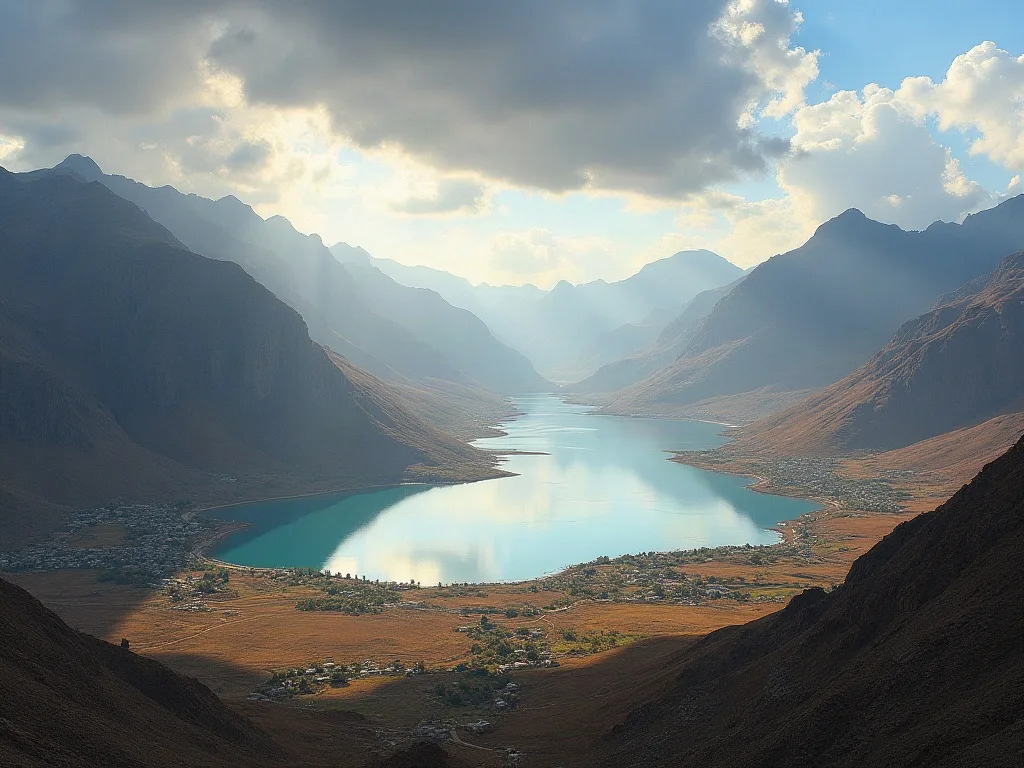
Imilchil sits at roughly 2,100 meters elevation on the Middle Atlas plateau. The town itself is modest: a few stone houses, a market square, and a mosque. But the landscape dominates. Snow caps peaks nearby in winter. Two lakes lie above the town, Isli and Tislit, the "male" and "female" lakes in Amazigh naming. These are the tears from the legend, places of power and liminality.
Water holds sacred meaning in Berber cosmology. In the arid Sahara and semi-arid mountains, water is life. Springs and lakes are not mere resources; they are liminal spaces where human and divine intersect. The location of the marriage festival at the edge of these waters suggests that the ceremony itself is understood as a threshold event. Young people cross from single to married status. The lakes, eternal and generative, witness this transformation.
The altitude also matters. High mountains are closer to the sky, closer to Amezwaru, the supreme Amazigh sky deity. Ceremonies held at elevation carry augmented power. This is why important rituals, sacred oaths, and legal proceedings in many Berber regions happened on high ground. The Imilchil plateau is not chosen because it is convenient. It is chosen because it is sacred.
Modern visitors sometimes treat the lakes as a tourist attraction and the festival as cultural display. But for participating families, the place retains its power. To marry at Imilchil is to marry in the presence of water, sky, and mountain. The ceremony draws potency from the land itself. That sacred geography connects directly to the broader patterns explored in Amazigh mythology, where water, elevation, and liminal thresholds recur as sites of divine encounter.
The Festival Today: Adaptation and Tension
The Imilchil Marriage Festival has changed over the last 50 years, though its core structure endures. Tourism has arrived. Anthropologists, photographers, and curious visitors from Marrakech and Fez now attend. Hotels have opened. The festival is no longer purely local business.
This visibility has created both benefit and stress. Young Amazigh people increasingly migrate to cities for work and education. The pool of participants has shifted. Some young people attend the festival as a cultural event rather than to actually marry. Others use it as a meeting ground with the understanding that real marriage arrangements will happen later, in cities, outside traditional frameworks.
Female participation, once limited to women already engaged or seeking marriage, has broadened. Unmarried women now attend openly, walk freely, and participate in the festival without the expectation of immediate betrothal. This reflects changing Moroccan law and education. Amazigh girls increasingly attend secondary school and university. They delay marriage. They have economic options their mothers did not.
Simultaneously, pressure remains. Family honor, clan identity, and the desire to preserve tradition pull young people toward the festival. Some women feel genuine joy in participating; others experience it as obligation. The festival thus becomes a terrain of negotiation between modern choice and inherited expectation.
Islamic authorities have occasionally challenged the festival, viewing it as un-Islamic because of its secular authority structure and pre-Islamic roots. The Moroccan state has sometimes supported the festival as a sign of authentic culture and tourism asset. This institutional pressure, from multiple directions, shapes how the festival is practiced and understood.
Despite these tensions, the ceremony structure itself remains remarkably stable. Couples still speak vows. Elders still witness. Gifts still transfer. The bride still dresses in scarlet. This persistence suggests that the ritual meets a deep need. Even in a modernizing Morocco, people seek public validation of marriage. They want community witness. They value the dramatic, collective nature of the ceremony. The Imilchil Marriage Festival provides all this in a form connected to their heritage.
Comparative Sacred Marriage Rites Across Cultures
The Imilchil festival, while unique in form, reflects patterns visible across many cultures. Sacred marriage ceremonies serve multiple functions: they legalize unions, they create kinship, and they embed private bonds in public memory. Understanding these comparisons illuminates what makes the Amazigh version distinctive.
In ancient India, the vivaha (marriage) rite required public witness and vocal consent from both bride and groom. The ceremony involved fire, sacred vows, and the exchange of gifts. Like Imilchil, it was a legal act, not purely religious, though priests presided. The bride's acceptance was required. The marriage was binding once spoken and witnessed.
Germanic and Norse societies conducted marriage through public declaration and property exchange, much as the Berbers do. A man would claim a woman before witnesses; gifts would transfer. The woman's assent was required by law. These ceremonies had no religious official; they were communal legal acts.
Islamic marriage law, nikah, while quite different from customary Berber practice, also emphasizes witness and the bride's verbal acceptance. Islamic tradition holds that a marriage is void if the bride does not consent. This overlap may explain why, despite the differences between Islamic law and Amazigh custom, the two systems could coexist in North Africa. Both required female voice; both required public witness.
Among the Yoruba of West Africa, the eru iyawo (bride gift) ceremony creates a binding contract that must be witnessed by elders from both families before a marriage is recognized. No union becomes socially valid until the public exchange is complete and acknowledged. Elder witnesses serve the same function there as the amghar does at Imilchil: they are not merely observers but legal guarantors. This parallel across the Sahara suggests that the public-witness structure of Amazigh marriage law belongs to a broader African ceremonial tradition, not an isolated Berber invention. In traditional Igbo practice, similarly, a marriage incomplete without public declaration and gift exchange is considered ohu, a bond without force.
What distinguishes Imilchil is the persistent non-religious authority structure. The elder is not a priest or imam, though those may be present. The elder is a judge of custom, upholding Amazigh law. This secularization of marriage authority, rooted in pre-Islamic practice, remains rare in the contemporary world. Most societies have moved marriage into either state bureaucracy or religious domain. Amazigh culture has maintained the third option: customary elder authority, existing alongside state and religious claims.
The Lived Experience: Voice from Participants
To understand the Imilchil Marriage Festival as more than anthropological artifact, it helps to consider how people who participate describe it. Interviews with couples who married at Imilchil reveal mixed emotions but consistent themes.
One woman in her thirties recalled her festival marriage: "My mother wore her dress for my marriage. All the women of our family could see it happen. No one could later say the marriage was not real or that I had not agreed. It was written in their hearts." For this woman, the public spectacle was protective. In a world where literacy is not universal and documents can be forged or lost, human memory becomes evidence.
A man described the groom's perspective: "My grandfather watched. The elder asked me before him. My father gave the gifts. Everything was known. When my son was born, no one could question his place in the family." Legitimacy, for him, flows from witnessed ceremony. The child of a festival marriage is unambiguously legitimate in the community's eyes.
A younger woman, marrying against her mother's wishes, found the festival paradoxical: "I wanted to marry my partner. The festival gave me space to do it publicly, in a way my family had to accept. But I also felt everyone watching, everyone owning my marriage. It was not just mine." This ambivalence reflects modern tensions. The ritual can enable female choice, but it can also constrain it.
These voices remind us that sacred rituals are not static ethnographic displays. They are lived, felt, negotiated. People within them experience agency and constraint simultaneously. The Imilchil festival is no exception.
Frequently asked questions about the Imilchil Marriage Festival
Frequently asked questions
Is the Imilchil Marriage Festival still practiced today, or is it only for tourists?
The festival occurs annually in September and remains a genuine Amazigh community event. While tourism has grown, actual marriages still happen, conducted according to customary law. Many participants are locals marrying for the first time. However, the presence of outsiders and the festival's fame have altered its character. Some couples use it as a cultural celebration rather than a legal marriage, conducting their binding ceremonies elsewhere.
What is the history of the two lakes at Imilchil, and why are they sacred?
The lakes, Isli and Tislit (meaning "male" and "female" in Tamazight), feature in the legend of the lovers whose tears created them. While likely not historically formed by tears, the lakes hold water-sacred status in Berber cosmology. In arid regions, water sources are spiritually potent. The lakes are understood as liminal spaces, tied to the fertility and renewal that marriage represents. Their presence makes Imilchil a spiritually significant location for marriage ceremonies.
What rights does a woman have in a marriage governed by Amazigh customary law?
In traditional Amazigh practice, married women retain property rights over their tajmat (bride gift) and can hold land and inheritance in some societies. They can initiate divorce, though this brings social consequences. They retain their own clan affiliation and kinship rights. However, the husband typically has authority over household decisions. While more protective than some contemporary systems, Amazigh customary law is patriarchal overall. Modern Moroccan law has further expanded women's rights, though customary practice in some areas still diverges from state law.
How does the Imilchil Marriage Festival differ from Islamic marriage law?
The festival is rooted in pre-Islamic Amazigh customary law and is adjudicated by an elder, not an imam, though religious figures may be present. Islamic marriage law (nikah) requires different contract terms and has different divorce rules, though both systems require female consent. The festival's authority structure remains secular and customary. In modern Morocco, state law supersedes both, but the festival preserves the customary framework in practice for those who choose to engage it.
Why do couples at Imilchil exchange gifts, and what do these gifts mean?
The exchange of asraf (bride price) and tajmat (bride gift) has legal force in Amazigh customary law. Asraf compensates the bride's family for her labor; tajmat becomes the bride's personal property, functioning as insurance within marriage and ensuring she has resources if the marriage ends. These are not bride-selling but contractual protections, recorded before witnesses and formalized through public ceremony. The gifts signal that both families acknowledge the union and its terms.
How has the Imilchil Marriage Festival been affected by modern Moroccan law and globalization?
Modern Moroccan state law and Islamic law formally supersede customary practice, though the festival persists. Young people migrating to cities, increasing female education, and tourism have changed participation patterns. Some couples use the festival as cultural celebration rather than binding marriage. Pressure from Islamic authorities has sometimes challenged the festival's secular nature. Yet the core ceremony structure remains stable, suggesting the ritual meets enduring needs for public validation and community witness despite modernization pressures.
Unresolved Questions: What the Festival Reveals About Ritual Persistence
The Imilchil Marriage Festival raises a profound question: why does a ceremonial form tied to pre-Islamic customary law persist in a predominantly Muslim nation in the 21st century? Anthropologists and historians debate the answer.
One school argues that the festival represents genuine cultural resistance, a way Amazigh people maintain identity against centuries of Arabic, French, and now global pressures. From this view, the festival is not survival but active preservation, chosen consciously by communities seeking to retain their heritage. The festival's growth in visibility over the last decades supports this reading: it has been reinvigorated, not allowed to fade.
Another view emphasizes pragmatism. The festival works. It provides a public, binding marriage framework in a context where legal alternatives may be remote, expensive, or socially alienating. For rural Amazigh communities far from urban courts and bureaucratic infrastructure, the festival offers legal clarity. This pragmatic perspective sees the festival not as tradition for tradition's sake but as a functional system that has earned continuity through usefulness.
A third perspective focuses on what the festival preserves: female voice, public witness, elder authority, and customary law. These are not exotic antiquities but fundamental human needs expressed in ceremony. The hunger for visible, witnessed commitment and for community involvement in marriage appears across cultures and eras. The Imilchil Marriage Festival may endure not because it is Amazigh but because it satisfies something universal about how humans formalize kinship. The Celtic marriage rite of Lughnasadh expresses the same hunger in a completely different climate and people: public declaration, seasonal gathering, community memory as law.
The question of persistence has moved beyond scholarship into the streets. Organizations such as the Amazigh World Congress (Agraw Amadlan Amazigh) and Morocco-based groups like the Amazigh Cultural Movement (Mouvement Culturel Amazigh) have for decades petitioned the Moroccan state to formally recognize Amazigh customary law, including marriage practices, as legally binding alongside state codes. These campaigns achieved a milestone in 2011, when the Moroccan constitution recognized Tamazight as an official national language. Activists now argue the next step is legal recognition of customary family law, so that festival marriages carry full state validity without requiring a separate civil registration. These ongoing legal battles mean the Imilchil Marriage Festival is not just a cultural spectacle. It is a contested legal frontier.
The festival's future is uncertain. As Morocco industrializes, as young people increasingly live in cities, as Moroccan law standardizes marriage practice, the festival's participants will likely decline in number. Yet it is unlikely to vanish entirely. Too many people have stake in its existence: families seeking cultural continuity, the Moroccan state valuing it as tourism and cultural asset, and Amazigh communities using it as a site of identity assertion. The Imilchil Marriage Festival will probably evolve further. Some aspects may fade, others strengthen. The ceremony structure itself, proven over centuries, may remain recognizable even as its context shifts.
Free 25-page sample
Want the whole story?
Take the first 25 pages free. If it pulls you in, the full edition is yours as an instant PDF download, with a paperback on Amazon for selected titles.
Berber
The Berber Mythology Book: The Gods, Spirits, and Sacred World of the Amazigh
The Amazigh: Gods, Spirits, and North Africa
The beliefs of North Africa’s first people, the Amazigh, who were old when Carthage was young: the sun and the moon, the jnun of the wild places, the cult of the ancestors and the caves, the goddess the Greeks called Athena, and a tradition that outlived every empire.
More from Berber
All articles
Berber
The Azru Oak: Sacred Tree Cult and Ritual Sites in Berber Tradition
The Azru Oak stands as the living spine of Berber sacred geography, where tribal councils, healing rites, and offerings to ancestral spirits converged for millennia. Discover how this revered tree shaped Berber law, spirituality, and community bonds across North Africa.
Berber
Masinissa: King and Cultural Hero of Numidia
Masinissa united Numidia and shaped the destiny of North Africa by walking between Carthage and Rome. His reign (202-148 BCE) transformed a fragmented kingdom into a civilized power that wrote its own laws.
Berber
Yennayer: Berber New Year and Agricultural Festival
Yennayer marks the Berber New Year on January 14, celebrating the spring planting season and ancestral connection to the land. Discover how this 2,944-year-old festival blends agricultural ritual, family tradition, and cultural identity across North Africa.
Berber
The Hand of Fatima in Berber Symbolism: Protection, Blessing, and Identity Across North Africa
The Hand of Fatima, or Khamsa, is far more than Islamic decoration in Berber culture. It carries layers of pre-Islamic protection magic, women's agency, and ancestral wisdom. Discover how Amazigh communities wove this symbol into identity, ritual, and everyday life across Morocco, Algeria, and Tunisia.