
Masinissa: King and Cultural Hero of Numidia
Masinissa united Numidia and shaped the destiny of North Africa by walking between Carthage and Rome. His reign (202-148 BCE) transformed a fragmented kingdom into a civilized power that wrote its own laws.
Contents
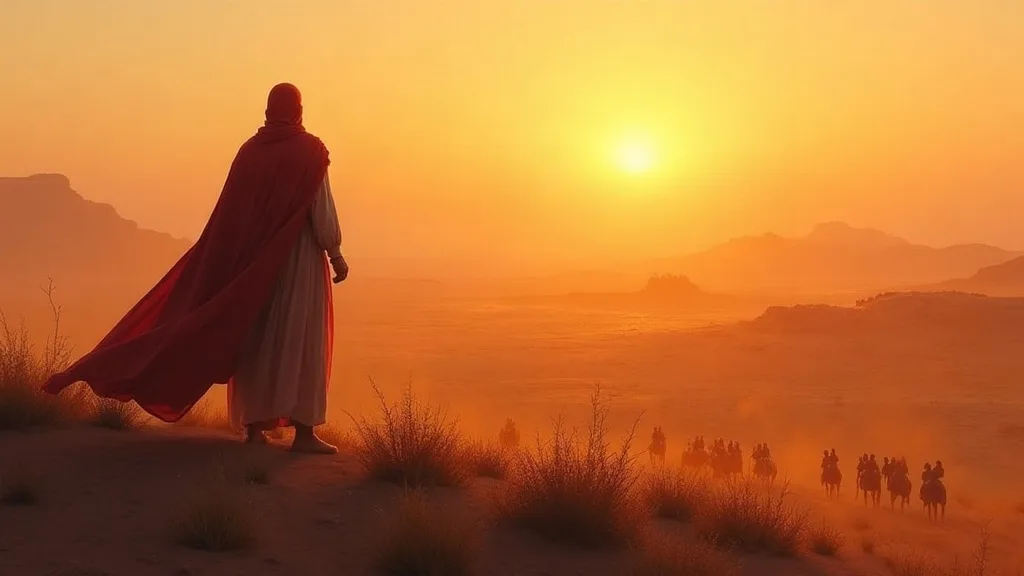
A young prince rides across the red earth of North Africa, his cavalry at his back. It is 213 BCE, and the Numidian grasslands are aflame with the Second Punic War. His name is Masinissa. Within fifty years, he will have united a fractured kingdom, bested Carthage, forged an alliance with Rome that neither controlled him, and left behind a nation that spoke his language, wrote his laws, and remembered his name as the architect of civilization in a land that Rome itself would later covet.
Masinissa was not born a king. He was the son of Gaia, a Numidian chieftain whose power was real but limited. The Numidian tribes, scattered across what is now Algeria and northern Tunisia, fought one another as fiercely as they fought invaders. No single leader commanded their loyalty. It took genius, patience, and an almost supernatural ability to read the currents of geopolitics to change that reality.
The World Masinissa Inherited: Numidia Divided
In the early third century BCE, Numidia existed as a patchwork. The kingdom was split between rival dynastic claims and the ambitions of two superpowers: Carthage to the south and Rome across the sea. The Numidian princes, including Masinissa's father Gaia, held the balance of power but could not consolidate it. Carthage had already drawn some Numidian tribes into its orbit through trade, tribute, and alliance. Rome was still building its Mediterranean empire and would soon come looking for allies.
The land itself defined the people. Numidia stretched across the Maghreb, the North African steppes and mountains where horses were bred and trained as nowhere else in the Mediterranean world. The Numidian cavalry was legendary. Fast, light, mounted on small but tireless horses, these riders could strike and vanish across open terrain. Any power that could command the Numidian horse had a weapon that infantry alone could not counter.
Young Masinissa learned this truth early. His education was both courtly and martial. He studied the Greek and Punic languages, the arts of negotiation and statecraft. But he also rode daily, trained in the use of the javelin and the sword, and absorbed the codes of honor and leadership that bound the Numidian tribes together.
Rising to Power: War and Ambition
When his father Gaia died, around 213 BCE, Masinissa inherited a small portion of Numidia. It was not enough. His half-brother Capussa, backed by the Carthaginian general Hasdrubal, claimed a larger share. For years, the two men jostled for dominance, neither able to crush the other.
Then Masinissa made a strategic move that would define his entire reign. Rather than accept Carthage's patronage or Rome's silence, he began to cultivate Rome directly. The Second Punic War (218-201 BCE) was raging. Carthage, led by Hannibal, was testing Rome's power across the Mediterranean. Rome needed allies in Africa, and Masinissa, though young and his kingdom small, offered something Rome valued: the possibility of fragmenting Carthage's support.
By 206 BCE, Masinissa had formally allied with Rome and the Roman general Scipio Africanus. The move was bold and calculated. Scipio was fighting Hannibal's generals in Spain and North Africa. With Masinissa's cavalry at his back, Scipio could strike Carthaginian positions with speed and reach Carthage itself threatened. It was a partnership between a Roman warlord and an African prince who both understood the mathematics of power.
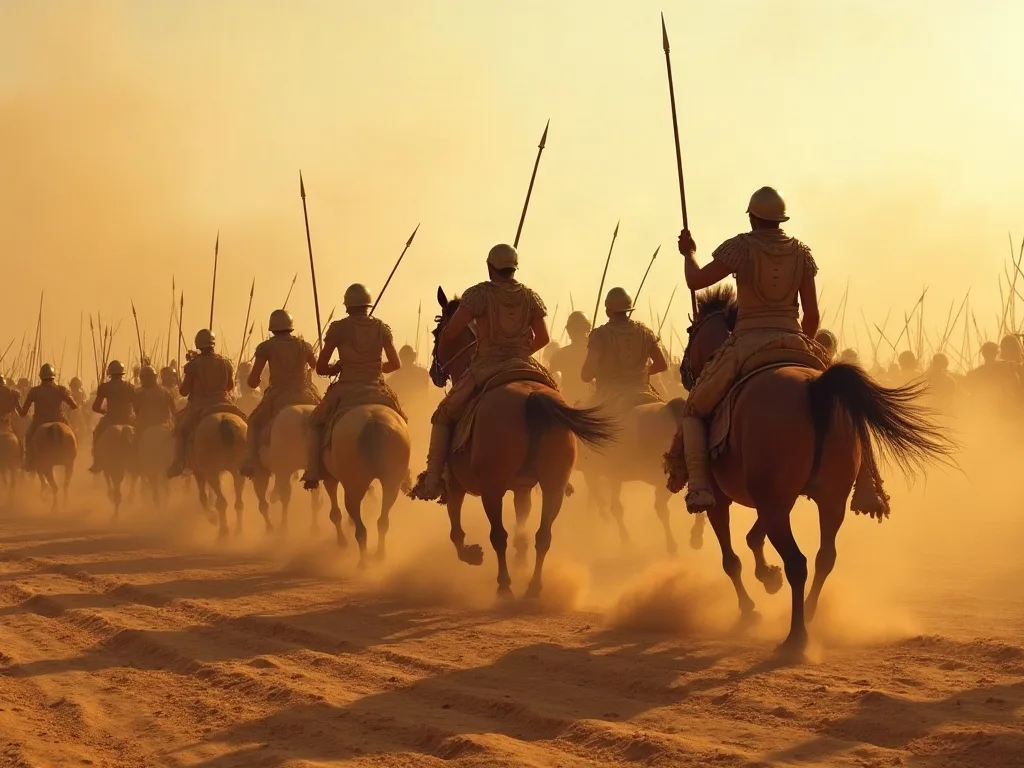
The payoff came at the Battle of the Great Plains (202 BCE). Hannibal himself had returned to Africa to defend Carthage. Scipio and Masinissa's combined forces met him there. The battle was vast and brutal. Masinissa's Numidian cavalry, wheeling and striking from every angle, broke Carthaginian formations. When the dust settled, Hannibal had lost. Carthage sued for peace. Rome had won the Second Punic War.
And Masinissa? He claimed his reward. By the Treaty of Zama, which ended the war, Rome recognized him as king of a unified Numidia. Rome did not occupy his lands or rule him directly. It recognized his sovereignty. The irony was precise: in defeating Carthage for Rome, Masinissa had used Rome's power to become master of his own house. He was Rome's ally, but no one's subject.
The Builder King: Creating Numidia
The victories in battle meant little if Masinissa could not turn fragmented tribes into a coherent kingdom. This was the work of his reign.
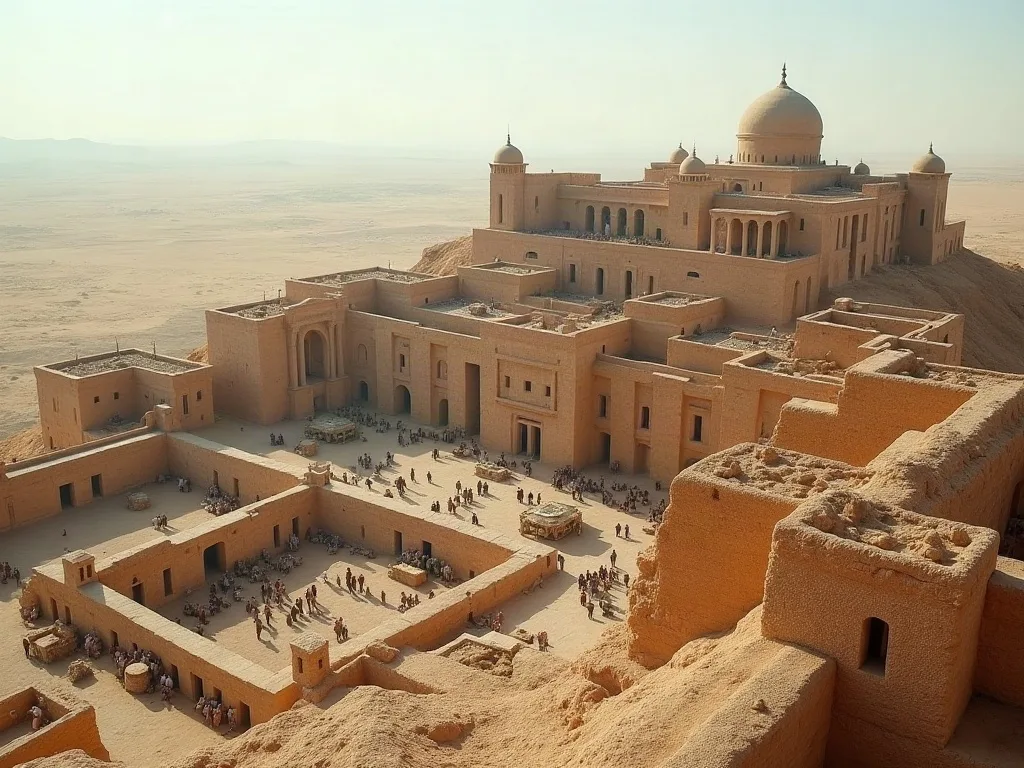
He established a capital at Cirta (modern Constantine, Algeria), a fortress city on a high plateau. From Cirta, he could oversee the richest lands of Numidia, control trade routes, and project power in all directions. He built a court and a bureaucracy. He issued royal decrees that applied to all Numidians, not just his own tribe. He minted coins bearing his own image and name, an assertion of sovereignty that only kings dared make.
He reformed the army. The Numidian cavalry was already famous, but Masinissa organized it into a disciplined force. He trained infantry and created a standing military that could defend the kingdom year-round, not just when crisis called out individual warriors. He fortified cities and garrison towns. When rebellion flickered in the provinces, he moved with speed and severity to stamp it out.
He promoted agriculture and trade. Numidia's wealth had always come from horses, wool, hides, and the grain that grew in the fertile river valleys. Masinissa opened roads, organized markets, and negotiated trade agreements with neighboring Libyan peoples and with Mediterranean merchants. The kingdom began to export more and import luxuries from Egypt, Greece, and the Levant.
He brought written law to Numidia. Before Masinissa, justice was tribal and customary. He created a code of law that applied across the kingdom, reducing the arbitrary power of local chiefs and centralizing judicial authority in the crown. These laws were written, which meant they could be known and consulted. It was a profound shift toward the rule of law.
He encouraged Hellenization, though carefully. Masinissa spoke Greek and Punic alongside his native Libyc (the Berber language of his people). He invited Greek scholars and artists to Cirta. He adopted some Greek customs in dress and ceremony. But he never abandoned Numidian tradition. His court was a bridge between cultures, not a copy of a foreign model.
The Difficult Alliance: Numidia and Rome
Masinissa's relationship with Rome was never servile, but it was complex. Rome had defeated Carthage. Rome now dominated the Mediterranean. Masinissa was a valuable ally, but he was also a potential rival if he grew too powerful. Rome watched him carefully.
For decades, the balance held. Masinissa stayed true to the alliance. When Rome fought in Egypt, in Greece, in Spain, Masinissa sent gifts and ambassadors to show respect. He never openly challenged Roman authority. But he also never gave Rome the chance to treat him as a subordinate. He negotiated, he explained himself, he presented Numidia as an independent kingdom that had chosen Rome's friendship.
There was one constant friction: Carthage. Even after the Second Punic War, Carthage remained wealthy and influential. It controlled trade routes and maintained a merchant fleet. Masinissa coveted Carthaginian territory. He wanted to expand Numidia's borders, particularly to the east and south where Carthaginian colonies still thrived.
Rome wanted Carthage weakened but not destroyed, at least at first. Rome preferred a world of balance, where multiple powers checked each other. But as Masinissa pushed against Carthage, taking lands and disputes to Rome for arbitration, Rome began to side with him. It was practical: Masinissa was more loyal, more stable, more useful as an ally than Carthage, which always seemed to be plotting a comeback.
The tension peaked in the 150s BCE. Masinissa, now in his eighties but still commanding his kingdom, expanded Numidian territory aggressively. He took land that Carthage disputed. He brought cases before the Roman Senate, which repeatedly sided with him. Carthage, desperate, declared war on Numidia directly. Masinissa crushed the Carthaginian forces. Rome, using this as a pretext, then launched the Third Punic War against Carthage, which ended in 146 BCE with Carthage's total destruction.
Masinissa died in 148 BCE, just before Carthage fell. He never saw the final humiliation of Carthage, but he knew it was coming. Rome had used him, yes. But he had used Rome equally to become master of Numidia and to destroy the one rival that might have challenged his reign.
The Man and His Legacy: Numidia After Masinissa
The ancient historians who wrote about Masinissa saw him as a remarkable figure. The Greek historian Polybius, who lived during Masinissa's reign, portrayed him as intelligent, just, and tireless. Livy, the Roman historian, described him as noble and wise. Both writers recognized that Masinissa was not a typical client king bowing to Rome. He was an architect.
His personal life was notable too. Masinissa married twice, perhaps three times, forging alliances through marriage as was the custom. He had many children, and he carefully prepared his eldest son Micipsa to inherit and continue his work. He lived into his nineties, an extraordinary age for the ancient world, and remained active until near the end. When he died, he was mourned as the founder of Numidian greatness.
The kingdom he left behind, however, did not last unchanged. After his death, Numidia was divided among his sons, as custom demanded. This fragmentation eventually weakened the kingdom. Within a few generations, Numidia was drawn into Rome's civil wars. By the first century BCE, Roman generals used Numidian territory as a base for their own conflicts. By the first century CE, Numidia was a Roman province.
But the memory of Masinissa persisted. For the Berber peoples who inhabited North Africa, he was the king who had made them into a nation, who had written their laws, who had negotiated with empires and remained unconquered. His reign became a reference point for identity and pride. Even as Rome's power grew, Numidia under Masinissa remained in memory as a time when Africans ruled themselves.
The coins Masinissa issued in Numidia are still found in the earth. His capital at Cirta continued to be an important city. The laws he created shaped Numidian society for centuries. The cavalry he trained became legendary. When historians look back at the ancient Mediterranean world, they see many kings who conquered, ruled, and were forgotten. Masinissa stands apart: a king who built, unified, and endured.
The Question of Numidia's Place in World Mythology
Masinissa himself is not a figure of Berber mythology in the sense of gods or demigods. He is a historical king, remembered for his deeds. Yet his story contains mythic dimensions: the young prince who rises from obscurity to unite a fractured kingdom, the leader who walks between two superpowers without being consumed by either, the builder who creates laws and civilization from chaos.
In later Berber tradition and in modern North African consciousness, Masinissa represents something larger than politics: the idea that North Africans could create their own systems, make their own choices, and shape their destiny. That mythic resonance is real, even if Masinissa himself was a historical figure documented in Greek and Roman sources.
His legacy intersects with the broader story of Berber civilization: a people with their own languages, their own customs, their own distinct identity, who nevertheless engaged with the larger Mediterranean world on terms they negotiated. The Berber peoples inhabited North Africa for thousands of years, and their traditions shaped kingdoms like Masinissa's. His reign represents one moment when Berber political and cultural power reached its height before Rome's expansion reshaped the region.
Frequently asked questions about Masinissa, King and Cultural Hero of Numidia
Frequently asked questions
Did Masinissa speak the Berber language?
Yes. Masinissa's native language was Libyc, the Berber language spoken by the Numidian people. He also learned Punic (the language of Carthage) and Greek through education and diplomacy. This multilingualism was essential to his role as a mediator between cultures and regions.
Was Masinissa loyal to Rome, or did he use Rome for his own ambitions?
Both. Masinissa formed a genuine alliance with Rome and honored his commitments to it. But he was not a subject or a puppet. He used Rome's power and Rome's conflicts with Carthage to advance Numidian interests. The relationship was symbiotic: Rome needed his cavalry and his territorial control; Masinissa needed Rome's legitimacy and backing to unify Numidia and contain Carthage.
What happened to Numidia after Masinissa died?
Masinissa's kingdom was divided among his sons, following Numidian inheritance custom. This fragmentation weakened Numidia politically. Within a few generations, the kingdom was drawn into Roman civil wars and eventually became a Roman province. However, the period of Masinissa's unified rule remained a memory of North African independence and achievement.
Did Masinissa ever lose a major battle?
Not in the accounts that survive. Masinissa's greatest victory was at the Battle of the Great Plains (202 BCE) alongside Scipio Africanus against Hannibal himself. Throughout his reign, he defeated rivals, Carthaginian forces, and rebellious tribes. His military record was remarkably successful, partly because he adapted tactics to changing circumstances and partly because he commanded fierce cavalry that was superior to his enemies.
Why is Masinissa remembered as a cultural hero, not just a military king?
Masinissa is remembered as a cultural hero because he did more than conquer. He built institutions: a capital city, a legal code, a bureaucracy, a court that brought together Greek, Punic, and Numidian traditions. He promoted trade, agriculture, and literacy. He created the idea of Numidia as a unified nation rather than a collection of tribes. This institutional and cultural legacy outlasted his military victories in the memory of his people.
Masinissa's Enduring Question: Can a Small Kingdom Stay Free?
Masinissa left behind something Rome eventually destroyed but could never fully erase: the precedent that a North African power could negotiate with empires as an equal, could unify its people under its own laws, and could shape its destiny through intelligence and strength rather than submission. His reign lasted 54 years. Rome's domination of North Africa would last half a millennium. Yet in the memory of the Berber peoples, in the coins that still bear his name, in the ruins of Cirta where he ruled, Masinissa remains the king who made Numidia great on its own terms.
The question he left unanswered echoes still: how long can a kingdom built on unity and culture survive when greater powers reshape the world around it? Masinissa found the answer through his lifetime: as long as a leader is wise enough to understand the currents of power and strong enough to steer his people through them. That answer proved true for his reign but not for his successors. Yet the attempt itself, the fact that he made it and that history records it, is what makes him a hero beyond his borders and his age.
Free 25-page sample
Want the whole story?
Take the first 25 pages free. If it pulls you in, the full edition is yours as an instant PDF download, with a paperback on Amazon for selected titles.
Berber
The Berber Mythology Book: The Gods, Spirits, and Sacred World of the Amazigh
The Amazigh: Gods, Spirits, and North Africa
The beliefs of North Africa’s first people, the Amazigh, who were old when Carthage was young: the sun and the moon, the jnun of the wild places, the cult of the ancestors and the caves, the goddess the Greeks called Athena, and a tradition that outlived every empire.
More from Berber
All articles
Berber
The Azru Oak: Sacred Tree Cult and Ritual Sites in Berber Tradition
The Azru Oak stands as the living spine of Berber sacred geography, where tribal councils, healing rites, and offerings to ancestral spirits converged for millennia. Discover how this revered tree shaped Berber law, spirituality, and community bonds across North Africa.
Berber
Yennayer: Berber New Year and Agricultural Festival
Yennayer marks the Berber New Year on January 14, celebrating the spring planting season and ancestral connection to the land. Discover how this 2,944-year-old festival blends agricultural ritual, family tradition, and cultural identity across North Africa.
Berber
The Hand of Fatima in Berber Symbolism: Protection, Blessing, and Identity Across North Africa
The Hand of Fatima, or Khamsa, is far more than Islamic decoration in Berber culture. It carries layers of pre-Islamic protection magic, women's agency, and ancestral wisdom. Discover how Amazigh communities wove this symbol into identity, ritual, and everyday life across Morocco, Algeria, and Tunisia.

Berber
The Myth of Isli and Tislit: Star-Crossed Lovers in Berber Tradition
Two siblings, separated by their father's curse, meet as strangers and fall in love before discovering their blood bond. The Berber myth of Isli and Tislit explores forbidden desire, family secrecy, and the landscape itself as witness to human tragedy.