
Yennayer: Berber New Year and Agricultural Festival
Yennayer marks the Berber New Year on January 14, celebrating the spring planting season and ancestral connection to the land. Discover how this 2,944-year-old festival blends agricultural ritual, family tradition, and cultural identity across North Africa.
Contents
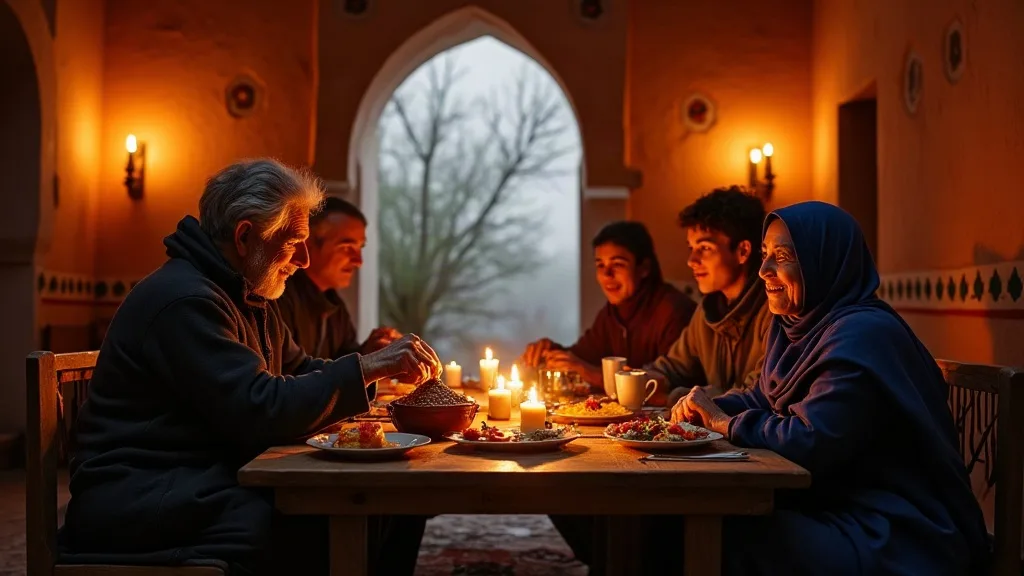
On January 14, across Morocco, Algeria, Tunisia, and the Berber diaspora worldwide, families gather to mark Yennayer, the Berber New Year. The name itself means "January" in Tamazight, the Berber language, but the day carries far more weight than a simple calendar turn. It is both a reckoning with the agricultural cycle and a declaration of cultural continuity. Fires are lit, grain is poured, couscous is shared, and the year 2026 is not the year 2026 in the conventional sense; it is the year 2944 in the Amazigh calendar, counting from the birth of the legendary warrior king Sheshanq (known in Greek as Shoshenq), who unified the Berber kingdoms around 950 BC.
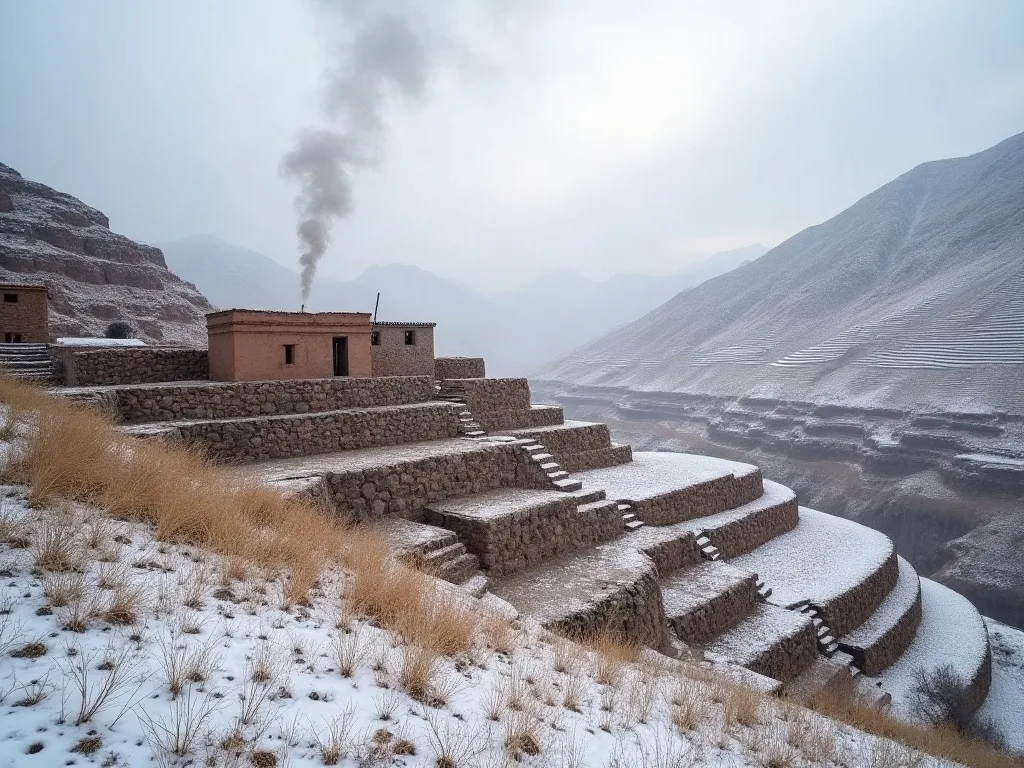
Yennayer arrives at a precise moment in the farming year: the cold depths of winter, when the earth is still dormant but germination has begun beneath the snow. In the mountains and rural plains of North Africa, January 14 falls just before the first spring rains and the opening of the planting season. To observe Yennayer is to acknowledge that renewal is not just a metaphor. It is a lived cycle, written into the soil and the sky, and the Berber peoples have marked it for nearly three millennia.
The Amazigh Calendar and Historical Roots of Yennayer
The Yennayer festival rests on one of the oldest continuous calendrical traditions in the Mediterranean world. The Amazigh calendar, also called the Berber calendar, counts years from approximately 950 BC, the era of Sheshanq I (Shoshenq in Greek), the Libyan pharaoh who conquered Egypt and established the 22nd Dynasty. This is not mythological time; Sheshanq is a documented historical figure whose reign is recorded in Egyptian hieroglyphics and Greek sources alike. Yet for the Amazigh peoples, the choice to date their calendar from his reign is itself a cultural act: it asserts that Berber history is not subsidiary to Egypt or Rome, but stands on its own foundation.
The calendar year begins on Yennayer, January 14 in the Gregorian calendar (though some communities observe it on January 13). This date aligns not with the winter solstice, which falls in December, but with a second astronomical threshold: the midpoint between the solstice and the spring equinox. Ancient agrarian societies across the Mediterranean observed similar turning points. The Roman Lupercalia, celebrated in February, also served as a purification festival tied to the coming planting. The Jewish Shevat, which overlaps with January-February, likewise marks a pivot in the agricultural year. But Yennayer is uniquely Amazigh, a living assertion of Berber identity in a region long contested by empires.
For centuries, the Amazigh calendar was maintained in oral tradition, passed through families and kept alive in rural communities where the rhythm of cultivation was the truest calendar. In 1980, during the Berber Spring (Tafsut n Imazighen), a youth movement in Algeria demanding recognition of Tamazight and Berber culture, Yennayer was revived as an explicitly political and cultural festival. It became a day to reclaim Amazigh identity at a moment when Arabic nationalism and French colonialism had both worked to erase Berber distinctiveness. In 1999, Algeria recognized Yennayer as a public holiday. Morocco followed in 2003. Tunisia joined in 2017. Today, it is an official national celebration across the Maghreb.
Agricultural Ritual and the Cycle of Renewal
Yennayer falls at a threshold moment in the farming year, and the festival is permeated with practices designed to ensure fertility, ward off calamity, and bless the seeds soon to enter the ground. These rituals are not superstition; they are embodied knowledge passed down by farmers who have tracked the seasons for generations.
One of the most widespread Yennayer practices is the preparation and sharing of special foods. Couscous made with seven or nine grains (wheat, barley, lentils, chickpeas, fava beans, dates, and sometimes almonds or honey) is served, each ingredient representing a different crop or blessing. The odd number, seven or nine, carries symbolic weight in many Mediterranean and Middle Eastern traditions, suggesting completeness and protection. Butter, milk, and honey are often added, marking abundance and sweetness. These foods are not merely consumed; they are offered to the earth and sometimes left on doorsteps or near fields as a gesture of reciprocity with the land that will feed the family through the coming year.
Another crucial practice is the lighting of fires. On Yennayer night, families kindle hearth fires, sometimes adding herbs, branches, or other plant material to the flames. Smoke rises into the cold January air, and the warmth radiates inward. The fire serves multiple purposes: it purifies the household, it wards off malevolent spirits or the evil eye (a concern in Mediterranean and Middle Eastern folklore), and it marks the boundary between the old year and the new. In some Berber communities, young people jump over these fires in a ritual of courage and renewal. The flames also evoke the sun's returning strength and the eventual heat that will ripen the crops.
Water, too, plays a role. In some regions, families perform ritual ablutions or pour water onto seeds or soil, mimicking the rains that winter has brought and that spring must deliver. This is practical wisdom dressed in ceremony: water is the limiting factor in North African agriculture, and Yennayer falls in the season of highest rainfall hope. By invoking water through ritual, communities were expressing both dependence on and reverence for this precious resource.
The timing is not arbitrary. January 14 comes when the grain planted in autumn has been in the ground for two to three months, root systems established but growth still invisible. The festival acknowledges a moment of waiting and faith: the farmer has done the work of tilling and sowing, and now the earth must do its part. To celebrate Yennayer is to participate in this contract between human labor and natural process.
Family Gathering and Social Restoration
While Yennayer honors the agricultural year, it also functions as a festival of family and community cohesion. The extended family gathers, often for a shared meal that may last several hours. This is not casual dining; it is a structured social event with roles and meanings.
The eldest members of the family, grandparents especially, hold honored places. They recite stories, blessings, and sometimes traditional poems (Tachelhit or Tarifit, depending on the Berber dialect of the region). Young children are included, marking them as part of an unbroken chain of tradition. Food is served in a specific order and sometimes in specific vessels: communal dishes from which family members eat together, reinforcing bonds of kinship and mutual obligation. In some households, the first portion is set aside for ancestors or for the poor, an acknowledgment that the family's prosperity is contingent and must be shared.
This gathering serves another function: it is a moment for conflict resolution and social repair. Disputes that have festered through the year may be addressed and reconciled. Promises are renewed. Debts are acknowledged. The new year is not begun with grievances left unhealed. In small, tightly knit communities where cooperation is essential for survival, this periodic renewal of social bonds is as important as any agricultural ritual.
The festival also marks a moment of exchange between generations. Elders share knowledge not just through direct teaching but through the embodied practice of cooking, sitting, and speaking together. Young people learn the names of dishes, the correct order of prayers or blessings, the stories of ancestors. This is cultural transmission happening in real time, unmediated by schools or books, and it remains powerful precisely because it involves the full presence of family members.
Yennayer Across the Berber Regions
The Berber peoples are not monolithic, and Yennayer celebrations vary meaningfully across the Maghreb and within diaspora communities. In the Atlas Mountains of Morocco, where Tamazight-speaking Amazigh communities live in high-altitude valleys, Yennayer involves specific foods tied to mountain agriculture: barley bread, dried fruits and nuts stored from the autumn, and sometimes cheese made from herding flocks. In the Saharan regions of Algeria and Mali, Berber Tuareg communities (also called the Amazigh of the Sahara) observe Yennayer with practices adapted to desert pastoralism, emphasizing herds and water sources rather than grain fields alone.
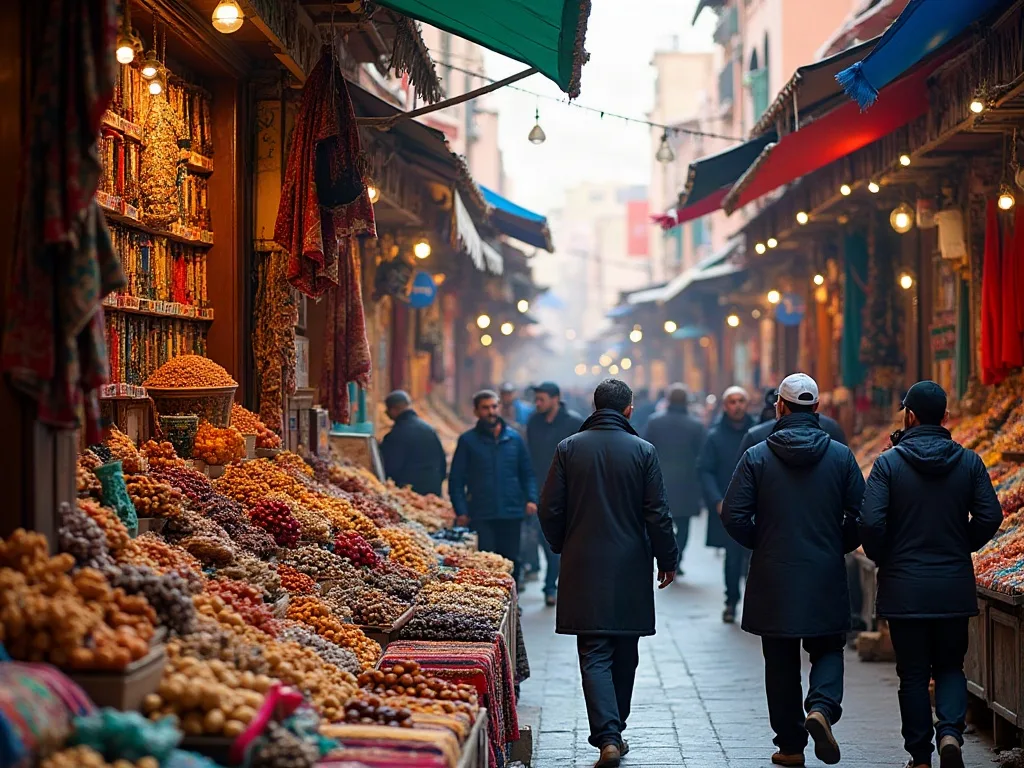
In urban centers like Marrakech, Algiers, and Tunis, Yennayer has evolved into a more public festival. Cultural associations organize events featuring music, poetry, and theatrical performances in Tamazight. The hammam (public bath) becomes a site of purification ritual. Markets display special Yennayer foods and goods. The festival becomes a moment for the urban diaspora to reconnect with rural heritage and for Berber activists and intellectuals to assert cultural pride in spaces of political visibility.
Among Berber diaspora communities in France, Belgium, and North America, Yennayer celebrations have adapted to new settings. Family meals still form the core, but they may be held in community centers or mosques. Restaurants in neighborhoods with large North African populations offer special Yennayer menus. Cultural organizations host lectures and film screenings exploring Amazigh history. Social media has expanded the festival's reach: Yennayer messages and photos circulate globally, creating a virtual gathering space for scattered communities.
Yet across these variations, the core remains consistent: the marking of a new agricultural year, the gathering of family, the invocation of blessing and protection, and the assertion of Amazigh cultural continuity in a region where that continuity has often been threatened by assimilation pressures.
Yennayer and Contemporary Berber Identity
The revival of Yennayer as a public holiday in the late 20th century was bound up with the broader Amazigh cultural movement. In Morocco and Algeria, the decades following independence from France saw a privileging of Arabic language and Arab nationalism. Tamazight, the Berber language, was marginalized in schools and government. Amazigh history and culture were absorbed into a pan-Arab narrative. By the 1980s, a new generation of Berbers demanded recognition of their distinct identity.
The Berber Spring of 1980 in Algeria and subsequent activism in Morocco transformed Yennayer from a private family observance into a public assertion of cultural rights. To celebrate Yennayer was to say: we are Amazigh, we have our own calendar, our own history, our own future. The choice to date the year from Sheshanq, a Libyan pharaoh, rather than from Muhammad's hijra (as the Islamic calendar does) or from Jesus's birth (as the Gregorian calendar does) was itself a political statement. It said that Amazigh civilization predates and operates independently of both Islamic and Western temporal frameworks.
In 2003, Morocco officially recognized Tamazight as a language to be taught in schools, a landmark victory for the Amazigh movement. In 2011, the Moroccan constitution was amended to make Tamazight an official language alongside Arabic. Tunisia and Algeria have made similar moves. These victories are tied directly to the visibility and vitality of festivals like Yennayer, which keep Amazigh culture alive in the public sphere and prevent it from being subsumed into a broader religious or national identity.
Today, younger Berbers, especially those with higher education and urban jobs, may approach Yennayer with a more self-conscious sense of cultural reclamation than their grandparents did. They may read about the historical Sheshanq, engage with academic work on Amazigh civilization, or participate in online forums debating Berber identity. Yet the festival itself remains rooted in family practice and agricultural observation, keeping it grounded in lived experience rather than pure ideology.
Yennayer Foods and Their Symbolism
The foods of Yennayer are laden with symbolic meaning, each ingredient and preparation method carrying intention. Understanding these dishes illuminates how ritual, agriculture, and desire for blessing interweave.
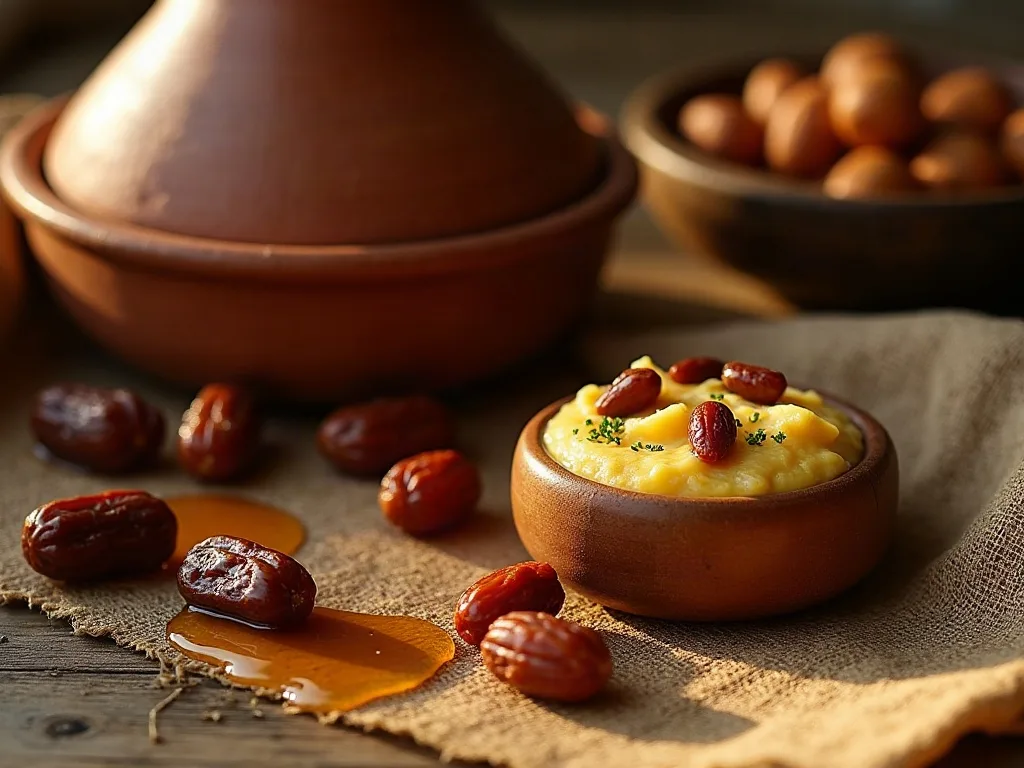
Amlou (also spelled amloh or amluh) is a thick paste made from roasted almonds, argan oil, and honey, often flavored with a touch of sea salt or orange blossom water. It is ancient, predating even written records of Berber culture, and appears in various forms across North Africa. The combination of nuts (energy, strength), oil (vital fat, smoothness, protection), and honey (sweetness, healing, divine favor) makes amlou a concentrated blessing. It is eaten on Yennayer morning, sometimes spread on bread, sometimes eaten with a spoon as a sweet and sustaining treat.
Tageella or tagine of lamb and preserved lemon brings together meat (nourishment, honor), lemon (purification, brightness), and olives (ancient cultivation, connection to the land). The slow cooking of a tagine, a earthenware vessel, ties the dish to the clay and pottery traditions of Berber craft. To eat this dish on Yennayer is to consume not just food but cultural continuity.
Bessara, a soup made from broad beans, garlic, and cumin, served with olive oil drizzled over the top, represents humility and earthiness. It is a poor person's dish, yet it is honored on Yennayer, suggesting that all members of the community, regardless of wealth, share in the festival's blessing. Cumin itself is linked to protection and good digestion in Mediterranean folk medicine, so the choice of spice is not accidental.
Barley bread (aghrum tella), made from barley flour mixed with water and salt and cooked on a griddle or in ashes, is a staple of Yennayer meals in some regions. Barley, being hardier than wheat and able to grow in marginal soils, is a symbol of resilience and adaptation. To eat barley bread on the New Year is to affirm willingness to endure, to make do, and to persist through hardship.
Dried fruits and nuts, stored from the autumn harvest, are eaten in abundance on Yennayer. Dates, figs, almonds, walnuts, and pomegranate seeds appear in dishes or are simply set out on a table for family members to graze on during the day. The preservation of autumn bounty into winter and spring is itself a triumph of forethought and skill, and eating these foods on the New Year celebrates human ingenuity and the earth's generosity.
Yennayer and the Islamic Calendar
A question sometimes arises: how does Yennayer, the Amazigh New Year based on a pre-Islamic calendar, coexist with Islam in contemporary Berber societies? The answer is nuanced and reflects the real complexity of religious and cultural identity in North Africa.
The vast majority of Berbers are Muslim, and Islam has been woven into Amazigh culture for over 1,400 years. The Islamic calendar (Hijri calendar), which counts from Muhammad's emigration to Medina in 622 CE, is used for religious observances: prayer times, Ramadan, Eid al-Fitr, and Eid al-Adha. These are central to Berber Muslim life and are observed with deep commitment and joy.
Yet Yennayer is not seen by most Berber Muslims as contradictory to their faith. Rather, it is understood as a cultural and agricultural festival that exists in a different register from religious observance. Yennayer is to culture what Ramadan is to faith. A Berber family might celebrate Yennayer on January 14 with grain rituals and family meals, and then celebrate Eid al-Fitr at the end of Ramadan with equal devotion. The two calendars and two sets of festivals are understood as complementary rather than competitive.
This coexistence reflects a broader pattern in Mediterranean and Middle Eastern societies, where pre-Islamic customs (relating to agriculture, family structure, seasonal cycles) have been preserved even as Islamic faith became the dominant religion. Similar patterns exist with Jewish communities in North Africa who also observe Yennayer. In Tunisia and Morocco, some Jewish residents continue to mark January 14 as a cultural festival, seeing it as part of a shared North African heritage that transcends religious boundaries.
In some Islamic contexts, there has been resistance to Yennayer, with conservative clerics arguing that it represents a pagan or pre-Islamic practice that should be abandoned. But this view has been increasingly marginalized. Most Moroccan and Algerian Islamic scholars and leaders now affirm that Yennayer is a cultural celebration of a Berber community's history and agriculture, not a religious act, and therefore is compatible with Islam. The official recognition of Yennayer as a national holiday in Muslim-majority states has tacitly endorsed this interpretation.
Yennayer in the Modern World and Digital Age
In 2026, Yennayer celebrations have expanded into digital and global spaces in ways that would have been unimaginable thirty years ago. The internet and social media have transformed how the festival is experienced, especially among diaspora communities and younger generations.
On January 14 each year, Yennayer hashtags trend on social media platforms. Moroccan and Algerian diaspora members post photos of family gatherings, traditional foods, and cultural events. Younger Berbers share TikTok videos explaining Yennayer to friends unfamiliar with it, often framing the festival in terms of cultural pride and anti-assimilation. Cultural organizations stream lectures on Amazigh history and language. YouTube hosts cooking tutorials for Yennayer dishes. This digital presence has the effect of globalizing the festival while also intensifying its connection to cultural identity.
At the same time, the digitization of Yennayer creates new questions. When a Berber family in Paris celebrates Yennayer by watching livestreams from Marrakech and sharing social media posts, is the experience of the festival altered? When young people learn about Yennayer primarily through digital media rather than through lived family practice, does something essential change? These are open questions, and different community members answer them differently.
What seems clear is that Yennayer is not disappearing under the pressure of globalization and assimilation. If anything, it is being reinvented and reasserted. The festival has become a focal point for conversations about Amazigh identity, postcolonial reclamation, and cultural continuity in a rapidly changing world. The planting of grain and the lighting of fires remain central rituals, but they are now accompanied by museum exhibitions, academic conferences, documentary films, and online petitions for further recognition of Amazigh language and culture.
Frequently asked questions about Yennayer and Berber New Year
Frequently asked questions
Why is the Amazigh calendar year 2944 instead of 2026?
The Amazigh calendar counts from approximately 950 BC, the era of Sheshanq I (Shoshenq in Greek), a Libyan pharaoh who unified Berber kingdoms and founded Egypt's 22nd Dynasty. This date was chosen by the Amazigh cultural movement to assert that Berber civilization has its own continuous historical narrative, independent of the Islamic or Western calendars. The year 2944 is calculated by adding 2,944 years to 950 BC, establishing Berber historical autonomy and cultural pride.
Is Yennayer a religious festival or a secular cultural one?
Yennayer is primarily a cultural and agricultural festival rather than a religious one, though it carries spiritual elements. Most Berber Muslims observe Yennayer alongside Islamic holidays without seeing contradiction; the two celebrations operate in different registers. Yennayer honors Amazigh history, agricultural cycles, and family bonds. Islamic holidays like Eid and Ramadan mark religious obligations and faith. This coexistence reflects how pre-Islamic customs have been preserved in Mediterranean societies even after religious conversion. Some conservative voices have opposed Yennayer as pagan, but this view is now widely marginalized; North African governments and mainstream religious scholars affirm Yennayer as compatible with Islam.
Why does Yennayer fall on January 14 specifically?
January 14 marks a turning point in the agricultural year: it falls midway between the winter solstice (late December) and the spring equinox (late March), and precedes the spring planting season and the highest rainfall months in North Africa. For farming societies, this threshold was crucial. Autumn grain had been in the ground for months with roots established but no visible growth. Winter rains had nourished the soil. The new year was declared at this precise moment of waiting and faith, just before spring labor began. The date aligns with other Mediterranean agricultural calendars; the Roman Lupercalia in February and the Jewish Shevat also mark similar transitions.
How has Yennayer changed since it became an official holiday?
Before the 1980s Berber Spring in Algeria, Yennayer was a family and rural community observance, maintained primarily through oral tradition and domestic practice. By the late 20th century, Amazigh activists transformed it into an explicitly political and cultural festival, asserting Berber identity against both Arab nationalism and French colonial assimilation. When Algeria (1999), Morocco (2003), and Tunisia (2017) officially recognized Yennayer, the festival moved from private household ritual into public celebration. Today, Yennayer includes cultural events, museum exhibitions, academic conferences, and digital media alongside traditional family meals and agricultural rituals. The festival now serves as a focal point for conversations about Amazigh rights, language, and historical recognition.
What is the connection between Yennayer and Sheshanq (Shoshenq)?
Sheshanq I, known in Greek as Shoshenq, was a Libyan pharaoh who ruled Egypt around 950 BC and founded the 22nd Dynasty. He unified Berber kingdoms and left documented inscriptions in Egyptian hieroglyphics and Greek sources. The Amazigh calendar counts from his era, beginning in 950 BC, a choice that reflects Berber determination to anchor their civilization in recorded historical time independent of Islamic or Western frameworks. By dating from Sheshanq's reign, the Amazigh peoples assert that their history predates and survives conquest, and that Berber civilization is continuous, self-determining, and ancient.
Do Yennayer celebrations differ across Morocco, Algeria, Tunisia, and the diaspora?
Yes, significantly. In the Atlas Mountains and rural areas, Yennayer involves foods tied to local agriculture and mountain pastoralism. In Saharan Tuareg communities, the festival emphasizes herds and desert survival. In urban centers like Marrakech and Algiers, Yennayer has become a public event with cultural performances, music, and intellectual gatherings. In diaspora communities in Europe and North America, celebrations often center on family meals in community centers, restaurant offerings, and online cultural exchange. Yet across these variations, the core elements remain: marking the New Year on January 14, gathering family, preparing special foods, invoking blessings for the agricultural cycle, and asserting Amazigh identity and continuity.
The Future of Yennayer in a Globalized World
As Amazigh cultural reclamation continues and Berber identity becomes increasingly visible in North African and diaspora spaces, Yennayer stands at an interesting juncture. The festival is no longer marginal or suppressed; it is now celebrated by millions, recognized by governments, and discussed in academic and cultural circles. Yet the challenges facing the festival are subtle and perhaps more insidious than outright prohibition.
Climate change and desertification threaten the agricultural cycle that Yennayer celebrates. Rainfall patterns in North Africa are becoming less predictable. Water scarcity is acute and worsening. For rural farming communities who rely on the January-March rains to irrigate spring crops, the reliability of seasonal ritual may diminish if the seasons themselves become unreliable. How will Yennayer evolve if the agricultural calendar it marks becomes obsolete?
Urbanization and youth migration also pose challenges. Younger Berbers, seeking economic opportunity, are moving from rural villages to cities and abroad. The transmission of Yennayer practices from generation to generation, which once happened through the lived experience of agricultural work and family meals, now happens more often through digital media and deliberate cultural education. This shift has benefits: it preserves knowledge and keeps culture alive even when people are geographically scattered. Yet something is also lost: the somatic memory of standing in a field at the precise moment planting begins, of feeling the cold January ground and knowing without words why fire is lit and grain is offered.
What seems likely is that Yennayer will continue to evolve and reinvent itself, as it has throughout history. It may become less tied to literal agriculture and more explicitly a celebration of Amazigh identity, history, and cultural continuity. It may thrive in urban and diaspora contexts even as rural agricultural practice declines. It may be reformulated through digital technology and global connectivity in ways that the 1980s activists who revived the festival could not have foreseen. But the core impulse, it seems, will persist: the refusal of Berber peoples to let their history be absorbed into larger narratives, the insistence on their own calendar and their own reckoning of time, and the affirmation of family, community, and the sacred bond between human labor and the earth.
Free 25-page sample
Want the whole story?
Take the first 25 pages free. If it pulls you in, the full edition is yours as an instant PDF download, with a paperback on Amazon for selected titles.
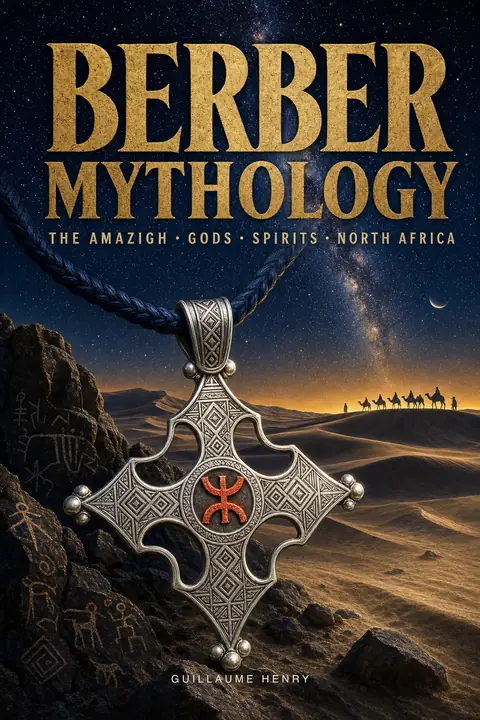
Berber
The Berber Mythology Book: The Gods, Spirits, and Sacred World of the Amazigh
The Amazigh: Gods, Spirits, and North Africa
The beliefs of North Africa’s first people, the Amazigh, who were old when Carthage was young: the sun and the moon, the jnun of the wild places, the cult of the ancestors and the caves, the goddess the Greeks called Athena, and a tradition that outlived every empire.
More from Berber
All articles
Berber
The Azru Oak: Sacred Tree Cult and Ritual Sites in Berber Tradition
The Azru Oak stands as the living spine of Berber sacred geography, where tribal councils, healing rites, and offerings to ancestral spirits converged for millennia. Discover how this revered tree shaped Berber law, spirituality, and community bonds across North Africa.
Berber
Masinissa: King and Cultural Hero of Numidia
Masinissa united Numidia and shaped the destiny of North Africa by walking between Carthage and Rome. His reign (202-148 BCE) transformed a fragmented kingdom into a civilized power that wrote its own laws.
Berber
The Hand of Fatima in Berber Symbolism: Protection, Blessing, and Identity Across North Africa
The Hand of Fatima, or Khamsa, is far more than Islamic decoration in Berber culture. It carries layers of pre-Islamic protection magic, women's agency, and ancestral wisdom. Discover how Amazigh communities wove this symbol into identity, ritual, and everyday life across Morocco, Algeria, and Tunisia.

Berber
The Myth of Isli and Tislit: Star-Crossed Lovers in Berber Tradition
Two siblings, separated by their father's curse, meet as strangers and fall in love before discovering their blood bond. The Berber myth of Isli and Tislit explores forbidden desire, family secrecy, and the landscape itself as witness to human tragedy.