

The Myth of Isli and Tislit: Star-Crossed Lovers in Berber Tradition
Two siblings, separated by their father's curse, meet as strangers and fall in love before discovering their blood bond. The Berber myth of Isli and Tislit explores forbidden desire, family secrecy, and the landscape itself as witness to human tragedy.
Contents
Two figures meet on a lonely mountain path in North Africa. One rides out from a hidden palace; the other emerges from a remote village. They are beautiful, young, and utterly alone in the world as they understand it. Neither knows the other's name or origin. Love strikes instantly, violently, with the force of water breaking a dam. They marry in secret. They build a life in those hidden places where lovers hide from the world. Then comes the moment of terrible recognition. The truth arrives not as a whisper but as a shout: they are brother and sister, separated by a father's curse before either could remember.
This is the myth of Isli and Tislit, one of the most enduring and emotionally raw narratives in Berber tradition. It tells of love that blooms in innocence and shatters on the rock of blood kinship. It speaks to the power of hidden knowledge, the cruelty of circumstance, and the way the universe itself can conspire against human happiness. For centuries, this story has moved through the Atlas Mountains and across North Africa in the voices of storytellers, each one adding their own color to the tale while its emotional core remains unshakable.
Unlike many myths recorded in written texts thousands of years ago, Isli and Tislit belongs to an oral tradition still living in Berber (Amazigh) communities. The story exists in many versions, shaped by the regions where it travels, the families who tell it, and the particular sorrows or hopes of each generation. Yet the fundamental shape of the myth remains consistent: separation, innocence, forbidden love, recognition, and a transformation of human sorrow into something that speaks to the sacred landscape itself.
The World Before Love: Family, Curse, and Separation
The myth begins not with the lovers themselves but with their father, a man of wealth and power in the ancient Berber world. In some versions, he is a king; in others, a nobleman. What matters is that he has two children born to him: Isli and Tislit, a son and daughter. The father's relationship with his wife, their mother, deteriorates. In some tellings, she betrays him; in others, they simply grow incompatible. The marriage fractures.
The father's response is not merely to separate from his wife. It is to tear his children from each other. He cannot tolerate the idea that his son and daughter might know each other, might share the bond of sibling affection. His rage at his wife transforms into a curse upon his own blood. He separates the children. Isli is taken away and raised in isolation, hidden in a palace or fortress in the mountains. Tislit is given to her mother or to another family, raised far away, her origins kept secret from her.
This separation is absolute. The father ensures that neither child will ever know they have a sibling. Neither will hear the other's name. Neither will grow up expecting or remembering family beyond what they are told. The curse is a curse of forgetting, of enforced ignorance. It is also a curse of isolation. Both children grow up alone in different ways: Isli in physical confinement, Tislit in the mystery of her own identity.
Years pass. The father may die; the curse may persist in the silence of those who guard these secrets. Isli reaches manhood in his hidden place. He is handsome, accomplished, educated in the ways considered noble in his world. But he is also profoundly lonely. He has been taught nothing of connection, nothing of the world beyond his walls. One day, the restraint that held him breaks. He rides out into the open.
Tislit has grown into a young woman of extraordinary beauty and grace. She has been raised among people who love her but who keep her parentage shrouded. She knows she is different, marked by something unspoken, but she does not understand what. She does not know she is a king's daughter. She does not know she has a brother. She knows only that she is alone in a way that other young women around her are not.
The Moment of Meeting: Innocence and Desire
The myths do not specify a single place for this meeting. In some versions, Isli travels and encounters Tislit in a village or at a well. In others, they meet on a mountain road. In still others, fate brings them to the same place as if drawn by something neither could name. What all versions preserve is the quality of that first moment: the shock of recognition that has nothing to do with actual knowledge. They see each other, and something ancient in them responds. They see beauty, yes, but more than that. They see something that mirrors themselves.
Isli approaches her. Tislit does not flee, though she has been taught caution about strange men. Instead, she feels the pull of familiarity. They speak. They discover they have much in common, though they cannot name why. Their thoughts seem to align. Their sense of humor matches. They find themselves wanting to be near each other in ways that feel natural and necessary, as if they had always been meant to occupy the same space.
Love arrives not as a gradual warming but as recognition. In the language of the myth, it is often described in terms of the body's knowledge before the mind's: a sense of rightness, of completion, of coming home. Isli recognizes in Tislit something he did not know he was seeking. Tislit, lonely all her life in ways she never fully understood, finds in Isli an absence of loneliness that feels like returning to a place she has never actually been.
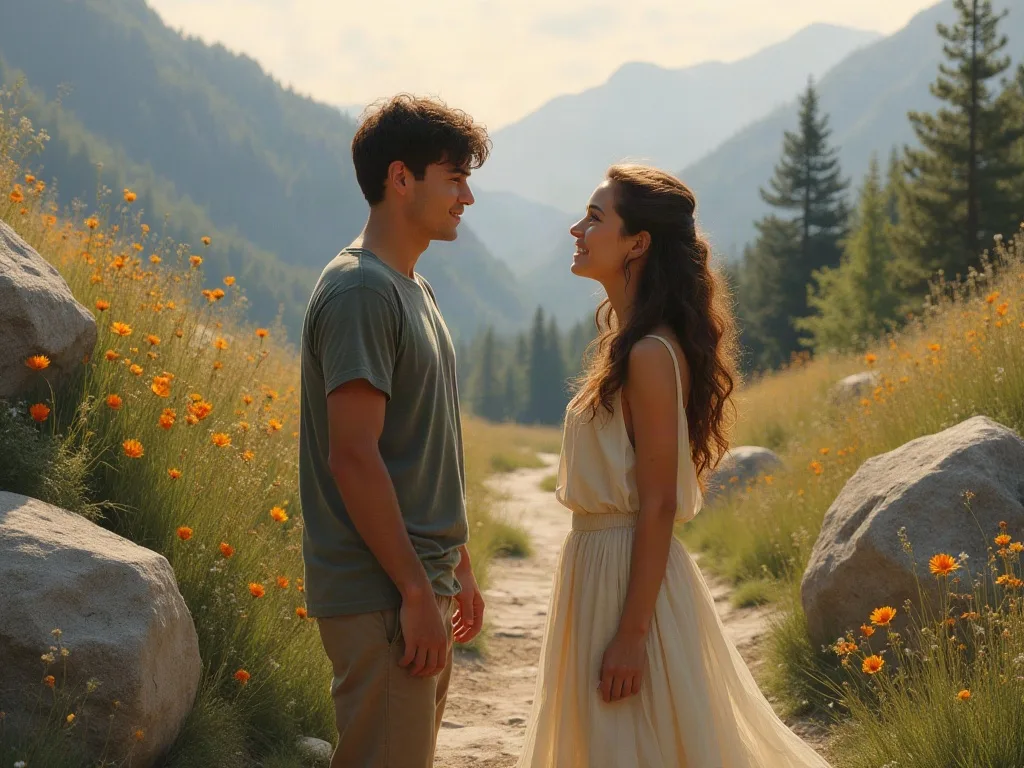
They marry in secret. They build a home together, usually described as hidden and remote. In many versions, it is a place blessed by the natural world in ways that seem to confirm their union: a valley with water, grass, shelter from wind and sun. They are happy in a way that transcends mere contentment. Their love seems to carry the force of something fated, blessed by the universe itself. The myths often suggest they are living outside normal time during this period, as if the world has paused to allow them their happiness.
The Curse Fulfilled: The Moment of Recognition
But myths do not end in villages hidden away from the world. The truth emerges. In some versions, a stranger arrives and recognizes them. In others, they encounter someone from their past who speaks a name that breaks the spell. In still others, the revelation comes through a physical mark or resemblance that can no longer be hidden. The exact mechanism varies, but the result is always the same: they discover they are siblings.
The moment of realization is rendered in the myths with devastating simplicity. Love does not stop. Desire does not evaporate. But the nature of everything they have built, everything they are to each other, transforms in an instant into something forbidden, incestuous, a violation of the most fundamental laws that structure human society. They have committed no wrong in their hearts; their hearts knew nothing of blood kinship. Yet they are guilty all the same. The curse their father laid upon them, the separation he enforced, has brought its terrible fruit.
Different versions handle the aftermath in different ways. In some, the lovers face their situation directly and choose to remain together, accepting that they have become outcasts, that the world cannot accommodate them. In others, they are torn apart by shame and horror at what they have unknowingly done. The grief is absolute. They have lost not just their happiness but their innocence. They have become, in the eyes of their world, a warning about the consequences of secrets, of hidden knowledge, of the past asserting itself upon the present.
The Transformation: Love Becoming Stone
What distinguishes Isli and Tislit from many tragic myths is what happens at the moment of their greatest despair. The lovers do not simply die of sorrow, though they may. Instead, they are transformed. In the most famous and widely told version of the myth, their bodies transform into stone. They become two mountain peaks.
This is not a punishment imposed by gods or by a curse-maker's voice. Rather, it seems to be a natural consequence of emotions so overwhelming, of love so profound and grief so absolute, that the human form cannot contain them. Their sorrow is so complete that stone is more appropriate to it than flesh. Their love, which cannot be expressed in the world of humans, becomes permanent. It becomes landscape. It becomes part of the earth itself.
The two peaks that bear their names stand in the Anti-Atlas Mountains of Morocco, a place of stunning beauty and profound isolation. Isli and Tislit, now stone, remain together eternally. They are separated by a small distance, close but not touching, a physical manifestation of their tragic situation. Lovers who travel to these peaks often bring offerings and tell the story to each other, acknowledging the power of a love that transcended its own destruction.
The transformation into landscape is significant in Berber tradition and in many mythologies of the Mediterranean and North African world. It suggests that human emotion, when extreme enough, can remake the world. It also suggests that there are forms of permanence available to lovers even when social and biological law forbids them. Isli and Tislit cannot live as man and wife, but they can live as the earth itself. Their love does not fade; it becomes elemental.

Forbidden Love in Berber and Mediterranean Context
The myth of Isli and Tislit engages with themes that have preoccupied cultures across the Mediterranean and beyond for millennia. The prohibition against incest is not invented by this myth; it is ancient and near-universal. Yet the way the myth approaches it is distinctive. The lovers are not condemned for their desire itself but for their ignorance. They are presented not as villains but as victims of secrets kept by those who should have protected them.
This reflects a sophistication about human nature and moral complexity that runs deep in Berber thought. The myth acknowledges that innocence can exist alongside transgression. It suggests that the social law against incest is real and binding, yet it does not frame the lovers as deserving punishment for falling in love. Instead, it frames the situation as tragic precisely because no one is truly to blame. The father who separated them is cruel and short-sighted. The lovers are innocent. Yet the consequence is sorrow that cannot be avoided.
The theme of hidden identity and its terrible revelations appears in mythologies across cultures. Compare the myth to the story of Oedipus, the Greek hero who killed his father and married his mother without knowing their identities. In the Greek tradition, Oedipus's unknowing acts are presented as violations that require ritual purification and exile. In Isli and Tislit, there is more emphasis on the lovers' innocence and less on divine punishment. The tragedy emerges from circumstance and human choice, not from the will of angry gods.
The myth also speaks to the power of secrecy in the ancient world. Before written records became ubiquitous, before official documentation made hidden identities nearly impossible, secrets could be kept across lifetimes. A child could be raised with no knowledge of their origins. A parent could enforce such absolute separation that siblings became strangers. The myth takes this real historical possibility and explores its emotional consequences. What happens when the world's most basic relationships are unknown?
The Landscape as Character: Geography and Myth
One of the most striking features of Isli and Tislit is the way landscape functions not merely as setting but as a character in the story. The mountains are not neutral. They witness the lovers' meeting, shelter their secret life together, and ultimately provide the only form of permanence available to them.
This relationship between human story and geographical feature is characteristic of Berber mythology and of many oral traditions rooted in specific places. The mountains, the wells, the valleys named in the story are real. They can be visited. The myth is not timeless and placeless; it is anchored in the actual world that the people who tell it inhabit. When someone travels to the Anti-Atlas Mountains and sees the two peaks, they are not encountering a metaphor. They are encountering the myth made physical.
The Berber peoples of North Africa have a profound connection to the landscape they inhabit. The Atlas Mountains have shaped not only the material conditions of life but also the spiritual and imaginative life of these communities. The myth of Isli and Tislit is one way that this relationship is expressed. The mountains are not indifferent to human sorrow. They can transform it. They can preserve it. They can make it eternal.
This contrasts with many mythological traditions that locate ultimate power in heaven or in divine beings who operate above the material world. In Isli and Tislit, the earth itself is responsive to human emotion. The transformation into stone is not a descent or a diminishment. It is an elevation, a way of achieving a permanence that flesh cannot achieve.

Scholarly Approaches and Transmission
The myth of Isli and Tislit was recorded in written form relatively recently, compared to other ancient myths. The earliest systematic collections of Berber oral traditions were made in the 19th and 20th centuries, by Berber scholars and by outside researchers. This means the myth comes to modern readers not directly from ancient texts but through the work of people who listened to storytellers and attempted to preserve what they heard in writing.
This raises important questions about authenticity and transmission. How faithfully does a written text capture an oral story that changes slightly each time it is told? How much have colonial and post-colonial contexts influenced the versions that have been preserved? Berber scholars today, including those from communities where the myth is still actively told, have worked to document and honor the diversity of versions while recognizing the unifying emotional and narrative core.
The myth appears in regional folklore encyclopedias and has been included in comparative studies of Mediterranean mythology and romantic literature. Some scholars connect it to broader patterns of love and transgression in Mediterranean and North African storytelling traditions. Others emphasize its uniqueness and the way it reflects specific aspects of Berber social structures and values.
One significant aspect of the scholarly discussion concerns the role of the father's curse and what it reveals about family structures in ancient Berber society. The absolute nature of his separation of the children, his ability to enforce such radical isolation, suggests a context in which parental and patriarchal power was considerable. The myth may reflect historical realities about how families, inheritance, and children's lives were controlled in these ancient societies.
Versions and Variations Across Berber Regions
The myth of Isli and Tislit is not owned by a single region or community. It circulates across Berber-speaking areas, from Morocco's Atlas Mountains to parts of Algeria and beyond. Each region, each family line of storytellers, has its own version. Some emphasize the beauty of the lovers' meeting; others emphasize the father's cruelty. Some focus on the moment of recognition and its horror; others move quickly past it to the transformation.
In some versions, the lovers are named differently or their relationship to each other is slightly altered. In some, there are additional characters who help or hinder their love. In some, the transformation into stone is accompanied by other phenomena: a spring appears, flowers bloom, birds gather. The basic structure remains recognizable, but the variations are not failures to preserve a single "true" version. They are evidence of a living tradition that adapts itself to the communities that tell it.
Some versions emphasize the lovers' agency; in these, they choose to live together even after discovering their relationship, and their transformation into stone is something they accept or even welcome. In other versions, shame and horror overwhelm them, and the transformation comes as a kind of mercy, an escape from a situation that cannot be survived in the human world. These variations reflect different values and different ways of thinking about love, family, and transgression.
Modern retellings of the myth, including literary adaptations and contemporary art, have engaged with these variations and sometimes created new ones. The myth has proven remarkably generative, capable of speaking to preoccupations very different from those of its original contexts. Yet the most powerful versions remain those closest to the oral tradition, where the focus is on the emotional arc of the story rather than on elaborate explanation or external judgment.
The Myth in Modern Berber Culture and Beyond
In contemporary Berber communities, the myth of Isli and Tislit continues to be told. It appears in children's stories, in literary works, in academic studies of folklore, and in the oral tradition itself. The two peaks in the Anti-Atlas Mountains remain pilgrimage sites and places where the story is recounted. Lovers visit. Storytellers gather.
The myth has also been discovered and engaged with by audiences beyond Berber communities. Versions have been translated into French, English, and other languages. It has been adapted as a play, as a poem, and as a novel. Each adaptation brings the story into conversation with the concerns of a new time and place. Some adaptations emphasize the romantic tragedy; others focus on questions of identity and social law. Some contemporary versions explore the myth's implications for understanding incest and family trauma in ways that would not have been articulated in older tellings.
This circulation of the myth demonstrates something important about how traditions work. A myth is not a fixed object that loses its power once removed from its original context. It is a story that can travel, that can be retold, that can speak to new audiences precisely because its emotional and narrative core is strong enough to carry different meanings in different times. Isli and Tislit remains powerful because it engages with fundamental human experiences: love, loss, identity, and the terrible consequences of secrets.
Why the Myth Endures: Timeless Themes, Earthly Consequences
The power of Isli and Tislit lies partly in its emotional honesty. It does not offer easy answers. It does not present love as redemptive or transformative in the way that many Western romantic narratives do. Instead, it acknowledges that love can be beautiful and devastating simultaneously, that innocence and guilt can coexist, and that some situations cannot be resolved in a way that allows human happiness to continue.
The transformation into stone is often interpreted as the ultimate consequence, but it can also be read as the only resolution available. The lovers cannot live as man and wife in a world governed by laws against incest. They cannot unknow what they have learned. They cannot go back to their former happiness. The only escape from this impossible situation is to become something other than human. Stone, unlike flesh, is indifferent to shame. Stone, unlike the human heart, does not grieve.
The myth also speaks to the way that family secrets and hidden identities shape human lives. In the modern world, where DNA testing and global documentation systems make such total ignorance nearly impossible, the myth may seem less immediately relevant. Yet its deeper concern remains vital. How much of our identity is determined by information we are given or denied? How can the absence of knowledge about our origins shape who we become? What happens when hidden truth emerges?
The landscape transformation at the heart of the myth suggests that some forms of love escape the social codes that govern human behavior. The peaks that bear the lovers' names are not a punishment; they are a preservation. In stone, Isli and Tislit are together eternally, neither condemned nor requiring forgiveness. They simply are, part of the earth itself, eternally beautiful and eternally tragic.
Frequently asked questions about Isli and Tislit
Frequently asked questions
Where do the Anti-Atlas Mountains peaks named Isli and Tislit actually stand?
The two peaks bearing the lovers' names are located in the Anti-Atlas Mountains of southern Morocco, near the town of Tafraout. The peaks remain important geographical and cultural landmarks, easily visible from the surrounding landscape. Visitors often trek to the site to see the formations and reflect on the myth. The exact coordinates and accessibility of the peaks vary depending on the specific version of the story being told, as different communities identify different formations with the lovers.
Is Isli and Tislit a myth unique to Berber cultures, or does it appear in other Mediterranean traditions?
The myth as told and transmitted is distinctly Berber, with roots in North African oral tradition. However, similar themes of forbidden love, hidden identity, and romantic transformation appear across Mediterranean and Middle Eastern mythology. The Greek myth of Oedipus, the story of Tristan and Isolde (from Celtic tradition as filtered through medieval European literature), and various Islamic-era tales of star-crossed lovers share some narrative structures with Isli and Tislit. What makes Isli and Tislit distinctive is its particular cultural context and its solution of transforming the lovers into landscape rather than having them die, flee, or face divine punishment.
How much of the myth is documented in ancient written sources, and how much comes from oral tradition?
Unlike many myths of Greece, Rome, or the ancient Near East, Isli and Tislit does not survive in ancient written texts. It belongs to the oral tradition of Berber storytelling, likely transmitted verbally for centuries before being recorded in writing in the 19th and 20th centuries. The earliest systematic recordings come from European and Berber scholars collecting folklore in Morocco and Algeria during the colonial and post-colonial periods. This means modern versions are shaped by the collectors, their methods, and the contemporary storytellers they interviewed. The myth's authenticity lies in its continuous transmission through living communities rather than in ancient textual preservation.
Are there different versions of the myth that end differently, or is the stone transformation the only conclusion?
The transformation into stone is the most widely known and most frequently retold ending, but variations do exist. In some versions, the lovers' death is described in different terms, or additional supernatural consequences occur. Some tellings emphasize the lovers' chosen sacrifice; others suggest an involuntary metamorphosis. Some versions include additional characters or events between the moment of recognition and the final transformation. These variations reflect the nature of oral tradition, where each storyteller may adapt certain elements while preserving the core emotional arc. The stone transformation, however, remains the most compelling and most culturally significant conclusion across the communities where the myth is actively told.
What does the myth of Isli and Tislit reveal about ancient Berber attitudes toward family and incest?
The myth reflects a sophisticated understanding that legal and biological prohibitions against incest were real and binding in Berber society, yet it presents a narrative sympathetic to the lovers themselves. The tragedy lies not in their desire or actions, which were undertaken in ignorance, but in the circumstances created by their father's curse and secrecy. This suggests that Berber moral philosophy recognized a distinction between culpability and consequence. The myth also reveals the authority wielded by fathers in controlling children's lives and identities, and the power of secrets to shape entire lifes. The fact that the lovers are presented as innocent and beautiful even as their situation is portrayed as genuinely transgressive shows a nuanced engagement with questions of law, innocence, and consequence.
The Eternal Echo: How Love Becomes Landscape
The power of Isli and Tislit extends beyond the moment of its telling. The myth creates a permanent alteration in the way people experience the landscape where it is rooted. When travelers see the two peaks in the Anti-Atlas Mountains, they see more than geological formations. They see a love story. They see a tragedy. They see the way human emotion can mark the earth itself.
In many cultures, myths do their work primarily through language, through stories told around fires or read from written texts. In Berber tradition, particularly in myths connected to landscape, the work of mythology continues in the physical world itself. The peaks are the myth. They are not a metaphor for the myth; they are the myth made tangible.
This understanding of how stories work, how they persist, and how they shape human experience offers something important to contemporary readers. In a world of infinite digital information, where stories are endlessly reproduced and circulated, the Berber approach suggests that the deepest power of myth comes from its grounding in actual places, actual communities, and actual transmission from one person to another. Isli and Tislit survives not because it is documented in libraries but because people continue to tell it, and because the landscape itself continues to speak it.
The lovers separated by their father's curse, meeting as strangers, falling in love in innocence, and discovering the forbidden nature of their bond, remain eternally present in stone. Their story reminds us that love does not always lead to happiness. That innocence does not prevent tragic consequence. That some forms of connection cannot exist within the world as organized by human law. And that the most profound transformations may come not from triumph but from the acceptance of what cannot be changed, made permanent in the earth itself.
Free 25-page sample
Want the whole story?
Take the first 25 pages free. If it pulls you in, the full edition is yours as an instant PDF download, with a paperback on Amazon for selected titles.
Berber
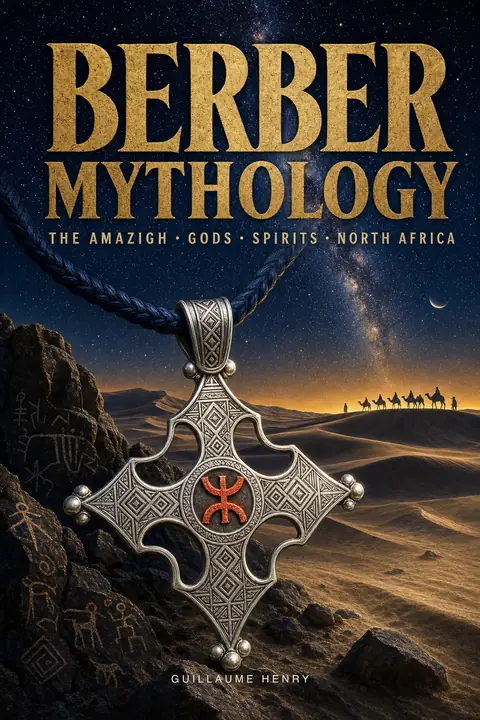
The Berber Mythology Book: The Gods, Spirits, and Sacred World of the Amazigh
The Amazigh: Gods, Spirits, and North Africa
The beliefs of North Africa’s first people, the Amazigh, who were old when Carthage was young: the sun and the moon, the jnun of the wild places, the cult of the ancestors and the caves, the goddess the Greeks called Athena, and a tradition that outlived every empire.
More from Berber
All articles
Berber
The Azru Oak: Sacred Tree Cult and Ritual Sites in Berber Tradition
The Azru Oak stands as the living spine of Berber sacred geography, where tribal councils, healing rites, and offerings to ancestral spirits converged for millennia. Discover how this revered tree shaped Berber law, spirituality, and community bonds across North Africa.
Berber
Masinissa: King and Cultural Hero of Numidia
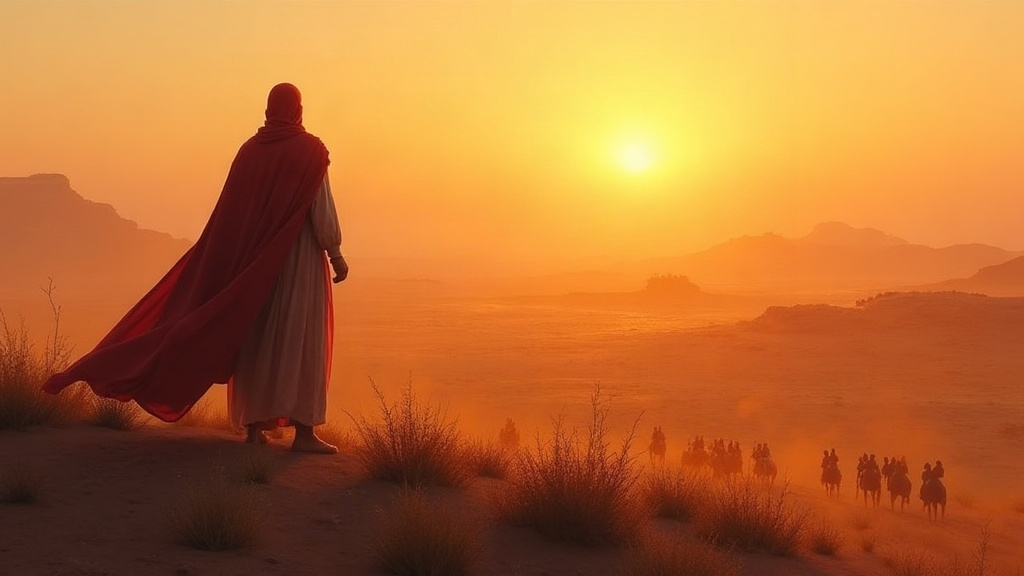
Masinissa united Numidia and shaped the destiny of North Africa by walking between Carthage and Rome. His reign (202-148 BCE) transformed a fragmented kingdom into a civilized power that wrote its own laws.
Berber
Yennayer: Berber New Year and Agricultural Festival
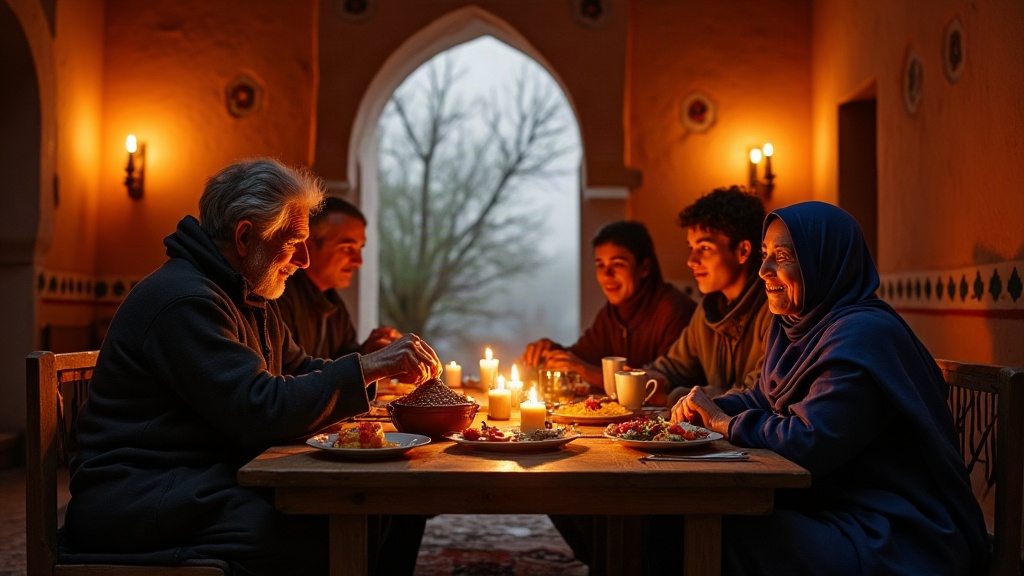
Yennayer marks the Berber New Year on January 14, celebrating the spring planting season and ancestral connection to the land. Discover how this 2,944-year-old festival blends agricultural ritual, family tradition, and cultural identity across North Africa.
Berber
The Hand of Fatima in Berber Symbolism: Protection, Blessing, and Identity Across North Africa
The Hand of Fatima, or Khamsa, is far more than Islamic decoration in Berber culture. It carries layers of pre-Islamic protection magic, women's agency, and ancestral wisdom. Discover how Amazigh communities wove this symbol into identity, ritual, and everyday life across Morocco, Algeria, and Tunisia.