
The Marriage of Anzar: Ritual and Myth in Berber Rain Tradition
When drought threatened the Amazigh world, communities married a young woman to Anzar, the rain god. Explore the myth, the ceremony, and why this ancient rite still echoes across North Africa.
Contents
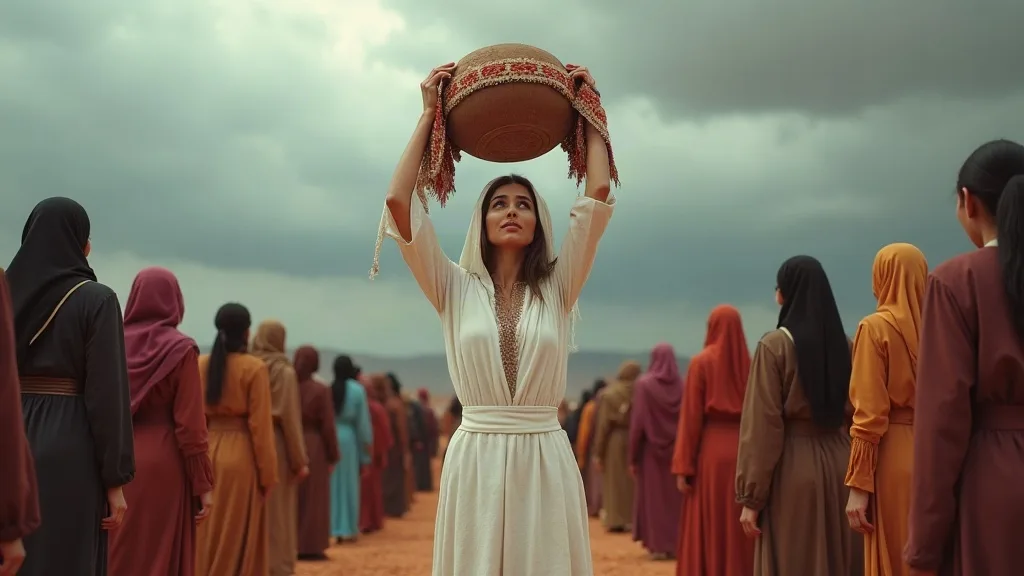
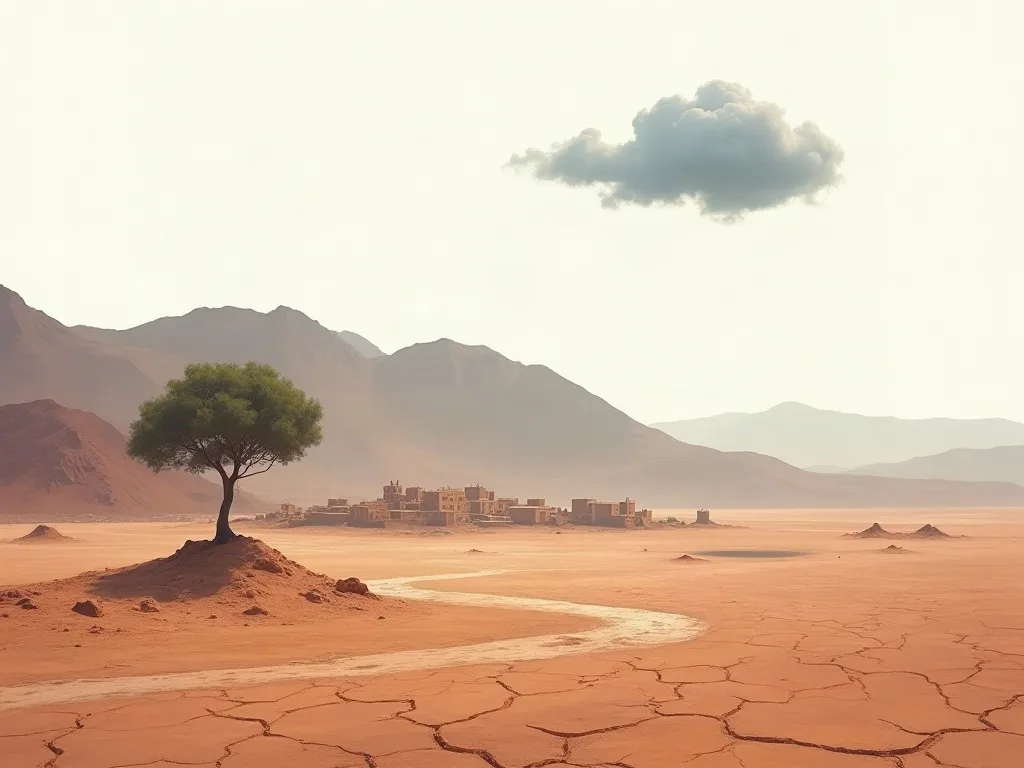
The sky has been white for weeks. No clouds. The earth cracks in long, dry seams across the field. Somewhere in a Kabyle village in northern Algeria, the women gather, choose their most spirited girl, and begin to prepare her wedding dress. She will marry the sky.
The Marriage of Anzar is one of the oldest surviving ritual myths of the Amazigh people, the indigenous Berbers of North Africa. It answers a question every agricultural people has faced: what do you do when the rain refuses to come? The Amazigh answer was not prayer alone, not sacrifice alone. It was a wedding. The community would stage a full marriage ceremony between a young woman and Anzar, the invisible god of rain, coaxing him down from the clouds through desire, music, and the social contract of matrimony.
This is not a story safely locked inside ancient texts. Ethnographers recorded versions of the rite across the twentieth century among Kabyle communities in Algeria and among Tachelhit-speaking groups in Morocco. The myth is alive in memory, in song, and in the continued practice of rain-calling ceremonies that persist in rural areas to this day.
Who Anzar Is: the Sky God of the Amazigh World
Anzar (also spelled Anzar, Enẓar, or Anzal in some regional dialects) is the Amazigh deity of rain and sky. His name derives from the Tamazight root connected to water and flow, though scholars debate the precise etymology. French ethnographer Emile Laoust, who documented Berber rituals in Morocco in the early twentieth century, described Anzar as a spirit who inhabits the upper atmosphere and controls the passage of rain clouds across the Atlas Mountains and the Maghrebian plain.
Unlike the warrior rain gods of some other traditions, Anzar is not violent by nature. He does not throw lightning in anger or flood rivers out of spite. He is, more precisely, a presence that can become absent. When Anzar withdraws, the land dries. When he is drawn back, rain falls. His personality in the myths is almost gentle, even yearning. He wants what any unmarried figure in a traditional society wants: a companion, a home, a reason to stay.
This characterization connects Anzar to a broader class of sky-husband deities found across the Mediterranean and sub-Saharan world, though the Amazigh tradition handles the theme with particular directness. The sky does not need to be tricked or defeated. It needs to be married. That single conceptual move shapes everything that follows.
The Myth at the Heart of the Ceremony
The narrative behind the ritual exists in several versions, none of them written in a single canonical text. Instead, the myth lives in oral transmission, in the verses sung during the ceremony, and in the explanations elders give when younger community members ask why the rite is done this way. Reconstructed from ethnographic records, the core story runs roughly as follows.
Long ago, a great drought settled over the land. The harvests failed. The springs went dry. The people prayed, but the sky stayed white and silent. One night, a young woman dreamed of a man standing in a gray cloud, looking down at the village. He was tall, his face the color of rain on stone. He said nothing, but his expression was unmistakably lonely.
The woman woke and told the village elders. They understood immediately. Anzar was not punishing the people. He was waiting. He had seen the village and wanted to be part of it, but no one had invited him in the proper way. The community had forgotten their obligation to the sky. And so the elders decided: they would offer Anzar a wife.
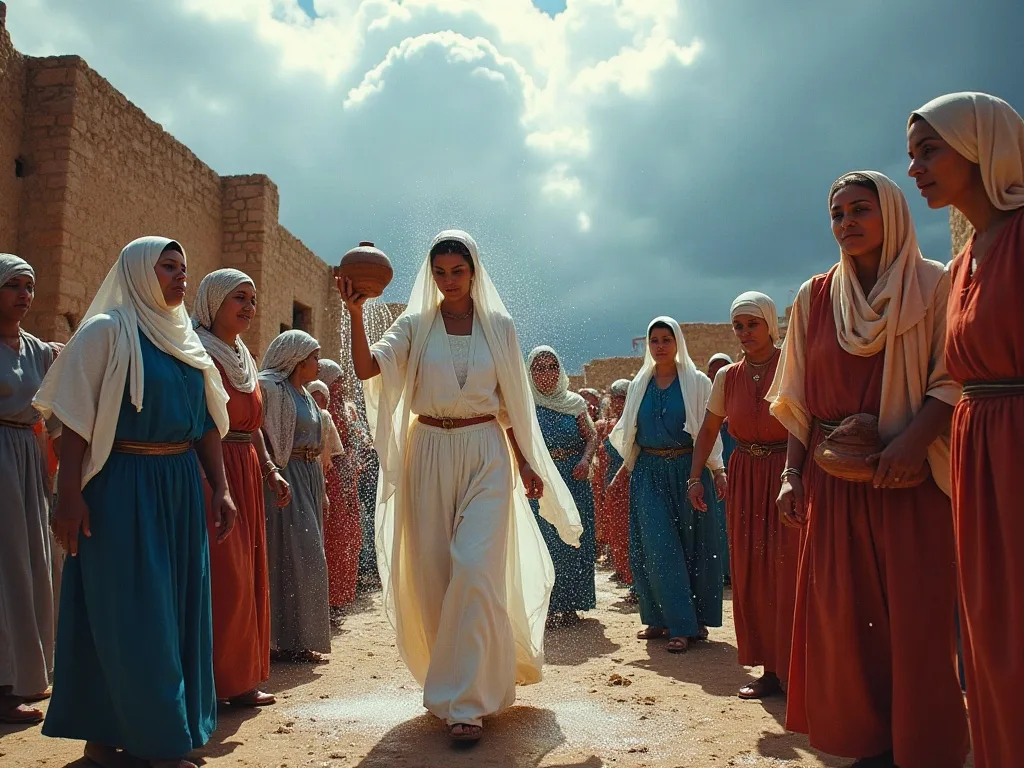
They chose the young woman who had dreamed of him. They dressed her in bridal clothes, covered her face with a sieve (in some versions, a wooden ladle) filled with water to represent the clouds, and led her through the village in a bridal procession. The women sang his name. They poured water over the bride's head. They asked Anzar to come down, to join his wife, to fill the fields and the wells and the cisterns.
Before the procession ended, rain began to fall.
The myth encodes a specific theology. Rain is not a random meteorological event but a relationship. The sky god has feelings. He responds to invitation. And crucially, the village as a collective body holds the power to summon him, not through force but through love, through the careful staging of a social ceremony he cannot refuse.
The Ritual Structure: What Actually Happened
The ceremony itself, documented in fieldwork by scholars including Tassadit Yacine and Pierre Bourdieu (whose early ethnographic work in Kabylia in the 1950s and 1960s touched on rain rituals), followed a recognizable pattern with local variations.
A girl or young woman was chosen, often described as being spirited, unmarried, and socially vital to the community. She was dressed in bridal finery. Crucial to the ceremony was the use of a tirenja (sometimes written tirenji), a wooden ladle or sieve decorated with cloth and sometimes with grain, which the bride would hold over her head. This object represented the cloud-vessel, the container that holds rain before releasing it.
The procession moved through the village in a specific order:
- Women led the procession, singing invocations to Anzar by name.
- The bride walked at the center, her head covered or her face partially hidden.
- The group stopped at thresholds: the village well, the edge of the fields, the entrance to the communal space.
- At each stop, water was poured over the bride, saturating her clothes.
- The songs grew louder and more rhythmic as the procession reached its end point.
The pouring of water over the bride was not symbolic of rain already fallen. It was an act of sympathetic magic, showing Anzar what was wanted by enacting it. The bride's wet clothing was the visual argument: this is how the land should look, this is what we are asking for.
After the procession, the community prepared a communal meal, and the bride was formally "married" to Anzar in a ceremony that mirrored, in abbreviated form, an actual wedding. No physical groom stood in, but the commitment was real: the village had pledged one of its own to the sky, and in return, they expected rain.

Anzar in Kabyle Song: the Myth in Verse
The most persistent surviving form of the Anzar myth is not a prose narrative but a song, or more precisely a genre of songs, sung exclusively during the rain-calling ceremony. Tassadit Yacine, a Kabyle scholar and poet who has done more than almost any living researcher to document Amazigh oral culture, transcribed and analyzed several of these songs in her works on Kabyle oral poetry.
The songs address Anzar directly in the second person. They call him by name. They describe his beauty. They tell him his wife is waiting. Some verses describe the land's suffering in terms that parallel a woman waiting for a husband who has traveled too far away: the fields are empty, the rivers are thin, the house has no life in it.
This use of love poetry in a rain ritual is not incidental. The Amazigh tradition treats the relationship between sky and earth as genuinely romantic, not merely metaphorical. Anzar is addressed the way a beloved is addressed in a wedding song, with longing and with the confidence that longing, properly expressed, will be answered. The songs are the persuasion. They are the dowry, in a sense: the village offering its best aesthetic effort to prove it deserves the rain.
One commonly cited verse (translated and discussed by Yacine) runs roughly: "Anzar, come down to us, your bride is dressed and waiting. The earth is thirsty like a widow. Come down, bring your gift, the fields will open for you." The imagery of the widowed earth is not accidental. Without Anzar, the land is incomplete, bereaved, out of proper order. The ceremony restores the order.
Cross-Cultural Echoes: Rain Marriages Beyond the Atlas
Amazigh Anzar Rite
A young woman dressed as a bride is led through the village. Water is poured over her by the community. Songs address the rain deity (Anzar) by name as a lover. The ceremony is understood as a marriage proposal from the human community to the sky god.
Slavic Dodola Ceremony
A girl (the Dodola or Peperuda) is dressed in leaves and flowers, led through the village, and drenched with water. Songs are sung asking for rain. The girl embodies the rain spirit. The ceremony is understood as an invocation through sympathetic enactment.
The structural similarity between the Amazigh Anzar ceremony and the South Slavic Dodola (or Peperuda in Bulgarian tradition) has attracted scholarly attention, with some researchers citing it as evidence of a pan-Mediterranean rain-bride archetype. Both traditions involve a young woman, a procession, water poured over her body, and songs addressed to an absent rain-being. Neither tradition is likely a direct borrowing from the other. The parallel is almost certainly independent, emerging from similar agricultural anxieties and similar conceptual moves across different cultures.
In Hindu tradition, the monsoon is sometimes ritually invited through ceremonies with structural echoes: the land as bride, the rain as groom, the ceremony as the mechanism of reunion. The Indra myth cycle in Sanskrit literature features extended negotiations between gods and humans around the release of rain, though the Vedic framework is considerably more complex and involves cosmic warfare rather than marriage.
The Yoruba tradition in West Africa includes rain-calling ceremonies addressed to Shango, the thunder deity, that similarly involve communal performance and direct address to the deity. The Amazigh tradition sits geographically and culturally between these Mediterranean and sub-Saharan worlds, and the Anzar rite reflects that position.
The Role of Women: Who Holds the Ceremony
One of the most consistent features of the Anzar ritual across all documented versions is that it is organized and led by women. Men may be present, but the procession, the songs, the choice of bride, and the pouring of water are all performed by women. This is not incidental. It reflects a Kabyle understanding of feminine authority over certain thresholds between the human and the sacred.
Pierre Bourdieu, in his ethnographic work on Kabyle society compiled in "The Logic of Practice" (1980, French edition; 1990 in English translation), noted that Kabyle ritual life distributed sacred competencies by gender in precise ways. Fertility, rain, birth, and the interior of the house fell under feminine ritual authority. War, the market, and the exterior public sphere fell under masculine authority. The Anzar ceremony fell clearly on the feminine side.
This matters for how we read the myth. The rain-bride is not a passive sacrifice offered to a hungry god. She is a ritual specialist, the most active figure in the ceremony, the one whose performance is expected to move the sky. The community places its trust in her. Her drenched body is the argument, her voice in the songs is the negotiation, and her "marriage" to Anzar is the covenant the community enters.
This also explains why the ceremony survived so long under conditions of religious pressure. Islam arrived in the Maghreb in the seventh century and over the following centuries became the dominant religion across North Africa. Rain prayers within Islamic practice (salat al-istisqa) are communal prayers led by an imam, addressed to Allah. The Anzar ceremony is structurally quite different. And yet it persisted, often practiced alongside Islamic prayer, because it operated in a separate register of authority, one coded as traditional feminine custom rather than formal theology.
Drought, Desire, and the Theology of Invitation
What makes the Marriage of Anzar theologically remarkable is the assumption embedded in every element of the rite: the divine can be moved by human initiative. Anzar does not come because the crops need him. He comes because he is lonely and because the community has properly extended an invitation. Drought is reframed as a failure of relationship, not a punishment or an act of divine indifference.
This is a subtle and generous cosmology. It locates moral responsibility in the human community, but not as guilt. The community has not sinned. It has simply been negligent in its social duties toward the sky. The solution is not atonement but courtship. The remedy for rain's absence is exactly what the remedy for any absent beloved would be: show up, dress well, sing with feeling, and make an honest offer.
The tirenja, the ladle or sieve held above the bride's head, captures this theology in a single object. It is a container that holds water and releases it through holes. The community is not demanding rain. It is showing Anzar the shape of what they want, trusting him to fill it. The marriage ceremony is, in this sense, a model of the relationship between human prayer and divine response across many traditions: not command, not plea, but the careful staging of conditions in which the desired outcome becomes possible.
These ideas connect to broader patterns in Amazigh sacred thought. The Amazigh world has a rich tradition of shrine-based veneration of local saints (imrabdhen in Tamazight), each associated with a specific landscape, a spring, a mountain, a crossroads. Anzar fits into this framework as a figure who is tied to a specific atmospheric place and who responds to proper ritual acknowledgment. For readers interested in how this localized sacred geography works across the broader tradition, Berber mythology offers the wider frame within which Anzar makes full sense.
Why the Rite Persisted: Memory, Drought, and Living Tradition
The Anzar ceremony has not simply survived as a museum piece. Ethnographers working in the Atlas Mountains in the 1980s, 1990s, and into the 2000s documented its practice in living communities. Drought in North Africa is not a historical problem. The Sahel's edge has moved, climate has shifted, and agricultural communities in the Maghreb continue to face seasons when the rain does not come.
The ceremony's survival is partly practical. It is a community-cohering event at a moment of stress, a reason for people to gather, to sing, to act collectively, when drought is already isolating and demoralizing. It creates social solidarity through shared performance. But it is also persistent because the myth at its heart has not lost its emotional logic. The idea that the world is a network of relationships, that the sky notices the human world and can be addressed as a person, still makes sense to people who live close to land and weather.
The broader Amazigh cultural revival, active since the 1980s and gaining legal and institutional recognition in Algeria (where Tamazight became a national language in 2002 and an official language in 2016) and Morocco (where Tamazight gained constitutional recognition in 2011), has brought renewed scholarly and cultural interest to myths like Anzar's. Poets and musicians, particularly in the Kabyle tradition, have returned to Anzar as a symbol of indigenous identity: the rain god who belongs to this specific land, this specific people, this specific way of reading the sky.
Frequently Asked Questions About the Marriage of Anzar
Frequently asked questions
Is Anzar worshipped today, or is the ceremony purely historical?
The Anzar ceremony persists in living practice in some rural Kabyle and Tamazight-speaking communities in Algeria and Morocco, documented as recently as the early 2000s by ethnographers. It is not practiced universally, and in many areas it has faded from regular use, but it has not disappeared entirely. Its survival exists alongside Islamic practice, occupying a distinct ritual space coded as traditional feminine custom.
What is the tirenja, and why is it central to the ceremony?
The tirenja (also tirenji) is a wooden ladle or sieve, sometimes decorated with cloth or grain, that the rain-bride holds above her head during the procession. It represents the cloud vessel: the container that holds and releases rain. The object enacts through sympathetic logic what the community is asking for, showing Anzar the shape of rain before he has produced it. It is one of the most consistent elements across regional versions of the ceremony.
How does the Anzar myth relate to Berber pre-Islamic religion?
Anzar is understood by scholars as a survival from pre-Islamic Amazigh religious practice, which involved the veneration of local deities, sky spirits, and nature forces tied to specific landscapes. The precise contours of that pre-Islamic religion are not fully reconstructed, since no canonical Amazigh mythological text survives from antiquity equivalent to the Greek Theogony or the Norse Eddas. What we have is oral tradition, ethnographic documentation, and comparative analysis. Scholars like Emile Laoust and Tassadit Yacine have worked to reconstruct the broader belief system from these fragments.
Are there male participants in the Anzar ceremony?
In most documented versions, the Anzar ceremony is organized and led by women. Men may be present as observers or secondary participants, but the core ritual acts, choosing the bride, leading the procession, pouring water, and singing the invocations, are performed by women. This reflects a broader Kabyle ritual logic in which women hold authority over fertility, rain, and the domestic sacred sphere.
Is the Anzar myth connected to any ancient written sources?
No ancient written text specifically records the Anzar myth in the way Homer recorded Greek myths or Hesiod composed the Theogony. The tradition is primarily oral, and its documentation relies on fieldwork conducted from the late nineteenth century onward by French ethnographers (Laoust, Doutté) and, more recently, by Amazigh scholars themselves (Tassadit Yacine). This oral character is itself significant: the myth lives in performance, in song, not on a library shelf.
Anzar in the Amazigh Cultural Revival: the Rain God as Living Symbol
The political and cultural dimensions of the Anzar myth have sharpened since the 1980s. In the wake of the Berber Spring (Tafsut Imazighen) of 1980 in Algeria, when Kabyle students and intellectuals demanded recognition of Amazigh language and culture, figures from the mythological tradition became symbols of a broader identity claim. Anzar, as a deity who belongs specifically to this land, this sky, this people, carries a meaning that extends beyond rain.
Kabyle musicians in the singer-poet tradition (iqewwassen) have incorporated Anzar into songs that address cultural survival alongside the more ancient theme of meteorological prayer. The rain god becomes a metaphor: the community is still dressed as a bride, still waiting for recognition, still singing for what it is owed.
This is how living mythology works. The myth of Anzar does not stay locked in a historical ceremony. It moves into new forms, new struggles, carrying its original emotional logic (we have shown up, we have dressed well, we have sung our best song: now come down) into contexts its original performers could not have anticipated. The sky is still out there. The ladle is still raised. And somewhere in a Kabyle village, a woman is still singing his name.
Free 25-page sample
Want the whole story?
Take the first 25 pages free. If it pulls you in, the full edition is yours as an instant PDF download, with a paperback on Amazon for selected titles.

Berber
The Berber Mythology Book: The Gods, Spirits, and Sacred World of the Amazigh
The Amazigh: Gods, Spirits, and North Africa
The beliefs of North Africa’s first people, the Amazigh, who were old when Carthage was young: the sun and the moon, the jnun of the wild places, the cult of the ancestors and the caves, the goddess the Greeks called Athena, and a tradition that outlived every empire.
More from Berber
All articles
Berber
The Azru Oak: Sacred Tree Cult and Ritual Sites in Berber Tradition
The Azru Oak stands as the living spine of Berber sacred geography, where tribal councils, healing rites, and offerings to ancestral spirits converged for millennia. Discover how this revered tree shaped Berber law, spirituality, and community bonds across North Africa.
Berber
Masinissa: King and Cultural Hero of Numidia
Masinissa united Numidia and shaped the destiny of North Africa by walking between Carthage and Rome. His reign (202-148 BCE) transformed a fragmented kingdom into a civilized power that wrote its own laws.
Berber
Yennayer: Berber New Year and Agricultural Festival
Yennayer marks the Berber New Year on January 14, celebrating the spring planting season and ancestral connection to the land. Discover how this 2,944-year-old festival blends agricultural ritual, family tradition, and cultural identity across North Africa.
Berber
The Hand of Fatima in Berber Symbolism: Protection, Blessing, and Identity Across North Africa
The Hand of Fatima, or Khamsa, is far more than Islamic decoration in Berber culture. It carries layers of pre-Islamic protection magic, women's agency, and ancestral wisdom. Discover how Amazigh communities wove this symbol into identity, ritual, and everyday life across Morocco, Algeria, and Tunisia.