
The Rephaim: Ancestral Spirits and Chthonic Deities in Canaanite Religion
The Rephaim were the honored dead in Canaanite belief, spirits dwelling in the underworld with power over fertility and the living. Discover how ancient Canaanites honored these ancestral beings and why their beliefs echoed across centuries.
Contents
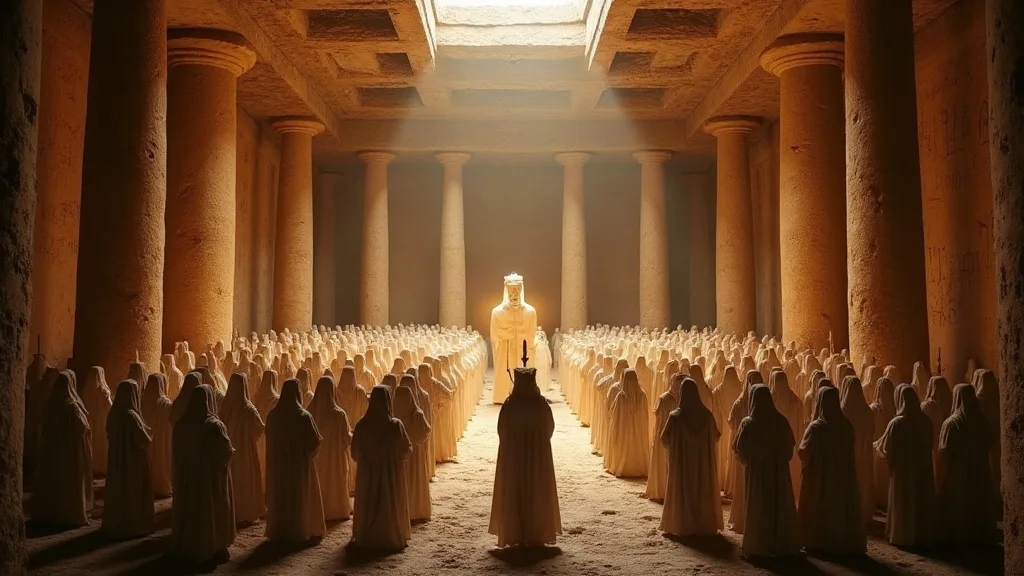
In the underworld beneath Canaanite soil, the dead did not simply vanish. They assembled in the realm below, in the dwelling of Mot, the god of death and the underworld. These were the Rephaim, the ancestral dead transformed into something between spirits and minor deities. They retained memory, power, and appetite. The living brought them food and drink. The Rephaim answered prayers, granted fertility to fields and herds, and could bless or curse their descendants. In Ugaritic and later Canaanite religion, the Rephaim represented ancestral spirits and chthonic deities, a category of being that occupied a strange and crucial middle ground between human mortality and divine eternity.
The word itself comes from the root rp', which carries the sense of "healers" or "shades," though its exact etymology remains debated among scholars. What is certain is that by the second millennium BCE, the concept of the Rephaim was woven deep into Canaanite thought: a recognition that the dead retained agency, that ancestors could mediate between the world of the living and the world beyond, and that proper ritual maintained this essential connection.
Origins and Identity of the Rephaim
The term Rephaim appears first in Ugaritic sources from the 14th to 12th centuries BCE, preserved in clay tablets discovered in the ruins of the city of Ugarit (modern Ras Shamra in Syria). These texts refer to a distinct class of beings: the collective dead who inhabited the underworld and maintained a kind of civic organization among themselves. They were not random ghosts or nameless shadows. The Rephaim formed a society, with hierarchies and roles, much like the living world mirrored in the realm below.
Different scholarly traditions have debated the nature of the Rephaim's transformation. Were they ancestors who became divine through death? Or were they originally divine beings who became associated with the dead? The evidence suggests both: the Rephaim operated simultaneously as remembered human forebears and as chthonic powers. A dead king became a Rephaim; a Rephaim could influence the harvest. This duality was not paradoxical in Canaanite thought. The boundary between human and divine was permeable, especially in the realm of death and the earth.
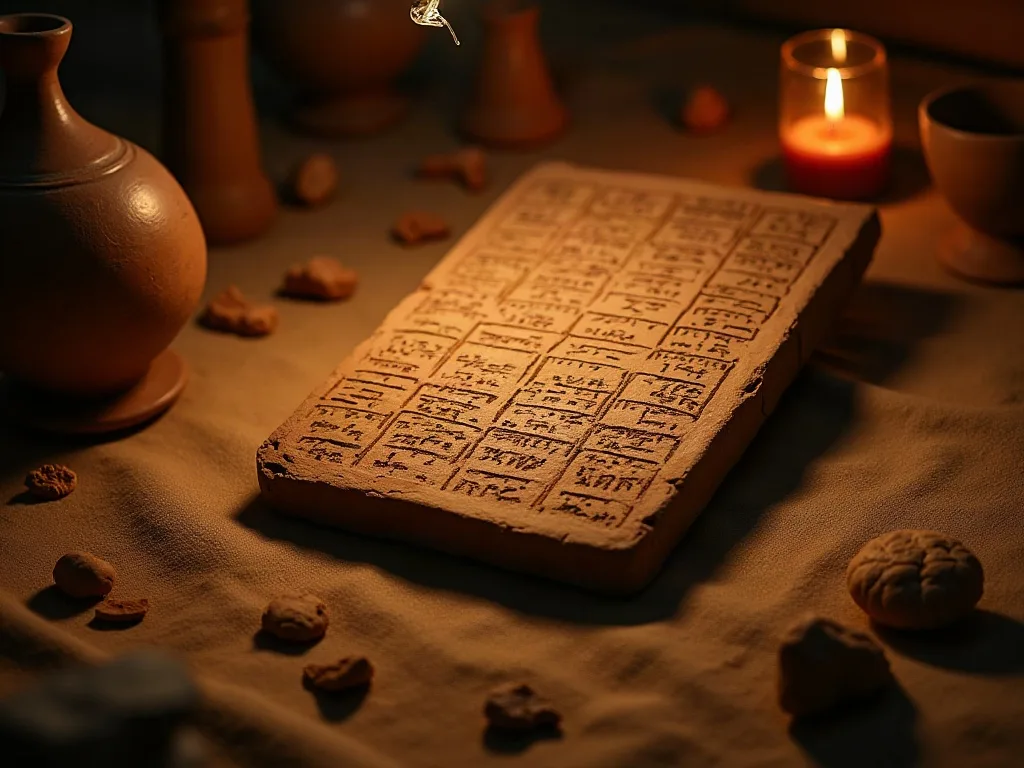
The social structure matters. The text known as KTU 1.161 (a modern catalog reference to a clay tablet discovered at Ugarit) contains what scholars call "the Rephaim text." It describes a gathering of these spirits, led by figures with royal or priestly titles. They are not monsters or demons but organized entities attending to their proper affairs, dining, acknowledging hierarchy. This image contradicts later Greek or Roman conceptions of the dead as pitiful shades. The Canaanite Rephaim retained status, memory, and purpose.
The Rephaim in the Underworld Realm
The realm of the dead in Canaanite belief was not abstract or ethereal. It was a place: the house of Mot, the dark underworld beneath the earth. Mot himself was a deity, one of the oldest and most feared in the Canaanite pantheon. He embodied death, sterility, and the end of all things. His realm was dry, dusty, and lined with the countless dead. Yet within this grim landscape, the Rephaim were not tormented. They held their own world, maintained their genealogies, and participated in a shadowy version of the living world's order.
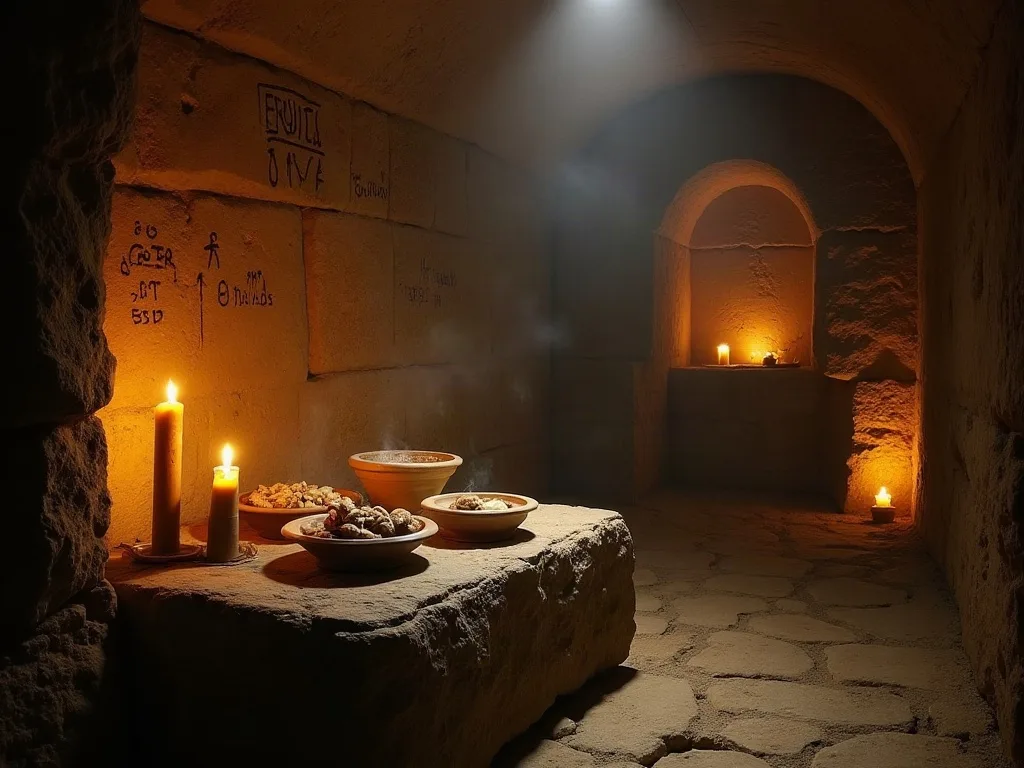
The geography of the Canaanite underworld was mapped in myth and ritual. To reach it, one descended through gates. The Rephaim dwelt in the deepest recesses, beyond the reach of ordinary living humans but close enough to hear prayers and smell the smoke of sacrifices. They were, in a real sense, hungry. One of the most persistent themes in Ugaritic religious practice was the offering of food and drink to the dead. Bread, wine, meat, honey: these were not mere symbolism but nourishment for the Rephaim, keeping them satisfied and favorably disposed toward their living families.
The underworld was not a place of punishment in the Canaanite conception. There is little evidence of moral judgment or reward in death, as we see in later Greek or Christian traditions. Instead, the underworld was a realm of continuity. The Rephaim existed in a diminished state, yes, but not a corrupted one. They were the guardians of genealogy, the memory of lineage, and the power that lineage could convey to the living.
Rituals, Offerings, and Communication with the Rephaim
The Rephaim demanded attention. Canaanite religious practice included regular rituals to honor and appease the dead. These ceremonies, sometimes called klt (from the root meaning "to feed"), involved the presentation of food and drink at the tomb, at altars dedicated to the dead, and in family shrines. The living invited the Rephaim to participate in sacred meals, and the Rephaim, it was believed, consumed the essence of the offering while the living consumed its substance.
This was not mere sentiment. The living depended on the Rephaim. In times of plague, famine, or infertility, neglecting the dead was considered dangerous. A dishonored ancestor could withhold blessing. A family without proper tombs to house and honor their dead stood in peril. The Rephaim were not passive remembrances. They were active agents in the cosmic order, holding the power to grant or deny the fertility that sustained all life.
Certain ceremonies appear to have involved direct communication. Ritual specialists, possibly seers or diviners, would invoke the Rephaim by name, speaking to them across the boundary between worlds. The Ugaritic texts suggest that during sacred festivals, especially those linked to the cycle of the agricultural year, the Rephaim were called upon to bless the crops and the herds. This was not prayer in the sense of petition to a distant god. It was more intimate: calling on the family's ancestors, the foundational Rephaim who had established the family's claim to land and lineage, to extend their favor downward through time.
The Rephaim in Ugaritic Texts and Mythology
The most direct evidence for the Rephaim comes from Ugaritic religious and administrative texts. The text KTU 1.161, which scholars often call the Rephaim text, provides a rare window into how these beings were conceived. It lists Rephaim by name, associates them with royal lineages, and depicts them as performing actions: speaking, gathering, attending to affairs. One passage refers to them preparing for a divine feast, suggesting that the Rephaim participated in the sacred calendar alongside the living gods.
Other references appear in the myths of Baal and Mot, the great struggle at the heart of Canaanite religion. When Baal, the god of rain and fertility, is defeated by Mot and descends into the underworld, he too enters the realm of the Rephaim. This is significant. Even the gods, when they pass through death, become part of the Rephaim collective. The boundary between divine and dead is not absolute but contextual. Baal's death and resurrection directly affect the Rephaim's status. When Baal returns, fertility returns; the Rephaim again receive the gifts that sustain them.
The mythology also suggests that certain Rephaim held greater power than others. Royal ancestors, in particular, seem to have been venerated as particularly potent. A deceased king, transformed into a Rephaim, could intercede with Mot or Baal on behalf of his living descendants. This created a vertical chain of authority: the living king drew legitimacy and power from his royal ancestors; the Rephaim accessed the power of the gods through their position at the boundary between worlds.
Biblical and Later Encounters with the Dead
When Hebrew scripture was written, Canaanite religious practices and beliefs had already spread across the Levant and intermingled with Israelite traditions. The word Rephaim appears in the Bible, notably in the book of Isaiah, where the prophet condemns those who consult with the dead: "When they say to you, seek out the mediums and the wizards who chirp and mutter, should not a people seek after their God? Should they seek the dead on behalf of the living?" This passage reveals that even centuries later, in Iron Age Judah, consultation with the Rephaim or other spirits of the dead was a practiced and contested religious activity.
The biblical tradition portrayed the Rephaim with deep ambivalence. They were recognized as real, as having agency, as being capable of communication. Yet the prophetic tradition increasingly discouraged such contact, positioning it as a deviation from the exclusive worship of Yahweh. This tension suggests that the Rephaim were not invented later but were a persistent, troubling inheritance from older Canaanite practice that the monotheistic tradition had to repeatedly suppress and reframe.
In Greek encounters with the Levantine world, the Rephaim were sometimes conflated with the shades of Hades or with heroes who received ritual honor. By the Hellenistic period, the living Canaanite worship of the Rephaim had largely faded, though the concept persisted in literature and in folk practice. The psyche, or ghost, in Greek tradition carries some echoes of the Rephaim's dual nature: not quite alive, not quite powerless, occupying a strange middle realm.
The Rephaim as Guardians and Healers
One of the most intriguing aspects of the Rephaim is their association with healing. The root rp' from which their name derives may relate to healing or to the divine right of kingship. Some scholars argue the Rephaim were originally understood as healers, wise ones among the dead who retained knowledge and power. This would align the Rephaim with a broader category of ancestral mediators found across many cultures: the dead who, because they crossed the boundary between life and death, possess knowledge and healing power that the living lack.
Tombs in the Canaanite world were not merely burial sites but active shrines. Families would return to the tomb to present offerings, to sleep and dream near the tomb (a practice called incubation), and to seek the counsel of the dead. In this context, the Rephaim were not something to fear but something to consult. A family seeking healing for a sick member might bring an offering to the tomb of a deceased healer, invoke the Rephaim who dwelt there, and ask for intercession.
This healing function connected the Rephaim to fertility more broadly. The Greeks would later understand fertility as the domain of agricultural deities like Demeter. But in Canaanite thought, the Rephaim, as earth-dwellers and guardians of lineage, held a portion of that power. To honor them was to ensure the health and proliferation of family, fields, and flocks. To neglect them was to invite sterility.
Scholarly Debate: Deity, Ancestor, or Both?
Modern scholars approach the Rephaim from different angles, and the interpretation remains contested. One school emphasizes their ancestral nature. The Rephaim are simply the dead, organized by lineage and role, recognized and honored as all ancestors are across human cultures. Another school points to their divine characteristics and their direct participation in ritual and myth, arguing that at least some Rephaim functioned as minor deities, with their own altars and cult.
The most persuasive interpretation may be that the Rephaim were neither exclusively one nor the other but existed in a category that Canaanite thought permitted more readily than later Western traditions. The boundary between divine and human was not fixed but fluid. A royal ancestor became a Rephaim and thereby gained access to divine power. A Rephaim, if sufficiently honored and remembered, could influence events in the world of the living. This is not contradiction but a different ontology: a different way of understanding what kinds of beings exist and how they relate.
Some scholars note that the Rephaim may have been a specific category among the dead, perhaps the elite or royal dead, rather than all deceased persons. This would align with the hierarchies evident in the texts and with the fact that certain families appear to have had particular relationships with particular Rephaim. Others argue that by the Iron Age, the concept had broadened to encompass all the dead, with the most powerful or remembered among them exercised greater influence.
Cross-Cultural Echoes of the Rephaim
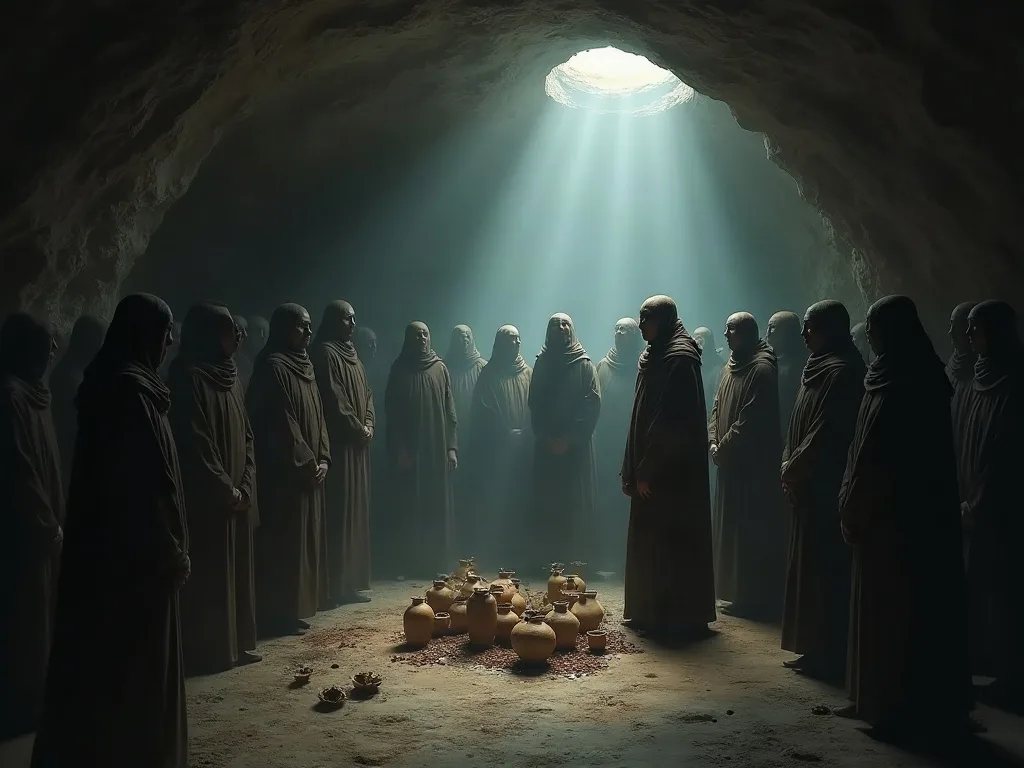
The Rephaim are not unique to Canaanite thought, though their specific expression is distinctive. Similar concepts appear across the ancient Mediterranean and Near East. The Roman Di Manes, the collective spirits of the ancestors, served a comparable function: maintaining the household, requiring propitiation, offering protection and blessing. In Greek thought, the keres and certain psychai occupied a similar liminal space, neither fully divine nor fully mortal.
The relationship between the Rephaim and the later Jewish conception of the afterlife is particularly interesting. While mainstream rabbinic Judaism ultimately rejected consultation with the dead as improper, the concept of the souls of the righteous retaining agency and the ability to intercede persisted in Jewish mysticism and in folk belief. The Rephaim's echoes sound in the idea of the tzaddikim, the righteous dead who maintained a channel to the divine.
In later magical and folk practices across the Mediterranean, necromancy and ancestor consultation continued despite official condemnation. In this context, the Rephaim represented a persistent folk understanding that the boundary between the worlds of the living and the dead was permeable, that the dead had power, and that the living could and should maintain relationship with them. Whether condemned by prophets or embraced by practitioners, the Rephaim's conceptual legacy endured.
Frequently asked questions about the Rephaim
Frequently asked questions
Who exactly were the Rephaim?
The Rephaim were the honored dead in Canaanite belief, a collective of ancestral spirits who dwelt in the underworld and retained agency, memory, and the power to influence the living. They were both revered forebears and minor divine beings, occupying a liminal space between mortality and divinity. The most prominent among them were royal or priestly ancestors whose blessing or curse could affect fertility, health, and family fortune.
What did the living do to honor or appease the Rephaim?
The living presented regular offerings of food and drink at tombs and domestic altars dedicated to the dead, in ceremonies called klt. Families would bring bread, wine, meat, and honey as nourishment for the Rephaim. Some evidence suggests ritual specialists invoked the Rephaim by name during sacred festivals, particularly those linked to agricultural cycles, to seek their blessing on crops and herds. This was not sentimental but pragmatic; neglecting the dead was believed to invite their displeasure.
How do we know about the Rephaim if they are so ancient?
The primary evidence comes from Ugaritic texts, especially those discovered in the ruins of Ugarit in modern Syria, dating to the 14th to 12th centuries BCE. The most detailed source is a clay tablet known as KTU 1.161, which describes the Rephaim by name, lists their roles, and depicts them gathering and acting as an organized collective. Later biblical references to consultation with the dead and warnings against such practices confirm that the belief persisted into the Iron Age and later. Archaeological evidence from tombs, shrines, and domestic altars also illuminates the living practices associated with the dead.
Were the Rephaim similar to ghosts or demons in other cultures?
Not precisely. While later Greek or Roman traditions sometimes portrayed the dead as pitiful shades or potentially dangerous entities, the Canaanite Rephaim were imagined as organized, purposeful, and not inherently malevolent. They retained status and memory. More accurate parallels might be the Roman Di Manes, the collective ancestral spirits who required propitiation and offered household protection, or the Jewish tzaddikim, the righteous dead believed to intercede with the divine. The Rephaim occupied a special middle ground: not quite divine but far more than mere ghosts.
Did worship or consultation of the Rephaim continue after Canaanite civilization declined?
The organized, systematic veneration of the Rephaim as it existed in the Late Bronze Age appears to have faded with the decline of Canaanite city-states and the rise of monotheistic traditions. However, the concepts underlying the Rephaim persisted in folk belief and in certain strands of mystical Judaism and Mediterranean necromantic practice. The biblical book of Isaiah contains prophetic condemnations of those who consult the dead, indicating the practice remained active even as official religious authorities opposed it. The belief that the honored dead retain power and can mediate between worlds is perennial across human cultures.
The Rephaim's Hidden Influence on Later Concepts of the Dead
The Rephaim did not vanish when the last Canaanite city fell. Their idea persisted. In medieval and early modern Europe, the concept of the ancestral dead retaining power and the obligation of the living to honor and propitiate them echoed through folk practices, through the cult of saints (which some scholars see as a Christianized version of ancestor veneration), and through magical traditions. The distinction between the living and the dead was always permeable; the Rephaim had simply given that ancient insight a particular form.
What makes the Rephaim significant to modern readers is not their quaintness but what they reveal about how humans have always thought about continuity. A family does not end with death. The dead remain part of the family, part of the landscape, part of the ongoing story. They hold power because they hold memory and because the living believe they do. In this, the Rephaim were expressing something universal, even as they did so in a distinctly Canaanite idiom.
Contemporary interest in ancestor veneration, in understanding the dead not as gone but as present in a different way, has made the Rephaim newly relevant. They are no longer exotic curiosities but examples of a sophisticated metaphysical understanding: that relationships persist beyond death, that the dead have roles and agency, and that maintaining those relationships is essential to the health and continuity of the living community. In this light, the Rephaim stand as witnesses to an old truth about what it means to be human and to belong to a lineage that stretches backward into the dark and forward into an uncertain future.
Read the full book
Want the whole story?
The complete edition is an instant PDF download here, with a paperback on Amazon for selected titles.
Canaanite
The Canaanite Mythology Book: Baal, El, Anat, and the Gods of the Ancient Levant
Baal, El, Anat, and the Gods of the Levant
The gods the Hebrew Bible warned against, recovered from the clay tablets of Ugarit: El the patriarch, Baal the storm-rider, Anat the war goddess, and Mot the lord of death. The mythology behind the Bible’s great rival.
More from Canaanite
All articles
Canaanite
El: The Father of Gods in Canaanite Religion
El ruled the Canaanite pantheon as the ancient king of gods, a weathered father whose name meant simply "god." Discover how this Syrian deity shaped Near Eastern belief for a thousand years before fading from memory.
Canaanite
Asherah: The Queen of Heaven and Consort of El
Asherah ruled the Canaanite pantheon as the Queen of Heaven, the consort of El, and the mother of seventy gods. Discover how this ancient goddess shaped Levantine belief and why her worship scandalized biblical writers.

Canaanite
Mot: The God of Death and the Underworld in Canaanite Myth
Mot rules the Canaanite underworld with an insatiable hunger, devouring all things mortal. Explore how this ancient god of death embodied fear, finality, and the cosmic struggle between life and extinction.
Canaanite
Anat: The Warrior Goddess of Love and Battle
Anat stands alone in Canaanite myth: a goddess who commands bloodshed and desire with equal fury. Explore the warrior deity who protected kings, seduced gods, and defied every boundary of her world.