
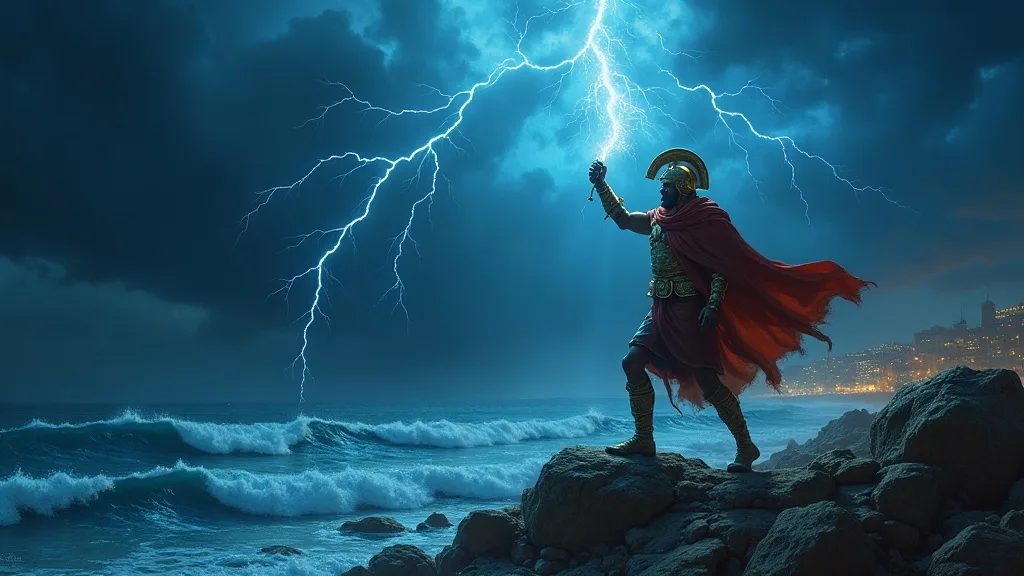
Baal: The Storm God and Lord of Canaan
Baal ruled the skies of ancient Canaan with thunder, rain, and a spear of lightning. His mythic battles shaped Bronze Age religion and echoed from the Bible to the stars.
Contents
The storm broke without warning. Rain hammered the cracked earth of the Levant, cattle lifted their heads toward the darkening sky, and farmers gripped their doorposts and whispered a name: Ba'al. He was not distant. He was present in every crack of thunder, every black cloud rolling in from the sea.
Baal: The Storm God and Lord of Canaan stood at the beating heart of Bronze Age religion across what is now Lebanon, Syria, Israel, and Palestine. He was not one god among many. He was the fighter, the rain-bringer, the cosmic champion who kept the world alive by wrestling death itself back year after year.
His myths were carved onto clay tablets at Ugarit, a port city on the Syrian coast, around 1400-1200 BC. Those tablets, discovered in 1929, gave modern scholars the most complete picture of Canaanite religion ever found. What they revealed was a theology of extraordinary power: a storm deity who fought sea monsters, built a palace in the clouds, and descended into the underworld before rising again, just as the rains return after the dry season.
Who Was Baal? Names, Titles, and the Shape of a Storm God
Baal is not a personal name in the way "Zeus" or "Odin" are. The word ba'al in Northwest Semitic languages simply means "lord" or "master." It was a title, and a god of storms carried it so completely that it became his identity.
His full name in the Ugaritic texts is Ba'al Hadad, where Hadad (or Haddu) is the actual divine name shared across the Semitic world, related to the Arabic Ra'd meaning thunder. The Assyrians and Babylonians called a parallel storm deity Adad. The Arameans worshipped Hadad at Damascus. But it was in Canaan and Ugarit that Hadad became so completely identified with his title "lord" that Baal eclipsed everything else.
He appears in the tablets with a cluster of vivid epithets. He is Aliyan Ba'al, meaning something like "the Mightiest Baal" or "the Prevailing Lord." He is Rkb 'rpt, "Rider of the Clouds," an image so resonant that it reappears almost word for word in the Hebrew Bible's Psalms, applied to the God of Israel. He is the son of Dagan, the grain god, which places him at the intersection of storm and harvest: the rain that makes the grain grow.
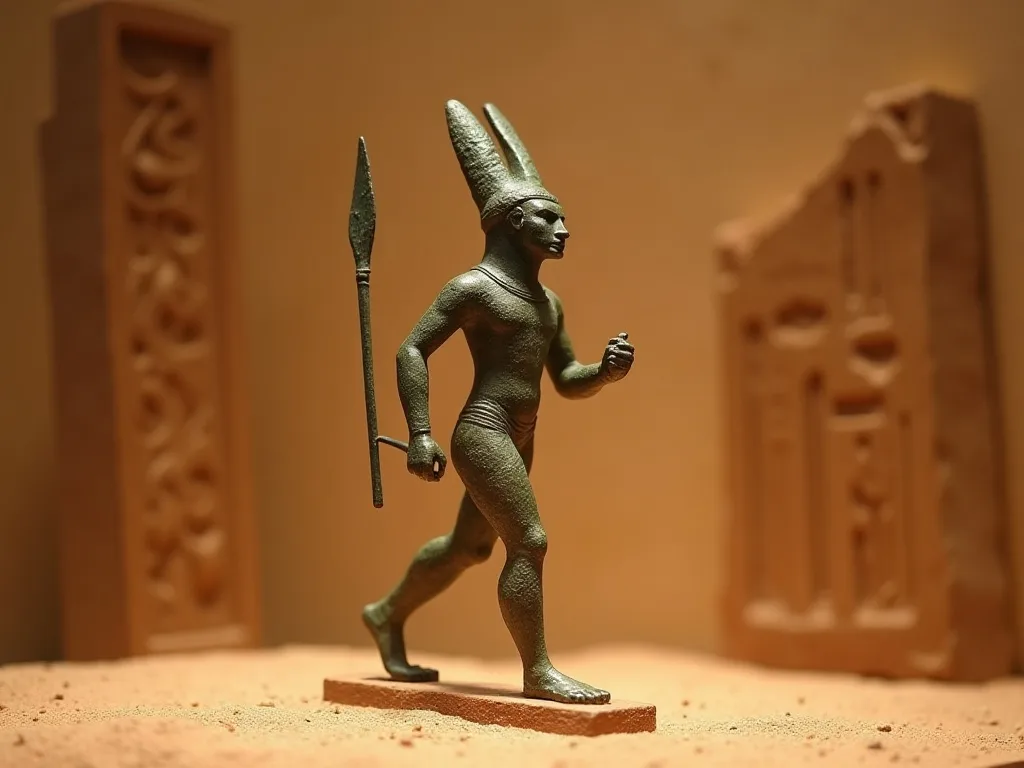
His weapon of choice is the lightning bolt, depicted in ancient Canaanite and Ugaritic art as a stylized spear or club thrust downward toward the earth. Bronze Age statuettes show him in a striding posture, arm raised, war helmet on his head. He looks ready to fight, because in the myths, he almost always is.
The Baal Cycle: Sea, Death, and the Fight for Kingship
The Baal Cycle is not a single story but a sequence of interlocking conflicts that together define what it means to be the lord of creation. Two enemies stand between Baal and the kingship of the gods: Yam (the sea) and Mot (death).
Baal Against Yam
Yam, whose name simply means "sea" in Ugaritic and Hebrew, is the god of the primordial ocean and rivers. He is chaotic, demanding, insatiable. When the divine assembly gathered at the table of El, the high god and father of the pantheon, Yam's messengers arrived to claim Baal as a tribute. El, aging and cautious, seemed ready to yield.
Baal refused.
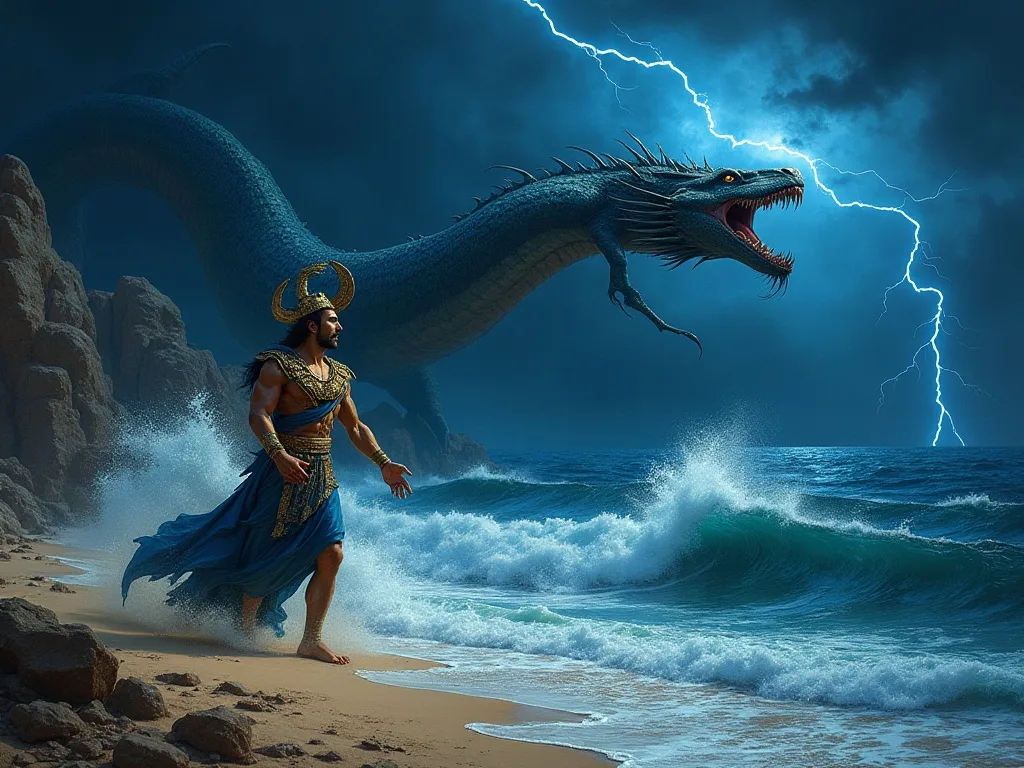
The craftsman god Kothar-wa-Khasis ("Skillful and Clever," the divine artisan) forged two magical clubs for Baal and gave them names: Yagrush ("Driver") and Ayyamur ("Chaser"). With these weapons, Baal struck Yam in the forehead and chest, driving the sea god into the earth. Baal's victory was total. The sea as a mythological force is not simply water; it is chaos held at bay by the storm, which is why this combat mattered so deeply to a society whose harbors and fishing routes depended on weather Baal controlled.
The language in the Ugaritic tablets at this point is genuinely thrilling: Kothar urges Baal to strike, the clubs fly like raptors, and Yam collapses. The goddess Astarte cries out to Baal not to finish Yam entirely, because some power must remain in the sea. Baal restrains himself. The world holds its balance.
The Palace on Mount Zaphon
After defeating Yam, Baal needed a palace. In ancient Near Eastern theology, a divine palace was not a luxury. It was the proof of kingship. Without a house, a god was a wanderer.
Baal petitioned El, the father of gods, through the intercession of Asherah, El's consort and the mother of the divine family. Asherah, the great sea goddess (distinct from Astarte), proved sympathetic. El granted permission, and Kothar-wa-Khasis built a palace of gold, silver, and cedar on the peak of Mount Zaphon, the sacred mountain of the Canaanites, identified with Jebel Aqra on the Turkish-Syrian border today, rising over 1700 meters above the sea.
One detail in the palace-building narrative is striking. Baal initially refused to let Kothar install windows in his new home. He was afraid, the text hints, of Mot, the god of death, whom he suspected could reach through a window to seize him. Eventually, Baal relented and had windows cut, through which the storm could speak in thunder. He immediately sent messengers to Mot, announcing his victory and his sovereignty.
It was the beginning of his second great contest.
Baal Against Mot: The God Who Swallowed the Storm
Mot is death itself, not death as a vague concept but death as a hungry, gaping entity. His name in Ugaritic and Hebrew means "death" directly. His realm is Sheol, the underworld, a dusty place beneath the earth where the dead go and from which no one returns.
Baal's messengers delivered his declaration of supremacy to Mot. Mot's reply was terrifying: he invited Baal to eat a meal in the underworld, and Baal, with what the text frames as fatal courtesy (or perhaps fate), descended.
Baal entered Mot's mouth and disappeared. The tablets describe Mot's gullet as one describes a landscape: lips to the earth, tongue to the sky, throat like a chasm. Baal was swallowed.
El mourned. He came down from his throne, poured ash on his head, and sat in lamentation. The rain stopped. The earth dried. Crops failed. The sun goddess Shapash searched the barren world. Baal's sister-consort Anat, the fiercest warrior goddess of the Canaanite pantheon, refused to accept her brother's death.
What Anat did next is among the most vivid passages in ancient mythology. She found Mot and split him with a blade, winnowed him like grain, ground him like flour, and scattered his pieces in the field. Mot was destroyed - for a season. Baal was revived and returned from the underworld, and rain fell on the earth again.
Mot, however, also revived. The two fought a final combat at the end of the cycle, watched by Shapash, the sun. Neither could permanently destroy the other. Shapash intervened, reminding Mot that El himself backed Baal. Mot withdrew, and Baal remained king.
The seasonal logic is transparent: Baal is the rain, Mot is the killing heat and drought of the Levantine summer. Every year the rains return. Every year Baal is, in a sense, reborn. The myth does not explain this as allegory; it presents it as the literal story of how the world works.
El: The High God Baal Needed to Defeat, and Then to Please
Baal's relationship with El is complicated in a way that feels almost modern. El is the undisputed father of the gods, the patriarch who sits at the source of the rivers of creation. He is ancient, bearded, wise, and sometimes frustratingly passive. He does not fight. He judges.
Baal's kingship is contingent on El's recognition. Without El's blessing, Baal's palace has no legitimacy. The Baal Cycle spends considerable attention on how Baal courts Asherah to win El's favour, because El alone can make the decree that sticks. Even after defeating Yam and Mot, Baal remains, in structural terms, a subject king, not the ultimate source of divine authority.
This tension between a dynamic storm god and a passive but supreme high god appears across ancient traditions. Enlil and Marduk in Mesopotamia, Zeus rising against Cronus, and Indra asserting dominance over Dyaus Pita in the Vedas all echo the same pattern: the active sky warrior who cannot fully displace the older cosmic father.
Scholars like Mark S. Smith, who published his landmark study "The Ugaritic Baal Cycle" in 1994, argue that this structure reflects real theological transitions: a younger warrior deity gaining prominence while an older high god retained nominal supremacy. The Canaanite religious record captures that negotiation in dramatic form.
Anat: The Warrior Who Brought Baal Back
No account of Baal is complete without serious attention to Anat. She is his sister, his ally, and in many passages his fiercest champion. She is a war goddess of shocking violence and boundless loyalty.
The tablets describe her wading through battle, wrists deep in blood, wearing severed heads at her belt and hands at her back. She is not a gentle intercessor. She is a combatant. When Baal dies, she does not pray: she fights her way to Mot and dismembers him.
Anat's relationship with Baal is intense and sometimes ambiguous. Some scholars read a romantic dimension into their bond, and the texts do describe them sleeping together in at least one fragmentary passage. But the primary register is martial fellowship: two storm-era deities, siblings in power, who between them cover the sky (Baal) and the battlefield (Anat).
Anat's iconography spread far. The Egyptians imported her worship directly, calling her a daughter of Ra and a protector of pharaohs. She appears in Egyptian art with a shield and spear. Her influence reached as far as her name appearing in Hebrew personal names (Shamgar ben Anat in the Book of Judges) and possibly in the Greek goddess Athena, though that etymological link remains debated.
Baal and the Hebrew Bible: The Most Famous Rivalry in Religious History
No tradition shaped by Baal is more widely read today than the Hebrew Bible's treatment of him, and none is more hostile.
The prophets of ancient Israel did not deny that Baal existed or that he had followers. They actively argued against him, which means people were genuinely choosing between Baal worship and YHWH worship well into the Iron Age. The Book of Kings records that the Phoenician princess Jezebel, wife of King Ahab of Israel in the 9th century BC, brought 450 prophets of Baal to the court. The prophet Elijah challenged them to a contest on Mount Carmel: both sides would build altars, and whichever deity sent fire from heaven to consume the offering would be recognized as god. The Baal prophets called all day, cutting themselves and crying out. Nothing happened. Elijah's offering was consumed instantly.
The contest on Carmel is the high drama of that rivalry, but the conflict runs through dozens of passages. Hosea uses the language of an unfaithful marriage to describe Israel turning to ba'alim (the plural, covering local Baal manifestations) and abandoning YHWH. Jeremiah condemns Baal by name. The name of the Phoenician god Baal-Zebub ("lord of the flies," possibly a polemical distortion of Baal-Zebul, "lord of the exalted house") enters later tradition as Beelzebub, a demon of the New Testament and Christian demonology.
It is worth noting what the polemics reveal: Baal was not a foreign import but a deeply embedded presence in Canaanite and early Israelite culture. Saul named one of his sons Eshbaal ("man of Baal"). David's descendants include Beeliada ("Baal knows"). The names did not survive into later Israelite orthodoxy unchanged, but their existence shows that for centuries, Baal was simply one name people gave to divine power.

Baal Across the Ancient World: Echoes from Carthage to Greece
Baal was not confined to Canaan. Phoenician colonists carried his worship wherever their ships went, and those ships went everywhere.
Baal Hammon became the chief god of Carthage, the Phoenician colony in North Africa that eventually challenged Rome. The Romans identified Baal Hammon with Saturn and conducted religious exchanges that blurred the two deities. Carthaginian stelae show Baal Hammon seated on a throne flanked by sphinxes, receiving offerings. The Roman writer Diodorus Siculus describes child sacrifices made to him in moments of extreme crisis, a claim that archaeologists have debated fiercely: the tophet sites at Carthage and other Phoenician colonies contain cremated remains of infants, but whether these represent sacrifice or infant burial after natural death remains contested.
In Cyprus and the Aegean, Baal merged with local storm deities to produce hybrid cults. The storm god of the Hittites, Teshub, shares the same combat-myth structure as Baal (fighting the sea serpent Illuyanka instead of Yam) and almost certainly shares a common Proto-Anatolian or early Semitic ancestor. Teshub's mythology illustrates how widely this combat-myth template traveled across the ancient Near East.
The Greek god Zeus absorbed characteristics of the Canaanite storm deity through cultural contact at Cyprus and in the myth of his fight against Typhon, the serpentine chaos monster. The combat at Mount Kasios, the Greek name for Mount Zaphon, is explicit: ancient sources place Zeus's battle with Typhon precisely at the Canaanite sacred mountain, and some versions of the myth were clearly influenced by Baal-Yam combat stories.
Even Baal's title "Rider of the Clouds" (rkb 'rpt) moved. The Hebrew Psalms call YHWH exactly this: the one who rides on the clouds. Scholars like Frank Moore Cross argued in "Canaanite Myth and Hebrew Epic" (1973) that early Israelite theology borrowed wholesale from Baal's image bank, then gradually reassigned those images to a deity whose identity was being sharpened in opposition to Baal worship. The borrowing was deep enough to leave permanent traces in scripture.
Baal Worship in Practice: Temples, Seasons, and Sacred Mountains
What did Baal worship look like on the ground? The texts give some picture, and archaeology fills the gaps.
Temples to Baal existed across Canaan and Phoenicia. At Ugarit itself, the Temple of Baal stood on a raised platform next to the Temple of Dagan, his father. The layout, a long room leading to a raised inner sanctuary, follows a plan also found in early Israelite temple design, suggesting shared architectural theology.
The Baal Cycle's seasonal structure implies ritual re-enactment. The New Year festival, called Akitu in Mesopotamia and likely paralleled in Canaan, may have involved the dramatic performance of Baal's combat and revival. Priests and cult officials would re-enact the storm god's victory over chaos to ensure that the rains would return.
High places, called bamot in Hebrew, were standard Baal worship sites. These were outdoor shrines on hilltops, equipped with standing stones (massebot), sacred poles (asherim, associated with the goddess Asherah), and altars. The Hebrew Bible condemns them repeatedly, but archaeologists have found them across Israel and Jordan, suggesting they were used by communities that mixed Baal worship with YHWH devotion well into the 8th century BC.
Bull imagery was central to Baal's cult. The Ugaritic texts call him "Bull Baal" in at least one passage, and bronze bull figurines found at Canaanite sites confirm the iconography. When the Book of Exodus describes Aaron making a golden calf for the Israelites in the wilderness, and when Jeroboam I later sets up golden calves at Bethel and Dan, the theological horror felt by the biblical editors makes sense against this background: bull imagery was Baal's mark.
Frequently Asked Questions About Baal: The Storm God and Lord of Canaan
Frequently asked questions
What is the primary source for Baal mythology?
The Ugaritic Baal Cycle is the main source, preserved on clay tablets discovered at Ras Shamra (ancient Ugarit) on the Syrian coast from 1929 onward. The tablets date to approximately 1400-1200 BC and were written in Ugaritic, an early alphabetic cuneiform script. Mark S. Smith's 1994 translation and commentary remains the standard scholarly edition. The Hebrew Bible, Phoenician inscriptions, and Hellenistic-era sources provide supplementary material.
Is Baal the same deity as the Baal condemned in the Bible?
Yes and no. The Hebrew Bible uses "Baal" to refer to both the specific storm deity of Ugaritic mythology and to a broader category of Canaanite local gods, since ba'al was also a generic title applied to regional divine lords. The Baal condemned by Elijah on Mount Carmel is generally identified as Baal Melqart, the chief deity of Tyre, whose worship Jezebel promoted. The polemical use of Baal in prophetic literature flattened what was actually a complex set of distinct cults.
How does Baal relate to the later figure of Beelzebub?
Baal-Zebul ("lord of the high abode" or "lord of the exalted house") was likely a legitimate epithet for Baal. The Hebrew Bible transforms it into Baal-Zebub ("lord of the flies"), a mocking inversion, in 2 Kings 1. By the time of the New Testament, Beelzebub had become a name for a demon or for Satan himself. This transformation from storm god to demon is a clear example of how religious polemics rebranded defeated deities as forces of evil.
Did Baal really die and rise again? Is there a parallel to resurrection myths?
The Baal Cycle does depict Baal entering the underworld and being revived, and scholars since James George Frazer's "The Golden Bough" (1890) have drawn parallels to dying-and-rising god motifs in other traditions. However, modern scholars like Mark S. Smith and John Day are cautious: Baal's death is less a theological resurrection than a seasonal myth. He does not die to save others; he falls to Mot's hunger and is retrieved by Anat. The agricultural parallel (rains disappear in summer, return in autumn) is the most defensible reading, not a doctrinal anticipation of later resurrection theology.
What was the relationship between Baal and the goddess Asherah?
In the Ugaritic texts, Asherah is the consort of El, not of Baal. She is the mother of the gods and plays a crucial diplomatic role in securing Baal's palace from El. However, the Hebrew Bible often links Baal and Asherah together as a pair of illicit deities, condemning their joint worship. Inscriptions found at Kuntillet Ajrud (dated to around 800 BC) and Khirbet el-Qom mention "YHWH and his Asherah," suggesting that in popular Israelite religion, Asherah had partially merged with or been grafted onto the consort role, creating a very different theological picture from the Ugaritic original.
How did Baal worship spread outside Canaan?
Phoenician trade and colonization carried Baal across the Mediterranean. Baal Hammon became the chief god of Carthage. Baal Melqart was worshipped at Tyre and exported to Cyprus, Sardinia, Spain, and Malta. The Hittites absorbed Baal-adjacent storm theology through cultural contact with Syria, while Greek mythology shows measurable influence from the Baal Cycle, particularly in Zeus's combat with Typhon on Mount Kasios (the ancient Zaphon). By the Hellenistic period, Baal was being openly identified with Zeus across much of the eastern Mediterranean.
How Baal Lives in Modern Scholarship and Popular Culture
Baal's afterlife in modernity is strange and layered. He spent nearly two millennia as a demon's name in Christian tradition. Goethe places a figure named Baal in the background of Faust's underworld journey. The German playwright Bertolt Brecht wrote his first major play in 1918 simply titled "Baal," using the name to signal an amoral, savage energy at odds with bourgeois morality.
In the 20th century, the discovery of the Ugaritic tablets changed everything. Suddenly Baal was not a demon but a fully realized mythological figure with a rich textual tradition. Scholars began reading the Hebrew Bible with new eyes, noticing how many phrases, images, and narrative structures had been borrowed from or were arguing directly against the Baal Cycle. Frank Moore Cross's 1973 work showed that the early Israelite conception of YHWH as the divine warrior who controls weather and sea drew heavily on Baal's mythology. That argument remains productive and contested.
Today, Baal appears in fantasy fiction, video games, and film as an archetype of the fallen divine: a god reduced to a villain, trailing his ancient power like a shadow. Those portrayals usually miss the real texture of the Ugaritic Baal, who is not evil, not demonic, not even particularly fearsome to the reader of the tablets. He is brave, sometimes reckless, devoted to his sister, and mortally afraid of Mot. He weeps when he descends to the underworld. He bargains, pleads, and fights. He is, above all, the rain.
And in the Levant today, when the autumn storms finally break over the dry hills and the first heavy rain hits the dust, something of that ancient recognition is still there: the sky cracking open, the smell of wet earth, the sense that something powerful has returned from wherever it goes in the summer. The tablets are 3,000 years old. The rain is the same rain.
Read the full book
Want the whole story?
The complete edition is an instant PDF download here, with a paperback on Amazon for selected titles.
Canaanite
The Canaanite Mythology Book: Baal, El, Anat, and the Gods of the Ancient Levant
Baal, El, Anat, and the Gods of the Levant
The gods the Hebrew Bible warned against, recovered from the clay tablets of Ugarit: El the patriarch, Baal the storm-rider, Anat the war goddess, and Mot the lord of death. The mythology behind the Bible’s great rival.
More from Canaanite
All articles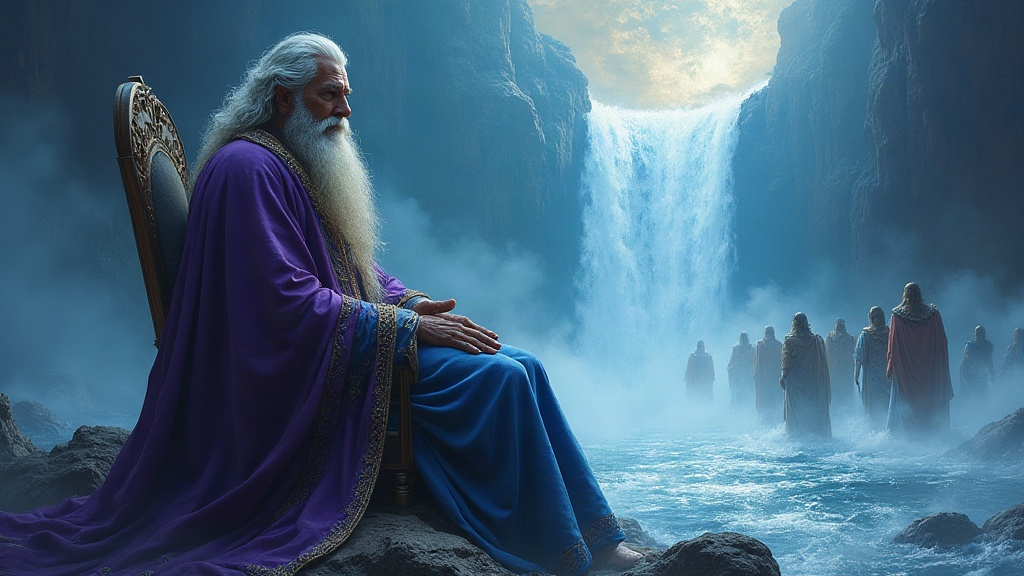
Canaanite
El: The Father of Gods in Canaanite Religion
El ruled the Canaanite pantheon as the ancient king of gods, a weathered father whose name meant simply "god." Discover how this Syrian deity shaped Near Eastern belief for a thousand years before fading from memory.

Canaanite
Asherah: The Queen of Heaven and Consort of El
Asherah ruled the Canaanite pantheon as the Queen of Heaven, the consort of El, and the mother of seventy gods. Discover how this ancient goddess shaped Levantine belief and why her worship scandalized biblical writers.

Canaanite
Mot: The God of Death and the Underworld in Canaanite Myth
Mot rules the Canaanite underworld with an insatiable hunger, devouring all things mortal. Explore how this ancient god of death embodied fear, finality, and the cosmic struggle between life and extinction.
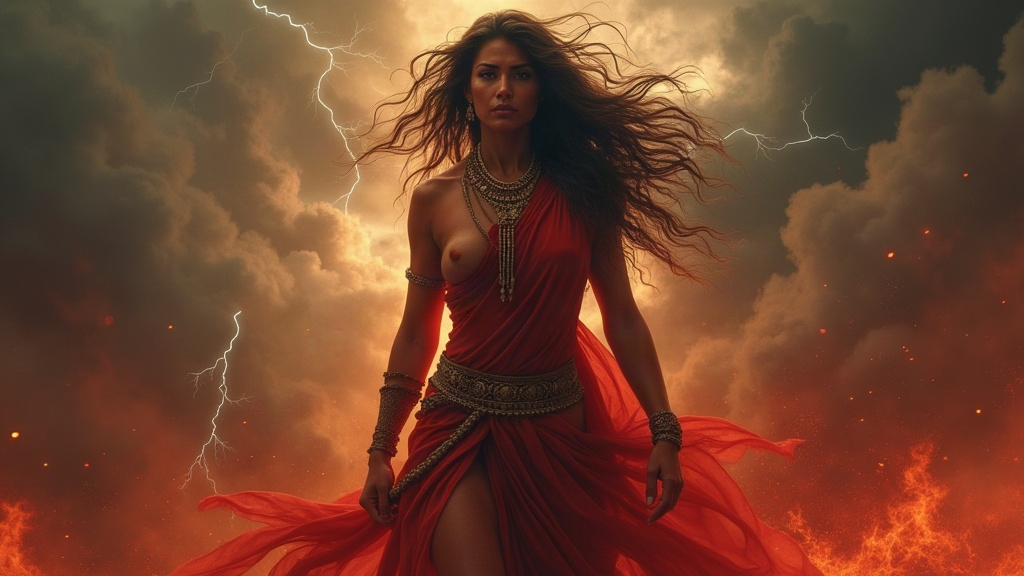
Canaanite
Anat: The Warrior Goddess of Love and Battle
Anat stands alone in Canaanite myth: a goddess who commands bloodshed and desire with equal fury. Explore the warrior deity who protected kings, seduced gods, and defied every boundary of her world.