

Coatlicue: Mother of Gods and the Aztec Pantheon
Coatlicue, the serpent-skirted mother, bore the sun god and ruled over fertility, childbirth, and death in Aztec belief. Discover how the Aztecs honoured her as the generative force behind their entire pantheon and cosmos.
Contents
On a hillside near Tenochtitlan, before all things came into being, Coatlicue swept. She gathered feathers fallen from the sky. This simple act of tidying set the cosmos in motion. A feather touched her skin. She felt desire. She bore a child who would become the sun itself. This is how the Aztecs explained creation; not through distant commands from on high, but through the body and labour of a mother.
Coatlicue, whose name means "Serpent Skirt" in Nahuatl (the language of the Aztecs), stands at the absolute centre of Aztec religious thought. She was not a minor deity worshipped on certain feast days. She was the earth itself made divine. The Aztecs built monumental sculptures of her, carved her image onto temple walls, and prayed to her in moments of birth, plague, and renewal. To know her is to understand how the Aztecs saw existence itself: cyclical, generative, terrifying, and sacred all at once.
The Mexica people (the proper name for the Aztecs) arrived in the Valley of Mexico in the 1300s as relative newcomers, migrants searching for a promised homeland. When they settled on an island in Lake Texcoco and built their great city, they inherited and adapted the religious traditions of older Mesoamerican cultures. Coatlicue was not their invention alone. She was an ancestor goddess reshaped through Aztec imagination. By the time Spanish conquistadors arrived in 1519, she had become absolutely central to how the Aztecs understood power, creation, and their own place in the cosmos.
The Birth of Huitzilopochtli: War, Desire, and Generative Power
The founding myth of the Aztec people revolves entirely around Coatlicue's body. According to the Florentine Codex (a primary text written by Bernardino de Sahagun, a Spanish friar, in the 16th century, documenting Aztec beliefs), Coatlicue lived on Coatepec, a mountain sacred to the serpent. She had already given birth to hundreds of gods. But on a particular day, as she swept the temple, she saw a ball of feathers floating down from above. She picked it up and placed it in her bosom.
Time passed. When she looked to embrace her other children, they noticed she was pregnant. Immediately, her four hundred sons flew into rage. How could their mother bear another child? They plotted to kill her. But Coatlicue carried in her womb a warrior far more dangerous than they could imagine.
Huitzilopochtli, the god of war and the sun, was born fully armed from Coatlicue. He erupted from her womb carrying a serpent of fire and immediately slew many of his siblings. This birth was not gentle. It was explosive, violent, and transformative. The Aztecs retold this story on their most sacred days. Huitzilopochtli's emergence from Coatlicue's body was the metaphorical emergence of the Aztecs themselves as a warrior people destined to dominate the valley.
The feather that impregnated Coatlicue was said to be a sign from the heavens. Some sources identify it as coming from Mixcoatl, the god of hunting, though the Florentine Codex leaves the father ambiguous. What matters is that Coatlicue's fertility was not tied to sexual union with a consort in the conventional sense. She bore the gods through encounters with the divine will itself. Her body was a site where the supernatural entered the material world.
The Serpent Skirt: Iconography and Layers of Meaning
When Aztec sculptors carved Coatlicue, they did not make her beautiful in a way that would comfort the viewer. Her image was designed to inspire awe, fear, and reverence simultaneously. She wore a skirt woven from live serpents. Her hands and feet ended in obsidian claws. Her breasts hung loose and drained. She wore a necklace of human hearts and severed hands. Where her head should have been, two streams of blood flowed from the stump of her neck in the shape of serpent heads facing each other.
This is not grotesque for its own sake. Every element carried meaning. The serpent skirt connected her to the earth and to fertility. The serpent was the creature closest to the soil, moving through it, bearing the soil's coldness and renewal. In Nahuatl, serpent (coatl) was part of words that meant fertility, water, and precious things. Coatlicue's serpent garment was her fecundity made visible.
The necklace of hearts and hands was more complex. Human hearts were the precious water (nextlaoaliztli) that the gods desired. The Aztecs believed that the gods had sacrificed themselves to bring humanity into existence and that humans owed a debt of blood in return. Coatlicue, wearing this necklace, embodied that cosmic transaction. She was not only the giver of life but the drinker of its price.
The streams of blood where her head was severed connected Coatlicue to death. She was not merely the mother of life but also of decay and return. The Aztecs did not separate these ideas into good and evil. Creation and destruction were twins. Coatlicue wore them both on her body. This is why she terrifies us when we see her sculptures in museums today. We are confronted with a deity who encompasses pregnancy and predation, nurture and obliteration, in a single breath.
The Earth Goddess: Coatlicue and the Telluric Divine
In Aztec cosmology, Coatlicue was identical with the earth. This is not metaphor but lived religious identity. The earth was not an inert stage where gods performed. The earth was alive, conscious, and divine. Coatlicue embodied this sacred aliveness.
The word coatl (serpent) also meant "twin" in some contexts. Coatlicue was sometimes called Tonantzin, meaning "our mother". She was prayed to in moments of childbirth, when the boundary between life and death grew thin. Midwives invoked her name. Women who died in pregnancy were believed to become warriors in the afterlife, companions of Huitzilopochtli in the east. Their struggle in birth was transformed into sacred warfare. Coatlicue was the goddess who understood this truth most deeply.
She was also called Cihuacoatl, the Woman Serpent. Under this name, she was sometimes depicted as presiding over the great marketplace of Tlatelolco. Commerce, exchange, and the circulation of goods were forms of cosmic reciprocity. Coatlicue, as the earth, received the labour of humans and returned fertility. She demanded worship and sacrifice. This was not punishment but the structure of existence itself.

The Aztecs understood time as cyclical, moving through five great ages or "suns". Each sun ended in cataclysm. Coatlicue was present in all of them. She was the constant beneath the cycles. After each destruction, she remained, ready to bear new worlds. The Popol Vuh, the great Mayan creation epic, describes similar cyclical destruction and rebirth. Though the Aztecs and Maya were distinct peoples, they shared deep cosmological convictions that the earth itself was both womb and tomb.
The Paradox of Motherhood: Generative Power and Ambivalence
One of the most striking aspects of Coatlicue in Aztec thought is that her role as mother and nurturer was bound up with destruction and dread. She was not the mild protective mother of European folk tradition. She was primal and uncanny.
When Huitzilopochtli was born and murdered his siblings, Coatlicue witnessed this act. The sources tell us she wept. Yet she also accepted it as necessary. The younger gods had to yield to the warrior god who would lead the Aztecs to their destined greatness. The mother who bore them was also the witness to their death. She carried both grief and acquiescence.
This complex maternal figure appears in comparative mythology. The Hindu goddess Kali wears a skirt of severed arms and a necklace of severed heads, though her iconography developed through different historical routes. Both goddesses embody the paradox that the life-giving force is also the death-dealing force. The same body that labours in childbirth also tears and rends. This is not a moral failing but a cosmic truth.
The Aztecs did not separate their mother goddesses into the nurturing and the destructive. A single goddess could encompass both. This made Aztec religious practice psychologically more integrated, in some ways, than traditions that split the feminine divine into virgin and harlot, life-giver and death-dealer. Coatlicue held both sides whole.
The Pyramid of Coatepec: Sacred Mountain and Temple
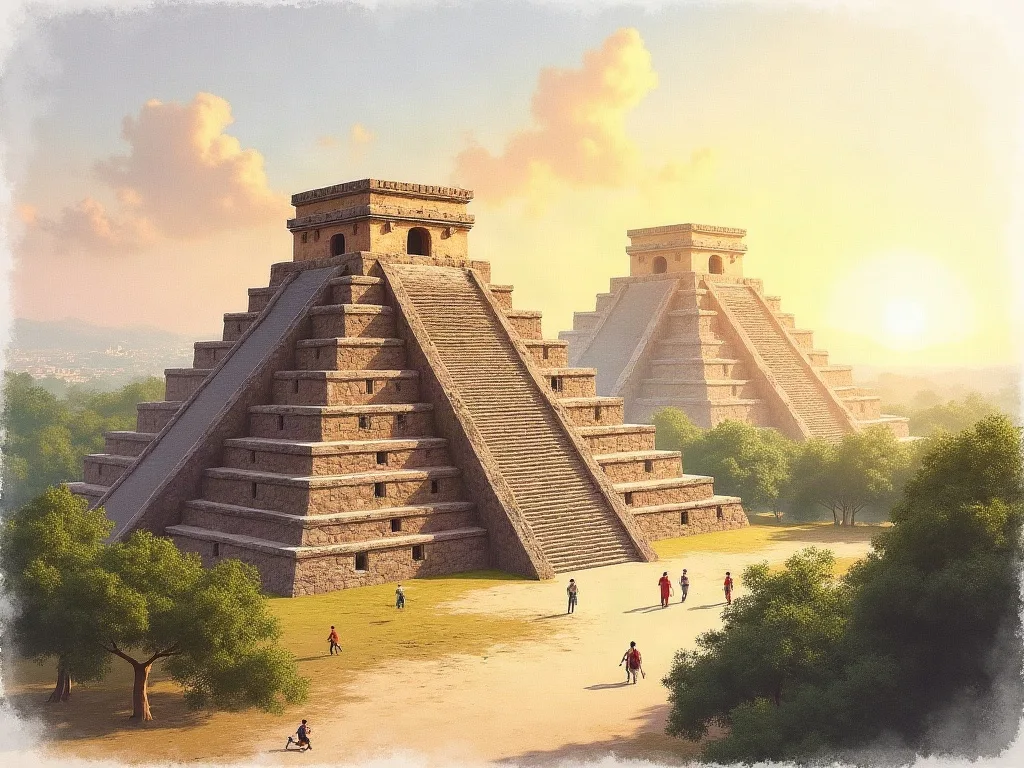
Coatlicue was associated with Coatepec, the sacred mountain where, according to legend, the Aztecs' ancestors received their founding prophecy. This mountain was not merely a geographic location. It was a threshold between the human world and the divine. Huitzilopochtli was born on Coatepec. The Aztecs built the great Temple Mayor (or Templo Mayor) in Tenochtitlan with Coatepec in mind. The pyramid was an earthly replica of the sacred mountain, a place where human and divine could meet.
Excavations in modern Mexico City have uncovered foundations and stones from the original Templo Mayor. Carved blocks showing serpent motifs and images of Coatlicue were discovered in situ, confirming what the Spanish chroniclers wrote. The temple was not an abstract or theoretical space. It was built with stone and labour, a physical anchor for the religious life of the city.
Inside or adjacent to the Templo Mayor were sanctuaries to multiple gods. The greatest of these honoured Huitzilopochtli on one side and Tlaloc, the rain god, on the other. This pairing was fundamental to Aztec survival. The city depended on both war and rain, on the warrior spirit and the generative waters. Coatlicue, as the earth beneath the temple and as the mother of Huitzilopochtli, was the foundation upon which all this religious architecture rested.
Coatlicue in Aztec Daily Life and Ritual
Coatlicue was not confined to mythology. She was a living presence in Aztec religious practice. Priests made offerings to her at specific times in the ritual calendar. The Aztec calendar was composed of two overlapping cycles: a 260-day ritual calendar and a 365-day solar calendar. Certain days and months were sacred to Coatlicue and the functions she governed.
Women in labour called out to her. Midwives, who held high status in Aztec society, were priestesses of Coatlicue in a real sense. They understood the mysteries she embodied. When a child was born, the midwife would cry out in a kind of war whoop, honoring the mother as a warrior. The pain of childbirth was not shameful or hidden but recognized as a form of sacred battle. Coatlicue presided over this transformation of a woman's body into a channel for new life.
The Florentine Codex records that in the month called Miccailhuitontli (the smaller feast of the dead), offerings were made to earth and to Coatlicue specifically. These included tamales made with amaranth seeds, maize cakes, and sometimes the heart of a sacrificial victim. The earth goddess received the most precious offerings the Aztecs could make: the precious water of the heart, as they called human blood, and the staple crops that kept the people alive.
Aztec women of childbearing age were sometimes called Mocihuaquetzqueh, meaning "women who have risen up" or "women warriors". This term recognized that motherhood was a form of warfare, that the woman who bore children was engaged in cosmic service. Coatlicue was their patron and exemplar. She had borne not children but gods. She had witnessed violence. She had endured.
Scholarly Debates and Interpretations
Modern scholars have puzzled over the meaning of Coatlicue's terrifying form. For many years, Western academics struggled to understand why a mother goddess would be depicted so grotesquely. Some early interpretations, influenced by European assumptions about femininity and divinity, suggested that Coatlicue represented a corrupted or debased version of a gentler earth goddess.
More recent scholarship, particularly work by Aztec scholars and indigenous researchers, has reframed this question entirely. The terrifying form is not a corruption but an accurate representation of how the Aztecs understood creation itself: as fundamentally ambivalent, as containing both generation and destruction, as demanding constant renewal through sacrifice. Coatlicue was not grotesque to the Aztecs. She was perfect. She encompassed the full reality of existence.
Scholars debate whether Coatlicue was originally a distinct pre-Aztec deity or whether the Aztecs synthesized her from earlier Mesoamerican traditions. The evidence suggests some synthesis. Earth mother goddesses appear in earlier Mesoamerican art and texts. But the Aztecs gave Coatlicue her specific form and her centrality. They made her the mother not just of humans but of their gods, the axis around which their entire cosmological system turned.
Another scholarly question concerns the relationship between Coatlicue and other female deities in the Aztec pantheon. Were they separate beings or aspects of a single divine principle? The Aztecs themselves seem to have held both views simultaneously, depending on context. This kind of theological flexibility was common in Mesoamerican religion. A deity could be singular and plural, local and universal, mythological and immanent, all at once.
The Coatlicue Monument and Modern Reception
One of the most famous objects in the world is the Coatlicue Monolith, a stone sculpture carved from basalt, now housed in the National Anthropology Museum in Mexico City. It stands over nine feet tall and weighs about twenty tons. It was discovered in 1790 during excavations near the Zocalo, the great plaza of Mexico City. For centuries, it had lain buried, hidden from Spanish sight.
When it was unearthed, scholars and priests were shocked. The Mexican government actually reburied it, afraid that indigenous people would venerate it and that such worship might challenge colonial authority. It was considered so pagan, so explicitly tied to practices the Spanish friars had tried to erase, that it was deemed dangerous. Only much later was it formally displayed as a museum piece.
Today, the Coatlicue Monolith is recognized as a masterpiece of Mesoamerican art. It is also a symbol of indigenous pride and the recovery of Aztec heritage in modern Mexico. When you stand before it in the museum, you are not simply looking at a carved stone. You are facing evidence that the Aztecs possessed a sophisticated theological vision, an artistic tradition of extraordinary power, and a cosmological understanding of the world that did not require European categories to be understood or appreciated.
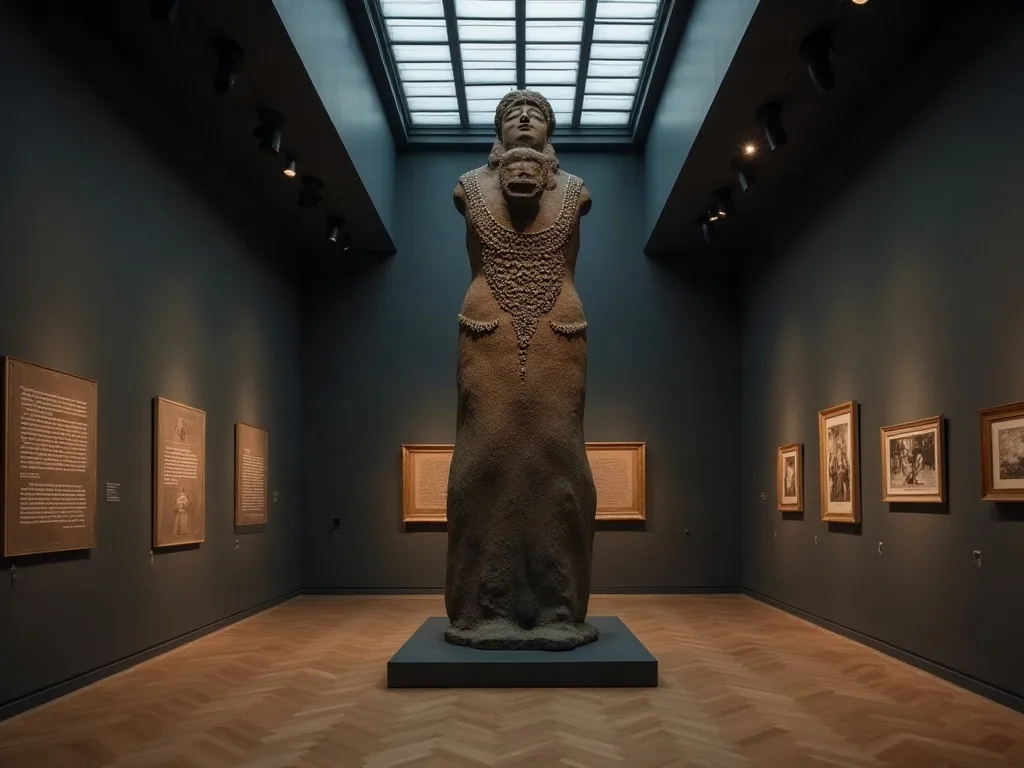
The sculpture is not meant to be beautiful in a European classical sense. It is meant to be powerful, to strike the viewer with awe and even dread. In this, it succeeds completely. Many visitors report feeling unsettled by Coatlicue's image. This unsettlement is not a bug. It is the intended effect. The Aztecs wanted worshippers to feel the full weight of cosmic truth, not to be comforted.
Coatlicue in the Aztec Pantheon: Relationships and Authority
Coatlicue held a unique position in the Aztec pantheon. She was not ruled by the high gods. She was their mother. Huitzilopochtli achieved supreme status as the tribal god of the Aztecs, the warrior deity who led them to Tenochtitlan. Yet even Huitzilopochtli, mighty as he was, was depicted as answering to his mother.
Tlaloc, the rain god, another supreme figure in the pantheon, was not her son in the mythological narratives, yet he too shared sacred space with her. The Templo Mayor had twin sanctuaries: one for Huitzilopochtli, one for Tlaloc. This suggests that in Aztec thought, the two aspects of survival, war and rain, were held in balance by and within the earth itself, Coatlicue's domain.
Tezcatlipoca, the god of sorcery and fate, was another supreme deity. The mythology surrounding Tezcatlipoca is complex and multiform. In some narratives, he is Coatlicue's son. In others, he is her counterpart or rival. This fluidity is typical of Aztec myth. The same figure could have multiple origins and relationships depending on which narrative tradition was being invoked.
What is consistent is that Coatlicue was never subordinate. She was the earth itself. All gods, all humans, all powers existed upon her surface and within her being. This made her not a goddess among goddesses but the fundamental condition of all existence.
The End of an Era: Spanish Conquest and Christian Conversion
When the Spanish conquistadors arrived in Tenochtitlan in 1519, they encountered a living, thriving religion centred on Coatlicue and the other gods. The Spanish friars, particularly the Dominicans and Franciscans, set about systematically destroying the material culture of Aztec religion. Temples were razed. Idols were destroyed. The great Templo Mayor, where Coatlicue had been venerated, was torn down and its stones were repurposed to build a Christian cathedral on the same site.
The suppression of Coatlicue worship was not merely destruction. It was an act of cosmic violation, in the Spanish Christian view. Here was a religion that honoured human sacrifice, that depicted the divine in forms that European Christianity deemed obscene or demonic. The Spanish saw themselves as liberators, freeing the indigenous people from bondage to demonic forces.
Yet the conquest was not total. Indigenous religious practices persisted underground and in hybrid forms. The Virgin Mary, in certain Mexican devotions, absorbed some of the attributes of Coatlicue. The feast day of the Virgin became, for many indigenous people, a continuation of older earth goddess veneration under a Christian name. This was not conscious syncretism, necessarily. It was spiritual survival. The need to honour the earth, to pray in moments of childbirth, to acknowledge the dual nature of creation and destruction, persisted even under Spanish Christian rule.
Coatlicue in Modern Indigenous and Academic Recovery
In the twentieth and twenty-first centuries, Coatlicue has experienced a remarkable recovery. Indigenous scholars and artists, particularly in Mexico, have reclaimed her as a symbol of Mesoamerican wisdom and as an ancestor of contemporary indigenous identity. She appears in modern poetry, visual art, and performance. The Chicana feminist scholar Gloria Anzaldua wrote extensively about Coatlicue as a figure of hybridity and transformation, seeing in the goddess a model for understanding the multiple, contradictory identities that border communities navigate.
Academic scholarship has also matured in its treatment of Coatlicue. Rather than viewing her as a primitive precursor to more "civilized" later traditions, scholars now recognize the Aztec religious system as a coherent, sophisticated theology. Coatlicue sits at the centre of this theology. Understanding her is understanding how the Aztecs explained the structure of reality itself.
The Coatlicue Monolith continues to draw millions of visitors. For many indigenous people from Mexico and beyond, seeing this sculpture is an act of reclaiming ancestry, of asserting that their grandmothers' grandmothers worshipped a truth that no conquest could entirely erase. For scholars and curious visitors from every background, encountering Coatlicue forces a reckoning with what we thought we knew about deity, divinity, and the sacred.
Frequently asked questions about Coatlicue and the Aztec pantheon?
Frequently asked questions
Why did the Aztecs depict Coatlicue as so terrifying?
The Aztecs did not separate creation and destruction into moral opposites. Coatlicue's fearsome appearance reflected the theological truth that existence itself is both generative and death-dealing, that the earth gives life and takes it back. Her serpent skirt, her necklace of hearts and hands, and her severed-head imagery were not marks of evil but of cosmic power and renewal.
Was Coatlicue worshipped by the Aztecs in everyday practice, or only in mythology?
Coatlicue was central to daily Aztec religious practice. Midwives invoked her during childbirth. Specific months in the ritual calendar honoured her. The Florentine Codex records offerings of tamales, maize cakes, and sacrificial hearts made to her. She was not a distant mythological figure but a present divine power felt in the earth beneath people's feet and in the bodies of women giving birth.
What is the connection between Coatlicue and the Templo Mayor?
The Templo Mayor in Tenochtitlan was built as an earthly replica of Coatepec, the sacred mountain associated with Coatlicue. The pyramid served as a meeting place between human and divine realms. Coatlicue, as the earth itself, was the foundation upon which the Templo Mayor stood. When Spanish conquistadors demolished the temple, they were symbolically destroying the sacred geography that made Coatlicue's presence palpable to the Aztec people.
How did Catholic Christianity interact with Coatlicue veneration after the Spanish conquest?
Spanish friars sought to erase Coatlicue worship, destroying temples and forbidding rituals. Yet indigenous religious practice persisted in hybrid forms. In some regions, the Virgin Mary absorbed attributes once held by Coatlicue, and feast days dedicated to Mary became continuations of older earth goddess veneration. This was not formal syncretism but spiritual survival under colonial rule.
Why is Coatlicue important to modern Chicana and indigenous feminism?
Modern scholars and artists, particularly Chicana feminists, see in Coatlicue a model for understanding multiplicity, contradiction, and transformation. She encompasses creation and destruction, motherhood and warfare, nurture and violence. She offers an alternative to European models of femininity and divinity. For contemporary indigenous communities, she is a symbol of ancestral wisdom and the resilience of indigenous identity against colonization.
Did the Aztecs believe Coatlicue still lived in their time, or was she only a past creator deity?
The Aztecs understood Coatlicue as a living, present reality. She was not confined to primordial time. She was the earth itself, continuously alive and active. Every harvest, every tremor, every new birth was her presence in the world. This made her not a figure of the distant mythological past but an immediate cosmic power.
Coatlicue's Enduring Cosmic Presence
What strikes anyone who encounters Coatlicue, whether through mythology, art, or scholarship, is her refusal to be domesticated. She cannot be reduced to a single function or attribute. She is mother and warrior. She is creation and annihilation. She is the soil beneath the city and the unfathomable cosmic power that brought the gods themselves into being. The Aztecs understood something that many later traditions have worked to suppress: that the sacred is not always comforting, that truth-telling sometimes requires terror, and that the divine does not need our approval to be itself.
The Coatlicue Monolith, buried for centuries, has risen again into public view. It stands in a museum in a Mexico City built partly on the ruins of Tenochtitlan. Indigenous people visit it as an ancestor. Scholars stand before it and grapple with questions of meaning and power. Each encounter with Coatlicue, whether in stone, in story, or in scholarly text, is an encounter with an intelligence vastly different from our own, an intelligence that looked at the cosmos and saw, in a pregnant woman's body and in the earth beneath mountains, the foundation of everything that exists. The serpent-skirted mother endures because what she represents cannot be killed: the generative force of the earth, the courage of motherhood, and the irreducible power of nature itself to create and destroy, to birth and to devour, in one eternal cycle.
Read the full book
Want the whole story?
The complete edition is an instant PDF download here, with a paperback on Amazon for selected titles.
Aztec
The Aztec Mythology Book: Quetzalcoatl, Huitzilopochtli, Tezcatlipoca, and the Five Suns of the Mexica
Blood, Feathered Serpents, and the Cosmic Engine of Tenochtitlan
The gods, heroes, and sacred calendar of the Mexica civilization. From the feathered serpent Quetzalcoatl to the five world ages, the complete mythology of Tenochtitlan.
More from Aztec
All articles
Aztec
Tenochtitlan: The Sacred Aztec Capital
Tenochtitlan rose from an island in Lake Texcoco as the Mexica people's promised homeland, guided by their god Huitzilopochtli. Discover how this sacred city became the center of the Aztec Empire and why its temples, waterways, and ceremonial heart shaped an entire civilization.
Aztec
The Legend of the Fifth Sun: Why the Aztecs Believed Humanity Required Divine Blood
The Aztecs lived under a cosmological clock. They believed the world had been created and destroyed four times before. The fifth world, their world, could only survive if the gods received constant nourishment: human blood. Discover how mythology, astronomy, and ritual wove together in one of history's most misunderstood civilizations.

Aztec
Tlaloc: God of Rain and Fertility in Aztec Mythology
Tlaloc brought water to the Aztec world, but his gifts came with terror. Discover how the rain god shaped Mesoamerican religion, from mountain shrines to the sacred cenotes where thousands sought his blessing.
Aztec
Huitzilopochtli: God of War and the Sun
Huitzilopochtli, the Aztec god of war, sun, and human sacrifice, emerged from his mother's womb fully armed to battle the darkness. His myth shaped the empire's entire worldview: conquest, cosmic duty, and survival itself.