

Xipe Totec: The Flayed God of Spring and Renewal
Xipe Totec, the Aztec god who sheds his skin to reveal new life beneath, embodies the price of transformation. His ritual required human sacrifice, yet held profound meaning for a civilization obsessed with cosmic renewal and seasonal rebirth.
Contents
In the spring of each year, the Aztecs gathered to watch a god die and be born again. Not once, but repeatedly. Xipe Totec, whose name means "Our Lord the Flayed One" in Nahuatl, embodied the most paradoxical truth the Aztecs knew: that death feeds life, that decay births growth, that the sacrifice of the old is the only way to make room for the new.
He stands at the centre of one of the most unsettling and profound religious concepts in Mesoamerica. To understand Xipe Totec is to glimpse how an ancient civilization understood renewal not as metaphor, but as cosmic necessity. His rituals horrify modern readers. Yet they reveal an intellectual and spiritual sophistication that demands respect.
Origins and Identity: The God Who Wears Many Skins
Xipe Totec first appears in Mesoamerican tradition long before the Aztec empire rose to dominance. The Olmecs, the Mayas, and the Toltecs all worshipped a flayed deity. But the Aztecs made him their own, integrating him into a vast mythological system where every god had a place in the machinery of cosmic creation.
In the Aztec cosmology, described in sources like the Florentine Codex compiled by Bernardino de Sahagún in the 16th century, Xipe Totec held a specific role: god of spring, of agriculture, of the renewal that comes when winter's death is stripped away. He was also a god of war, of conquest, of the warrior stripped of his riches and enslaved. His mythology speaks in the language of paradox because the Aztecs understood that life contains contradictions that cannot be resolved, only honoured.
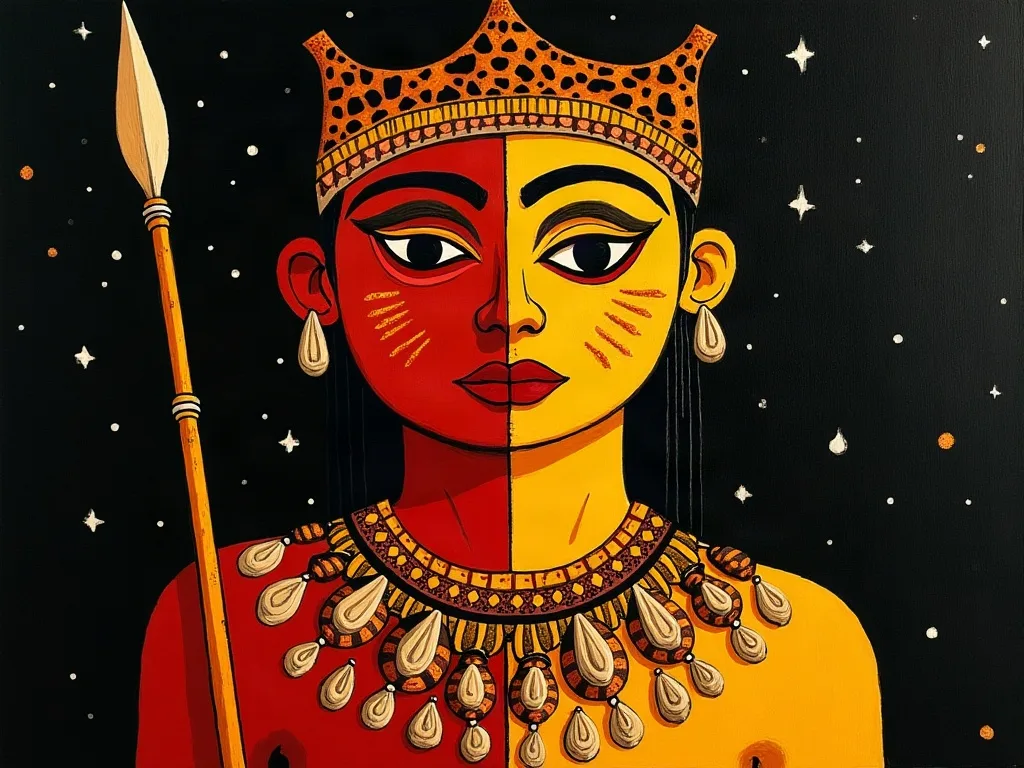
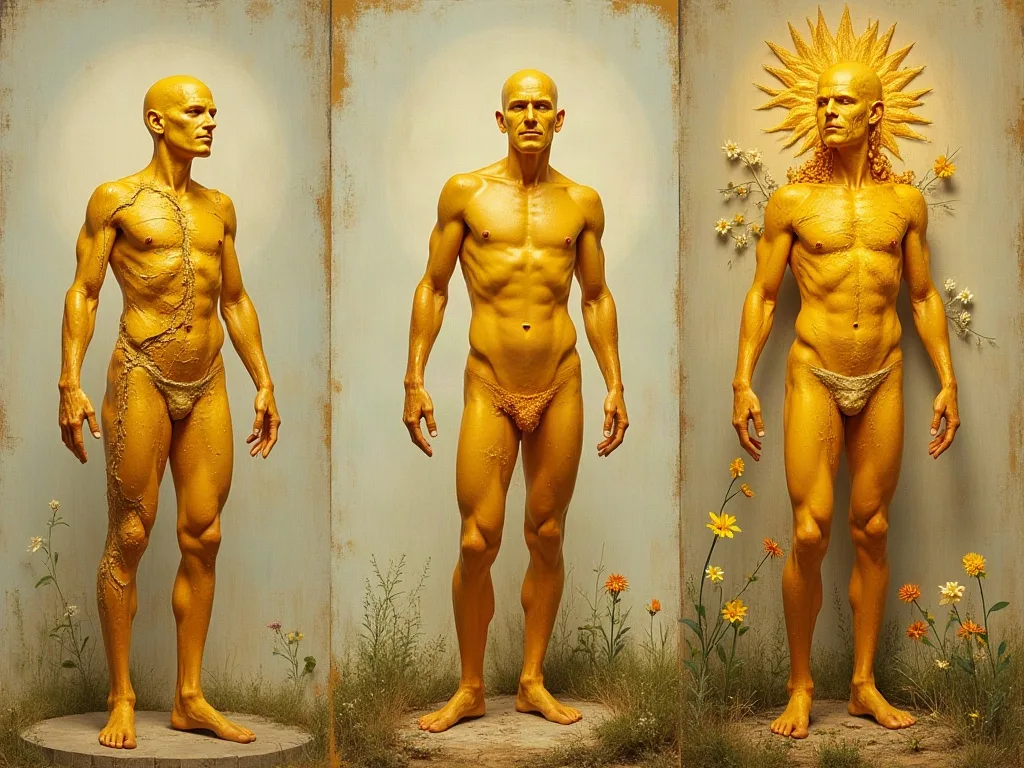
The iconography is unmistakable. Xipe Totec is depicted with flayed human skin draped over his own body like a suit. The skin hangs loose, revealing the god's true form underneath: often painted yellow or gold, symbolizing the new sun, the new season, the regenerated cosmos. His eyes peer out from the human eye sockets of the dead skin. His fingers extend through the fingers of the dead hands. The image is grotesque and beautiful simultaneously, repulsive and profound.
The Flaying: Ritual Meaning Beyond Horror
Modern readers approach Xipe Totec's rituals with understandable revulsion. The Tlacamictiliztli ceremony, performed during the month of Atlcahualo (roughly February-March, the dry season just before spring rains), involved the sacrifice of enslaved captives and the flaying of their bodies. Priests would then wear the skins as Xipe Totec himself wore them. The sacrifice of the victim became, in Aztec theology, an act of cosmic participation. The victim was not merely killed; the victim was transformed into the god.
This requires a radical shift in perspective. To the Aztecs, this was not murder. It was sacrament. The victim, often a war captive or a purchased slave, was being offered to the god so that the god could renew himself, and in doing so, renew the world. The cycle of Nahuatl cosmology depended on such offerings. Without them, the sun would not rise. Crops would not grow. The Fifth Sun, the current age of the world, would come to an end.

The flayed skin itself became a second garment for the god, a sign of duality. Underneath the death skin lay the god's true golden body, alive and radiant. This visual metaphor describes the agricultural cycle: the seed coat must split open; the old plant must die; the nutrients must return to soil. And from that death, the new shoot emerges. Spring is not a gentle season in this worldview. It is violent, necessary, and absolute.
Xipe Totec's priests, the Xipeme, wore the skins for twenty days following the sacrifice. They were vessels of the god, living statues of renewal. Pilgrims would come to touch them, hoping to receive healing. The skin itself was believed to possess transformative power. Xipe Totec was a god of smallpox victims, of those afflicted with skin disease, of anyone whose body had been marked by illness or harm. To encounter the Xipeme was to believe that your own skin might be shed, that your affliction might slough away, that underneath the disease lay a new and healthy self.
Xipe Totec and the Cosmic Cycles
The Aztec universe operated in grand cycles. The Tonalpohualli, the 260-day ritual calendar, interlocked with the Xiuhpohualli, the 365-day solar calendar. Every 52 years, these cycles aligned. The Aztecs believed that the world might end at that moment. The ceremony of the New Fire was performed to ensure that the sun would rise again, that the cycle would continue. Xipe Totec's renewal ritual was a smaller echo of this cosmic anxiety.
Xipe Totec presided over Atlcahualo, the first month of the Aztec year, the month of drying and scarcity before the rains came. It was a time of hunger. The granaries from the previous harvest were running low. The new crop had not yet been planted. The god's sacrifice mirrored this liminal moment: the death of the old season, the hunger of transition, and the promise of renewal if the proper offerings were made.
But Xipe Totec was not merely a god of agriculture. He was also a god of warriors and conquest. The skin he shed was the skin of the enemy captured in war. The Aztec Empire expanded through militarism, and warfare itself was understood as a sacred obligation, a way to feed the gods and ensure cosmic order. When an Aztec warrior captured an enemy, he took on that captive as his responsibility, a debt to the god. The captive's eventual sacrifice was not a personal violence; it was a sacred transaction.
The Cross-Cultural Shadow: Xipe Totec's Roots
The flayed god did not originate with the Aztecs. Archaeologists have found evidence of flayed deity worship in Toltec and Maya contexts. The Toltec city of Tula, which dominated central Mexico before the Aztec rise, venerated a similar figure. The Mayas had their own death and renewal deities, though they took different forms.
This continuity tells us something important: the concept of shedding and renewal runs deep in Mesoamerican thought. It is not a peculiarity of the Aztecs, but an insight that multiple civilizations arrived at independently. The notion that nature operates through cycles of death and regeneration; that sacrifice is necessary; that the old must be stripped away for the new to grow; these are observations drawn from the land itself.
The Aztecs inherited this wisdom and systematized it. They built it into their calendar, their theology, their political structure. Conquest became a sacred duty because it supplied the sacrifices that kept the cosmos functioning. The empire itself was understood as an expression of cosmic necessity.
Xipe Totec in the Codices and Surviving Sources
Our knowledge of Xipe Totec comes from a handful of surviving sources, each filtered through the perspective of either Aztec artists or Spanish friars who recorded Aztec religion after the conquest. The Florentine Codex, compiled by Sahagún from interviews with surviving Aztecs, provides detailed descriptions of Xipe Totec's festivals and attributes. The Codex Borbonicus, a pre-Columbian document that escaped destruction, shows him in painted form. The Primeros Memoriales and other ethnographic accounts add texture and detail.
These sources, however fragmentary, paint a consistent picture. Xipe Totec appears in a distinctive costume: the flayed human skin, yellow body paint, a shell ornament at the chest, often a spear-thrower in hand. He is frequently shown with half his face red, half yellow, divided vertically down the centre. This duality represents his dual nature: death and life, old and new, the underworld and the world above.
He is also associated with the jaguar, the Aztec symbol of night, of the underworld, of death itself. The jaguar sheds its spotted skin each year, gaining new strength. Xipe Totec, like the jaguar, is a being of metamorphosis.
The Scholarly Debate: Sacrifice as Cosmic Necessity vs. Political Tool
Modern scholars have long debated the true meaning of Xipe Totec's sacrifice. Some interpret it purely as a cosmological requirement: the Aztecs genuinely believed that the world would end without human sacrifice. Others argue that the religious justification masked political and economic motivations. Conquest supplied not only sacrificial victims but also tribute, labour, and the expansion of imperial power.
The truth likely lies in a complex interlocking of both perspectives. The Aztecs were not cynical manipulators using religion to hide naked power grabs. Nor were they automatons enslaved to a cosmology they could not question. Instead, they were human beings navigating a worldview in which religion and politics were inseparable. The cosmos required offerings. The empire required conquest. Both could be true simultaneously.
Xipe Totec embodies this complexity. He is a god of fertility and growth, of abundance and renewal. He is also a god of war, of conquered enemies, of the captive about to be sacrificed. He holds no contradiction because in the Aztec mind, there was none. Death and life, conquest and creation, are two sides of a single necessary process.
The Aftermath: Xipe Totec in the Colonial Period and Beyond
When the Spanish conquered the Aztec Empire in 1521, they were horrified by human sacrifice. The friars who followed the conquistadors set about systematically destroying Aztec temples, melting down gold idols, and burning codices. Xipe Totec's priesthood was dismantled. His temples fell.
Yet the god did not disappear. Indigenous peoples in Mexico, particularly in the central highlands, continued to venerate him in hidden forms. Syncretic practices emerged, sometimes superficially Christianized but maintaining core Mesoamerican concepts. The Virgin Mary in some traditions absorbed attributes of the earth mother goddess. Saints' days aligned with old festival calendars. Xipe Totec's emphasis on renewal found new outlets.
In the modern era, Xipe Totec has become a subject of intense scholarly and artistic interest. He appears in contemporary Mexican literature, visual art, and academic research. He is studied not as a relic of a barbaric past, but as a sophisticated theological figure, a god who expressed profound truths about cyclical time, transformation, and the costs of renewal.
Xipe Totec and Modern Interpretations: Sacred Violence Reconsidered
Contemporary scholarship has begun to move beyond simple moral condemnation of Aztec sacrifice. Not to justify it, but to understand it on its own terms. Historians like David Carrasco and Davíd López Austin have shown how deeply embedded sacrifice was in Mesoamerican philosophy. It was not alien to their thought; it was central to it.
Xipe Totec, as a god, forces us to confront uncomfortable questions. Can a religious system be simultaneously sophisticated and violent? Can a god be real and meaningful to people even as we reject his rituals? Can we honour the intellectual and spiritual achievements of a civilization while condemning its practices?
These questions have no easy answers. But wrestling with them is what serious engagement with Xipe Totec demands. He cannot be dismissed as the invention of priests trying to justify murder, nor can he be sentimentalized as a nature god misunderstood by squeamish Westerners. He is something far more complex: a theological response to a lived reality, a god who embodied what an entire civilization believed about the nature of time, growth, and the price of existence.
Frequently Asked Questions About Xipe Totec: The Flayed God of Spring and Renewal
Frequently asked questions
Was Xipe Totec the only Aztec god associated with spring and renewal?
No. The Aztecs had multiple deities associated with agricultural cycles and rebirth. Tezcatlipoca, the Smoking Mirror, was a primary creator god associated with change. Tlaloc, the rain god, was essential to fertility. But Xipe Totec was unique in his emphasis on the actual shedding of the old and the violent transformation required for renewal.
Did the victims of Xipe Totec's sacrifice understand their role as sacred?
This is debated by scholars. Some victims were war captives who likely knew what awaited them. Others were purchased slaves. Pre-Columbian sources suggest that some captives were treated honourably before sacrifice, even celebrated as representatives of the god. But it would be naive to assume universal consent or spiritual willingness. The truth was probably mixed, varying across individual cases and time periods.
How does Xipe Totec compare to renewal gods in other cultures?
Many cultures have death and rebirth deities: Osiris in Egypt, Dionysus in Greece, even aspects of Christ in Christian theology. But Xipe Totec's flayed skin is unique as a visual metaphor. The image is so specific and so literal that it forces engagement with the physical reality of transformation in ways that more abstract symbols do not.
What evidence survives of Xipe Totec worship after the Spanish conquest?
Direct worship largely disappeared, destroyed by missionary campaigns. However, indigenous communities in Mexico incorporated Xipe Totec's attributes into syncretic religious practices, and the god appears in some folk traditions and Day of the Dead observances. The knowledge was preserved in hidden form rather than erased.
Why did the Aztecs believe sacrifice was necessary to keep the sun rising?
The Aztecs observed that the sun rises and sets in a cycle, that seasons change, that life depends on water, on fertile soil, on the renewal of crops. They developed a cosmology to explain these patterns. In their view, the cosmos was not self-sustaining; it required continuous feeding, continuous work, continuous offering. Sacrifice was the price of existence itself.
The Enduring Paradox: Death as Gateway
Xipe Totec remains one of the most challenging figures in world mythology, precisely because he refuses to be spiritually tamed. He is beautiful and terrible. He offers renewal and demands death. He embodies an insight that the Aztecs understood with perfect clarity: that transformation is never clean, never painless, and never comes without a cost.
To look at Xipe Totec is to confront the reality that growth requires decay, that spring requires the death of winter, that every new beginning is also an ending. The Aztecs saw this truth written into the natural world and built a religion around it. Their god wears a dead skin not from cruelty, but from honest observation.
The flayed god has much to teach, if we are willing to listen beyond the horror of his image to the philosophy he embodies. He speaks of cycles beyond human control, of the necessity of letting go, of the strange wisdom that lies hidden in the gap between destruction and creation. In a modern world obsessed with permanence and growth, Xipe Totec's message is increasingly difficult to ignore: nothing stays the same, and that is not a tragedy. It is the very engine of existence.
Read the full book
Want the whole story?
The complete edition is an instant PDF download here, with a paperback on Amazon for selected titles.
Aztec
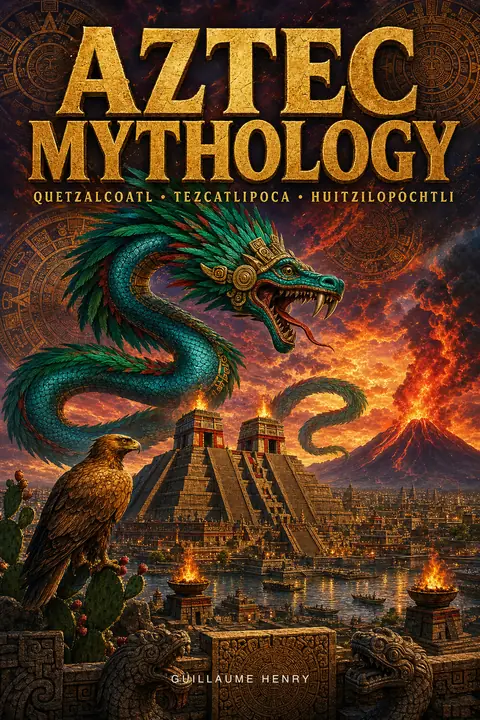
The Aztec Mythology Book: Quetzalcoatl, Huitzilopochtli, Tezcatlipoca, and the Five Suns of the Mexica
Blood, Feathered Serpents, and the Cosmic Engine of Tenochtitlan
The gods, heroes, and sacred calendar of the Mexica civilization. From the feathered serpent Quetzalcoatl to the five world ages, the complete mythology of Tenochtitlan.
More from Aztec
All articles
Aztec
Tenochtitlan: The Sacred Aztec Capital
Tenochtitlan rose from an island in Lake Texcoco as the Mexica people's promised homeland, guided by their god Huitzilopochtli. Discover how this sacred city became the center of the Aztec Empire and why its temples, waterways, and ceremonial heart shaped an entire civilization.
Aztec
The Legend of the Fifth Sun: Why the Aztecs Believed Humanity Required Divine Blood
The Aztecs lived under a cosmological clock. They believed the world had been created and destroyed four times before. The fifth world, their world, could only survive if the gods received constant nourishment: human blood. Discover how mythology, astronomy, and ritual wove together in one of history's most misunderstood civilizations.

Aztec
Coatlicue: Mother of Gods and the Aztec Pantheon
Coatlicue, the serpent-skirted mother, bore the sun god and ruled over fertility, childbirth, and death in Aztec belief. Discover how the Aztecs honoured her as the generative force behind their entire pantheon and cosmos.

Aztec
Tlaloc: God of Rain and Fertility in Aztec Mythology
Tlaloc brought water to the Aztec world, but his gifts came with terror. Discover how the rain god shaped Mesoamerican religion, from mountain shrines to the sacred cenotes where thousands sought his blessing.